Table of contents
What is an employee survey?
An employee survey is much more than just a questionnaire. It is a strategic tool for measuring employee sentiment and gaining valuable insights. Think of the survey as an ECG for your company: it measures the heart rate of your organization—the satisfaction, commitment, and motivation of your employees.
In today's job market, where competition for talent is fiercer than ever, it is crucial to understand the needs and concerns of your own employees. A professionally conducted employee survey conducted by a Swiss provider provides you with precisely this data. It is anonymous, structured, and subject to data protection regulations (DSG/GDPR). A professional employee survey works with minimum case numbers and covers the entire working environment: from workload and leadership quality to corporate culture.
However, an employee survey is not purely an analysis tool. As a strategic HR instrument, it forms the basis for targeted changes. Used correctly, it sends a strong signal to your employees: "We are listening. Your opinion matters." That alone can motivate employees and strengthen trust in management. It is the first step toward an open feedback culture in which everyone feels heard and valued.
Employee satisfaction survey: objectives and benefits
An employee satisfaction survey is your compass for successful corporate management. It not only shows you where you stand, but also where you need to go. The goals are clear:
- Identify weaknesses: Where does the shoe pinch? A good survey reveals what is wrong in the company. Whether it's unclear processes, a lack of appreciation, or poor leadership, you'll find out firsthand.
- Motivating employees: Asking questions shows interest. And showing interest motivates. A survey can be a real motivation booster. Your employees feel taken seriously and valued. Important KPIs here are internal comparisons with the previous year or industry benchmarks.
- Reduce employee turnover: High turnover is expensive. An employee satisfaction survey helps you understand the reasons for resignations and take countermeasures. This allows you to retain talent in your company in the long term. Read our employee study on the most important reasons for resignations in Switzerland here. An important KPI here is the participation rate, because employees who did not participate are particularly at risk of resigning.
- Strengthen your employer brand: Companies that listen to their employees are more attractive employers. An open feedback culture gets around and attracts new talent. See our partner companies that have been honored with our Employer Award here.
However, the benefits extend far beyond the human resources department. Satisfied and motivated employees are more productive and customer-friendly. This has a direct impact on your business success.
But beware: an employee survey is not a sure-fire success. It is a promise. A promise that you will listen and take action.
Conducting employee surveys: The most common mistakes
Despite good intentions, many employee surveys come to nothing. A Conducting an employee survey is easy. successful one is an art. Here are the most common mistakes – and how to elegantly avoid them.
Mistake #1: No action taken after the survey
This is a classic scenario. The survey is complete, the results are in – and then what? Silence. The feedback disappears into a digital drawer. This is frustrating for employees. They took the time to give honest feedback. If no visible action follows, they feel not only ignored but also deceived. The result: trust declines, motivation wanes, and hardly anyone participates in the next survey.
When conducting an employee survey, the following applies: Those who seek feedback must also be prepared to act on it. And these consequences must be visible and comprehensible. Otherwise, the impression quickly arises that management's interest is merely a political fig leaf.
Our tip:
- Plan a clear process of action before the survey.
- Define clear responsibilities and liabilities.
- Set up an internal project group or task force to analyze and prioritize the results and derive measures.
- Give this task force the necessary leeway in advance to be effective.
- Divide planned actions into short-term quick wins, medium-term, and long-term measures.
Conflicts of values can cause your survey to fail
The implementation of a survey often fails not because of a lack of will, but because of conflicts of values—and these conflicts of values often remain invisible.
A typical example: Management interprets the survey results and decides on measures to increase efficiency—clear processes, measurable goals, optimized workflows.
The team, on the other hand, asked for more autonomy, flexibility, and a greater say in the survey. Both sides mean well, both want improvement—but they are talking about completely different things.
Such conflicts arise because people and organizations have different value systems. Some prioritize order, efficiency, and structure. Others prioritize harmony, self-determination, and meaningfulness. Neither perspective is wrong, but when they clash unrecognized, even well-intentioned measures fail. Management feels misunderstood because their efforts are not appreciated. Employees feel overlooked because their actual concerns have not been addressed. The result: frustration on both sides and the feeling that the survey has been pointless.
The solution
The solution lies in making these different values visible when planning the employee survey. Before measures are decided upon, the various perspectives should be on the table:
- What does improvement mean for management?
- What about the different teams?
- What about different generations within the company?
Once these questions have been clarified, measures can be developed that take different values into account and thus achieve significantly higher acceptance and effectiveness.
Our tip:
- Before planning measures, engage in a structured dialogue about expectations and values.
- Don't just ask WHAT should change, but WHY different groups want these specific changes. This will prevent well-intentioned measures from failing due to differing fundamental understandings.
Digression: The 7 value systems according to Clare Graves
Clare Graves' model helps us understand value conflicts. It describes seven different value systems that shape people and organizations:
Purple prioritizes tradition, belonging, and community. Red stands for assertiveness, power, and quick action. Blue values order, structure, clear rules, and reliability. Orange focuses on efficiency, success, innovation, and measurable results. Green values harmony, equality, participation, and consensus. Yellow strives for flexibility, integration of different perspectives, and pragmatic solutions. Turquoise thinks holistically and globally.
Every system has its merits. Problems arise when one system dominates and others are not respected – or when different systems clash without this conflict being recognized. A typical scenario: a blue-orange-dominated management team encounters a green-yellow-dominated team. Both want improvement, but their ideas about what that means are fundamentally different. If this difference is not made visible, change processes fail – not out of malice, but out of mutual misunderstanding.
Mistake #2: Lack of communication with employees
A successful employee survey depends on transparent and consistent communication of the results. But this is often lacking in practice. Employees take part in the personnel survey... and then: radio silence. No feedback, no information, no classification.
It becomes particularly tricky when communication takes place but is unclear or unbalanced—for example, when only positive results are highlighted or critical points are deliberately omitted. This quickly creates the feeling that the whole thing was just a compulsory exercise—with the consequence that the tool for increasing employee satisfaction itself becomes something that tends to disappoint employees.
The solution:
- Plan how you will communicate the survey results before the survey is conducted.
- Announcement, results including critical points, measures decided upon, status updates after a few months.
- Combine short, easily digestible formats such as videos, town hall meetings, or team presentations with a written summary on the intranet.
- Make it clear which feedback has led to specific changes. This strengthens your credibility as an employer.
Communicating critical results: Psychological safety is crucial
The dilemma faced by many managers:
They are unsure how to communicate critical results —especially if they themselves have been critically evaluated. This uncertainty is understandable and comprehensible. Receiving critical feedback and then talking openly about it requires not only professional maturity but also psychological security. Managers need to feel that honest communication will not be interpreted as weakness and that they will receive support when they need it.
In this context, psychological safety means that managers can address criticism without fear of losing face or suffering negative consequences. They can admit that results are difficult and that they need support to deal with them. It is precisely this openness that teams need—not a perfect facade, but an authentic engagement with feedback.
Communication often fails not because of unwillingness, but because of excessive demands. Managers do not know how to classify difficult results, which words are appropriate, or how to moderate dialogue formats without them escalating. This requires concrete preparation: moderation guidelines, sample formulations, collegial sparring, or external support if the situation is particularly delicate.
Our tip:
- Communicate in a balanced way—this includes critical points. Train managers in how to deal with difficult results and provide them with specific tools.
- Create a culture where managers can ask for support without it being seen as a weakness.
- This creates genuine psychological security —not only for employees, but also for managers.
Mistake #3: Survey fatigue and incorrect survey interval
"Another survey?" – this is what many employees think when companies conduct several surveys in quick succession without delivering any visible results. This is known as survey fatigue. The result: declining survey response rates and growing disinterest. Employee feedback should not be an end in itself, but must lead to clear measures. This is the only way to maintain employee trust.
The solution: Define a clear survey cycle. A comprehensive employee survey every two to three years is ideal for many organizations. In between, targeted pulse surveys can be used when there is a specific need. It is important to allow enough time between surveys to evaluate the results, implement measures, and communicate progress. This is the only way to ensure that the process remains credible and participation remains high. The rule of thumb is: more is not necessarily better. (How often should an employee survey be conducted? Read more about this here.)
Survey fatigue is often a symptom of deeper problems: a lack of trust in leadership, a feeling of not being heard, or disappointment with previous feedback exercises. Before you launch your next survey, engage in an open dialogue about previous experiences. What went well? What didn't? What is needed this time around?
Our tip: Ask fewer questions and focus on consistent implementation. Demonstrate visible progress between surveys.
The implementation of an employee survey usually fails not because of strategy or good intentions. It fails because of human factors, emotions, conflicts, and loss of trust.
– Dr. Max Mandl, ETH, transformation consultant at Valuematch
Mistake #4: Lack of involvement from executives and management
Middle managers play a key role in implementing the results of employee surveys. They are often the link between strategic management and operational teams—and are therefore crucial to sustainable success. However, if this key group is not actively involved, even the best measures can fizzle out on paper.
Middle managers often feel that their needs are not being adequately addressed: they either receive access to results too late, are not involved in planning measures, or are unsure how to deal with critical feedback from their own team. This leads to uncertainty, resistance, or passivity—and, in the worst case, frustration on the part of employees because no real changes are visible.
The solution:
- BInvolve middle management early on and actively.
- Train managers specifically in how to handle team reports, interpret results, and moderate dialogue formats.
- So-called train-the-trainer formats, in which HR and line managers receive practical training to act as multipliers, are particularly effective.
- Clear role expectations, appropriate tools such as moderation guidelines or results presentations, and space for open questions create confidence in dealing with feedback.
When managers themselves are part of the problem: neutral mediation as a solution
Particularly when the survey shows that some managers themselves are part of the problem, special attention is needed. In such situations, neutral moderation is crucial—but what does that mean in concrete terms, and why is it so important?
When a manager receives critical feedback, they find themselves in an extremely vulnerable position. Their own superiors expect them to deal with the results professionally. The team expects change. The manager themselves has to deal with the emotional weight of the feedback – often associated with shame, self-doubt, or defensiveness. In this situation, it is almost impossible to engage in constructive dialogue internally and without support.
Neutral mediation creates a safe space in which several things can happen at once: the manager is not exposed, but taken seriously. The team can express its perspective without fear of consequences. Both sides learn to understand each other's point of view – not to prove who is right, but to move forward together.
Specifically, such mediation takes place in several steps:
- Individual discussions: The mediator understands the perspectives of the manager and the team separately from one another.
- Develop rules for discussion: What is the goal? How do we want to talk to each other? What is taboo?
- Joint dialogue: Instead of assigning blame, make needs and expectations visible.
- Reach an agreement: Concrete, measurable steps that both sides will take—and a date for a follow-up meeting a few months later.
The key point is that the mediator does not have their own agenda. They are not part of the hierarchy, are not loyal to one side, but are exclusively committed to the process. This enables openness that would be difficult to achieve internally. At the same time, mediation ensures that changes initiated by feedback do not immediately fail due to resistance or emotional overload.
Our tip: Invest in preparing your managers. Offer concrete support when critical feedback needs to be processed—not as a sign of weakness, but as a professional necessity. Create psychological security for managers as well, not just for teams. And when conflicts escalate or emotions run high, seek neutral support from outside.
Mistake #5: Lack of commitment to measures
The added value of an employee survey does not arise in the management meeting room, but in the everyday work of the teams. Nevertheless, we often see measures being decided at a strategic level without any consideration of whether they can actually be implemented at an operational level. The reverse situation is equally problematic: results are openly discussed, but there is no commitment to what happens next – who will implement which measures and by when.
The following applies:
- Not all issues can be sensibly regulated centrally.
- Some challenges—such as those relating to cooperation, team spirit, or everyday communication—can only be addressed through direct dialogue on site.
- Those who attempt to solve everything using a top-down approach overlook the potential of the team level.
The solution:
- Use the results where change has an impact—in the team.
- Instead of making all decisions centrally, managers at all levels should be involved—with results reports, targeted working materials, and clear framework conditions.
- Each manager receives a separate report for their team—clearly presented, with benchmarks and recommendations for action.
- Results at team level should only be evaluated if the minimum number of responses has been reached in order to ensure confidentiality. Managers then moderate structured team workshops to interpret the results and derive measures – adapted to the reality of the team.
Some questions in the employee survey—for example, those concerning fairness in promotions or performance culture—deliberately leave room for interpretation. This openness is intentional, as it encourages discussion. It is important that managers are trained to contextualize these questions within the team and discuss them openly.
The conflict of values: top-down versus bottom-up
Top-down versus bottom-up is a classic conflict of values: "We manage centrally to ensure consistency" versus "Teams should decide for themselves; they know the situation on the ground." Genuine participation requires transparency about decision-making scope: What can the team decide? What must be decided centrally? Only when this is clear can false expectations be avoided.
Our tip: Before the survey, clarify which decisions can be made locally. Create real scope for action at the team level. Communicate honestly about what is feasible and what is not.
Checklist for follow-up and results processing
Employee surveys only reveal their full potential when concrete measures are derived from the results within the team. This checklist will help you to effectively follow up on your employee survey—from preparing the results to sustainable implementation within the team.
Phase 1: Before the survey
Define the action process. Who decides what and by when? Plan the communication route and train managers at an early stage. Hold a values workshop with senior management: What are the different expectations? What does improvement mean for different groups? Identify potential areas of conflict at this stage.
- Define objectives: What exactly do we want to know?
- Planning the process: Who is responsible? What happens to the results?
- Train managers: Prepare your managers for their roles.
- Prepare communications: Draft all emails and announcements.
Phase 2: During the interview
- Transparent communication is crucial. Explain why the survey is being conducted, what it is for, and what will happen to the data. Ensure anonymity.
- Communicate transparently: Why, what for, how long? Guarantee anonymity!
-
Send reminder: A friendly reminder halfway through increases participation rates.
- Communicate the results —including critical points. Identify quick wins and implement them within 90 days. Be aware of where different values clash and conflicts arise. Offer mediation when conflicts escalate or when critical feedback causes emotional stress. Organize team workshops for local measures and follow up after six to twelve months: What has been implemented?
- A professional employee survey does not end with clicking "Submit responses." It is the starting point for a long-term dialogue—ideally where employees work every day: in a team. This is how feedback leads to real change. The goal is to establish employee feedback not as a one-way communication, but as a sustainable dialogue process that strengthens your corporate culture in the long term.
-
Share results: Communicate the most important findings—openly and honestly.
-
Implement quick wins: Quickly implement 2-3 simple measures.
-
Conduct team workshops: Give teams space to develop their own solutions.
-
Plan follow-up: Provide an update on the status of the matter after 6 months.
The authors:
This article combines two perspectives: methodological excellence and the human side of change. Because only when both are right can feedback lead to progress.
- ValueQuest GmbH (Kathrin Neumüller, neumueller@valuequest.ch, valuequest.ch) is your partner for structured employee surveys and 360-degree reviews. The focus is on methodology, process, and measurable results.
- Valuematch (Max Mandl, max@valuematch.com) supports organizations during transformations and conflicts—especially when changes meet with resistance or different value systems clash.
Post published on January 1, 2026
About Dr. Kathrin Neumüller

Dr. oec. HSG Kathrin Neumüller is Co-Managing Director at ValueQuest and an expert in employee inspiration and empowerment. She also teaches strategic management in the MBA program at the ZHAW. She holds a doctorate from the University of St. Gallen (HSG) and studied at the University of Cambridge. Learn more about Kathrin
Inspired? Then share this post via your favorite platform.
Other articles that might interest you ...
Heimgärten Aargau Honored as a Top Employer: Enthusiasm Meets Trust
October 27, 2026
Reading time: 3 min
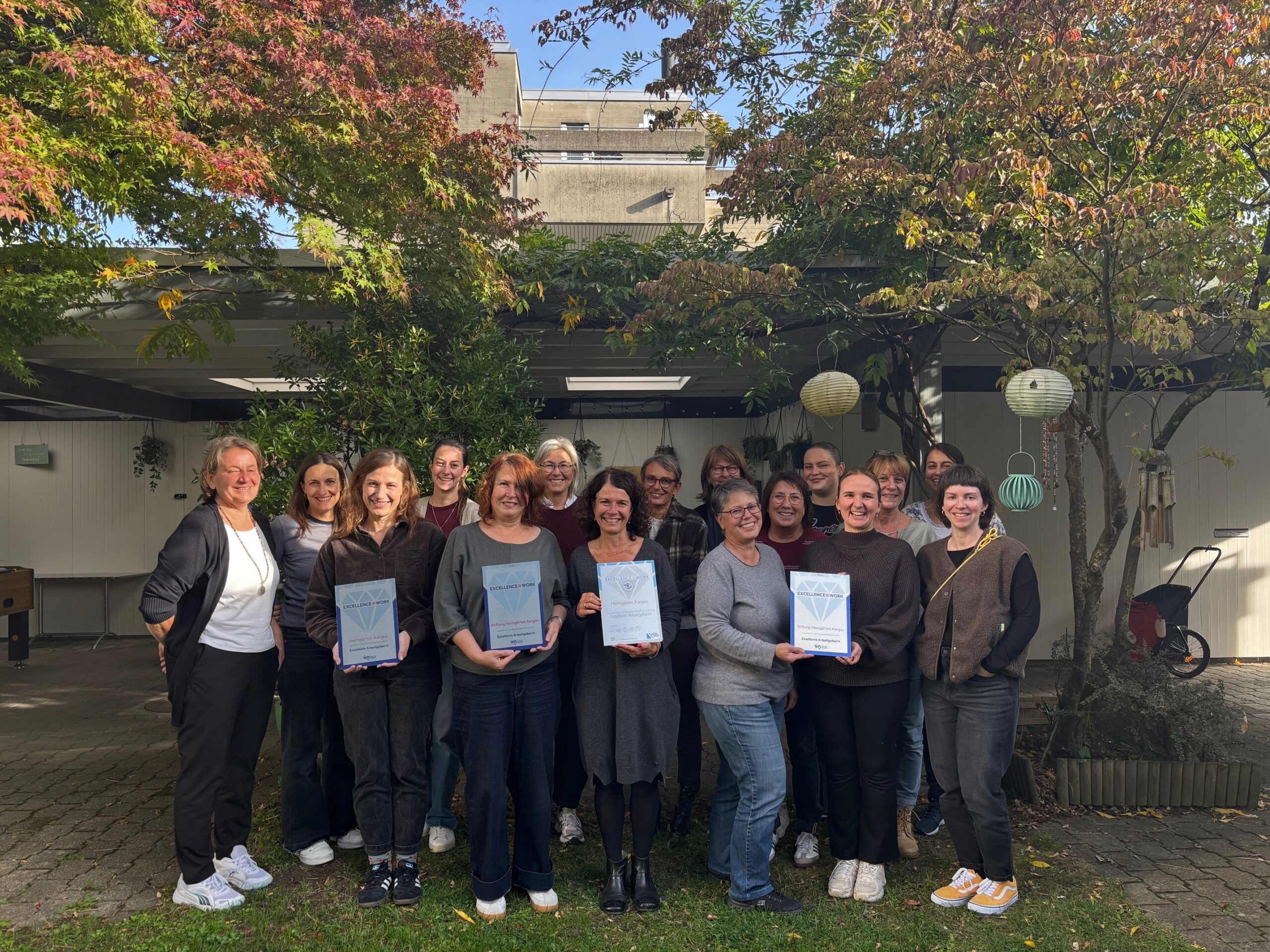
The Heimgärten Aargau Foundation has once again achieved outstanding results in the latest employee survey. For the fourth consecutive year, ValueQuest has honored the foundation with the Excellence@Work Award in recognition of its high appeal as an employer. We extend our heartfelt congratulations.

AI in the Swiss Insurance Market: What Insurers Can Learn from the Results
October 1, 2026
Reading time: 4 min
Artificial intelligence is not universally accepted in the Swiss insurance market. As a study by ValueQuest shows, customers’ openness to AI depends heavily on how it is used.

AI in the Swiss Insurance Market: Between Acceptance and Skepticism
September 28, 2026
Reading time: 5 min
For many Swiss people, artificial intelligence has become an integral part of everyday life. However, the situation is different when it comes to insurance companies.

Top Employer: Raiffeisenbank Glarnerland Impresses with Strong Leadership
September 21, 2026
Reading time: 2 min
ValueQuest recently had the honor of presenting the “Excellence@Work Award” to Raiffeisenbank Glarnerland. We extend our heartfelt congratulations.
Top Swiss Employers: GastroSocial
September 9, 2026
Reading time: 3 min
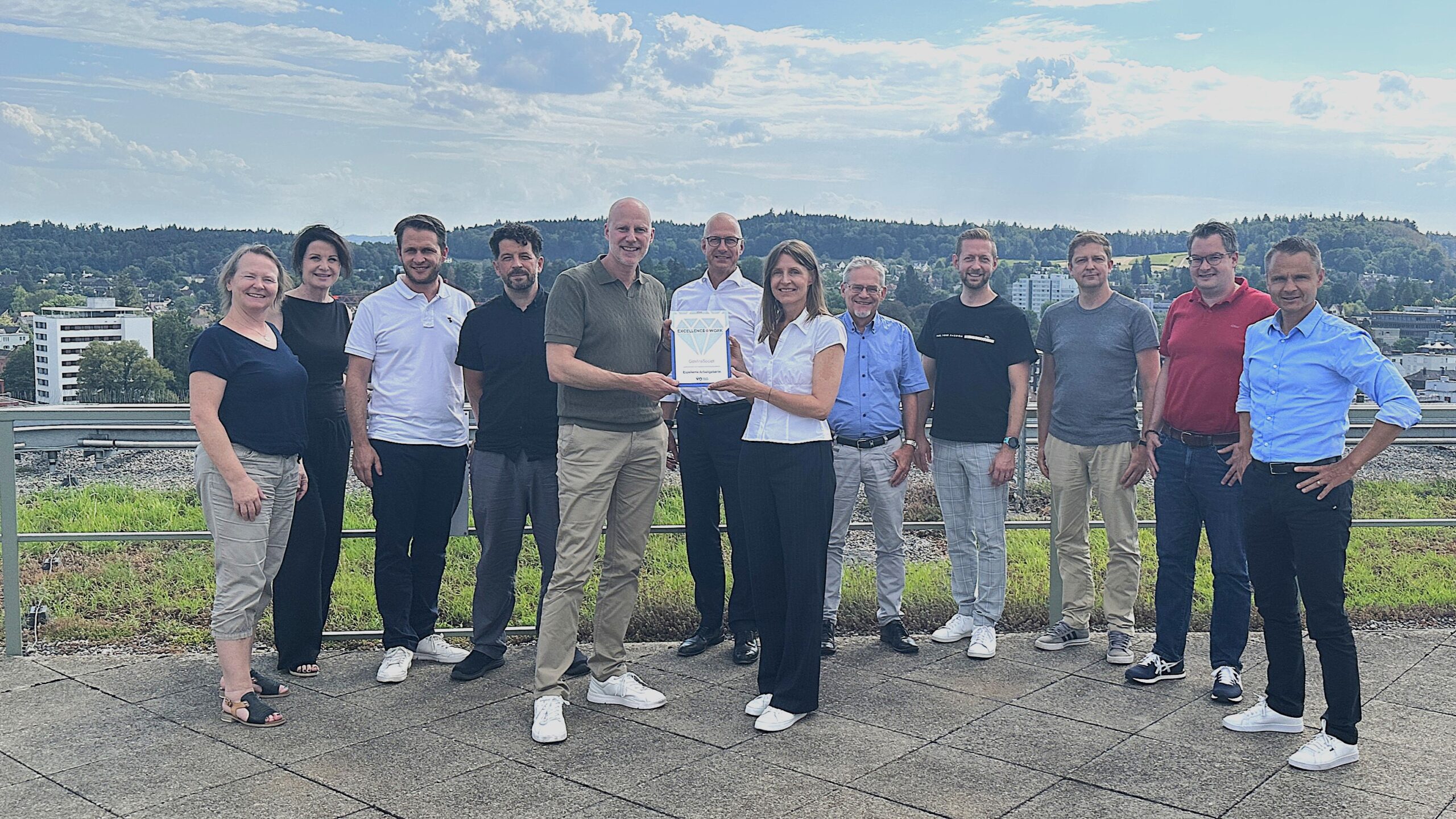
GastroSocial has received the 2026 Excellence@Work Award from ValueQuest. With a response rate of 96 percent, a motivation score of 84, and 87 percent of employees serving as brand ambassadors, the company demonstrates a strong employer culture.

Employee Survey: Raiffeisenbank Möhlin Achieves Excellent Results
August 31, 2026
Reading time: 3 min
Raiffeisenbank Möhlin is one of Switzerland's top employers and is receiving our Excellence@Work Award in recognition of this achievement. Congratulations!

Employee Surveys in Switzerland: Find Providers & Tools
August 30, 2026
Reading time: 6 min
Employee Survey in Switzerland: How Do You Find the Right Employee Survey Provider? What Really Matters When It Comes to Anonymity, Tools, Questionnaires, and Analysis.

360-Degree Feedback Questionnaire: Sample, Template, and Sample Questions
August 21, 2026
Reading time: 7 min
Table of Contents A 360-degree feedback process is only as good as its questionnaire. The questionnaire is at the heart of the entire process. It determines whether...

Employee Survey: The CAMPUS SURSEE Foundation Is Among Switzerland's Best Employers
August 5, 2026
Reading time: 2 min
ValueQuest honors particularly attractive employers in Switzerland with the Excellence@Work Award. We recently had the pleasure of presenting the award to the CAMPUS SURSEE Foundation.