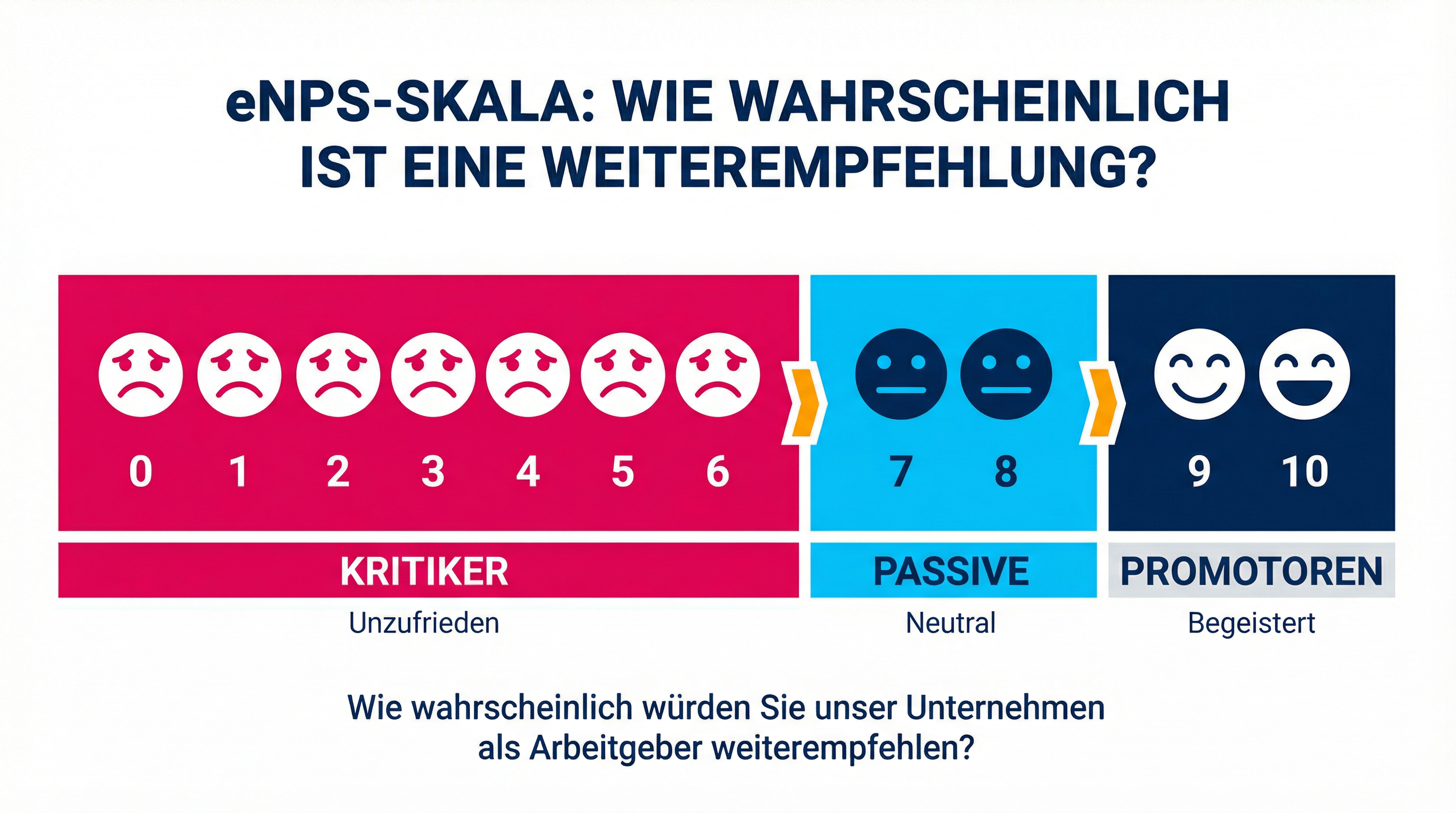
What are employee surveys and when does it make sense to conduct employee surveys? We address these questions in this blog post.
Employee surveys are an effective tool for analyzing and improving the well-being, work motivation and commitment of employees in a company. They are used to gather the opinions and experiences of employees through a mostly quantitative questionnaire and to improve work processes and the working environment based on this data. Employee surveys should be seen as a starting point for initiating an open dialog and a continuous learning and change process in your company.
In this practice-oriented guide, we want to show you the essential steps of an effective, efficient and successful employee survey. We also address the question of how companies can measure the success of the survey.
What are employee surveys?
Employee surveys are structured surveys for the target group "employees". They offer them the opportunity to express their opinions, needs and wishes on various aspects of the company neutrally and anonymously. Employee surveys are a reliable source of data that enables companies and managers to "listen" to employees and gather their feedback. Important topics include working conditions, management style, further training opportunities, work motivation and the perception of career development prospects.
When should employee surveys not be conducted?
Employee surveys should not be an end in themselves in terms of corporate policy. Companies should not use surveys exclusively to strategically position themselves as an attractive employer both internally and externally. Surveys are not a key performance indicator tool, but a dialog tool that allows companies to participate in the experiences of their employees.
What goals should employee surveys actually pursue?
The aim of employee surveys is to monitor changes in the company, evaluate the measures taken from the employees' perspective and bring about improvements.
Employee surveys serve to increase employee satisfaction and motivation. They improve working conditions and the flow of communication, support change management and strengthen employee commitment. Companies must be able to derive specific measures from them in order to strengthen employees' identification with the company and positively influence the corporate culture.
In general, employee surveys can pursue several objectives:
- To encourage employees to think and reflect and, building on this, to stimulate dialog between employees.
- Collecting employees' ideas.
- to generate key figures, for example to check the effectiveness or perceptions of changes in the company.
What steps are necessary for employee surveys?
1. planning and target definition
- Focus: A survey needs a clear focus. Define clear objectives for your survey.
- Questions: Select suitable questions and determine the scope of the survey. More questions do not automatically lead to higher data quality or greater depth of information. However, too few questions often leave room for interpretation. A good reference is a questionnaire with approx. 80 questions.
- Questionnaire length: The maximum time for completing the questionnaire should be around 15 minutes. This ensures higher data quality and reduces survey fatigue.
- Frequency: Survey your employees in a targeted manner and at regular intervals. Every 2 years would be ideal.
2. communication with employees
Also check your employee surveys at the communication level:
- In your communication, focus on the employees' world of experience and choose a human-centered storyline. Surveys should provide reflection opportunities for teams to work on the real problems of the organization.
- Employee surveys should not be communicated top-down.
- Communicate the survey period and motivate employees to participate.
3. design of a questionnaire for an employee survey
Avoid stumbling blocks when designing your questionnaire by asking yourself the following questions:
- Does your questionnaire convey an old-fashioned image of people? For example, praise from superiors implies a top-down approach.
- Avoid exaggerations from English, such as "I want to go the extra mile for my company".
- Avoid linguistic ambiguities such as puns or double negatives.
4. conducting the employee survey
Choose a suitable survey method (e.g. online questionnaire) and make sure that employees have the opportunity to answer anonymously. To protect the anonymity of employees and increase data quality, it is advisable to work with a professional partner such as ValueQuest.
5. evaluation of your employee survey
Analyze the results carefully and gain important insights. Identify strengths, weaknesses and potential for improvement, differentiated by business unit or function.
6. derivation of measures
Derive concrete measures from the results and develop an implementation plan to improve the identified problems and areas for action. The results should be processed as quickly as possible after the evaluation and translated into concrete action measures.
6. communication and implementation after the employee survey
Share the results with the employees, explain the implementation plan and implement the measures. Ensure that employees are informed about the progress of the measures or - even better - can actively participate in the implementation. Proactive communication and participation in the measures increase acceptance of change.
When should an employee survey be conducted by a professional full-service provider?
When it comes to providers of employee surveys, a general distinction is made between full-service providers and technology providers.
Full-service provider of employee surveys
Full-service providers such as ValueQuest offer comprehensive and holistic solutions. Experienced project managers take care of the entire process, from planning and design to implementation and evaluation of the survey. Customized questionnaires are developed together with the customer. A secure, technical infrastructure for data collection and analysis as well as for providing the results reports are also part of the full-service offering. Professional full-service providers offer additional services such as benchmarks and workshops on measures to improve employee motivation and employee satisfaction.
Working with a professional service provider for employee surveys is advantageous in several respects:
- External experts such as ValueQuest have the experience and expertise to conduct a comprehensive and meaningful employee survey. ValueQuest, for example, has been conducting employee surveys for more than 20 years.
- The customer's expectations are collected and translated into a customized questionnaire.
- External experts ask the right questions. A professional partner for employee surveys provides you with a competent external view.
- External experts conduct your employee survey with objectivity, anonymity and confidentiality. This promotes openness and trust among your employees.
Technology and platform provider for employee surveys
Technology and platform providers, such as Netigate, provide technical solutions for employee surveys. They offer software platforms or tools that enable companies to conduct their own employee surveys. Technology providers require customers to do the groundwork and be independent: they have to select the questions for the questionnaire themselves, manage the participant addresses and collect and analyze the data. This process requires a high level of expertise and know-how on the customer side, as the customers themselves are responsible for the content design and evaluation of the survey. If a customer has little expertise in data collection and analysis, working with a technology provider can lead to incorrect or distorted answers.
Comparison between full-service providers and technology providers for employee surveys
While full-service providers such as ValueQuest cover the entire employee survey process and guarantee customers customized solutions, technology providers make software platforms available on which companies can carry out their surveys independently.
The decision depends on the specific requirements as well as the company's financial and time resources. Generally speaking, less is more. It is better to carry out a competently designed and statistically robust employee survey every two years than constant ad hoc surveys using a technological platform that may tire out your employees.
Employee surveys are a means to an end and rarely provide immediate solutions. However, they are a helpful tool for identifying and prioritizing problems and areas for action within the company. In order to obtain concrete results, it is worth consulting an external, competent expert to draw up and evaluate the survey.
How do companies measure whether the employee survey was successful?
The success of an employee survey is measured by the honesty of the responses and the quality of the data. An employee survey is not necessarily successful if the results are positive, but if clear potential for improvement and areas for action can be identified. Discrepancies between the company units can also indicate problem areas and potential for improvement.
The success of an employee survey can be assessed on the basis of various criteria:
- Participation rate: A high participation rate, also known as the response rate, indicates a high level of employee interest in the company and shows that employees are willing to express their opinions and participate in change processes.
- Positive feedback from employees: Positive feedback and constructive feedback regarding the survey indicate a successful survey.
- A change in employee behavior, such as increased commitment, is also a sign of the success of your employee survey. Employees feel that they are taken seriously and have the feeling that they can bring about positive changes in the company.
Conclusion: Employee surveys are dialog instruments
Employee surveys should not be a political end in themselves or a staging tool for white washing in order to position the company as an attractive employer both internally and externally. Rather, they are an effective tool for identifying weak points in the corporate culture and recognizing potential for improvement in everyday working life. With a professional, experienced and competent expert at your side, you can avoid stumbling blocks and achieve meaningful results.
It is crucial to work with the results after the employee survey and prioritize areas for action in order to ensure the long-term success of the employee survey and bring about a positive change in the corporate culture and management style.
Article published on November 16, 2023
About Dr. Kathrin Neumüller

Dr. oec. HSG Kathrin Neumüller is Co-Managing Director at ValueQuest and an expert in employee inspiration and empowerment. She also teaches strategic management in the MBA program at the ZHAW. She holds a doctorate from the University of St. Gallen (HSG) and studied at the University of Cambridge. Learn more about Kathrin
Inspired? Then share this post via your favorite platform.
Other articles that might interest you ...

AI in the Swiss Insurance Market: What Insurers Can Learn from the Results
October 1, 2026
Reading time: 4 min
Artificial intelligence is not universally accepted in the Swiss insurance market. As a study by ValueQuest shows, customers’ openness to AI depends heavily on how it is used.

AI in the Swiss Insurance Market: Between Acceptance and Skepticism
September 28, 2026
Reading time: 5 min
For many Swiss people, artificial intelligence has become an integral part of everyday life. However, the situation is different when it comes to insurance companies.

Top Employer: Raiffeisenbank Glarnerland Impresses with Strong Leadership
September 21, 2026
Reading time: 2 min
ValueQuest recently had the honor of presenting the “Excellence@Work Award” to Raiffeisenbank Glarnerland. We extend our heartfelt congratulations.
Top Swiss Employers: GastroSocial
September 9, 2026
Reading time: 3 min
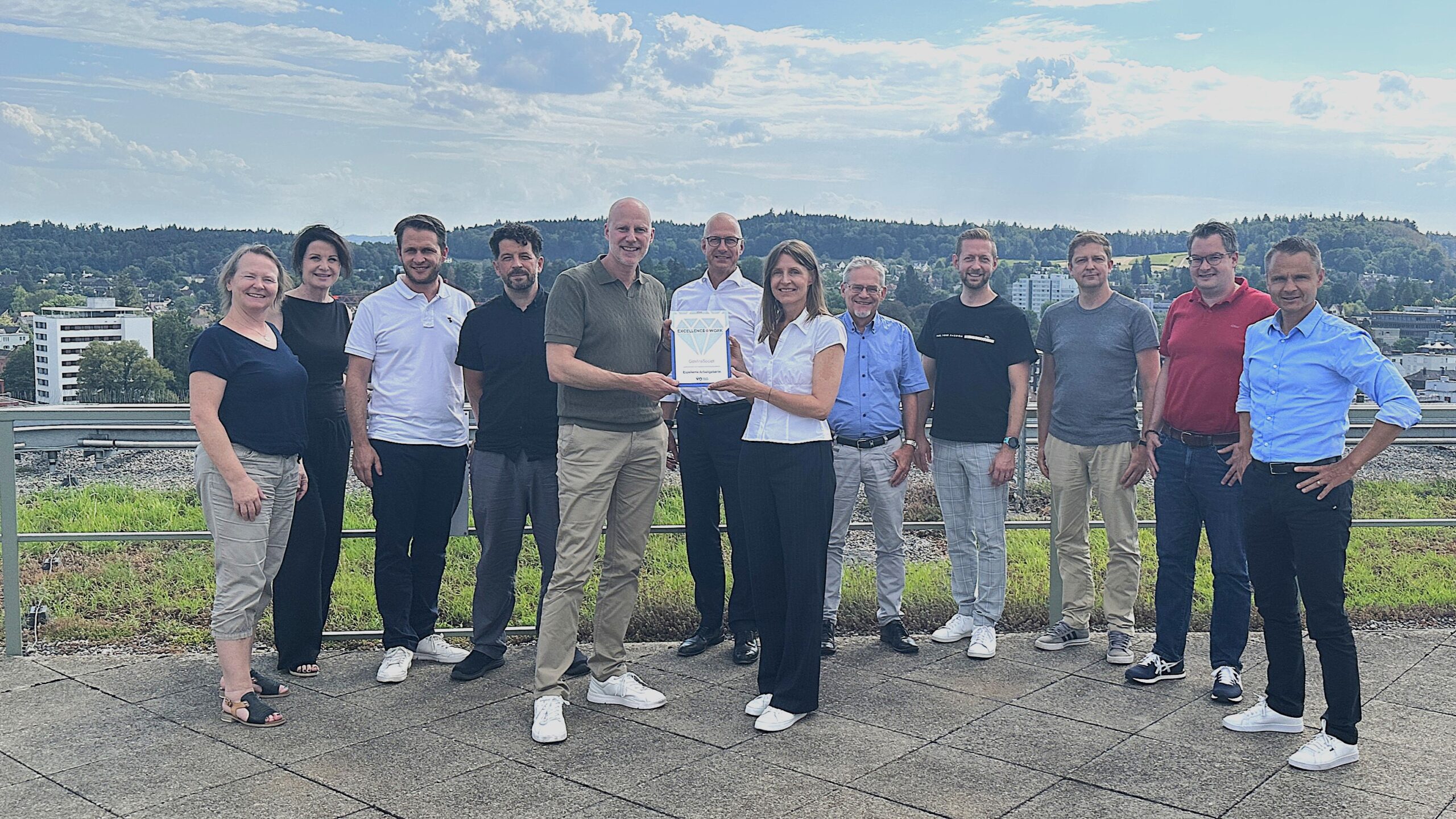
GastroSocial has received the 2026 Excellence@Work Award from ValueQuest. With a response rate of 96 percent, a motivation score of 84, and 87 percent of employees serving as brand ambassadors, the company demonstrates a strong employer culture.

Employee Survey: Raiffeisenbank Möhlin Achieves Excellent Results
August 31, 2026
Reading time: 3 min
Raiffeisenbank Möhlin is one of Switzerland's top employers and is receiving our Excellence@Work Award in recognition of this achievement. Congratulations!

Employee Surveys in Switzerland: Find Providers & Tools
August 30, 2026
Reading time: 6 min
Employee Survey in Switzerland: How Do You Find the Right Employee Survey Provider? What Really Matters When It Comes to Anonymity, Tools, Questionnaires, and Analysis.

360-Degree Feedback Questionnaire: Sample, Template, and Sample Questions
August 21, 2026
Reading time: 7 min
Table of Contents A 360-degree feedback process is only as good as its questionnaire. The questionnaire is at the heart of the entire process. It determines whether...

Employee Survey: The CAMPUS SURSEE Foundation Is Among Switzerland's Best Employers
August 5, 2026
Reading time: 2 min
ValueQuest honors particularly attractive employers in Switzerland with the Excellence@Work Award. We recently had the pleasure of presenting the award to the CAMPUS SURSEE Foundation.
Raiffeisenbank Regio Arbon, a Top Employer: Personal Responsibility as Part of a Strong Corporate Culture
July 7, 2026
Reading time: 2 min
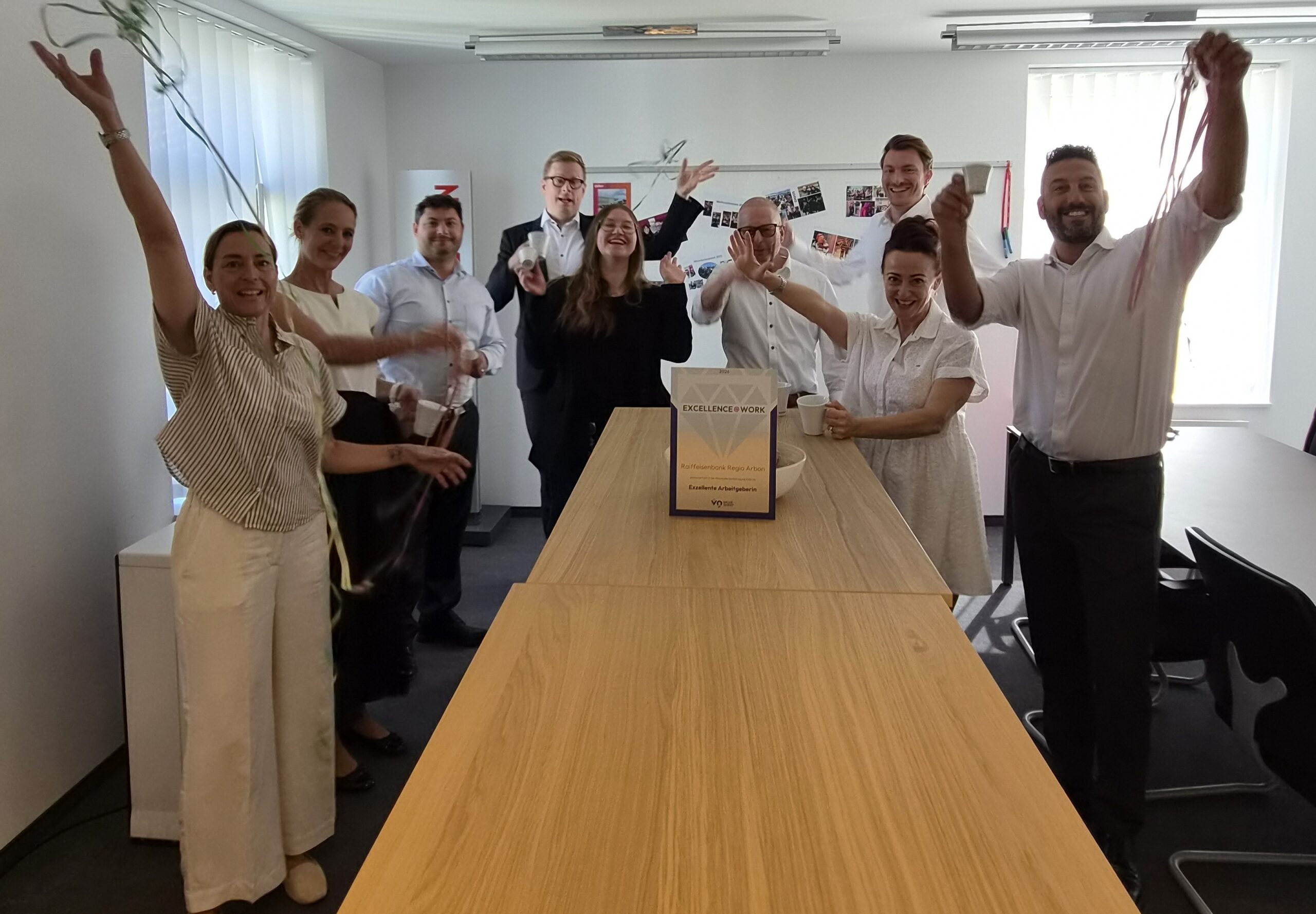
ValueQuest honors particularly attractive employers in Switzerland with the Excellence@Work Award. We recently had the pleasure of presenting the award to Raiffeisenbank Regio Arbon.