Table of contents
PROMEA, a leading pension fund and social insurance provider in Switzerland, has consistently achieved top marks in customer satisfaction for years. But how has it managed to stay so far ahead of the competition in the eyes of its customers for so long? Competition is fiercer than ever, and customer needs are becoming increasingly complex. Against this backdrop, a systematic focus on the needs of policyholders and affiliated companies is crucial.
We spoke with Ricardo Garcia, CEO of PROMEA, about how to not only measure customer satisfaction but also embody it every day and use it as a strategic compass for the company’s continued development.
Customer Satisfaction: What Does That Mean in Promea's Day-to-Day Operations?
Kathrin Neumüller: Mr. Garcia, many organizations cite customer satisfaction as a key goal. What does this term mean to you, specifically, in your day-to-day work at PROMEA? How can you tell internally that this commitment is actually being put into practice by management and among employees?
Ricardo Garcia: For us, customer satisfaction is the foundation for retaining our existing customers and attracting new ones. Internally, this is reflected less in individual metrics and more in the overall outcome of our efforts. The customer satisfaction survey and the resulting Net Promoter Score (NPS) are the most important confirmation for us that our commitment is recognized and appreciated by our customers. A very good NPS score is the ultimate sign to us that both leadership and employees have internalized the customer-centric approach and are actively putting it into practice.
Kathrin Neumüller: And beyond this purely metrics-based approach, are there specific behaviors or processes that you use to determine whether customer focus is deeply embedded in the company?
Ricardo Garcia: Absolutely. One very important aspect is how we handle complaints. We carefully analyze how we respond to critical feedback and what solutions we offer.
In addition, we receive valuable feedback from the associations whose members are insured with us. These associations often hear very directly what matters to their members. Last but not least, we regularly visit customers, and through these face-to-face interactions, we gain a very good sense of how our services are received. These qualitative insights are an indispensable complement to the quantitative data from the customer survey.
Surprising Findings from Customer Satisfaction Surveys
Kathrin Neumüller: In the customer satisfaction surveys you conducted together with ValueQuest, were there any results that surprised you or gave you particular food for thought?
Ricardo Garcia: Yes, there certainly were. One example that immediately comes to mind is the evaluation of our chatbot. Customer satisfaction with it was extremely low, which really surprised us. Although the chatbot wasn’t prominently featured on our website, we hadn’t expected such a low score. As a result, we immediately took steps to make the chatbot more visible and promoted it more actively in our communications.
Kathrin Neumüller: That’s an interesting point. Do you attribute the low acceptance rate to a general skepticism toward chatbots in Switzerland?
Ricardo Garcia: That certainly plays a role. Most people still prefer direct contact with another person, ideally without having to wait. But I also think it’s a generational issue. Younger customers tend to be more open to this. We’re also currently exploring the possibility of integrating a voice module to make the interaction feel more natural. Technological developments are advancing rapidly in this area, and we’ll be evaluating what new opportunities arise this year.
📌 Side Note: What Is Customer Satisfaction?
Customer satisfaction describes the extent to which a customer’s expectations of a product or service are met or exceeded. It is the result of a comparison between perceived performance (actual performance) and original expectations (target performance).
- Positive feedback: Performance exceeds expectations. This leads to high customer satisfaction.
- Confirmation: The service meets expectations. The customer is satisfied.
- Negative disconfirmation: Performance falls short of expectations. This leads to dissatisfaction.
Systematically measuring customer satisfaction using metrics such as the Net Promoter Score (NPS) or the Customer Satisfaction Score (CSAT) enables companies to objectively evaluate their own performance, identify areas for improvement, and strengthen customer loyalty in a targeted manner.
High customer satisfaction has been shown to correlate with greater loyalty, positive word-of-mouth, and, ultimately, a company's financial success.
The Key Factors for Ensuring Service Quality
Kathrin Neumüller: PROMEA has been achieving very high satisfaction ratings for years. Where do you currently see the most important levers for not only maintaining this high level but also specifically building on it?
Ricardo Garcia: In our latest customer survey, we included a new question that allowed customers to choose from more than ten options to indicate what matters most to them about our service. The big—and very positive—surprise was that quality was ranked first, even ahead of price.
Of course, price remains a very important factor, but quality is an even higher priority for our customers. This shows us that our focus on first-class services is the right approach. Interestingly, a recent price increase had only a marginal impact on satisfaction with our value for money, which further supports this insight.
Kathrin Neumüller: How exactly do you define quality at PROMEA?
Ricardo Garcia: In the customer survey, the customers themselves defined the most important quality characteristics. These include, above all, quick response times and high availability. For us, these are not abstract concepts, but measurable metrics.
For example, in our ERP system, we track the lead times for all processes in our mass-market business. We set clear goals in this area and can closely monitor progress over time. This ensures that we meet our own quality standards and our customers’ expectations.
Sustainability: Hype or a Relevant Factor for Customer Satisfaction?
Kathrin Neumüller: Sustainability is a topic that is the subject of intense public debate. However, the results of your customer survey show that sustainability currently plays a lesser role in your customers’ satisfaction than other factors. How do you interpret this finding?
Ricardo Garcia: I wouldn’t say that sustainability is overrated, but people’s priorities are often very pragmatic. At the end of the day, what matters most to many people is what ends up in their own wallets. Sustainability is seen as an important value, but people’s willingness to sacrifice returns or accept higher costs for it is limited. We see this in referendums in Switzerland as well: Basically, everyone is in favor of sustainability—as long as it doesn’t cost anything. This pattern is also reflected in our customer survey.
However, we have also found that the importance of sustainability among our customers has increased significantly compared to the 2023 survey. We asked the same question again, and the percentage of customers for whom sustainability is a relevant criterion has risen from around 45% to over 55%. This is a significant development. When compared to older customer surveys—such as the one conducted by AXA, where approval ratings were just over 40%—it appears that our customers attach above-average importance to this issue. This is particularly interesting given that many of our customers are industrial companies with low margins, for whom cost efficiency is paramount.
Toward Greater Customer Satisfaction: From Analysis to Concrete Implementation
Kathrin Neumüller: How do you ensure that the results of the surveys are not only analyzed but also translated into concrete decisions and priorities?
Ricardo Garcia: The results are directly incorporated into our strategic planning. We have a clearly defined process in which the insights from the customer survey are integrated into our annual strategy workshop. There, the results are presented, discussed, and used to derive concrete actions. These actions are then incorporated into the performance agreements for individual departments and employees. This ensures that the customer’s voice is not only heard but also translated into concrete action.
Kathrin Neumüller: Can you give a specific example of a situation where insights from the customer satisfaction survey led to a direct change?
Ricardo Garcia: In addition to the chatbot example mentioned earlier, we have also made adjustments in the area of communication. The customer survey showed that our clients want even more proactive and clear communication, especially regarding complex topics such as changes in the law or amendments to the investment regulations. In response, we revised our communication processes, introduced new formats such as explanatory videos, and increased the frequency of our newsletters. The feedback has been very positive.
The Role of the Net Promoter Score (NPS) as an Internal Performance Metric
Kathrin Neumüller: What role does customer satisfaction or the NPS play at PROMEA as an internal management or performance metric? Is it incorporated into management discussions or strategic deliberations?
Ricardo Garcia: NPS is a key performance indicator for us. It is an integral part of the annual strategy workshops mentioned earlier and is discussed at the highest levels. The trend in NPS is an important indicator of the success of our initiatives and directly influences the company’s strategic direction. It serves as our compass to ensure that we are on the right track and remain focused on our customers’ needs.
Transparency as the Key to External Positioning
Kathrin Neumüller: PROMEA publicizes the results of its customer satisfaction surveys very prominently, including on its website. What role do these results play in your external positioning?
Ricardo Garcia: A very important one. For us, transparent communication of results is a clear commitment to customer focus and a key differentiator in the marketplace. We want to show potential customers that we take their opinions seriously and are willing to be judged by our performance. The high satisfaction ratings are, of course, a strong selling point and help us build trust. At the same time, however, we’re also signaling that we’re not resting on our laurels, but are continuously working on improvements.
Customer Satisfaction: The Value of Independent Measurement
Kathrin Neumüller: What specific added value do you see in working with an independent institute like ValueQuest?
Ricardo Garcia: Working with ValueQuest as an external partner offers us several key advantages. First, it ensures an objective and neutral perspective. An independent market research firm isn’t blinded by its own perspective and is willing to ask tough questions when necessary.
Second, we benefit from the expertise and benchmarks that ValueQuest brings from other industries and companies. This helps us better contextualize our own results and gain new insights for our work. And third, having the assessment conducted externally enhances the credibility of the results, both internally among employees and externally among customers.
Future Challenges for Customer Satisfaction
Kathrin Neumüller: Where do you see the biggest challenges when it comes to continuing to systematically measure customer satisfaction in the future and maintaining it at a high level?
Ricardo Garcia: One of the biggest challenges is certainly the increasing individualization of customer needs. A “one-size-fits-all” approach is becoming less and less effective. We must be able to respond flexibly to different requirements without sacrificing efficiency in our mass-market business.
Another challenge is digital transformation. Today’s customers expect a seamless and intuitive digital customer journey. We must continue to invest in this area and remain innovative so as not to fall behind. Finally, it is becoming increasingly difficult to draw the right conclusions from the vast amount of data and identify the areas that truly require action. The systematic analysis and interpretation of data will therefore become even more important in the future.
Kathrin Neumüller: Mr. Garcia, thank you very much for this insightful conversation.
Post published on June 20, 2026
About Dr. Kathrin Neumüller

Dr. oec. HSG Kathrin Neumüller is Co-Managing Director at ValueQuest and an expert in employee inspiration and empowerment. She also teaches strategic management in the MBA program at the ZHAW. She holds a doctorate from the University of St. Gallen (HSG) and studied at the University of Cambridge. Learn more about Kathrin
Inspired? Then share this post via your favorite platform.
Other articles that might interest you ...

AI in the Swiss Insurance Market: What Insurers Can Learn from the Results
October 1, 2026
Reading time: 4 min
Artificial intelligence is not universally accepted in the Swiss insurance market. As a study by ValueQuest shows, customers’ openness to AI depends heavily on how it is used.

AI in the Swiss Insurance Market: Between Acceptance and Skepticism
September 28, 2026
Reading time: 5 min
For many Swiss people, artificial intelligence has become an integral part of everyday life. However, the situation is different when it comes to insurance companies.

Top Employer: Raiffeisenbank Glarnerland Impresses with Strong Leadership
September 21, 2026
Reading time: 2 min
ValueQuest recently had the honor of presenting the “Excellence@Work Award” to Raiffeisenbank Glarnerland. We extend our heartfelt congratulations.
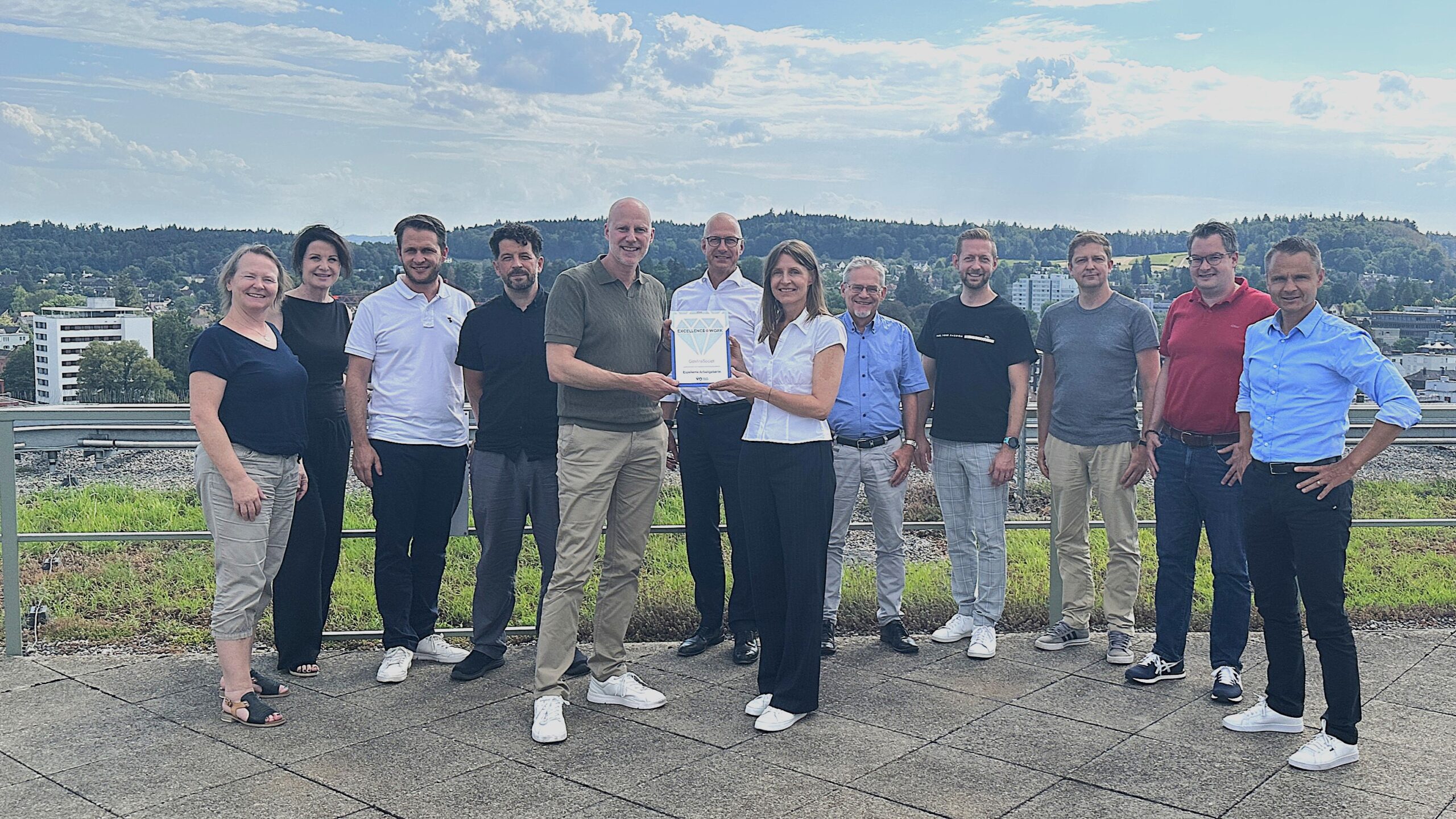
Top Swiss Employers: GastroSocial
September 9, 2026
Reading time: 3 min
GastroSocial has received the 2026 Excellence@Work Award from ValueQuest. With a response rate of 96 percent, a motivation score of 84, and 87 percent of employees serving as brand ambassadors, the company demonstrates a strong employer culture.

Employee Survey: Raiffeisenbank Möhlin Achieves Excellent Results
August 31, 2026
Reading time: 3 min
Raiffeisenbank Möhlin is one of Switzerland's top employers and is receiving our Excellence@Work Award in recognition of this achievement. Congratulations!

Employee Surveys in Switzerland: Find Providers & Tools
August 30, 2026
Reading time: 6 min
Employee Survey in Switzerland: How Do You Find the Right Employee Survey Provider? What Really Matters When It Comes to Anonymity, Tools, Questionnaires, and Analysis.

360-Degree Feedback Questionnaire: Sample, Template, and Sample Questions
August 21, 2026
Reading time: 7 min
Table of Contents A 360-degree feedback process is only as good as its questionnaire. The questionnaire is at the heart of the entire process. It determines whether...

Employee Survey: The CAMPUS SURSEE Foundation Is Among Switzerland's Best Employers
August 5, 2026
Reading time: 2 min
ValueQuest honors particularly attractive employers in Switzerland with the Excellence@Work Award. We recently had the pleasure of presenting the award to the CAMPUS SURSEE Foundation.
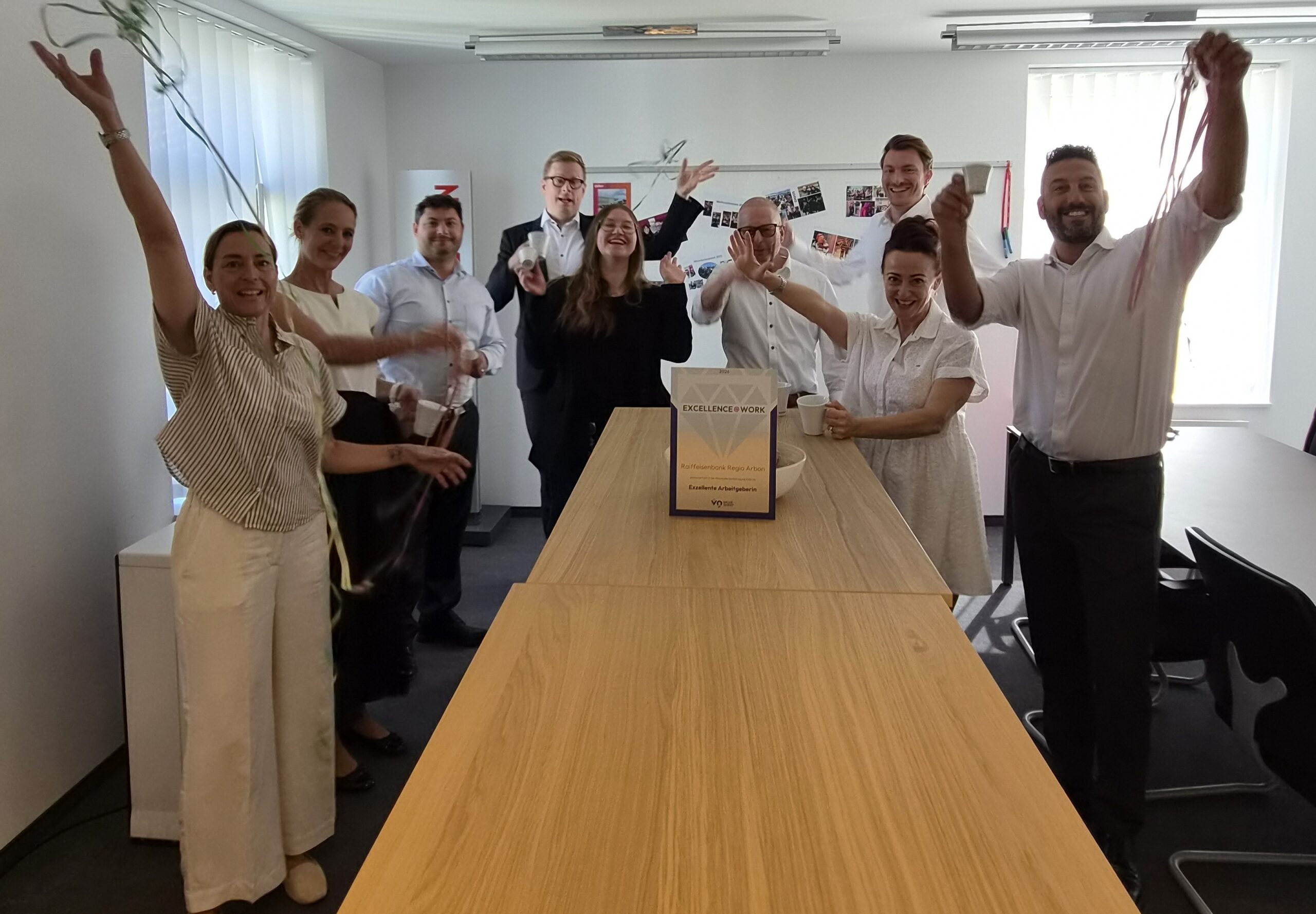
Raiffeisenbank Regio Arbon, a Top Employer: Personal Responsibility as Part of a Strong Corporate Culture
July 7, 2026
Reading time: 2 min
ValueQuest honors particularly attractive employers in Switzerland with the Excellence@Work Award. We recently had the pleasure of presenting the award to Raiffeisenbank Regio Arbon.