Why do we often react defensively—or even feel hurt—when faced with criticism? A key but frequently overlooked factor in this dynamic is the feeling of shame. Shame is a deeply human emotion that has a profound impact on our reactions and behaviors in the workplace.
This article is based on a recent webinar by ValueQuest, led by Andrea Schön, which explored the often-taboo topic of shame in the workplace and its impact on our feedback culture.
Shame: The Guardian of Human Dignity
Shame is a social emotion that exists in all cultures. The German social scientist Dr. Stephan Marks aptly describes it as the “guardian of human dignity.” It acts as an internal warning system that alerts us when our reputation, our sense of belonging, or our need to be respected as a person are at risk.
Shame often arises when people fear that they will be questioned, devalued, or humiliated as individuals. It is an emotionally risky feeling, as at its core it involves the potential loss of a part of one’s identity. Although we all experience shame, it is a highly stigmatized emotion. We rarely talk about it, and it is often confused with other feelings, such as guilt.
The Four Basic Forms of Shame
Dealing with Shame: How We React to Shame
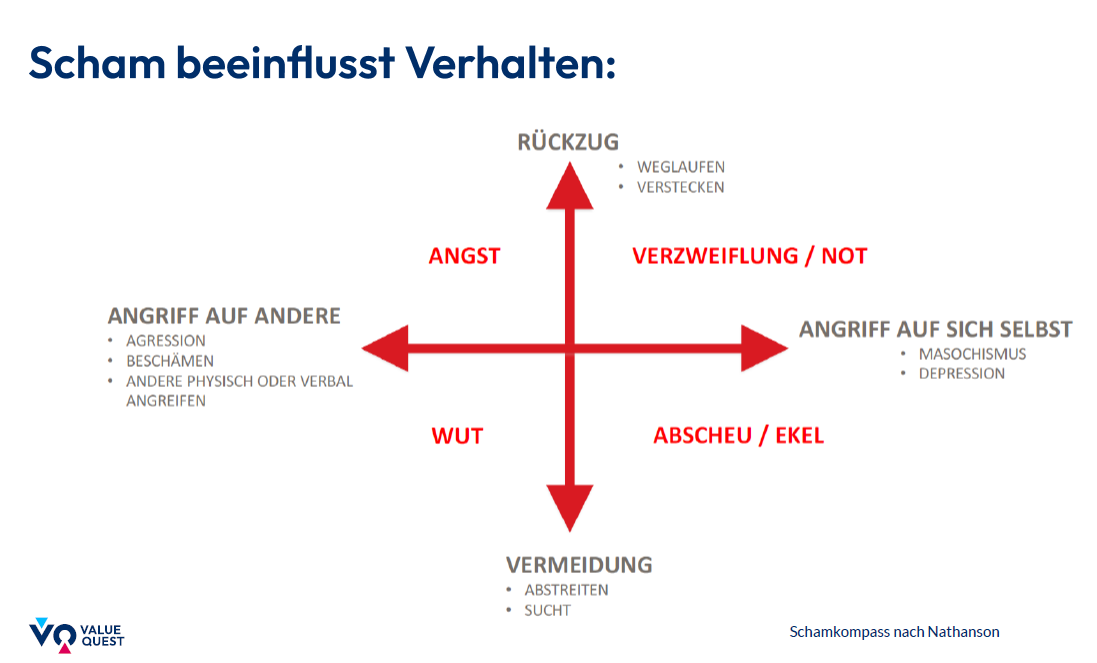
The way we experience shame is physically similar to situations of extreme stress: sweating, blushing, or turning pale are typical reactions that often intensify the feeling of shame. To ward off this painful feeling, we resort to various coping strategies:
- Withdrawal: We make ourselves small, remain silent, and try to become invisible. This is often associated with fear.
- Attacking others: We pass on that feeling by humiliating or shaming others, or by directing our anger at them.
- Attacking ourselves: excessive self-criticism, perfectionism, or self-deprecation, combined with despair and the thought, “There’s something wrong with me.”
- Avoidance: We deny the issue, brush it off, make excuses, or escape into distractions.
These defense mechanisms explain why feedback triggers such varied and often difficult reactions. What we perceive as “difficult personalities” are often people using shame as a defense mechanism.
Shame in an Organizational Context
A lot is at stake in everyday work life: recognition, a sense of belonging, competence, and status. Shame rarely manifests itself directly in this context, but rather in the form of defensive reactions such as sarcasm, justification, gossip, secrecy, or avoiding difficult conversations. Employees who are criticized for new ideas think twice before putting themselves out there again. The result is often polite rather than honest feedback.
But shame does not only have a destructive side. Marks emphasizes the constructive, development-promoting function of empathic shame. It can motivate us to reflect on and change our behavior—provided that we continue to see ourselves as valuable despite a mistake.
Creating safe spaces for honest feedback
The most effective antidote to destructive shame is empathy and a sense of security. Connection, relationships, comfort, and fairness help reduce feelings of shame. Since vulnerability is at the heart of shame, we must create an environment in which people feel safe enough to reveal themselves.
The concept of psychological safety is central here. Teams with a high level of psychological safety—where employees can ask for help, admit mistakes, and voice criticism without fear of embarrassment—have been shown to be more successful.
Managers play a crucial role as role models in this process. How do they handle their own mistakes? How do they respond to criticism? Do they ever show vulnerability? Through structured processes such as 360-degree feedback, organizations can create safe spaces. Such tools facilitate honest feedback by ensuring anonymity and provide valuable insights for development through diverse perspectives.
Conclusion: Shame in the Workplace
Emotions like shame aren’t going to disappear from our daily work lives. But if we learn to recognize them, name them, and deal with them constructively, we can harness their protective function. By removing the stigma surrounding shame and creating safe, dignified spaces, we enable honest feedback and foster the ongoing development of employees and organizations.
Post published on June 4, 2026
About Andrea Schön

Andrea Schön is an experienced project manager for employee surveys and 360-degree management feedback and has been advising and supporting ValueQuest clients for 10 years. She studied work and organizational psychology, and as a systemic coach, she is particularly interested in better uniting people and work. She has been Managing Director of ValueQuest since 2023. Find out more about Andrea
Inspired? Then share this post via your favorite platform.
Other articles that might interest you ...

AI in the Swiss Insurance Market: What Insurers Can Learn from the Results
October 1, 2026
Reading time: 4 min
Artificial intelligence is not universally accepted in the Swiss insurance market. As a study by ValueQuest shows, customers’ openness to AI depends heavily on how it is used.

AI in the Swiss Insurance Market: Between Acceptance and Skepticism
September 28, 2026
Reading time: 5 min
For many Swiss people, artificial intelligence has become an integral part of everyday life. However, the situation is different when it comes to insurance companies.
Top Employer: Raiffeisenbank Glarnerland Impresses with Strong Leadership
September 21, 2026
Reading time: 2 min
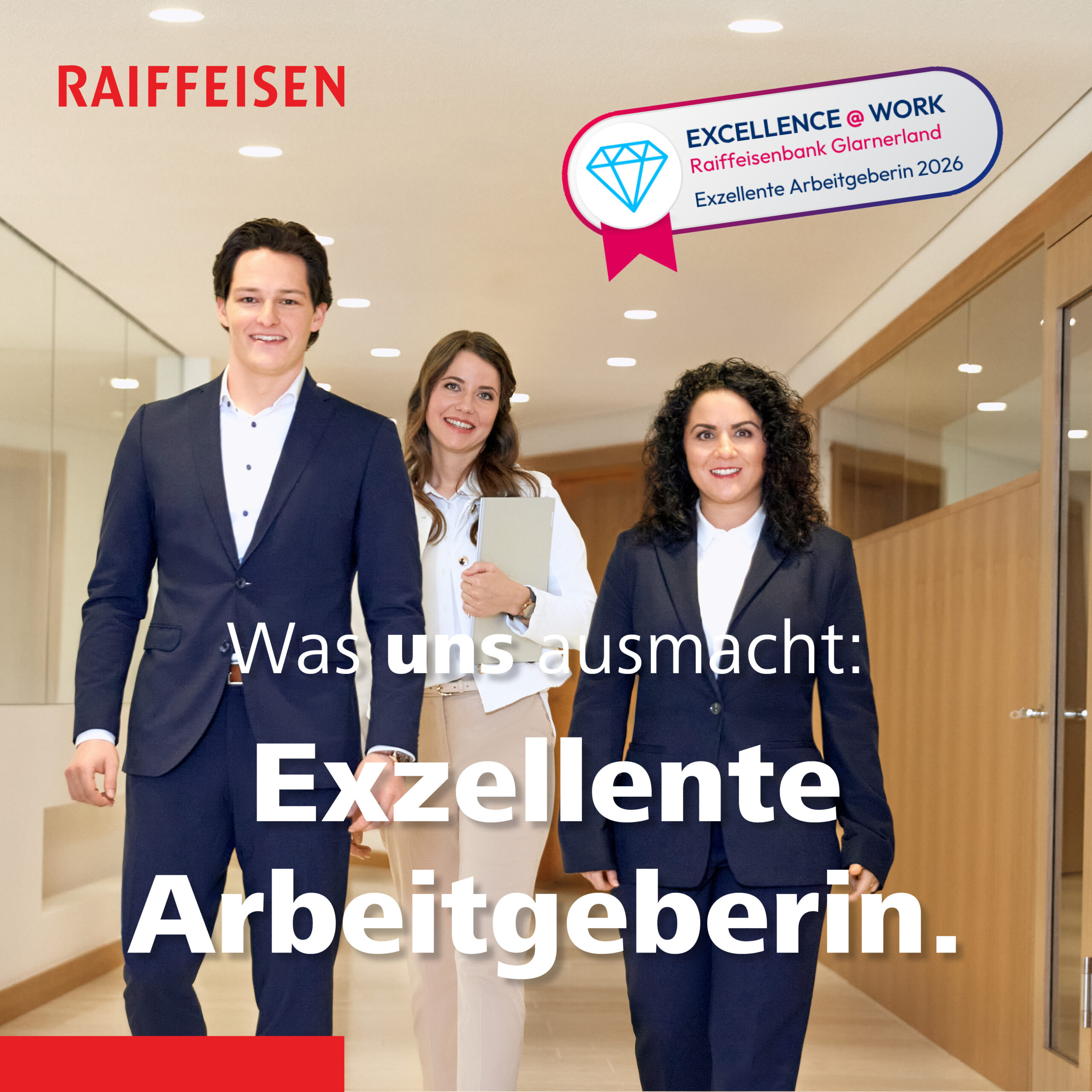
ValueQuest recently had the honor of presenting the “Excellence@Work Award” to Raiffeisenbank Glarnerland. We extend our heartfelt congratulations.
Top Swiss Employers: GastroSocial
September 9, 2026
Reading time: 3 min
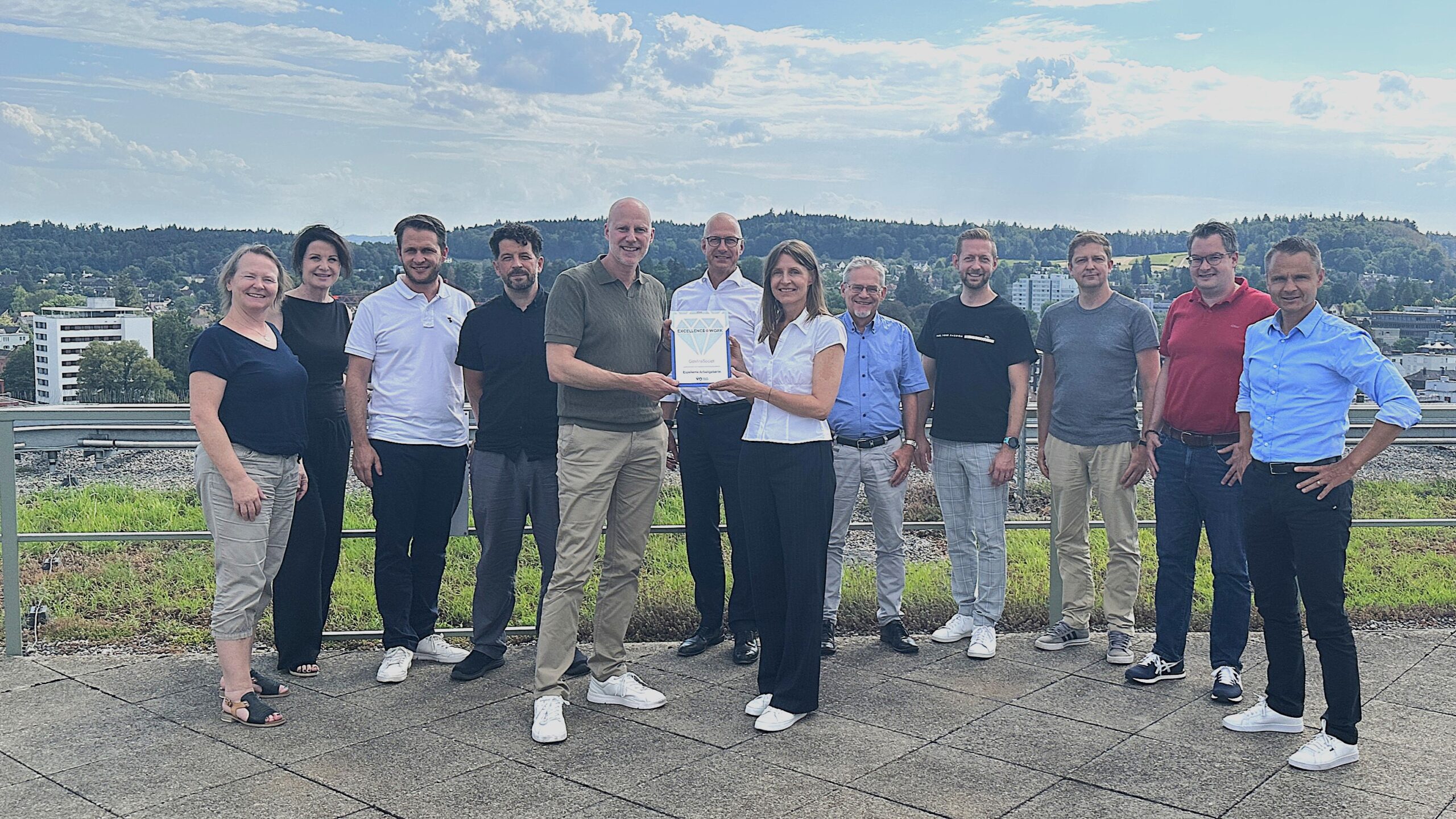
GastroSocial has received the 2026 Excellence@Work Award from ValueQuest. With a response rate of 96 percent, a motivation score of 84, and 87 percent of employees serving as brand ambassadors, the company demonstrates a strong employer culture.

Employee Survey: Raiffeisenbank Möhlin Achieves Excellent Results
August 31, 2026
Reading time: 3 min
Raiffeisenbank Möhlin is one of Switzerland's top employers and is receiving our Excellence@Work Award in recognition of this achievement. Congratulations!

Employee Surveys in Switzerland: Find Providers & Tools
August 30, 2026
Reading time: 6 min
Employee Survey in Switzerland: How Do You Find the Right Employee Survey Provider? What Really Matters When It Comes to Anonymity, Tools, Questionnaires, and Analysis.

360-Degree Feedback Questionnaire: Sample, Template, and Sample Questions
August 21, 2026
Reading time: 7 min
Table of Contents A 360-degree feedback process is only as good as its questionnaire. The questionnaire is at the heart of the entire process. It determines whether...
Employee Survey: The CAMPUS SURSEE Foundation Is Among Switzerland's Best Employers
August 5, 2026
Reading time: 2 min
ValueQuest honors particularly attractive employers in Switzerland with the Excellence@Work Award. We recently had the pleasure of presenting the award to the CAMPUS SURSEE Foundation.
Raiffeisenbank Regio Arbon, a Top Employer: Personal Responsibility as Part of a Strong Corporate Culture
July 7, 2026
Reading time: 2 min
ValueQuest honors particularly attractive employers in Switzerland with the Excellence@Work Award. We recently had the pleasure of presenting the award to Raiffeisenbank Regio Arbon.