
Table of contents
A customer survey will only yield useful results if the questionnaire is clearly structured and designed to achieve a specific goal. Many customer surveys fail not because of how they are conducted, but because the questions are too broadly worded or lead to unclear insights.
So before you launch your customer survey, it’s worth taking a step back. First, determine the key questions you want to answer with your survey. Is it about customer satisfaction, customer loyalty, or specific weaknesses in your offering?
Typical objectives of a customer survey include:
- Measuring customer satisfaction
- Understanding customers' willingness to recommend
- Identifying the causes of customer churn
- Receive feedback on products or services
If you clearly define the objective, the questionnaire will automatically become more precise. Your customer survey will be easier to understand and, at the same time, more meaningful, thereby gaining strategic significance.
Customer Survey: How the Questionnaire Should Be Structured
A well-structured questionnaire follows a clear logic. This structure not only helps you analyze the results, but also ensures that your customers can answer the survey intuitively.
Start with the overall rating
The customer survey always begins with an overall assessment. This first question gives you a general overview before delving into specific aspects.
Sample questions:
- “Overall, how satisfied are you with our collaboration?”
- “How likely are you to recommend us to others?”
These questions may seem simple, but they provide a key metric for your entire customer survey.
Topics covered in the main section of the questionnaire
The main section delves into specific service areas in greater detail. This reveals where your company excels from the customer’s perspective and where there is room for improvement. Typical topics in a customer survey include:
- Quality of products or services
- Consulting and Support
- Reliability and on-time delivery
- Communication and Availability
- Value for money
It is important that each question is clearly worded and focuses on a specific aspect. As soon as multiple topics and aspects are mixed together in a single question, the results lose their significance. This can even confuse the customer, causing them to abandon the survey.
Open-ended questions for further insights
At the end of the customer survey, you should give your customers space to provide their own feedback. Open-ended questions often yield exactly the insights that are missing from standardized questionnaire templates.
Examples:
- “What do you particularly appreciate about working with us?”
- “Where do you see the greatest need for improvement?”
- “What exactly should we change?”
These responses are often particularly valuable because they reveal connections that aren't captured in scaled questions.
Common Mistakes in Customer Surveys and How to Avoid Them
Many customer surveys provide little value, even though they were conducted at great expense. The reason often lies in the way the questions are worded. Four mistakes are particularly common.
Leading questions skew results
Leading questions subconsciously steer the answer in a certain direction. This results in a distorted picture. Examples:
- “How much do you value our expert customer service?”
- “How satisfied are you with our excellent selection?”
To put it neutrally:
- “How would you rate our customer service?”
- “How would you rate our offer?”
The rating should always be included in the response options, not in the question.
Double questions lead to unclear results
If you combine two aspects in a single question, you won't know later which part was evaluated.
Example:
- “How satisfied are you with the quality and price?”
Better:
- “How satisfied are you with the quality?”
- “How would you rate the value for money?”
Unclear questions lead to differing interpretations
Questions without a clear context are interpreted differently by customers. This makes it difficult to analyze the results. Example:
- “How satisfied are you with us?”
Better:
- “How satisfied are you with our collaboration over the past year?”
A good question always specifies the context and time frame.
Unnecessary questions make the questionnaire longer
Many survey templates include questions that serve no specific purpose. These questions reduce participation rates and response rates and offer little added value.
Typical examples:
- Information already available in the CRM
- Questions not related to specific measures
- Questions that will not be analyzed later
If you can’t draw a conclusion from a response, the question doesn’t belong in the customer survey. Think in advance about how you would interpret different responses and what strategic implications those responses would have.

Sample questions for your questionnaire
The following sample customer survey questions illustrate typical content. They are intended to serve as a guide for your own questionnaire.
A good questionnaire doesn't simply copy and paste questionnaire templates; instead, it adapts them to your specific situation.
Overall satisfaction and loyalty
- “Overall, how satisfied are you with our collaboration?”
- “How likely are you to recommend us to others?”
- “How has your satisfaction changed compared to last year?”
Product and Service Quality
- “How well does our offering meet your needs?”
- “How would you rate the value for money?”
- “How satisfied are you with the reliability?”
- “How would you rate the quality of our services?”
Consulting and Support
- “How competent do you find your contacts?”
- “How well do you feel supported?”
- “How proactively are you kept informed?”
- “How well do we understand your needs?”
Communication and Availability
- “How easy is it to reach us?”
- “How clear is our communication?”
- “How quickly are your inquiries answered?”
- “How well informed are you about the status?”
These questions are usually asked on a scale of 1 to 6 or 1 to 5. 5 is usually the highest rating (e.g., very satisfied), while 1 is the lowest (very dissatisfied).
Open questions
- “What do you particularly appreciate about working together?”
- “Where do you see room for improvement?”
- “What exactly should we change?”
- “What would it take for you to recommend us to others?”
Why it makes sense to use a professional provider for customer surveys
Developing a professional questionnaire requires experience. Many in-house customer surveys suffer from similar shortcomings, such as unclear questions or a lack of structure. An experienced Swiss provider of customer surveys offers two key advantages:
- methodological rigor in the design of the questionnaire
- Comparative data from other customer surveys in Switzerland
These benchmark figures will help you properly interpret your results and target specific areas for improvement. As the market leader in customer surveys, ValueQuest has been supporting companies in Switzerland for over 20 years with customer surveys and feedback initiatives—from questionnaire development to data analysis.
Sample Questionnaire for Customer Surveys in Switzerland
Many companies are looking for survey templates for their customer surveys. While these can be a good starting point, they are no substitute for tailoring the survey to your specific industry. The relevant topics vary significantly depending on the industry.
Typical focus areas of a customer survey by industry
Financial Services Providers and Insurance Companies
- Trust
- Transparency
- Quality of counseling
Industry and B2B
- On-time delivery
- technical support
- consistent quality
Retail and E-commerce
- Shopping experience
- Delivery
- Returns Process
Healthcare
- Quality of care
- Waiting times
- personalized support
IT and Software
- Stability
- Support
- Introduction
In addition to the industry, two factors play a particularly important role in Switzerland: multilingualism and the high value placed on personalized service. These aspects should be taken into account in every customer survey.

What Matters in a Customer Survey in Switzerland
A good questionnaire doesn't just happen by chance. It is based on clear decisions and a thorough understanding of the target audience.
Select relevant topics
Only ask about topics you can actually do something about. Anything else will lead to expectations you won’t be able to meet later on.
Use clear and understandable language
Avoid jargon. Your customers should be able to understand every question right away, without needing any further explanation.
Customize the questionnaire
Standardized questionnaire templates are often too general. It is crucial that you add industry-specific topics and tailor your questionnaire accordingly.
One aspect that is often underestimated is the timing of the customer survey. A survey conducted immediately after a project yields different results than one conducted several months later. It is important to maintain consistency in your approach.
Post published on May 27, 2026
About Melanie Wollschläger

Melanie Wollschläger is a Senior Partner at ValueQuest. A sociology graduate (University of Leipzig), she has been assisting companies with employee surveys, customer feedback, and multi-client studies since 2010. She heads the Customer & Market division and oversees large-scale market studies.
Inspired? Then share this post via your favorite platform.
Other articles that might interest you ...

AI in the Swiss Insurance Market: What Insurers Can Learn from the Results
October 1, 2026
Reading time: 4 min
Artificial intelligence is not universally accepted in the Swiss insurance market. As a study by ValueQuest shows, customers’ openness to AI depends heavily on how it is used.

AI in the Swiss Insurance Market: Between Acceptance and Skepticism
September 28, 2026
Reading time: 5 min
For many Swiss people, artificial intelligence has become an integral part of everyday life. However, the situation is different when it comes to insurance companies.

Top Employer: Raiffeisenbank Glarnerland Impresses with Strong Leadership
September 21, 2026
Reading time: 2 min
ValueQuest recently had the honor of presenting the “Excellence@Work Award” to Raiffeisenbank Glarnerland. We extend our heartfelt congratulations.
Top Swiss Employers: GastroSocial
September 9, 2026
Reading time: 3 min
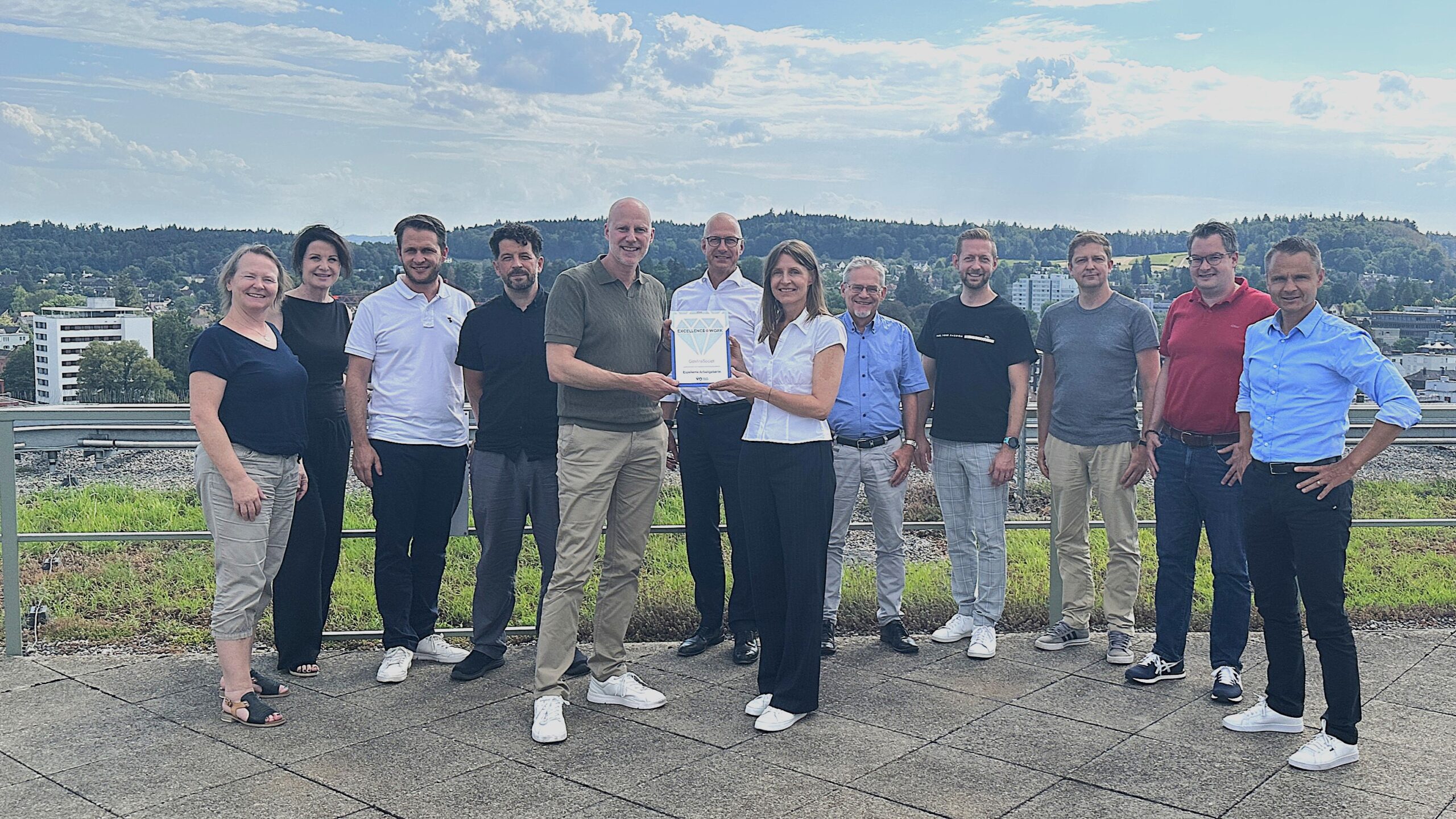
GastroSocial has received the 2026 Excellence@Work Award from ValueQuest. With a response rate of 96 percent, a motivation score of 84, and 87 percent of employees serving as brand ambassadors, the company demonstrates a strong employer culture.

Employee Survey: Raiffeisenbank Möhlin Achieves Excellent Results
August 31, 2026
Reading time: 3 min
Raiffeisenbank Möhlin is one of Switzerland's top employers and is receiving our Excellence@Work Award in recognition of this achievement. Congratulations!

Employee Surveys in Switzerland: Find Providers & Tools
August 30, 2026
Reading time: 6 min
Employee Survey in Switzerland: How Do You Find the Right Employee Survey Provider? What Really Matters When It Comes to Anonymity, Tools, Questionnaires, and Analysis.

360-Degree Feedback Questionnaire: Sample, Template, and Sample Questions
August 21, 2026
Reading time: 7 min
Table of Contents A 360-degree feedback process is only as good as its questionnaire. The questionnaire is at the heart of the entire process. It determines whether...

Employee Survey: The CAMPUS SURSEE Foundation Is Among Switzerland's Best Employers
August 5, 2026
Reading time: 2 min
ValueQuest honors particularly attractive employers in Switzerland with the Excellence@Work Award. We recently had the pleasure of presenting the award to the CAMPUS SURSEE Foundation.
Raiffeisenbank Regio Arbon, a Top Employer: Personal Responsibility as Part of a Strong Corporate Culture
July 7, 2026
Reading time: 2 min
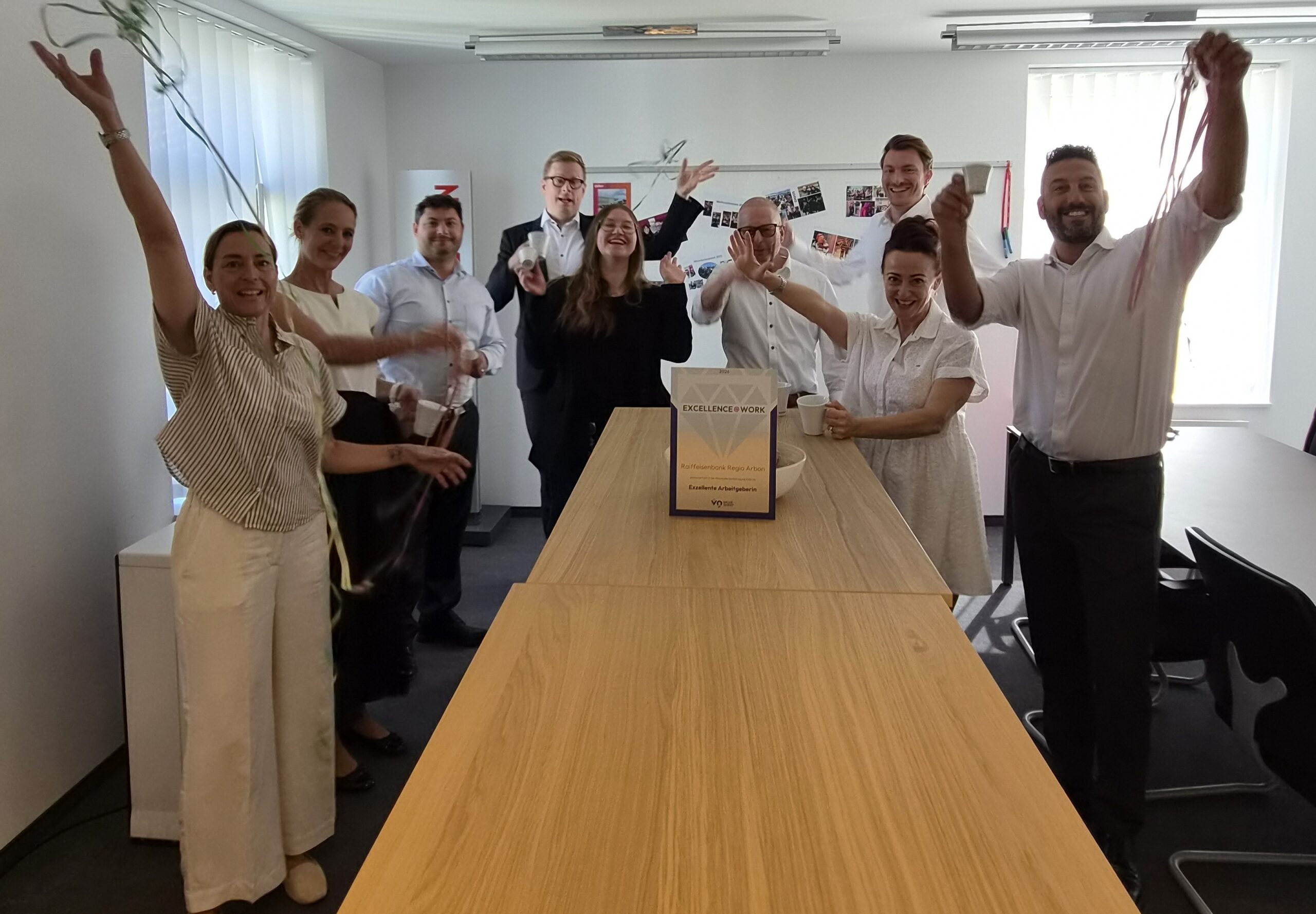
ValueQuest honors particularly attractive employers in Switzerland with the Excellence@Work Award. We recently had the pleasure of presenting the award to Raiffeisenbank Regio Arbon.
