Table of contents
Our new pension fund study, "Pension Fund Solutions 2026," provides answers for pension fund advisors, brokers, and financial service providers. Our study shows that while there is generally trust in pension funds, there are significant gaps in people’s knowledge about their own retirement planning.
Advisors who fully understand the concerns, knowledge gaps, and needs of policyholders can build long-term, trusting client relationships through targeted education and transparent communication.
The study was prepared by Melanie Wollschläger (Head of Pension Fund Solutions) and Gabriel Martin.
Please contact me directly if you would like to receive a free copy of our latest Swiss Pension Fund Study 2026.
- Melanie Wollschläger
Company-sponsored pension plans dominate
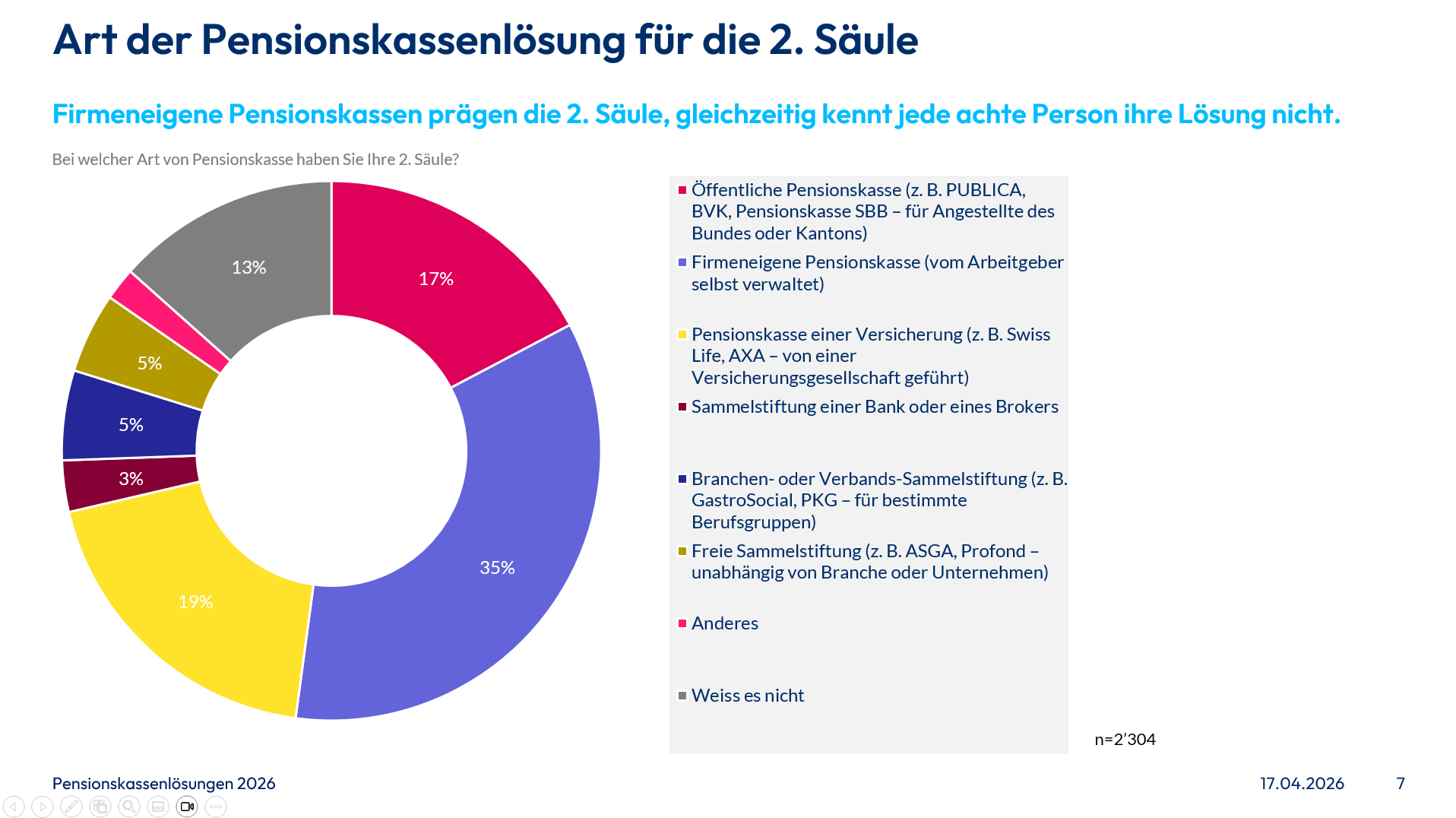
When it comes to pension fund solutions, the Swiss pension landscape is diverse: the second pillar is primarily made up of company-sponsored pension funds.
- About 35 percent of respondents are insured through such a health insurance plan.
- Next on the list are pension funds operated by insurance companies (19 percent) and public pension funds (17 percent).
- However, one in eight people (13 percent) do not know which pension fund manages their 2nd pillar / pension plan.
For pension fund advisors, this means that a significant number of potential or existing clients are heading toward retirement without a clear plan.
Pension Fund: Knowledge about the Second Pillar Is Unevenly Distributed
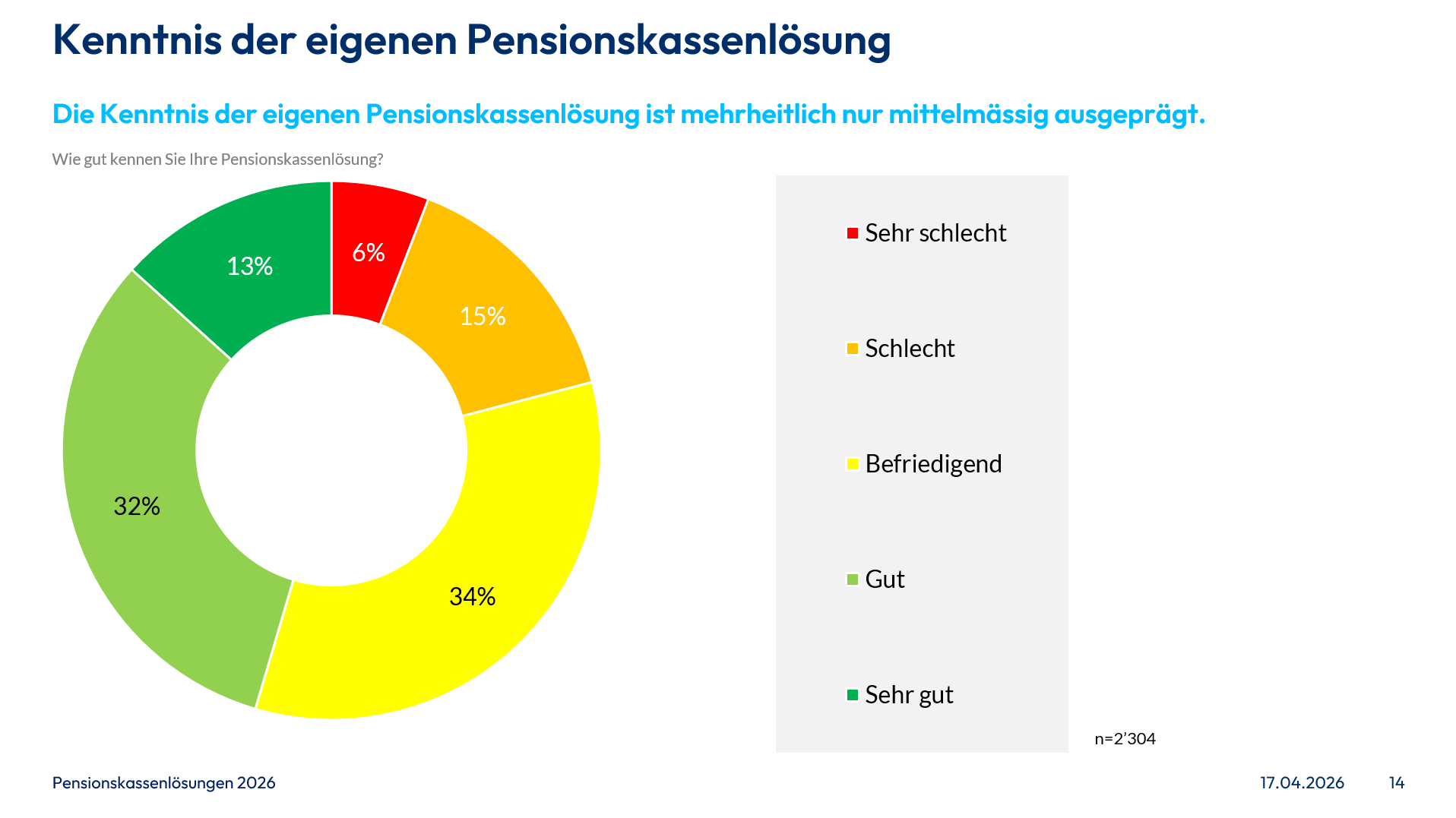
Our pension fund study shows that knowledge of one’s own pension plan depends heavily on sociodemographic factors. The majority of insured individuals rate their own knowledge as average: only 45 percent say they have a good or very good understanding of their pension plan. Twenty-one percent rate their knowledge as poor or even very poor.
- Gender: Men rate their knowledge of pension funds and occupational retirement plans significantly higher than women. While men achieve an average score of 3.5 (on a scale of 1 to 5), women have an average score of 3.1. As many as 17 percent of women are unaware of their pension plan, compared to just 10 percent of men. Female policyholders are therefore a target group with a particularly high need for education and correspondingly high potential for advisory services.
- Age: As people get older, their understanding of the second pillar—or the pension fund—increases. Those aged 18 to 29 rate their knowledge at 3.2, while those over 60 rate it at 3.6.
- Education and income: This is where the strongest effects are evident. Individuals with only a compulsory primary school education (3.1) or an income below 4,000 francs (2.9) exhibit significant gaps in their knowledge. Among college graduates (3.5) and those with incomes over 12,000 francs (3.6), understanding of pension funds and occupational retirement plans is significantly higher. A closer look at income reveals that in the lowest income bracket (up to CHF 4,000), as many as 29 percent do not know where their 2nd pillar is managed. In contrast, among those with incomes over CHF 12,000, the figure is only 4 percent. Furthermore, company-owned pension funds are significantly more prevalent among the highest earners (36 percent) than among the lowest earners (26 percent).
- Housing situation: Homeowners are significantly more familiar with their pension fund (3.7) than renters (3.1).
Tip for pension fund advisors: The main problem facing the industry isn’t mistrust, but rather a limited understanding of their own solutions. Standardized information about pension funds is often insufficient. Especially when it comes to younger, lower-income groups and those less interested in retirement planning, clear, target-audience-specific communication is the most effective strategy.
Please contact me directly if you would like to receive a copy of our latest Swiss Pension Fund Study 2026.
- Melanie Wollschläger
Confidence in the pension fund is high
How do Swiss citizens rate their pension funds? Our pension fund study paints a nuanced picture.
- High level of trust in leadership: Trust in the pension fund’s fair and competent leadership is comparatively high at 56 percent (top-2 ratings of 5 and 6)—the highest score across all four evaluation dimensions. Only 14 percent of respondents disagree with this statement (ratings of 1 and 2 on the scale).
- Comprehensibility of the pension statement: Just under half of respondents (48 percent) find the pension statement easy to understand. However, men and higher-income earners understand the statement significantly better than women and lower-income earners. As many as 19 percent find the statement difficult to understand (scores of 1 and 2).
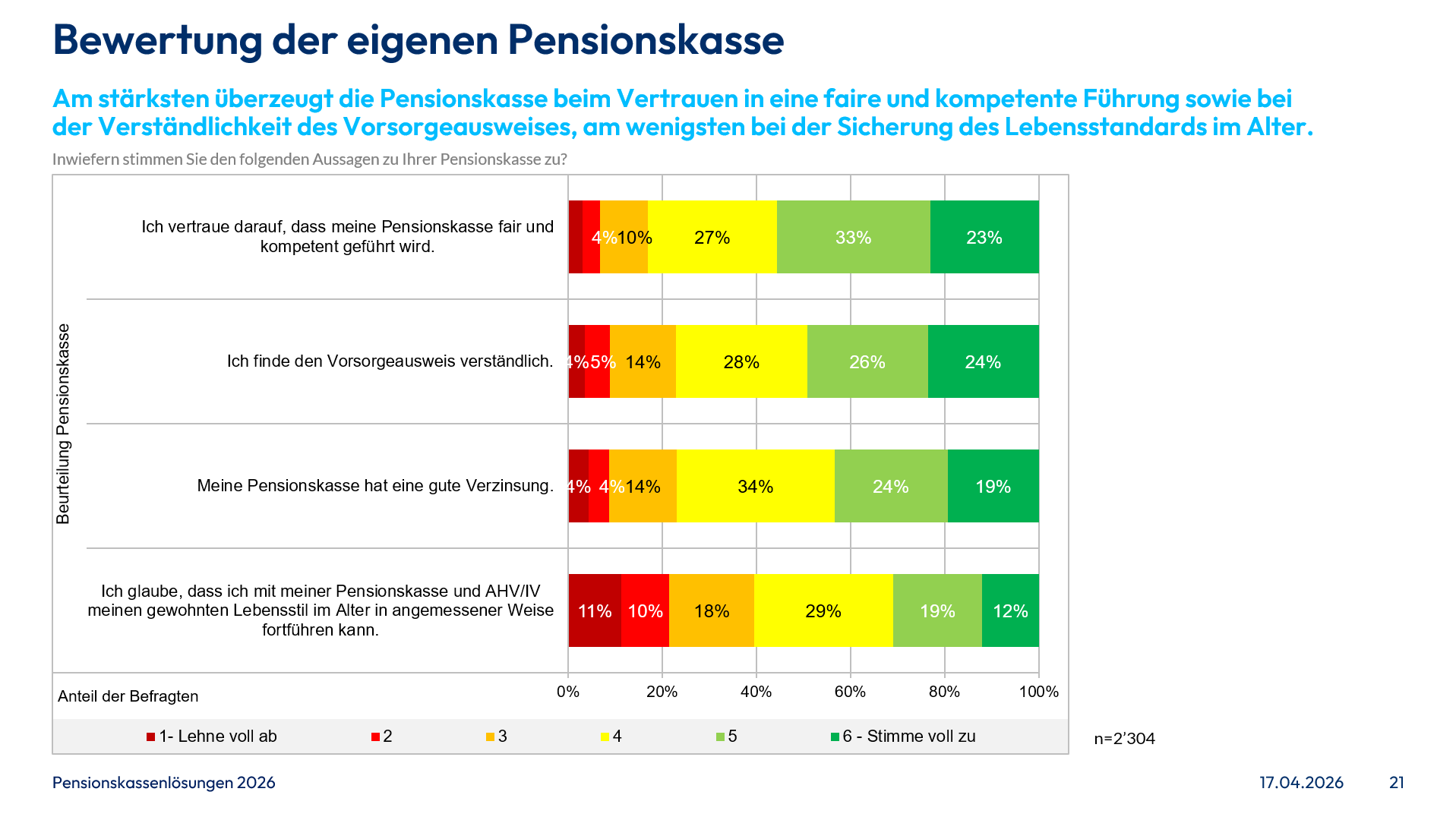
- A critical view of returns: Returns are already viewed more critically (43 percent agree). Here, the proportion of undecided respondents (score 4) is highest at 34 percent, indicating significant uncertainty in assessing returns.
- Concerns about standard of living: The real sticking point with the 2nd pillar is maintaining one’s standard of living in old age. Only 31 percent of respondents in our study believe that their pension fund and AHV/IV will allow them to continue their accustomed lifestyle in a reasonable manner. There is therefore doubt about the future security of the pension solution. This is the only statement where the rejection rate (scores 1 and 2) is relatively high at 21 percent, and the approval rate (scores 5 and 6) is the lowest at 31 percent.
Pension funds are therefore perceived more as fair than as a guarantee of a worry-free retirement. Even in cases where a pension fund is considered to be managed competently, there remains a concern that the retirement savings will ultimately be insufficient.
Pension Plans in Switzerland Under Scrutiny
Concerns about living standards in old age are not evenly distributed. Our study of pension funds also reveals significant social disparities in this area.
- Women are significantly more pessimistic: only 26 percent of women believe their standard of living is secure, compared to 37 percent of men. This may be due, among other things, to the fact that women in Switzerland withdraw only half as much money from their pension funds as men.
- Regional differences: French-speaking Switzerland (24 percent) is significantly more pessimistic than German-speaking Switzerland (34 percent).
- The income effect: Among those earning less than 4,000 francs, only 19 percent believe they have adequate retirement savings; among those earning more than 12,000 francs, the figure is 40 percent.
This disconnect between trust in the pension fund and concerns about one’s own financial future is the central conflict that advisors should address through personalized retirement planning analyses.
Methodology: For this study, a total of 2,304 online interviews were conducted between February and April 2026 with residents of Switzerland. The sample allows for a detailed analysis by age group, gender, region, education level, income, and housing situation.
Post published on April 22, 2026
About Melanie Wollschläger

Melanie Wollschläger is a Senior Partner at ValueQuest. A sociology graduate (University of Leipzig), she has been assisting companies with employee surveys, customer feedback, and multi-client studies since 2010. She heads the Customer & Market division and oversees large-scale market studies.
Inspired? Then share this post via your favorite platform.
Other articles that might interest you ...

AI in the Swiss Insurance Market: What Insurers Can Learn from the Results
October 1, 2026
Reading time: 4 min
Artificial intelligence is not universally accepted in the Swiss insurance market. As a study by ValueQuest shows, customers’ openness to AI depends heavily on how it is used.

AI in the Swiss Insurance Market: Between Acceptance and Skepticism
September 28, 2026
Reading time: 5 min
For many Swiss people, artificial intelligence has become an integral part of everyday life. However, the situation is different when it comes to insurance companies.
Top Employer: Raiffeisenbank Glarnerland Impresses with Strong Leadership
September 21, 2026
Reading time: 2 min
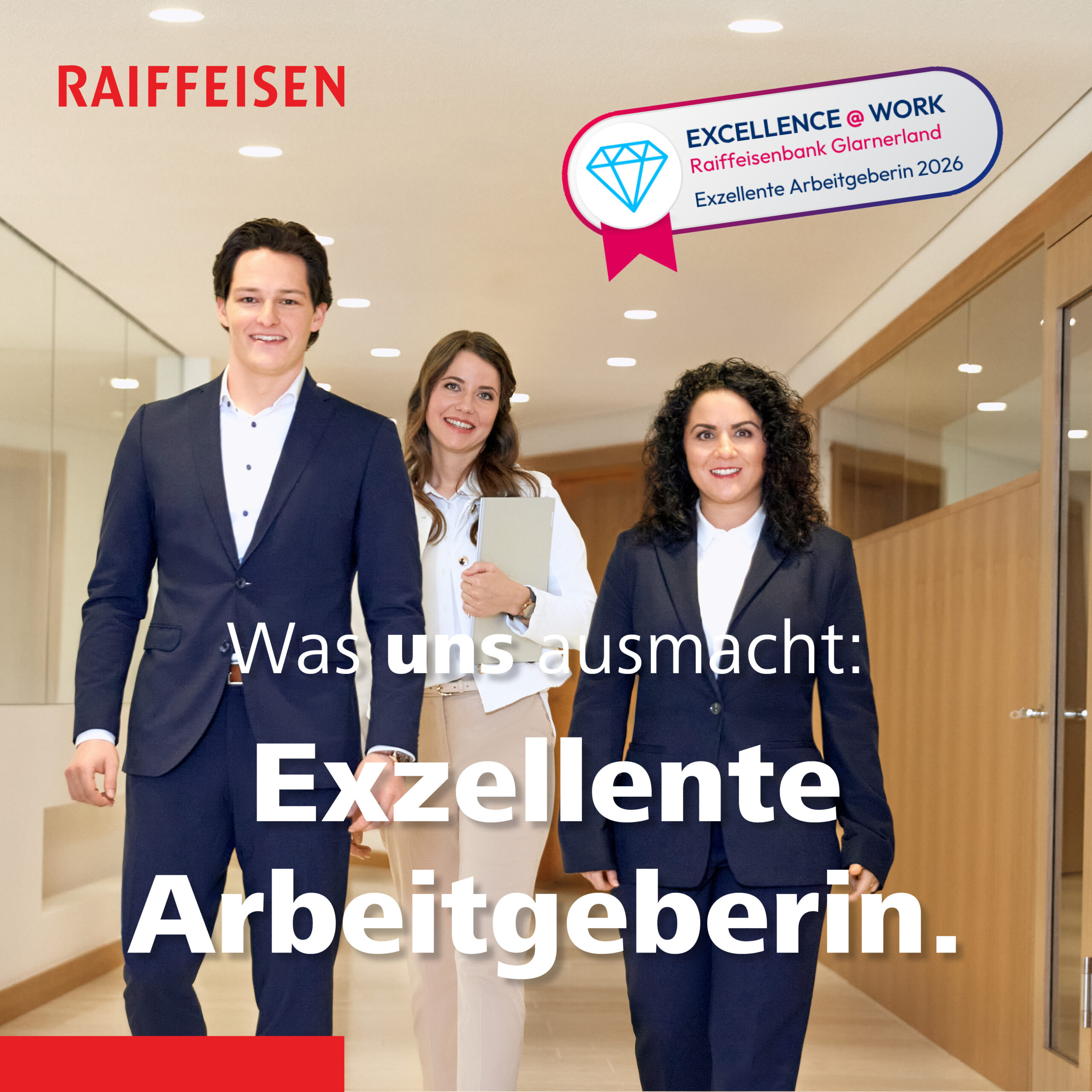
ValueQuest recently had the honor of presenting the “Excellence@Work Award” to Raiffeisenbank Glarnerland. We extend our heartfelt congratulations.
Top Swiss Employers: GastroSocial
September 9, 2026
Reading time: 3 min
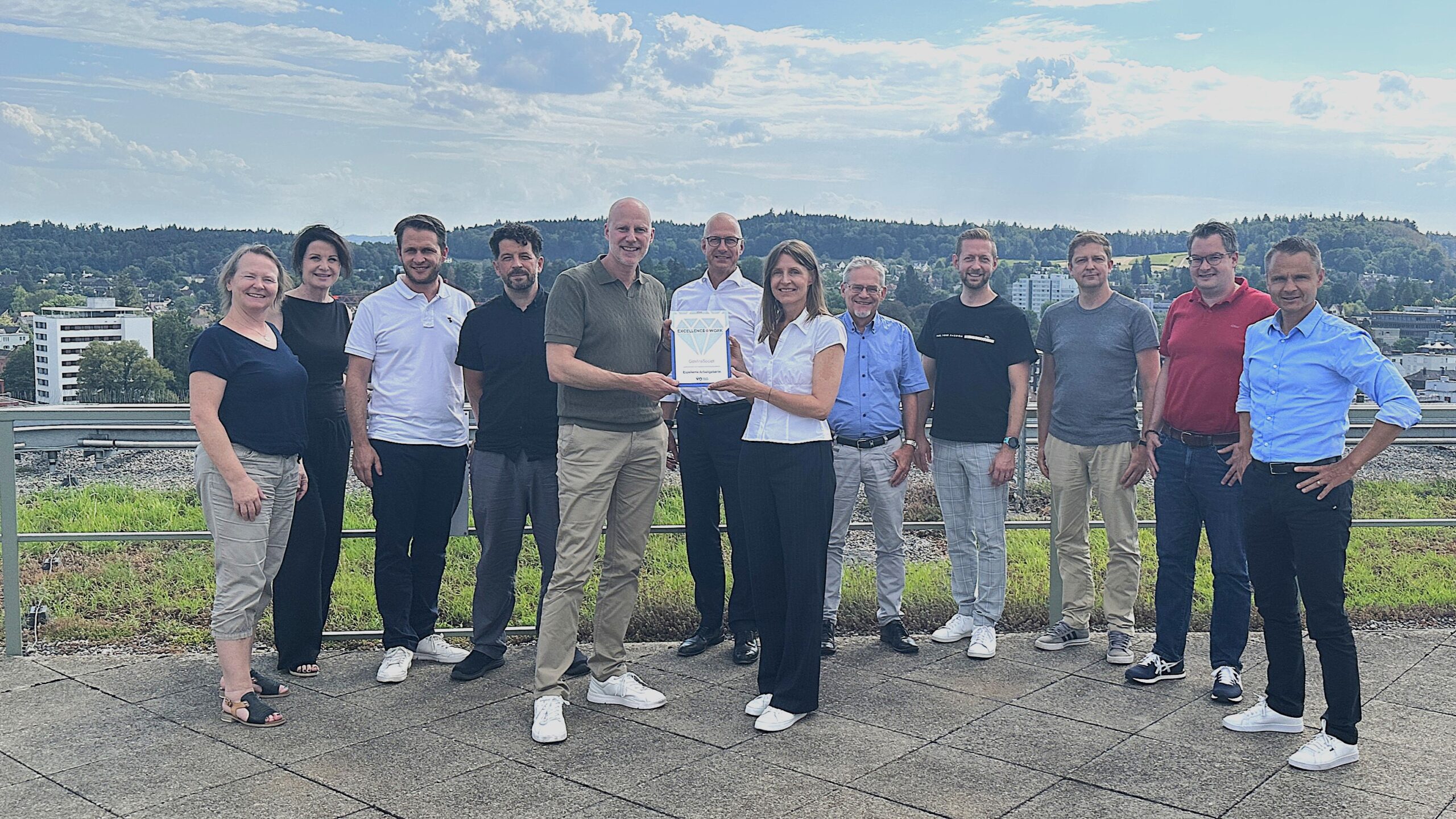
GastroSocial has received the 2026 Excellence@Work Award from ValueQuest. With a response rate of 96 percent, a motivation score of 84, and 87 percent of employees serving as brand ambassadors, the company demonstrates a strong employer culture.

Employee Survey: Raiffeisenbank Möhlin Achieves Excellent Results
August 31, 2026
Reading time: 3 min
Raiffeisenbank Möhlin is one of Switzerland's top employers and is receiving our Excellence@Work Award in recognition of this achievement. Congratulations!

Employee Surveys in Switzerland: Find Providers & Tools
August 30, 2026
Reading time: 6 min
Employee Survey in Switzerland: How Do You Find the Right Employee Survey Provider? What Really Matters When It Comes to Anonymity, Tools, Questionnaires, and Analysis.

360-Degree Feedback Questionnaire: Sample, Template, and Sample Questions
August 21, 2026
Reading time: 7 min
Table of Contents A 360-degree feedback process is only as good as its questionnaire. The questionnaire is at the heart of the entire process. It determines whether...
Employee Survey: The CAMPUS SURSEE Foundation Is Among Switzerland's Best Employers
August 5, 2026
Reading time: 2 min
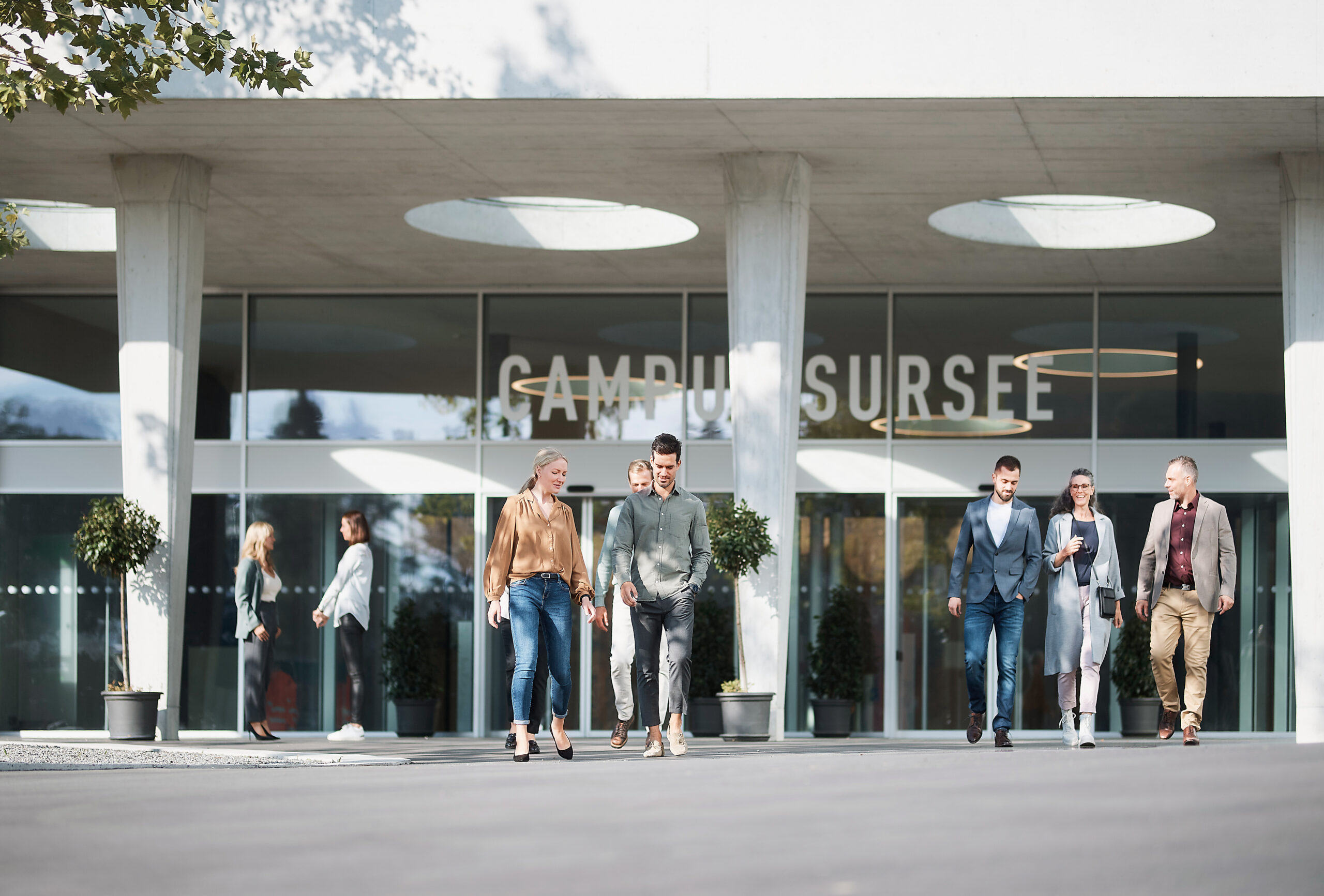
ValueQuest honors particularly attractive employers in Switzerland with the Excellence@Work Award. We recently had the pleasure of presenting the award to the CAMPUS SURSEE Foundation.
Raiffeisenbank Regio Arbon, a Top Employer: Personal Responsibility as Part of a Strong Corporate Culture
July 7, 2026
Reading time: 2 min
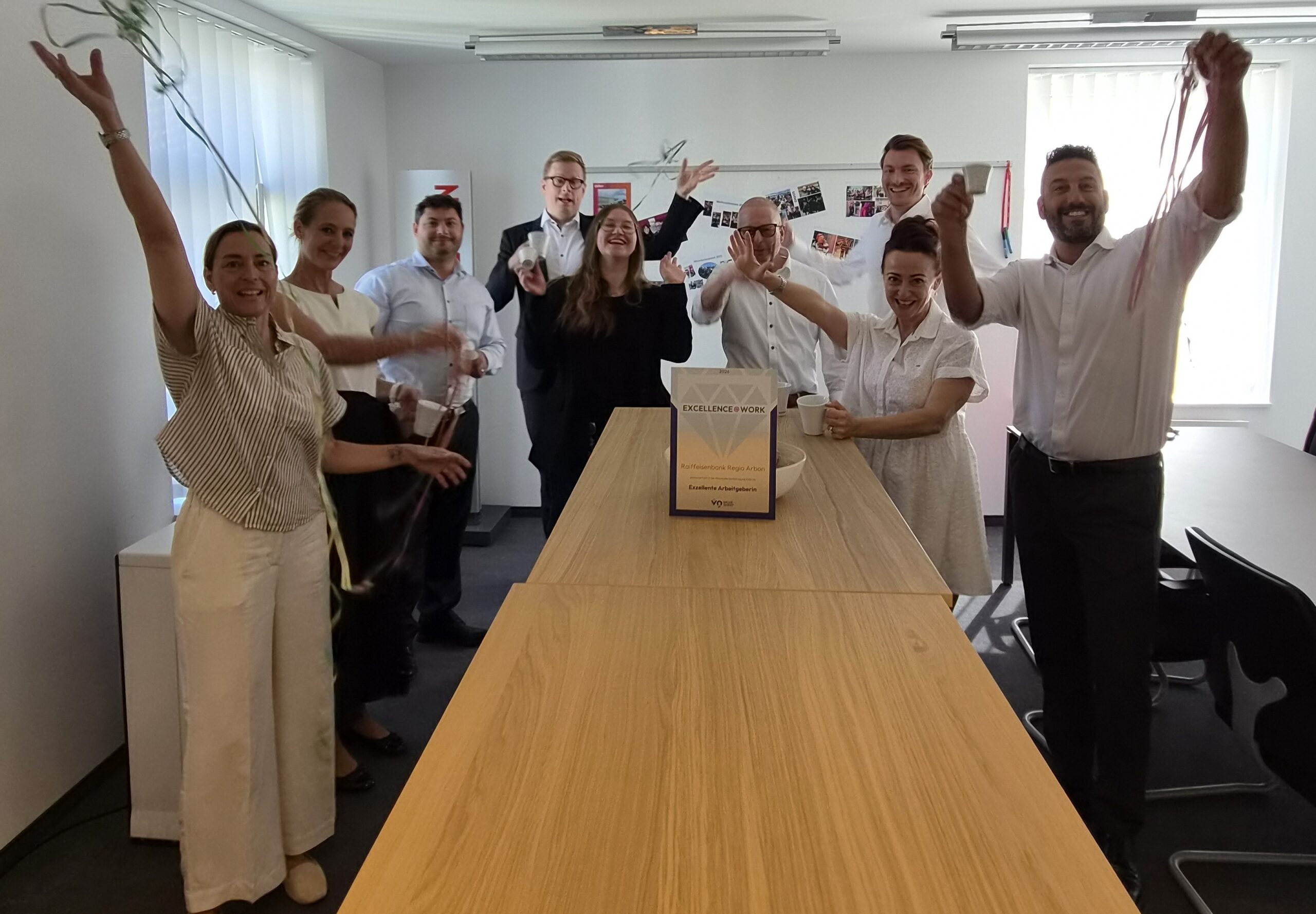
ValueQuest honors particularly attractive employers in Switzerland with the Excellence@Work Award. We recently had the pleasure of presenting the award to Raiffeisenbank Regio Arbon.