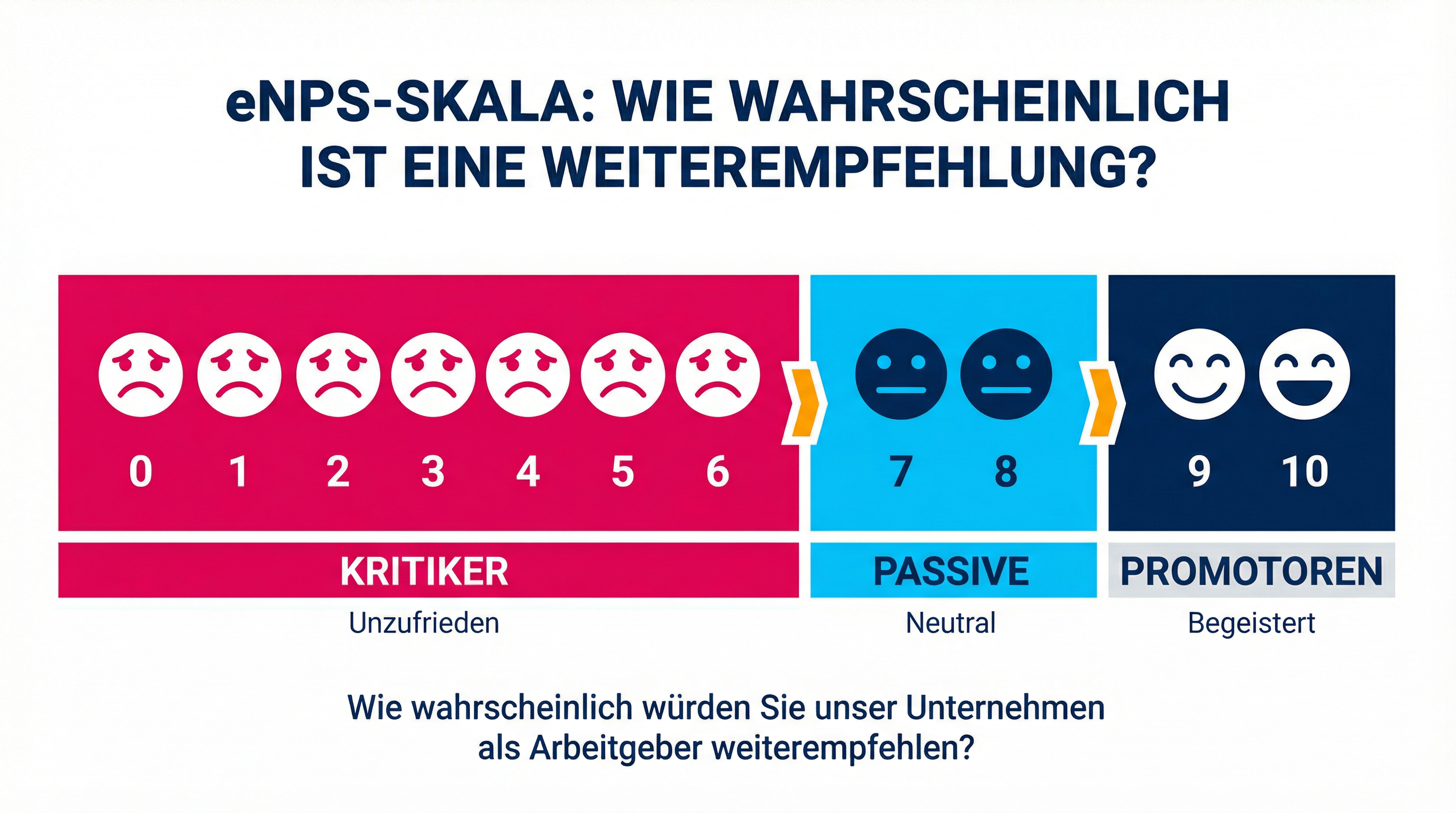
Benchmarking comparisons with other companies is an important aspect of employee surveys. Top management in particular often wants to know exactly where their own company stands in comparison to the competition.
Comparison group for benchmarking
The first step is to clarify with whom you want to compare yourself. This could be companies from the same sector, of the same size or with the same culture, etc. While a one-to-one comparison with other companies can certainly be interesting, in reality it always leads to problems.
Ideally, the organization in question would perform better than the market in some aspects of the benchmarking comparison and less well in others. Unfortunately, this is rarely the case. We often observe that an organization or even an individual unit is either above or below the market benchmark in all aspects.
In both cases, the reaction to the result is usually not productive. Those who are better in all aspects pat themselves on the back and carry on as before. However, those who perform worse than the benchmark in all areas are demotivated and often simply look for someone to blame. The full potential and the entire information content of an employee survey are not optimally utilized in this way.
These one-sided patterns (all negative, all positive) are caused by the so-called halo effect. Satisfied employees tend to rate everything slightly better. In units where things are not going so well, the opposite is the case; everything is rated slightly worse.
Based on this experience, ValueQuest has developed SmartBenchmarking© and built up a comprehensive database. The aim is to enable all units to take a differentiated view of the results of the employee survey and find constructive solutions.
Because one thing is clear: it's never all bad. The real reason for dissatisfaction must be found. And it's also never all good; there are always areas where improvements can be made.
Our benchmarking approach SmartBenchmarking©
The idea behind SmartBenchmarking© is a comparison with organizations that have the same or similar motivation values. This makes it possible to compare exactly which topics are above or below the average of similarly motivated organizations.
Let's take a look at a concrete example from practice:
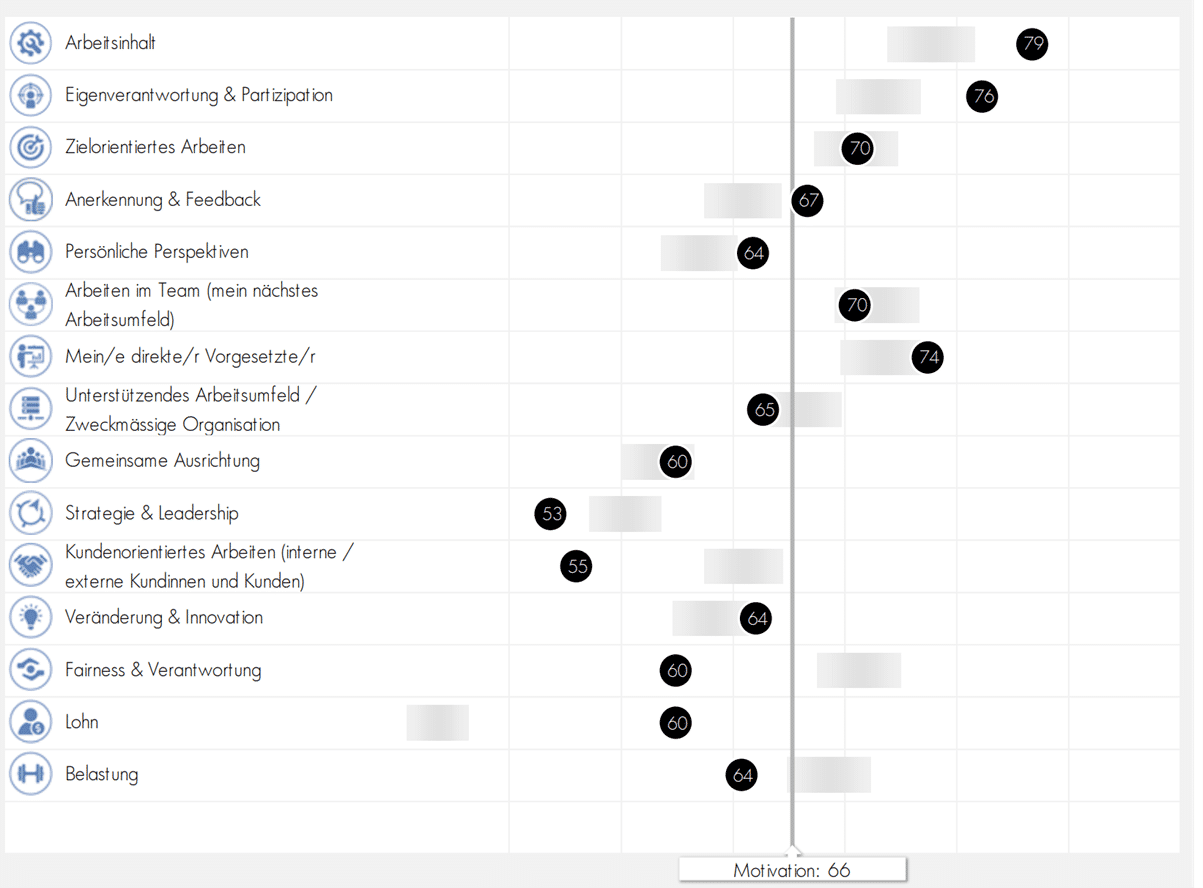
This unit of a public administration has an overall below-average motivation score of 66 points (out of 100). In the chart, the range of norm values for organizations with (the same) motivation score of 66 is highlighted in grey. It can be seen that the company evaluated here tends to be above average for topics in the micro-environment (work content, personal responsibility, direct management, etc.). This works well, although motivation is mediocre.
However, this organization performs significantly worse than the companies in the comparison when it comes to topics from the macro environment. For example, the score for Strategy & Leadership - which includes questions on management - is well below the gray bar. This means that the organization is positioned well below the average of the organizations with which it is compared. The same applies to customer orientation. The topic of fairness & responsibility is even more clearly below the benchmark. This gives an indication of the topics in which an organization stands out positively or negatively compared to the peer organizations and where it might be worth delving deeper into the topic.
Our SmartBenchmarking© can also be filtered by industry or function. It has been shown that a functional comparison is often more meaningful than an industry comparison. Finance departments, for example, generally "function" in a similar way, regardless of whether they belong to a retailer or an industrial company.
Conclusion
Benchmarking definitely offers added value for an employee survey. ValueQuest's Smart Benchmarking approach also guarantees that this comparison is used in a constructive and motivated way.
Do you want to get more out of your employee survey? Then get in touch with us! You can reach us on 044 786 32 52 or send us an e-mail directly to info@valuequest.ch.
Don't miss any more news? Then become a follower on our Linkedin company profile.
Article published on October 29, 2021
About Heidi Blanken

Heidi Blanken is an expert and advisor at ValueQuest with a focus on evaluation and methodological consulting. She studied psychology with a focus on methodology as well as economics and labor law at the University of Zurich and graduated with a lic. phil. I degree.
Inspired? Then share this post via your favorite platform.
Other articles that might interest you ...
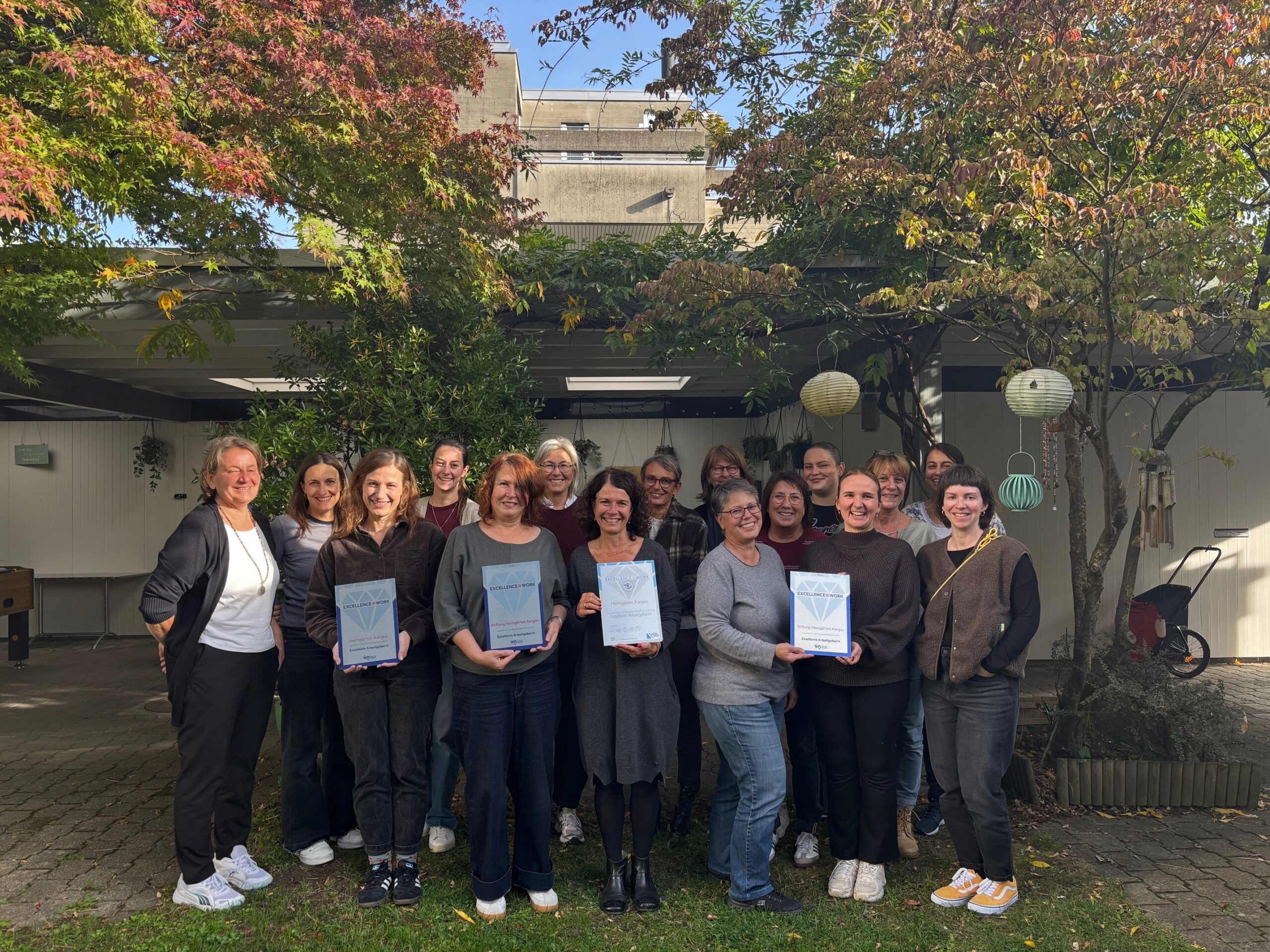
Heimgärten Aargau Honored as a Top Employer: Enthusiasm Meets Trust
October 27, 2026
Reading time: 3 min
The Heimgärten Aargau Foundation has once again achieved outstanding results in the latest employee survey. For the fourth consecutive year, ValueQuest has honored the foundation with the Excellence@Work Award in recognition of its high appeal as an employer. We extend our heartfelt congratulations.

AI in the Swiss Insurance Market: What Insurers Can Learn from the Results
October 1, 2026
Reading time: 4 min
Artificial intelligence is not universally accepted in the Swiss insurance market. As a study by ValueQuest shows, customers’ openness to AI depends heavily on how it is used.

AI in the Swiss Insurance Market: Between Acceptance and Skepticism
September 28, 2026
Reading time: 5 min
For many Swiss people, artificial intelligence has become an integral part of everyday life. However, the situation is different when it comes to insurance companies.
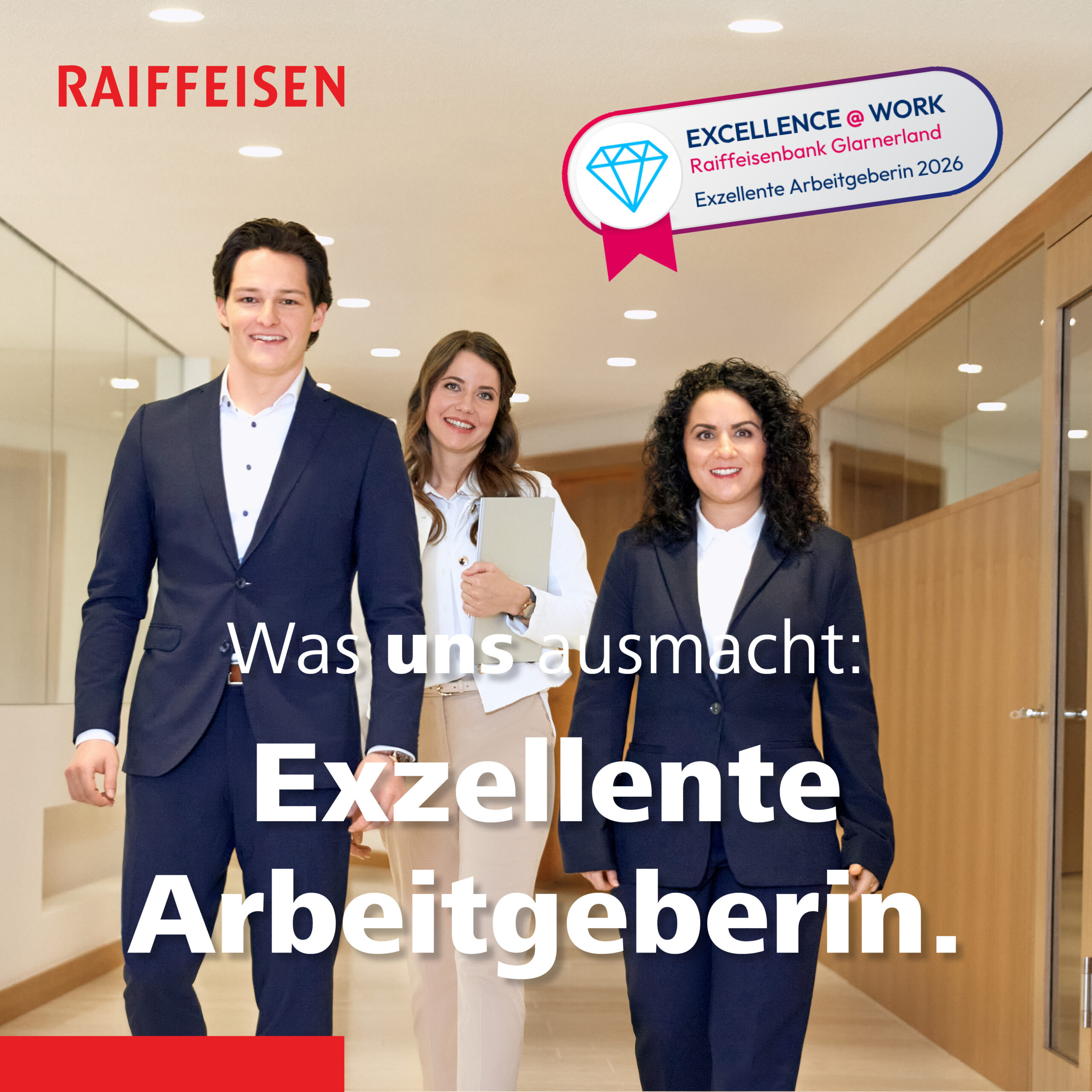
Top Employer: Raiffeisenbank Glarnerland Impresses with Strong Leadership
September 21, 2026
Reading time: 2 min
ValueQuest recently had the honor of presenting the “Excellence@Work Award” to Raiffeisenbank Glarnerland. We extend our heartfelt congratulations.
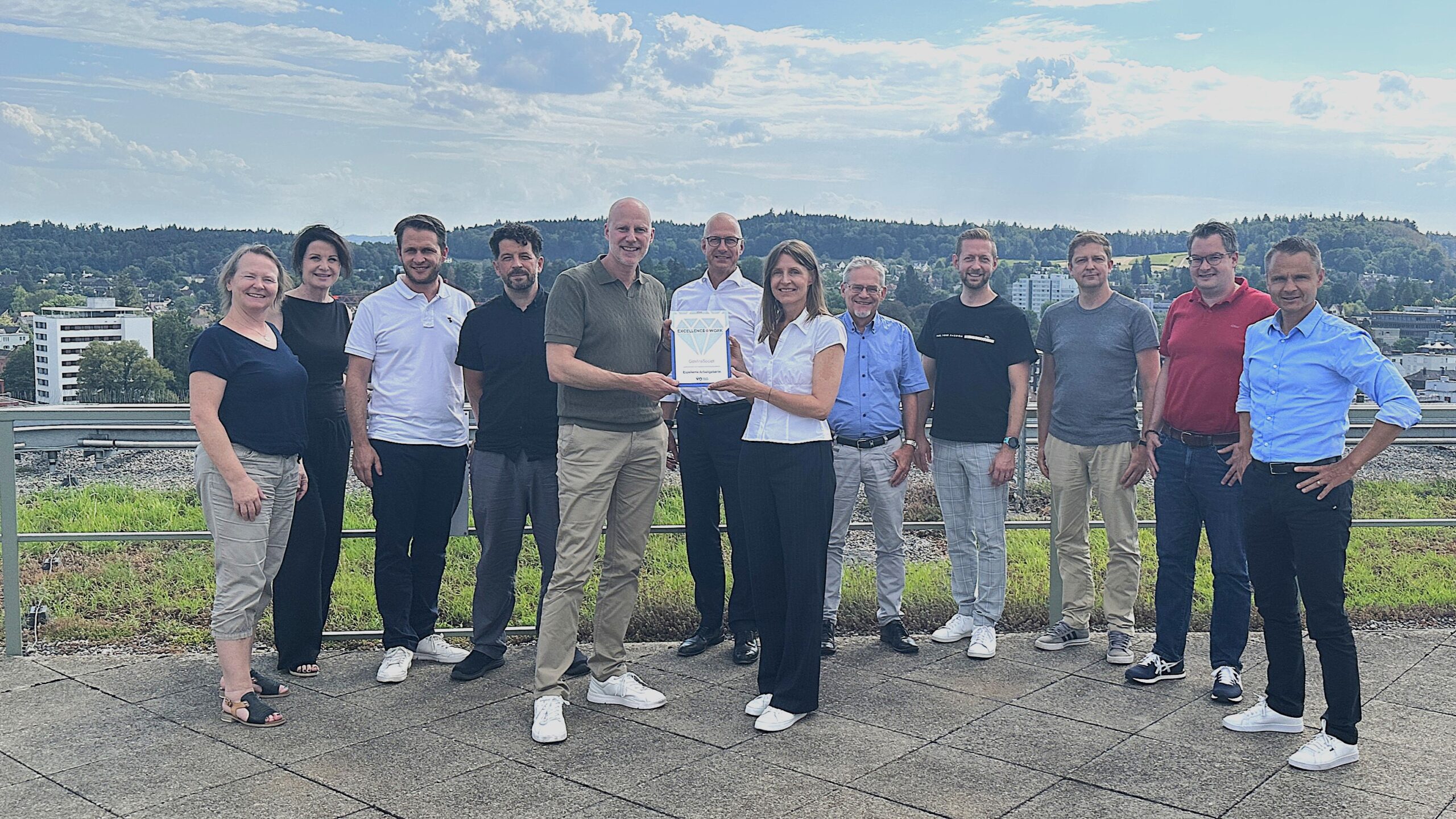
Top Swiss Employers: GastroSocial
September 9, 2026
Reading time: 3 min
GastroSocial has received the 2026 Excellence@Work Award from ValueQuest. With a response rate of 96 percent, a motivation score of 84, and 87 percent of employees serving as brand ambassadors, the company demonstrates a strong employer culture.

Employee Survey: Raiffeisenbank Möhlin Achieves Excellent Results
August 31, 2026
Reading time: 3 min
Raiffeisenbank Möhlin is one of Switzerland's top employers and is receiving our Excellence@Work Award in recognition of this achievement. Congratulations!

Employee Surveys in Switzerland: Find Providers & Tools
August 30, 2026
Reading time: 6 min
Employee Survey in Switzerland: How Do You Find the Right Employee Survey Provider? What Really Matters When It Comes to Anonymity, Tools, Questionnaires, and Analysis.

360-Degree Feedback Questionnaire: Sample, Template, and Sample Questions
August 21, 2026
Reading time: 7 min
Table of Contents A 360-degree feedback process is only as good as its questionnaire. The questionnaire is at the heart of the entire process. It determines whether...

Employee Survey: The CAMPUS SURSEE Foundation Is Among Switzerland's Best Employers
August 5, 2026
Reading time: 2 min
ValueQuest honors particularly attractive employers in Switzerland with the Excellence@Work Award. We recently had the pleasure of presenting the award to the CAMPUS SURSEE Foundation.