In this article, we’ll explore the real reasons behind resignations that are hidden in the open-ended comments and how companies can use this insight to retain their top talent.
Those who do not take part in an employee survey are twice as likely to resign. According to our long-term study. Over 14,000 free-text comments from a Swiss employer were analyzed over a period of four years. The result: employee surveys are far more than just a barometer of sentiment. They are the most reliable early warning system for impending dismissals.
Table of contents
The top reasons for quitting: Leadership and recognition make the difference
The analysis clearly shows that those who resign primarily criticize the management. In their comments, employees who left the company mentioned problems with their superiors and the management culture much more frequently. This is not about individual cases, but about structural issues:
- Rigid hierarchical thinking that blocks innovation
- Lack of involvement in important decisions, which undermines commitment
- a tone without appreciation that destroys trust
If these cultural factors are missing, loyalty to the company is lost. Leadership is therefore no longer just a management issue, but the key that decides whether employees stay or leave. A culture of fairness, recognition and trust acts as a protective shield against staff turnover. Poor leadership, on the other hand, massively accelerates it.
The three most common reasons for dismissal relate to corporate culture:
- Inadequate management
- Lack of appreciation
- Unfairness and unjust behavior
Poor management is the No. 1 reason for dismissal
Leadership determines loyalty. A poor leadership culture is the strongest and most common reason for resignations. People who experience problems with their boss over a long period of time rarely stay with the company. Criticism of management is therefore the clearest warning sign of impending staff turnover. The well-known saying is confirmed time and again: "Employees don't quit a job, they quit their manager."
The figures from our study:
- 6.2 % of employees who subsequently resigned explicitly cited leadership or management issues (e.g. poor leadership behavior or rigid hierarchical thinking).
- The figure for permanent employees was only 3.9 %.
- This means that those who resign criticize management around 60 % more frequently - a statistically highly significant difference.
Lack of appreciation as a driver of dismissal
Appreciation is one of the most important, but often underestimated, factors in employee retention. Anyone who feels that their work is not seen or recognized will gradually lose motivation and trust in their employer. As a result, the idea of changing jobs becomes increasingly important. Our study clearly shows that employees who intend to resign complain significantly more often about a lack of recognition.
The figures at a glance:
- 5% of employees who subsequently resigned explicitly cited a lack of appreciation.
- The figure for the permanent ones was only 1.1 %.
- The risk of a lack of recognition is therefore more than twice as high for those who resign.

The myth of the "hard facts": Why pay and processes rarely make the difference
Many employees are annoyed by "hard facts" such as salary, processes, work-life balance or IT systems. They cause frustration in everyday life, but rarely lead directly to resignation. Our data clearly shows that even those who criticize salary or processes often stay with the company. There is dissatisfaction, but no acute intention to leave.
Salary: dissatisfaction, but not a driver for dismissal
The topic of salary frequently crops up in the comments. Salary is among the top reasons for dissatisfaction. In fact, people demand more pay or criticize their pay.
But our data proves it: Salary dissatisfaction rarely leads directly to resignation. The salary issue is often an outlet for underlying problems. Those who feel fairly treated and valued are more likely to accept a below-average salary. Those who are dissatisfied with management, on the other hand, use the salary issue as a rational argument for a decision that has long since been made emotionally.
The figures at a glance:
- 13.1 % of employees who resigned cited salary as a point of criticism.
- The figure for the permanent ones was 12.1 %.
- Conclusion: Both groups complain about pay almost equally often. It is a widespread frustration factor, but not a decisive reason for quitting.
Career and development: Important, but rarely decisive
For many employees, further training and development opportunities are among the key expectations of their employer. They are often demanded - but have surprisingly little influence on whether someone actually resigns. Our study shows that although career issues are regularly criticized, they do not determine loyalty or resignation.
The figures at a glance:
- Around 5% of employees who resigned cited a lack of further training or development opportunities.
- Approximately the same number of permanent employees expressed the same criticism.
- Conclusion: Career opportunities are a widespread point of criticism and influence satisfaction, but not directly employee retention.
Work-life balance, processes and IT: annoyances without dismissal effects
Whether it's working hours, high workload, work-life balance, slow IT or inefficient processes: Such annoyances crop up in many comments. However, our analysis shows that they are rarely the reason for resignation.
Remarkably, employees who stayed were more likely to mention IT or process problems (6.6 % compared to 5.3 % of those who left). This suggests that although satisfied employees complain loudly about systems, they stay anyway. Those who have fundamental problems with the culture, on the other hand, are more likely to resign - regardless of IT frustration.
The figures at a glance:
- 6-7% of both groups mentioned topics such as working from home, overtime or stress.
- Around 10% of both groups criticized the cooperation or communication.
- 6.6% of employees who stayed cited IT or process problems, compared with 5.3% of those who left.
- Conclusion: Operational annoyances are common, but they do not lead directly to dismissal.
The age factor: younger employees resign more quickly
Our data confirms a well-known pattern: younger employees are significantly more willing to change jobs and less loyal than older generations. Points of criticism such as a lack of appreciation or poor leadership affect all age groups. But while a 55-year-old often stays despite grievances, a 25-year-old is quicker to take the consequences and resign.
Age therefore acts as an amplifier. Younger employees are much quicker to resign if they are dissatisfied. Older employees also criticize, but are more likely to stay - often because they are more deeply rooted, have family obligations or are reluctant to change jobs.
The termination rates by age at a glance:
- Under 30: 34% (one in three leaves the company)
- 31-40 years: 17 %
- 41-50 years: 13.6 %
- Over 50 years: 10.7
Article published on September 20, 2025
About Bruno Catellani

Inspired? Then share this post via your favorite platform.
Other articles that might interest you ...

AI in the Swiss Insurance Market: What Insurers Can Learn from the Results
October 1, 2026
Reading time: 4 min
Artificial intelligence is not universally accepted in the Swiss insurance market. As a study by ValueQuest shows, customers’ openness to AI depends heavily on how it is used.

AI in the Swiss Insurance Market: Between Acceptance and Skepticism
September 28, 2026
Reading time: 5 min
For many Swiss people, artificial intelligence has become an integral part of everyday life. However, the situation is different when it comes to insurance companies.

Top Employer: Raiffeisenbank Glarnerland Impresses with Strong Leadership
September 21, 2026
Reading time: 2 min
ValueQuest recently had the honor of presenting the “Excellence@Work Award” to Raiffeisenbank Glarnerland. We extend our heartfelt congratulations.
Top Swiss Employers: GastroSocial
September 9, 2026
Reading time: 3 min
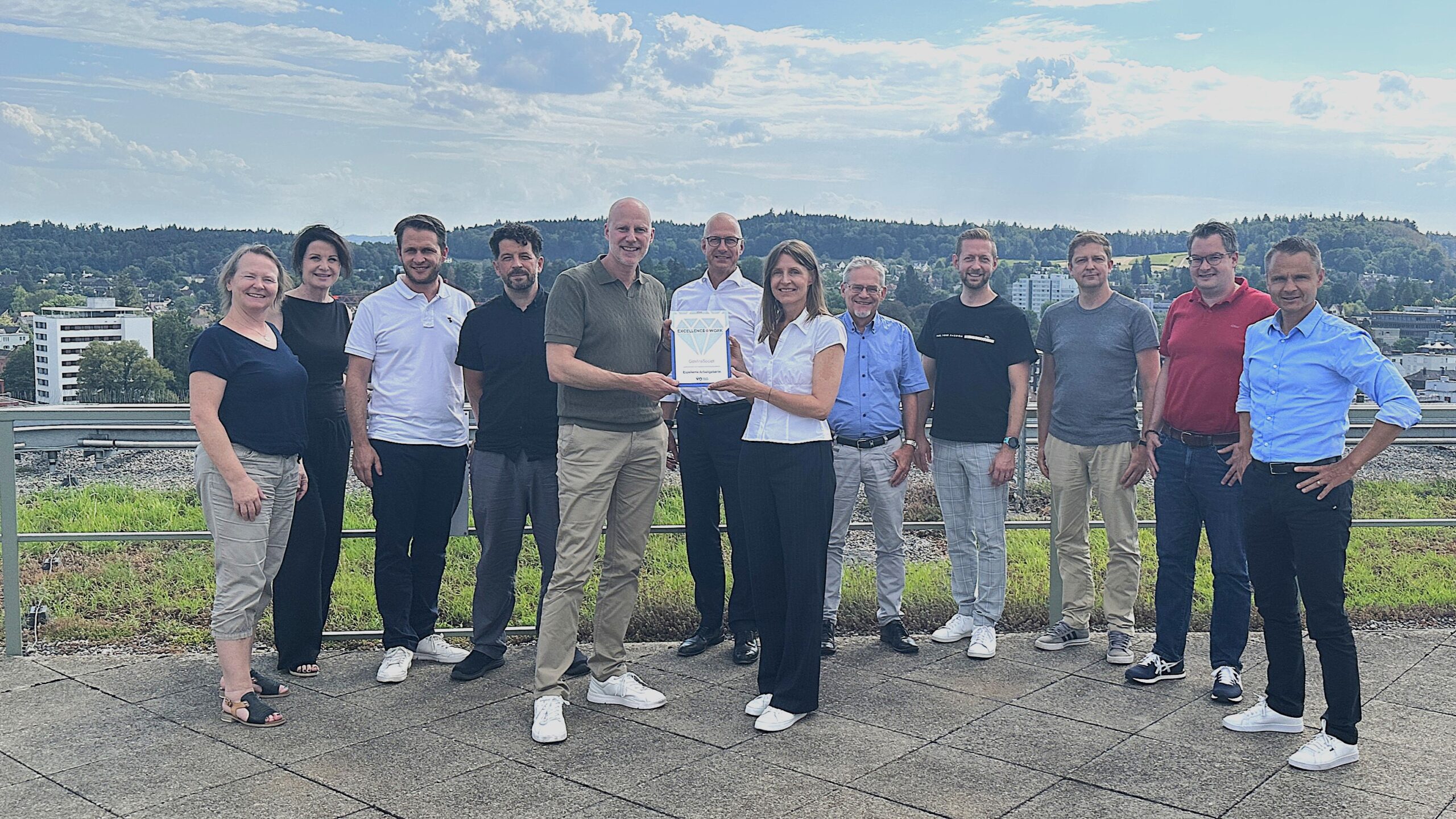
GastroSocial has received the 2026 Excellence@Work Award from ValueQuest. With a response rate of 96 percent, a motivation score of 84, and 87 percent of employees serving as brand ambassadors, the company demonstrates a strong employer culture.

Employee Survey: Raiffeisenbank Möhlin Achieves Excellent Results
August 31, 2026
Reading time: 3 min
Raiffeisenbank Möhlin is one of Switzerland's top employers and is receiving our Excellence@Work Award in recognition of this achievement. Congratulations!

Employee Surveys in Switzerland: Find Providers & Tools
August 30, 2026
Reading time: 6 min
Employee Survey in Switzerland: How Do You Find the Right Employee Survey Provider? What Really Matters When It Comes to Anonymity, Tools, Questionnaires, and Analysis.

360-Degree Feedback Questionnaire: Sample, Template, and Sample Questions
August 21, 2026
Reading time: 7 min
Table of Contents A 360-degree feedback process is only as good as its questionnaire. The questionnaire is at the heart of the entire process. It determines whether...

Employee Survey: The CAMPUS SURSEE Foundation Is Among Switzerland's Best Employers
August 5, 2026
Reading time: 2 min
ValueQuest honors particularly attractive employers in Switzerland with the Excellence@Work Award. We recently had the pleasure of presenting the award to the CAMPUS SURSEE Foundation.
Raiffeisenbank Regio Arbon, a Top Employer: Personal Responsibility as Part of a Strong Corporate Culture
July 7, 2026
Reading time: 2 min
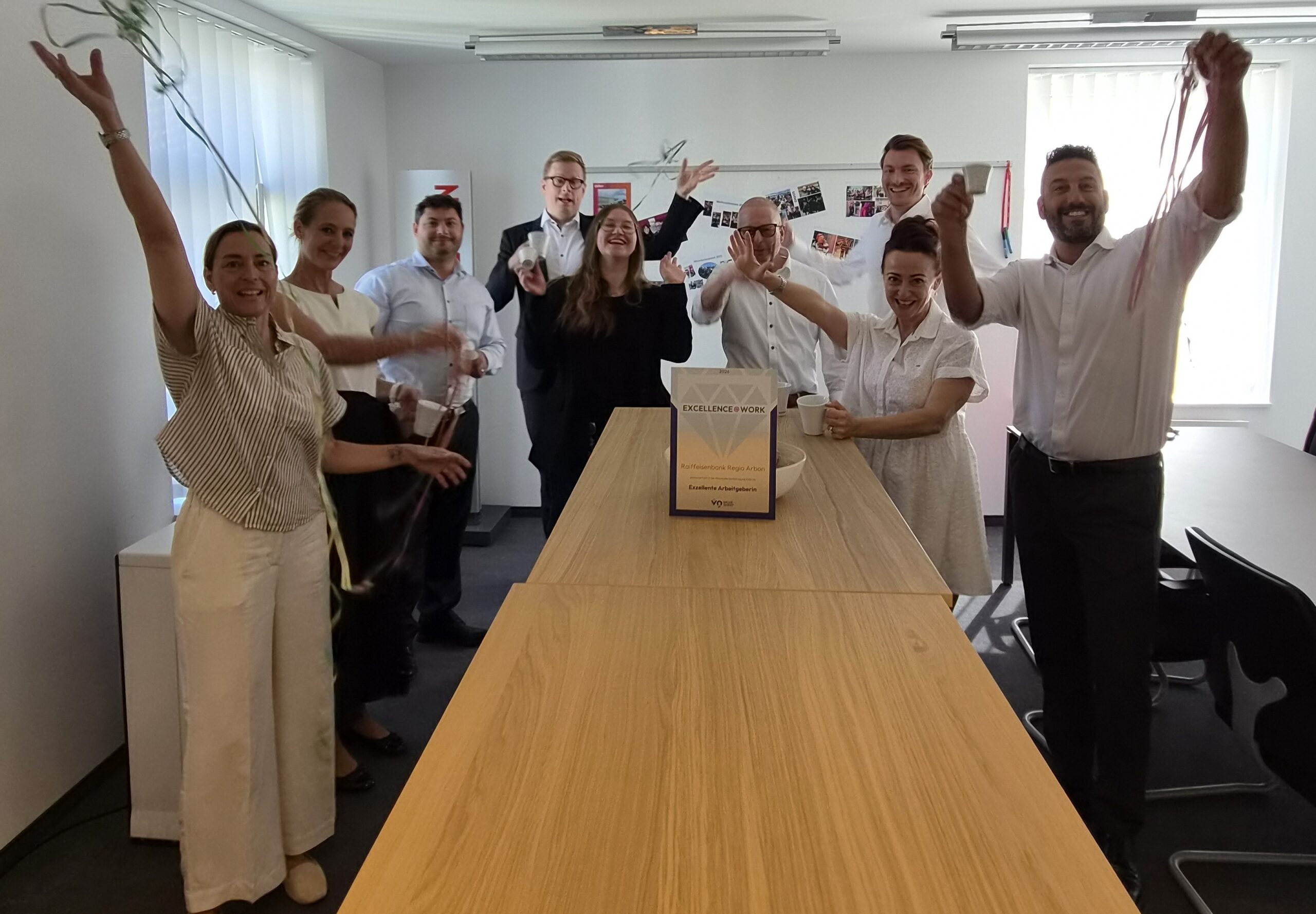
ValueQuest honors particularly attractive employers in Switzerland with the Excellence@Work Award. We recently had the pleasure of presenting the award to Raiffeisenbank Regio Arbon.