Table of contents
360-degree feedback is more than just a tool for evaluating managers. When used correctly, it becomes a strategic lever for fostering organizational culture, self-reflection, and performance.
In a conversation with Marielena Einzinger of IE Engineering Group AG, it becomes clear how 360-degree feedback works in practice, what challenges arise, and what companies should keep in mind if they want to successfully use 360-degree feedback as a development tool.
Ms. Einzinger is the Managing Director of IE Industrial Engineering München GmbH and a member of the Group Executive Board at IE Engineering Group AG.
360-Degree Feedback: Trust Is the Foundation of a Successful Feedback Process
Andrea Schön:
Thank you very much for taking the time to speak with us today. We’d like to discuss the role that 360-degree feedback plays in your organization and your practical experience with it.
I’ve known the IE Group for quite some time and see your organization as very entrepreneurial. The hierarchies are flat. Employees have a great deal of autonomy and creative freedom. I see leadership at your company more as a supportive force than as a means of control.
How would you describe your company culture in your own words? What values shape the way you work together?
Marielena Einzinger:
Our culture is distinctly entrepreneurial. We are performance-driven because we want to deliver the highest quality to our customers. That is our commitment.
We employ highly specialized experts. They are highly skilled in their fields and eager to take on responsibility. That is exactly what we encourage. That is why flat hierarchies work well for us. We expect every employee to think like an entrepreneur.
For us, leadership means setting the framework. We provide direction and establish priorities. We ensure quality. At the same time, we create an environment in which employees can develop their strengths.
Trust is the foundation of this process. And it is precisely this trust that makes 360-degree feedback effective in our organization. Without trust, leadership feedback simply doesn't work.
360-degree feedback enhances self-reflection in leadership
Andrea Schön:
You have been making targeted investments in leadership development for several years. What role does 360-degree feedback play in this?
Marielena Einzinger:
Our managers are usually highly skilled subject matter experts themselves. They know their field inside and out. That is a major advantage.
But leadership is about more than just being good at your job. Leadership means driving the team’s performance. You have to guide the team, pool their strengths, and foster collaboration.
A key aspect of this is self-reflection. And this is precisely where 360-degree feedback comes into play. This feedback tool reveals how one’s leadership is actually perceived. How does my communication come across? How do my colleagues react to my decisions?
Especially when you’re very knowledgeable in your field, you might overestimate the impact you have. You think: “Everything is clear to me, so it must be clear to everyone.” 360-degree feedback shows whether that’s really true.
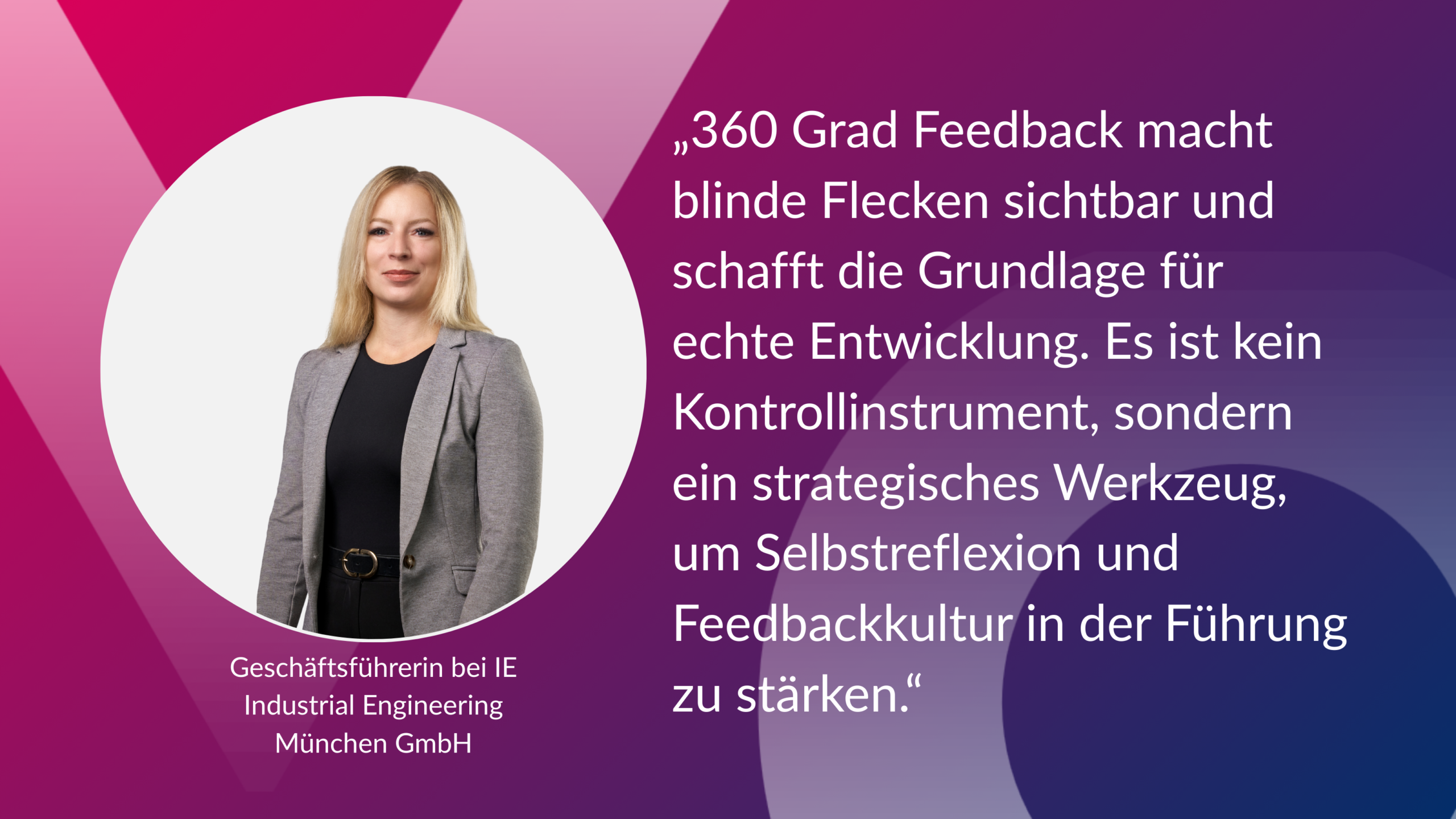
360-degree feedback brings blind spots to light. And this transparency is the foundation for growth.
360-degree feedback as a comparison between one's self-perception and others' perception
Andrea Schön:
In your opinion, what makes 360-degree feedback particularly valuable?
Marielena Einzinger:
The most important point is the alignment between one’s self-image and how others perceive you.
You get an honest picture of how you come across to others. And this picture isn't based on just one perspective, but on several. That's exactly what makes 360-degree feedback so powerful.
We discuss the results of the 360-degree feedback openly as a team. The feedback is anonymous. But when managers share their results transparently and address their weaknesses, a genuine dialogue emerges.
Sometimes someone will even say outright, “I’m the one who gave you that feedback.” This leads to an open dialogue. It strengthens the culture of feedback and the culture of learning from mistakes.
That is why 360-degree feedback has an impact not only at the individual level but also on a cultural level.
Contact us if you would like a comprehensive, tailor-made leadership development program. Barbara Haimoff
360-degree feedback reveals clear patterns
Andrea Schön:
What particularly impressed you about the most recent 360-degree feedback session?
Marielena Einzinger:
What I particularly appreciate about 360-degree feedback is the clarity of the results. Clear patterns emerge. You can quickly see where your strengths lie and where there is still room for growth.
Analyzing the feedback allows for different perspectives. You can analyze it by location, by hierarchical level, or for the entire organization. This helps you determine whether an issue affects a single person or is common across a group.
This distinction is extremely important. A 360-degree feedback assessment helps determine whether an issue relates to an individual’s development or to a structural problem within the organization.
Of course, the results aren’t always pleasant—especially when the gap between how you see yourself and how others see you is wider than expected. But that’s exactly what makes it valuable. 360-degree feedback provides honest feedback.
I must also emphasize that our employees use this tool very professionally. It is not used as an outlet for frustration. The comments are constructive and well-thought-out. The comment feature in the 360-degree feedback, in particular, provides valuable insights.
Often, a single comment is all it takes to make us consciously reflect on the impression we make.
360-degree feedback requires professional guidance
Andrea Schön:
Feedback can be challenging. How do you support your managers through the 360-degree feedback process?
Marielena Einzinger:
Support is crucial. A 360-degree feedback assessment shouldn’t just be sent out and then left to its own devices.
First, the process must be clearly explained. What does 360-degree feedback mean? How are the results handled? What are the implications? This transparency is essential.
Once the results are available, they are first compiled by me, as the HR manager. They are then discussed in the appropriate committees, such as the executive board.
There, we help each other make sense of the results. What could this mean? Where does a particular perception come from?
In addition, I hold one-on-one meetings with each manager who reports directly to me. The situation can be particularly emotional, especially during the first 360-degree feedback session. I observe how the person reacts to the results. Are they feeling uncertain? Do they need support?
We use the 360-degree feedback to develop specific development plans. Depending on the need, these are followed by training sessions or executive coaching. These take place on a regular basis and consistently revisit the results.
In some cases, 360-degree feedback is also incorporated into performance evaluations. This provides a comprehensive picture.
360-degree feedback is only effective if it is actively acted upon.
From 360-degree feedback to a structured development process
Andrea Schön:
Did the 360-degree feedback also lead to structural changes?
Marielena Einzinger:
Yes, definitely. The last 360-degree feedback served as the starting point for a new, structured leadership coaching cycle.
We deliberately used the 360-degree feedback as a starting point for individual development plans. This was a particularly important step for the executive committee.
We work with a dedicated leadership coach. Both locations receive joint training and support. During these sessions, we focus specifically on the areas for development identified in the 360-degree feedback.
Because these meetings are scheduled at fixed times throughout the year, they create a sense of commitment. Every manager knows that they will be working on their assigned topics.
An additional benefit: During these meetings, we provide each other with feedback. This was a request from the committee itself. So the 360-degree feedback has not only spurred individual development but also fostered collective reflection.
And because we conduct 360-degree feedback on a regular basis, we can compare developments over the years. This creates transparency and continuity.
360-degree feedback makes a difference in day-to-day management
Andrea Schön:
Where do you see specific changes in everyday life as a result of 360-degree feedback?
Marielena Einzinger:
The comment feature in 360-degree feedback is extremely effective. It often contains very specific feedback.
You read a suggestion for improvement and immediately realize: I can implement this right away. These are quick changes that I like to call “quick wins.” So 360-degree feedback not only provides strategic insights but also immediate opportunities for action.
In the long run, it is primarily awareness that changes. After receiving 360-degree feedback, managers have a clearer understanding of their blind spots. They are reminded of the areas where they need to grow.
You hear people say things like, “That’s my area of focus; I’m working on it right now.” This sense of personal responsibility stems from the clarity of the feedback.
Sometimes it’s enough simply to address weaknesses openly. When a manager says, “I need to improve in this area, but I’m working on it,” it fosters understanding within the team. In this way, 360-degree feedback promotes transparency and trust in day-to-day work.
360-Degree Feedback as a Strategic Tool for Leadership Development
Andrea Schön:
What do you consider to be the most important benefit of 360-degree feedback?
Marielena Einzinger:
For me, 360-degree feedback primarily improves the quality of leadership.
And leadership quality has a direct impact on an organization’s performance. As leadership becomes clearer, more thoughtful, and more intentional, the quality of collaboration also improves.
360-degree feedback fosters self-reflection. At the same time, it promotes an open feedback culture. Together, these two elements support our commitment to excellence.
We don’t view 360-degree feedback as a tool for monitoring, but rather as a tool for development. And that is precisely why it has a strategic impact.
The biggest challenge in leadership: From subject matter expert to reflective leader
Andrea Schön:
What challenges do you see in making the transition from subject matter expert to manager?
Marielena Einzinger:
Many of our managers are highly skilled in their field. They are experts in their area. And that is precisely what makes the transition challenging.
When you transition from a technical role to a leadership position, you have to learn to let go. You can no longer do everything yourself. You have to delegate responsibility.
This is especially difficult when you have very high standards. You know exactly how you would do it yourself. The urge to do it yourself is strong.
But this is exactly where 360-degree feedback comes in. It shows that leadership doesn't mean doing everything perfectly yourself. It highlights the importance of delegation, trust, and clear communication.
Those who fail to take this step run the risk of overburdening themselves. Leadership means enabling others to deliver quality, not trying to control everything yourself.
Why We Continue to Consistently Implement 360-Degree Feedback
Andrea Schön:
Why did you decide to continue with 360-degree feedback?
Marielena Einzinger:
Because we clearly see the added value.
For us, 360-degree feedback has become an integral part of leadership development. It provides honest feedback, clear patterns, and specific areas for development.
The analyses are well-structured and easy to use. They allow you to identify actions to take and track progress. This makes 360-degree feedback a strategic tool rather than a one-time exercise.
When implementing a 360-degree feedback process company-wide, you need a professional framework. Processes must be clear. Deadlines must be met. Communication must be transparent.
Only then can trust in the instrument be established.
Implementing 360-Degree Feedback: The Key Success Factors
Andrea Schön:
What recommendations do you have for companies looking to implement a 360-degree feedback system?
Marielena Einzinger:
First, the goal must be clear. Why are we implementing 360-degree feedback? What do we want to achieve strategically?
Then you should carefully consider how many reviewers per person is appropriate. A very large group can lead to average ratings. A smaller group can result in more extreme ratings. This decision should be made deliberately.
Communication is key. A 360-degree feedback process must be clearly explained. Everyone involved needs to know how the results will be handled.
And most importantly: the results must be acted upon. 360-degree feedback is only effective if it is firmly integrated into leadership development.
Measures must be implemented consistently. Otherwise, 360-degree feedback will remain a one-time effort with no lasting impact.
Andrea Schön: Ms. Einzinger, thank you very much for your candid insights and practical experience. We wish you continued success in further developing your leadership culture.
Post published on March 11, 2026
About Andrea Schön

Andrea Schön is an experienced project manager for employee surveys and 360-degree management feedback and has been advising and supporting ValueQuest clients for 10 years. She studied work and organizational psychology, and as a systemic coach, she is particularly interested in better uniting people and work. She has been Managing Director of ValueQuest since 2023. Find out more about Andrea
Inspired? Then share this post via your favorite platform.
Other articles that might interest you ...

AI in the Swiss Insurance Market: What Insurers Can Learn from the Results
October 1, 2026
Reading time: 4 min
Artificial intelligence is not universally accepted in the Swiss insurance market. As a study by ValueQuest shows, customers’ openness to AI depends heavily on how it is used.

AI in the Swiss Insurance Market: Between Acceptance and Skepticism
September 28, 2026
Reading time: 5 min
For many Swiss people, artificial intelligence has become an integral part of everyday life. However, the situation is different when it comes to insurance companies.
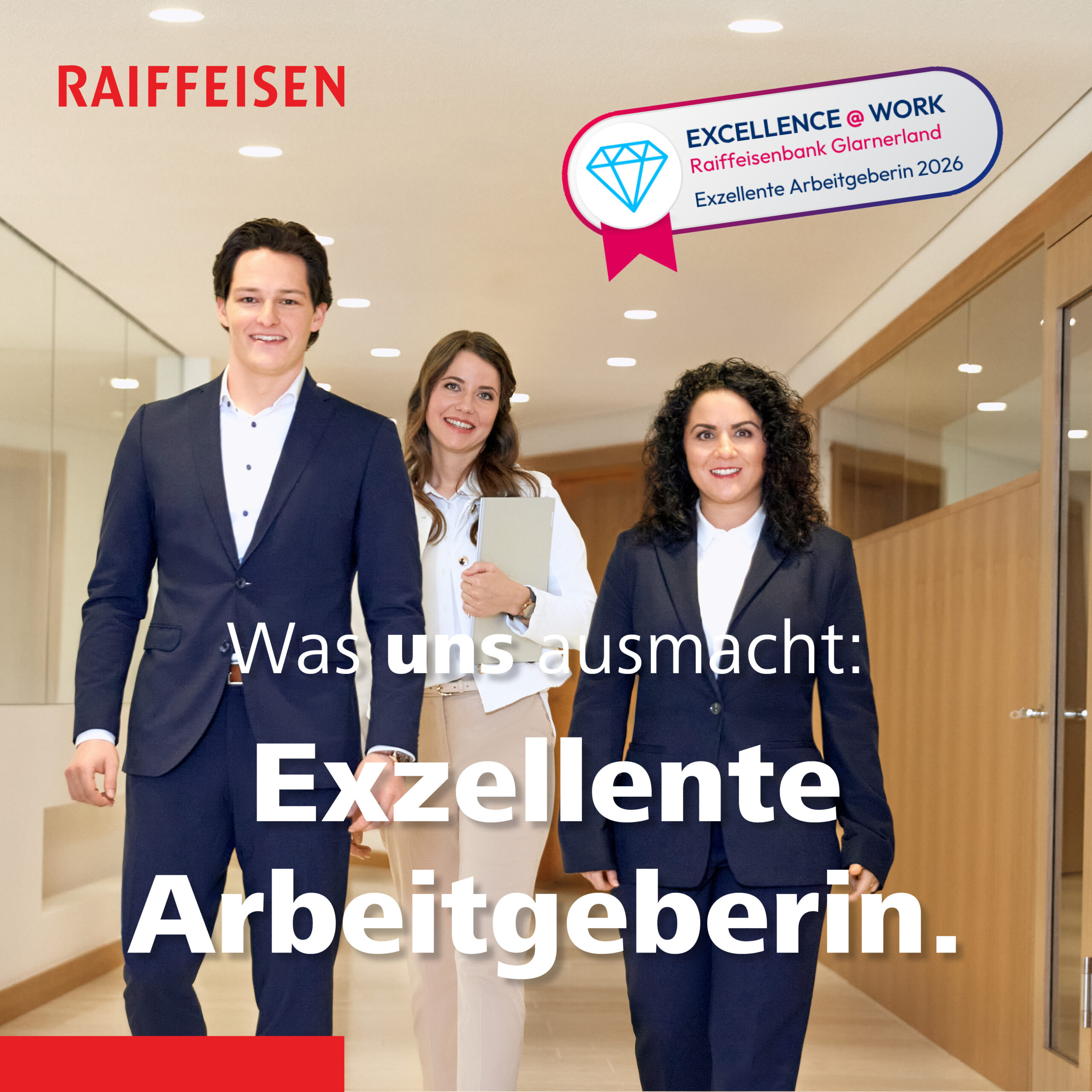
Top Employer: Raiffeisenbank Glarnerland Impresses with Strong Leadership
September 21, 2026
Reading time: 2 min
ValueQuest recently had the honor of presenting the “Excellence@Work Award” to Raiffeisenbank Glarnerland. We extend our heartfelt congratulations.
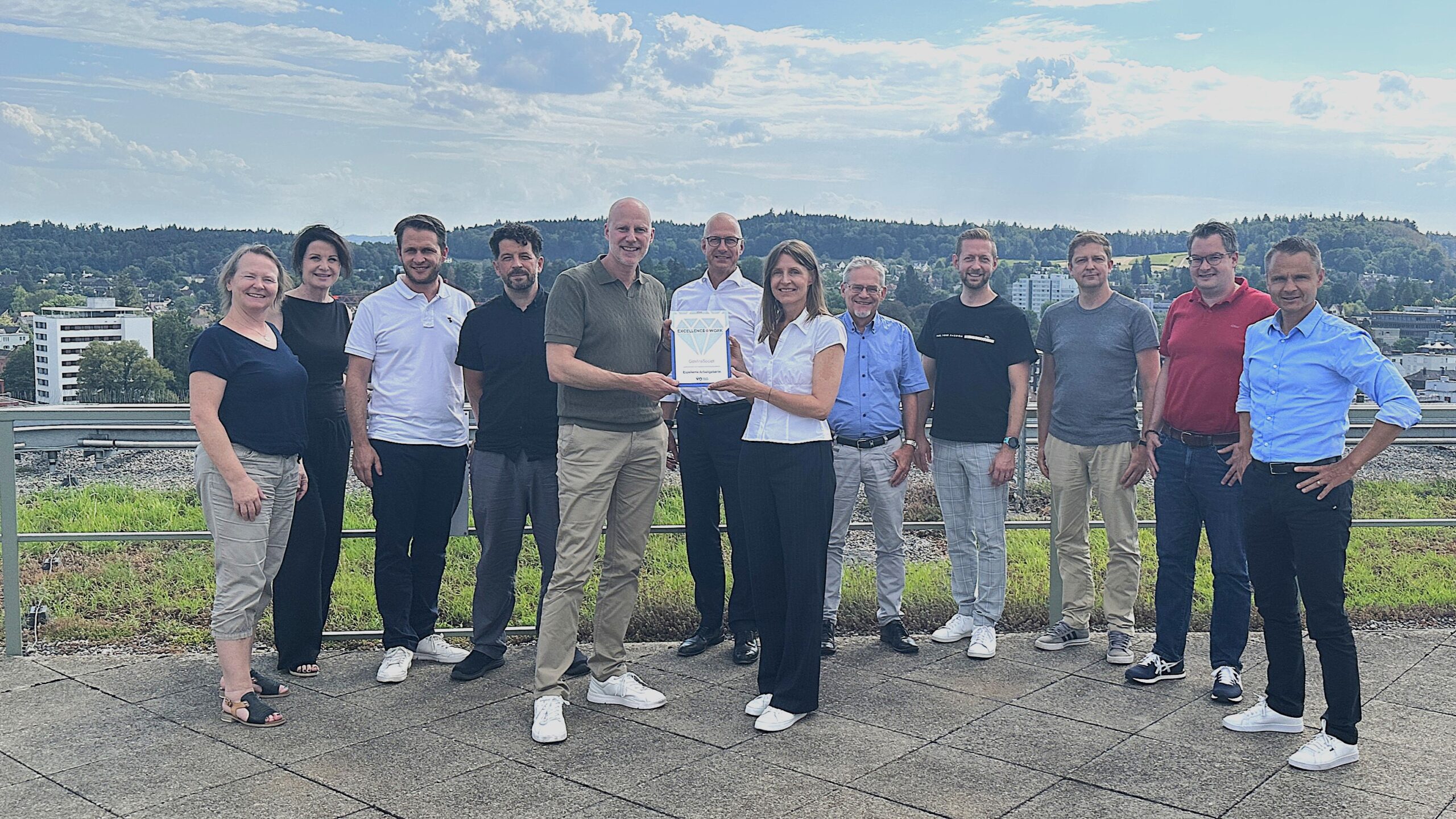
Top Swiss Employers: GastroSocial
September 9, 2026
Reading time: 3 min
GastroSocial has received the 2026 Excellence@Work Award from ValueQuest. With a response rate of 96 percent, a motivation score of 84, and 87 percent of employees serving as brand ambassadors, the company demonstrates a strong employer culture.

Employee Survey: Raiffeisenbank Möhlin Achieves Excellent Results
August 31, 2026
Reading time: 3 min
Raiffeisenbank Möhlin is one of Switzerland's top employers and is receiving our Excellence@Work Award in recognition of this achievement. Congratulations!

Employee Surveys in Switzerland: Find Providers & Tools
August 30, 2026
Reading time: 6 min
Employee Survey in Switzerland: How Do You Find the Right Employee Survey Provider? What Really Matters When It Comes to Anonymity, Tools, Questionnaires, and Analysis.

360-Degree Feedback Questionnaire: Sample, Template, and Sample Questions
August 21, 2026
Reading time: 7 min
Table of Contents A 360-degree feedback process is only as good as its questionnaire. The questionnaire is at the heart of the entire process. It determines whether...
Employee Survey: The CAMPUS SURSEE Foundation Is Among Switzerland's Best Employers
August 5, 2026
Reading time: 2 min
ValueQuest honors particularly attractive employers in Switzerland with the Excellence@Work Award. We recently had the pleasure of presenting the award to the CAMPUS SURSEE Foundation.
Raiffeisenbank Regio Arbon, a Top Employer: Personal Responsibility as Part of a Strong Corporate Culture
July 7, 2026
Reading time: 2 min
ValueQuest honors particularly attractive employers in Switzerland with the Excellence@Work Award. We recently had the pleasure of presenting the award to Raiffeisenbank Regio Arbon.