Dr. Kathrin Neumüller is Co-Managing Director at ValueQuest - the leading Swiss provider of employee surveys and 360-degree feedback. In addition to teaching at the Zurich University of Applied Sciences (ZHAW), she is a keynote speaker and author of specialist books on the topics of labor shortages, new work, employee motivation and leadership. In this interview, she explains how the world of work needs to change so that employees are not only satisfied, but also look forward to the working week ahead on Sunday evenings.
Ms. Neumüller, is a rethink necessary in the world of work in order to better reconcile economic growth and sustainability?
In our Western culture, many people define themselves strongly through their work. Our work and our profession shape our identity and contribute to our self-confidence. So there is a certain dependency on our profession. It is difficult to escape this. However, there is now a shift in thinking that has been reinforced by the Covid pandemic. The term New Work addresses precisely this paradigm shift and poses the question: what do we really work for?
The social philosopher Frithjof Bergmann, who coined the term "New Work" in the 1980s, had a clear vision: work should serve people and not the other way around. Bergmann emphasized that people should do work that they "really, really want to do". Work should therefore not only be a source of income, but also a path to self-realization and social contribution. Bergmann's approach calls for a radical redefinition of work that focuses on people and their needs.
How can we imagine this expanded understanding of work?
The Swabian word "Schaffen" offers a new perspective here. It goes beyond our conventional understanding of work. "Creating" does not only mean working in the sense of an activity for a wage, but also creating and creative design, which can have a meaning for society without being tied to monetary remuneration. This understanding can help us to redefine work - away from a pure source of income or duty, towards an activity that creates meaning, contributes to personal development and makes a positive contribution to society and the environment.
What does empowerment mean in the context of New Work?
Empowerment is far more complex than most people think. This is because it means far more than autonomy in decision-making, but also access to important information, the provision of resources and training, as well as recognition and rewards for their achievements. On the one hand, there is the company perspective and on the other, the employee perspective. Just because companies are implementing New Work measures doesn't mean that it will be well received by employees. When implementing New Work measures and empowerment, we must also take the employees' perspective into account.
We often talk about how companies can implement New Work. But do New Work and empowerment also place demands on employees?
Yes, indeed they do. New Work and empowerment not only place demands on employers, but also on employees. Tasks no longer come cut up in bite-sized pieces on a serving tray. Employees are now expected to take an active role in their working environment and move away from a consumerist approach to work. Employees should be proactive, look for opportunities to develop their skills and play an active role in shaping their working environment. A collaborative partnership between managers and employees is crucial to realizing the full potential of New Work and empowerment. However, for employees to be able to shape their work, it is important that the company has defined a long-term vision. Management must know where it wants to go and communicate this clearly. It therefore needs a clear vision, mission and values that employees can identify with and that they consider inspiring and worth striving for.
Ms. Neumüller, how do you retain employees in the company in the long term? What contributes to employee satisfaction?
Many HR managers believe that satisfaction is the key to retaining employees in the long term. In my opinion, however, it's about much more than just satisfaction.
Do you have an example of this?
Let's look at salary: an employee might be unhappy with her salary, but if salary is not that important to her, a salary increase will not change her motivation or commitment to the company. An appropriate salary is rather a basic need - a hygiene factor. If the salary is too low, even a fruit basket or a foosball table will not help to keep the employee in the company. Satisfaction or dissatisfaction in certain areas does not automatically lead to greater loyalty.
The range of other job opportunities also plays a major role. Good alternatives can lead to a change of job even if there is little dissatisfaction. Employee satisfaction and retention is therefore a very complex issue.
So what is crucial for keeping employees in the company and motivating them?
There are many influencing factors, including the variety of tasks, opportunities for promotion and the level of stress. However, the quality of management and the corporate culture are really decisive for long-term loyalty and employee motivation.
What else contributes to motivation?
Motivation is also influenced by various demographic factors, such as seniority or generation. As a rule, employees are very motivated when they start a new job, as many tasks are new and they receive more attention. After about two years in the same company, however, motivation tends to decrease.
Are there differences between the generations when it comes to motivation?Yes, our employee surveys show that employees under the age of 29 tend to be less motivated. However, it would be unfair to describe these younger employees as work-shy or lazy. Rather, these results show that traditional incentives such as pay rises or career opportunities, which worked for the baby boomers, do not have the same effect on the younger generation. Each generation has different needs and expectations. To meet these, we need to rethink leadership and employee motivation.
And what makes the younger generation tick?
Younger employees want to work, but they are also looking for experiences - including at work. At the same time, they question their work more. They have seen how their parents' generation worked hard all their lives. They have also experienced the sudden change in life from an early age: terrorist attacks such as 9/11 were part of their childhood. They grew up with the feeling: "It could be over tomorrow." They are also used to a different kind of interpersonal communication: they are used to social media, which means that they know constant stimulation and constant feedback - every like, every comment is feedback. They therefore also expect regular feedback and "tangibility" from their employer.
Dealing with the labor shortage
What can companies do about the labor shortage?
I would like to fundamentally question the labor shortage. It exists in some sectors, for example in the care professions or in the catering industry - there are indeed labor shortages there. In other sectors, however, the labor shortage is often homemade. There is a mismatch between the requirements of employers and the talents that employees bring with them. Some employers seem to be looking for the jack of all trades - in other words, highly qualified employees with a lot of experience, but at a low wage.
What can I do as an employer to help my employees stay healthy?
There are many ways: from healthy meals in the canteen to the provision of bar tables and sports competitions. But health involves more than just physical well-being. Mental well-being is just as important. The latter in particular has recently seen a decline. More and more employees are suffering from stress and emotional strain. In Germany, the sickness rate reached an all-time high in 2023. According to the Institute for Employment Research (IAB), every German employee is ill for an average of 15.2 days a year.
To what extent are resilience workshops and stress coaching the solution here?
In my opinion, resilience workshops distract from the actual problem and shift the responsibility onto the employees. The responsibility for stress-related absences does not lie solely with the employees. Stress often arises in the workplace. It is not enough to send stressed employees to resilience coaching sessions to improve their stress competence. Companies need to take action and take responsibility for overworking their employees. It is time to design workplace structures in such a way that employees are exposed to less stress.
How should companies do this?
An important contribution to health promotion is the creation of a healthy corporate culture. We need to stop downplaying or even glorifying stress and emotional exhaustion. In some circles, stress has become a status symbol - the only true currency. If you are stressed, you are considered important. In such companies, it is difficult to establish a health-promoting culture at the same time.
What constitutes such a health-promoting culture?
One crucial aspect is a health-promoting management style. Managers should support a culture in which employees feel encouraged to communicate at an early stage when they are overwhelmed. In this way, absences due to burnout can be avoided. Ultimately, an attitude of appreciation and goodwill is the most important thing for employee health. It's about seeing employees not just as workers, but as people, taking them seriously and treating them as equals. Although these principles sound simple, they are a major challenge for many companies to implement.
How do you bring meaningfulness to a job? Even in - at first glance - very meaningless jobs, e.g. on the assembly line.
This discussion about meaningfulness and purpose often revolves around highly qualified office jobs. At the University of St.Gallen in Switzerland, I spent several years researching whether and how store employees in the retail sector experience inspiration and a sense of purpose. At first glance, activities such as stocking shelves or cashiering seem monotonous and meaningless. But I see it differently.
Why not?
I remember an interview with a cashier at a supermarket chain in Switzerland. She found the customer exchange inspiring. Inspiration and meaningfulness start with ourselves. Everyone perceives them differently. A supportive manager, contact with customers and an empowering work environment can promote inspiration. Ultimately, the idea of whether we perceive our work as meaningful and inspiring arises within ourselves. In my recently published book "Inspiring employees" published by Springer, I go into more detail on these topics.
Does the discussion about purpose and creating meaning always make sense?
We should question the discussion about the creation of meaning or purpose itself. Not all people necessarily seek a higher meaning in their work. Many people go to work to earn a living. If the pay is not right, the purpose fades into the background. At the same time, we must not allow the discussion about meaning and purpose to distract us from important issues, such as the question of whether we have the right managers or whether there is a culture of appreciation in the company.
How can you introduce the 4-day week without putting employees under even more pressure?
Not all 4-day weeks are the same. Essentially, there are two approaches: One is to reduce the working week from five to four days without reducing the total hours. This inevitably leads to longer working days. On the other hand, there is the actual reduction in total working hours, where employees effectively only work four days without compensating for the "lost" day. With the latter approach, for example, the working week would be reduced from 40 to 32 hours - but with the same salary.
Many employers are concerned that the company's results will suffer as a result of the 4-day week. What is your view on this?
These concerns are understandable. But pilot projects in Iceland show a different picture: shorter working hours do not necessarily lead to lower employee productivity or performance. On the contrary, the 4-day week according to the second approach requires an adaptation of work processes, for example through shorter and more targeted meetings, a reduction in idle time and more efficient e-mail traffic. Parkinson's law provides an explanation for this: tasks take as much time as we give them. If we schedule a meeting for an hour, it will also take an hour.
What framework conditions are needed?
However, clear framework conditions are necessary for the successful implementation of the 4-day week. Small and medium-sized enterprises (SMEs) in particular should ensure that strategic planning does not suffer as a result of reduced working hours. In SMEs in particular, management and senior staff are often heavily involved in operational business, which means that strategic decisions that do not have the same degree of urgency as day-to-day business could be neglected. The challenge in introducing the 4-day week is not only to reduce working hours, but also to bring about a cultural change in work organization. By streamlining processes, such as more efficient meetings, targeted e-mail communication and the active involvement of employees in process improvements, working time can be used more efficiently.
Can you give us a best practice example of a motivating company?
When it comes to best practice examples, it's easy to immediately think of large, world-famous companies like IKEA. But I would like to deliberately mention a smaller example, namely the SME where I have the privilege of working: ValueQuest. What particularly motivates me here is the culture of trust. I have the freedom to work from anywhere - workstations are not just a rare exception here, but part of the company culture. I also do work every day that is meaningful to me - I carry out employee surveys to improve other people's working conditions. That inspires me a lot. From day one, I was encouraged to contribute critical thoughts and my voice was heard.
Why do you cite an SME as an example of best practice?
Germany is an SME country - almost all companies in Germany are small and medium-sized enterprises (SMEs). I would like to encourage other SMEs not to step into the shadow of large corporations on the employer market. SMEs can position themselves as great employers. SMEs may not have the recognition of big brands like Swiss Life, IKEA or Swatch, but when it comes to culture and sense of purpose, Swiss SMEs offer a lot to their potential employees. Instead of imitating the big employer brands, SMEs should confidently emphasize what they have to offer: short lines of communication, small teams and active participation. When it comes to creating a sense of purpose, team spirit and practising agility, large corporations can learn a lot from SMEs.
One has the feeling, or rather figures prove, that the management level of many companies has been artificially inflated. There have never been as many managers as there are today. Isn't this contrary to the desired motivation of employees (keyword: personal initiative, responsibility)?
In fact, we are seeing an increase in management levels in many companies, which means that management spans are shrinking - more and more managers are leading fewer and fewer employees. This trend has both positive and negative aspects, especially when it comes to employee motivation.
Which are?
On the positive side, the intention is to offer managers more motivation and prospects through these artificially created career ladders. It's a way to retain talent within the organization and give them the feeling that there are opportunities to develop and move up.
What disadvantages do more management levels have for employees themselves?
More complexity and longer official channels. More management levels can lengthen decision-making paths and make the organization as a whole less agile. This can actually have a counterproductive effect when it comes to employee motivation. Personal initiative and taking responsibility are crucial in an environment where decisions need to be made quickly and efficiently. However, over-inflating the management level can disrupt this dynamic.
It is therefore a question of balance. Companies need to find a balance between creating incentives and development opportunities for managers and maintaining a lean, efficient organizational structure that encourages employees to take the initiative.
Article published on September 15, 2025
About Dr. Kathrin Neumüller

Dr. oec. HSG Kathrin Neumüller is Co-Managing Director at ValueQuest and an expert in employee inspiration and empowerment. She also teaches strategic management in the MBA program at the ZHAW. She holds a doctorate from the University of St. Gallen (HSG) and studied at the University of Cambridge. Learn more about Kathrin
Inspired? Then share this post via your favorite platform.
Other articles that might interest you ...

AI in the Swiss Insurance Market: What Insurers Can Learn from the Results
October 1, 2026
Reading time: 4 min
Artificial intelligence is not universally accepted in the Swiss insurance market. As a study by ValueQuest shows, customers’ openness to AI depends heavily on how it is used.

AI in the Swiss Insurance Market: Between Acceptance and Skepticism
September 28, 2026
Reading time: 5 min
For many Swiss people, artificial intelligence has become an integral part of everyday life. However, the situation is different when it comes to insurance companies.
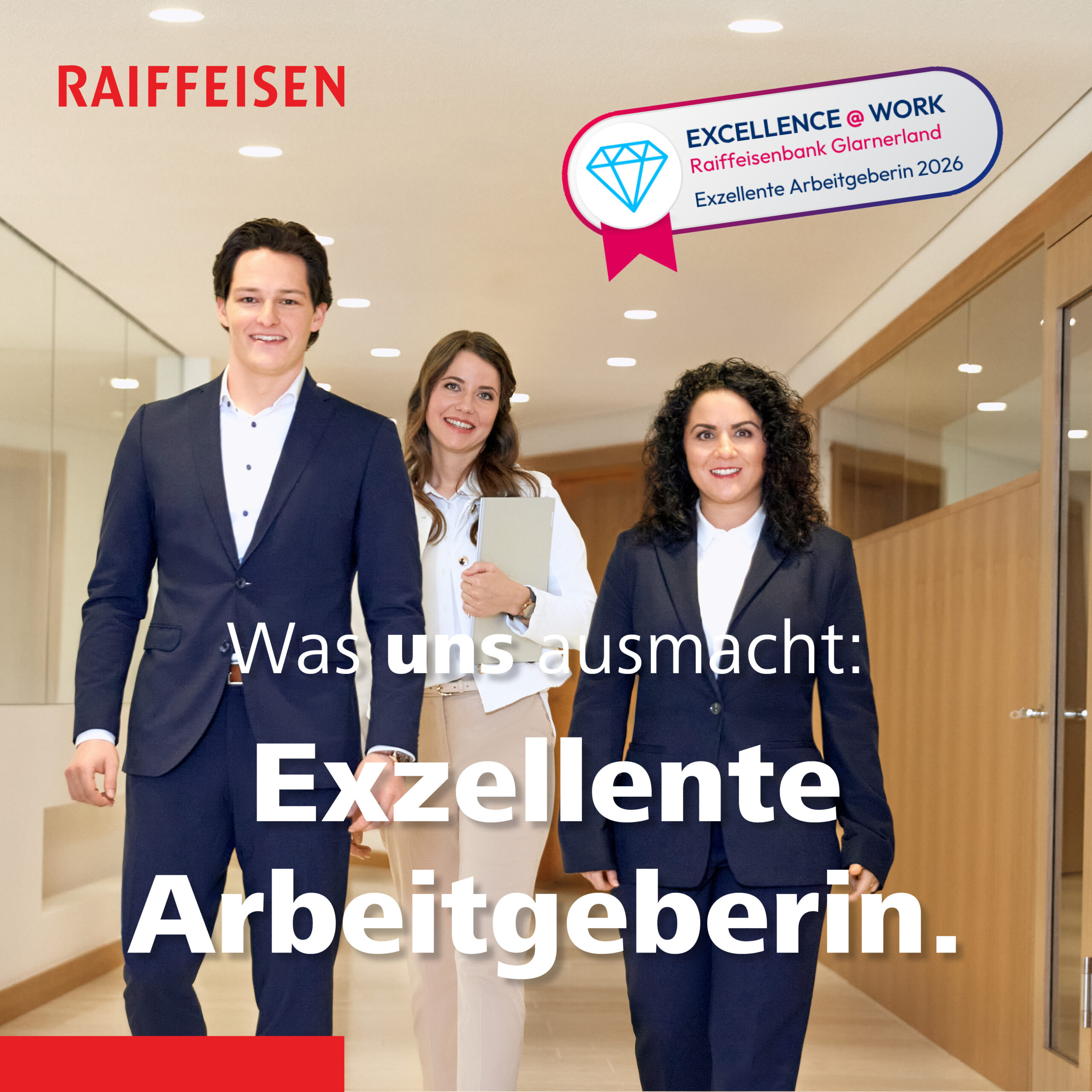
Top Employer: Raiffeisenbank Glarnerland Impresses with Strong Leadership
September 21, 2026
Reading time: 2 min
ValueQuest recently had the honor of presenting the “Excellence@Work Award” to Raiffeisenbank Glarnerland. We extend our heartfelt congratulations.
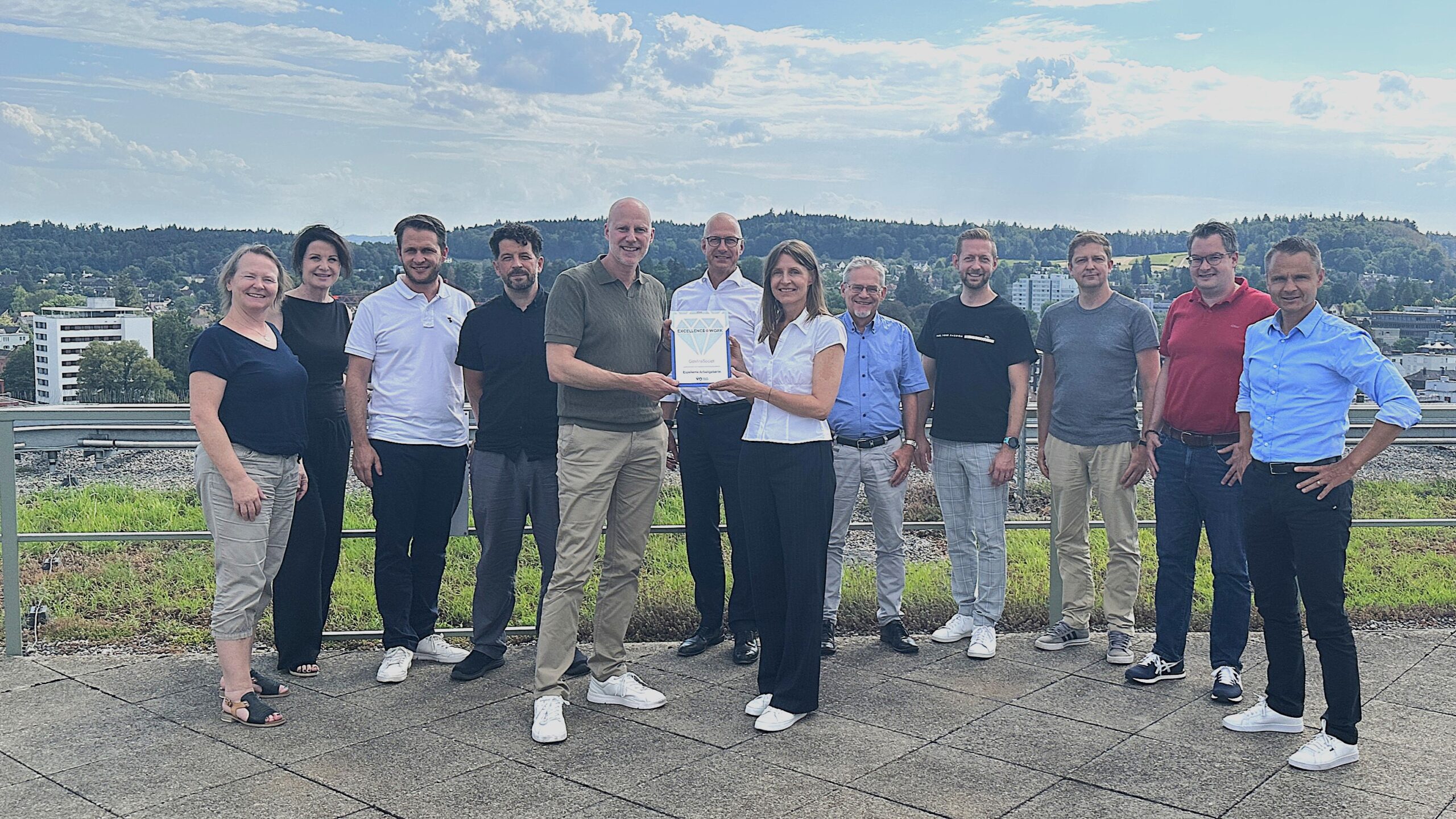
Top Swiss Employers: GastroSocial
September 9, 2026
Reading time: 3 min
GastroSocial has received the 2026 Excellence@Work Award from ValueQuest. With a response rate of 96 percent, a motivation score of 84, and 87 percent of employees serving as brand ambassadors, the company demonstrates a strong employer culture.

Employee Survey: Raiffeisenbank Möhlin Achieves Excellent Results
August 31, 2026
Reading time: 3 min
Raiffeisenbank Möhlin is one of Switzerland's top employers and is receiving our Excellence@Work Award in recognition of this achievement. Congratulations!

Employee Surveys in Switzerland: Find Providers & Tools
August 30, 2026
Reading time: 6 min
Employee Survey in Switzerland: How Do You Find the Right Employee Survey Provider? What Really Matters When It Comes to Anonymity, Tools, Questionnaires, and Analysis.

360-Degree Feedback Questionnaire: Sample, Template, and Sample Questions
August 21, 2026
Reading time: 7 min
Table of Contents A 360-degree feedback process is only as good as its questionnaire. The questionnaire is at the heart of the entire process. It determines whether...
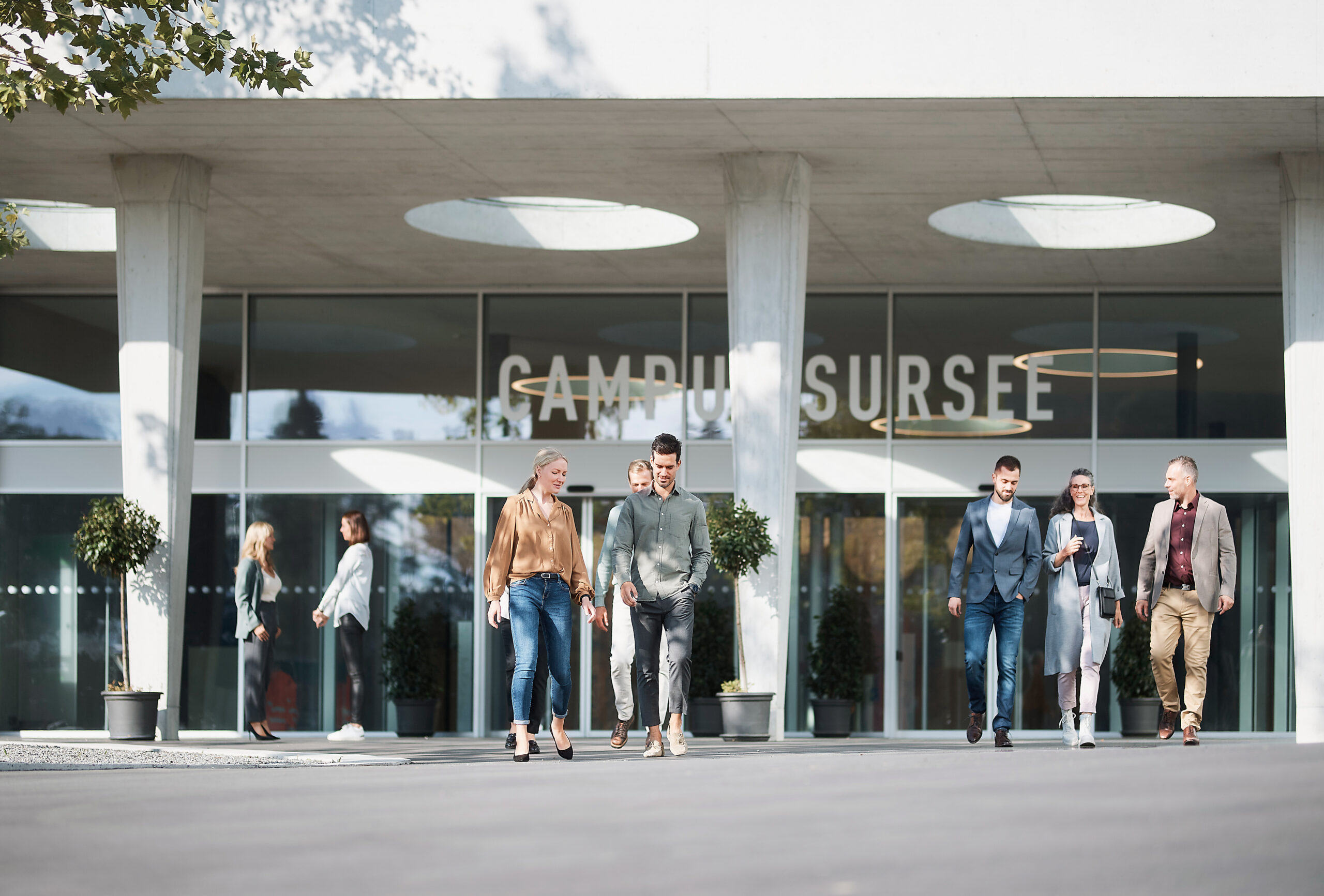
Employee Survey: The CAMPUS SURSEE Foundation Is Among Switzerland's Best Employers
August 5, 2026
Reading time: 2 min
ValueQuest honors particularly attractive employers in Switzerland with the Excellence@Work Award. We recently had the pleasure of presenting the award to the CAMPUS SURSEE Foundation.
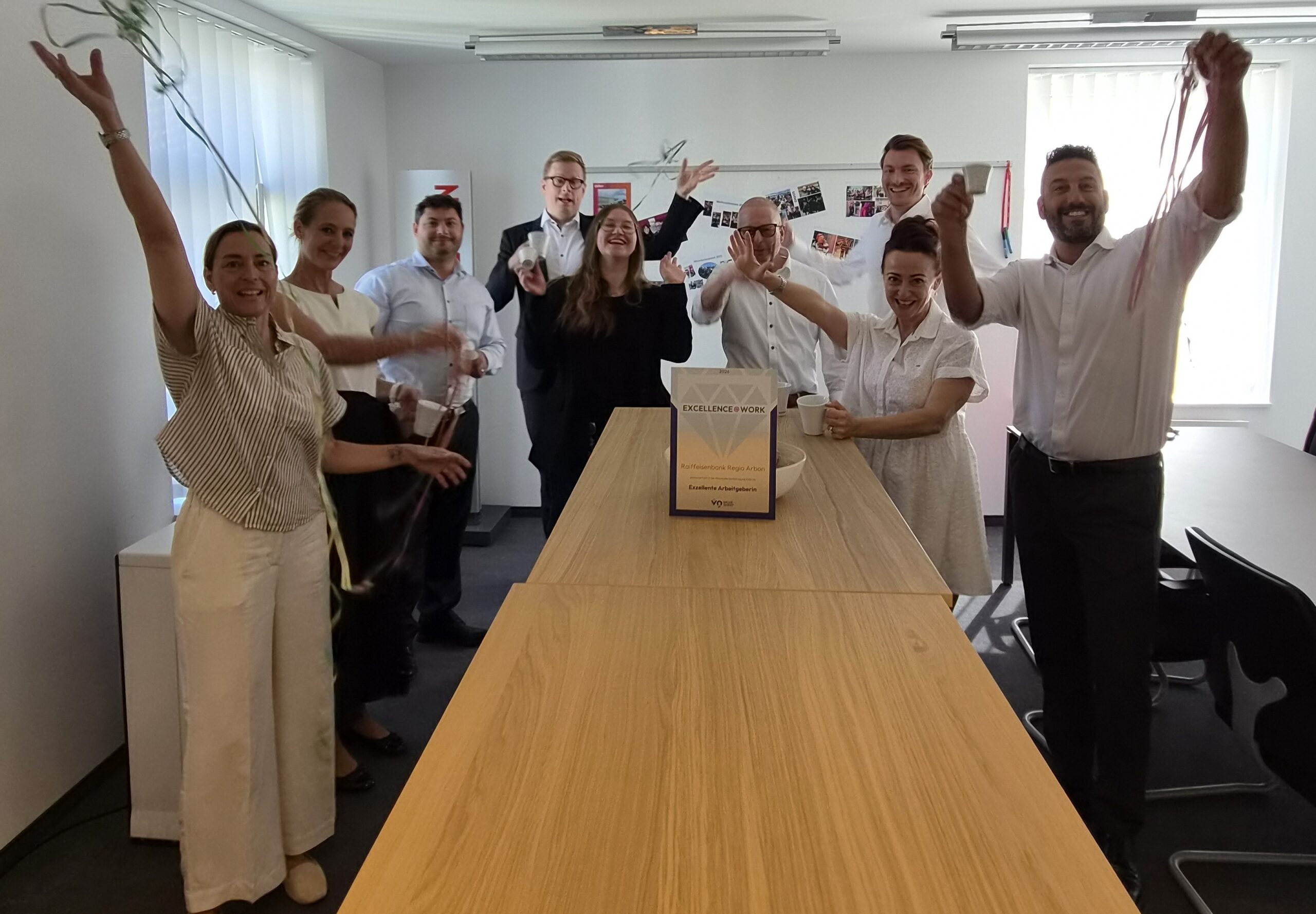
Raiffeisenbank Regio Arbon, a Top Employer: Personal Responsibility as Part of a Strong Corporate Culture
July 7, 2026
Reading time: 2 min
ValueQuest honors particularly attractive employers in Switzerland with the Excellence@Work Award. We recently had the pleasure of presenting the award to Raiffeisenbank Regio Arbon.