Our project manager Kathrin Neumüller spoke with Stefan Regli, Head of National Mail and Parcels at Swiss Post (Post CH Ltd), on the topic of "Good Leadership". Stefan Regli is currently responsible for around 400 employees and has more than 25 years of management experience in large corporations. He is also Vice President of GS1 Switzerland, the trade association for sustainable value creation networks.
Key messages:
- A constructive feedback culture means that feedback is given, actively requested and accepted across hierarchies. It includes both feedback on performance(feedback) and forward-looking suggestions for improvement(feedforward).
- A healthy error culture requires a positive view of people in which errors are not seen as intentional actions. Mistakes should be seen as an opportunity for improvement and not interpreted exclusively negatively.
- Good leaders show a genuine interest in their employees, not just in terms of their work, but in them as people.
- Generative AI will change professions, but will not necessarily make them redundant. The importance of empathy and social skills (in leadership) could even increase, while AI increasingly takes on analytical tasks. A new form of leadership will be required that includes the targeted integration of AI into business processes.
- Companies should focus more on finding employees who fit in with the corporate culture and take a future-oriented view of applicants' skills and competencies. Employee recruitment should be less role-based and more person-based in order to make the best possible use of scarce human resources. If functions become redundant in the future and requirement profiles change, the employee can be deployed in a different role.
Kathrin Neumüller: What does good leadership mean to you, Stefan?
Stefan Regli: For me, good leadership means that employees feel comfortable in their workplace, that they enjoy their work and are motivated. These are clear indicators that managers are fulfilling their tasks. Well-being in the workplace is influenced by a number of key factors, including a positive error culture and a transparent information and feedback culture.
Kathrin Neumüller: How do you define a good error culture and a good feedback culture?
Stefan Regli: A healthy feedback culture means that employees actively and constructively give each other "feedback" and "feedforward" by making suggestions for improvements across all hierarchical levels. It is essential that feedback is not only given, but also actively requested and accepted. As far as error culture is concerned, I live by a personal credo: nobody makes mistakes on purpose. Mistakes are a natural part of our work. This means that managers in particular should have a positive view of people. Just as we celebrate successes as a team, we should view mistakes as shared learning opportunities. What exactly constitutes a mistake is a matter of interpretation. The term "mistake" has negative connotations, although mistakes can also be seen as positive because they reveal potential for improvement.
Feedback
- Feedback usually refers to feedback or assessments of tasks already completed and achievements in the past.
- The focus is on reflecting on what went well and what could be improved.
- Feedback is retrospective, i.e. focused on the past, and helps the recipient to learn from experience and improve future performance.
Feedforward:
- Feedforward is future-oriented and focuses on solutions and possibilities for future tasks or behaviors.
- These are suggestions, advice or recommendations aimed at optimizing future performance.
- In contrast to feedback, feedforward focuses on future
Stefan Regli: For people to really feel comfortable in their workplace, it is essential that managers take a genuine interest in them. Good managers are not only interested in the content of the job and the company's figures. It is also crucial to take an interest in the employees themselves, who drive the company forward. This genuine interest is felt by the employees and contributes significantly to a positive working atmosphere. A good leader is also characterized by their ability to offer support in difficult and challenging situations. Likewise, leaders should set a clear direction and inspire employees to work together to achieve these goals.
Kathrin Neumüller: You talk about support in difficult situations. In this respect, are you referring to professionally difficult situations or are you also referring to privately difficult situations in which you support your employees? Are they two different worlds for you?
Stefan Regli: For me, the boundaries between private and professional life are blurred. Of course, there are certain boundaries that you shouldn't cross as a manager. However, personal problems often also affect professional performance. If I, as a manager, am able to help my employees with personal challenges, for example by creating the necessary professional freedom to deal with them, then this helps them to be more motivated and more willing to perform.
Kathrin Neumüller: What advice can you give our readers to improve their leadership skills?
Stefan Regli:
- Show genuine interest in your employees. Find out who they are as people, what they like to do and where their strengths lie.
- Give them responsibility and accompany them on this path. Give them the freedom to do so.
- Recognize good performance through honest and positive feedback. If necessary, you should also not shy away from constructive, negative feedback.
- Stay authentic and be yourself.
Kathrin Neumüller: To what extent do you think good leadership can be learned?
Stefan Regli: For me, good leadership is a continuous process that has a lot to do with experience. To be able to lead better, you need to gain experience. We learn from both mistakes and wrong decisions. Basically, a lot of it is trial and error: trying things out, accepting feedback and consciously giving employees freedom and responsibility. In particular, "letting go" needs to be learned. As a young manager, I personally wanted to stay in control. With increasing experience, I have learned to relinquish responsibility and create more freedom. A solid basis of trust between managers and employees is essential. Managers with more experience tend to trust their employees more than less experienced managers.
A strong culture of trust as the basis for collaboration is becoming even more important in times of working from home. With home office and smart work, managers have recently been confronted with another challenge: Leading remotely. Remote leadership became a major challenge during the Covid pandemic and still is to some extent.
Kathrin Neumüller: To what extent can an intrinsic interest in others and their reality be learned? You either like other people or you don't like them.
Stefan Regli: I agree with you on this point. That's why not all technically competent people are automatically good managers. A good specialist is not necessarily a good manager and vice versa. It is important that companies correctly assess and utilize the skills of each person in their personnel development.
Kathrin Neumüller: To what extent is poor employee performance a consequence of poor leadership?
Stefan Regli: Failure to meet performance expectations is often linked to expectation management. Only if a manager's expectations are clearly defined can we speak of poor performance. In my opinion, there are no fundamentally bad employees, only those whose skills are not being optimally utilized. It is the manager's job to make the best possible use of employees' human resources and skills. In this sense, there are no good or bad employees per se. Rather, it is the managers who may have difficulties in correctly recognizing the strengths of their team members and using them effectively.
This consideration leads to an important point in personnel development: it is no longer just a matter of finding employees who fit a specific job description exactly. Rather, in view of the shortage of skilled workers, we should work towards recruiting and deploying people based on their individual strengths and skills. This means that we should move away from purely role-based recruitment and take a more person-based approach, focusing on the unique skills of each individual.
Many companies are still stuck in traditional recruitment approaches: they look for candidates who are an exact fit for an advertised position instead of reversing the focus. My suggestion would be to focus the search on people who fit the corporate culture and whose skills and competencies match the company's long-term goals. Instead of replacing employees one-to-one, we should think about how their individual strengths can be best utilized. This approach avoids gaps that arise when job profiles change or certain skills become redundant in the future.
Kathrin Neumüller: What do you think about the frequently voiced accusation that Generation Z is unmotivated or even "lazy", especially with regard to collaboration in intergenerational teams?
Stefan Regli: It is inappropriate to lump Generation Z together. Their work mentality may differ from previous generations in that they value a balanced professional and private life. This often leads to a preference for part-time work or multiple occupations. We should not interpret these differences as laziness, but as a different attitude to life and a changed perspective on working life. For companies, this means an adjustment in talent management. The younger generation is entering the job market with a fresh and experience-oriented approach. They are not just looking for a job, but for experiences and adventures in the workplace. This experience orientation in the workplace is becoming increasingly important. Older generations may prefer the home office, but I am seeing a growing interest from Generation Z to physically come into the office and have experiences.
You can also read our blog post on tensions and opportunities in the multigenerational workplace.
Kathrin Neumüller: Do you think that we are heading towards a two-tier employee society in which some enjoy a lot of flexibility and freedom, while others are strongly tied to the workplace?
Stefan Regli: The world of work is diverse. Employees in production or construction can't do their work from home. Nevertheless, I don't believe in a two-tier society. Many people who work in these areas enjoy doing so and have consciously chosen this profession.
Kathrin Neumüller: What inspires you about leadership?
Stefan Regli: People inspire me. Different people, different skills that employees bring with them, inspire me. As a manager, it inspires me to make a difference together with my team and to inspire, motivate and enthuse employees. It inspires me to work towards a shared vision with my employees.
Kathrin Neumüller: How do you view the theory that generative AI could make us superfluous as employees?
Stefan Regli: I am convinced that there will be some restructuring on the labor market: Some professions that exist today will no longer exist tomorrow. However, such shifts are nothing new. They have been with us since the beginning of digitalization. Generative AI can be seen as a further boost to digitalization. I am convinced that people will also be needed for many activities in the future. I am not of the opinion that AI will completely replace everything. Empathy and social skills will tend to become more important again. Other analytical tasks can probably be solved better with generative AI. A new type of leadership will also be required that integrates AI into business processes in a targeted and meaningful way.
Article published on June 18, 2024
About Barbara Haimoff

Barbara Haimhoff is Office Manager at ValueQuest and ensures that day-to-day business runs smoothly. She graduated from the KV Baden business school and is a qualified commercial clerk with many years of professional experience in administration and organization. Find out more about Barbara
Inspired? Then share this post via your favorite platform.
Other articles that might interest you ...

AI in the Swiss Insurance Market: What Insurers Can Learn from the Results
October 1, 2026
Reading time: 4 min
Artificial intelligence is not universally accepted in the Swiss insurance market. As a study by ValueQuest shows, customers’ openness to AI depends heavily on how it is used.

AI in the Swiss Insurance Market: Between Acceptance and Skepticism
September 28, 2026
Reading time: 5 min
For many Swiss people, artificial intelligence has become an integral part of everyday life. However, the situation is different when it comes to insurance companies.
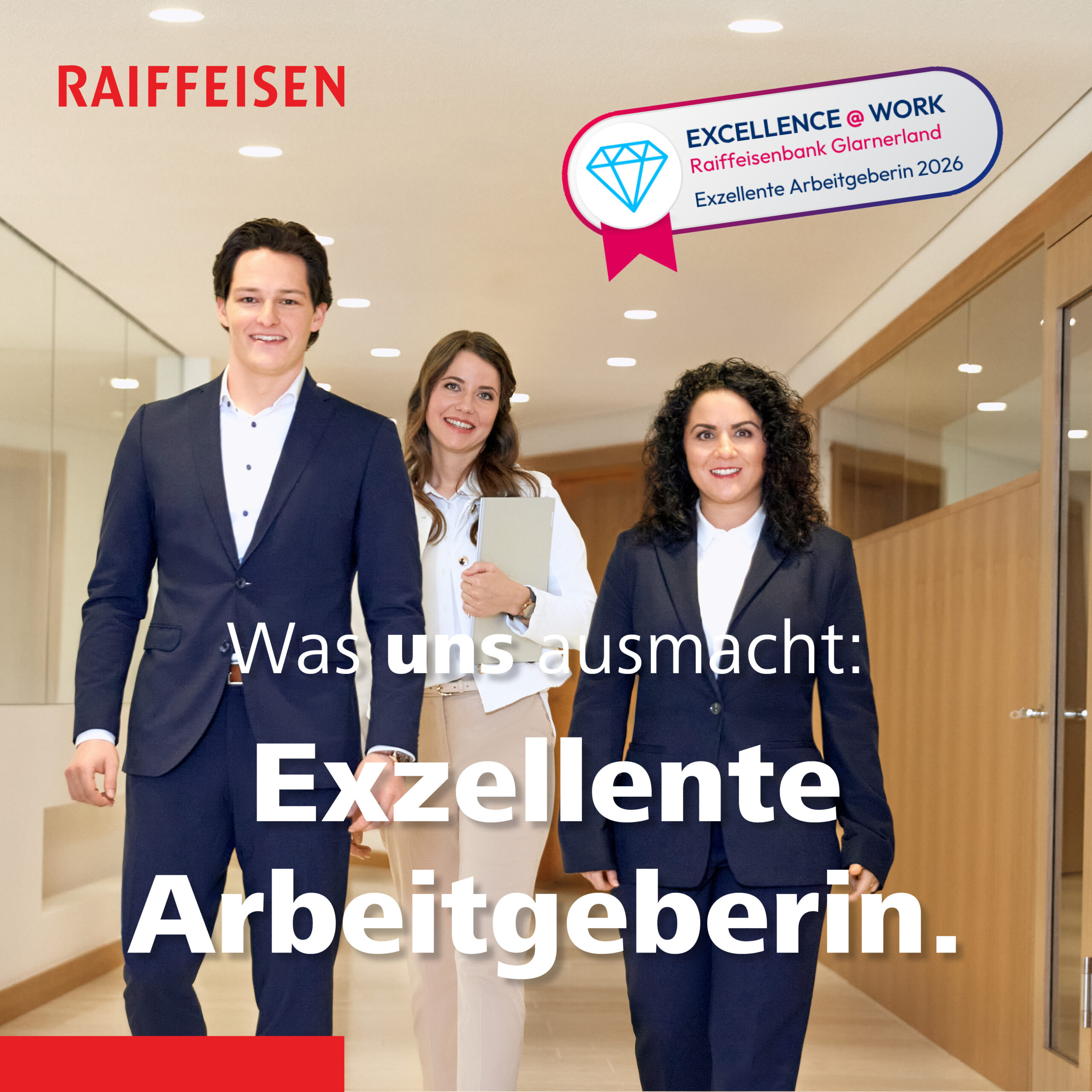
Top Employer: Raiffeisenbank Glarnerland Impresses with Strong Leadership
September 21, 2026
Reading time: 2 min
ValueQuest recently had the honor of presenting the “Excellence@Work Award” to Raiffeisenbank Glarnerland. We extend our heartfelt congratulations.
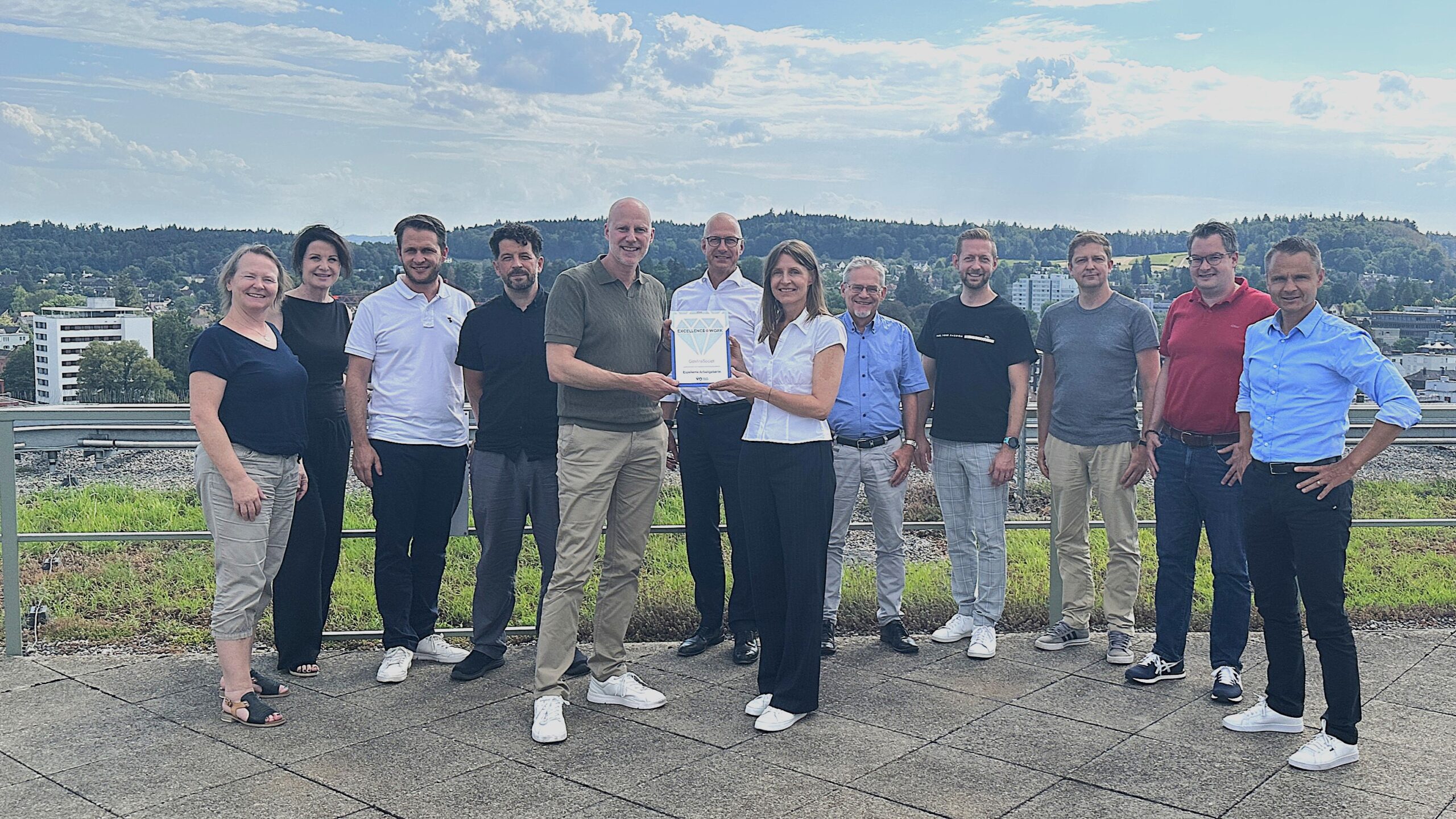
Top Swiss Employers: GastroSocial
September 9, 2026
Reading time: 3 min
GastroSocial has received the 2026 Excellence@Work Award from ValueQuest. With a response rate of 96 percent, a motivation score of 84, and 87 percent of employees serving as brand ambassadors, the company demonstrates a strong employer culture.

Employee Survey: Raiffeisenbank Möhlin Achieves Excellent Results
August 31, 2026
Reading time: 3 min
Raiffeisenbank Möhlin is one of Switzerland's top employers and is receiving our Excellence@Work Award in recognition of this achievement. Congratulations!

Employee Surveys in Switzerland: Find Providers & Tools
August 30, 2026
Reading time: 6 min
Employee Survey in Switzerland: How Do You Find the Right Employee Survey Provider? What Really Matters When It Comes to Anonymity, Tools, Questionnaires, and Analysis.

360-Degree Feedback Questionnaire: Sample, Template, and Sample Questions
August 21, 2026
Reading time: 7 min
Table of Contents A 360-degree feedback process is only as good as its questionnaire. The questionnaire is at the heart of the entire process. It determines whether...
Employee Survey: The CAMPUS SURSEE Foundation Is Among Switzerland's Best Employers
August 5, 2026
Reading time: 2 min
ValueQuest honors particularly attractive employers in Switzerland with the Excellence@Work Award. We recently had the pleasure of presenting the award to the CAMPUS SURSEE Foundation.
Raiffeisenbank Regio Arbon, a Top Employer: Personal Responsibility as Part of a Strong Corporate Culture
July 7, 2026
Reading time: 2 min
ValueQuest honors particularly attractive employers in Switzerland with the Excellence@Work Award. We recently had the pleasure of presenting the award to Raiffeisenbank Regio Arbon.