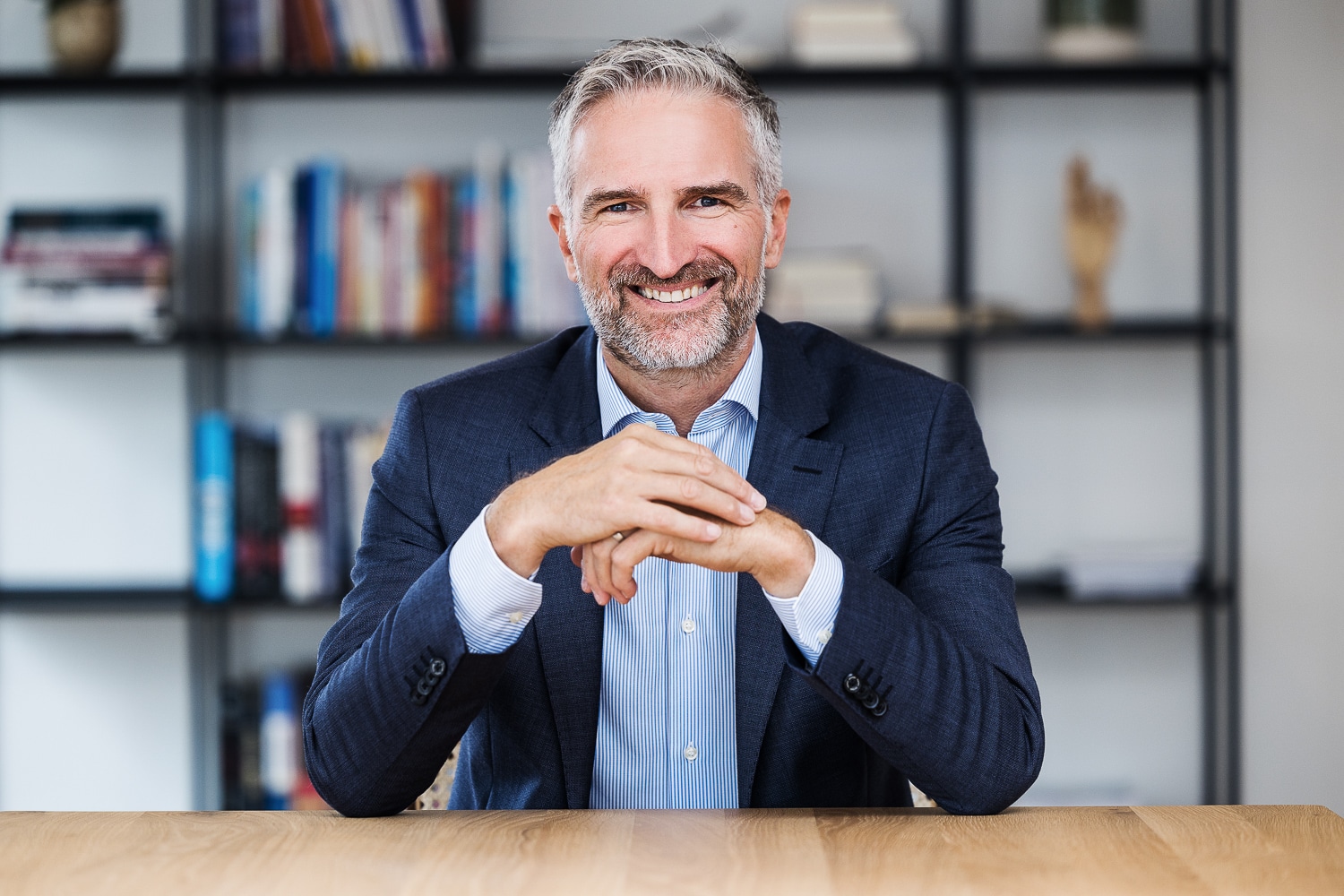
Gianni Valeri was CEO of the Manpower Group Switzerland, Managing Director of Coople Switzerland and Director Professional Staffing of the Adecco Group Switzerland and Italy. He is now Managing Director of Leadership & Culture and focuses in particular on the topics of leadership, intercultural management and organizational culture. Kathrin Neumüller conducted an exciting expert interview with him in which the focus was on the further development of one's own leadership style and leadership culture through leadership feedback.
What influence do management culture and corporate culture have on employee performance?
Kathrin: Where does your personal inspiration come from to deal with leadership, leadership culture and talent strategy and to support companies in these areas?
Gianni: There are two sources for my passion on this topic. On the one hand, I have worked in personnel services for 25 years and have had the opportunity to get to know and support countless companies. I was able to interview and place thousands of specialists and found that the same person, the same specialist, the same person or employee that I placed could generate incredible enthusiasm with one customer, but the same person could lead to harsh criticism and complaints from another customer.
It was a big surprise at first. I asked myself: How can that be? It's the same person doing the same job. Why are there such big differences? I learned back then that various elements have to work together to ensure that the collaboration between the employee and the manager really works well. These elements are, for example, leadership, management culture and corporate culture.
The second major source of inspiration was my Executive MBA at the Zurich University of Applied Sciences(ZHAW) from 2013 to 2015. During this Executive MBA, leadership was a major topic. I wrote my master's thesis on the influence of leadership on company performance and was thus able to develop my passion further. The critical juxtaposition of practice and theory fascinated me at the time. I've been teaching leadership at the ZHAW since 2018 because I can bring theory and practice together and pass on the results. It is my professional experience and theoretical exploration of the topic of leadership that motivated me to make this topic my life's work. It is precisely the support in these areas that is the strongest and most valuable, as I can provide companies and managers with tools and models to further develop their own leadership.
Talent can only develop in the right organizational and leadership culture
Gianni: You also touched on the topic of talent strategy. I am skeptical about the talent discussion, as this term implies that the development of talent lies exclusively with the employee themselves. However, I am of the opinion that this is fundamentally one-sided and wrong, as being or becoming talented has to do with many external factors and these must interact. The management culture and organizational culture have a strong influence on how people can use their talents.
Kathrin: I think your answer is very encouraging in that it does not necessarily attribute all the responsibility for professional success to the individual, but also to external circumstances. It is said that you are the architect of your own happiness. Nevertheless, there are factors that you cannot influence. I find your statement that the same people can also polarize fascinating. That they can fly in one environment and feel trapped in another, and that organizational factors can be supportive for some employees and inhibiting for others.
Gianni: I agree with that. It's not just the responsibility of the manager, nor is it exclusively the responsibility of the employee. That's why I'm making a bold statement here: everyone is a talent if they can bring their skills to bear in the right environment.
Leadership success depends on leadership goals
Kathrin: Your thesis is: "Leadership can be learned". This statement would probably surprise many people because they assume that leadership is innate. How did you arrive at this statement?
Gianni: Of course, I would have to ask the counter question - what is good leadership? Does good leadership have to do with the company's success and performance? Or does good leadership have to do with employee satisfaction? Leadership success depends on the perspective.
The notion that leadership skills are innate dates back to the late 19th and early 20th centuries. The so-called Great Man Theory of Leadership comes from the military. At that time, leadership was primarily researched in a military environment. According to this theory, you are either born a leader or you are not. In the meantime, leadership research has continued to work on this topic, incorporating the Big Five personality traits and investigating which character traits the majority of leaders have. In the course of this, scientists have also tried to find out which character traits are hereditary.
The demands of employees evolve in line with social changes
Research now says that around 50% of the characteristics that are important for leaders are inherited. At the same time, leadership aspirations and leadership styles also evolve with society. Until 1950, leadership was strongly authoritarian. Today, leadership is expected to be more participative, cooperative and inclusive. This has changed and developed with society. As a result, other people are becoming good leaders today who probably wouldn't have been 50-70 years ago.
Good leadership can be learned
Gianni: There are many tools to work on your leadership style. I believe that many aspects of good leadership can be learned, for example through training, mentoring and, of course, personal experience. If someone is born with the characteristics of a good leader - let's call them talents - then it is easier to become a better leader. If you have fewer innate characteristics, you can learn most of them if you have the will to do so. A Roger Federer is blessed with great talent, but he also had to train.
Kathrin: You compare a good manager with a competitive athlete or a professional musician. In these areas, there is the 10,000-hour rule according to the US psychologist Anders Ericsson - in other words: no master has fallen from the sky. Just because leadership is considered a soft skill doesn't mean that it doesn't need to be practiced and developed. On the other hand, you say that the definition of good leadership is also based on social and economic goals, i.e. in an economic system that aims to maximize profit, a different leadership style is preferred than in socially oriented systems or companies, such as the so-called gGmbHs (non-profit limited liability companies).
Are women the better managers?
Kathrin: Tomas Chamorro-Premuzic, Chief Innovation Officer at Manpower Group and a world-renowned professor of industrial and organizational psychology, recently published a book titled *Why So Many Incompetent Men Are in Leadership Positions (and What to Do About It)*. In it, Chamorro-Premuzic draws on current scientific research to demonstrate that, statistically speaking, men are worse leaders than women. Most companies and organizations confuse destructive personality traits such as narcissism and excessive self-confidence with leadership potential. Gianni, what do you think defines a female leadership style?
Gianni: Generally speaking, leadership strength is often equated with a strong demeanor, or more provocatively, "confused". People see the boss as a strong person. If the boss is strong, then we have the impression that he is a good boss. In my view, this is wrong. We are operating in the world of animal instincts here, if I may put it that way. My master's thesis on the influence of leadership on performance brought this to light. Back then, I was able to show with a small sample that women perform better - both financially and in terms of employee satisfaction. Women tend to have a higher level of neuroticism. In other words, they are strongly committed to the cause. They lead in a participative way [according to my study] and reward, value and recognize their employees - better than their male colleagues. Accordingly, I can say that women tend to lead better.
There is a big difference between men and women: If you ask a woman if she wants to take on a role or challenge, the woman will reply, "I'll have to see if I can do it. I'll think about it." The man will say: "I can do it". Even if it later turns out to be the opposite. I believe that management and HR development programs must take into account that the interaction with women and men is different. Women can show a little more self-confidence. However, it is also the manager's job to see these abilities and to give the person this self-confidence and support them in their development.
What can Swiss companies do to better integrate women into the labor market?
Kathrin: Where should Swiss companies catch up in terms of integrating women and mothers into the labor market? What recommendations do you have?
Gianni: Companies still have a lot of catching up to do. Some are already doing very well. But many companies still have some catching up to do. I don't think much of quotas. I am a strong advocate of consciously managing employees, identifying and emphasizing skills and consciously promoting people. My wife also works part-time - companies have a lot of catching up to do, especially in this area. When we talk about part-time work, many companies talk about 80 or 90%. That's not part-time. It's a reduced workload. As far as part-time models are concerned, we need models and opportunities that allow women who perhaps want to work 50% to 60% to take on management or expert positions. Many companies are showing that this is possible. So we have a lot of catch-up potential here, especially when we talk about a shortage of skilled workers. However, it needs the right leadership and no nose-picking when the little one is ill and she has to work from home. It takes a lot of awareness and good leadership to create good cooperation. Companies still have room for improvement here.
Kathrin: Thank you very much, Gianni, for this interesting interview. We look forward to hearing your practical tips for better leadership in the second part of this interview, which we will publish shortly.
Article published on July 18, 2023
About Dr. Kathrin Neumüller

Dr. oec. HSG Kathrin Neumüller is Co-Managing Director at ValueQuest and an expert in employee inspiration and empowerment. She also teaches strategic management in the MBA program at the ZHAW. She holds a doctorate from the University of St. Gallen (HSG) and studied at the University of Cambridge. Learn more about Kathrin
Inspired? Then share this post via your favorite platform.
Other articles that might interest you ...

AI in the Swiss Insurance Market: What Insurers Can Learn from the Results
October 1, 2026
Reading time: 4 min
Artificial intelligence is not universally accepted in the Swiss insurance market. As a study by ValueQuest shows, customers’ openness to AI depends heavily on how it is used.

AI in the Swiss Insurance Market: Between Acceptance and Skepticism
September 28, 2026
Reading time: 5 min
For many Swiss people, artificial intelligence has become an integral part of everyday life. However, the situation is different when it comes to insurance companies.
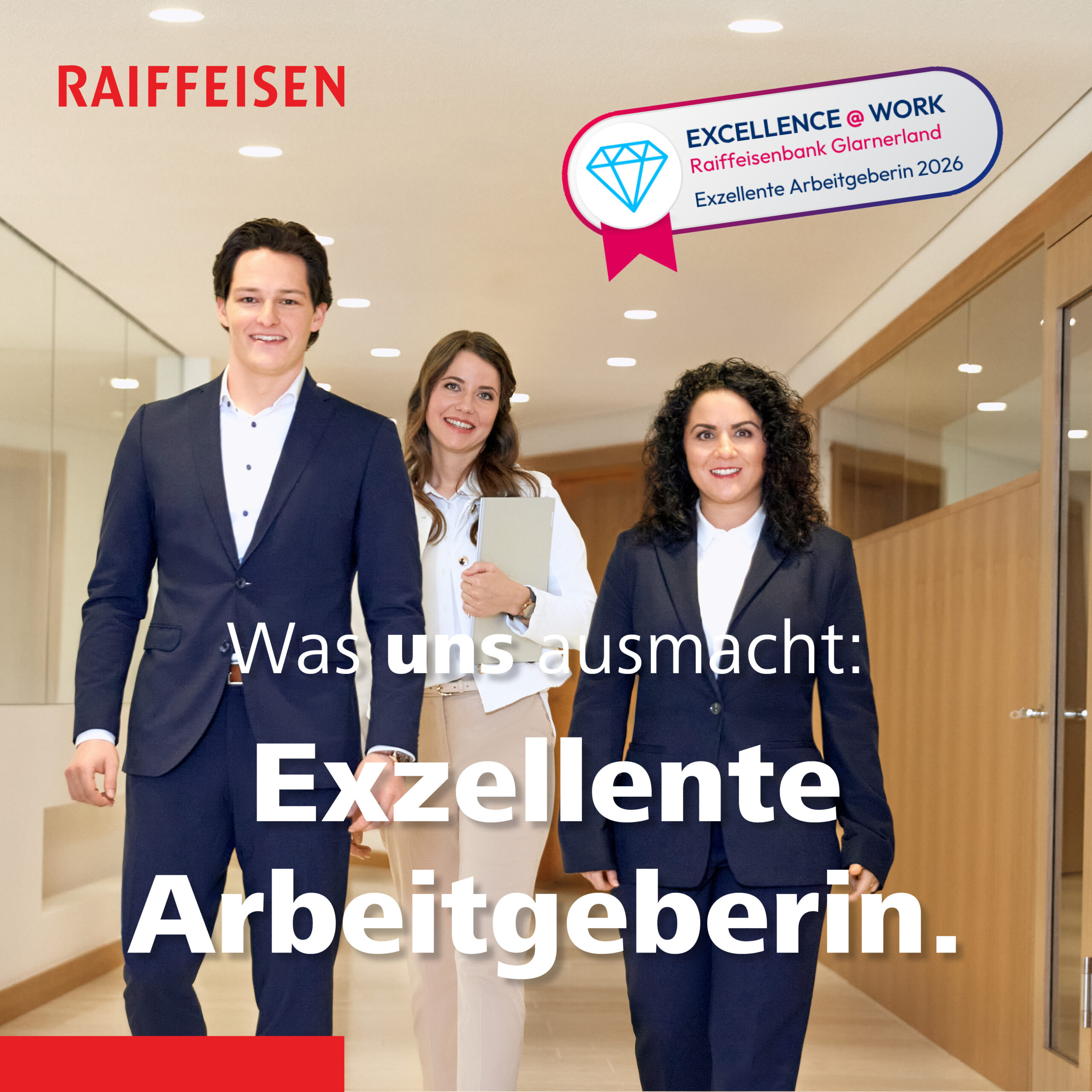
Top Employer: Raiffeisenbank Glarnerland Impresses with Strong Leadership
September 21, 2026
Reading time: 2 min
ValueQuest recently had the honor of presenting the “Excellence@Work Award” to Raiffeisenbank Glarnerland. We extend our heartfelt congratulations.
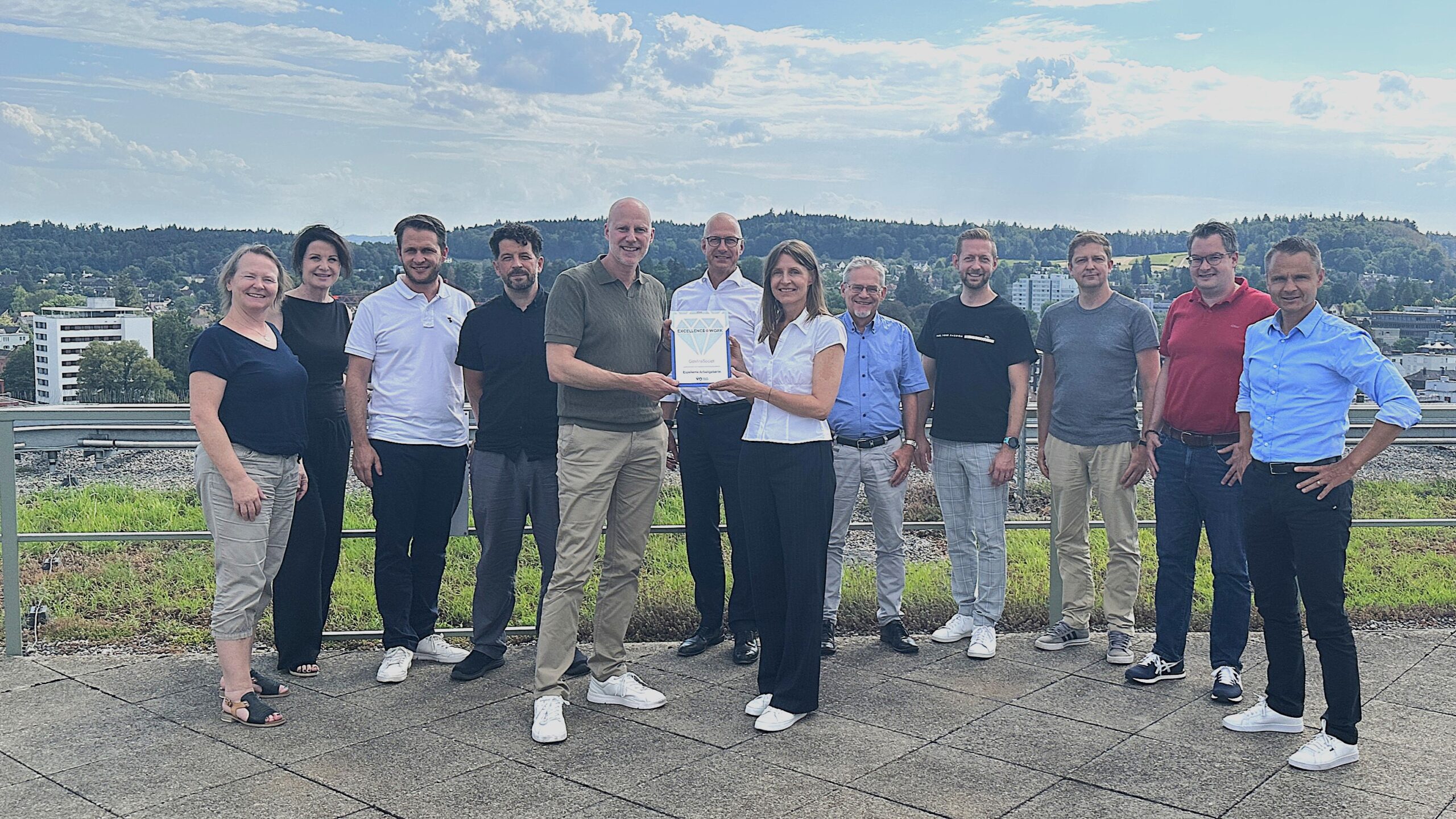
Top Swiss Employers: GastroSocial
September 9, 2026
Reading time: 3 min
GastroSocial has received the 2026 Excellence@Work Award from ValueQuest. With a response rate of 96 percent, a motivation score of 84, and 87 percent of employees serving as brand ambassadors, the company demonstrates a strong employer culture.

Employee Survey: Raiffeisenbank Möhlin Achieves Excellent Results
August 31, 2026
Reading time: 3 min
Raiffeisenbank Möhlin is one of Switzerland's top employers and is receiving our Excellence@Work Award in recognition of this achievement. Congratulations!

Employee Surveys in Switzerland: Find Providers & Tools
August 30, 2026
Reading time: 6 min
Employee Survey in Switzerland: How Do You Find the Right Employee Survey Provider? What Really Matters When It Comes to Anonymity, Tools, Questionnaires, and Analysis.

360-Degree Feedback Questionnaire: Sample, Template, and Sample Questions
August 21, 2026
Reading time: 7 min
Table of Contents A 360-degree feedback process is only as good as its questionnaire. The questionnaire is at the heart of the entire process. It determines whether...
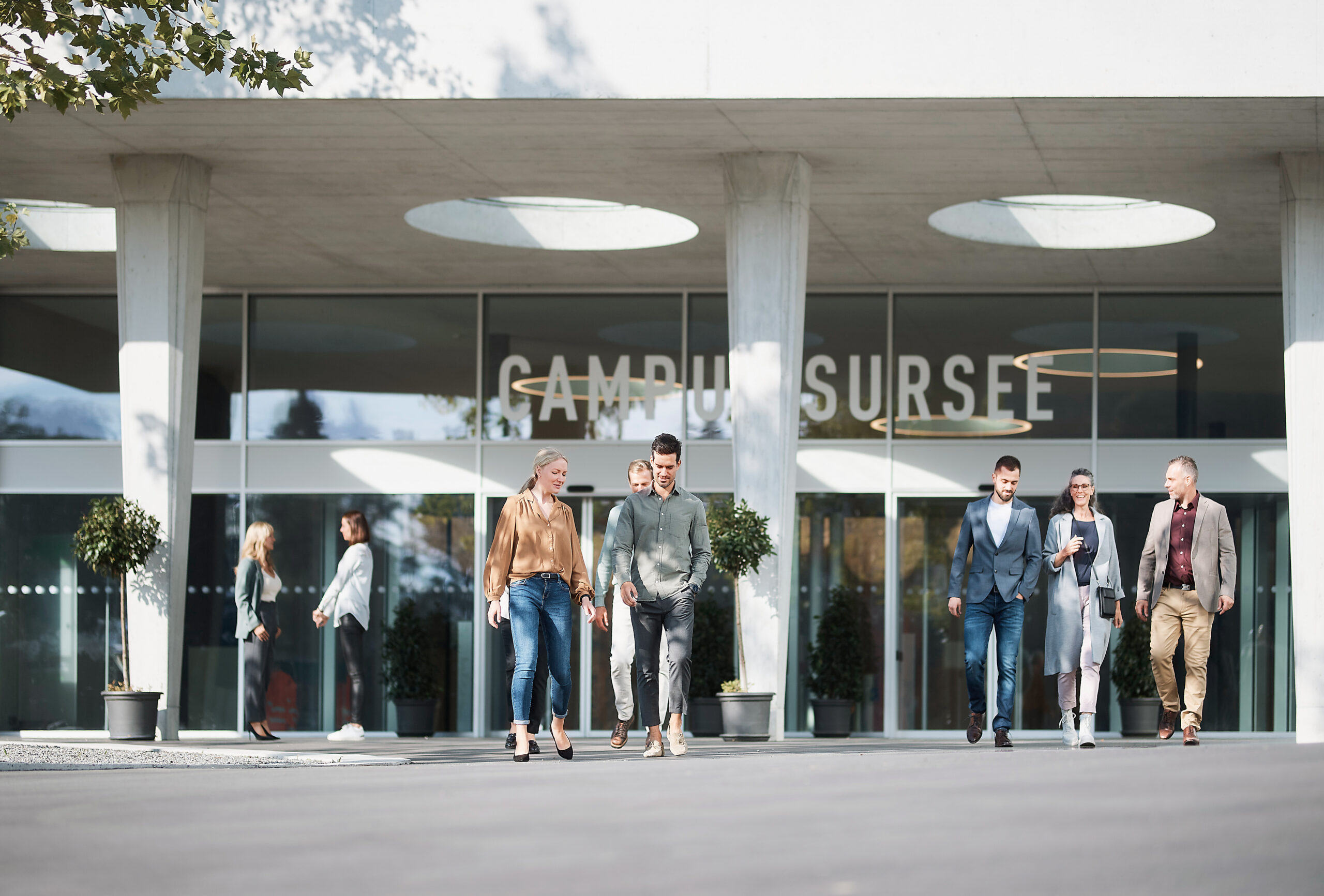
Employee Survey: The CAMPUS SURSEE Foundation Is Among Switzerland's Best Employers
August 5, 2026
Reading time: 2 min
ValueQuest honors particularly attractive employers in Switzerland with the Excellence@Work Award. We recently had the pleasure of presenting the award to the CAMPUS SURSEE Foundation.
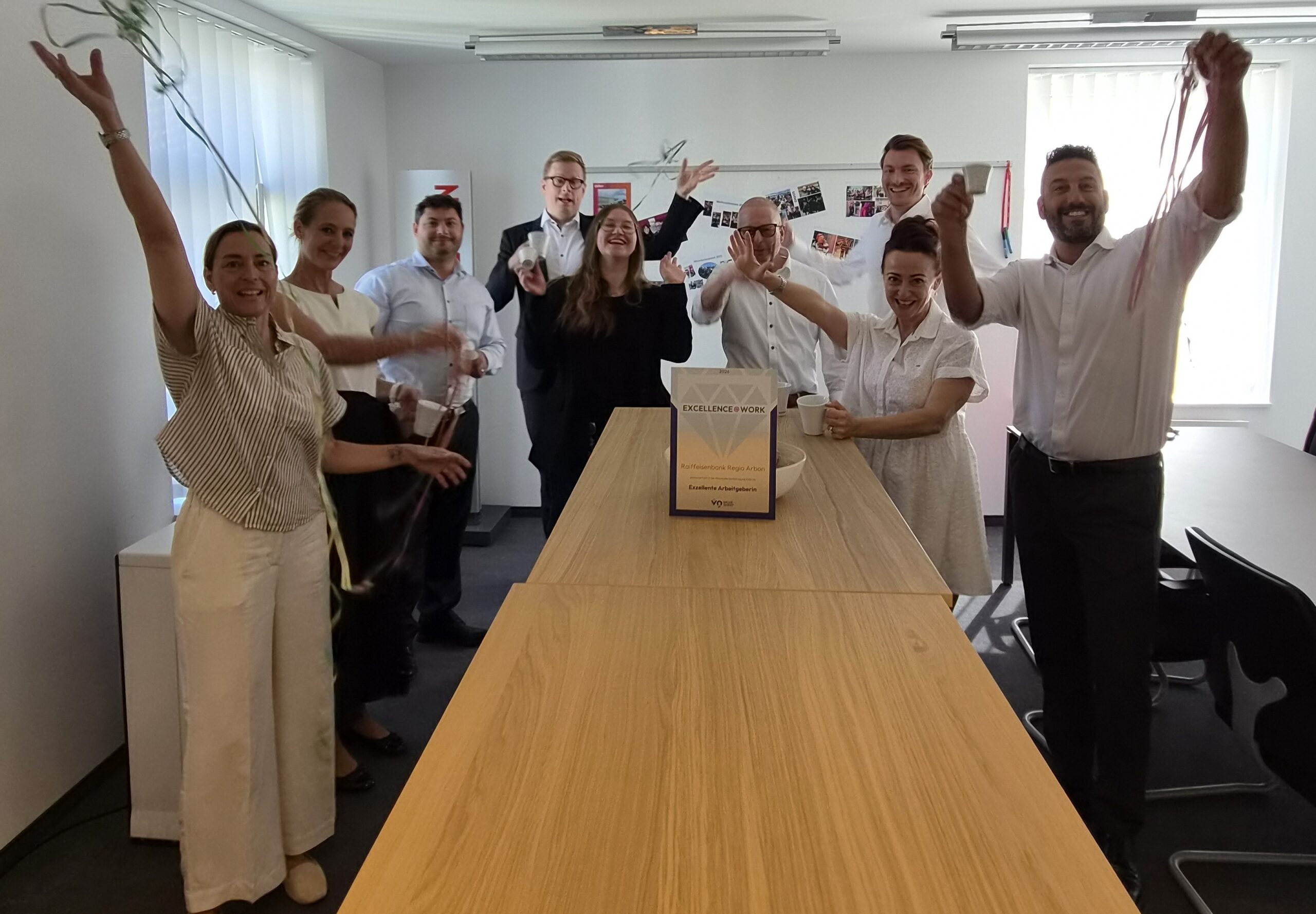
Raiffeisenbank Regio Arbon, a Top Employer: Personal Responsibility as Part of a Strong Corporate Culture
July 7, 2026
Reading time: 2 min
ValueQuest honors particularly attractive employers in Switzerland with the Excellence@Work Award. We recently had the pleasure of presenting the award to Raiffeisenbank Regio Arbon.