From questionnaire to change. Employee surveys are only effective if they are followed by action. (Image: Pexels)
Around 80% of large and medium-sized enterprises (SMEs) regularly conduct employee surveys, usually as part of organizational development and participative management. Ideally, this provides companies with valuable feedback that helps to identify potential for improvement in working conditions, leadership and corporate culture.
"All too often, the actual benefits of surveys are squandered - through poor questions, inadequate evaluation or a lack of consequences. What is intended as a management tool often ends up as a paper tiger. As a result, many companies have good intentions when it comes to employee surveys, but fail to implement them - much like a textbook that you buy to educate yourself, but which ends up gathering dust on the shelf without being read.
Table of contents
There is often a lack of clear measures or willingness to implement them. The true value of an employee survey lies not in the data collected, but in what the company does with it. It is crucial to use the survey as a starting point for sustainable change - only then will it become an effective tool for long-term success.
- Around 80% of companies conduct employee surveys, often as part of organizational development.
- The aim is to obtain valuable feedback in order to identify potential for improvement.
- Many companies fail to implement the results.
- The value of the survey lies in the use of the results for sustainable change.
Employee surveys should not serve as a political end in themselves or be used as an instrument for "white washing" in order to present the company as an attractive employer both internally and externally. A survey is not just a tool for key figures, but a dialog tool that forms the starting point for an open exchange between employees and management and should initiate a continuous learning and change process. There are few things more frustrating for employees than when a survey is not followed up with action and the results gather dust in a drawer unused.
- Employee surveys are not a PR tool to strengthen the image of an attractive employer.
- They serve as a dialog tool for the exchange between employees and management.
- Frustration arises when a survey is not followed by action ...
- Surveys should initiate a continuous learning and change process.
How important is anonymity in employee surveys?
Anonymity is often the main reason why companies choose external providers for employee surveys. Anonymity creates trust and enables employees to express themselves openly and honestly. This is the only way for the employer to receive honest feedback and see what needs to be worked on. At ValueQuest, we use a minimum evaluation threshold of five employees to ensure that anonymity is guaranteed even in small groups. In companies with a low culture of trust, this limit can be raised to provide even more security. It is important to communicate this clearly to employees in advance in order to gain their trust.
- Anonymity creates trust and honest feedback, which is why external providers are often commissioned.
- At least five or more participants are required so that evaluations can be made and anonymity can be guaranteed.
- This limit can be increased in companies with a low level of trust.
- It is important to create transparency about these measures in order to gain the trust of employees.
How often should employee surveys be conducted?
The regularity of the surveys is another important success factor. An interval of two years is ideal. This leaves enough time to implement the measures from the results and to review their impact. More frequent surveys can lead to an overload - both for the employees, who have to take part in surveys all the time, and for the company management, which has to process the results and derive appropriate measures. The benefits are limited.
- It is best to survey your employees every two years to check the impact of your measures.
- Too frequent surveys can overburden employees and managers.
- More and more frequent surveys are not necessarily better. There must be enough room for the results to be implemented.
When is an employee survey successful?
The success of an employee survey can be measured by several factors. The honesty of the responses is crucial, as only honest feedback provides a real basis for change. The participation rate also plays a major role: a high response rate - usually 80% - shows that employees are willing to get involved and that they take the survey seriously. However, a survey is not necessarily successful if the results are positive. It is much more important that clear potential for improvement and areas for action can be identified. Discrepancies between departments can also provide valuable indications of problem areas.
Definition of employee surveys
Employee surveys are structured and systematic surveys in which employees are asked about important topics such as their job satisfaction, leadership, cooperation, corporate culture or change processes. Anonymous and honest feedback is intended to help identify the strengths and weaknesses of the organization and derive targeted improvement measures.
Another sign is positive feedback from employees. If the feedback is constructive and the survey is perceived as meaningful, this speaks for successful implementation. It's not just about satisfaction, but about employees feeling that their (critical) opinions are taken seriously. If employees feel that their opinions are heard and that measures are taken as a result, they will be more motivated to continue to play an active role.
Ultimately, it is the implementation of the measures that determines long-term success. It is not enough to collect results - concrete steps must follow. Transparent communication of the measures ensures that employees gain confidence in the process and remain willing to actively participate in the improvement. The survey should therefore not be seen as a one-off action, but as a starting point for continuous dialog and sustainable changes in the company.
- Honest answers and high participation rates of at least 80% are decisive success factors.
- Success means that concrete potential for improvement and areas for action are recognized.
- The implementation of measures and transparent communication are crucial for long-term success.

The right questionnaire for employee surveys
The questionnaire is the centerpiece of every employee survey. It should not only be used to take stock, but should also be geared towards the company's strategic goals. Questions are often mistakenly asked that are unrelated to work performance, such as "Would you welcome taking your partner to an employee event?". Such questions do not provide any useful insights.
Outdated images of people or leadership such as "praise from superiors" should also be avoided. Such questions suggest a hierarchical, top-down attitude. Phrases such as "go the extra mile for the company" hardly fit in with Swiss culture and undermine the seriousness of the survey.
It is best to cover various topics in the questionnaire and not just focus on one area such as the line manager or the workplace. At ValueQuest, we typically survey 16 subject areas. These subject areas are essential levers for change and provide concrete starting points for measures.
- The questionnaire should be strategically aligned with the company's objectives and address relevant topics.
- Questions unrelated to work performance or outdated management images should be avoided.
- It is important to cover a variety of topics, not just superiors or the workplace.
- ValueQuest typically surveys 16 topics that serve as levers for change.
Specific example questions from various dimensions
| Dimension | Example question |
|---|---|
| Work Content | "I enjoy my work, it's more than just a job for me." |
| Personal responsibility & participation | "My tasks and responsibilities are clearly defined."
"I can work independently and on my own responsibility." |
| Recognition & feedback |
"My supervisor values my opinion." "I receive appreciation for the work I do." "My line manager gives me feedback that helps me progress." |
| Personal perspectives (personnel | "I see good opportunities for my professional development at "Name Employer"."
"There are good opportunities for further training at "Name Employer"." |
| Teamwork | "I feel fully accepted in my team."
"In our team, I can openly say what I think (without negative consequences)." |
| Customer orientation & quality |
"Everyone at our company feels personally responsible for the satisfaction of our customers." "(Name of employer) offers customers first-class product and service quality." |
What makes for good questions in an employee survey?
- Clarity and unambiguity:
Questions should be easy to understand and leave no room for interpretation, as ambiguity can reduce the significance of the results. Good questions are characterized by the fact that they ask exactly what you want to know.
Less successful: "Are you satisfied with the information policy?"
Better: "I regularly receive all the important information I need to do my job efficiently?" (Scaled question from 1-6 or 1-5, from completely disagree to completely agree)
- Qualitative versus quantitative questions:
It makes sense to use two qualitative questions, e.g. to ask about suggestions for improvement or positive experiences. However, too many qualitative questions overwhelm employees and also the HR team, which has to evaluate the answers. An example of this would be.
Less successful: "What would you do if you were CEO?"
Better: "What two specific changes would make your job much easier?"
Each question should contribute to the company's strategic goals. Questions that are not directly related to work performance or company goals offer no added value and distract from the actual objectives of the survey. If a company is undergoing a transformation process, for example, it makes sense to ask employees about their willingness to change. This could be done with a question such as "At our company, employees feel encouraged to think and act entrepreneurially." Such questions address not only general job satisfaction, but also the company's capacity for innovation and development.
This focus on willingness to change is an important aspect of employee surveys in many companies, as entrepreneurial-minded employees bring the necessary agility and innovative strength to make the company successful in the long term. The trend is therefore moving away from measuring pure employee satisfaction.
- Levers for change:
Questions must be designed in such a way that they provide concrete starting points for measures. Good questions make it clear which areas need to be improved and what specific steps the company should take, for example:
"I receive feedback that helps me move forward."
"Cooperation between the departments works well."
"My line manager delegates to the right extent."
Artificial intelligence (AI) can help with employee surveys
Artificial intelligence offers many new and exciting possibilities for creating and evaluating questionnaires. AI-based tools such as Survey Crafter or SurveyDone create surveys at the touch of a button. However, caution is advised: Not every question generated by AI hits the core of the corporate vision or supports the strategic goals. Critical selection by humans remains essential. Even in the age of AI, companies should check whether the questions actually contribute to the company's values and goals. Otherwise, there is a risk of "data cemeteries" that are not used.
Data tells, story tells - Don't generate data graveyards without insights
We live in a technocratic world - advancing technology and tools make it easy to conduct surveys. But this harbors dangers: Companies run the risk of conducting too many surveys without making good use of the data obtained. This inevitably leads to data graveyards. Too many uncoordinated questions that do not clearly contribute to the company's objectives can also be counterproductive. It is more important to derive concrete measures from the results than the amount of data.
Lack of communication
Employee surveys often fail due to inadequate internal communication. The purpose of the survey and how the results will be evaluated must be clearly communicated in advance. After the survey, it is equally important to provide information about the next steps and not leave employees in a vacuum. Many employees are afraid to express their opinions openly or doubt that anything will change after the survey. Clear and open communication before, during and after the survey is crucial to gaining the trust of employees and encouraging their participation.
The search for the "absolute truth"
An employee survey is always just a snapshot. It does not represent the entire reality, but only shows part of it - namely what employees want to reveal to management. It is a mistake to believe that a survey reveals all problems or shows the "absolute truth". Companies should see the results as a starting point for a more in-depth dialog.
Lack of feedback culture
A common misconception is that an employee survey automatically creates an open feedback culture. On the contrary: without an existing feedback culture that promotes openness, trust and psychological safety, a survey cannot deliver meaningful results. If employees feel that their opinions are not being taken seriously or that no changes are being made, the survey results become a farce.
Article published on April 30, 2025
About Dr. Kathrin Neumüller

Dr. oec. HSG Kathrin Neumüller is Co-Managing Director at ValueQuest and an expert in employee inspiration and empowerment. She also teaches strategic management in the MBA program at the ZHAW. She holds a doctorate from the University of St. Gallen (HSG) and studied at the University of Cambridge. Learn more about Kathrin
Inspired? Then share this post via your favorite platform.
Other articles that might interest you ...
Heimgärten Aargau Recognized as a Top Employer: Enthusiasm Meets Trust
October 27, 2026
Reading time: 3 min
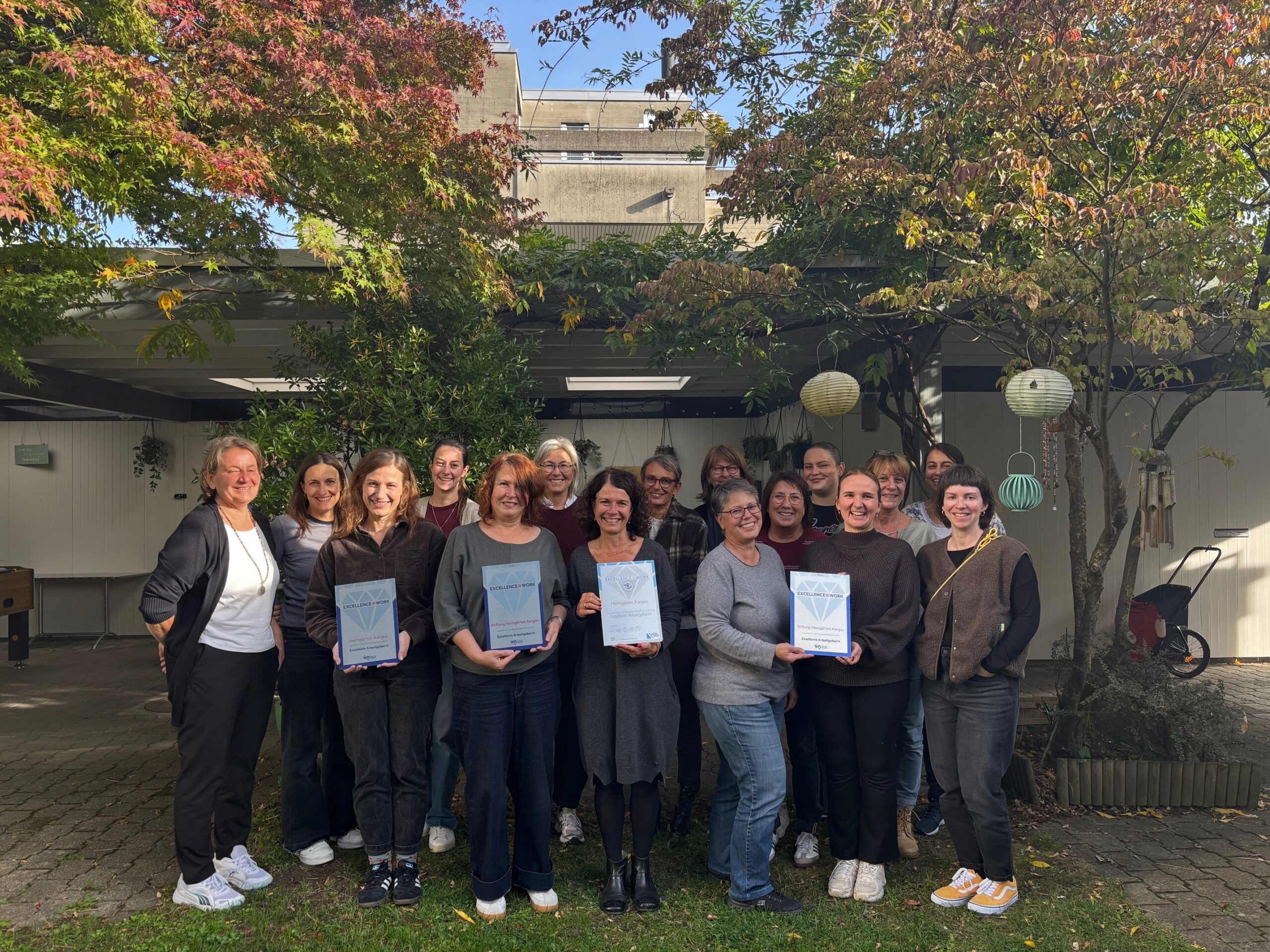
The Heimgärten Aargau Foundation has once again achieved outstanding results in the latest employee survey. For the fourth consecutive year, ValueQuest has honored the foundation with the Excellence@Work Award in recognition of its high appeal as an employer. We extend our heartfelt congratulations.

AI in the Swiss Insurance Market: What Insurers Can Learn from the Results
October 1, 2026
Reading time: 4 min
Artificial intelligence is not universally accepted in the Swiss insurance market. As a study by ValueQuest shows, customers’ openness to AI depends heavily on how it is used.

AI in the Swiss Insurance Market: Between Acceptance and Skepticism
September 28, 2026
Reading time: 5 min
For many Swiss people, artificial intelligence has become an integral part of everyday life. However, the situation is different when it comes to insurance companies.

Top Employer: Raiffeisenbank Glarnerland Impresses with Strong Leadership
September 21, 2026
Reading time: 2 min
ValueQuest recently had the honor of presenting the “Excellence@Work Award” to Raiffeisenbank Glarnerland. We extend our heartfelt congratulations.
Top Swiss Employers: GastroSocial
September 9, 2026
Reading time: 3 min
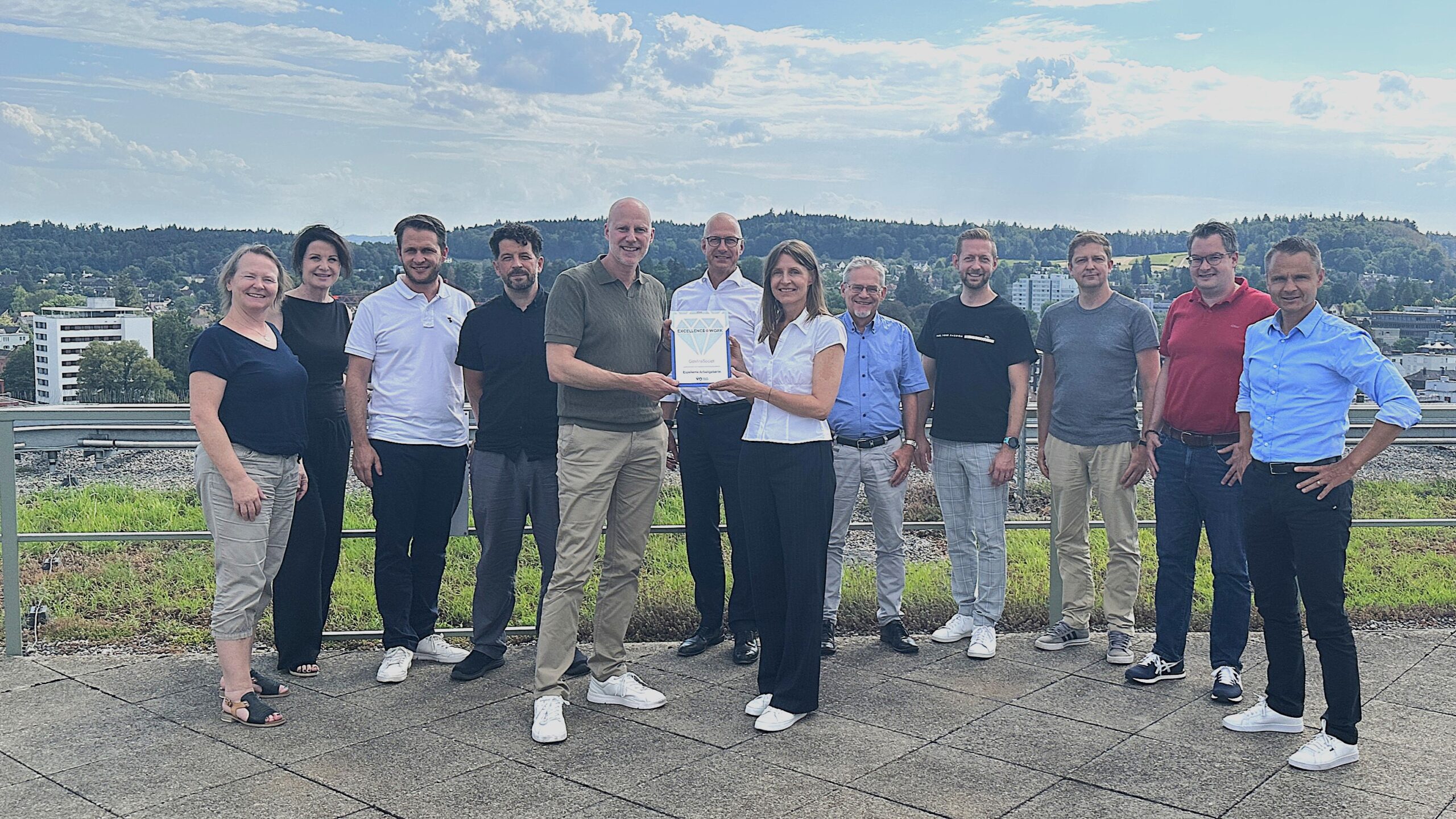
GastroSocial has received the 2026 Excellence@Work Award from ValueQuest. With a response rate of 96 percent, a motivation score of 84, and 87 percent of employees serving as brand ambassadors, the company demonstrates a strong employer culture.

Employee Survey: Raiffeisenbank Möhlin Achieves Excellent Results
August 31, 2026
Reading time: 3 min
Raiffeisenbank Möhlin is one of Switzerland's top employers and is receiving our Excellence@Work Award in recognition of this achievement. Congratulations!

Employee Surveys in Switzerland: Find Providers & Tools
August 30, 2026
Reading time: 6 min
Employee Survey in Switzerland: How Do You Find the Right Employee Survey Provider? What Really Matters When It Comes to Anonymity, Tools, Questionnaires, and Analysis.

360-Degree Feedback Questionnaire: Sample, Template, and Sample Questions
August 21, 2026
Reading time: 7 min
Table of Contents A 360-degree feedback process is only as good as its questionnaire. The questionnaire is at the heart of the entire process. It determines whether...

Employee Survey: The CAMPUS SURSEE Foundation Is Among Switzerland's Best Employers
August 5, 2026
Reading time: 2 min
ValueQuest honors particularly attractive employers in Switzerland with the Excellence@Work Award. We recently had the pleasure of presenting the award to the CAMPUS SURSEE Foundation.