Table of contents
Benefits and objectives of employee surveys
What is the purpose of an employee survey?
It is about recording how employees see their working environment, how high employee satisfaction is and involving employees in the development of the organization. Each person's voice carries the same weight. This gives management a broad and well-founded basis for making decisions and targeting improvements in the right places.
Without a survey, employee retention measures often miss the mark. If you don't know how satisfied your employees are, you run the risk of failing to meet their needs.
Is it enough just to measure employee satisfaction?
No, employee satisfaction alone is not enough. Whether employees are satisfied says something about the current mood in the workforce, but not about the causes of low (or high) satisfaction or about development potential. In addition to employee satisfaction, we therefore also measure commitment, motivation, loyalty and the framework conditions that influence these factors. These include the assessment of leadership and communication as well as development opportunities and remuneration.
Who takes part in the employee survey?
Our employee surveys are full surveys, i.e. the survey is aimed at all employees. From the Board of Directors to apprentices, all employees should (and may) take part in order to ensure that opinions are as broadly based as possible. Employee surveys provide orientation and are an effective management tool. They promote dialog, transparency and a willingness to change across all hierarchical levels.
Do other companies also carry out such surveys?
Yes, very many. From SMEs to large corporations, employee surveys are now a key management tool. Regular employee surveys are now part of the standard repertoire at large corporations. Smaller companies often do not yet survey their employees systematically. However, it is precisely here that employee surveys can create a great deal of added value.
💡 Tips for employers: successfully interviewing employees
Communicate the purpose clearly
Explain openly why the survey is taking place.
Actively involve managers
The support of middle management and executives is crucial for acceptance within the team.
Offer time slots during working hours
If you want to participate, you need space to do so. Plan time consciously.
Guarantee anonymity
Place value on data protection and, if necessary, external evaluation.
Include all target groups
Also plan formats for employees without PC access (e.g. paper questionnaires).
Not just asking. Act too.
Communicate the results and derive concrete measures.
Working with benchmarks
The comparison with other companies helps with classification and prioritization.
Thinking at team level
Topics such as collaboration and feedback are best dealt with within the team itself.
Repeat regularly
Every two years is a proven rhythm for making progress measurable.
Frequency and planning of surveys
How often should an employee survey be conducted?
A good survey is not a one-off project. It should take place regularly, approximately every 2 years, depending on the number of employees, level of maturity, culture and change dynamics in the company. This allows developments to be tracked and measures to be taken in good time.
What influences the right interval between surveys?
How often an employee survey should be conducted depends, among other things, on how quickly an organization can actually implement measures. The company should not be overwhelmed. Conducting surveys every two years ensures that there is enough time in between for implementation and impact. This is the only way to make long-term developments visible.
Contents and questioning techniques
What topics are covered in an employee survey?
There are usually two central topics in surveys: On the one hand, employees are asked how satisfied, loyal and committed they are. Secondly, the conditions that need to be created in the working environment in order for this employee satisfaction to develop. This includes, for example, questions about leadership, communication, development opportunities, teamwork and remuneration.
How is the questionnaire structured?
The questionnaire mainly contains closed questions with answer scales. In addition, there are some open questions where you can freely formulate your own assessments.
How are the questions formulated?
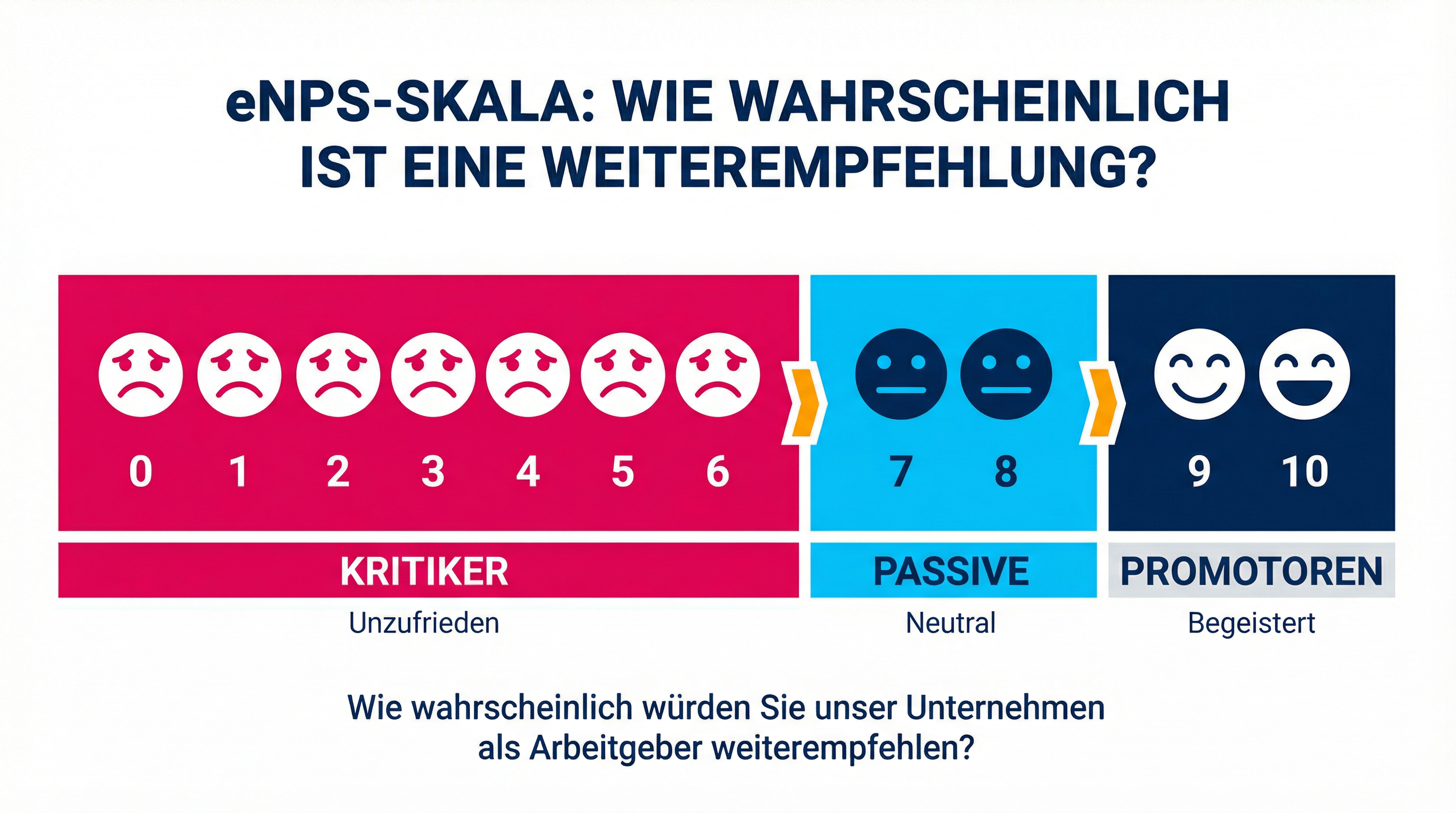
As a rule, questions are formulated as simple statements, for example: "I am satisfied with my job." You can then mark on a scale how strongly you agree with this statement (e.g. 1 = strongly disagree, 6 = strongly agree).
How many questions does a typical survey contain?
Usually between 80 and 90 questions. That sounds like a lot, but it can easily be done in around 15 to 20 minutes.
Are short surveys or pulse surveys an alternative?
Yes, short surveys or pulse surveys can be useful as a supplement. Short surveys on current topics or after major changes can help to quickly obtain an initial picture of the mood. However, pulse surveys are no substitute for a well-founded overall survey.
Why are employees addressed as "I" in the survey, even though they are normally addressed as "I" in the company?
Even in companies with a "you" culture, we deliberately use the "you" form in our surveys. As an external and trustworthy service provider, we want to maintain a professional distance and emphasize that the survey is not conducted by the employer itself, but by us as an independent body. Using the form "you" thus strengthens trust in the anonymity and credibility of the survey results.
Implementation and framework conditions of personnel surveys
How is the survey conducted?
Usually as an online survey. Employees receive an invitation via their business e-mail address. In special cases (e.g. in production, construction or logistics), we also send the survey by post. If some of the employees do not have access to a computer, the survey is conducted in a combined form: online for everyone with digital access and a paper questionnaire for everyone else.
Is the survey completed during working hours?
Yes, ideally yes. The company should deliberately make time available for this.
Is participation voluntary?
Participation in employee surveys is generally voluntary. In Switzerland, it is even legally regulated that employees cannot be forced to participate. However, clear communication, transparency regarding the purpose of the survey and a guarantee of anonymity can encourage a high level of participation.
Are there right or wrong answers?
No. These are not questions about knowledge. It's all about opinions and personal perceptions. And there is no right or wrong.
What is a good answer?
A good answer is not necessarily positive, but above all honest. A critical or reserved opinion can be very valuable. The honesty of employees determines the success of an employee survey. Answers that do not reflect the truth, but only say what the employer wants to hear, are less helpful.
Participation and response rate
What is a good response rate?
For office workers, a good response rate is around 80 percent. In areas without direct computer access, it can be somewhat lower.
How can the response rate be increased?
In our experience, there are several factors that have an impact on the response rate. These include, above all, internal company communication, support from superiors, experience from previous surveys and trust in anonymity. But the timing and the current mood also have an impact. If employees are frustrated or overworked, they are less likely to take part.
What to do if the response rate is low?
Managers can take action in advance. They should make it clear that the survey is important, that employees' opinions will be heard and that concrete changes will result from it. If employees have the impression that nothing will happen anyway, they will be less willing to participate. On the other hand, those who are convinced that their voice counts will usually participate.
External support and quality
Why should an external provider be commissioned?
An external provider ensures an independent, methodologically sound survey and guarantees anonymity and data protection. This increases credibility. Employees are more open when they know that their answers will not be analyzed internally. As an external provider, we also have many years of survey experience as well as a large pool of questions and benchmarks to compare your own organization with similar companies.
Is the evaluation by ValueQuest scientifically sound?
Yes, ValueQuest is a recognized market and social research institute. We are committed to the highest standards of methodology, data protection and scientific validity. Our model is backed by more than 20 years of research and practice in the HR sector. All modules are based on recognized constructs with high explanatory value. Each question has been proven to actually measure the intended dimension.
Implementation and impact of employee surveys
What happens after the interview?
The measures are usually defined in one or more implementation workshops. Depending on your wishes, this can be done together with ValueQuest as the implementation partner, by external coaches or by you as the client internally. We offer various formats: from team workshops to coaching sessions and leadership development.
Should employees be involved in the implementation?
Absolutely. A successful survey does not end when you click on "Send response". It is crucial that the results are also translated into concrete measures. Employees should be involved in finding solutions - for example through workshops, feedback rounds or working groups. This creates relevance, acceptance and legitimacy. Some topics (such as better communication by the management) can be tackled centrally. However, separate formats are needed at team level. Topics such as teamwork or mutual support should be dealt with within the team itself.
Offers and cooperation
What does an employee survey with ValueQuest cost?
Please contact us and describe your needs. We will provide you with a customized offer within a short period of time.
Can coaches or consultants also cooperate with ValueQuest?
Yes, cooperation is possible. Please get in touch with us.
Is it possible to book presentations or keynotes?
Yes, researcher and Co-Managing Director Kathrin Neumüller is available for presentations and workshops. Three particularly popular presentations are:
- "Inspiring and empowering employees in times of change"
- "Cross-generational leadership"
- "Successfully implementing employee surveys"
Article published on July 10, 2025
About Dr. Kathrin Neumüller

Dr. oec. HSG Kathrin Neumüller is Co-Managing Director at ValueQuest and an expert in employee inspiration and empowerment. She also teaches strategic management in the MBA program at the ZHAW. She holds a doctorate from the University of St. Gallen (HSG) and studied at the University of Cambridge. Learn more about Kathrin
Inspired? Then share this post via your favorite platform.
Other articles that might interest you ...

AI in the Swiss Insurance Market: What Insurers Can Learn from the Results
October 1, 2026
Reading time: 4 min
Artificial intelligence is not universally accepted in the Swiss insurance market. As a study by ValueQuest shows, customers’ openness to AI depends heavily on how it is used.

AI in the Swiss Insurance Market: Between Acceptance and Skepticism
September 28, 2026
Reading time: 5 min
For many Swiss people, artificial intelligence has become an integral part of everyday life. However, the situation is different when it comes to insurance companies.

Top Employer: Raiffeisenbank Glarnerland Impresses with Strong Leadership
September 21, 2026
Reading time: 2 min
ValueQuest recently had the honor of presenting the “Excellence@Work Award” to Raiffeisenbank Glarnerland. We extend our heartfelt congratulations.
Top Swiss Employers: GastroSocial
September 9, 2026
Reading time: 3 min
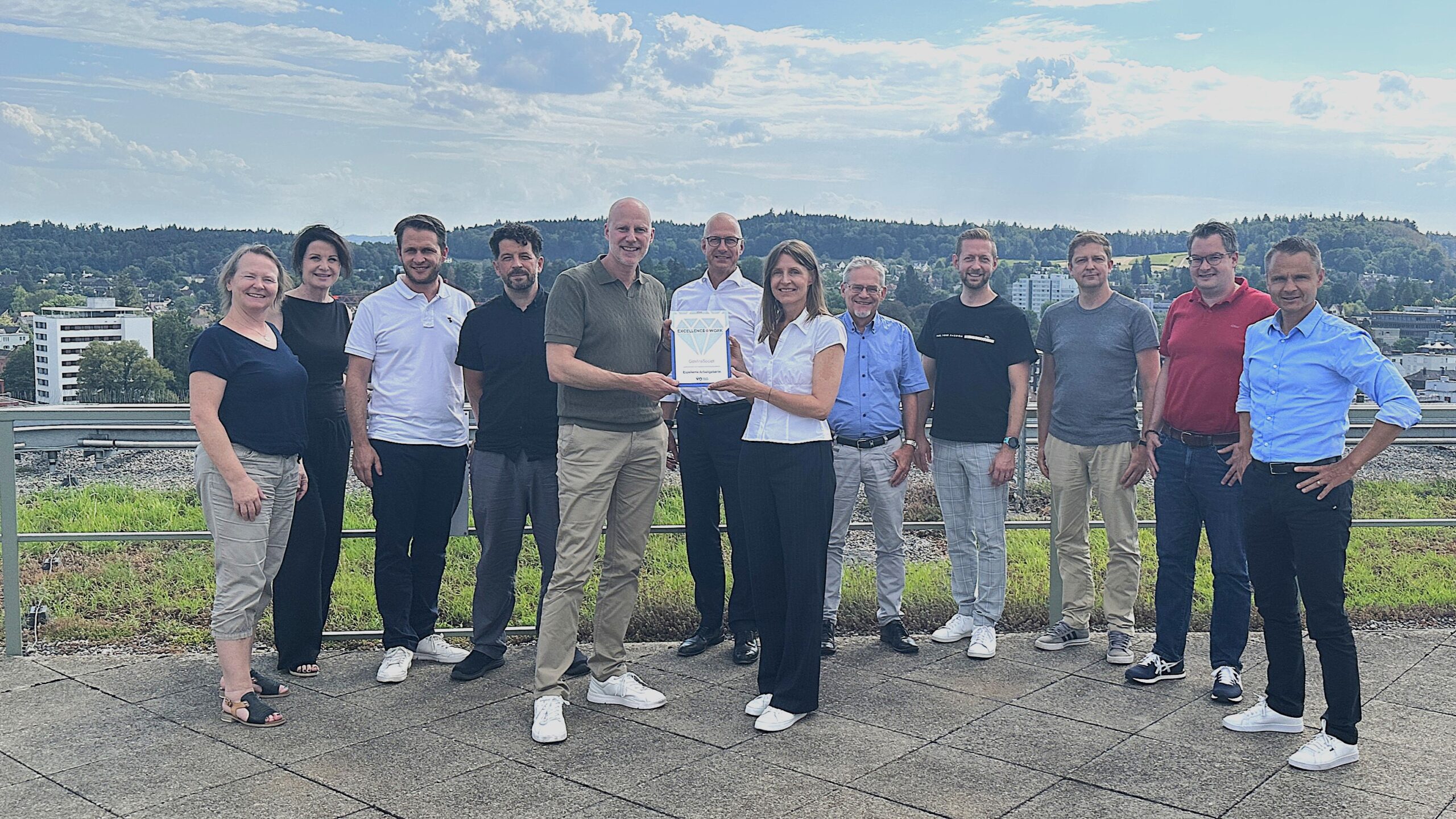
GastroSocial has received the 2026 Excellence@Work Award from ValueQuest. With a response rate of 96 percent, a motivation score of 84, and 87 percent of employees serving as brand ambassadors, the company demonstrates a strong employer culture.

Employee Survey: Raiffeisenbank Möhlin Achieves Excellent Results
August 31, 2026
Reading time: 3 min
Raiffeisenbank Möhlin is one of Switzerland's top employers and is receiving our Excellence@Work Award in recognition of this achievement. Congratulations!

Employee Surveys in Switzerland: Find Providers & Tools
August 30, 2026
Reading time: 6 min
Employee Survey in Switzerland: How Do You Find the Right Employee Survey Provider? What Really Matters When It Comes to Anonymity, Tools, Questionnaires, and Analysis.

360-Degree Feedback Questionnaire: Sample, Template, and Sample Questions
August 21, 2026
Reading time: 7 min
Table of Contents A 360-degree feedback process is only as good as its questionnaire. The questionnaire is at the heart of the entire process. It determines whether...

Employee Survey: The CAMPUS SURSEE Foundation Is Among Switzerland's Best Employers
August 5, 2026
Reading time: 2 min
ValueQuest honors particularly attractive employers in Switzerland with the Excellence@Work Award. We recently had the pleasure of presenting the award to the CAMPUS SURSEE Foundation.
Raiffeisenbank Regio Arbon, a Top Employer: Personal Responsibility as Part of a Strong Corporate Culture
July 7, 2026
Reading time: 2 min
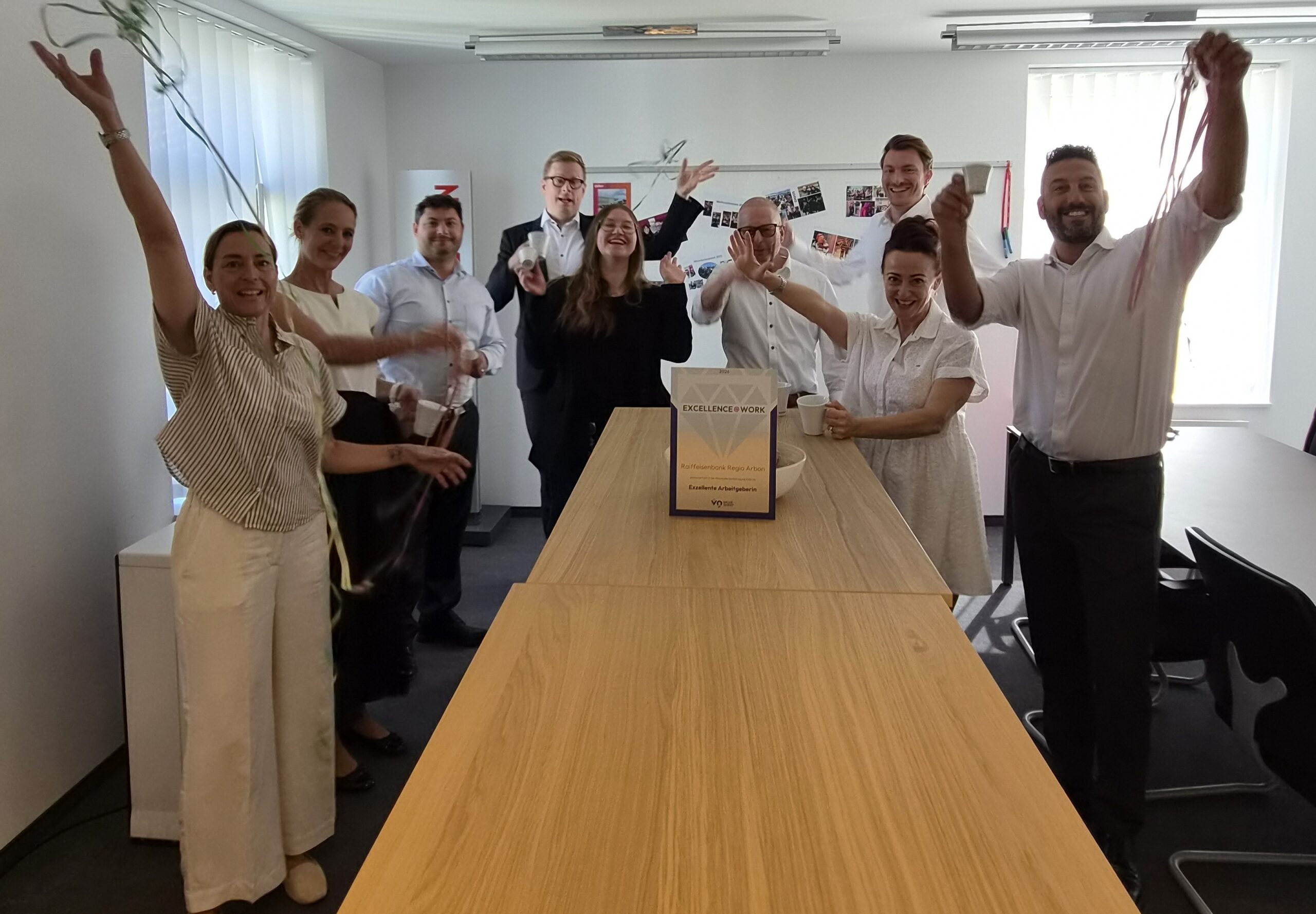
ValueQuest honors particularly attractive employers in Switzerland with the Excellence@Work Award. We recently had the pleasure of presenting the award to Raiffeisenbank Regio Arbon.