Filling apprenticeship positions is becoming an increasing challenge for many Swiss SMEs. Although apprenticeships are highly valued in Switzerland, around 10% of all apprenticeships remain unfilled each year. In other words: 7,000 to 10,000.
One thing is certain: Attracting young talent to your company at an early stage secures skilled workers in the long term and strengthens your position as an attractive employer.
- What do apprentices really want from their apprenticeship and their employer?
- How do they experience their day-to-day work?
- And what can training companies in Switzerland do to position themselves as an attractive employer for apprentices?
Answers are provided by a new, representative study of over 45,000 apprentices, which was initiated by WorkMed (a joint venture between SWICA and Psychiatrie Baselland) and was conducted in collaboration with the University of Applied Sciences Northwestern Switzerland and Luca Bonfadelli (study co-author) from ValueQuest. Our Research Manager Luca Bonfadelli was in charge of the implementation.
Table of contents
Apprenticeships in Switzerland: the backbone of the Swiss economy
Apprenticeships are central to Switzerland. Around 210,000 young people are currently completing an apprenticeship. This corresponds to around two thirds of a school leaver cohort (FSO, 2023). Despite this, up to 10,000 apprenticeships remain unfilled every year(source: Yousty). One possible reason: the psychological stress of many young people is increasing. Some drop out of their apprenticeship. Others don't start them at all.
Swiss SMEs are particularly challenged in this situation. Around 60% of all apprenticeships in Switzerland are offered by small and medium-sized companies (FSO, 2023). Those who not only recruit apprentices, but also successfully support them, secure the skilled workers of tomorrow.
“
Those who take mental health seriously are not only acting in the best interests of their trainees, but are also creating a long-term basis for high employee loyalty.
Mental stress in the focus of the learner survey
For many young people in Switzerland, an apprenticeship is the start of their professional life and a formative stage in their personal and professional development. They learn to take on responsibility, to work in teams and to deal with pressure. Many apprentices take on responsibility for their work for the first time, have to integrate into a team and experience a new everyday structure that is very different from their school days.
However, this transition not only leaves behind learning experiences, but also traces: many learners experience psychological stress, from excessive demands to emotional withdrawal. This is precisely why this survey focuses on the psychological well-being of learners.
For training companies, this means that those who take mental health seriously are not only acting in the best interests of their trainees, but are also creating a long-term basis for high employee retention.
The mental health of learners is relevant for SMEs
Around 60% of all apprenticeships in Switzerland are offered by SMEs (FSO, 2023). Smaller companies in particular therefore play a key role in vocational education and training. They not only shape the image of apprenticeships, but also the actual experience of young people. Those who provide apprentices with good support today secure the skilled workers of tomorrow - and at the same time strengthen their own employer image.
Certificates such as "Top training company" or programs such as "Great Start!" can help to make commitment visible. However, the decisive factor is how learners experience their everyday working life: the relationship with their superiors, communication and the employer's attitude (taking learners seriously). An award or certificate is all well and good, but it is no substitute for effective measures to increase employee motivation among learners.
Employer attractiveness begins before the first day of work
Employers can score points if they take the concerns and uncertainties of apprentices seriously and build up a trusting relationship. In addition to the anticipation of starting an apprenticeship, many young people also report concerns that should be taken seriously. Around 60 percent fear excessive demands, too little vacation, long working hours or a lack of understanding for their personal situation. Almost a fifth of those surveyed even stated that they were not looking forward to any specific aspect of the apprenticeship.
These figures show that a successful training program doesn’t begin on the first day of work. Rather, employers are encouraged to actively support new hires right from the selection and onboarding stages. A comprehensive “employee journey” has become the buzzword of the moment.
Training companies that focus on the following elements can prevent many difficulties:
Training companies that focus on the following elements can prevent many difficulties:
-
- Appreciative welcoming cultureShow a positive attitude right from the start
- Personal discussionsTake time for expectations, questions and uncertainties
- Early clarificationMake roles, processes and responsibilities transparent
- Room for emotionsTake concerns seriously and address them openly
- Appreciative welcoming cultureShow a positive attitude right from the start
Employers need to invest in a positive relationship with learners
Learners develop particularly positively when they work in a supportive environment. The study shows that 80 to 90 percent of young people perceive their vocational trainers and class teachers as committed, respectful and supportive. The level of agreement with statements such as:
- "I am taken seriously"
- "I can speak openly about mistakes"
- "I work in a team with respectful interaction"
These results show that a positive relationship culture and a constructive learning environment are key factors for successful training. In concrete terms, this means for employers:
- Promote social competence
- Strengthening the coaching skills of vocational trainers
- Living a feedback culture
Employers should take mental stress seriously
Despite the overall positive assessment of the apprenticeship, 61% of learners report psychological problems in the broadest sense. These include negative thoughts, depressive moods, feelings of being overwhelmed or symptoms such as anxiety and concentration problems. In half of these cases, psychological stress significantly impairs everyday life in teaching.
What is particularly alarming is that many of these young people make little use of counseling services, even though they are available, whether through the vocational school, the training company or external agencies. This is a clear call to action for training companies.
Contact persons, a clear communication culture and low-threshold access to mental health support are needed. The first step is often to make learners aware of the existing services. The aim must be to remove the taboo surrounding mental health and anchor it as a natural part of training. The responsibility for this does not lie solely with the apprentices. The training company also has a duty.
A quarter of trainees think about dropping out of their apprenticeship
A quarter of apprentices have already thought about dropping out of their apprenticeship several times - especially in very small companies. However, the greater the support in the training company, the less often such thoughts occur. The most important reason why apprentices nevertheless persevere is their own determination not to give up (80 percent). This is followed by the trust placed in them and their parents' desire for them to continue their training.
These results underline the fact that personal relationships and a supportive environment are decisive factors in preventing students from dropping out of training.
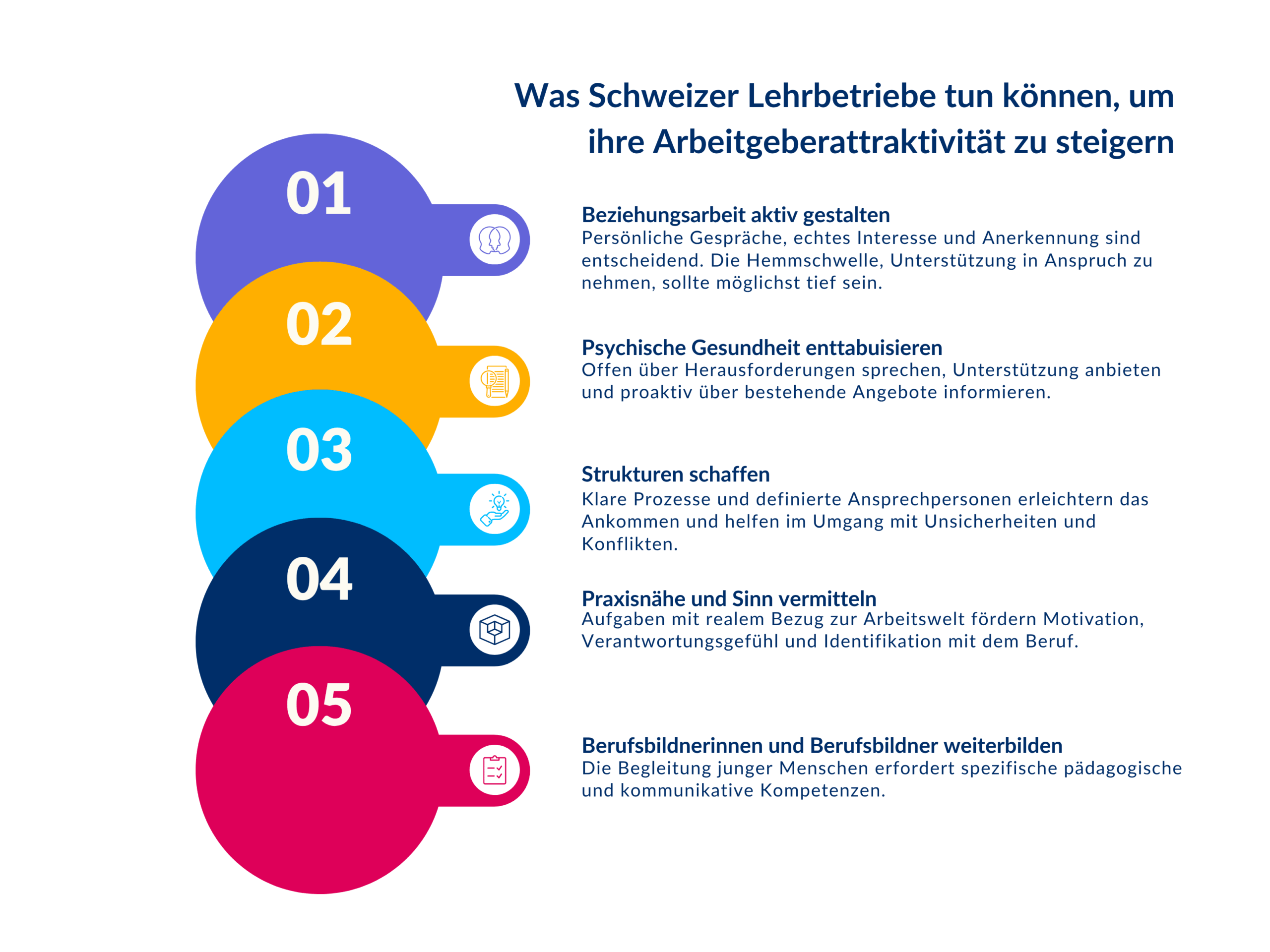
Tips for making training companies more attractive as employers
The results of the study clearly show that companies play a key role in the healthy development and maturation of young people in vocational training. We therefore recommend the following tips for training companies to accompany apprentices on their journey and improve their employer image at the same time:
- Actively shaping relationshipsPersonal discussions, genuine interest and recognition are crucial. The aim here is to lower the inhibition threshold for using such advice.
- Removing the taboo from mental health: Talk openly about challenges, offer support and proactively provide information.
- Create structuresClear processes and contact persons make it easier to arrive and deal with difficulties.
- Convey practical relevance and meaningTasks with a real connection to the world of work promote motivation and a sense of responsibility.
- Further training for vocational trainers: Guiding and supporting young people requires specific skills.
📌 About WorkMed
WorkMed AG is a center for work and mental health that works in the field of prevention, clarification and management of training and work problems as well as improving the employability and labour market integration of people with mental health problems. To this end, the joint venture between SWICA and Psychiatrie Baselland provides comprehensive services for various target groups.
Article published on June 24, 2025
About Dr. Kathrin Neumüller

Dr. oec. HSG Kathrin Neumüller is Co-Managing Director at ValueQuest and an expert in employee inspiration and empowerment. She also teaches strategic management in the MBA program at the ZHAW. She holds a doctorate from the University of St. Gallen (HSG) and studied at the University of Cambridge. Learn more about Kathrin
Inspired? Then share this post via your favorite platform.
Other articles that might interest you ...

AI in the Swiss Insurance Market: What Insurers Can Learn from the Results
October 1, 2026
Reading time: 4 min
Artificial intelligence is not universally accepted in the Swiss insurance market. As a study by ValueQuest shows, customers’ openness to AI depends heavily on how it is used.

AI in the Swiss Insurance Market: Between Acceptance and Skepticism
September 28, 2026
Reading time: 5 min
For many Swiss people, artificial intelligence has become an integral part of everyday life. However, the situation is different when it comes to insurance companies.

Top Employer: Raiffeisenbank Glarnerland Impresses with Strong Leadership
September 21, 2026
Reading time: 2 min
ValueQuest recently had the honor of presenting the “Excellence@Work Award” to Raiffeisenbank Glarnerland. We extend our heartfelt congratulations.
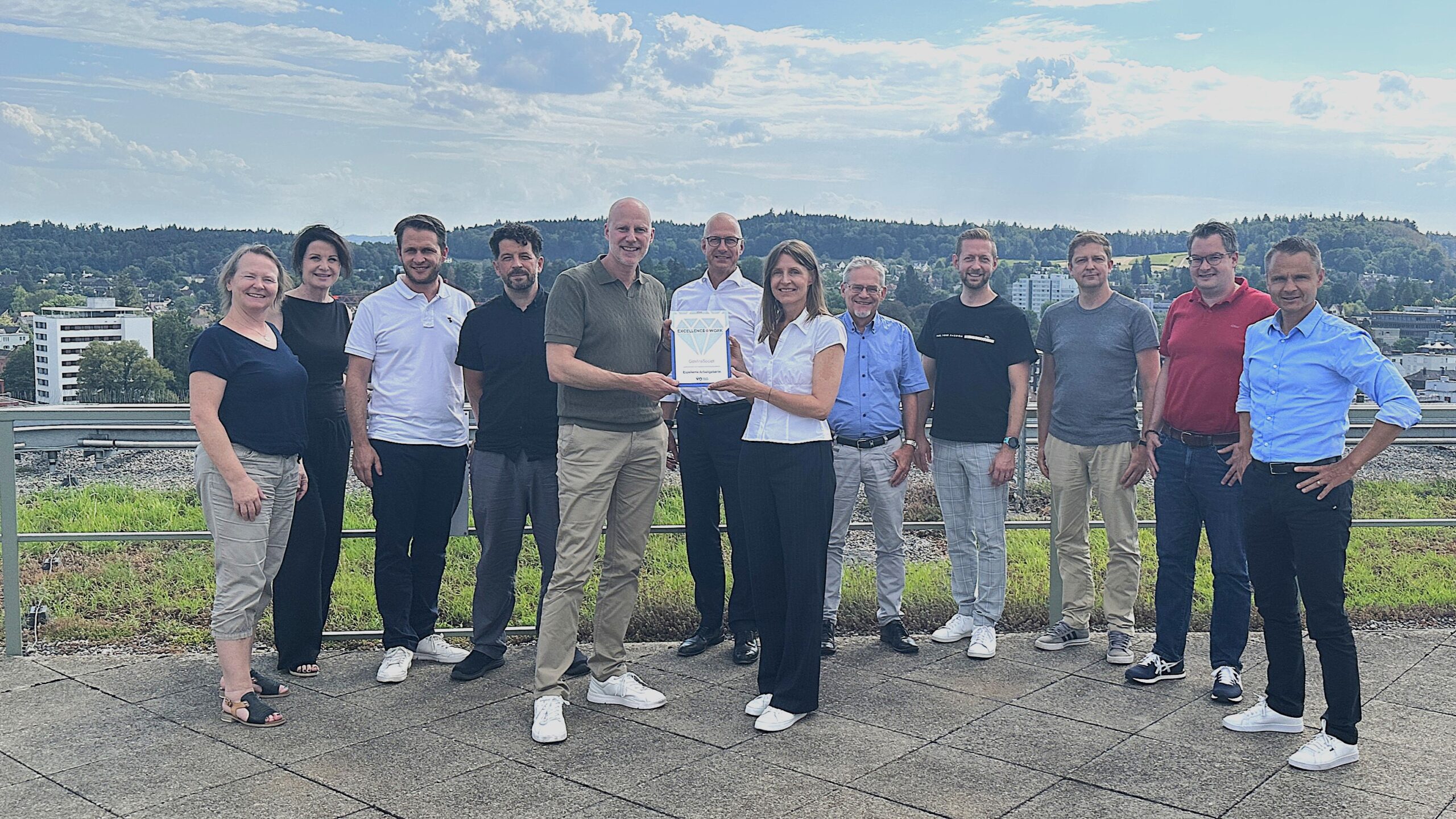
Top Swiss Employers: GastroSocial
September 9, 2026
Reading time: 3 min
GastroSocial has received the 2026 Excellence@Work Award from ValueQuest. With a response rate of 96 percent, a motivation score of 84, and 87 percent of employees serving as brand ambassadors, the company demonstrates a strong employer culture.

Employee Survey: Raiffeisenbank Möhlin Achieves Excellent Results
August 31, 2026
Reading time: 3 min
Raiffeisenbank Möhlin is one of Switzerland's top employers and is receiving our Excellence@Work Award in recognition of this achievement. Congratulations!

Employee Surveys in Switzerland: Find Providers & Tools
August 30, 2026
Reading time: 6 min
Employee Survey in Switzerland: How Do You Find the Right Employee Survey Provider? What Really Matters When It Comes to Anonymity, Tools, Questionnaires, and Analysis.

360-Degree Feedback Questionnaire: Sample, Template, and Sample Questions
August 21, 2026
Reading time: 7 min
Table of Contents A 360-degree feedback process is only as good as its questionnaire. The questionnaire is at the heart of the entire process. It determines whether...

Employee Survey: The CAMPUS SURSEE Foundation Is Among Switzerland's Best Employers
August 5, 2026
Reading time: 2 min
ValueQuest honors particularly attractive employers in Switzerland with the Excellence@Work Award. We recently had the pleasure of presenting the award to the CAMPUS SURSEE Foundation.
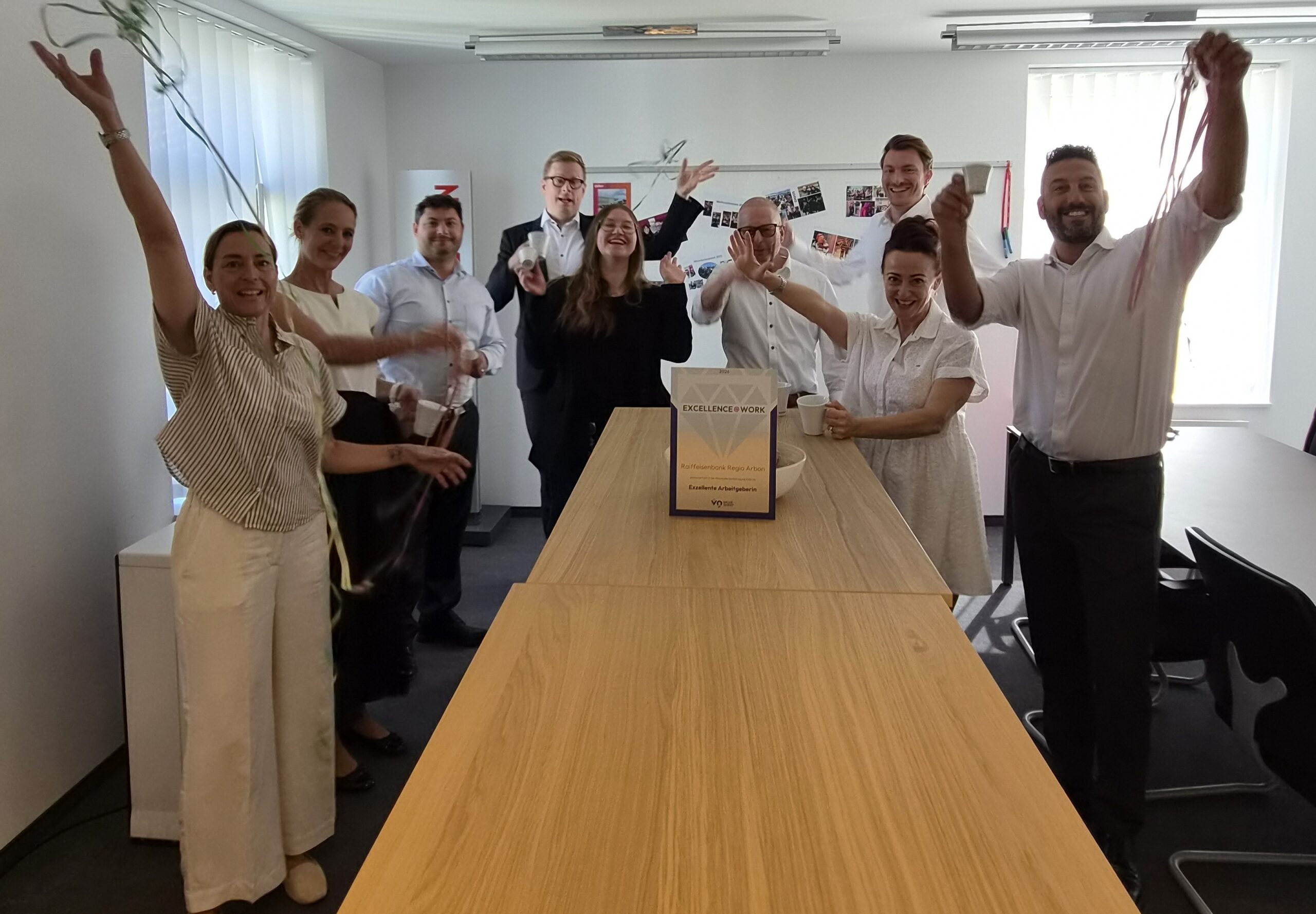
Raiffeisenbank Regio Arbon, a Top Employer: Personal Responsibility as Part of a Strong Corporate Culture
July 7, 2026
Reading time: 2 min
ValueQuest honors particularly attractive employers in Switzerland with the Excellence@Work Award. We recently had the pleasure of presenting the award to Raiffeisenbank Regio Arbon.