Employee surveys are an established and effective instrument of modern corporate management. They allow management to obtain meaningful and differentiated feedback from employees and to identify potential for improvement in working conditions and in the management and corporate culture. According to the guiding principle "Satisfied employees lead to satisfied customers", companies hope that improved working conditions will lead to greater employee satisfaction, which in turn should have a positive impact on customer satisfaction and the company's success. So much for the theory. The "employee satisfaction-customer satisfaction-company success" results chain requires that the knowledge gained from employee surveys is also applied effectively. It is not enough to simply collect feedback - management must also be prepared to make changes based on the feedback received. This can mean improving working conditions, strengthening the corporate culture or finding new ways to promote employee development. This operational view of employee surveys is widespread, but falls short.
Employee surveys are much more than a feedback tool that can be used to retrospectively measure employee satisfaction with their working conditions. Such surveys should be consistently aligned with the corporate strategy and viewed as strategic tools that not only provide past-related findings, but also open up future-oriented opportunities for action. Employee surveys should therefore be seen primarily as strategic tools which, in addition to taking stock, also show whether employees have the right skills and competencies to strengthen and secure their employer's competitiveness in the future.
The limits of measuring satisfaction
To ensure that employee surveys offer long-term and effective benefits, they need to be aligned with the company's strategic positioning. The decisive factor here is which key performance indicators are the focus of the survey. Employee satisfaction is at the heart of most employee surveys. Employee satisfaction is usually operationalized with the question "How satisfied or dissatisfied are you currently in your company on a scale from 1 (very dissatisfied) to 5 (very satisfied)?" But how meaningful is the answer? Employee satisfaction as a performance indicator can be misleading, as it does not automatically reflect the importance of individual aspects of work for employees. For example, an employee may be dissatisfied with their salary, but if this plays a subordinate role for them, this dissatisfaction will not significantly affect their work performance. Therefore, pay increases in such cases do not necessarily lead to an increase in performance. In addition, the satisfaction rating provides little information about how employees interact with customers or whether they are willing to develop and learn new skills.
Scientific studies confirm that increased employee satisfaction does not automatically go hand in hand with higher customer satisfaction and profitability (Hogreve et al., 2017, Bowen and Schneider, 2014). Satisfaction is based on a comparison of current working conditions with the original expectations of employees, such as in terms of salary, managers or interaction between colleagues. High employee satisfaction therefore simply means that employees rate the actual working conditions more positively than expected (Locke, 1976). Employee satisfaction is therefore more of an indicator of the general well-being and fulfillment of employees' needs and can even lead to a certain inertia: Employees who are satisfied with the status quo tend to be less committed to change (Straume & Vittersø, 2012). In other words, employee satisfaction is not necessarily a driver of long-term corporate success - especially not in a dynamically disruptive market environment, as we show below.
The need for new key figures in a dynamic market environment
So what added value does measuring employee satisfaction offer companies in today's dynamic and disruptive market environment? One thing is certain: Technological progress is leading to a profound transformation of society and the economy. In order to be successful in an increasingly dynamic market environment, companies and their employees need to be highly willing to change. Companies must question their traditional business models and practices in an accelerated and technology-driven world and reinvent themselves in certain respects. In doing so, they are dependent on employees who are able to identify new trends, have a high willingness to change and are happy to experiment with innovative ideas. In this context, measuring employee satisfaction is only of limited value, as it cannot be used to measure the willingness of employees to actively participate in the necessary innovations.
The pioneer of management theory Peter Drucker coined the guiding principle: "[Only] what gets measured, gets managed." According to Drucker, measuring specific performance indicators directs a company's attention and resources to certain areas. So when employee satisfaction is measured, attention is focused on a key performance indicator whose significance is limited in a dynamic competitive environment. High employee satisfaction levels can even obscure the actual challenges facing a company and, in the worst case, lead to poor strategic decisions. A focus on employee satisfaction can therefore lead to the neglect of key performance indicators that would be decisive for continuous learning and the active promotion or co-design of corporate change. Instead, future-proof competencies such as the ability to inspire, innovative strength, willingness to change and creativity of employees must be included as key performance indicators in employee surveys.
The role of inspiration in a disruptive corporate world
In today's era of digital transformation and technological progress, the focus is increasingly shifting from efficiency gains to effectiveness gains. Efficiency means making optimal use of existing resources, such as automating invoicing. Effectiveness, on the other hand, means making the right strategic decisions, such as investing in the research and development of new products that meet market needs. In the future, it will no longer be primarily about employees performing their existing tasks more efficiently. Instead, employees should question existing tasks, processes and working methods with regard to the company's goals and develop new ideas in order to increase the company's effectiveness. In this context, generative artificial intelligence, such as the AI application Chat-GPT, can automate repetitive and time-consuming tasks and thus make existing work processes more resource-efficient. However, the decision as to whether a process actually serves the company's goals remains a human task, as machines cannot judge the effectiveness of decisions. Chat-GPT can, for example, generate hundreds of suggested questions for an employee survey within seconds. The decision as to whether the questions generated are in line with the company's goals and vision and therefore contribute to its strategic competitiveness is a matter for human judgment.
Although technical steps such as the creation of an image can be delegated to generative artificial intelligence (such as DALL-E), the actual idea and intention for the realization of the image must still come from the artist herself. She alone can deem political or social grievances worthy and translate them into an image. Only she can judge whether the depiction in the picture fulfills the intended meaning and is contextually significant.
Companies should therefore include metrics in their employee surveys that do not primarily reflect employee productivity and efficiency, but rather the willingness and ability to transform. In contrast to satisfaction, the concept of "employee inspiration" picks up on openness to change, entrepreneurial thinking and the willingness to question established views and develop new ideas, and makes these employee competencies and skills measurable. Inspiration is a driving force that awakens our awareness of new and better possibilities and allows us to think outside the box. It makes us question the old and implement the new. Inspiration is often triggered by an "aha moment" - in this moment we see a new solution clearly before our inner eye. Thanks to this flash of inspiration, we come up with new ideas or convincing visions that expand our knowledge and bring us closer to our personal goals. In a corporate context, for example, employees can be inspired by competent managers or a meaningful corporate vision. These sources inspire employees to develop new behaviors and implement the newly acquired inspirational ideas profitably for the company. Inspiration therefore consists of an idea development phase followed by an implementation phase.
Studies show that inspired employees generate significantly more innovative ideas and proactively find solutions that have a positive impact on customer loyalty and sales compared to less inspired employees (Neumüller, 2022). Inspiration goes hand in hand with "sense-making": when we are inspired, we recognize a certain goal, such as improved sales skills, which we see in our superiors, as desirable. Inspiration makes us realize why it is personally valuable for us to achieve a certain goal or develop a skill. This meaningfulness of goals or skills to be learned stems from our own convictions. Let's take the example of an artist: although the painting or creation of a picture can be delegated to a generative artificial intelligence, the actual idea and intention for the realization of the picture must be initiated by the artist. She alone can deem political or social grievances worthy and translate them into a painting. Only the artist can judge whether the depiction in the picture fulfills the intended meaning and is contextually significant.
Inspiration: The human factor in an AI-driven world
In the age of generative artificial intelligence, inspired employees are more relevant than ever before. While generative AI applications such as chat GPT can process seemingly endless amounts of information within seconds, they depend on our precise input and inspired ideas to generate these outputs. During prompting, the AI is given a text command. The output in the form of an image or text is generated on the basis of probabilities. For example, if Chat-GPT identifies the word "New", it calculates the probability of the next word based on a number of factors, such as the context and the training data. For example, "New York" is a common combination. However, if the previous text is about technology, the combination of "New Technology" is more likely. The emergence of artificial intelligence therefore requires companies to rethink how human and technological resources can be used symbiotically. Our thesis is that people will serve as inspiring sources of ideas for AI in the future: While AI can process information efficiently, it will need inspired employees to provide AI with prompts. The power of human inspiration and artificial intelligence will therefore go hand in hand to deliver better - more efficient and more effective - results. The assessment of the generated output as relevant and desirable will still be reserved for employees.
Conclusion
In a market environment characterized by technological advances and disruptive changes, inspired employees are indispensable. Companies must therefore realign their employee surveys and performance measurements to capture and promote this future-proof competence. Although the use of artificial intelligence helps us to automate many tasks, human skills remain highly relevant: Without our power to inspire, we can hardly act as a "muse" for artificial intelligence, i.e. give it clear orders for the output to be created through our prompts. We still need a flash of inspiration that spurs us on to call up DALL-E, an AI system for image creation, and type in this idea: "Paint a picture in the style of Cézanne's 'Kiss of the Muse'. Replace the artist with a robot inspired by the muse." (See illustration above). The resulting work illustrates the symbiosis of human inspirational power with artificial intelligence: we have the unique ability to inspire machines with our ideas, while AI takes over certain technical aspects. Even after the image has been created, it is ultimately up to human judgment (sense-making) to assess whether the resulting work actually conveys the intended message.
This blog post was published on 15.02.2024 in KMU-Magazin.
Are you ready to reap the benefits of an inspired work environment? Would you like to know how inspired your employees really are and how you can increase their inspirational potential?
Our Inspiring Workplace Index® is a customized tool for companies that want to go beyond traditional measures of employee satisfaction. With our index, you gain deep insights and concrete approaches to create a culture of inspiration that not only improves satisfaction, but also the sustainability of your company.
Contact us for more information. We accompany you on the way to an inspired corporate culture!
Our book tip: "Inspiring employees - promoting inspiration and effectively driving it forward in the company" by Kathrin Neumüller and Thomas Rudolph (published on 18.03.2024 by Springer Gabler).
Sources:
Neumüller, K. (2022). Frontline Employee Inspiration in Retailing - Conceptualization, Scale Development, Sources, and Customer Outcomes (Doctoral dissertation, University of St. Gallen).
Straume, L. V., & Vittersø, J. (2012). Happiness, inspiration, and the fully functioning person: Separating hedonic and eudaimonic well-being in the workplace. The Journal of Positive Psychology, 7(5), 387-398.
Thrash, T. M. (2020). The Creation and Curation of all Things Worthy: Inspiration as Vital Force in Persons and Cultures. Advances in Motivation Science, 2-20.
Hogreve, Jens, et al. "The service-profit chain: A meta-analytic test of a comprehensive theoretical framework." Journal of marketing 81.3 (2017): 41-61.
Bowen, D. E., & Schneider, B. (2014). A Service Climate Synthesis and Future Research Agenda. Journal of Service Research, 17(1), 5-22.
Locke, E.A. (1976) The Nature and Causes of Job Satisfaction. In: Dunnette, M.D., Ed., Handbook of Industrial and Organizational Psychology, Vol. 1, 1297-1343.
Article published on February 21, 2024
About Barbara Haimoff

Barbara Haimhoff is Office Manager at ValueQuest and ensures that day-to-day business runs smoothly. She graduated from the KV Baden business school and is a qualified commercial clerk with many years of professional experience in administration and organization. Find out more about Barbara
Inspired? Then share this post via your favorite platform.
Other articles that might interest you ...

AI in the Swiss Insurance Market: What Insurers Can Learn from the Results
October 1, 2026
Reading time: 4 min
Artificial intelligence is not universally accepted in the Swiss insurance market. As a study by ValueQuest shows, customers’ openness to AI depends heavily on how it is used.

AI in the Swiss Insurance Market: Between Acceptance and Skepticism
September 28, 2026
Reading time: 5 min
For many Swiss people, artificial intelligence has become an integral part of everyday life. However, the situation is different when it comes to insurance companies.

Top Employer: Raiffeisenbank Glarnerland Impresses with Strong Leadership
September 21, 2026
Reading time: 2 min
ValueQuest recently had the honor of presenting the “Excellence@Work Award” to Raiffeisenbank Glarnerland. We extend our heartfelt congratulations.
Top Swiss Employers: GastroSocial
September 9, 2026
Reading time: 3 min
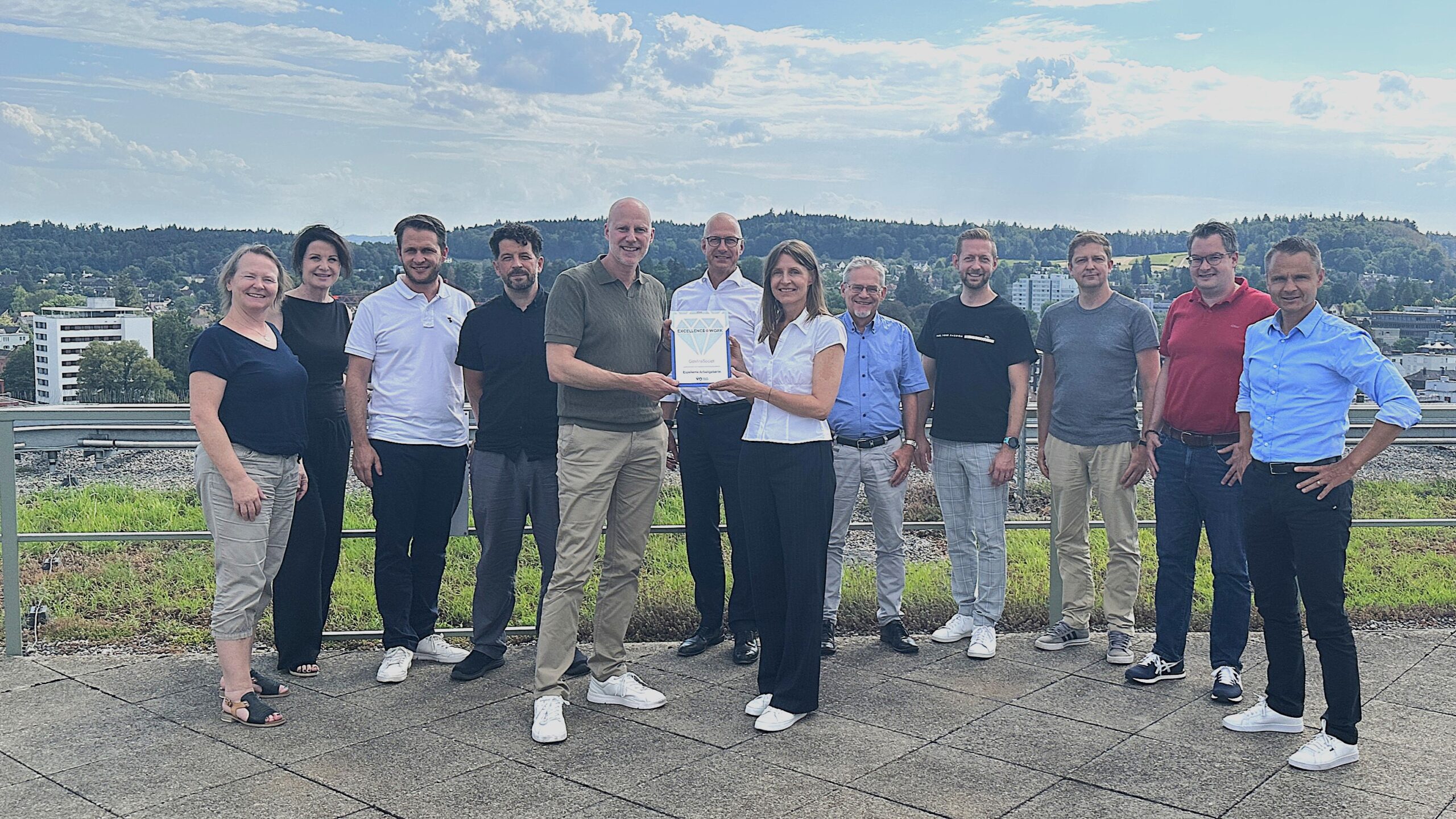
GastroSocial has received the 2026 Excellence@Work Award from ValueQuest. With a response rate of 96 percent, a motivation score of 84, and 87 percent of employees serving as brand ambassadors, the company demonstrates a strong employer culture.

Employee Survey: Raiffeisenbank Möhlin Achieves Excellent Results
August 31, 2026
Reading time: 3 min
Raiffeisenbank Möhlin is one of Switzerland's top employers and is receiving our Excellence@Work Award in recognition of this achievement. Congratulations!

Employee Surveys in Switzerland: Find Providers & Tools
August 30, 2026
Reading time: 6 min
Employee Survey in Switzerland: How Do You Find the Right Employee Survey Provider? What Really Matters When It Comes to Anonymity, Tools, Questionnaires, and Analysis.

360-Degree Feedback Questionnaire: Sample, Template, and Sample Questions
August 21, 2026
Reading time: 7 min
Table of Contents A 360-degree feedback process is only as good as its questionnaire. The questionnaire is at the heart of the entire process. It determines whether...

Employee Survey: The CAMPUS SURSEE Foundation Is Among Switzerland's Best Employers
August 5, 2026
Reading time: 2 min
ValueQuest honors particularly attractive employers in Switzerland with the Excellence@Work Award. We recently had the pleasure of presenting the award to the CAMPUS SURSEE Foundation.
Raiffeisenbank Regio Arbon, a Top Employer: Personal Responsibility as Part of a Strong Corporate Culture
July 7, 2026
Reading time: 2 min
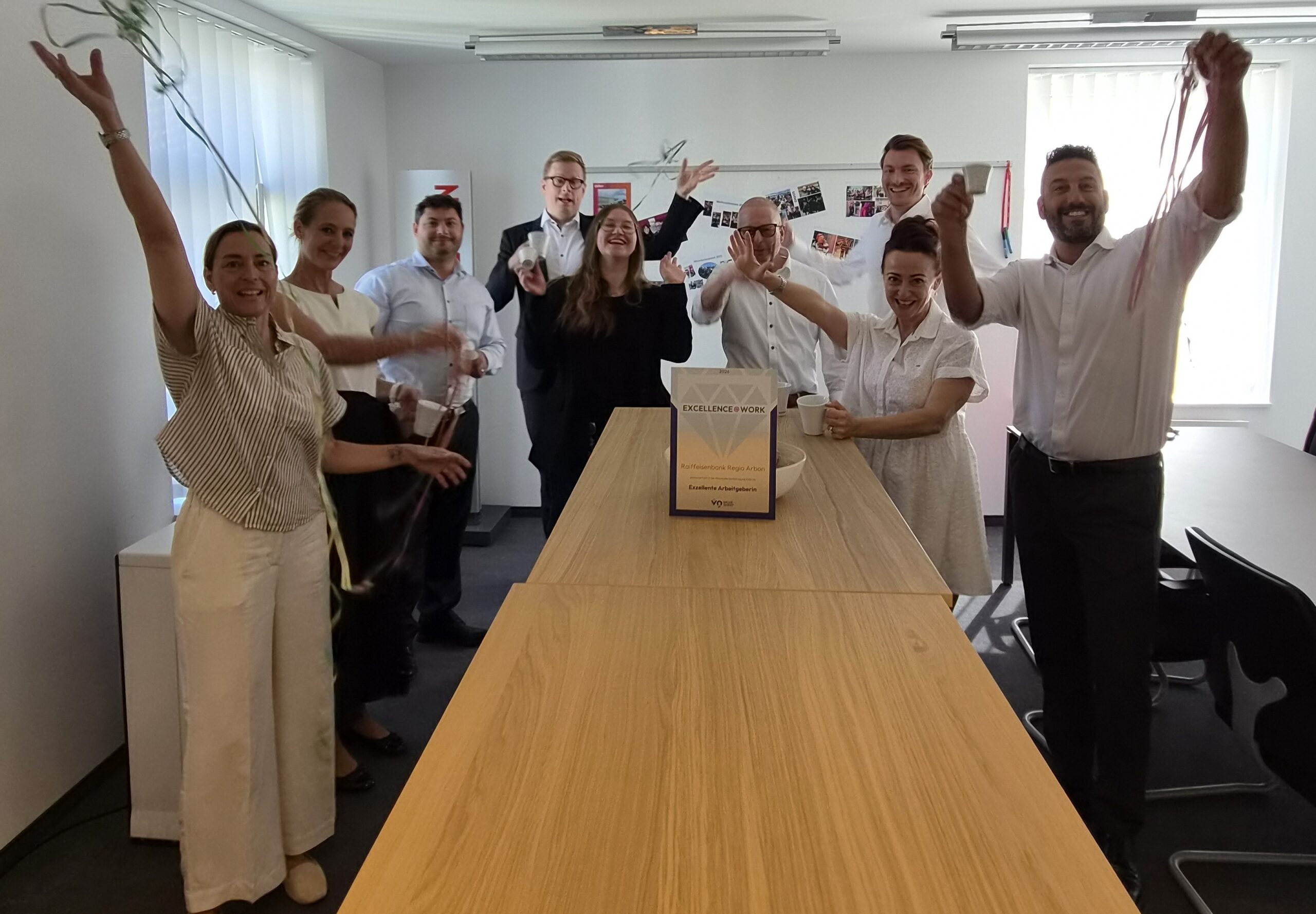
ValueQuest honors particularly attractive employers in Switzerland with the Excellence@Work Award. We recently had the pleasure of presenting the award to Raiffeisenbank Regio Arbon.