Table of contents
The established feedback tool for measuring employee satisfaction
Employee surveys are no longer a "nice-to-have", but are now standard in organizational and management development. The shortage of skilled workers is forcing companies to rethink. If you don't listen to your employees, you will lose them to the competition. Because the competition for qualified specialists is increasing and the employees' expectations of their employersrs are rising, reliable feedback channels are needed.
Employee surveys offer a structured way of systematically recording the opinions, wishes and satisfaction of the workforce. At the same time, they enable companies to recognize problems at an early stage, identify potential for improvement and actively strengthen employee loyalty. This feedback tool is now widely used in the DACH region and serves as a crucial basis for creating a positive workplace culture.
But how widespread are these employee surveys really? Who initiates them and which topics are the focus? Recent studies provide revealing insights.
Six out of ten companies conduct an employee survey
Conducting employee surveys has long since become standard practice in large companies in the DACH region. As early as 2008, a comprehensive study by Hossiep and Friegwhich examined 820 of the largest companies in Germany, Austria and Switzerland, showed an impressive penetration rate: 80% of the participating companies had already conducted an employee survey.
More recent figures from Germany confirm the trend, but also show that there is still room for improvement. A study published in 2024 by the market research institute smart insights found that 60% of the 312 decision-makers surveyed regularly conduct employee surveys in their company. Conversely, this means that four out of ten companies still do not use this important feedback tool. A further 24% show interest, but have not yet taken any measures. Only 11% deliberately refrain from using this feedback tool.
There are no comparable figures for Switzerland and Austria. However, evidence from relevant studies shows that employee surveys are also an integral part of modern HR work and management development there. The cultural and economic similarities within the DACH region suggest that the penetration rates are at a comparable level. In Switzerland in particular, where labor market conditions are often seen as a model, progressive HR practices such as regular employee surveys are likely to be widespread.
The big boom came after the turn of the millennium. The study by Hossiep and Frieg shows: Between 2000 and 2004 alone, 85 companies introduced their first employee survey - the strongest growth in the period studied.
The trend is towards pulse surveys
The way in which companies survey their employees has changed significantly. Instead of conducting a large survey once a year, more and more companies are opting for more frequent, shorter surveys - so-called pulse surveys. The advantage: companies can react more quickly to changes and take measures promptly instead of waiting a year for the next major survey. The smart insights study shows: 73% of companies survey several times a year. Only 18% do it once a year, and only 7% survey less frequently.
For comparison: The older Hossiep & Frieg study shows a different picture. At that time, 32% were surveyed annually, 34% every two years and 12% every three years. The survey frequency has therefore increased massively - a sign that companies want prompt, continuous feedback.
In terms of methods, digitalization has clearly prevailed. 81% of companies rely on online surveysespecially in companies with more than 50 employees. In smaller organizations, face-to-face interviews remain a popular alternative at 49% - which corresponds to the more direct communication culture in manageable teams.
Employee surveys are a strategic tool
Who drives employee surveys? In most cases, it is the management. Both the study by Hossiep & Frieg (78%) and that by smart insights (62%) identify the top management level as the main initiator. The HR department follows as the driving force with 40%. Interestingly, employee representatives play a subordinate role with only 3% - even though they should have a strong interest in employee satisfaction.
These figures underline this: Employee surveys are seen as a strategic instrument that must be supported by the company management. It does not work without the backing and commitment of management.
External support plays an important role. Over half of the companies (57%) make use of external services - from specialized survey tools to holistic consulting. 22% outsource the process completely. This shows that many companies recognize the complexity of a professional employee survey and seek the appropriate expertise.
Large companies vs. SMEs: differences in employee surveys
Our internal data from ValueQuest shows that there are clear differences between large companies and SMEs. While corporations with several hundred or thousand employees almost invariably rely on systematic, digital surveys, the reality in smaller companies is different. SMEs with fewer than 50 employees often conduct surveys more informally - if at all. Personal discussions, open doors to management or regular team meetings often replace structured surveys here.
There is no clear pattern when it comes to the question of whether the survey is conducted internally or externally. Large companies usually have their own HR departments with the relevant expertise and more often conduct surveys internally, supported by specialized software solutions. SMEs, on the other hand, rely more heavily on external providers when they take the step of conducting systematic surveys. SMEs often lack the internal resources and expertise to design, conduct and evaluate surveys. External providers offer not only the technology, but also the neutrality that is particularly important in smaller companies. Employees are often more open with third parties than with their own superiors.
What is in demand? Leadership, communication, further training
The focus of the content has remained relatively constant over the years. The focus is on topics that are crucial for job satisfaction:
- Guidance
- Information and communication
- Professional development
- Colleagues and team
- Salary and bonuses
The The main motives for introducing a personnel survey are of a strategic nature. Companies primarily want to drive forward the implementation of their strategy (63.2%) and improve internal communication (55.7%). Employee surveys are therefore not an end in themselves, but an instrument for achieving overarching corporate goals.
In addition to the traditional topics, new focal points have emerged in recent years that provide deeper insights into the psychological aspects of work. In addition to traditional HR KPIs such as employee satisfaction and employee motivation, modern indicators such as employee inspiration, purpose and employee empowerment to measure how future-oriented employees think and act. Today, topics such as work-life balance, fairness and recognition are no longer just "soft" factors, but are seen as hard, business-relevant key figures that have a direct impact on a company's performance and innovative strength.
But conducting an employee survey is not enough
Employee surveys are firmly established in the DACH region. As early as 2007, 80% of the largest companies in Germany, Austria and Switzerland regularly conducted such surveys, as studies show. Today, in 2024, they have become an integral part of HR management and have evolved methodologically thanks to digitalization. But conducting an employee survey is far from enough.
Recent studies show an alarming discrepancy between the mere completion of surveys and the actual emotional commitment of employees. While companies are making progress on topics such as leadership and fairness, as the Great Place to Work Report suggests, the Gallup Engagement Index 2024 reveals a profound engagement crisis in Germany: only 9% of employees are still highly emotionally engaged - a historic low. A full 78% are merely "working to rule". At the same time, trust in managers has fallen dramatically: only 21% of employees still trust their line manager without reservation.
The conclusion is clear: simply collecting feedback is not enough. Companies must take the results seriously, establish transparent communication processes and derive concrete, tangible measures from the findings. Employees need to feel that their voice is heard and leads to change. This is precisely where things often go wrong.
Article published on October 30, 2025
About Dr. Kathrin Neumüller

Dr. oec. HSG Kathrin Neumüller is Co-Managing Director at ValueQuest and an expert in employee inspiration and empowerment. She also teaches strategic management in the MBA program at the ZHAW. She holds a doctorate from the University of St. Gallen (HSG) and studied at the University of Cambridge. Learn more about Kathrin
Inspired? Then share this post via your favorite platform.
Other articles that might interest you ...

AI in the Swiss Insurance Market: What Insurers Can Learn from the Results
October 1, 2026
Reading time: 4 min
Artificial intelligence is not universally accepted in the Swiss insurance market. As a study by ValueQuest shows, customers’ openness to AI depends heavily on how it is used.

AI in the Swiss Insurance Market: Between Acceptance and Skepticism
September 28, 2026
Reading time: 5 min
For many Swiss people, artificial intelligence has become an integral part of everyday life. However, the situation is different when it comes to insurance companies.
Top Employer: Raiffeisenbank Glarnerland Impresses with Strong Leadership
September 21, 2026
Reading time: 2 min
ValueQuest recently had the honor of presenting the “Excellence@Work Award” to Raiffeisenbank Glarnerland. We extend our heartfelt congratulations.
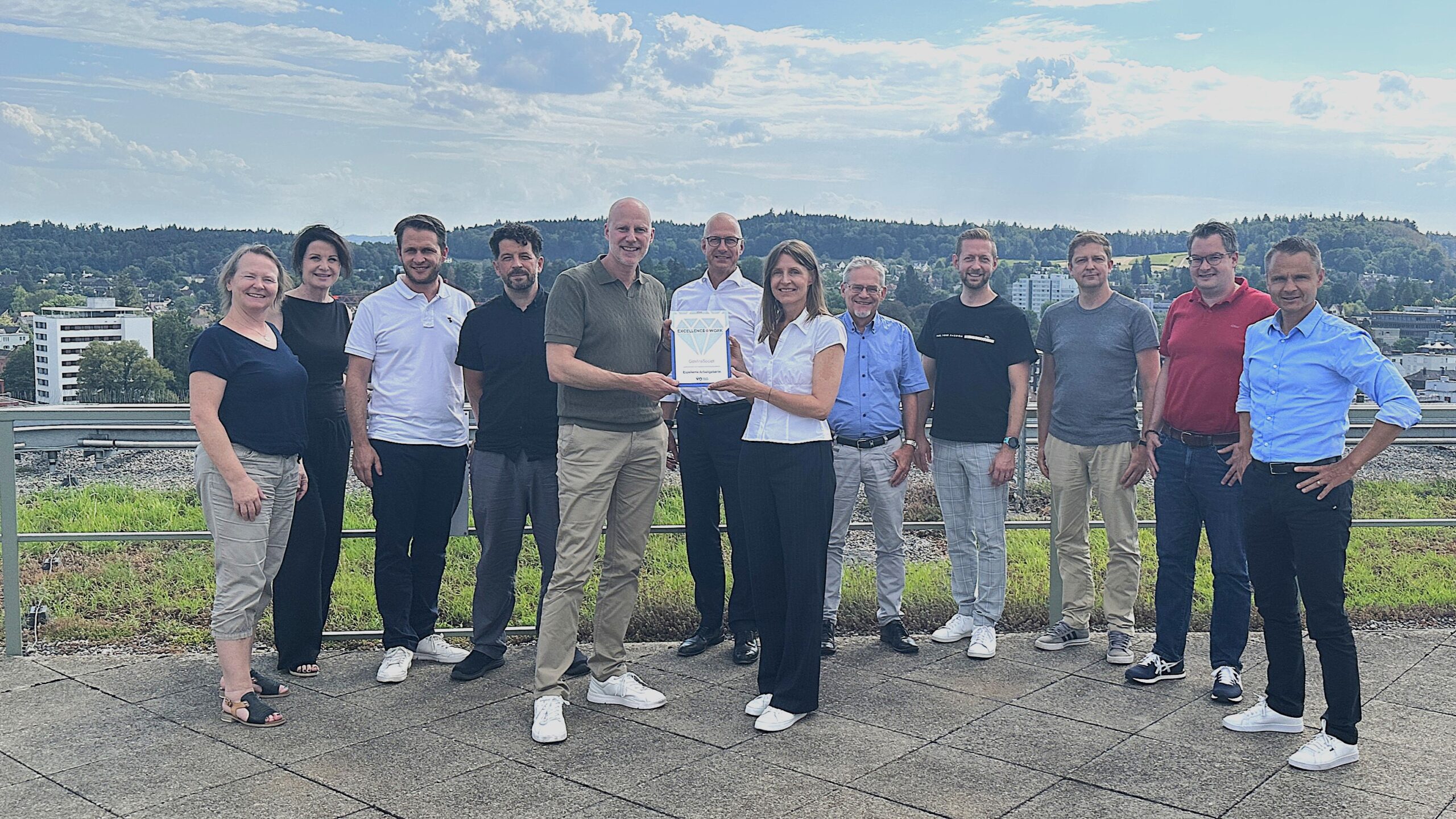
Top Swiss Employers: GastroSocial
September 9, 2026
Reading time: 3 min
GastroSocial has received the 2026 Excellence@Work Award from ValueQuest. With a response rate of 96 percent, a motivation score of 84, and 87 percent of employees serving as brand ambassadors, the company demonstrates a strong employer culture.

Employee Survey: Raiffeisenbank Möhlin Achieves Excellent Results
August 31, 2026
Reading time: 3 min
Raiffeisenbank Möhlin is one of Switzerland's top employers and is receiving our Excellence@Work Award in recognition of this achievement. Congratulations!

Employee Surveys in Switzerland: Find Providers & Tools
August 30, 2026
Reading time: 6 min
Employee Survey in Switzerland: How Do You Find the Right Employee Survey Provider? What Really Matters When It Comes to Anonymity, Tools, Questionnaires, and Analysis.

360-Degree Feedback Questionnaire: Sample, Template, and Sample Questions
August 21, 2026
Reading time: 7 min
Table of Contents A 360-degree feedback process is only as good as its questionnaire. The questionnaire is at the heart of the entire process. It determines whether...
Employee Survey: The CAMPUS SURSEE Foundation Is Among Switzerland's Best Employers
August 5, 2026
Reading time: 2 min
ValueQuest honors particularly attractive employers in Switzerland with the Excellence@Work Award. We recently had the pleasure of presenting the award to the CAMPUS SURSEE Foundation.
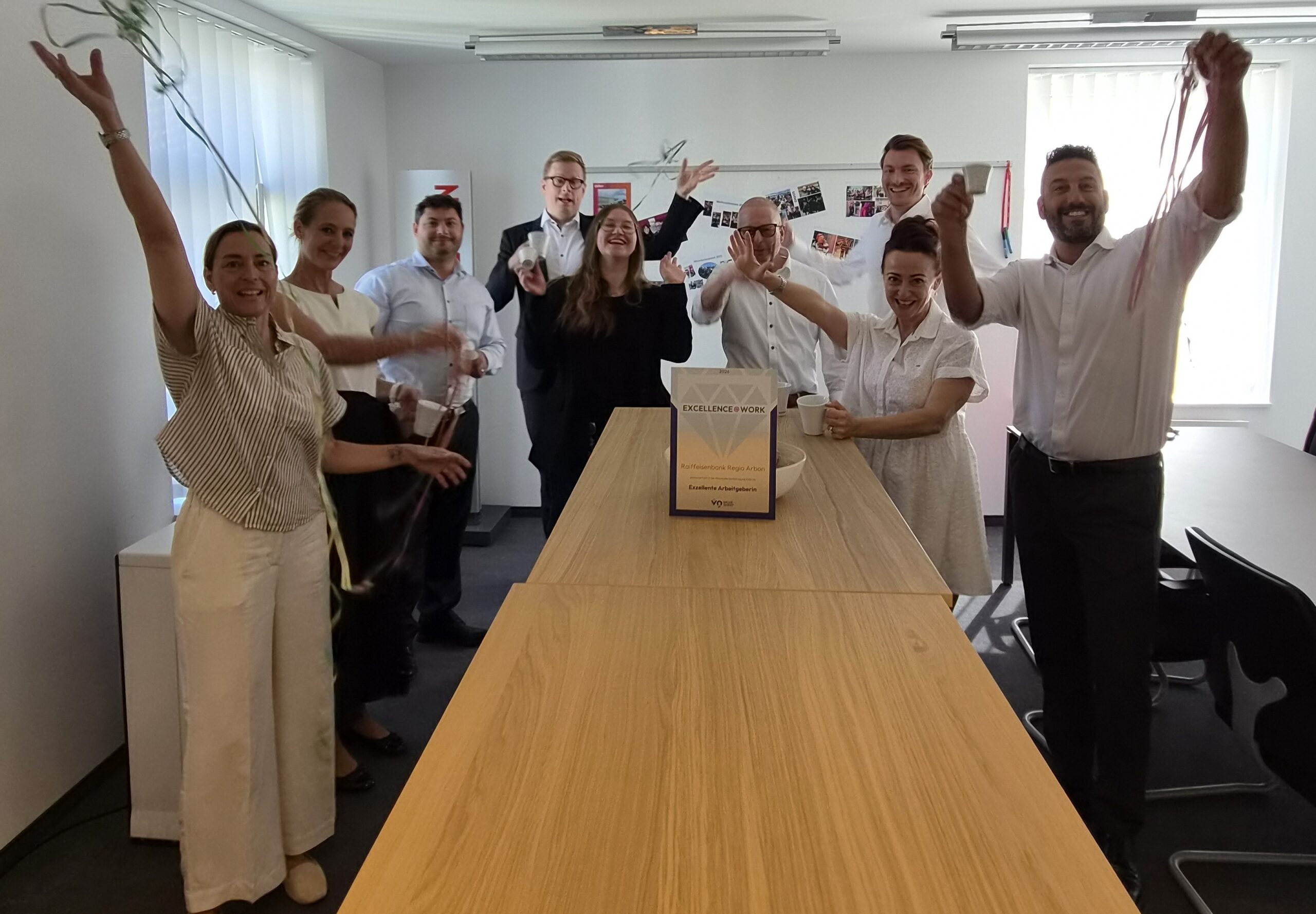
Raiffeisenbank Regio Arbon, a Top Employer: Personal Responsibility as Part of a Strong Corporate Culture
July 7, 2026
Reading time: 2 min
ValueQuest honors particularly attractive employers in Switzerland with the Excellence@Work Award. We recently had the pleasure of presenting the award to Raiffeisenbank Regio Arbon.