A company is only as good as its employees. The latest Gallup study (2024) paints a sobering picture: four out of five employees are only half-hearted in their work and perform far less than they could. But how can companies change this? The solution is empowerment! This article shows how you can empower your employees in a targeted manner and which stumbling blocks you should be aware of.
What is empowerment?
Empowerment comes from the English word "power" and means a redistribution of decision-making powers within the company. Instead of getting decisions from the manager, empowered employees can make decisions themselves. This has several advantages: employees work less by the book as they are encouraged to contribute their own ideas. Decisions are made more quickly by those who are directly affected and have the necessary expertise. This makes companies more innovative and speeds up the company's reaction time.
In addition to the major benefits for employee productivity and the company's success, the empowerment concept also takes into account the latest developments in the labor market. The expectations of employees have changed significantly over the last three decades: Work should not only serve to earn money, but also enrich lives and contribute to self-development. These far-reaching changes - often referred to as "New Work" - require a new understanding of leadership in which managers empower more and control less. The empowerment approach is therefore a central component of this new management philosophy.
More freedom to make decisions is of little benefit
"Empowerment" is often used as a buzzword: Sometimes it is equated with agile decision-making. Sometimes with more freedom to make decisions. But empowerment is far more complex and multi-layered. Giving employees more decision-making and creative freedom only has a limited effect on their motivation and productivity.
Rather, empowerment means improving the organizational framework conditions in such a way that employees can develop their full potential. The interplay of these framework conditions is important. Empowerment has four levers. And it only has the desired effect if all four levers are used consistently. In addition to decision-making and creative freedom, incentives, information transparency and resources also play a decisive role. These include not only time resources, but also qualified feedback, advice and the willingness of colleagues and superiors. We call this approach "structural empowerment" because the focus is on the design of organizational structures. Figure 1 shows how empowerment can be implemented holistically within a company.
Figure 1: How to empower your employees
Four levers for companies
- Information transparency: Ensure that your employees have relevant information to perform their tasks effectively. Promote communication and information transparency through internal communication systems such as intranet portals and regular meetings.
- Freedom to make decisions: Allow your employees to make decisions within a defined framework. A decentralized decision-making structure allows them to manage projects independently or make budget decisions, but within clearly defined guidelines.
- Resources: Provide the necessary resources to perform their duties successfully. Organize training, mentoring and development programs to develop employees' skills.
- Incentives: Use financial rewards such as bonuses and non-monetary incentives such as recognition, promotions or development opportunities. Performance-based reward systems based on team performance are a good example.
"Empowerment means improving the working environment so that employees can develop their full potential."
How employees perceive the working environment
These four levers - access to information, freedom of choice, resources and incentives - look at empowerment from a corporate perspective. This is about creating organizational structures, conditions and forms of work that enable employees to develop. However, the corporate perspective falls short when it comes to empowerment. Flexible and agile forms of work, for example, can be an important part of an empowering working environment, but they are only one side of the coin (Schermuly, 2019). The decisive factor is how employees perceive their working environment. Even if companies implement all four levers of structural empowerment, employees may not personally perceive this as genuine empowerment. feel. We call this subjective experience of empowerment psychological empowerment (Spreitzer, 1995). Here, too, there are four dimensions:
- Meaningfulness / significance: Employees perceive their work as meaningful and significant if it is in line with their personal values and goals. For example, an employee in a non-profit organization feels that their work is particularly meaningful because it contributes to society.
- Competence: Employees have confidence in their skills and knowledge. Regular feedback and training opportunities strengthen this trust.
- InfluenceEmployees can influence decisions and processes that affect their work. A team member who is involved in decision-making processes and can implement their ideas feels more connected to the company.
- Self-determination: Employees should have the freedom to organize their work independently. Flexible working hours and the opportunity to work from different locations can support this self-determination.
Empowerment therefore means much more than just autonomy and freedom. Employers must create a holistically empowering working environment. The approach will only be beneficial if employees perceive this working environment as truly empowering.
Tasks are no longer served up on a tray
Empowerment is the responsibility of both employers and employees. One side of the coin is that employers are willing to empower their employees. The other side of the coin is that employees also want to be empowered. For employees, empowerment means accepting responsibility and taking an active role. It is a departure from a consumerist attitude to work. Tasks are no longer served up in bite-sized portions. Every empowered employee should actively seek out tasks that contribute to the company's long-term vision. For this to succeed, everyone in the company must have a clear vision, mission and values with which they identify and which they find inspiring.
The biggest stumbling blocks in the implementation of empowerment
- Underestimating resistance to change
Change processes often fail due to resistance from employees. Many employees are not prepared to take on responsibility as they have developed a consumerist attitude to work over the years.Tip 1: Promote a culture of active engagement and provide your employees with intensive support during the transition. Commitment must be worthwhile for employees, e.g. in the form of high appreciation and recognition. - Neglect middle management and executives
Be aware that managers can also put up resistance if they feel threatened by a loss of control. This resistance often manifests itself in micromanagement, withholding information or passivity towards change initiatives.Tip 2: Prepare your managers for their new role as enablers and mentors through targeted training and coaching. In a management workshop, work out the long-term benefits of empowerment for middle management in order to secure their commitment. - Not communicating vision and values
A clear vision should be ambitious but achievable and describe where the company is heading in the next five to ten years. Clear values define the fundamental beliefs and principles that guide the company's actions.Tip 3: Tip: Formulate a clear and inspiring corporate vision and unambiguous values. Communicate these regularly in meetings, newsletters and on the intranet. Organize workshops and events to actively involve employees and ensure that they understand and live the vision and values. - Equate empowerment with freedom of choice
Empowerment is more than just freedom of choice. The empowerment approach is only effective if you consistently implement all four levers.Tip 4: Tip: Familiarize yourself with the four dimensions of structural empowerment and use a structured questionnaire or employee interviews to check the extent to which these dimensions are already present in your company. - Disregarding the needs of employees
Empowerment is not always synonymous with New Work, which places the needs of employees at the center of economic activity. If employees do not want to be empowered, empowerment can be at odds with the New Work mentality.Tip 5: Ask your employees to what extent they want to be empowered and what they specifically need for this (e.g. time, feedback, exchange).
Do your employees even want to be empowered?
In the world of work, we basically have to deal with two images of people. These are based on the theory X and the Theory Y (McGregors, 1964). Theory X assumes that people are naturally lazy, work-shy and responsibility-shy. They need to be controlled and often motivated with punishments or incentives. This view is clearly at odds with empowerment, which focuses on autonomy and self-determination. Theory Y is completely different. It states that people are intrinsically motivated to take on responsibility and enjoy working. Theory Y supports the principles of empowerment by assuming that employees work best when they are autonomous, can use their skills and are involved in decision-making processes.
In other words, the empowerment approach is based on a positive and emancipated view of people. According to this, people and employees have the ability and desire to actively and self-determinedly shape their work. Empowerment therefore presupposes that managers see the potential of employees and (want to) trust them.
Empowerment means courage
For the empowerment approach to succeed, employees must be prepared to accept and use this empowerment with all its consequences. If employees have been "educated" for decades to be immature and to work through tasks, it is often difficult for them to suddenly become empowered. It is understandable if employees are initially hesitant or afraid of making mistakes. After all, empowerment requires courage from employers and employees - the courage to make mistakes and recognize opportunities for improvement. Empowerment is not just a collection of organizational measures. It is a mindsetthat managers must also adopt.
Empowerment requires support for managers
Empowerment basically means a democratization of responsibility - in other words, responsibility is distributed across hierarchical levels. What is a gain in decision-making freedom for employees can be perceived by managers as disempowerment. This can lead to fear and resistance among managers: On the one hand, the fear of losing control, and on the other, the fear of investing resources and money in transparent communication channels. These concerns are justified because, from the line manager's perspective, empowerment also means relinquishing control and power. It is therefore clear that empowerment requires support and advice not only for employees, but also for managers. It requires a culture of trust - from both sides.
Sources and further reading:
- Gallup. (2024). State of the global workplace report.
- Kanter, R. M. (1977). Men and Women of the Corporation. New York: Basic Books.
- Laschinger, H. K. S. (1996). A theoretical approach to studying work empowerment in nursing: A review of studies testing Kanter's theory of structural power in organizations. Nursing Administration Quarterly, 20(2), 25-41.
- Laschinger, H. K. S., Finegan, J., Shamian, J., & Wilk, P. (2001). Impact of structural and psychological empowerment on job strain in nursing work settings: Expanding Kanter's model. Journal of Nursing Administration, 31(5), 260-272.
- McGregor, D. (1964). The Human Side of Enterprise. McGraw-Hill.
- Schermuly, C. (2019). New work and empowerment. Beltz.
- Schermuly, C. (2023). Empowerment: Strengthening and developing employees. In: Felfe, J., van Dick, R. (eds) Handbuch Mitarbeiterführung. Springer Reference Psychology . Springer, Berlin, Heidelberg.
- Spreitzer, G. M. (1995). Psychological Empowerment in the Workplace. Academy of Management Journal.
Article published on July 30, 2025
About Dr. Kathrin Neumüller

Dr. oec. HSG Kathrin Neumüller is Co-Managing Director at ValueQuest and an expert in employee inspiration and empowerment. She also teaches strategic management in the MBA program at the ZHAW. She holds a doctorate from the University of St. Gallen (HSG) and studied at the University of Cambridge. Learn more about Kathrin
Inspired? Then share this post via your favorite platform.
Other articles that might interest you ...

AI in the Swiss Insurance Market: What Insurers Can Learn from the Results
October 1, 2026
Reading time: 4 min
Artificial intelligence is not universally accepted in the Swiss insurance market. As a study by ValueQuest shows, customers’ openness to AI depends heavily on how it is used.

AI in the Swiss Insurance Market: Between Acceptance and Skepticism
September 28, 2026
Reading time: 5 min
For many Swiss people, artificial intelligence has become an integral part of everyday life. However, the situation is different when it comes to insurance companies.

Top Employer: Raiffeisenbank Glarnerland Impresses with Strong Leadership
September 21, 2026
Reading time: 2 min
ValueQuest recently had the honor of presenting the “Excellence@Work Award” to Raiffeisenbank Glarnerland. We extend our heartfelt congratulations.
Top Swiss Employers: GastroSocial
September 9, 2026
Reading time: 3 min
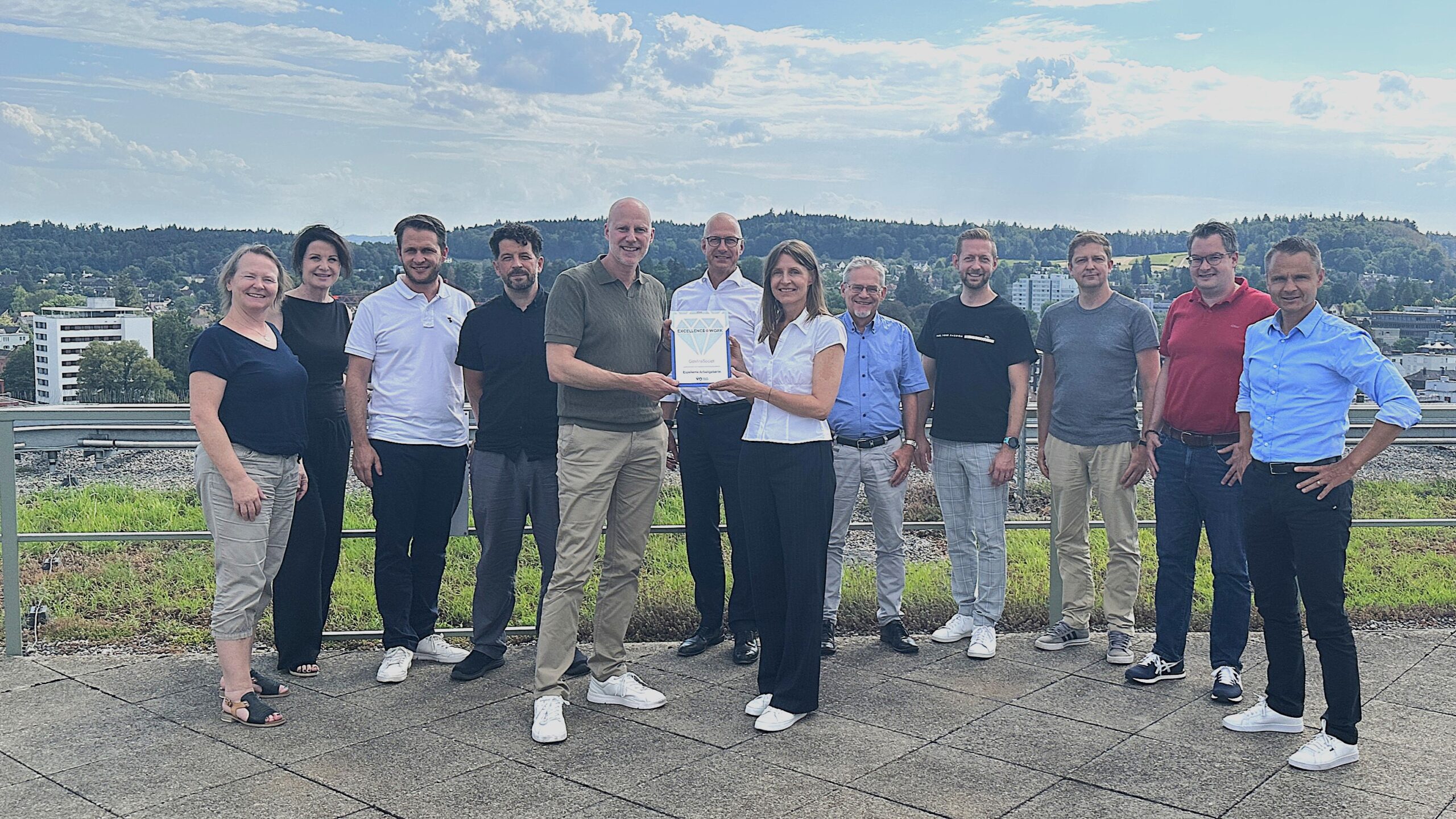
GastroSocial has received the 2026 Excellence@Work Award from ValueQuest. With a response rate of 96 percent, a motivation score of 84, and 87 percent of employees serving as brand ambassadors, the company demonstrates a strong employer culture.

Employee Survey: Raiffeisenbank Möhlin Achieves Excellent Results
August 31, 2026
Reading time: 3 min
Raiffeisenbank Möhlin is one of Switzerland's top employers and is receiving our Excellence@Work Award in recognition of this achievement. Congratulations!

Employee Surveys in Switzerland: Find Providers & Tools
August 30, 2026
Reading time: 6 min
Employee Survey in Switzerland: How Do You Find the Right Employee Survey Provider? What Really Matters When It Comes to Anonymity, Tools, Questionnaires, and Analysis.

360-Degree Feedback Questionnaire: Sample, Template, and Sample Questions
August 21, 2026
Reading time: 7 min
Table of Contents A 360-degree feedback process is only as good as its questionnaire. The questionnaire is at the heart of the entire process. It determines whether...

Employee Survey: The CAMPUS SURSEE Foundation Is Among Switzerland's Best Employers
August 5, 2026
Reading time: 2 min
ValueQuest honors particularly attractive employers in Switzerland with the Excellence@Work Award. We recently had the pleasure of presenting the award to the CAMPUS SURSEE Foundation.
Raiffeisenbank Regio Arbon, a Top Employer: Personal Responsibility as Part of a Strong Corporate Culture
July 7, 2026
Reading time: 2 min
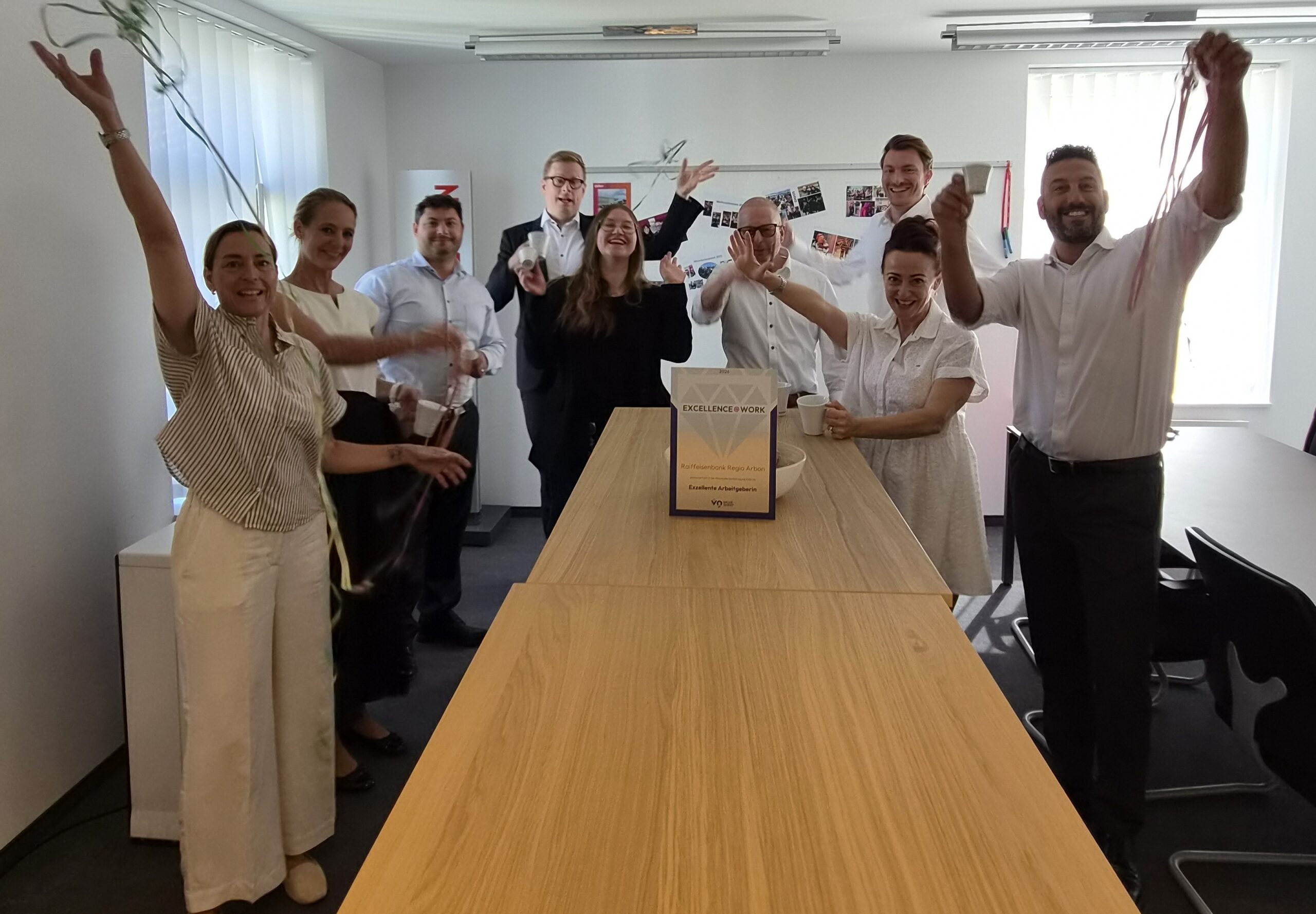
ValueQuest honors particularly attractive employers in Switzerland with the Excellence@Work Award. We recently had the pleasure of presenting the award to Raiffeisenbank Regio Arbon.