A clearly defined corporate purpose is essential today for attracting, motivating, and retaining talent in the long term. Studies show that 52% of job seekers would turn down a job offer if the company’s values or purpose did not align with their own (LinkedIn, 2016). Younger generations, in particular, place great value on meaning and values: 86% of millennials would be willing to compromise on salary and title if they could work for a company that shares their values. By comparison, barely one in ten baby boomers would say the same (Nair et al., 2022).
The Covid pandemic has accelerated this development towards a search for meaning. During the pandemic, many people began to question their professional decisions and placed greater emphasis on meaningful work. Especially in times of crisis, uncertainty and social division, unifying values and a clear purpose become increasingly important - both for individuals and for companies. But how can purpose be integrated into everyday working life so that it doesn't just remain an abstract concept but has a real impact?
Purpose is the DNA of a company
Purpose describes a company’s reason for being—the “why” behind its actions. It is no coincidence that there is no exact translation for “purpose” in German—the concept is complex and serves as a bridge between a company’s past and its future: Unlike mission or vision, purpose represents a company’s ambition and the positive contribution it makes to its stakeholders and society. It is the “North Star” that unites employees and leaders in times of change and provides direction. Purpose permeates the entire organization and shapes strategic decisions, corporate culture, and daily operations.
The world of work has changed fundamentally in recent decades. While clear job titles and specialized skills used to be at the forefront, today's era of technological transformation requires a constant development of skills. Purpose helps employees to find their bearings in this complex and dynamic world of work and to focus on the right skills that will remain relevant in the long term. When implemented correctly, purpose brings substantial benefits for companies. Studies show that 58% of purpose-driven companies experienced growth of 10% or more within three years - compared to only 42% of companies without purpose (Ernst & Young Global Limited, 2016). In fact, purpose-driven companies show a 30% higher rate of innovation and better overall results when leaders and employees understand purpose and put it into practice every day (Ernst & Young Global Limited, 2016).
A recent survey by the Swiss market and opinion research institute ValueQuest illustrates the practical benefits of a clear and practiced purpose. The institute, which specializes in employee surveys and 360-degree feedback, investigated how purpose influences employees' perceptions. The results clearly show how important a clear purpose is for motivation, trust and a sense of belonging. Employees who see meaning in their work and are convinced that their work serves a greater social purpose are more motivated (+21 points on a scale of 1-100), feel more trust (+18 points) and think that they can make a greater impact in their role (+22 points) than those who do not perceive this purpose. A lived and inspiring purpose is therefore far more than just a marketing buzzword - it is a key success factor for motivated employees and the long-term success of a company.

Figure: Relationship between purpose perception and employee motivation, trust, happiness, effectiveness and sense of belonging. If employees have the impression that their company follows a clear social meaning and purpose, this has a positive effect on their work performance and their feelings at work.
A paradigm shift in management thinking
In many companies, the employee journey begins with clearly specified tasks, competencies and goals defined by management. The focus here is on smooth integration and ensuring that new team members understand what needs to be done as quickly as possible. However, the question of "why" is rarely asked - why a particular task is carried out at all. According to conventional management logic, as long as the work gets done, the "why" plays a subordinate role. Purpose has often been understood as a top-down process in which charismatic leaders set the purpose of the work and create stable cultures (Rey, Velasco & Almandoz, 2019).
Truly purpose-oriented organizations break with this logic. They are characterized by a more comprehensive and empathetic view of people. Here, the company is not only seen as a place where goals are achieved, but also as a space in which the personal purpose of each individual can unfold. This modern purpose concept is based on the idea that purpose is not dictated from above, but that the company responds to the individual needs, expectations and realities of employees' lives. Managers in such organizations recognize that each team member has their own goals, experiences and challenges. Their aim is to create a working environment in which employees feel understood and valued. This enables them to live their purpose at work and find fulfillment.
Purpose in SMEs: challenges and opportunities
Despite these advantages, many companies fail to integrate their purpose into the entire organization. SMEs in particular often lack a clearly defined purpose. Even when it exists, it is often limited to the upper management level. According to a study by Dhingra et al. (2021), 85% of managers believe that purpose is anchored in their organization. However, only 15% of employees at operational level state that they actually experience their purpose at work. This disparity shows that purpose is often not communicated or lived effectively. For purpose to remain more than a concept, companies must ensure that it is understood and actively implemented by all employees.
Contrary to the widespread assumption that purpose is a concept for large corporations, SMEs offer ideal conditions for developing purpose authentically and sustainably. SMEs are aware of their raison d'être and origins and are committed to a strong corporate culture. Their flatter hierarchies and shorter communication channels facilitate the direct and transparent communication of values and goals to all employees. In SMEs, there is also greater proximity between the management and the workforce. This personal exchange makes it easier to not only define the purpose in theory, but also to anchor it in everyday working life. Employees in SMEs often experience more directly how their contribution influences the success of the company.
What it takes for a good purpose
A well-defined purpose is far more than just a buzzword - it is a strategic asset that gives a company and its employees long-term orientation. However, for purpose to be effective, it must fulfill a few key characteristics. In four steps, we show you how you can successfully define, live and integrate purpose into your organization.
Step 1: Find your own purpose
For us, a shared purpose starts with ourselves. Every employee must have the opportunity to reflect on and understand their personal sense of purpose. Unilever, for example, offers purpose workshops where employees can discover how their individual purpose aligns with the company’s corporate purpose.
However, this is an ongoing process that requires discipline (Rey et al., 2019): Individuals and organizations must regularly pause, rethink, adapt and update their purpose.
However, this reflection is not a one-off process. Regular discussions are necessary to maintain its relevance in a constantly changing world of work (Rey et al., 2019). As purpose is a component of self-identity, it cannot be controlled or dictated from the outside. Companies that try to impose purpose from above quickly come across as manipulative or paternalistic. Instead, each employee defines their own contribution, which makes purpose authentic.
A key success factor is a dialog-oriented approach: instead of monologues by managers, the focus should be on interactive discussions in which all team members are heard. Purpose workshops offer a safe space for such discussions. Employees can link their individual purpose with the goals of the company. A crucial prerequisite for these processes is psychological safety - the certainty that opinions and perspectives can be expressed without fear of negative consequences.
Step 2: Define the corporate purpose
Individual reflection is followed by the definition of the corporate purpose - a task that can only be successfully mastered by involving all employees. From management to operational level, everyone should be actively involved in the development process. This participatory approach strengthens acceptance and creates a common goal that goes beyond individual roles and tasks. Purpose can work in different ways, depending on the focus of the organization. Jonathan et al. (2022) identify three central categories that can serve as inspiration for you
- Competence-based purpose
A competence-based purpose conveys added value for customers and employees who create this value. One example of this is Mercedes with its guiding principle "First Move the World", which emphasizes innovation and progressive developments in the automotive industry. - Culture-related purpose
A culture-based purpose creates a strong internal alignment and promotes collaboration, both within the organization and with external partners. One example of this is dm-drogerie markt, whose purpose is closely interwoven with the corporate culture. The attitude "Here I am human, here I shop" reflects the company's core values: humanity, responsibility and trust. These values not only shape the way we treat our customers, but also the way we work together with our employees, creating a culture that promotes identification and commitment in the long term. - Impact-based purpose
An impact-based purpose emphasizes how companies not only want to be economically successful, but also make a positive contribution to society. Vaude is a manufacturer of outdoor equipment with a strong focus on sustainability and ecology. Vaude's purpose is: "We want to be a thoroughly sustainable company and thus make our contribution to a world worth living in." Vaude achieves this by developing innovative, environmentally friendly products, assuming social responsibility along the entire supply chain and consistently aligning its corporate goals with ecological standards. In this way, Vaude combines economic success with the goal of protecting the environment and promoting sustainable values.
A clearly defined purpose must be authentic, relevant, practicable and inspiring. Companies can ask themselves whether their purpose meets the expectations of their stakeholders, whether it is compatible with the company's goals and whether it is tangible in day-to-day activities. In the following, we present these core characteristics with relevant key questions.
Step 3: Critically scrutinize the corporate purpose
A purpose must be more than just a slogan on a website - it must be lived credibly through appropriate action, make a clear contribution to society, offer orientation and inspire. The following aspects and questions help to critically reflect on a company's purpose and anchor it in the long term:
Social contribution: What does our company do for society?
A company is not an end in itself. It is embedded in a larger social context. A company's raison d'être is also derived from the fact that it benefits society. A purpose with social significance emphasizes that the company is more than a profit machine - it derives its raison d'être from making a contribution to society (Jasinenko & Steuber, 2023). Companies should actively address the question of how they can make a positive contribution to the common good. A purpose that focuses on social contribution creates a basis for responsible action and strengthens the company's connection to the community. The following key questions need to be answered
Key questions:
- What contribution does our company make to the common good?
- Does our purpose promote positive change in the world that goes beyond our own benefit?
- To what extent does our company aim to contribute to the common good?
2. authenticity: Does the company live its purpose credibly?
A purpose is only effective if it is authentic and anchored in all hierarchies. An authentic purpose is firmly anchored in the culture and values of the company and is underlined by the daily actions of management and employees (Jasinenko & Steuber, 2023). Purpose must be alive in everyday life and reflected in decisions and actions. If there is a lack of authenticity, purpose is quickly perceived as an empty promise. One example is the coffee chain Starbucks, which publicly commits to conserving resources, while CEO Brian Niccol regularly flies 1600 kilometers to work by private jet (Starbucks, 2023). Such contradictions undermine credibility and give the impression that the purpose is just a façade. The following key questions need to be answered:
Key questions:
- Do we act consistently with our values and do we remain true to them even in difficult times?
- Do we anchor our purpose credibly in all departments and activities?
- Does the company credibly embody the core values?
3. relevance: Does the purpose provide orientation and support?
Purpose should offer employees orientation, especially in complex or uncertain situations. A relevant purpose serves as a reliable north star and gives employees clarity when making decisions. A purpose that remains too abstract loses its meaning and is not anchored in everyday life (Pircher, 2016; Jasinenko & Steuber, 2023).
Key questions:
- Does our purpose provide clear orientation, especially in difficult and unclear situations?
- Is the purpose comprehensible to every employee in the team and linked to their daily tasks?
- Can the team members identify with the purpose and draw motivation from it?
- Do the overarching goals of our company provide orientation in complex situations?
- Do the higher goals of our company guide the decisions and actions of our employees?
- Do the overarching goals of our company provide stable orientation in times of rapid change?
Managers should ensure that the purpose is relevant to employees' everyday lives. A key test for a good purpose is whether it can be linked to the daily tasks of each individual. Purpose that is tangible and can be experienced directly strengthens the orientation and motivation of employees. However, if it remains abstract, it quickly becomes an empty phrase.
4. inspiration: Does the purpose move employees emotionally?
The true power of purpose only unfolds when it actually inspires employees and is lived by them. Employees always see the company purpose through their own "glasses" and interpret it in a very individual way. Purpose is therefore not just a requirement from the management level, but an expression of the personal perception of each individual. If purpose is communicated as a social contribution without actually inspiring employees, it degenerates into an empty promise. A company's purpose is therefore only as strong as the enthusiasm and conviction with which its employees support it (Tuin et al., 2020).
Key questions:
- Does our purpose give employees the feeling that they are part of something bigger?
- Does the purpose create a sense of belonging and pride in the team?
- Does our purpose inspire not only our employees, but also external stakeholders?
Step 4: Make purpose measurable
Companies should use internal scorecards or other tools to monitor the implementation of the purpose and the commitment of the organization. Some companies even integrate purpose metrics into their managers' performance reviews. Such approaches not only help to make progress measurable, but also signal the strategic importance of corporate purpose for the company.
Conclusion: Purpose as the key to sustainable corporate success
A clearly defined and authentically lived purpose is far more than just a management trend - it is the strategic key to motivated, loyal and high-performing employees. The integration of purpose begins with individual reflection and requires clear, dialog-oriented development at company level. Authenticity, relevance, social contribution and inspiring impact are essential characteristics that make purpose tangible and create a strong bond between the company and its employees.
In SMEs in particular, flat hierarchies and direct communication channels open up ideal opportunities to develop and anchor purpose. However, regardless of the size of the company, a purpose that only exists on paper loses its impact. It must be tangible in everyday life, integrated into decisions and anchored in the corporate culture.
Bibliography
LinkedIn. (2016). Purpose at work report. Retrieved from https://www.linkedin.com
Harvard Business Publishing Corporate Learning. (2022, July). Do you believe work should bring a sense of purpose to your life? Retrieved from https://www.linkedin.com
McKinsey & Company. (2021). Help your employees find purpose-or watch them leave. Retrieved from https://www.mckinsey.com/business-functions/people-and-organizational-performance/our-insights/help-your-employees-find-purpose-or-watch-them-leave
Deloitte. (2015, January 27). Becoming irresistible: A new model for employee engagement. Deloitte Review. Retrieved from https://www2.deloitte.com
Interbrand. (2017). Best global brands. Retrieved from https://www.interbrand.com/best-global-brands/
Guest, A., Probst, N., & Simpson, B. (2020, December 3). Purpose, not platitudes: A personal challenge for top executives. McKinsey & Company. Retrieved from https://www.mckinsey.com
Knowles, J., Hunsaker, B. T., Grove, H., & James, A. (2022, March). What is the purpose of your purpose? Harvard Business Review. Retrieved from https://hbr.org/2022/03/what-is-the-purpose-of-your-purpose
Jasinenko, A., & Steuber, J. (2023). Perceived organizational purpose: Systematic literature review, construct definition, measurement and potential employee outcomes. Journal of Management Studies, 60(6), 1415-1447.
Rey, C., Velasco, J. S. C., & Almandoz, J. (2019). The new logic of purpose within the organization. In C. Rey, M. Bastons, & P. Sotok (Eds.), Purpose-driven organizations (pp. 1-25). Cham: Palgrave Macmillan. https://doi.org/10.1007/978-3-030-17674-7_1
Dhingra, N., Samo, A., Schaninger, B., & Schrimper, M. (2021). Help your employees find purpose-or watch them leave. McKinsey & Company. Retrieved from https://www.mckinsey.com
Ernst & Young Global Limited. (2016, April 20). The business case for purpose. Retrieved from https://assets.ey.com/content/dam/ey-sites/ey-com/en_gl/topics/digital/ey-the-business-case-for-purpose.pdf
Article published on October 15, 2025
About Dr. Kathrin Neumüller

Dr. oec. HSG Kathrin Neumüller is Co-Managing Director at ValueQuest and an expert in employee inspiration and empowerment. She also teaches strategic management in the MBA program at the ZHAW. She holds a doctorate from the University of St. Gallen (HSG) and studied at the University of Cambridge. Learn more about Kathrin
Inspired? Then share this post via your favorite platform.
Other articles that might interest you ...

AI in the Swiss Insurance Market: What Insurers Can Learn from the Results
October 1, 2026
Reading time: 4 min
Artificial intelligence is not universally accepted in the Swiss insurance market. As a study by ValueQuest shows, customers’ openness to AI depends heavily on how it is used.

AI in the Swiss Insurance Market: Between Acceptance and Skepticism
September 28, 2026
Reading time: 5 min
For many Swiss people, artificial intelligence has become an integral part of everyday life. However, the situation is different when it comes to insurance companies.
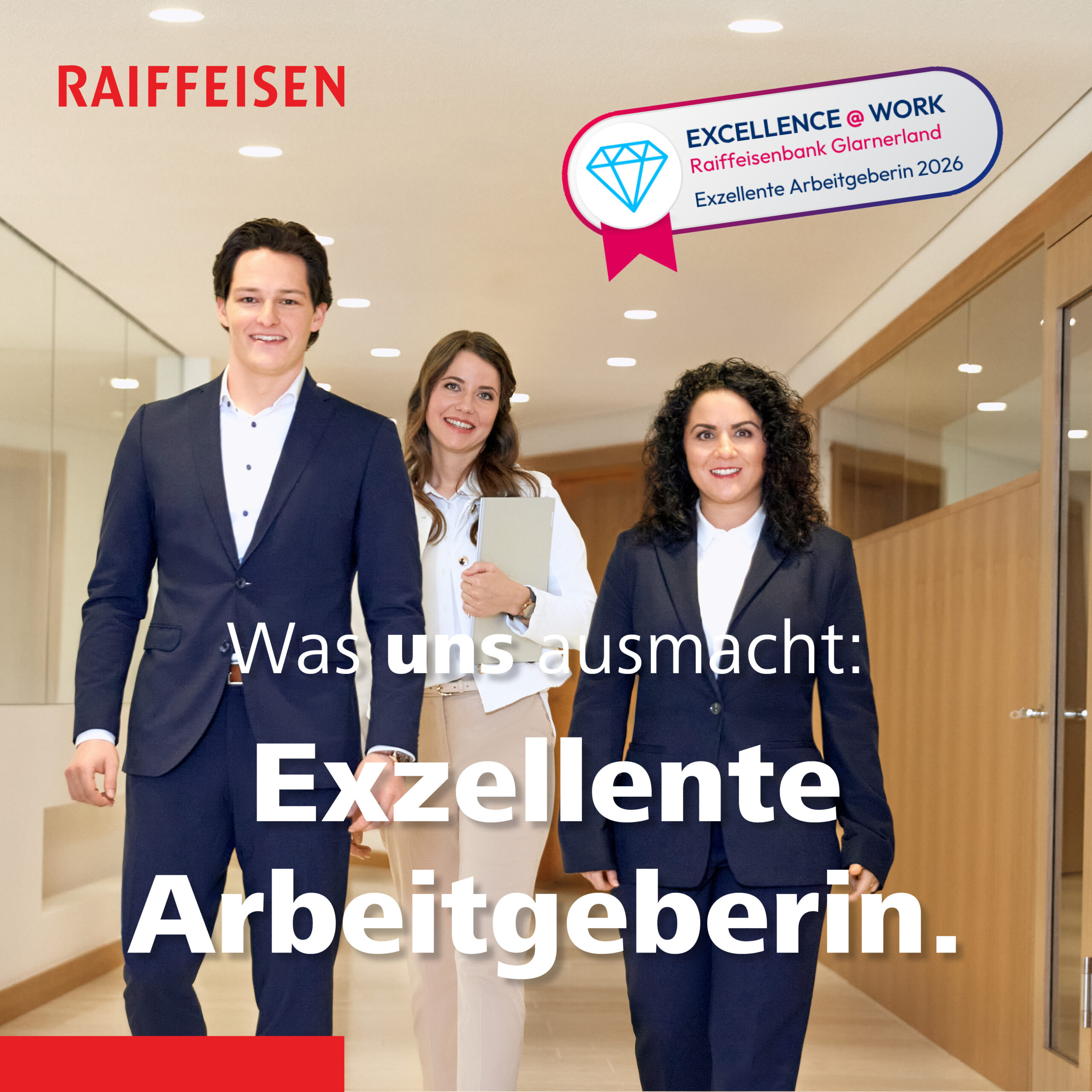
Top Employer: Raiffeisenbank Glarnerland Impresses with Strong Leadership
September 21, 2026
Reading time: 2 min
ValueQuest recently had the honor of presenting the “Excellence@Work Award” to Raiffeisenbank Glarnerland. We extend our heartfelt congratulations.
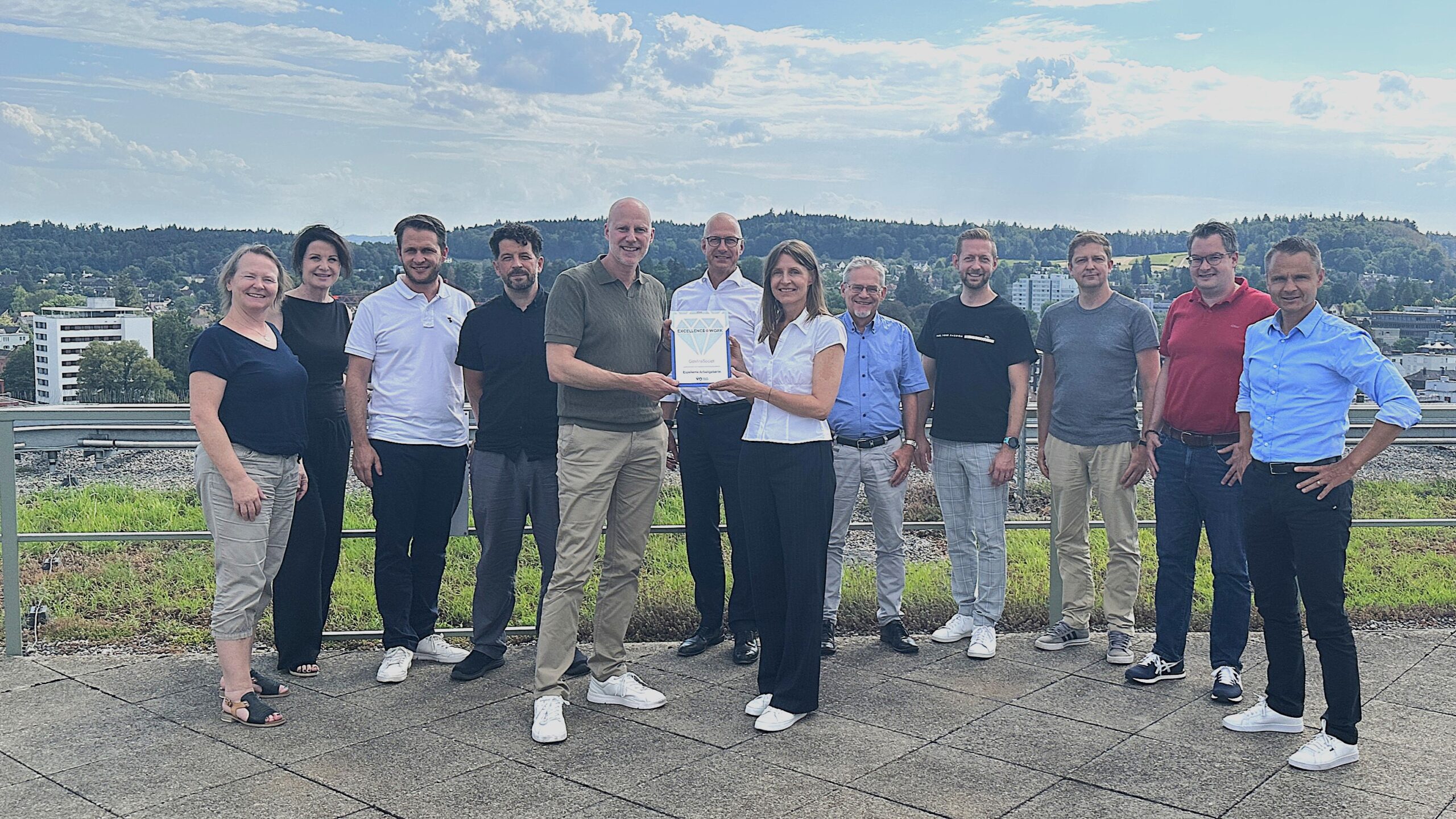
Top Swiss Employers: GastroSocial
September 9, 2026
Reading time: 3 min
GastroSocial has received the 2026 Excellence@Work Award from ValueQuest. With a response rate of 96 percent, a motivation score of 84, and 87 percent of employees serving as brand ambassadors, the company demonstrates a strong employer culture.

Employee Survey: Raiffeisenbank Möhlin Achieves Excellent Results
August 31, 2026
Reading time: 3 min
Raiffeisenbank Möhlin is one of Switzerland's top employers and is receiving our Excellence@Work Award in recognition of this achievement. Congratulations!

Employee Surveys in Switzerland: Find Providers & Tools
August 30, 2026
Reading time: 6 min
Employee Survey in Switzerland: How Do You Find the Right Employee Survey Provider? What Really Matters When It Comes to Anonymity, Tools, Questionnaires, and Analysis.

360-Degree Feedback Questionnaire: Sample, Template, and Sample Questions
August 21, 2026
Reading time: 7 min
Table of Contents A 360-degree feedback process is only as good as its questionnaire. The questionnaire is at the heart of the entire process. It determines whether...

Employee Survey: The CAMPUS SURSEE Foundation Is Among Switzerland's Best Employers
August 5, 2026
Reading time: 2 min
ValueQuest honors particularly attractive employers in Switzerland with the Excellence@Work Award. We recently had the pleasure of presenting the award to the CAMPUS SURSEE Foundation.
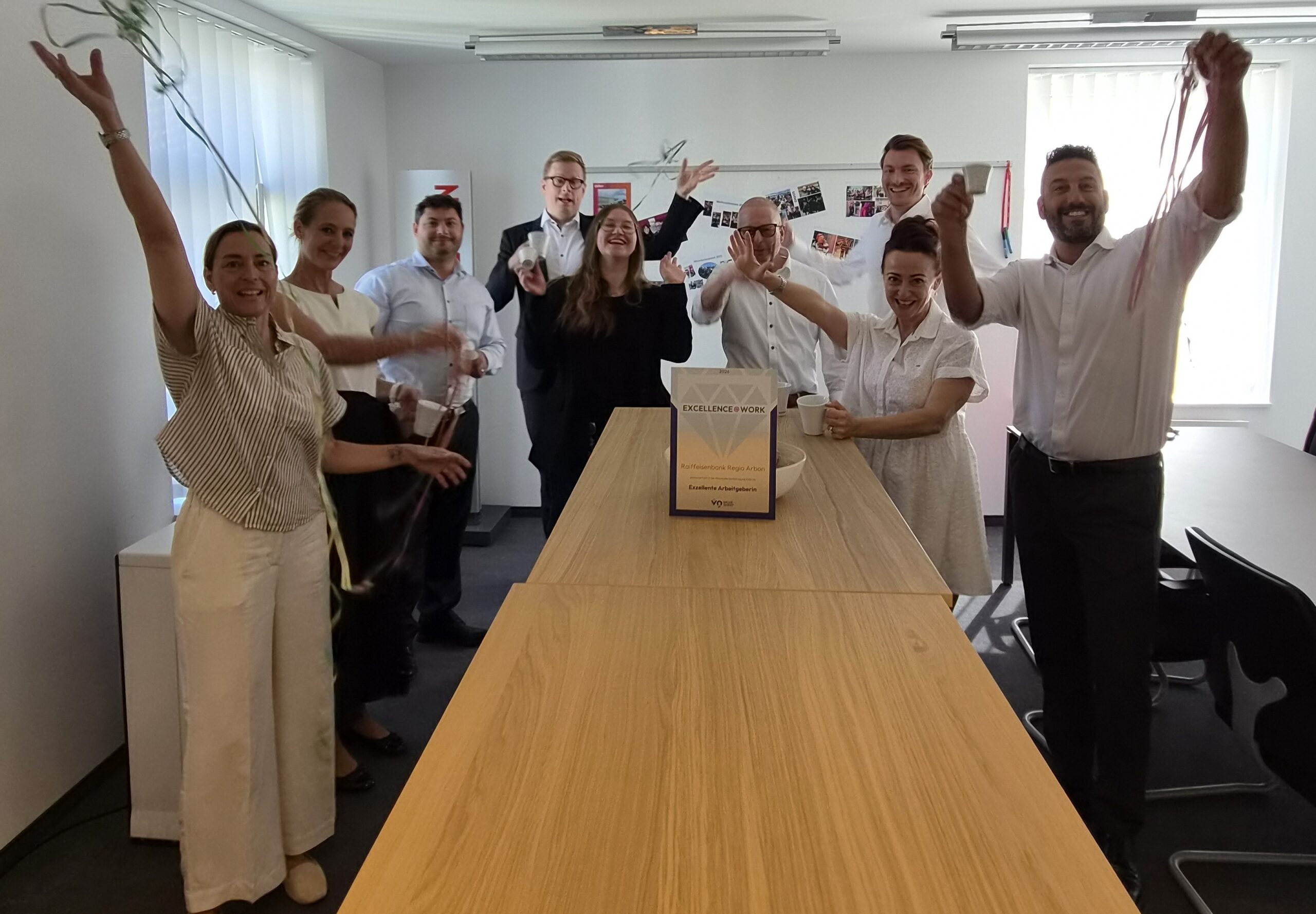
Raiffeisenbank Regio Arbon, a Top Employer: Personal Responsibility as Part of a Strong Corporate Culture
July 7, 2026
Reading time: 2 min
ValueQuest honors particularly attractive employers in Switzerland with the Excellence@Work Award. We recently had the pleasure of presenting the award to Raiffeisenbank Regio Arbon.