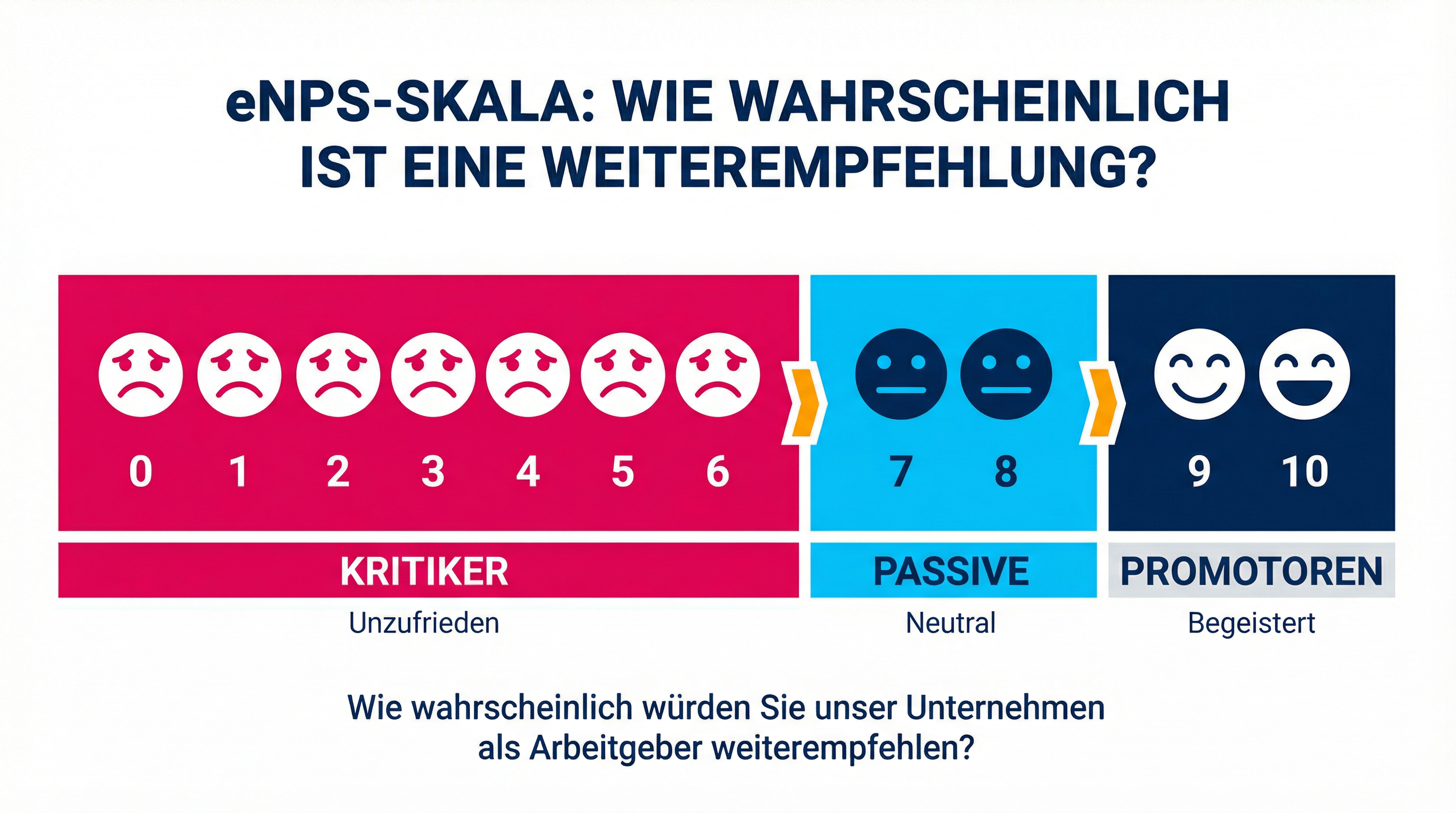
Salary has long since ceased to be the main criterion when choosing a job - especially for the younger generation. Kathrin Neumüller, an expert in employee surveys at the Swiss market research institute ValueQuest, knows what is important.
The interview was conducted by Dominique Simonnot (published on Wednesday, April 3, 2024 in the Aargauer Zeitung, CH Media)
Ms. Neumüller, what is the key to motivating employees and keeping them in the company?
A number of factors come into play here, including the variety of tasks, opportunities for promotion and an appropriate level of stress. However, the quality of leadership and the corporate culture, which takes cultural and intangible values into account, are really decisive for long-term loyalty and employee motivation. The alignment of personal values with those of the employer, appreciation, open communication and respect for employees as people often outweigh the salary. However, this does not mean that salary is unimportant. Rather, it is a basic need.
Does anything else contribute to motivation?
Motivation also depends on a number of demographic factors. For example, seniority. As a rule, employees are very motivated when they start a new job because many tasks are new and because they receive more attention. But after about two years in the same company, motivation tends to decline.
Are there differences between the generations?
Our employee surveys show that employees under the age of 30 tend to be less motivated. However, it would be unfair to describe these younger employees as work-shy or even lazy. Rather, these results indicate that traditional incentives such as salary increases or career opportunities, which were still effective for the baby boomers, are not having the desired effect. Every generation has different needs and expectations. In order to meet these, we need to rethink leadership and employee motivation.
Younger people in particular care more about their health. How can employers contribute to this?
There are many possibilities: Starting with healthy meals in the canteen, through to the provision of bar tables and sports competitions. But health encompasses more than just physical well-being. Mental well-being is just as important. However, the latter in particular has suffered in recent times. More and more employees are suffering from stress and emotional strain and are therefore staying away from work more often. According to a study by CSS, almost one in two 30-year-olds has been absent from work due to emotional stress.
That is devastating. To what extent are resilience workshops and stress coaching the solution here?
In my opinion, resilience workshops distract from the actual problem and shift responsibility onto the employees. The responsibility for stress-related absences does not lie solely with the employees. Stress often arises in the workplace. Companies need to take action and take responsibility for overworking their employees.
What can companies do?
An important contribution to health promotion is the creation of a healthy corporate culture. We need to move away from playing down or even approving of stress and emotional exhaustion. In some circles, stress has become a status symbol. If a person is stressed, they are considered important. In companies where this is the case, it is difficult to establish a health-promoting culture at the same time.
What could a health-promoting management style look like?
Managers should support a culture in which employees feel encouraged to communicate early on when they are overwhelmed. In this way, absences due to burnout can be avoided. Ultimately, an attitude of appreciation and goodwill is the most important thing for employee health: It's about seeing employees not just as workers, but as people, taking them seriously and treating them as equals. As simple as these principles may sound, they are challenging for many companies to implement.
However, the meaningfulness of a job is also not unimportant.
Not all people necessarily seek a higher meaning in their work. Many go to work to earn a living. If the pay is not right, the meaning is unimportant. In addition, the discussion about meaningfulness often revolves around highly qualified office jobs. At the HSG, I spent several years researching whether and how store employees in the retail trade, for example, experience inspiration and meaningfulness. Stocking shelves or cashiering may seem monotonous at first glance - for some even meaningless. But that is not the case.
Why not?
I remember an interview with a Coop cashier who found the customer exchange at the checkout inspiring. Inspiration and meaningfulness start with ourselves. Everyone perceives them differently. A supportive manager, contact with customers and an empowering working environment can promote inspiration.
How important is coffee in a company?
As an avid coffee drinker, I naturally say: very important. But joking aside. It's not about the coffee itself. It's more about what it symbolizes - appreciation and social exchange. Fixed coffee breaks provide an important framework for personal exchanges with colleagues and thus strengthen team spirit. I would even go so far as to suggest that coffee should be free as a sign of appreciation from the employer - a seemingly small but meaningful gesture.
Is it possible to introduce the 4-day week without putting employees under even more pressure?
Not all 4-day weeks are the same. Essentially, there are two approaches: One is to reduce the working week from five to four days without reducing the total hours. This inevitably leads to longer working days. On the other hand, there is the actual reduction in total working hours, where employees effectively only work four days without compensating for the "lost" day. With the latter approach, for example, the working week would be reduced from 40 to 32 hours - but with the same salary.
Do you share employers' concerns that the company's results could suffer as a result of the 4-day week?
These concerns are understandable. But pilot projects in Iceland show a different picture: shorter working hours do not necessarily lead to lower employee productivity or performance. On the contrary, the 4-day week according to the second approach requires an adjustment of work processes, for example through shorter and more targeted meetings, a reduction in idle time and more efficient e-mail traffic. Parkinson's law provides an explanation for this: tasks take as much time as we give them. If we schedule a meeting for an hour, it will also take an hour.
What framework conditions are needed?
Small and medium-sized enterprises (SMEs) in particular should ensure that strategic planning does not suffer as a result of reduced working hours. Here in particular, management and senior staff are often heavily involved in operational business, which means that strategic decisions that do not have the same degree of urgency as day-to-day business could be neglected. The challenge is not only to reduce working hours, but also to bring about a cultural change in the way work is organized. By streamlining processes, such as more efficient meetings, targeted e-mail communication and the active involvement of employees in process improvements, working time can be used more efficiently.
Article published on April 11, 2024
About Barbara Haimoff

Barbara Haimhoff is Office Manager at ValueQuest and ensures that day-to-day business runs smoothly. She graduated from the KV Baden business school and is a qualified commercial clerk with many years of professional experience in administration and organization. Find out more about Barbara
Inspired? Then share this post via your favorite platform.
Other articles that might interest you ...

AI in the Swiss Insurance Market: What Insurers Can Learn from the Results
October 1, 2026
Reading time: 4 min
Artificial intelligence is not universally accepted in the Swiss insurance market. As a study by ValueQuest shows, customers’ openness to AI depends heavily on how it is used.

AI in the Swiss Insurance Market: Between Acceptance and Skepticism
September 28, 2026
Reading time: 5 min
For many Swiss people, artificial intelligence has become an integral part of everyday life. However, the situation is different when it comes to insurance companies.
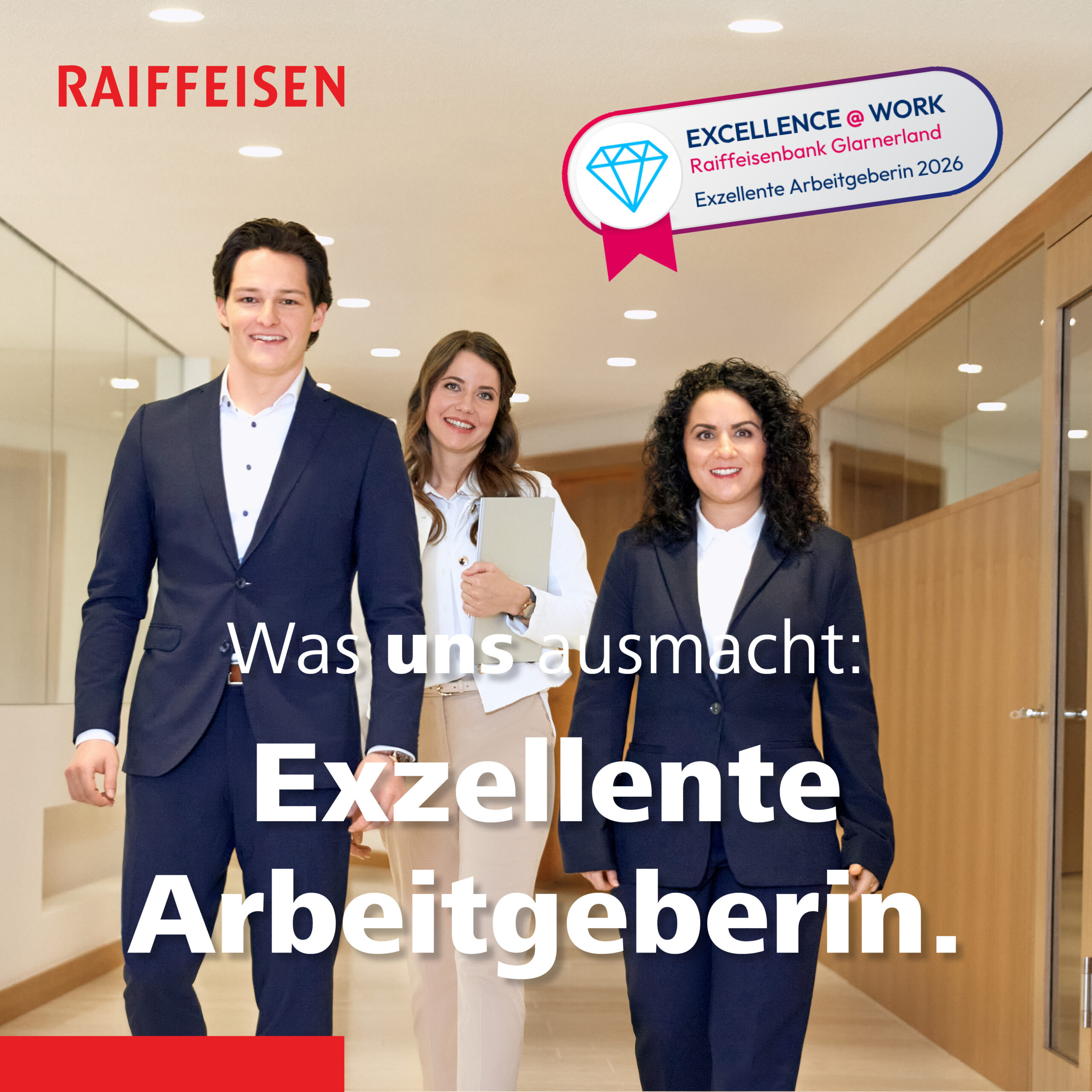
Top Employer: Raiffeisenbank Glarnerland Impresses with Strong Leadership
September 21, 2026
Reading time: 2 min
ValueQuest recently had the honor of presenting the “Excellence@Work Award” to Raiffeisenbank Glarnerland. We extend our heartfelt congratulations.
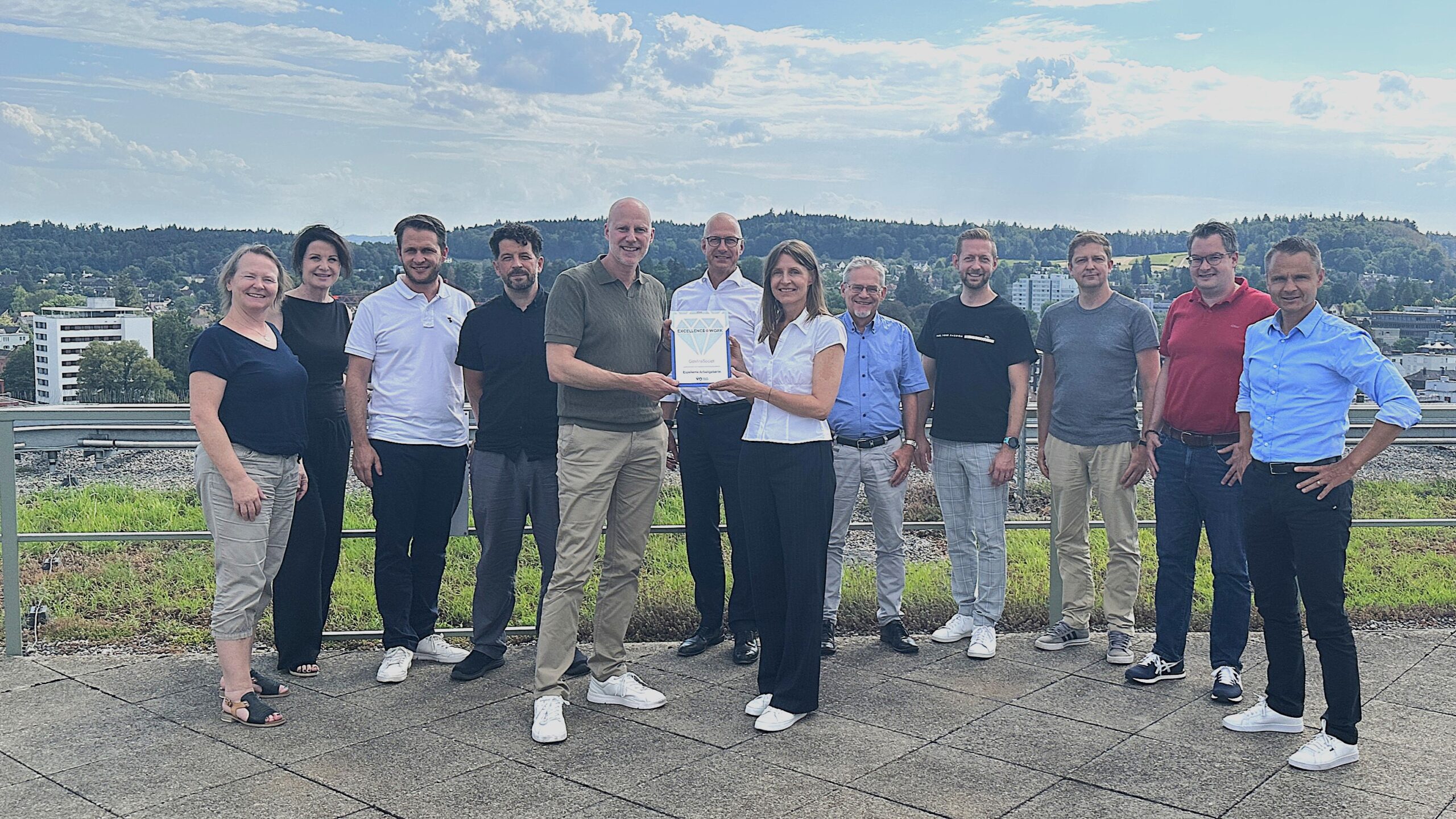
Top Swiss Employers: GastroSocial
September 9, 2026
Reading time: 3 min
GastroSocial has received the 2026 Excellence@Work Award from ValueQuest. With a response rate of 96 percent, a motivation score of 84, and 87 percent of employees serving as brand ambassadors, the company demonstrates a strong employer culture.

Employee Survey: Raiffeisenbank Möhlin Achieves Excellent Results
August 31, 2026
Reading time: 3 min
Raiffeisenbank Möhlin is one of Switzerland's top employers and is receiving our Excellence@Work Award in recognition of this achievement. Congratulations!

Employee Surveys in Switzerland: Find Providers & Tools
August 30, 2026
Reading time: 6 min
Employee Survey in Switzerland: How Do You Find the Right Employee Survey Provider? What Really Matters When It Comes to Anonymity, Tools, Questionnaires, and Analysis.

360-Degree Feedback Questionnaire: Sample, Template, and Sample Questions
August 21, 2026
Reading time: 7 min
Table of Contents A 360-degree feedback process is only as good as its questionnaire. The questionnaire is at the heart of the entire process. It determines whether...
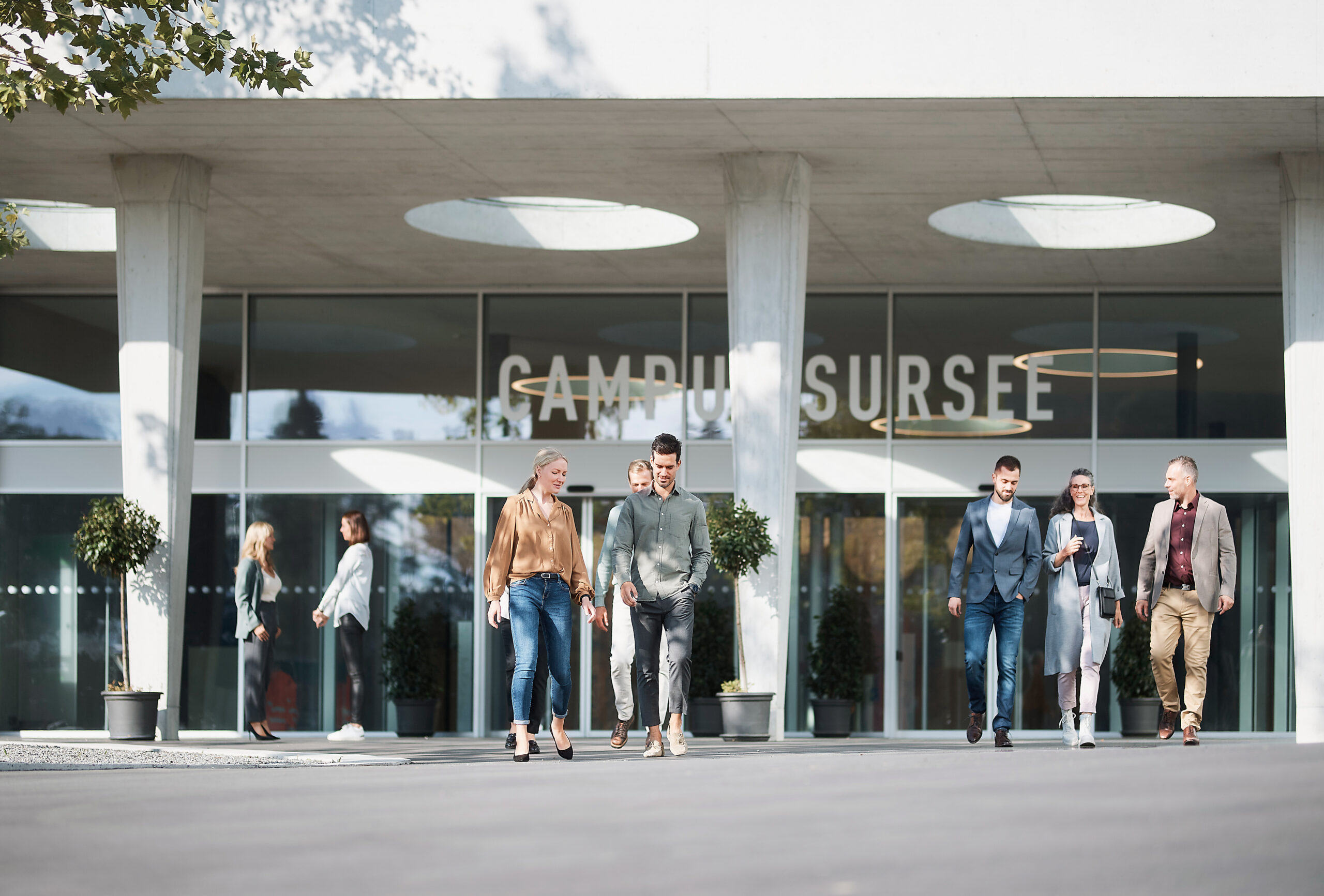
Employee Survey: The CAMPUS SURSEE Foundation Is Among Switzerland's Best Employers
August 5, 2026
Reading time: 2 min
ValueQuest honors particularly attractive employers in Switzerland with the Excellence@Work Award. We recently had the pleasure of presenting the award to the CAMPUS SURSEE Foundation.
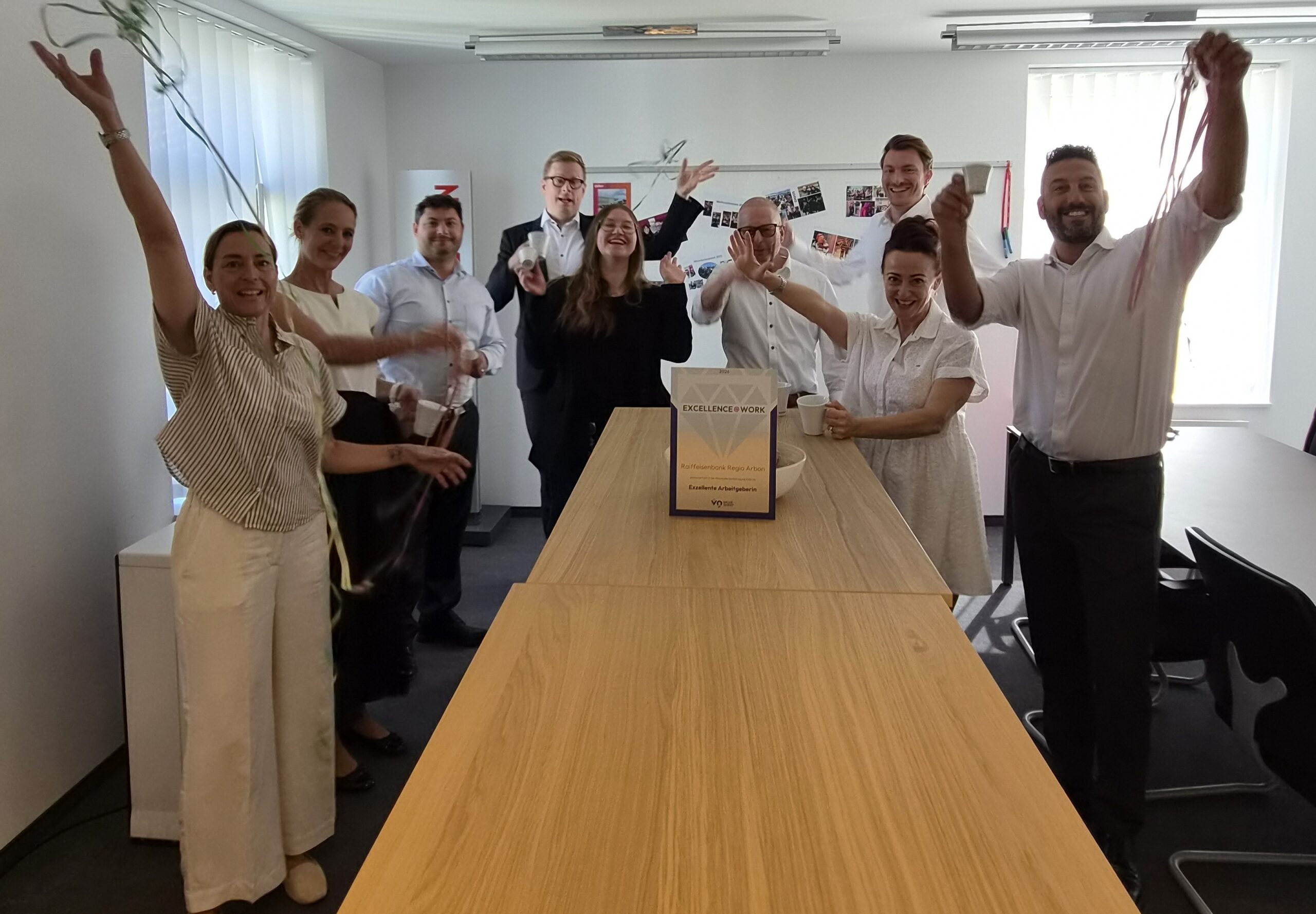
Raiffeisenbank Regio Arbon, a Top Employer: Personal Responsibility as Part of a Strong Corporate Culture
July 7, 2026
Reading time: 2 min
ValueQuest honors particularly attractive employers in Switzerland with the Excellence@Work Award. We recently had the pleasure of presenting the award to Raiffeisenbank Regio Arbon.