"What inspires you?" - a question that is rarely asked in traditional employee surveys. Far too often, the focus is on familiar KPIs such as employee satisfaction, engagement or commitment. These KPIs clearly have their place. However, they fall short in some areas, especially in our increasingly dynamic competitive environment. Find out more in our webinar.
Table of contents
One thing is certain: The world of work is changing. Skills shortages, digitalization and cultural change are putting companies in this country under increasing pressure. Employees are now more willing to change their employer. Loyalty is on the decline. Against this backdrop, it is no longer enough to simply measure and improve employee satisfaction. What is needed is a deeper understanding of what really motivates and drives people. In other words, companies should look at what inspires employees as people and what keeps them in the company.
This was precisely the topic of our webinar "Inspiring employees", which Dr. Kathrin Neumüller held together with the provider of the Ahead communication platform.
The central questions:
- ✅ Why is inspiration superior to employee satisfaction and engagement?
- ✅ How can inspiration be measured in the work context?
- ✅ What concrete impact does it have on employees' day-to-day work?
- ✅ How can companies create an inspiring working environment?
- ✅ Are there differences between the generations when it comes to inspiration?
Answers were provided by the current Employee Study 2025, conducted in Switzerland and Liechtenstein, as well as Kathrin's research on employee inspiration at the University of St. Gallen.
Swiss workplaces are hardly inspiring
The results of our latest Employee Survey 2025 paint a sobering picture. Only a third of employees in Switzerland and Liechtenstein feel inspired by their work. Two thirds, on the other hand, experience little or no inspiration. In many cases, the necessary framework conditions are simply lacking.
Why is that?
- Too much routine has crept in.
- There is no appreciation.
- Corporate visions seem interchangeable and pay too much attention to purely economic goals instead of a larger social purpose.
Many companies conduct surveys to find out how satisfied their employees are. However, it is not uncommon for the results to disappear unprocessed into a drawer. This is a missed opportunity, because this is precisely where there is great potential. These facts are a wake-up call for HR and management. In the webinar, we revealed why it's about much more than employee satisfaction.
Employee satisfaction and employee inspiration in comparison
🧘♀️ Employee satisfaction
As the word "zu-frieden" suggests, it refers to a state of inner peace and balance.
Contentment means that we are in harmony with ourselves and our environment - and want to maintain the status quo.
🚀 Employee inspiration
Inspiration, on the other hand, moves us. It brings energy, ideas and a willingness to change.
Inspired employees want to shape things, learn new things - and actively help shape the future.
Why transformation cannot succeed without employees
Transformation is always people-driven. ChatGPT, automation, digitalization or not - at the end of the day, it is people who drive (or block) change. Whether a transformation succeeds depends not only on technology or strategy, but first and foremost on whether employees are willing to support it. True to the motto: culture eats strategy for breakfast.
Technology is a means to an end. No matter how much you invest in digital infrastructure, progress will fall by the wayside if employees don't get on board. In fact, around 70% of change initiatives in companies fail because they are unable to get people on board or mobilize them.
What inspiration is (not)
Inspiration is more than just a pleasant feeling. Rather, it describes the experience of meaningfulness in professional activity. Inspired employees develop ideas, question routines and drive innovation.
But be careful: Inspiration is not just something for white-collar employees, i.e. employees sitting at a PC. Our research at the University of St. Gallen shows: Retail employees (at the checkout or stocking shelves) can also be inspired. Inspiration here means, for example, being open to change, recognizing new working methods and, if necessary, passing these on directly to customers, e.g. through a creative "consumer idea" at the meat counter.
Inspiration is therefore not a "soft" feel-good aspect, but a strategic lever for corporate success. It increases the willingness to change, promotes entrepreneurial thinking and has an impact far beyond the immediate workplace. This is because inspiring workplaces have an enormous external impact and are therefore highly attractive to applicants.
- Productivity. Inspired employees work on average around one month more per year. This is shown by our latest study on employee productivity in Swiss companies.
- Well-being. They feel significantly more resilient and experience a higher level of mental and physical well-being.
- willingness to change. They are more open to new processes and think in a more solution-oriented way.
- Employer branding. Inspiring companies are perceived as attractive employers - both internally and externally.
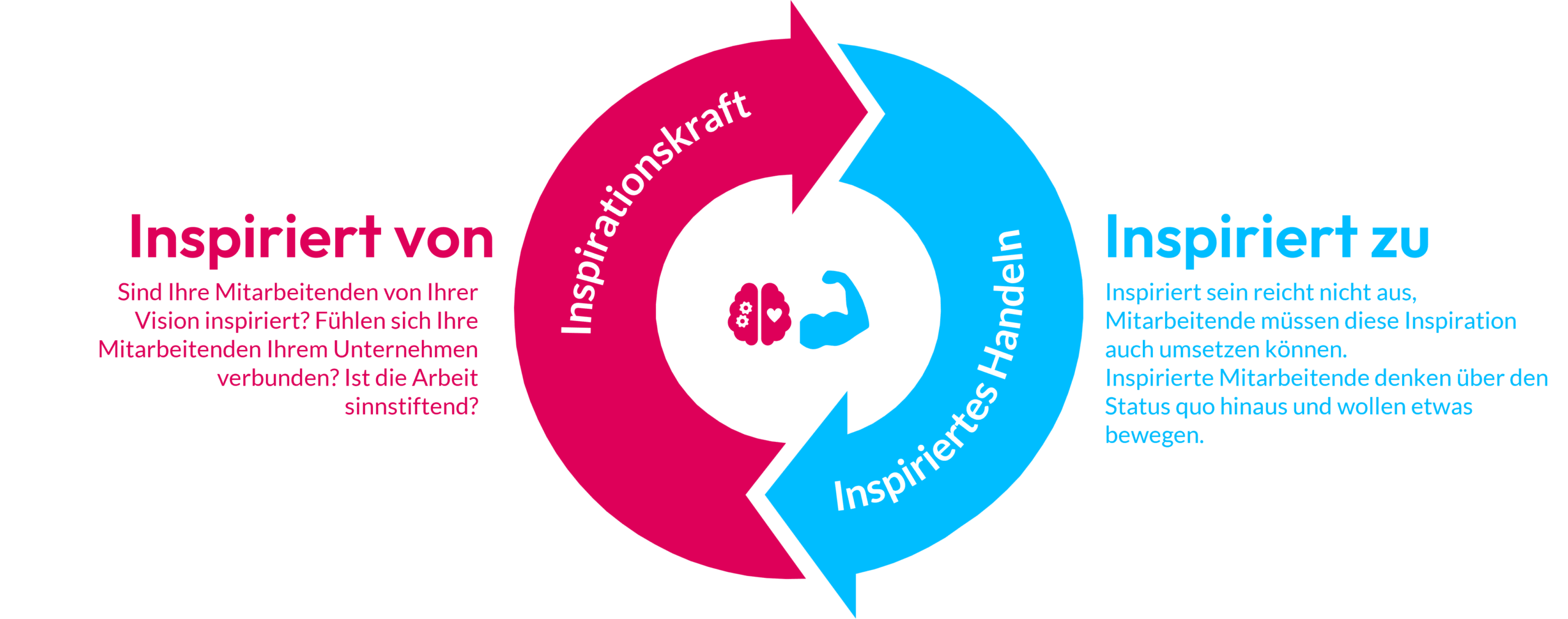
Based on science, ValueQuest measures inspiration along two dimensions:
- Inspirational power - i.e. impulses from outside, for example from colleagues, an inspiring and moving vision or appreciation experienced.
- Inspired action - in other words, the will and ability to actively implement these impulses in your own day-to-day work.
Inspiration often begins with an external impulse. Something touches us, draws our attention and sets us in motion. Suddenly we want to create something, express ourselves, try something new. This moment is more than motivation or commitment. It is a developmental boost and leads to inner growth.
Creating inspiring working environments
One feedback tool that ValueQuest uses to make inspiration more tangible is the Employee Inspirations Journey. This is a reflection tool that employees use to examine their personal sources of inspiration, development potential and development goals. Here, for example, we ask:
- What inspires you in life and in your day-to-day work?
- How meaningful is your employee journey with your current employer?
- What would you like for your professional future?
What is important here is that inspiration is not just about people as workers, but about what inspires and touches people in their everyday lives. It is not about their professional role, but about people as a whole.
Difference between inspiration and inspirational leadership
Inspirational leadership has long been a concept in science. It usually involves a top-down approach: a manager with vision, rhetorical talent and a strong personality who inspires their team and motivates them to perform at their best. This behavior is often asked about in 360-degree feedback.
The catch? This type of measurement measures the behavior of the manager, not the actual experience of the employees. Whether I as an employee really feel inspired is left out of the equation.
Our understanding of inspiration starts right here. We do not (only) ask who is inspiring, but what inspires. It is about the personal experience. The moment of inspiration can be triggered by a manager, but it doesn't have to be.
It can be just as inspiring:
- A supportive team
- An encounter with a colleague during a coffee break
- Further training
- A customer conversation that touches
- Or a vision that goes beyond sales targets and creates added value for society
Inspiration is therefore not a management style. It is a state. And this state is not only created by good leadership, but also by an inspiring environment. So if companies want to understand what really motivates employees, it is not enough to focus on leadership.
What really inspires employees
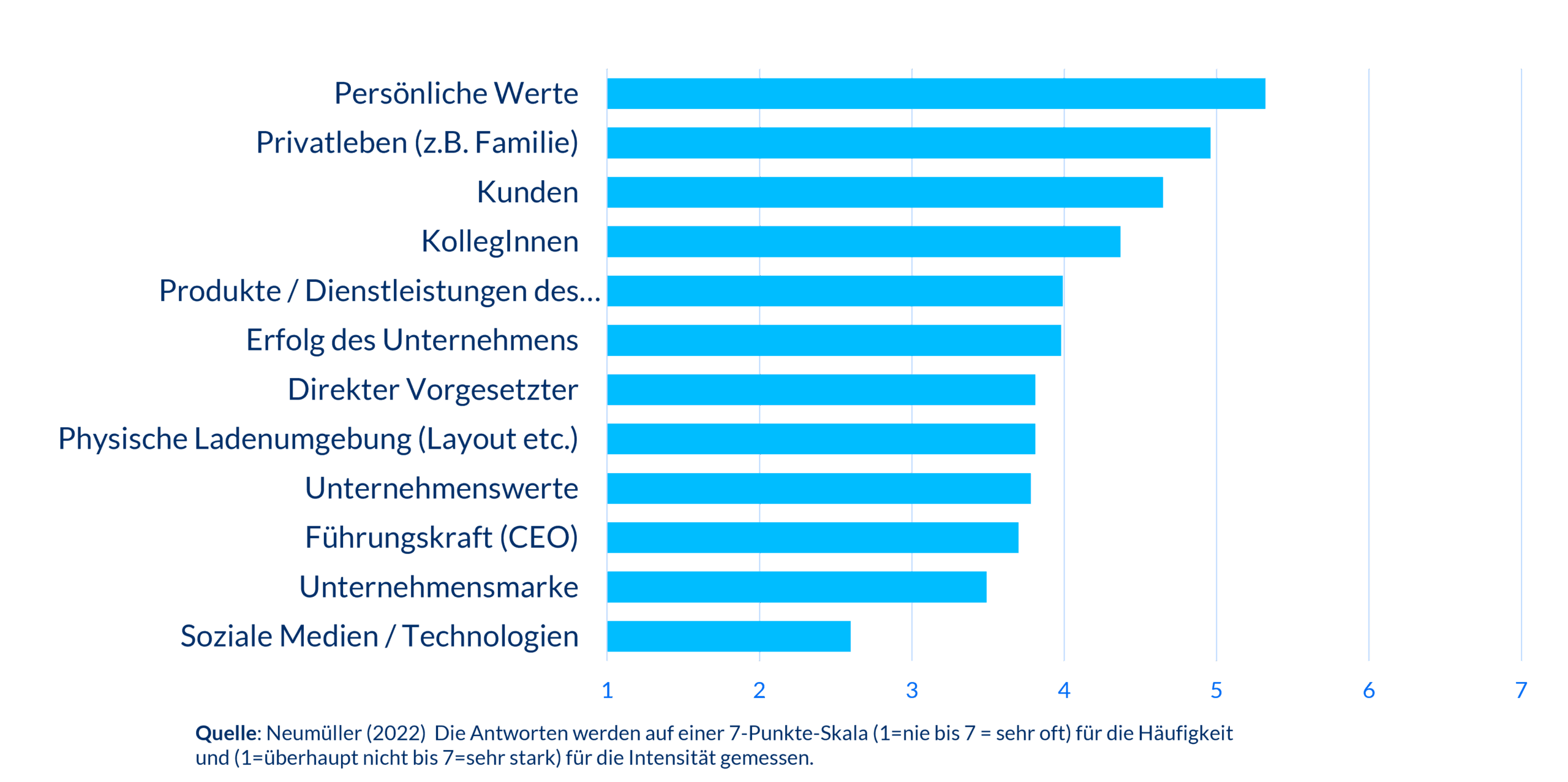
Many companies believe that inspiration comes primarily from strong leadership, great visions or a clearly formulated value system. But our research shows a very different picture. Traditional factors such as company values or direct superiors are not at the top of the list when it comes to the real sources of inspiration in everyday working life.
The data from the latest research speaks for itself. These are the top sources of inspiration for employees:
- 💡 Personal values
- 🏡 Private environment
- 🤝 Customer contact
- Colleagues 👥 Colleagues
- 📚 Learning & further development
And leadership? That comes much later. Just like the corporate strategy, which is often perceived as too abstract or too distant. If visions are only aimed at turnover or efficiency, there is a lack of emotional access.
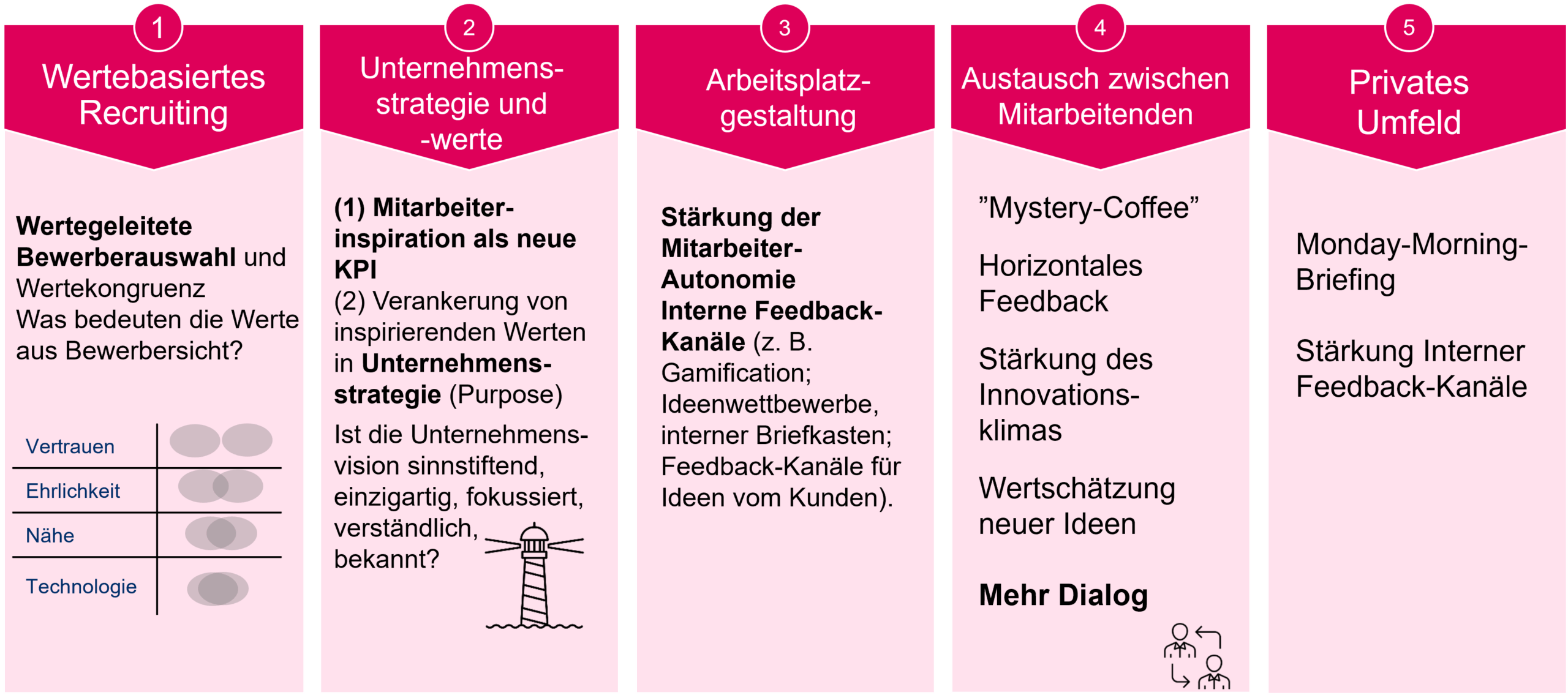
Inspiring working environment: this is where companies can start
If companies want to create an inspiring environment, it is not enough to tweak the strategy. They have to shape the reality they experience. Our survey clearly shows where the biggest levers lie:
More autonomy and freedom
Only 50 percent of employees experience sufficient freedom to implement their own ideas. But those who are allowed to create feel effective - and are more likely to be inspired.
More appreciation and recognition
Only 44 percent feel that their impulses are taken seriously. The experience of resonance is a key factor for inspiration.
Visions with charisma
Only 34 percent find the corporate vision inspiring. It often remains vague or purely economically oriented. But if you want to convey meaning, you also have to offer meaning.
Short and sweet
- A full 64 % of the employees surveyed feel uninspired. There is still a lot of potential here.
- Don't forget employees over 50: they are more inspired and more willing to transform than anyone else.
- Employee inspiration goes beyond satisfaction, commitment and dedication - it touches us on a human level.
- What really inspires you? (Why game from Design Thinking) - start a conversation with others. The Employee Inspiration Journey is a dialog instrument and development tool for this.
- What gets measured gets done: Establish employee inspiration as a new target value.
Article published on June 10, 2025
About Dr. Kathrin Neumüller

Dr. oec. HSG Kathrin Neumüller is Co-Managing Director at ValueQuest and an expert in employee inspiration and empowerment. She also teaches strategic management in the MBA program at the ZHAW. She holds a doctorate from the University of St. Gallen (HSG) and studied at the University of Cambridge. Learn more about Kathrin
Inspired? Then share this post via your favorite platform.
Other articles that might interest you ...

AI in the Swiss Insurance Market: What Insurers Can Learn from the Results
October 1, 2026
Reading time: 4 min
Artificial intelligence is not universally accepted in the Swiss insurance market. As a study by ValueQuest shows, customers’ openness to AI depends heavily on how it is used.

AI in the Swiss Insurance Market: Between Acceptance and Skepticism
September 28, 2026
Reading time: 5 min
For many Swiss people, artificial intelligence has become an integral part of everyday life. However, the situation is different when it comes to insurance companies.
Top Employer: Raiffeisenbank Glarnerland Impresses with Strong Leadership
September 21, 2026
Reading time: 2 min
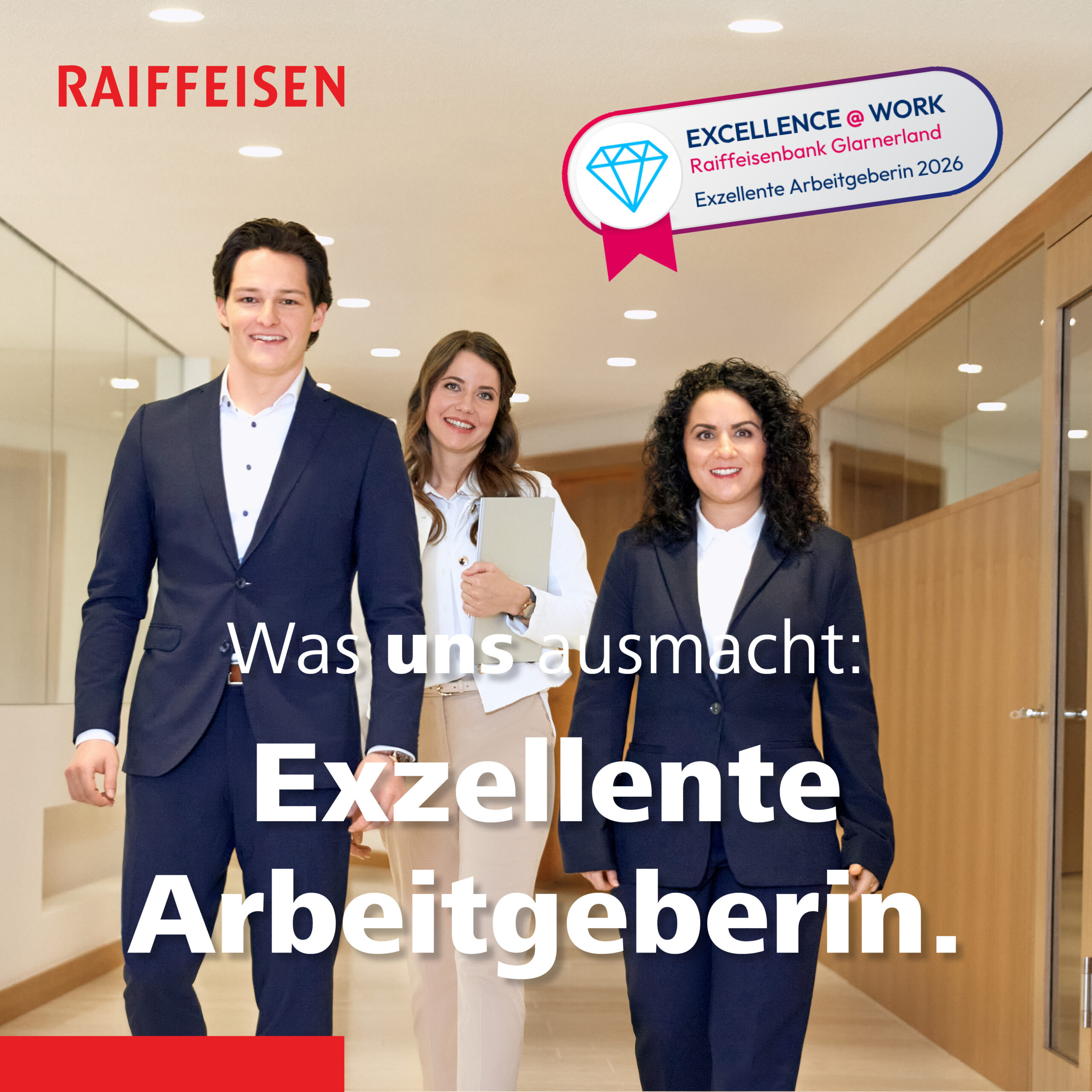
ValueQuest recently had the honor of presenting the “Excellence@Work Award” to Raiffeisenbank Glarnerland. We extend our heartfelt congratulations.
Top Swiss Employers: GastroSocial
September 9, 2026
Reading time: 3 min
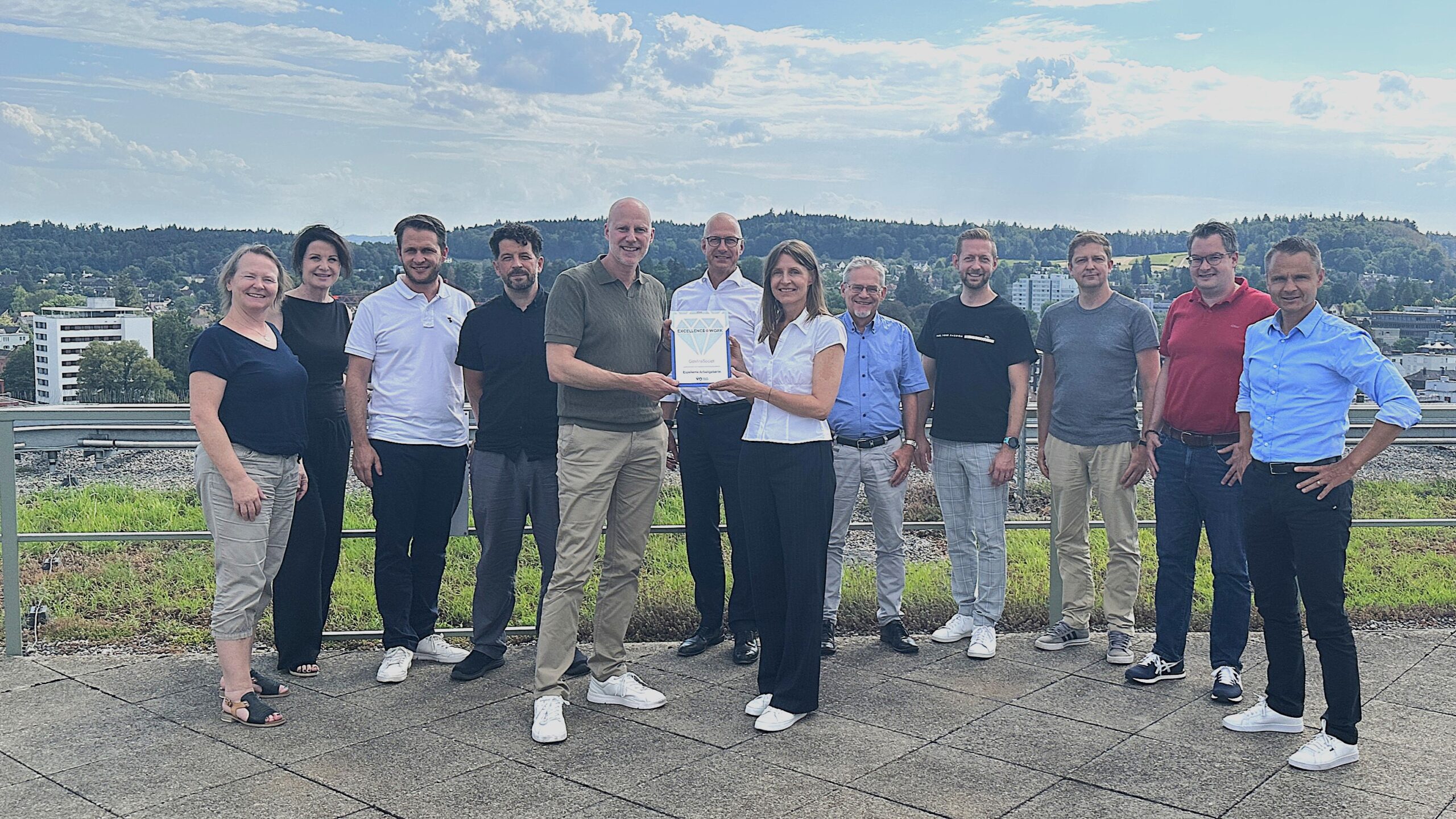
GastroSocial has received the 2026 Excellence@Work Award from ValueQuest. With a response rate of 96 percent, a motivation score of 84, and 87 percent of employees serving as brand ambassadors, the company demonstrates a strong employer culture.

Employee Survey: Raiffeisenbank Möhlin Achieves Excellent Results
August 31, 2026
Reading time: 3 min
Raiffeisenbank Möhlin is one of Switzerland's top employers and is receiving our Excellence@Work Award in recognition of this achievement. Congratulations!

Employee Surveys in Switzerland: Find Providers & Tools
August 30, 2026
Reading time: 6 min
Employee Survey in Switzerland: How Do You Find the Right Employee Survey Provider? What Really Matters When It Comes to Anonymity, Tools, Questionnaires, and Analysis.

360-Degree Feedback Questionnaire: Sample, Template, and Sample Questions
August 21, 2026
Reading time: 7 min
Table of Contents A 360-degree feedback process is only as good as its questionnaire. The questionnaire is at the heart of the entire process. It determines whether...
Employee Survey: The CAMPUS SURSEE Foundation Is Among Switzerland's Best Employers
August 5, 2026
Reading time: 2 min
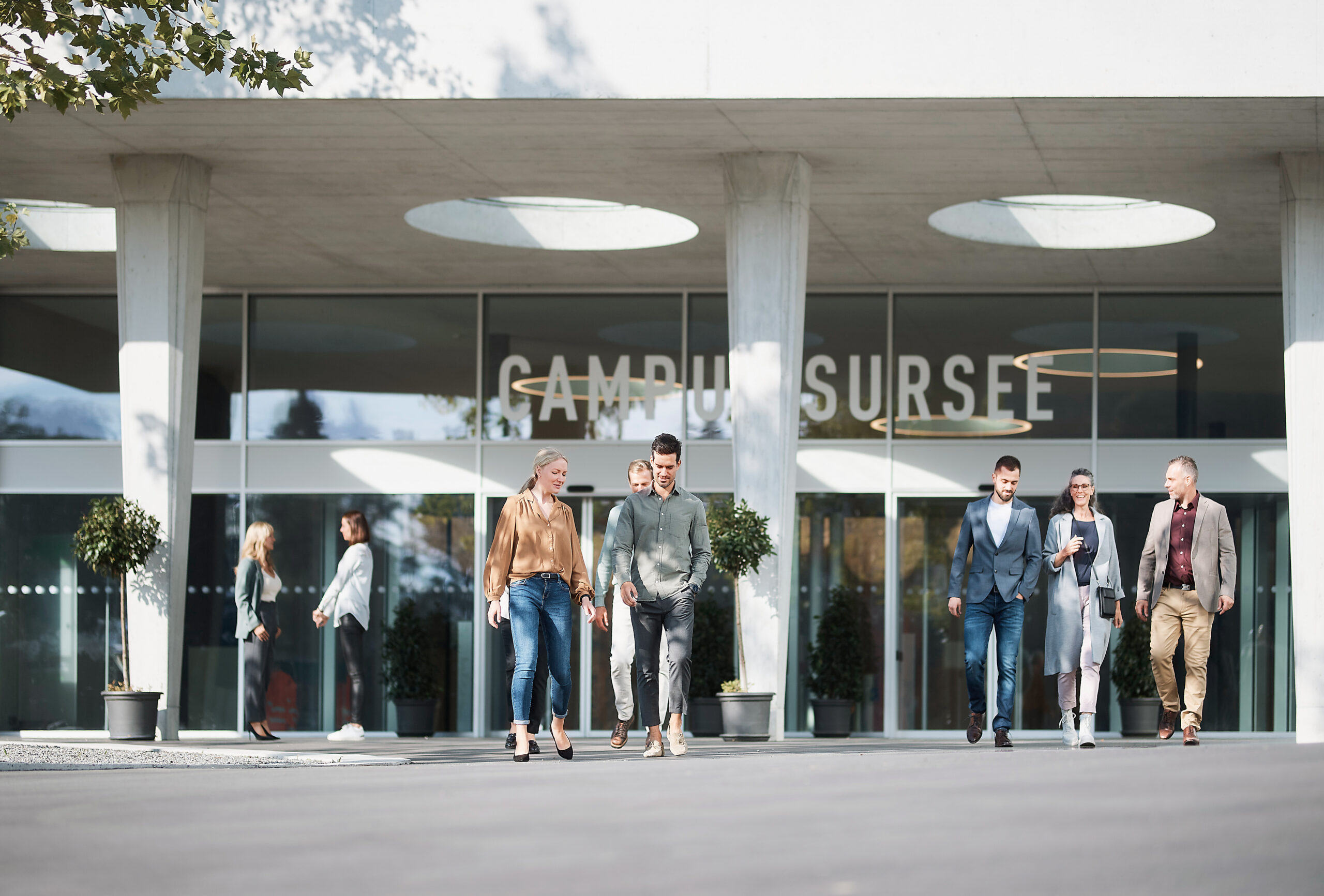
ValueQuest honors particularly attractive employers in Switzerland with the Excellence@Work Award. We recently had the pleasure of presenting the award to the CAMPUS SURSEE Foundation.
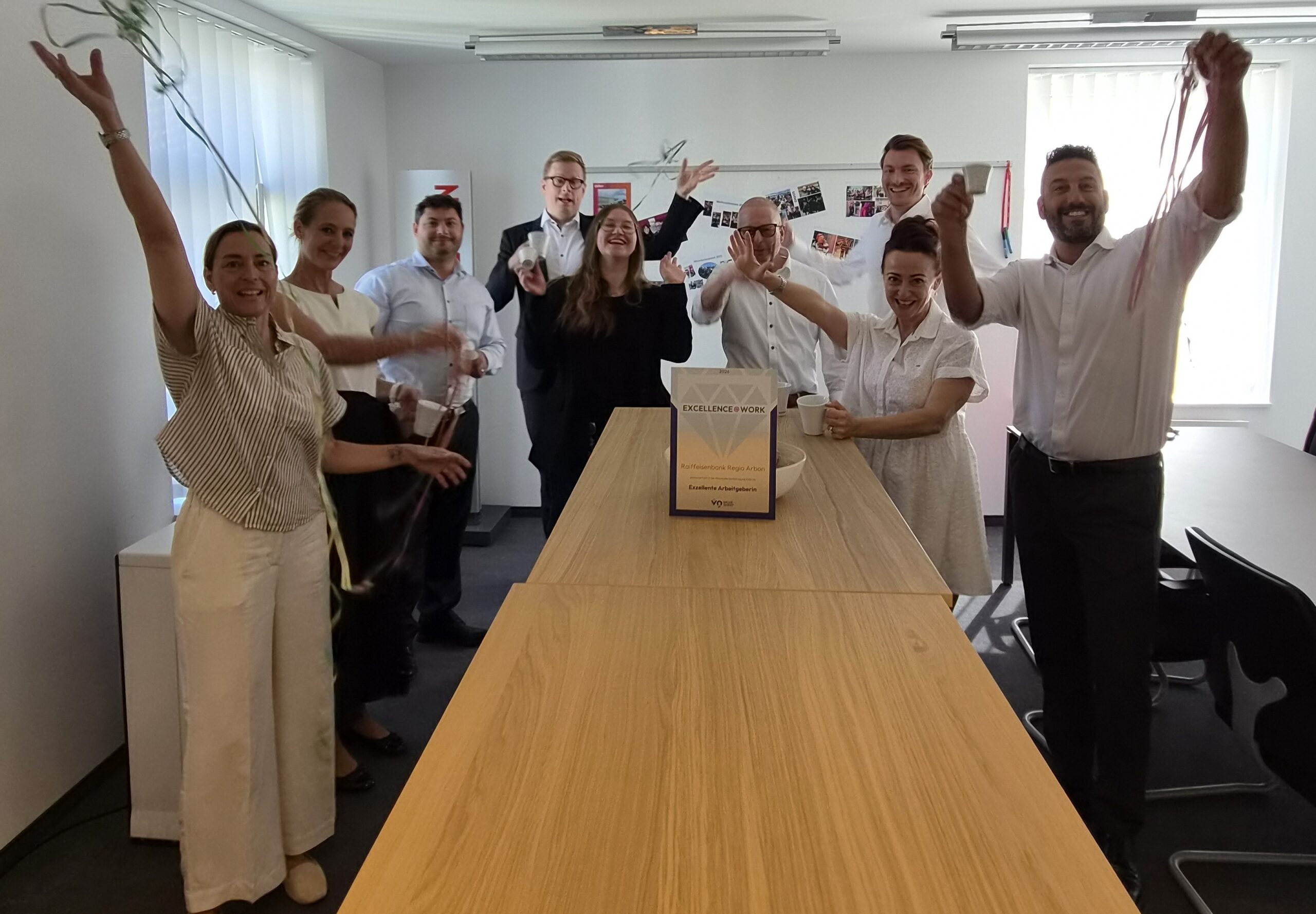
Raiffeisenbank Regio Arbon, a Top Employer: Personal Responsibility as Part of a Strong Corporate Culture
July 7, 2026
Reading time: 2 min
ValueQuest honors particularly attractive employers in Switzerland with the Excellence@Work Award. We recently had the pleasure of presenting the award to Raiffeisenbank Regio Arbon.