Vany managers have a clear idea of the skills and qualifications they expect from new employees. However, talents and skills that are already present in their own team are often overlooked. The skills shortage could be significantly alleviated if companies had a better understanding of the skills and abilities of their existing employees and deployed them in a more targeted manner. But how exactly can this be achieved? Skills management provides an answer.
The shortage of skilled workers presents companies with major challenges. Effective skills management can help to overcome this. 360 feedback is a valuable tool here. (Image: Pexels)
by Dr. Kathrin Neumüller and Thomas Bigliel
Qualified employees are crucial to a company's success, but finding them is a challenge for many companies. Many companies look for external talent, but often overlook the fact that the skills they need are already available in their existing teams. Valuable but untapped talent often lies dormant in the company's own employees. Skills management comes into play to make these visible and usable: it deals strategically with the question of which skills and competencies are currently available in the company and which will be needed in the future in order to be successful on the market.
In contrast to talent management, which concentrates on identifying and promoting potential managers and high potentials, skills management aims to identify all skills and competencies within the workforce and develop them in a targeted manner. The focus is on bringing together the right skills in the right place at the right time in order to achieve the company's goals. According to the latest Gallup Study Germany 2024, however, companies in this country are far from achieving this skill-job match: four out of five employees are not exploiting their full potential in the workplace and are unable to make optimum use of their skills. This is precisely where effective skills management comes in. Continuous analysis and evaluation of skills within the company should ensure that the right employees are entrusted with the right tasks.
Info box: Definition of skill managementSkill management is defined as the management of employees' qualifications, experience and knowledge. The aim is to place the right skills in the right position at the right time - and at optimal cost. Skill management comprises three main components:
Through this systematic approach, skill management ensures that employees are continuously developed and that the company can react flexibly to changing market requirements. Skill management therefore has a strategic function (Granados and Erhardt, 2012). |
Instead of evaluating employees based solely on their job titles and functions, skills management takes a more detailed perspective and focuses on specific skills and competencies. This skill-based view emphasizes an employee's specific skills, such as knowledge of Python or JavaScript, rather than simply viewing them as a software developer (function-based).
| Info box: What are skills? Skills are abilities and abilities that people learn and develop in order to perform certain tasks or professions. These skills can be divided into two main categories: Hard Skills and Soft Skills. Hard skills are measurable and specific abilities that are often acquired through formal education and training. They are usually objectively measurable and can be demonstrated through certificates and assessments. Examples of hard skills include programming (knowledge of programming languages such as Python, Java or C++), data analysis (ability to analyze and interpret data using tools such as Excel or SQL) and language skills (proficiency in foreign languages such as English, Spanish or Chinese).Soft skills, on the other hand, are personal, interpersonal skills that are harder to measure but are crucial for effective collaboration and communication in the work environment. Examples of soft skills include communication (ability to communicate clearly and effectively), teamwork (ability to work and collaborate successfully in a team), problem solving (ability to find creative and effective solutions to problems) and time management (ability to plan and prioritize tasks efficiently). |
How to proceed correctly!
This article offers you a detailed step-by-step guide to effective skills management in your company. A particular focus here is on analyzing the current situation. Here we show you how you can use 360-degree feedback to precisely identify the individual strengths and development areas of your specialists and managers.
To provide you with a clear roadmap, we have compiled the most important steps for successful skills management.
The second step is to systematically record the current skills and competencies of your employees. To do this, develop a skills matrix in which all employees and their respective skills are recorded. Use digital tools such as HR software or special skills management tools to efficiently collect and organize the data. The skills matrix helps to document and visualize the existing skills of employees. It forms the basis for further analysis and the development of targeted measures for skills development within the company.
| Digital Marketing | Software development | UX design | |
| Person 1 | ●●○○ | ●●●○ | ●○○○ |
| Person 2 | ●●●● | ●●○○ | ●●●○ |
| Person 3 | ●○○○ | ●●●● | ●●○○ |
Step 3: Carrying out an actual skills analysis
The third step is to comprehensively analyze the collected data in order to obtain a clear overview of the existing skills and their distribution within the company. 360-degree feedback is a particularly valuable tool for this. This involves collecting comprehensive feedback from superiors, colleagues, employees and through self-assessments (see graphic). This feedback provides a detailed and objective view of the existing skills and competencies of each employee. The strategically correct selection of the skills and abilities to be assessed is essential so that the feedback providers can identify targeted potential for improvement.
Step 4: Comparison of actual and target status
The fourth step involves comparing the existing skills (current status) with the requirements resulting from the company's objectives (target status). Carry out a skills gap analysis to identify the gaps (skills gaps) where the current skills are not sufficient to achieve the company's goals. Then prioritize these identified skill gaps according to the urgency and relevance defined in step 1. The resulting priority list helps you to deploy your resources efficiently and develop targeted measures to close the skill gaps (see table).
| Department | Identified skill gaps | Urgency | Significance for corporate goals |
| Marketing | 80 % require training in digital marketing | High | Very high |
| IT | 70% need to expand their software development skills | Medium | High |
| UX design | Significant need for training in the area of UX design | High | Very high |
Identified skill gaps (Image: Own illustration)
Step 5: Develop measures to close the skills gaps
Once the skill gaps have been identified and prioritized, develop tailored training and development programs to close these gaps. This could be done through internal workshops, external training, online courses or certifications. In addition, mentoring and coaching programs should be implemented to develop employees in a targeted manner and promote specific skills. Job rotation and collaboration on projects can also be promoted to enable employees to learn and apply new skills in practice. These measures ensure that employees are continuously developed and acquire the necessary skills to meet the company's objectives.
| Department | Identified skill gaps | Measures to close the skills gap | |
| Marketing | 80 % require training in digital marketing | Development of an internal training program for digital marketing | |
| IT | 70% need to expand their software development skills | Cooperation with external providers for software development workshops | |
| UX design | Significant need for training in the area of UX design | Hiring a UX expert to provide internal training and workshops | |
Step 6: Monitoring and adjustment
In the final step, carry out regular assessments to measure the progress of the development measures and ensure that the skill gaps are effectively closed. Based on the results and feedback, continuously adapt the measures to ensure that they meet the company's current requirements and objectives. This continuous monitoring and adjustment ensures that the skills management strategy remains relevant and effective and that employees are optimally prepared for future challenges.
Deep dive: the role of 360-degree feedback
360-degree feedback is a proven tool that shows its strengths particularly in analyzing the current situation and continuously monitoring the skills development of specialists and managers. By obtaining feedback from different perspectives - from superiors, colleagues, employees and through self-assessments - you obtain a complete picture of your employees' skills and competencies. This comprehensive view enables you to precisely identify strengths and development areas and introduce targeted measures for further development.
How 360-degree feedback works
Feedback from various sources
Anonymity and openness
Structured process and detailed analysis
Individual feedback discussions and continuous support
Incorporating 360-degree feedback into the skills management process ensures that employees' skills are recorded and developed comprehensively and effectively. This method enables precise identification of skill gaps and leads to targeted measures to close these gaps. As a result, not only are the company's goals achieved, but the challenges of the market are also successfully overcome.
| Dr. oec. HSG Kathrin Neumüller is Co-Managing Director of the Swiss market research institute ValueQuest, a leader in employee surveys and 360-degree feedback. She is an expert, keynote speaker and author of specialist books on employee motivation and leadership. She also lectures on the Executive Program at the Zurich University of Applied Sciences (ZHAW). Her latest book "Inspiring Employees" was published in February 2024 (image box). If you have any questions or suggestions, please do not hesitate to contact Ms. Neumüller.
Contact: neumueller@valuequest.ch Thomas Bigliel is a managing director and digitization expert. Bigliel founded and managed several start-ups. He has won the prestigious Grimme Online Award and is the author of specialist books on marketing technology. He is affiliated with the Lucerne University of Applied Sciences and Arts (HSLU), where he specializes in human-computer interaction design. Bigliel is also a former member of the cantonal council of Graubünden. |
Step 1: Analyze your business goals and derive the required skills
The first step is to check whether the existing skills in the workforce are in line with the company's overall strategy. To do this, it is important to know exactly what the company's long-term and short-term goals are. Identify the specific goals, such as expanding into new markets, introducing new technologies or improving customer loyalty. The success or achievement of the goal should be quantifiable and measurable so that it can be objectively verified.
Take, for example, a goal related to digital transformation. A measurable goal could be to increase the efficiency of internal processes by 20% and to achieve the introduction of at least three new digital products within the next 12 months. The current level of efficiency could be measured by the average processing time of internal processes and the number of existing digital products. Once these goals are clearly defined, you should identify the skills and competencies required to achieve these goals. An effective skills management system should capture and regularly assess both soft skills and hard skills (see infobox).
First create a longlist of all required skills, both hard skills and soft skills. Then prioritize the identified skills based on their urgency and relevance to the company's goals. Weight the skills to determine their relative importance and impact on achieving the company's goals. In this example, employees with hard skills are needed in the areas of business analysis, software development and user experience (UX) design. At the same time, soft skills such as effective communication and teamwork are crucial to ensure that everyone involved works well together and the project is completed successfully.
Step 2: Record the current skills of your employees in a skills matrix
(● = expertise, ○ = no expertise)
Example of a skills matrix with a five-level scale. (Image: Own illustration)
For example, in the table, person 1 has moderate skills in digital marketing, advanced skills in software development, and basic skills in UX design. Person 2, on the other hand, is well versed in digital marketing, has moderate skills in software development and advanced skills in UX design. The relevance of these skills and therefore the prioritization of measures to strengthen them depends on the overarching company goals.

Evaluation of competencies by the various feedback groups. (Image: ValueQuest GmbH)
From the assessment of all relevant skills and abilities of individual employees based on 360-degree feedback, it can be deduced, for example, that only 20% of marketing employees have experience in digital marketing. Or that in the IT department, 30% of employees have advanced software development skills, while UX design skills are only occasionally present.
In our example, the following measures were developed to close the identified skill gaps: An internal training program for digital marketing was developed for the marketing team. For the IT department, collaborations were agreed with external providers to offer workshops to expand software development skills. In addition, a UX design expert was hired to offer internal training and workshops for employees in the area of UX design.
Measures to close the skills gap. (Image: Own illustration)
Once you have implemented the development measures, it is crucial to regularly monitor progress and continuously adapt the measures. Here too, 360-degree feedback is a key tool. By integrating 360-degree feedback into the skills management process, companies can ensure that their employees' skills are continuously developed and that the company's goals are achieved.
The core of 360-degree feedback lies in the collection of feedback from different perspectives. This includes evaluations from superiors, colleagues, employees and a self-assessment. This broad basis of feedback ensures that an employee's strengths and weaknesses are highlighted from different perspectives.
An important aspect of 360-degree feedback is the anonymity of the feedback. Anonymous surveys encourage honest and open communication, as the feedback providers do not have to fear any negative consequences. This is crucial in order to receive constructive and honest feedback that is helpful for personal and professional development.
A well-structured process is essential to ensure that feedback is targeted and constructive. Standardized questionnaires are used that are tailored to the specific requirements and objectives of the organization. Once the data has been collected, the feedback is analyzed in detail. These analyses help to identify patterns and trends that serve as a basis for development measures.
After the data has been evaluated, individual feedback meetings take place. These discussions are often moderated by trained coaches who help employees to understand the feedback and plan specific development steps. Continuous support in the implementation of measures and regular status quo discussions are crucial to ensure sustainable development processes.
Article published on May 25, 2025
About Dr. Kathrin Neumüller

Dr. oec. HSG Kathrin Neumüller is Co-Managing Director at ValueQuest and an expert in employee inspiration and empowerment. She also teaches strategic management in the MBA program at the ZHAW. She holds a doctorate from the University of St. Gallen (HSG) and studied at the University of Cambridge. Learn more about Kathrin
Inspired? Then share this post via your favorite platform.
Other articles that might interest you ...

AI in the Swiss Insurance Market: What Insurers Can Learn from the Results
October 1, 2026
Reading time: 4 min
Artificial intelligence is not universally accepted in the Swiss insurance market. As a study by ValueQuest shows, customers’ openness to AI depends heavily on how it is used.

AI in the Swiss Insurance Market: Between Acceptance and Skepticism
September 28, 2026
Reading time: 5 min
For many Swiss people, artificial intelligence has become an integral part of everyday life. However, the situation is different when it comes to insurance companies.
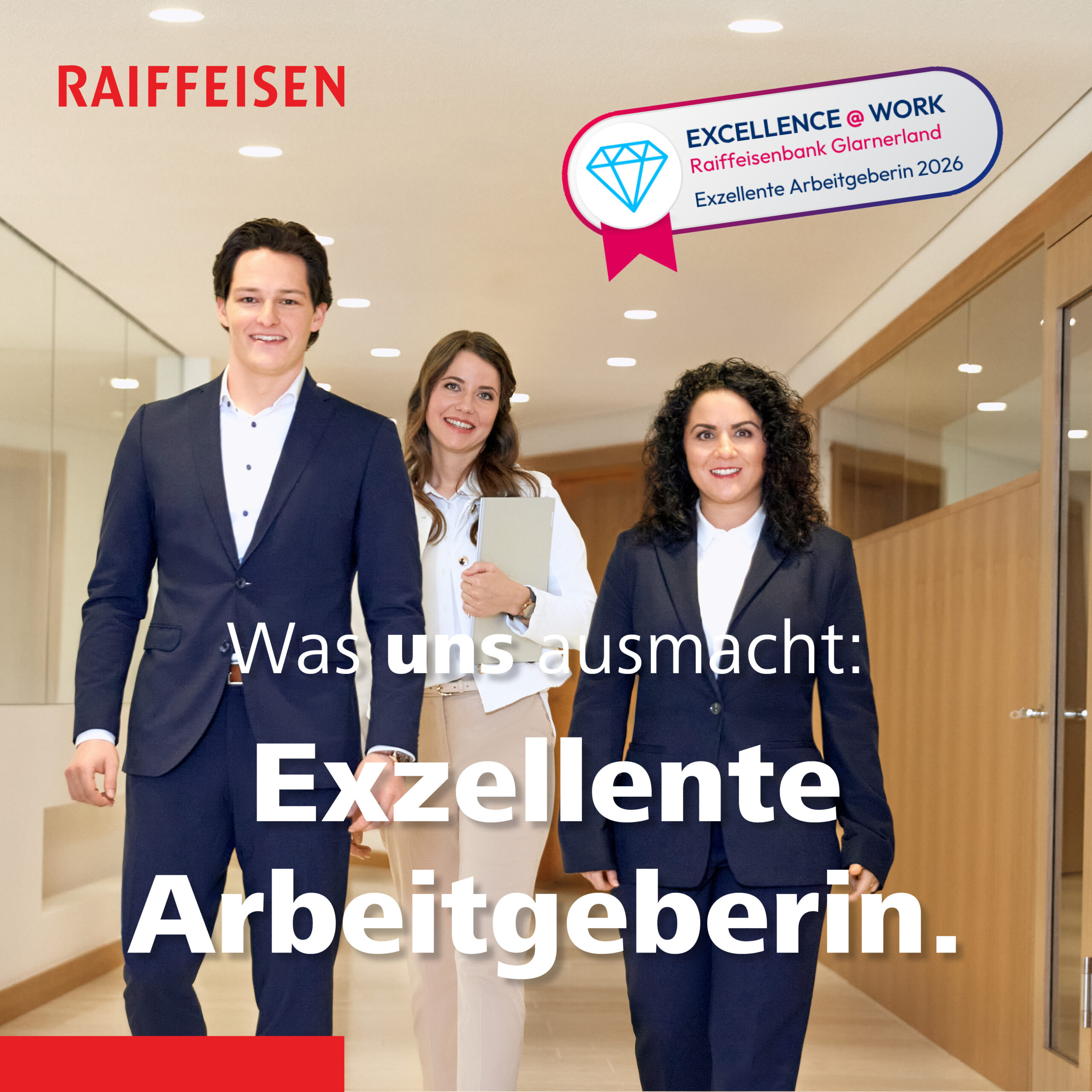
Top Employer: Raiffeisenbank Glarnerland Impresses with Strong Leadership
September 21, 2026
Reading time: 2 min
ValueQuest recently had the honor of presenting the “Excellence@Work Award” to Raiffeisenbank Glarnerland. We extend our heartfelt congratulations.
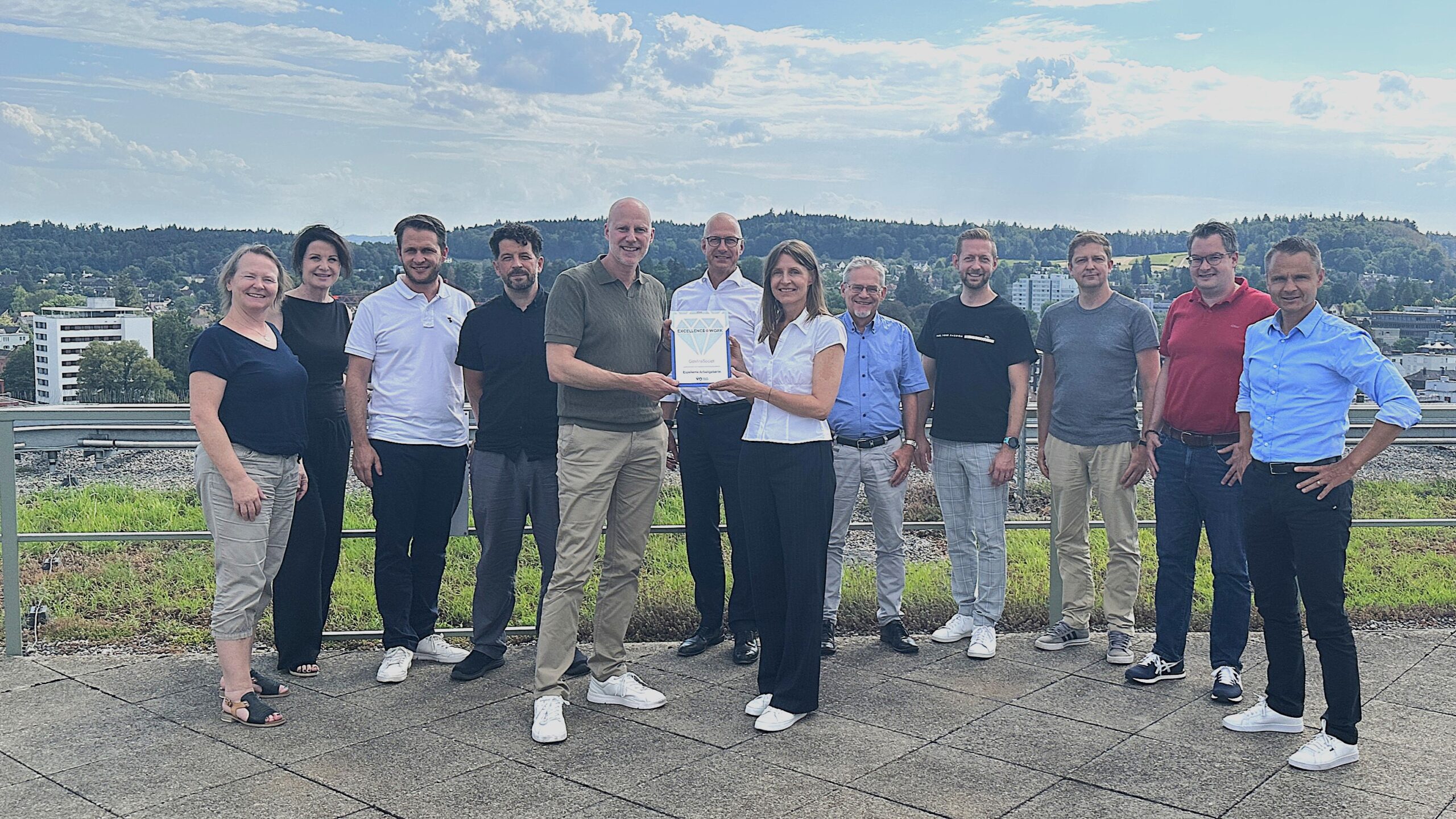
Top Swiss Employers: GastroSocial
September 9, 2026
Reading time: 3 min
GastroSocial has received the 2026 Excellence@Work Award from ValueQuest. With a response rate of 96 percent, a motivation score of 84, and 87 percent of employees serving as brand ambassadors, the company demonstrates a strong employer culture.

Employee Survey: Raiffeisenbank Möhlin Achieves Excellent Results
August 31, 2026
Reading time: 3 min
Raiffeisenbank Möhlin is one of Switzerland's top employers and is receiving our Excellence@Work Award in recognition of this achievement. Congratulations!

Employee Surveys in Switzerland: Find Providers & Tools
August 30, 2026
Reading time: 6 min
Employee Survey in Switzerland: How Do You Find the Right Employee Survey Provider? What Really Matters When It Comes to Anonymity, Tools, Questionnaires, and Analysis.

360-Degree Feedback Questionnaire: Sample, Template, and Sample Questions
August 21, 2026
Reading time: 7 min
Table of Contents A 360-degree feedback process is only as good as its questionnaire. The questionnaire is at the heart of the entire process. It determines whether...

Employee Survey: The CAMPUS SURSEE Foundation Is Among Switzerland's Best Employers
August 5, 2026
Reading time: 2 min
ValueQuest honors particularly attractive employers in Switzerland with the Excellence@Work Award. We recently had the pleasure of presenting the award to the CAMPUS SURSEE Foundation.
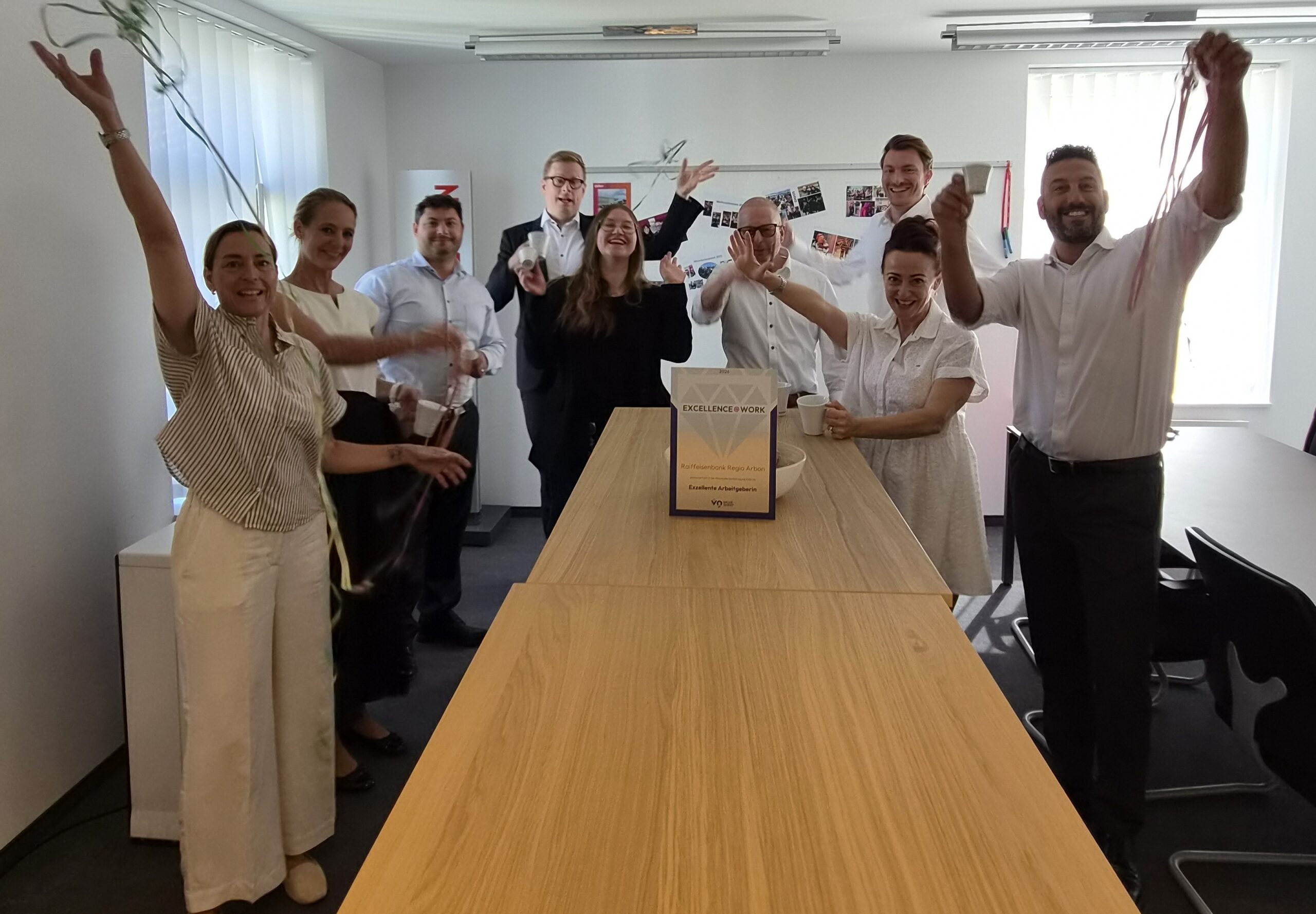
Raiffeisenbank Regio Arbon, a Top Employer: Personal Responsibility as Part of a Strong Corporate Culture
July 7, 2026
Reading time: 2 min
ValueQuest honors particularly attractive employers in Switzerland with the Excellence@Work Award. We recently had the pleasure of presenting the award to Raiffeisenbank Regio Arbon.