Inspiring employees means getting them excited about change in disruptive times. (Image: Pexels)
Productivity through inspiration: Swiss companies are leaving great potential untapped. According to our new "Inspiring Workplace Index", the majority of employees in Switzerland lack inspiring working conditions - with significant consequences for performance and willingness to change. Particularly noteworthy: the greatest source of inspiration comes not from young talent, but from the 50+ generation.
Table of contents
The Swiss economy is stumbling. Now it's time to roll up our sleeves and get to work. But that's easier said than done. After all, seven out of ten companies in Switzerland are struggling to find suitable skilled workers(ManpowerGroup Switzerland, 2024) - and only 11% of employees feel emotionally attached to their employer(Gallup, 2025).
The consequences? Expensive. Very expensive. Misplacements cost Swiss companies up to CHF 150,000 per position (Korn Ferry, 2023). The economic damage caused by a lack of emotional commitment is even more serious: Gallup estimates the annual productivity losses at around CHF 50 billion(Handelszeitung, 2020).
And now? Another fruit basket? The third aperitif of the month? Free yoga? Or would you prefer a better pension fund? There are many ideas when it comes to increasing employer attractiveness. However, many of these fringe benefits fall flat. Because they fail to meet the actual needs of employees. Because employees today are looking for something else: meaning. Purpose. Inspiration. Genuine employee loyalty is not created through bonuses or benefits. It comes from meaningful, inspiring work that contributes to the personal purpose of each individual. But this is precisely where many Swiss companies are lacking.
Our latest survey of over 500 employees in Switzerland and Liechtenstein paints a sobering picture:
- Only 36% of respondents feel inspired at work.
- 38% state that they find little or no sources of inspiration within the company.
- On a normal working day of 8.5 hours, an average of 2.5 hours are not used productively - according to the companies themselves, around a third of their potential is not being utilized.
The blame does not (only) lie with the employees - but with the working environment. This is because many companies do not create an inspiring working environment. Yet this is precisely the lever that would enable them to really harness the potential of their employees. Inspiration is the key to productivity, motivation and innovation. Our Inspiring Workplace Index - the first Swiss study to systematically examine how meaning and inspiration are experienced in the work context - starts right here. We show:
- Why employee satisfaction is not enough
- Whether Mr. and Mrs. Schweizer feel inspired by their work
- How more inspiration can lead to more innovation, productivity and willingness to change
- And how inspiration can be made measurable and usable in the company

Employee satisfaction is not enough
A fair wage. A secure job. An appreciative boss who treats me decently: when these basic needs are met, we talk about job satisfaction. It is undoubtedly a key indicator of whether employees feel happy and want to stay with the company.
But employee satisfaction has its limits. Satisfied employees arrive on time, complete their tasks properly and then go home after work. What's often missing: participation, initiative and new ideas. Satisfied employees are not automatically more productive, more proactive or more customer-oriented (Straume & Vittersø, 2012).
So what is missing?
Take a moment and mentally answer two questions:
- How satisfied are you currently with your work - on a scale of 1 to 10?
- And now: How inspired do you feel in your work - also on a scale of 1 to 10?
Most people give different answers to these questions. Why? Because satisfaction is intuitively something completely different from inspiration.
- Satisfaction means: I have no reason to complain.
- Inspiration means: I have a reason to get involved. I am working towards a greater whole.
Inspired employees are more motivated, experience their work as more meaningful and are actively committed to positive change. They develop their own initiative and demonstrate entrepreneurial thinking - qualities that are crucial in times of change and uncertainty.
Inspiration is not a "nice-to-have", but rather a strategic lever to inspire employees to achieve company goals and develop their full potential.
Understanding, measuring and using inspiration - as shown by our employee survey
Our Switzerland-wide employee survey - the Inspiring Workplace Index 2025 - clearly shows that inspiration in the workplace is an underestimated but key success factor. Those who are inspired contribute new ideas, think ahead and do more. Inspired employees experience their work as meaningful, motivating and beneficial. Employers who specifically focus on an inspiring working environment create the basis for resilient and committed employees and teams as well as for a sustainable corporate culture:
Promoting mental well-being and reducing absenteeism
An inspiring working environment boosts emotional and mental well-being - by up to 30 points on a scale of 100, according to our employee survey. Inspired employees feel more balanced, resilient and resilient.
Employers who specifically invest in an inspiring working environment benefit in several ways:
- Fewer days of sickness and absence
- Greater well-being in the workplace
- More mental resilience and resilience in everyday working life
Increase employee productivity through meaningful work
On a normal working day of 8.5 hours, more than 2.5 hours on average remain unproductive - according to our survey. The respondents estimate that only around 69% of their potential is actually used in the company. This means that a third of working time remains unused.
An inspiring working environment can make a significant economic contribution here and close the gap considerably:
- If employees feel inspired, they work around 38 minutes more per working day.
- Extrapolated to a 42.5-hour working week, this results in around 19 additional working days per year and employee - almost an entire additional working month.
Develop more willingness to change: Our study results clearly show that employees who find their workplace inspiring and meaningful have a greater willingness to change. In short, they rate their willingness to embrace change and drive it forward up to 20 points higher than colleagues with low inspirational power. To the benefit of the entire organization: it becomes more agile and adaptable.
Increase energy and drive in everyday working life: an inspiring environment has an invigorating effect: In our survey, inspired employees say they feel 23 points more energetic on average than others. Inspired employees approach their tasks with drive, focus and joy - which has a noticeable effect on the overall team atmosphere.
Enabling personal growth on the job: Inspired employees experience their work as a development opportunity. Their perceived potential for personal growth is 24 points higher than that of less inspired colleagues. They see their work not just as a task, but as an opportunity to develop and learn new things.
Experience flow and joy at work: According to our survey, the "flow state" - complete concentration, enjoyment and productivity - occurs up to 30 points more frequently among inspired employees. An inspiring working environment therefore not only increases motivation overall, but also makes work more fulfilling.
Measuring inspiration. Is that possible? Yes! Time and again, we hear the question of how inspiration can be measured. Measuring inspiration is far more difficult than measuring employee satisfaction or commitment. Because inspiration is personal. The question "What inspires you?" is deeply individual. Although average values and patterns can be identified, inspiration is ultimately a personal experience. It is shaped by the situation, changes with the life situation and has a different effect on each person. What inspires one person can have the exact opposite effect on another.
And this is exactly where our Employee Inspiration Journey comes in: our innovative development and dialog tool accompanies employees individually along their personal inspiration journey. Our tool reveals what motivates employees and where untapped potential lies. The Employee Inspiration Journey is not a traditional employee survey, but a tool for personal reflection.
Inspiration is the most important lever for a positive employee experience
Inspiration changes how we as employees experience our work and our workplace. Those who feel inspired see the workplace not only as a place for performance, but also as a space for personal development. Inspiration goes hand in hand with a significantly stronger employee experience.
Inspires employees ...
- see more opportunities for development (+17 points): For them, the workplace is a space to grow and learn.
- feel more meaning in their work (+17 points): They understand how their work contributes to the bigger picture.
- trust more (+22 points): They feel safe, can speak openly and contribute ideas.
- feel more joy, flow and energy at work (+21 points): Inspiration inspires - and creates enthusiasm.
- feel empowered (+17 points): They experience themselves as effective, competent and involved in shaping the company.
- feel better and more balanced (+24 points): Inspiration is good for you - also emotionally.
- are seen as whole people (+26 points): Not just as a worker, but as a whole person.
- feel full of energy at work (+24 points): You start the day with drive.
Inspiration in the workplace - what is it anyway?
Inspiration is a driving force that goes beyond motivation and satisfaction. When we feel inspired, we see a new, desirable vision that we work towards. Or we have a spontaneous "aha" moment that triggers an impulse to act. However, inspiration is not only found in the creative field, but also in everyday working life - for example, when we suddenly know how to solve a problem that has been bothering us for days. Or when a company's vision appeals to us so much that we want to actively contribute to it. Inspiration encompasses two central dimensions:
- Being inspired: Employees are inspired by something or someone - e.g. by colleagues, managers or external influences.
- Inspired to act: The inspired idea is then translated into a concrete action - such as a new project, a product, a solution or a willingness to change.
Our latest employee survey shows that many employees in Switzerland are fundamentally willing to get involved and help shape the future. However, this willingness to help shape things often fails due to a lack of sources of inspiration in the working environment. Because:
- 64 % of employees surveyed feel uninspired or hardly inspired at work
- 62% state that they find few or no sources of inspiration within the company
It is striking that part-time employees tend to be more inspired than full-time employees. They are more likely to find their work meaningful. Possible reasons for this are a better work-life balance, less stress or more mental openness due to impressions outside the world of work.
At first glance, the results seem sobering - but they hold great potential. A clearly formulated, emotionally appealing vision can create meaning and purpose - and thus strengthen loyalty to the company. However, the corporate vision currently only reaches 34% of employees emotionally.
The situation is different when it comes to inspired action - i.e. the question of whether inspiration actually leads to active action or an impulse to act:
- The inspirational power of the environment (e.g. through leadership, culture, vision) averages 62 out of 100 points
- The score for inspired action - i.e. the actual implementation of ideas - is higher: between 64 and 71 points
Skills shortage? It's worth taking a look at the over 50s
Our data shows: Employees over the age of 50 (Group 5) are not only particularly experienced, but also particularly inspired. They achieve the highest scores in almost all areas - and in some cases significantly exceed the overall average. Especially in times of a shortage of skilled workers, this is a strong signal: the 50+ generation not only brings expertise and stability, but also enthusiasm, a sense of purpose and a willingness to change.
- Above-average inspiration: Three out of four employees over 50 agree that they are inspired to contribute their best every day. Among younger employees under 30, the figure is less than half.
- Above-average willingness to transform: In our survey, around one in four people over 50 said: "I am fully prepared to support changes in the company." This figure is higher than in any other age group. By comparison, only around one in eight under 30s said this.

How to create an inspiring working environment
Inspiration does not happen by chance. It is the result of specifically designed framework conditions - and these can be influenced. Our data shows that Swiss companies still have room for improvement here. These key factors determine whether a working environment is experienced as inspiring and meaningful. An inspiring working environment does not happen by chance. Here are the ten drivers that form the basis for an inspiring working environment:
Transparent communication: Many companies lack clear communication:
- Only41% of employees feel sufficiently informed about management priorities.
- Only half of them know the goals and plans of their own unit.
- And only52% know exactly what is expected of them.
This means that around one in two people work in the dark about what they should be working towards - and what contribution they can make. If you don't know the goal, you can't determine the course.
Freedom and self-determination in the workplace: autonomy is a strong driver of inspiration. But many people lack it.
- Only49% can decide for themselves when and how they do their work.
- Only48% have the opportunity to take on challenging tasks.
- 61% set their own priorities - but there is still room for maneuver.
In short, around half of the workforce experience their working day as externally determined and therefore uninspiring.
Feedback and learning culture: An inspiring environment thrives on feedback. But this is lacking in many places:
- Only44% receive sufficient praise for what they do well.
- Only39% know what they could work on or improve.
- Only47% receive regular feedback from managers.
- It is no better in the team: only43% feel sufficiently mirrored by colleagues.
Two out of three employees receive too little feedback overall and therefore too little impetus for further development.
Time and resources: Inspiration needs support and resources. But this is lacking:
- Every second person feels overloaded with time.
- There is often a lack of suitable work equipment or personnel support.
If employees have to constantly limit themselves to the bare essentials, there is hardly any room for creative ideas or further development.
Promoting a culture of innovation - ideas need implementation: Inspiration often ends up as a fixed idea - because there is a lack of implementation:
- 52% of employees are allowed to contribute their own ideas.
- But only a third actually see this implemented.
- Almost half (47%) feel that the working environment is not innovation-friendly.
The problem is that anyone who realizes that their suggestions are being ignored will eventually stop making them.
Appreciation: Appreciation is not a "nice-to-have", but a strategic lever:
- Only38% receive recognition for innovative contributions.
- 48% feel that they are not valued enough overall.
Regular, honest recognition is a key driver of motivation, trust and inspiration.
Inspiring leadership: Good leadership is inspiring. But in practice, this is often in short supply:
- Only 35% of employees feel that their managers have an inspiring vision for the future.
- 46% say that their leadership shows energy and enthusiasm for the company's goals.
- 45% perceive their superiors as calm and confident.
- 39% experience forward-looking action and clear impulses.
- And only 43% think that managers clearly formulate what needs to be done next
Value-oriented inspiration: Our data makes this clear: The better the company's values match employees' personal values, the higher their ability to inspire. Companies that specifically select new employees according to cultural fit and make their values visible in everyday life create a working environment with more meaning, commitment and identification.

Methodology and calculation
In the summer of 2024, we surveyed over 500 employees (50% women, 49% men, 1% diverse; average age 42) in Switzerland and Liechtenstein in various professions and industries to analyze the power of inspiring work environments. The Inspiring Workplace Index collects quantitative and qualitative data to identify key factors for successful transformation:
- Survey period: summer 2024
- Participants: 508 employees in Switzerland and Liechtenstein
- Method: Scaled questions and qualitative insights
Article published on May 13, 2025
About Dr. Kathrin Neumüller

Dr. oec. HSG Kathrin Neumüller is Co-Managing Director at ValueQuest and an expert in employee inspiration and empowerment. She also teaches strategic management in the MBA program at the ZHAW. She holds a doctorate from the University of St. Gallen (HSG) and studied at the University of Cambridge. Learn more about Kathrin
Inspired? Then share this post via your favorite platform.
Other articles that might interest you ...

AI in the Swiss Insurance Market: What Insurers Can Learn from the Results
October 1, 2026
Reading time: 4 min
Artificial intelligence is not universally accepted in the Swiss insurance market. As a study by ValueQuest shows, customers’ openness to AI depends heavily on how it is used.

AI in the Swiss Insurance Market: Between Acceptance and Skepticism
September 28, 2026
Reading time: 5 min
For many Swiss people, artificial intelligence has become an integral part of everyday life. However, the situation is different when it comes to insurance companies.
Top Employer: Raiffeisenbank Glarnerland Impresses with Strong Leadership
September 21, 2026
Reading time: 2 min
ValueQuest recently had the honor of presenting the “Excellence@Work Award” to Raiffeisenbank Glarnerland. We extend our heartfelt congratulations.
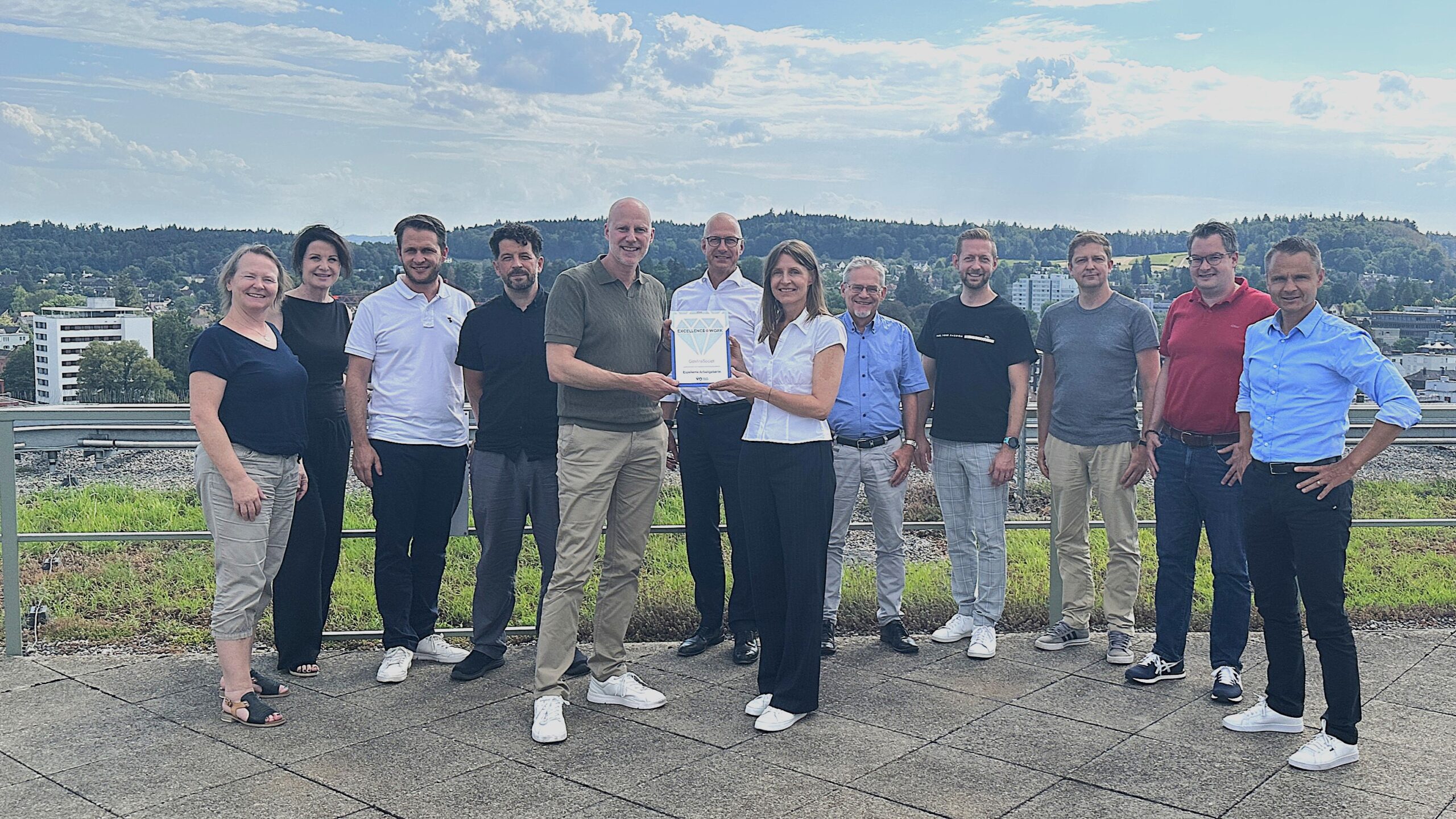
Top Swiss Employers: GastroSocial
September 9, 2026
Reading time: 3 min
GastroSocial has received the 2026 Excellence@Work Award from ValueQuest. With a response rate of 96 percent, a motivation score of 84, and 87 percent of employees serving as brand ambassadors, the company demonstrates a strong employer culture.

Employee Survey: Raiffeisenbank Möhlin Achieves Excellent Results
August 31, 2026
Reading time: 3 min
Raiffeisenbank Möhlin is one of Switzerland's top employers and is receiving our Excellence@Work Award in recognition of this achievement. Congratulations!

Employee Surveys in Switzerland: Find Providers & Tools
August 30, 2026
Reading time: 6 min
Employee Survey in Switzerland: How Do You Find the Right Employee Survey Provider? What Really Matters When It Comes to Anonymity, Tools, Questionnaires, and Analysis.

360-Degree Feedback Questionnaire: Sample, Template, and Sample Questions
August 21, 2026
Reading time: 7 min
Table of Contents A 360-degree feedback process is only as good as its questionnaire. The questionnaire is at the heart of the entire process. It determines whether...
Employee Survey: The CAMPUS SURSEE Foundation Is Among Switzerland's Best Employers
August 5, 2026
Reading time: 2 min
ValueQuest honors particularly attractive employers in Switzerland with the Excellence@Work Award. We recently had the pleasure of presenting the award to the CAMPUS SURSEE Foundation.
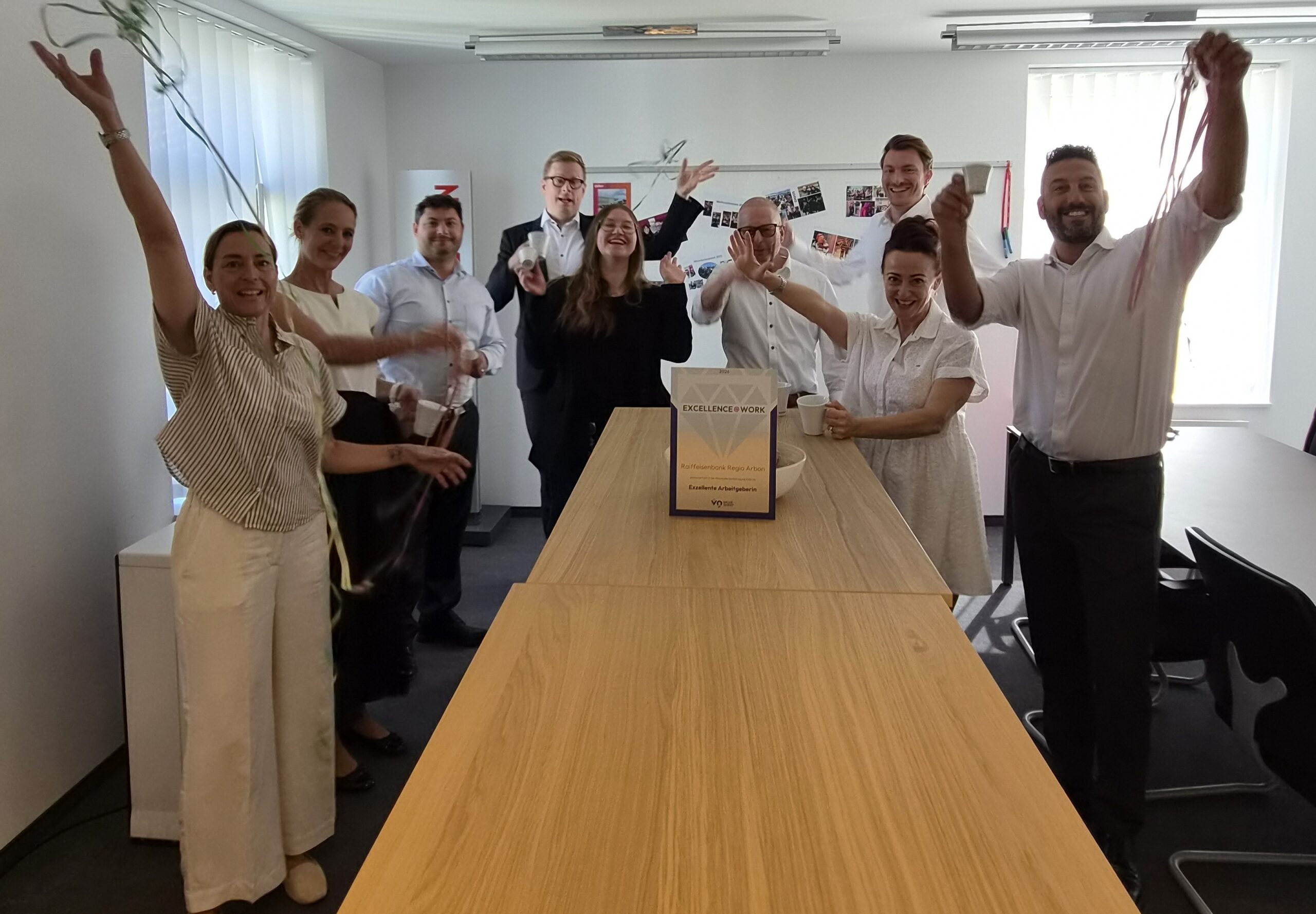
Raiffeisenbank Regio Arbon, a Top Employer: Personal Responsibility as Part of a Strong Corporate Culture
July 7, 2026
Reading time: 2 min
ValueQuest honors particularly attractive employers in Switzerland with the Excellence@Work Award. We recently had the pleasure of presenting the award to Raiffeisenbank Regio Arbon.