Many employees suddenly had to work from home during the coronavirus pandemic. This change posed a major challenge for companies and their employees.
In a representative survey of employees in German-speaking Switzerland, ValueQuest examined the way in which they worked during the pandemic and analyzed the corresponding effects on employee motivation. The survey took place in April 2022. 606 employees from the private and public sectors were surveyed.
Where did most people work during the pandemic?
The chart below shows that half of the respondents worked almost exclusively at their official workplace during coronavirus, while the other half worked from home to varying degrees. Of these, a full 30% worked mostly or exclusively from home.
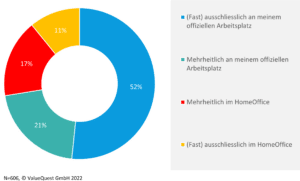
Figure 1: Place of work during the pandemic
Major differences by sector
In private-sector companies, 14% of employees worked (almost) exclusively from home, while in public-sector organizations (including the healthcare sector) the figure was only 8%. The finance, consulting and IT sector stands out clearly with 30% of employees working almost exclusively from home.
The larger the organization, the more often people worked from home
The following chart shows that employees in companies with 250 or more employees worked from home significantly more often - mostly or almost exclusively - than in companies with fewer than 250 employees.
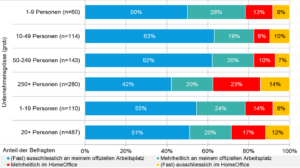
Figure 2: Working from home divided by organization size
The study also showed that employees with a higher income (and higher education) worked from home more often.
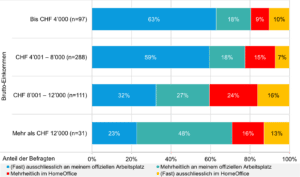
Figure 3: Working from home broken down by salary level
Effects of working from home on employee motivation
It is important for employers to understand how working from home affects employee motivation. Has engagement and employee satisfaction increased or has working from home had a negative impact?
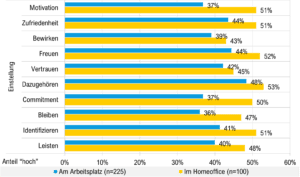
Figure 4: Employee motivation - differentiated by home office. Based on employees in private-sector companies.
The chart shows the proportion of employees with a strong / high level of various indicators in the area of employee motivation. Overall, 51% of employees - most or all of whom have worked from home - have a high level of motivation. The figure is only 37% for employees who mainly worked at the official workplace.
While the differences in the aspects of job satisfaction (achieve, enjoy, trust, belong) are less pronounced, there are major differences in commitment (stay, identify, perform), especially in larger companies.
A similar picture emerged with regard to the subjectively perceived change in job satisfaction over the last 12 months. For 29% of people who (mostly) worked from home, job satisfaction has improved, for 19% it has deteriorated. The values are much more critical for employees who (mostly) worked at the official workplace. Job satisfaction has increased for just 21% of respondents and decreased for 34% of respondents.
This statement applies to companies in the private sector and those in public administration. It should be noted, however, that in public administration and especially in the healthcare sector, many employees did not have the opportunity to work from home.
Home office even after the end of the Covid pandemic?
Looking at the positive effects of working from home on employee motivation, the question arises as to whether the employees concerned would like to continue working from home even after the Covid-19 pandemic has "ended".
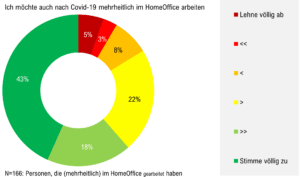
Figure 5: Desire to continue working from home
The chart shows that over 60% of those surveyed would also like to work from home in the future. Only every 6th employee rejects this option. The desire to continue working from home is particularly pronounced among middle-aged people (families). According to the study, one important reason is the feeling that working from home is very productive.
In summary, it can be said that the option of working from home has a very positive effect on employee motivation. It is therefore sensible and expedient for companies to continue to offer employees this option.
Professional feedback tools
New working models always mean new management challenges. Above all, communication and dialogue with employees must be redefined and reorganized. Our proven tools - employee surveys and 360° management feedback - support companies and managers in recognizing changes and needs at an early stage and addressing the issues efficiently. ValueQuest attaches great importance to ensuring that employee surveys and management feedback are flanked by appropriate implementation tools and measures.
Article published on June 15, 2022
About Heidi Blanken

Heidi Blanken is an expert and advisor at ValueQuest with a focus on evaluation and methodological consulting. She studied psychology with a focus on methodology as well as economics and labor law at the University of Zurich and graduated with a lic. phil. I degree.
Inspired? Then share this post via your favorite platform.
Other articles that might interest you ...

AI in the Swiss Insurance Market: What Insurers Can Learn from the Results
October 1, 2026
Reading time: 4 min
Artificial intelligence is not universally accepted in the Swiss insurance market. As a study by ValueQuest shows, customers’ openness to AI depends heavily on how it is used.

AI in the Swiss Insurance Market: Between Acceptance and Skepticism
September 28, 2026
Reading time: 5 min
For many Swiss people, artificial intelligence has become an integral part of everyday life. However, the situation is different when it comes to insurance companies.
Top Employer: Raiffeisenbank Glarnerland Impresses with Strong Leadership
September 21, 2026
Reading time: 2 min
ValueQuest recently had the honor of presenting the “Excellence@Work Award” to Raiffeisenbank Glarnerland. We extend our heartfelt congratulations.
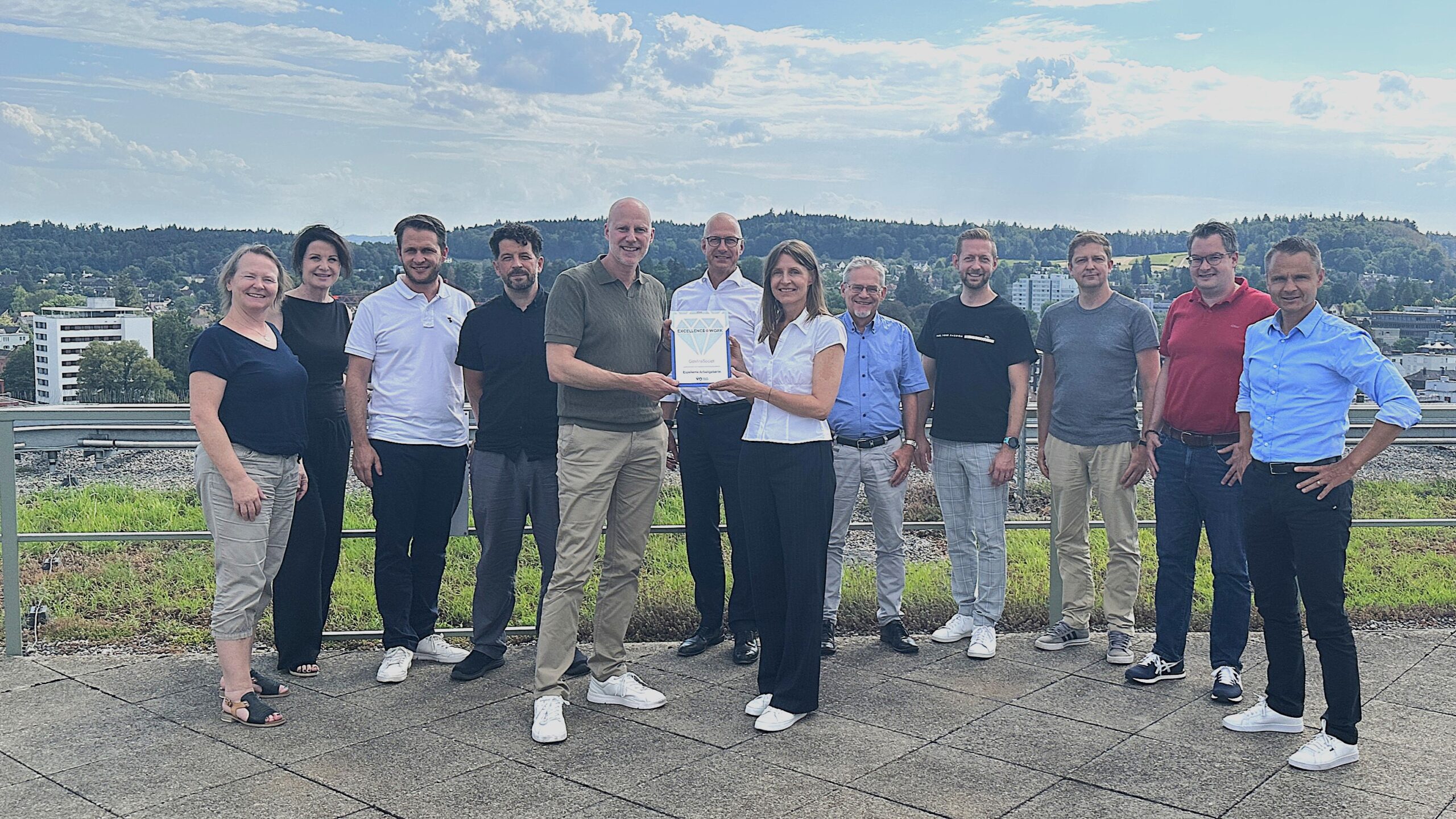
Top Swiss Employers: GastroSocial
September 9, 2026
Reading time: 3 min
GastroSocial has received the 2026 Excellence@Work Award from ValueQuest. With a response rate of 96 percent, a motivation score of 84, and 87 percent of employees serving as brand ambassadors, the company demonstrates a strong employer culture.

Employee Survey: Raiffeisenbank Möhlin Achieves Excellent Results
August 31, 2026
Reading time: 3 min
Raiffeisenbank Möhlin is one of Switzerland's top employers and is receiving our Excellence@Work Award in recognition of this achievement. Congratulations!

Employee Surveys in Switzerland: Find Providers & Tools
August 30, 2026
Reading time: 6 min
Employee Survey in Switzerland: How Do You Find the Right Employee Survey Provider? What Really Matters When It Comes to Anonymity, Tools, Questionnaires, and Analysis.

360-Degree Feedback Questionnaire: Sample, Template, and Sample Questions
August 21, 2026
Reading time: 7 min
Table of Contents A 360-degree feedback process is only as good as its questionnaire. The questionnaire is at the heart of the entire process. It determines whether...
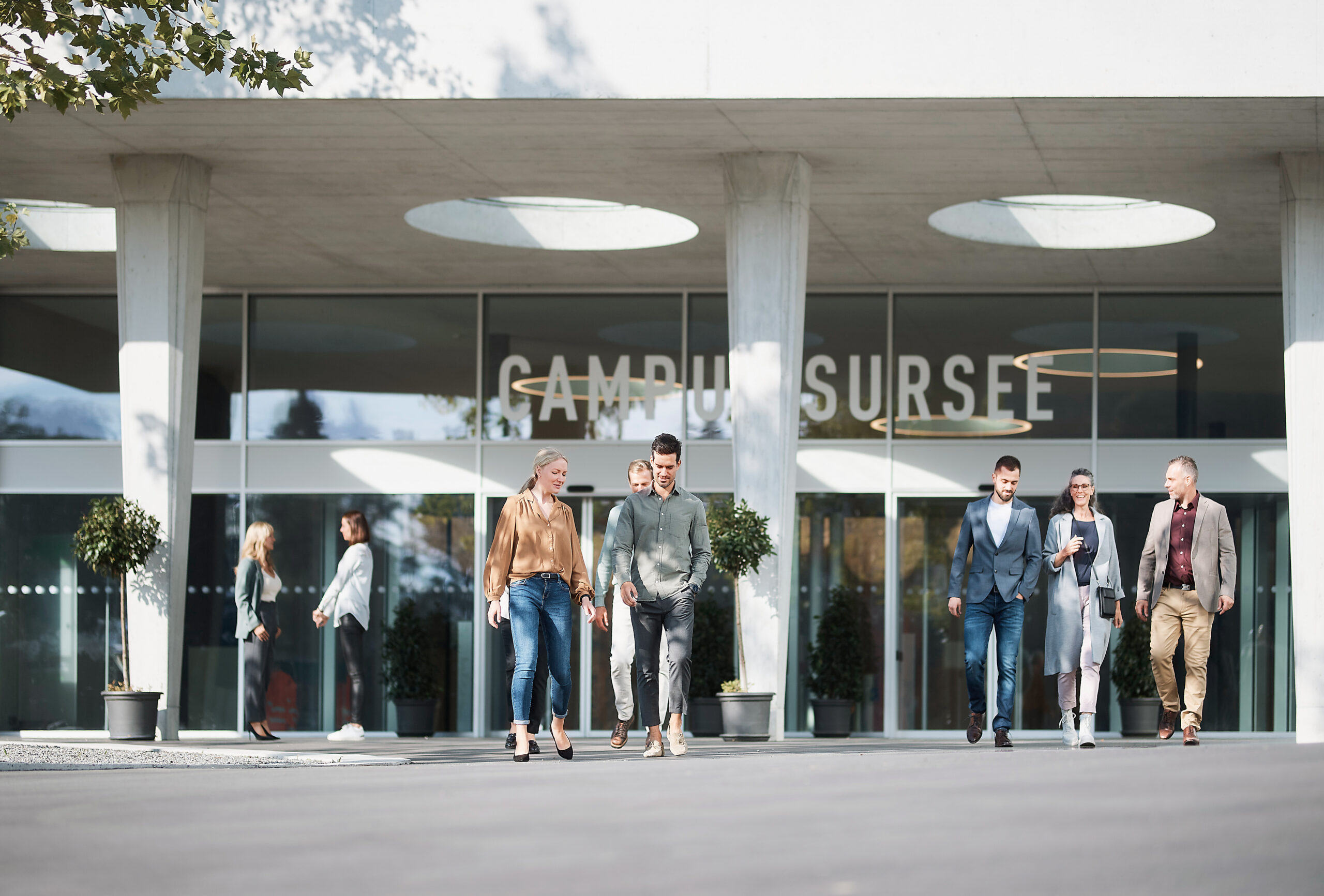
Employee Survey: The CAMPUS SURSEE Foundation Is Among Switzerland's Best Employers
August 5, 2026
Reading time: 2 min
ValueQuest honors particularly attractive employers in Switzerland with the Excellence@Work Award. We recently had the pleasure of presenting the award to the CAMPUS SURSEE Foundation.
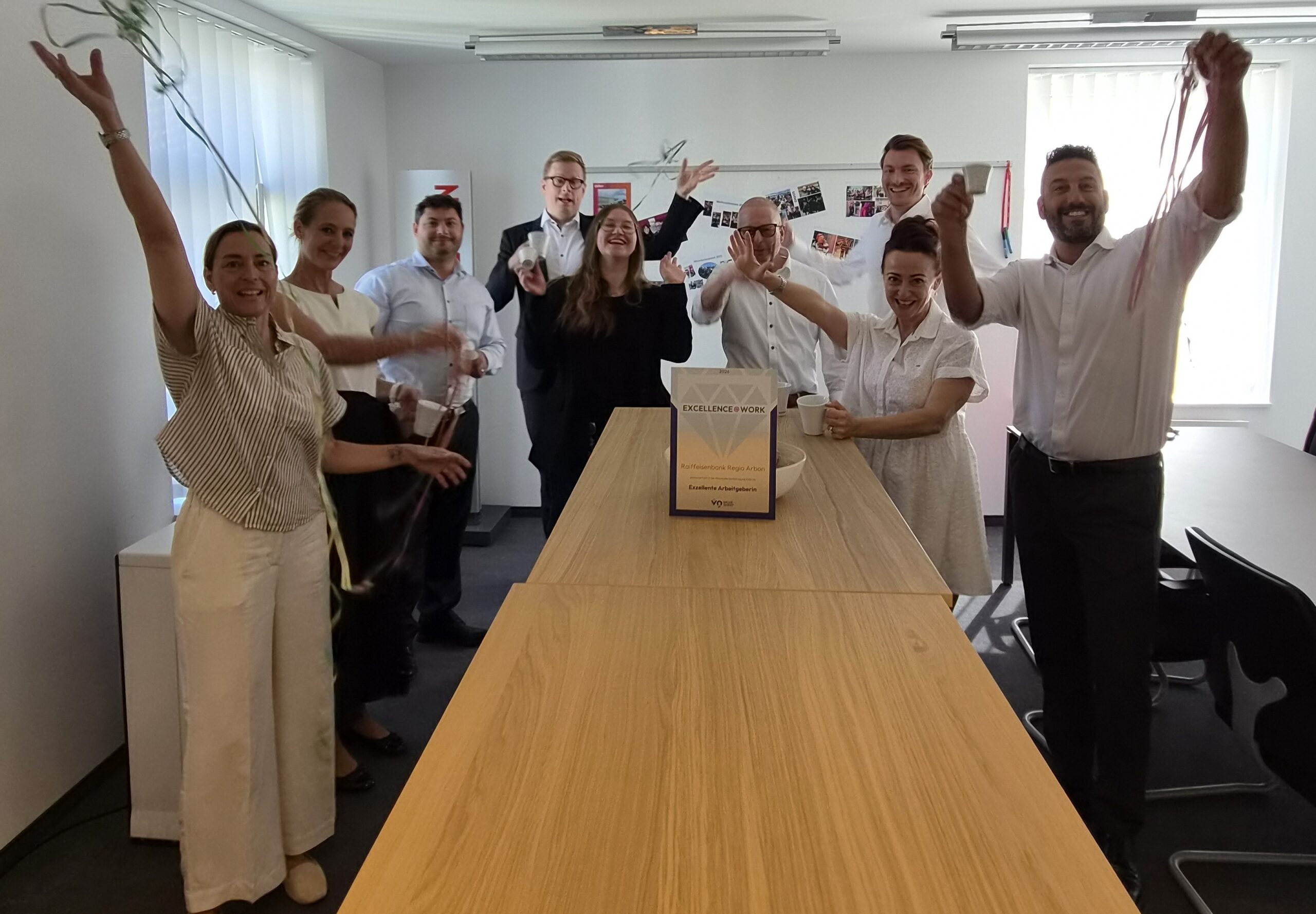
Raiffeisenbank Regio Arbon, a Top Employer: Personal Responsibility as Part of a Strong Corporate Culture
July 7, 2026
Reading time: 2 min
ValueQuest honors particularly attractive employers in Switzerland with the Excellence@Work Award. We recently had the pleasure of presenting the award to Raiffeisenbank Regio Arbon.