An employee survey is an important topic for companies, especially now that many organizations are struggling with dissatisfied employees and increased fluctuation.
We are frequently asked questions about employee surveys. And this topic is also often researched on Google. The ingenious tool "Answer Socrates" provides an overview of the most frequent and important questions in connection with employee surveys. We have picked out some of the most important questions and answered them based on our more than 20 years of experience in employee surveys.
How effective are employee surveys?
Employee surveys are an effective tool for understanding the mood and concerns of employees, especially in difficult times. A survey helps companies to uncover issues that affect employee productivity and engagement. If conducted correctly, an employee survey provides important data and information that can be used to improve company culture.
A recent Salesforce study found that employees who feel heard at work are 4.6 times more likely to perform at their best.
What about anonymity?
Anonymity is crucial in order to obtain an honest and differentiated picture of the mood. This gives employees the freedom they need to express critical opinions. This is why employee surveys should never be conducted internally, even if the technical expertise is available. An external specialist for employee surveys such as ValueQuest ensures that all data protection and anonymity requirements are met unconditionally.
Of course, ValueQuest can track who answered what in an online survey. However, it is crucial that the results reports ensure the anonymity of the employees. For this reason, a minimum number of responses per unit is defined in advance for an employee survey so that a separate report can be created for this unit. Our experience shows that employee confidence in the survey is very high in this way.
Are employee surveys mandatory?
Participation in an employee survey should be voluntary. It is possible to conduct a survey in accordance with the new General Data Protection Regulation (GDPR), provided that companies observe the following guidelines:
Voluntariness: Compulsory participation in an employee survey is not covered by law. Employers must clearly communicate this to their employees.
Anonymity: It must not be possible to draw any conclusions about the identity of the person who completed the questionnaire. The formal design of a survey should guarantee the anonymity of the respondents just as much as the design of the content.
How long should an employee survey be?
Opinions differ widely on this question. Basically, a distinction must be made here between a comprehensive employee survey and a pulse survey.
Years of experience have taught us the following: The principle of a comprehensive employee survey is: as short as possible, as long as necessary. There are approaches to employee surveys that operate with very few questions. This is sufficient to provide a picture of employee engagement. However, it does not generate enough differentiated information to subsequently initiate concrete measures and changes.
A question set of around 50 to 70 simple statements/questions usually works best and allows differentiated measures to be identified. It is important that the questions are formulated in simple, precise statements, supplemented by 2-3 open questions. Such a survey can be completed in 15-18 minutes, which is well accepted by the employees.
Under no circumstances should the survey contain more than 100 questions. It is also important to avoid including several different "surveys" in one employee survey. Along the lines of: if we're already surveying employees, we might as well ask them about this and that as well. In such a case, the employees transfer their general mood to all topics and little differentiated information is obtained.
How often should employee surveys be conducted?
We recommend a frequency of 2 years for a comprehensive employee survey. More frequent surveys leave the organization little time to actually implement the measures. If employees are surveyed less frequently, there is a risk that important changes will not be recognized in time. An exception is when an employee survey reveals a very high need for action. In this case, employees should be surveyed again after one year at the latest. This allows you to check whether a trend reversal is apparent.
Pulse surveys
In recent years, employee surveys have increasingly been supplemented by pulse surveys. These are very short surveys that are conducted regularly (weekly to quarterly). They are well suited to monitoring the development of the mood among employees (tracking) or to asking short and "burning" questions on an ad hoc basis.
ValueQuest has developed a modern feedback tool that can be used on a PC, tablet or smartphone without complicated installation. You find out in real time what is going well and where you need to take action! And you can track the success of your activities over time.
Which scale for employee surveys?
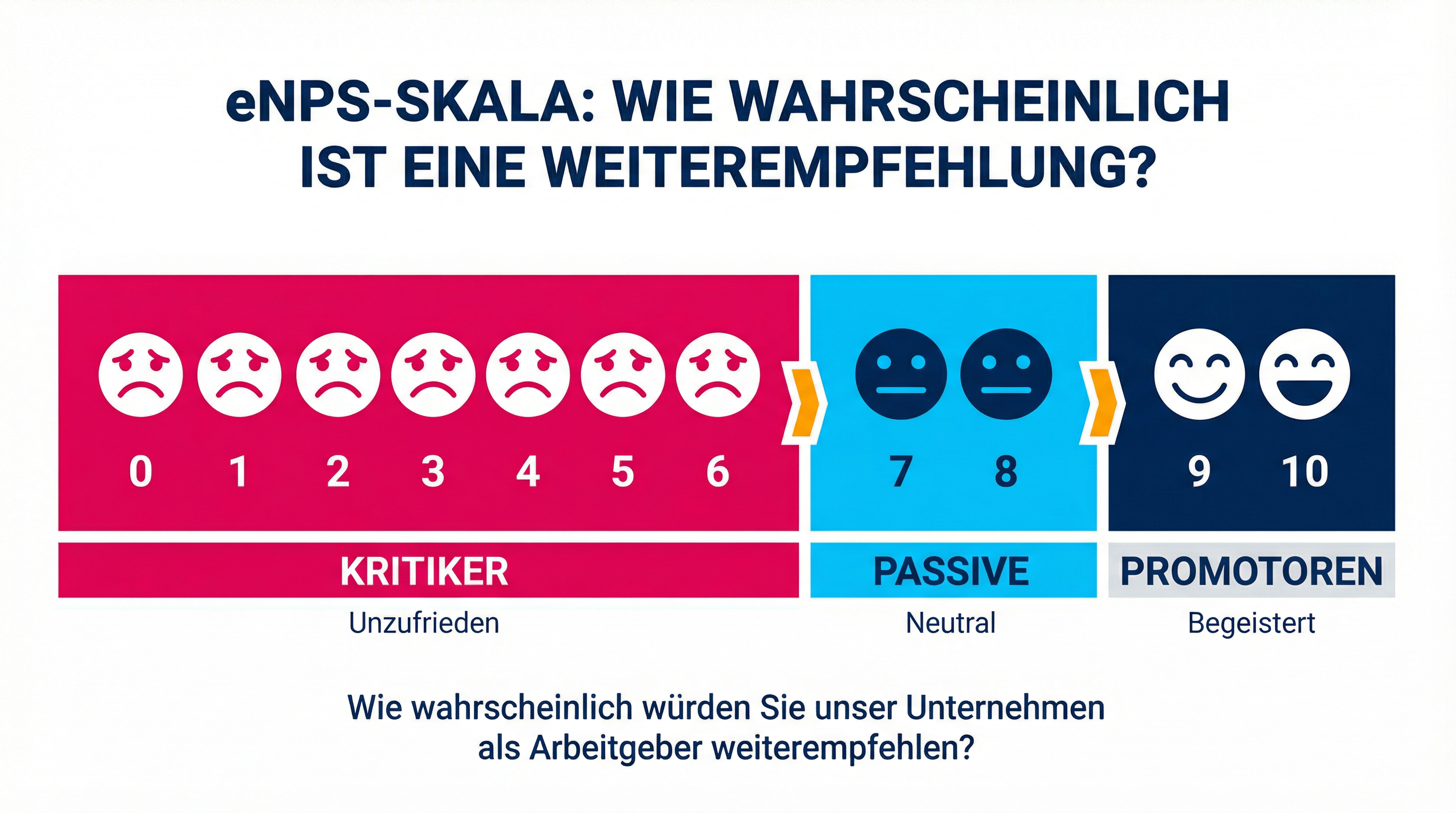
The question of the right scale comes up again and again. Here, too, the principle applies: scales should be as short as possible and as long as necessary. While 10-point scales dominate in the English-speaking world, they are rather rare here and only unnecessarily inflate the questionnaire. In our experience, the 6-point scale has proven its worth. It is based on the school grading system and is differentiated enough. We recommend only labeling the ends of the scales (completely disagree ó strongly agree) and avoiding pseudo-categories such as "somewhat agree".
It is important that the scale represents a logical answer to the question. If we ask employees how satisfied they are with their salary, then the scale must range from "dissatisfied" to "very satisfied". If we work with statements such as "I think my salary is appropriate", then the scale must range from "disagree" to "agree".
It is often claimed that a scale needs an odd number of answers to enable a neutral position. We cannot agree with this. It is much more important to formulate the questions in such a way that differentiated answers are possible. You can find more detailed information on this topic in our blog post on scales.
What is the best way to evaluate?
When evaluating the data, it is crucial that you don't just use descriptive statistics (e.g. this is what % of employees think...). There must be a clear impact model in order to determine the drivers for employee motivation or demotivation. This requires the use of AI and multilinear statistical methods. This enables the individual units to identify the measures that most effectively increase employee motivation or maintain a high level of satisfaction and commitment. You can read more about this in our blog post on organizational DNA analysis.
Are employee surveys also suitable for small and medium-sized companies?
Employee surveys have the greatest impact in smaller companies in particular. In an SME, each individual employee is more important, i.e. the individual counts more than in a large company. It is therefore all the more important to maintain or increase employee motivation and loyalty and thus avoid dismissals. It is also a good way of keeping an eye on employee health. In small to medium-sized companies, it is often easier to implement measures directly and effectively. You can find more templates, questions and tips on employee surveys here.
Article published on November 9, 2022
About Barbara Haimoff

Barbara Haimhoff is Office Manager at ValueQuest and ensures that day-to-day business runs smoothly. She graduated from the KV Baden business school and is a qualified commercial clerk with many years of professional experience in administration and organization. Find out more about Barbara
Inspired? Then share this post via your favorite platform.
Other articles that might interest you ...
Heimgärten Aargau Honored as a Top Employer: Enthusiasm Meets Trust
October 27, 2026
Reading time: 3 min
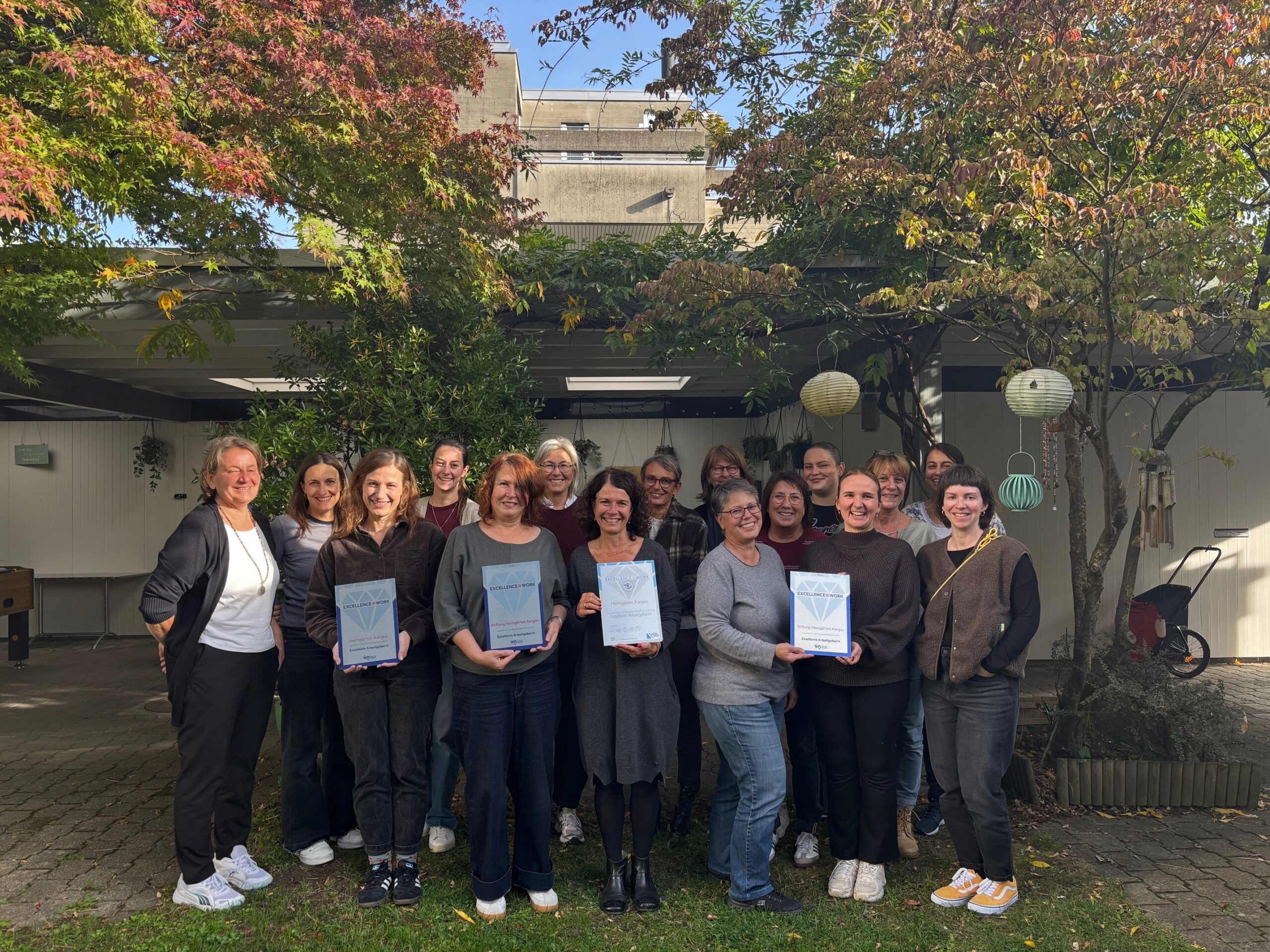
The Heimgärten Aargau Foundation has once again achieved outstanding results in the latest employee survey. For the fourth consecutive year, ValueQuest has honored the foundation with the Excellence@Work Award in recognition of its high appeal as an employer. We extend our heartfelt congratulations.

AI in the Swiss Insurance Market: What Insurers Can Learn from the Results
October 1, 2026
Reading time: 4 min
Artificial intelligence is not universally accepted in the Swiss insurance market. As a study by ValueQuest shows, customers’ openness to AI depends heavily on how it is used.

AI in the Swiss Insurance Market: Between Acceptance and Skepticism
September 28, 2026
Reading time: 5 min
For many Swiss people, artificial intelligence has become an integral part of everyday life. However, the situation is different when it comes to insurance companies.

Top Employer: Raiffeisenbank Glarnerland Impresses with Strong Leadership
September 21, 2026
Reading time: 2 min
ValueQuest recently had the honor of presenting the “Excellence@Work Award” to Raiffeisenbank Glarnerland. We extend our heartfelt congratulations.
Top Swiss Employers: GastroSocial
September 9, 2026
Reading time: 3 min
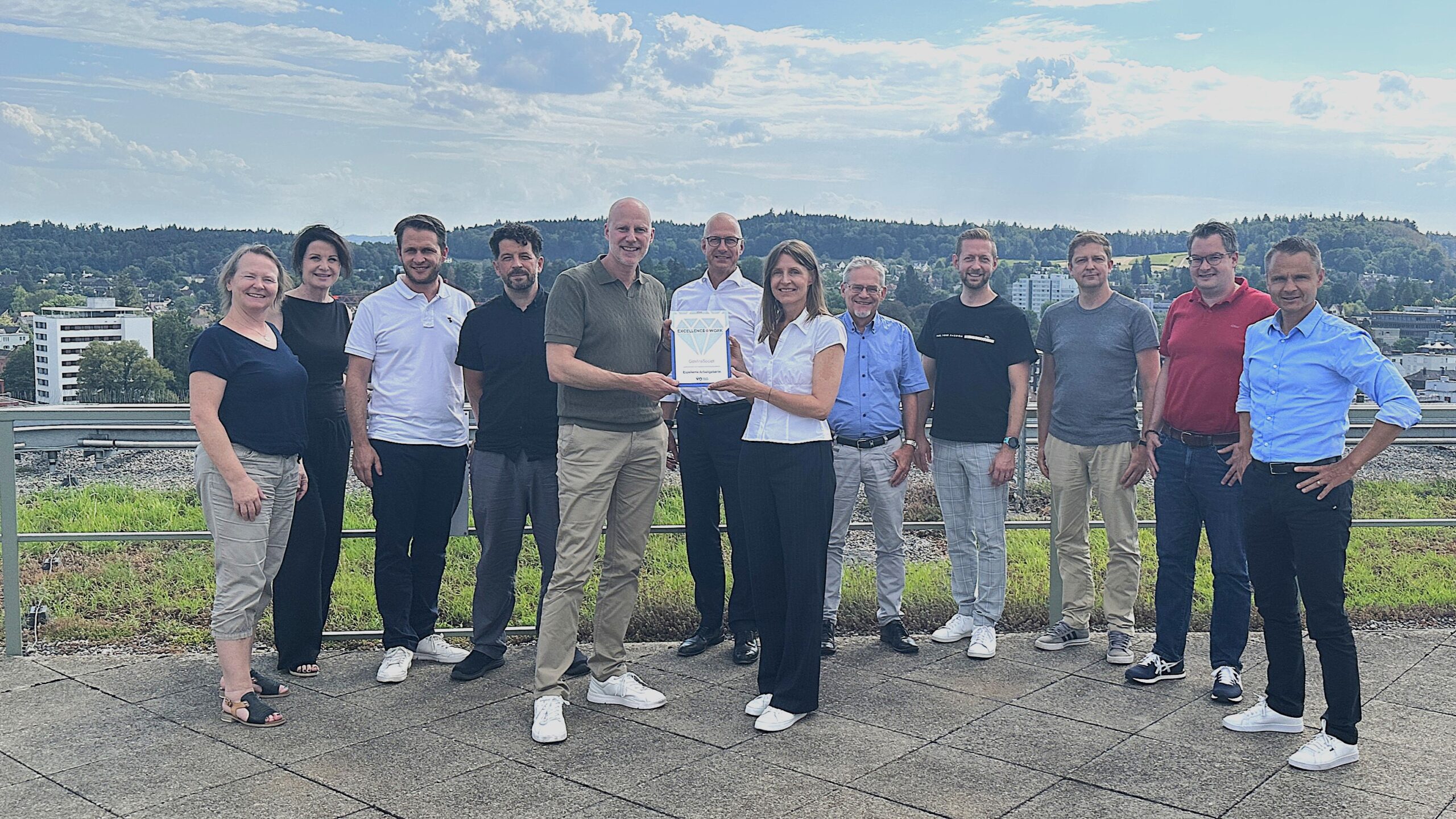
GastroSocial has received the 2026 Excellence@Work Award from ValueQuest. With a response rate of 96 percent, a motivation score of 84, and 87 percent of employees serving as brand ambassadors, the company demonstrates a strong employer culture.

Employee Survey: Raiffeisenbank Möhlin Achieves Excellent Results
August 31, 2026
Reading time: 3 min
Raiffeisenbank Möhlin is one of Switzerland's top employers and is receiving our Excellence@Work Award in recognition of this achievement. Congratulations!

Employee Surveys in Switzerland: Find Providers & Tools
August 30, 2026
Reading time: 6 min
Employee Survey in Switzerland: How Do You Find the Right Employee Survey Provider? What Really Matters When It Comes to Anonymity, Tools, Questionnaires, and Analysis.

360-Degree Feedback Questionnaire: Sample, Template, and Sample Questions
August 21, 2026
Reading time: 7 min
Table of Contents A 360-degree feedback process is only as good as its questionnaire. The questionnaire is at the heart of the entire process. It determines whether...

Employee Survey: The CAMPUS SURSEE Foundation Is Among Switzerland's Best Employers
August 5, 2026
Reading time: 2 min
ValueQuest honors particularly attractive employers in Switzerland with the Excellence@Work Award. We recently had the pleasure of presenting the award to the CAMPUS SURSEE Foundation.