So far, only 15 percent of Swiss people have consciously used AI to learn about insurance, compare offers, or get recommendations. A recent study by ValueQuest shows why there is still a high level of reluctance and in which areas insurers can already count on a comparatively high level of acceptance.
For many people, AI is already part of everyday life
Resistance to artificial intelligence is generally no longer particularly high. 55 percent of respondents use applications such as ChatGPT or Copilot daily or several times a week. 22 percent do so daily, and another 33 percent several times a week. 31 percent rarely use AI applications, and just 14 percent do not use AI at all.
For insurers, this is a good starting point: A large portion of the population is already familiar with AI from other areas of life and has gained their own experience with it. However, user groups differ significantly, especially in terms of age. Among 18- to 29-year-olds, 75 percent use AI regularly. Among people aged 60 and older, by contrast, the figure is only 33 percent. Education and income are also clearly correlated with AI usage.
An AI strategy based on the “one size fits all” principle is therefore unlikely to be very effective. What matters is not merely whether insurers use AI, but how they design their offerings to accommodate different levels of experience and usage.
When it comes to insurance, trust is still lacking
Just because people use AI doesn’t mean they trust it when it comes to insurance matters. Only 30 percent of respondents say they trust artificial intelligence in this area somewhat or very much. Fifty-one percent trust it only a little, and another 19 percent don’t trust it at all. Very high levels of trust are the exception, with only 3 percent expressing such confidence.
This reveals a significant gap: While 55 percent use AI regularly in their daily lives, only 30 percent trust AI when it comes to insurance matters.
This isn't entirely surprising. Insurance often involves financial consequences, personal data, and decisions that are directly relevant to customers. Transparency, traceability, and control therefore play a greater role here than in many other AI applications.
For insurers, this means that trust cannot be built through communication alone; it must be evident in the actual customer experience. Customers should be able to recognize when AI is being used, what role it plays, and at what point a human reviews, confirms, or corrects a decision.
Frequent use of AI builds trust
The influence of past personal experience with AI is particularly evident. Among those who use AI on a daily basis, 62 percent tend to trust or strongly trust artificial intelligence, even when it comes to insurance matters. Among people who do not use AI at all in their daily lives, that figure is only 3 percent. The statistical analysis thus shows a clear correlation between usage experience and trust.
However, user experience is no guarantee of acceptance. Even among daily AI users, 38 percent do not rank the technology among their top two most trusted technologies. In other words, even digitally savvy target groups do not give insurers carte blanche to use artificial intelligence.
AI is rarely used intentionally in the insurance industry
The gap widens even further when the question focuses not on general usage but on specific experiences in the insurance sector. Only 15 percent of respondents have consciously used AI for insurance information, comparisons, or recommendations. 67 percent say they have not done so yet. Another 18 percent believe it is possible that they have already encountered AI without having consciously noticed it.
Here, too, the influence of general AI experience is evident. Among daily users, 36 percent have already consciously used AI for insurance-related matters. Among those who never use AI, the figure is just 1 percent. But the other side of the coin is also interesting: even among daily AI users, nearly two-thirds have not yet had any conscious experience with AI in the insurance sector.
For insurers, it is therefore not enough to rely on their customers’ high level of tech savvy. An application must offer concrete and immediately recognizable added value.

From the customers' perspective, where is it acceptable to use AI?
The question of in which areas insurance companies are permitted to use AI is particularly revealing.
Fraud detection enjoys the highest level of acceptance: 37 percent of respondents can envision AI being used in this area. This is followed by customer service and answering questions at 32 percent, and preparing quotes at 30 percent. Respondents become more cautious as soon as AI gets closer to individual decisions or the assessment of specific cases:
- Filling out or reviewing applications: 25 percent
- Recommend products: 24 percent
- Processing claims: 17 percent
- Personalized recommendations: 15 percent
- Review claims: 14 percent
29 percent of respondents do not accept AI in any of the application areas surveyed.
A fairly clear pattern emerges here: When AI is used to provide support, speed up processes, or enhance security, acceptance levels are higher. Conversely, the more it makes judgments about customers, services, or specific claims, the greater the reluctance becomes.
However, acceptance does not depend solely on what AI is used for. Personal experience with artificial intelligence, age, and income also play a role.
In the second part of this article, we will highlight which customer groups are particularly open to AI and what insurers can learn from this for the practical implementation of their AI strategy.
About the Study
The ValueQuest study “AI in the Swiss Insurance Market” examines the use of artificial intelligence, trust in AI, and acceptance of various applications in the insurance context.
A total of 2,080 people between the ages of 18 and 67 in German-speaking and French-speaking Switzerland were surveyed in April and May 2026. The results are descriptive and highlight differences and patterns among various target groups. No causal relationships can be inferred from them.
The analysis was conducted as part of ValueQuest's Moment of Truth Tracking (MoTT).
Would you like to learn more about how Swiss insurance customers perceive AI and which areas of application offer particular potential? Contact us for more information about the study and Moment of Truth Tracking.
Post published on September 28, 2026
About Melanie Wollschläger

Melanie Wollschläger is a Senior Partner at ValueQuest. A sociology graduate (University of Leipzig), she has been assisting companies with employee surveys, customer feedback, and multi-client studies since 2010. She heads the Customer & Market division and oversees large-scale market studies.
Inspired? Then share this post via your favorite platform.
Other articles that might interest you ...

AI in the Swiss Insurance Market: What Insurers Can Learn from the Results
October 1, 2026
Reading time: 4 min
Artificial intelligence is not universally accepted in the Swiss insurance market. As a study by ValueQuest shows, customers’ openness to AI depends heavily on how it is used.

AI in the Swiss Insurance Market: Between Acceptance and Skepticism
September 28, 2026
Reading time: 5 min
For many Swiss people, artificial intelligence has become an integral part of everyday life. However, the situation is different when it comes to insurance companies.

Top Employer: Raiffeisenbank Glarnerland Impresses with Strong Leadership
September 21, 2026
Reading time: 2 min
ValueQuest recently had the honor of presenting the “Excellence@Work Award” to Raiffeisenbank Glarnerland. We extend our heartfelt congratulations.
Top Swiss Employers: GastroSocial
September 9, 2026
Reading time: 3 min
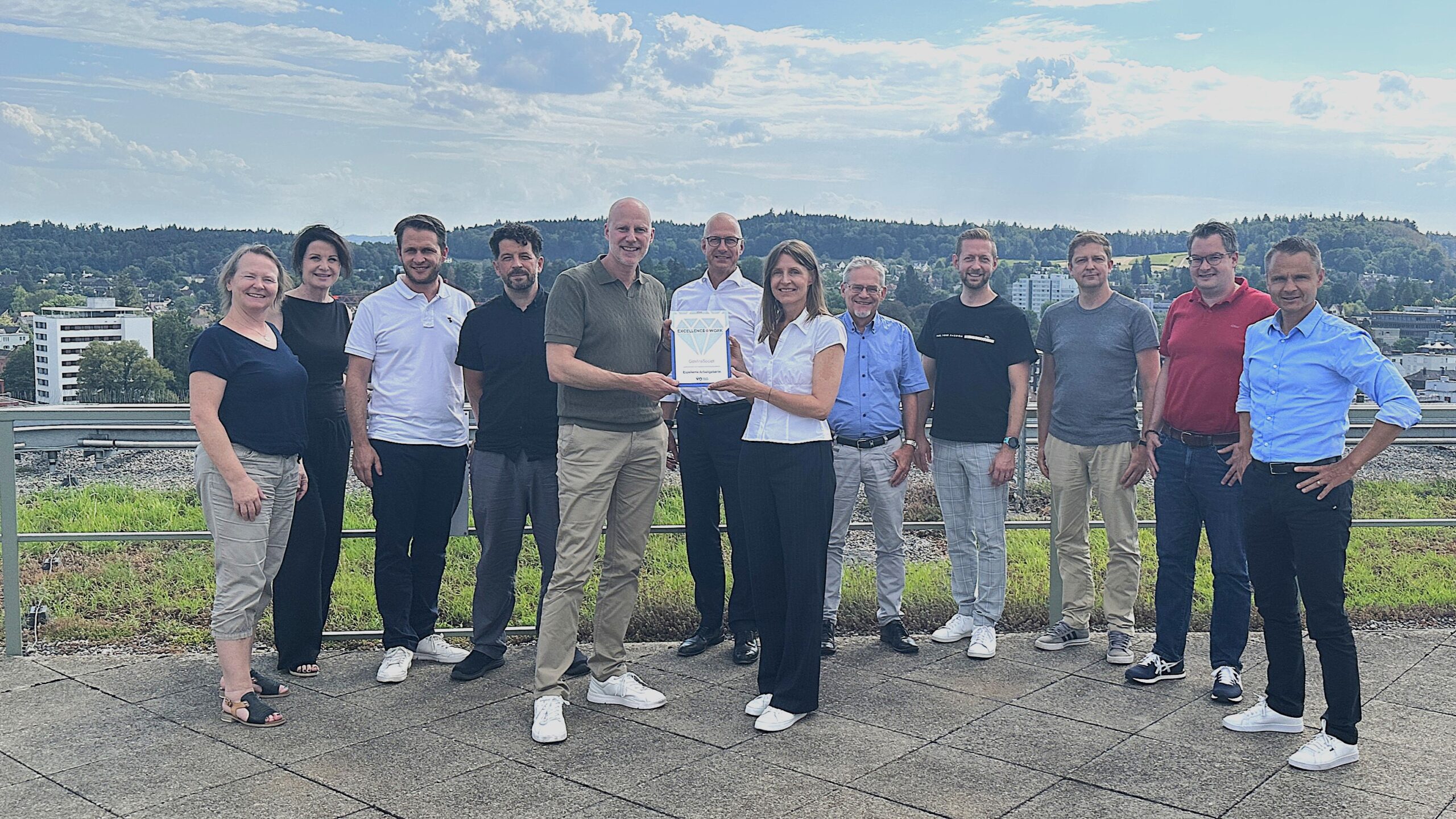
GastroSocial has received the 2026 Excellence@Work Award from ValueQuest. With a response rate of 96 percent, a motivation score of 84, and 87 percent of employees serving as brand ambassadors, the company demonstrates a strong employer culture.

Employee Survey: Raiffeisenbank Möhlin Achieves Excellent Results
August 31, 2026
Reading time: 3 min
Raiffeisenbank Möhlin is one of Switzerland's top employers and is receiving our Excellence@Work Award in recognition of this achievement. Congratulations!

Employee Surveys in Switzerland: Find Providers & Tools
August 30, 2026
Reading time: 6 min
Employee Survey in Switzerland: How Do You Find the Right Employee Survey Provider? What Really Matters When It Comes to Anonymity, Tools, Questionnaires, and Analysis.

360-Degree Feedback Questionnaire: Sample, Template, and Sample Questions
August 21, 2026
Reading time: 7 min
Table of Contents A 360-degree feedback process is only as good as its questionnaire. The questionnaire is at the heart of the entire process. It determines whether...

Employee Survey: The CAMPUS SURSEE Foundation Is Among Switzerland's Best Employers
August 5, 2026
Reading time: 2 min
ValueQuest honors particularly attractive employers in Switzerland with the Excellence@Work Award. We recently had the pleasure of presenting the award to the CAMPUS SURSEE Foundation.
Raiffeisenbank Regio Arbon, a Top Employer: Personal Responsibility as Part of a Strong Corporate Culture
July 7, 2026
Reading time: 2 min
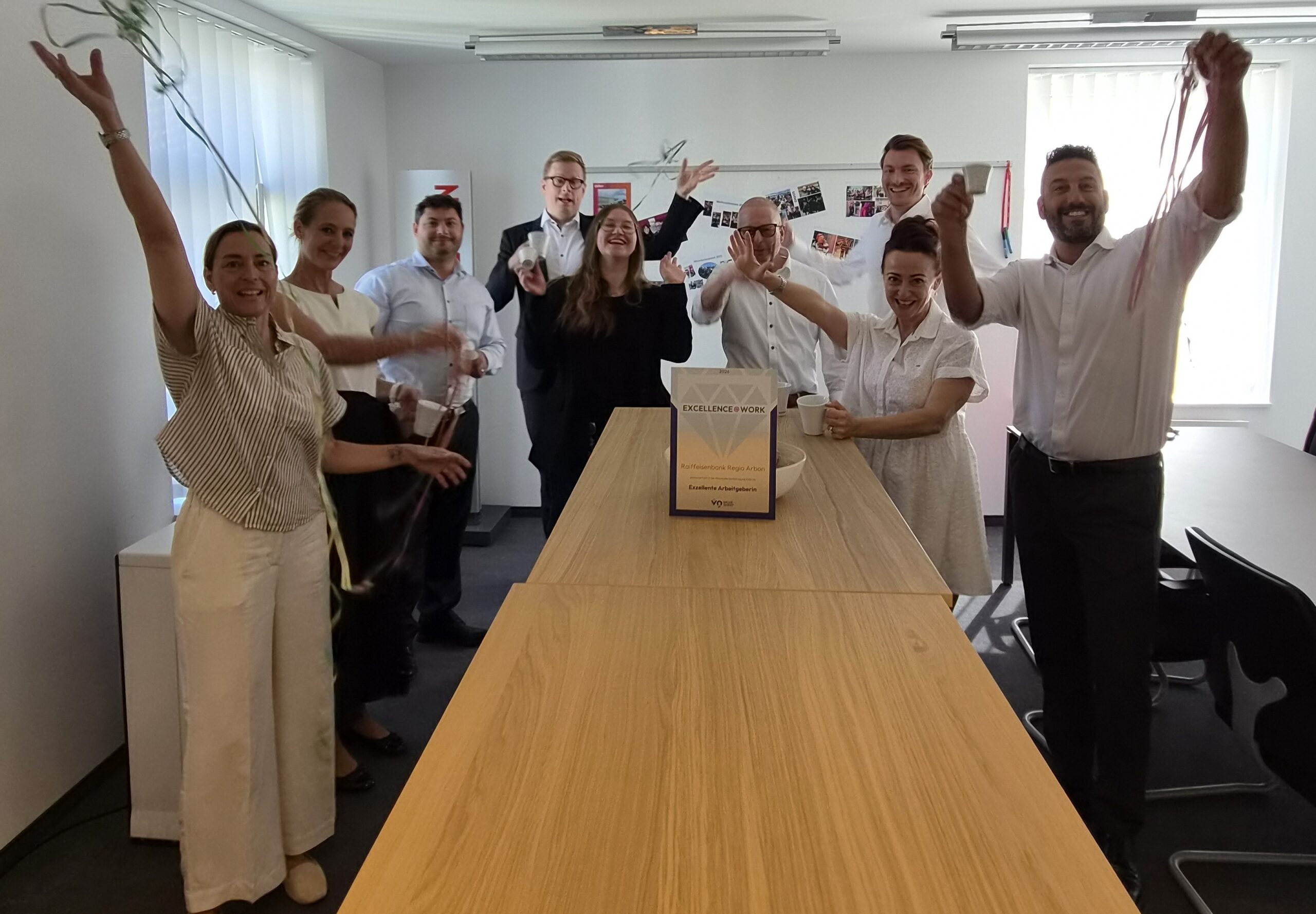
ValueQuest honors particularly attractive employers in Switzerland with the Excellence@Work Award. We recently had the pleasure of presenting the award to Raiffeisenbank Regio Arbon.