
Table of contents
A 360-degree feedback process is only as good as its questionnaire. The questionnaire is at the heart of the entire process. It determines whether you’ll end up with nothing more than superficial opinions or whether you’ll actually gain insights that are relevant to leadership development.
A professional 360-degree feedback questionnaire enables companies to systematically reflect on leadership, highlight strengths, and identify specific areas for development.
- But what makes a good 360-degree feedback questionnaire?
- What methodological principles are crucial?
- What questions should definitely be included in a 360-degree feedback questionnaire?
- And which questions actually lead to valuable feedback?
In this article, we’ll show you how to lay the foundation for sustainable leadership development in Switzerland using a 360-degree feedback questionnaire template, a 360-degree feedback guide, and well-crafted sample questions for a 360-degree feedback assessment.
360-Degree Feedback: The Scientific Basis for the Feedback Questionnaire
A professional 360-degree feedback questionnaire is based on scientific principles of questionnaire design. This is the only way to produce valid and reliable results.
A good 360-degree feedback questionnaire meets two key quality criteria.
- Validity: The 360-degree feedback questionnaire actually measures what it is intended to measure. It focuses on relevant leadership competencies and observable behavior in day-to-day leadership situations.
- Reliability: The questions in the 360-degree feedback questionnaire yield consistent results. This means that different feedback providers can arrive at comparable assessments.
A key component of a high-quality 360-degree feedback questionnaire is the use of what are known as behavioral anchors. Instead of evaluating abstract traits, the questionnaire focuses on specific, observable actions. Example:
A question like this is less suitable:
“The manager is empathetic.”
A question like this is much more meaningful:
“The manager takes the time to address their employees’ concerns, even when the workday is hectic.”
This approach significantly improves the quality of a 360-degree feedback questionnaire.
The advantages are clear.
- More objectivity:
Observable behavior reduces room for interpretation. - A More Action-Oriented Approach:
Managers can identify specific areas for development. - More Fairness:
All evaluators rate the same, clearly defined behaviors.
This makes the 360-degree feedback questionnaire an effective feedback tool for leadership development.
The Right Scale for the 360-Degree Feedback Questionnaire
One factor that is often underestimated when designing a 360-degree feedback questionnaire is the response scale. The scale directly influences the quality of the data collected and the validity of the subsequent analysis. In practice, two types of scales have proven particularly effective for 360-degree feedback questionnaires.
- Frequency scale: A frequency scale typically ranges from
“(Almost) Never” to “(Almost) Always.”
This scale is particularly well-suited for behavior-based questions in the 360-degree feedback questionnaire because it encourages feedback providers to reflect on actual observations.
- Agreement scale: An agreement scale typically ranges from
“Strongly disagree” to “Strongly agree.”
This format is suitable for high-level assessments in the 360-degree feedback questionnaire, such as for overall evaluations of leadership.
A high-quality 360-degree feedback questionnaire typically uses rating scales with at least five—preferably six—response levels.
Having an even number (e.g., 1–6) of response options offers a significant advantage. There is no neutral middle ground. This encourages respondents to provide a clear assessment, which enhances the validity of the data in the 360-degree feedback questionnaire.
Self-Perception and Others’ Perception in 360-Degree Feedback
The real strength of a 360-degree feedback questionnaire lies in the comparison between one's self-perception and how others perceive one. That is why a professional 360-degree feedback questionnaire always includes an identical self-assessment by the manager.
It is only by comparing these two perspectives that valuable insights emerge. When analyzing a 360-degree feedback questionnaire, four patterns typically emerge.
- Consistency Between One's Self-Image and How Others Perceive One
- Overconfidence
- Underestimating oneself
- so-called blind spots
It is precisely these blind spots that are particularly relevant to leadership development. They reveal where one’s own perception differs significantly from that of others.
Professional executive coaching can address precisely these issues. The 360-degree feedback questionnaire thus becomes a feedback tool for personal development and organizational learning.
360-Degree Feedback: Dimensions of the Questionnaire
A well-designed 360-degree feedback questionnaire is based on a clearly defined competency model. These models break down the complex topic of leadership into various dimensions. While individual models may vary depending on the company, certain core areas have proven effective in many 360-degree feedback questionnaires.
As a professional provider of 360-degree feedback in Switzerland, ValueQuest 4 offers a structured and scientific approach. Typical dimensions of a 360-degree feedback questionnaire include, for example:
- Leadership & Integrity: Does the leader serve as a role model? Does he or she take responsibility and take a clear stand?
- Development & Innovation: Does this person actively support others? Do they share knowledge and foster a culture of learning?
- Organization & Planning: Are structures and processes designed to be effective? Is communication clear and results-oriented?
- Results & Customer Focus: Is the focus on creating added value? Are challenging but realistic goals set?
- Implementation & Decision-Making: Are decisions made clearly and implemented consistently? Is delegation done effectively?
- Cooperation & Communication: How is teamwork fostered? Is communication open, honest, and respectful?
These dimensions form the foundation of a structured 360-degree feedback questionnaire.
360-Degree Feedback Questionnaire: Sample Questions
The quality of the questions determines the success of a 360-degree feedback questionnaire. Well-formulated questions translate abstract competencies into specific behaviors that others can observe. A sample 360-degree feedback questionnaire can therefore provide valuable guidance.
Below you will find a comprehensive collection of 360-degree feedback questions for leaders that have proven effective in practice. These sample 360-degree feedback questions are based on typical leadership dimensions and can be incorporated directly into a 360-degree feedback questionnaire.
Role Modeling & Attitude
- "A leader leads by example in what they expect from others."
- "She takes responsibility for the decisions she makes, even when things don't go according to plan."
- "She takes a clear stand and shows her character, even in difficult situations."
Support & Learning Culture
- My manager gives me feedback that helps me advance in my professional development
- She is a good coach who helps others improve.
- She is open to new ideas and fosters a culture where people are encouraged to try new things
Structure & Clarity
- The manager ensures clear structures and efficient workflows
- Meetings she leads are well-prepared and yield clear results
- It provides clear, open, and timely information on important topics
Results- and Customer-Focused
- The manager ensures that the focus remains on activities that create value for our customers
- She sets challenging but realistic goals and deadlines
- She recognizes good performance and offers praise
Decisiveness & Decision-Making
- Even under pressure, the manager makes clear and well-reasoned decisions
- She sticks with a task until it is completely finished
- She effectively delegates tasks and responsibilities and encourages independent work
Collaboration & Dialogue
- The manager fosters an environment where people can express their opinions openly and honestly
- She listens attentively and tries to understand others' perspectives
- She communicates in a way that motivates and inspires
Avoiding Mistakes: What Not to Include in a 360-Degree Feedback Questionnaire
There are a few pitfalls you should definitely avoid when creating your 360-degree feedback questionnaire:
- Unstructured open-ended questions: Plain text fields without a guiding question often result in comments that are vague or difficult to analyze. It’s better to use clear, guiding questions such as “What should this person definitely keep doing?” or “What specific advice would you give this person for further development?”
- Leading questions: Questions that already steer the answer in a certain direction (“Don’t you agree that…?”) skew the results.
- Ambiguous phrasing: Each question should address only one aspect. “The manager communicates clearly and quickly” should be broken down into two separate questions.
- Too many questions: A questionnaire should take about 15–20 minutes to complete. A good 360-degree feedback questionnaire typically includes between 40 and 60 behavioral questions.
360-Degree Feedback Questionnaire: FAQ
What is a 360-degree feedback questionnaire?
A 360-degree feedback questionnaire is a structured feedback tool used to evaluate leaders. It allows an individual to receive feedback from various perspectives—such as employees, colleagues, supervisors, and self-assessment. These different perspectives provide a comprehensive picture of leadership competencies.
How many questions should a 360-degree feedback questionnaire include?
In practice, a professional 360-degree feedback questionnaire typically contains between 40 and 60 questions. This number allows for a thorough assessment of various leadership dimensions without overwhelming the respondents. A good guideline is a completion time of 15 to 20 minutes.
What topics should be included in a 360-degree feedback questionnaire?
Typical topics in a 360-degree feedback questionnaire for managers include, among others:
- Leadership and Integrity
- Communication and Collaboration
- Employee Development
- Decision-making ability
Post published on August 21, 2026
About Dr. Kathrin Neumüller

Dr. oec. HSG Kathrin Neumüller is Co-Managing Director at ValueQuest and an expert in employee inspiration and empowerment. She also teaches strategic management in the MBA program at the ZHAW. She holds a doctorate from the University of St. Gallen (HSG) and studied at the University of Cambridge. Learn more about Kathrin
Inspired? Then share this post via your favorite platform.
Other articles that might interest you ...

AI in the Swiss Insurance Market: What Insurers Can Learn from the Results
October 1, 2026
Reading time: 4 min
Artificial intelligence is not universally accepted in the Swiss insurance market. As a study by ValueQuest shows, customers’ openness to AI depends heavily on how it is used.

AI in the Swiss Insurance Market: Between Acceptance and Skepticism
September 28, 2026
Reading time: 5 min
For many Swiss people, artificial intelligence has become an integral part of everyday life. However, the situation is different when it comes to insurance companies.

Top Employer: Raiffeisenbank Glarnerland Impresses with Strong Leadership
September 21, 2026
Reading time: 2 min
ValueQuest recently had the honor of presenting the “Excellence@Work Award” to Raiffeisenbank Glarnerland. We extend our heartfelt congratulations.
Top Swiss Employers: GastroSocial
September 9, 2026
Reading time: 3 min
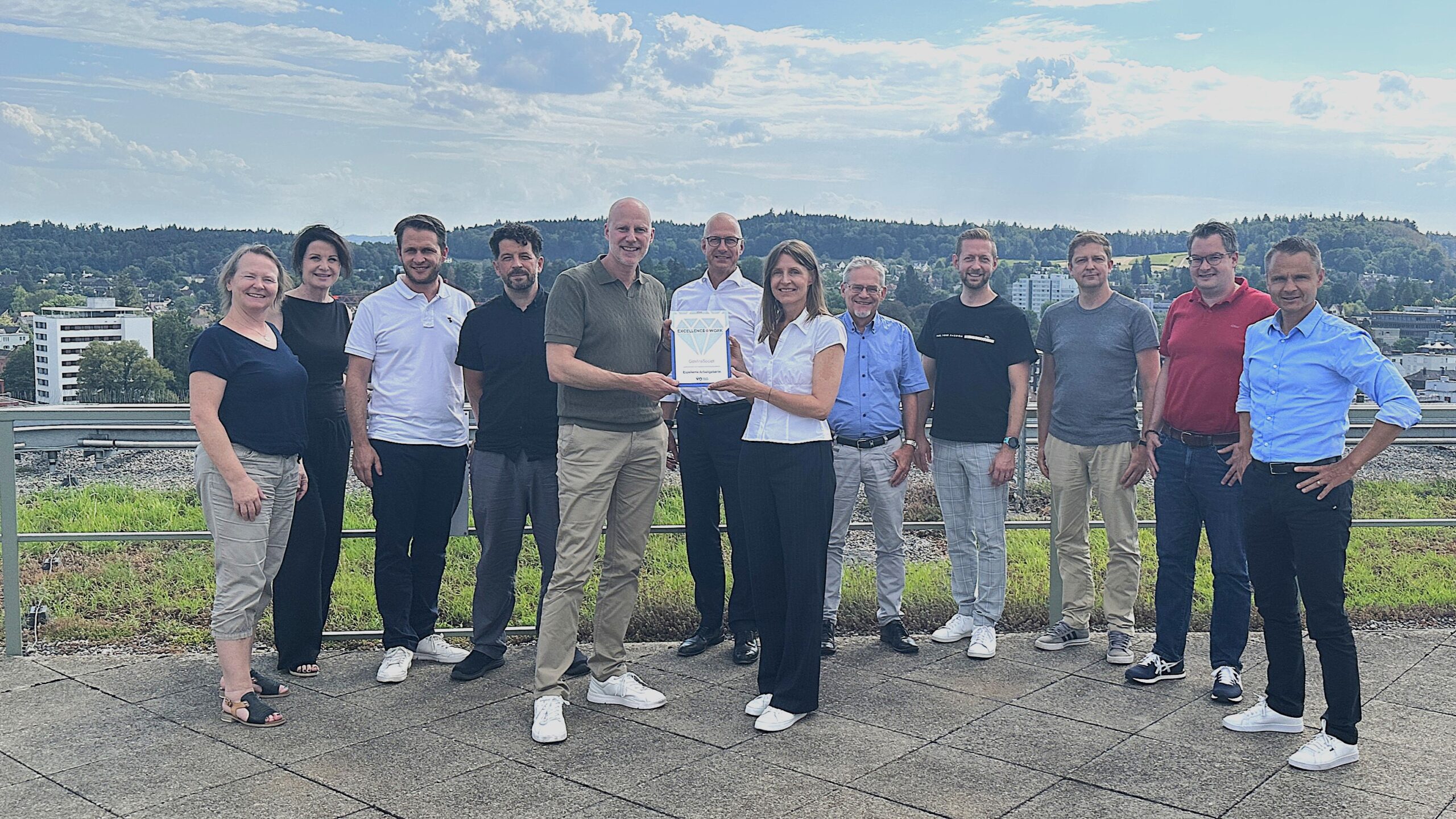
GastroSocial has received the 2026 Excellence@Work Award from ValueQuest. With a response rate of 96 percent, a motivation score of 84, and 87 percent of employees serving as brand ambassadors, the company demonstrates a strong employer culture.

Employee Survey: Raiffeisenbank Möhlin Achieves Excellent Results
August 31, 2026
Reading time: 3 min
Raiffeisenbank Möhlin is one of Switzerland's top employers and is receiving our Excellence@Work Award in recognition of this achievement. Congratulations!

Employee Surveys in Switzerland: Find Providers & Tools
August 30, 2026
Reading time: 6 min
Employee Survey in Switzerland: How Do You Find the Right Employee Survey Provider? What Really Matters When It Comes to Anonymity, Tools, Questionnaires, and Analysis.

360-Degree Feedback Questionnaire: Sample, Template, and Sample Questions
August 21, 2026
Reading time: 7 min
Table of Contents A 360-degree feedback process is only as good as its questionnaire. The questionnaire is at the heart of the entire process. It determines whether...

Employee Survey: The CAMPUS SURSEE Foundation Is Among Switzerland's Best Employers
August 5, 2026
Reading time: 2 min
ValueQuest honors particularly attractive employers in Switzerland with the Excellence@Work Award. We recently had the pleasure of presenting the award to the CAMPUS SURSEE Foundation.
Raiffeisenbank Regio Arbon, a Top Employer: Personal Responsibility as Part of a Strong Corporate Culture
July 7, 2026
Reading time: 2 min
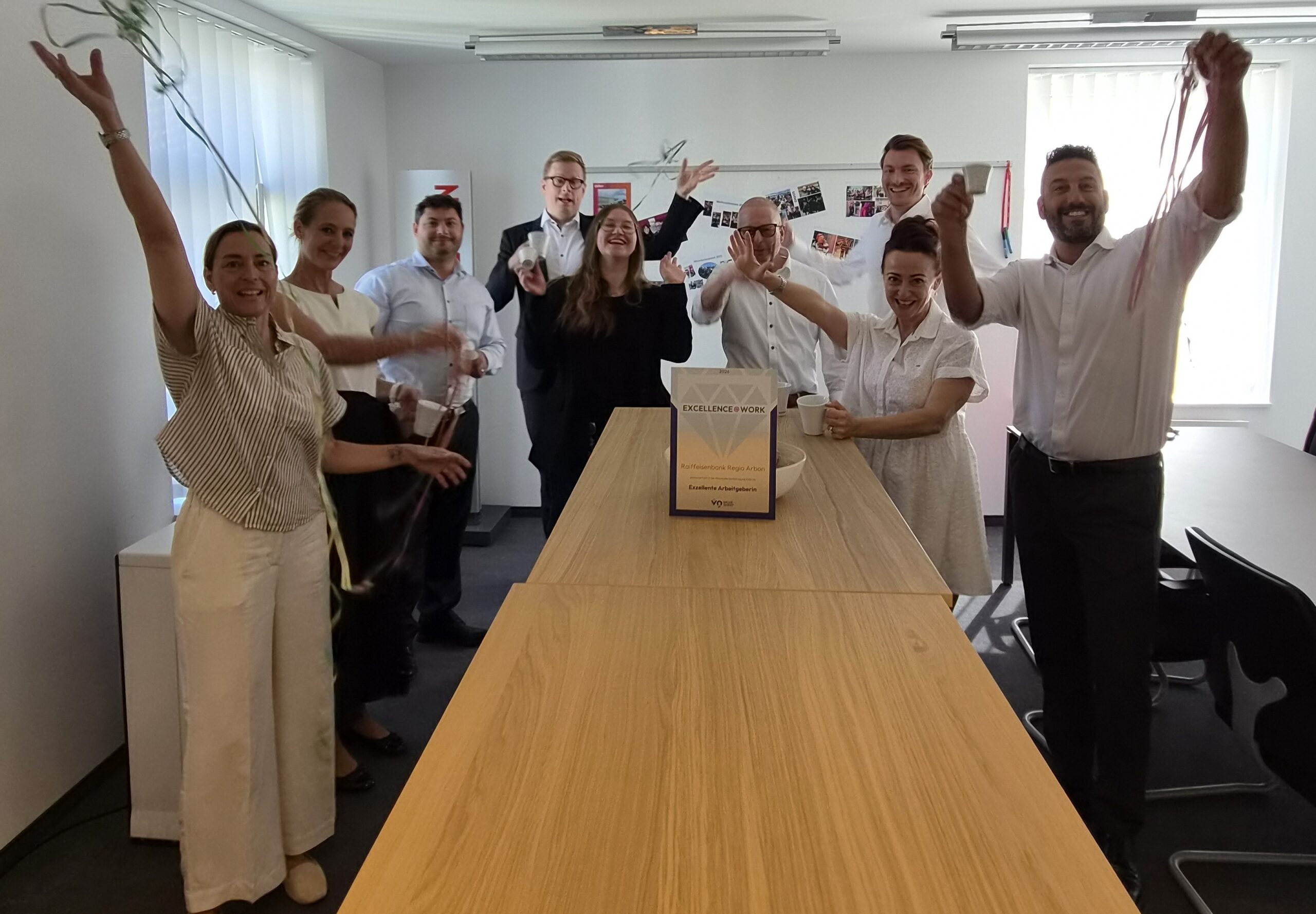
ValueQuest honors particularly attractive employers in Switzerland with the Excellence@Work Award. We recently had the pleasure of presenting the award to Raiffeisenbank Regio Arbon.
