Various companies are currently struggling with a sharp increase in employee turnover. For this reason, ValueQuest refreshed a study from October 2019 and surveyed 600 employees in German-speaking Switzerland again in April 2022 on job satisfaction and employee motivation. This allows the statements immediately before and after the end of the pandemic to be compared.
Little change in employee motivation
At first glance, employee motivation has hardly changed. In 2019, 42% of employees were highly motivated; currently, this figure is even slightly higher at 43%. At 21%, the proportion of employees with low motivation has also not changed compared to 2019.
However, if we look at the changes by company size in the tables below, we can see that employees in smaller companies are generally much more motivated than those in larger companies. However, motivation among employees in smaller companies in particular has decreased slightly compared to 2019, while it has increased significantly in large companies (250+ employees).
| Company size | |||||
| 2019 | 1-9 persons (n=82) | 10-49 persons (n=142) | 50-249 persons (n=145) | 250+ persons (n=246) | |
| Motivation | % high | 65% | 46% | 44% | 31% |
| Satisfaction | % high | 65% | 48% | 48% | 34% |
| Commitment | % high | 60% | 42% | 39% | 30% |
| Quantity | 82 | 142 | 145 | 246 | |
| Company size | |||||
| 2022 | 1-9 persons (n=60) | 10-49 persons (n=116) | 50-249 persons (n=148) | 250+ persons (n=288) | |
| Motivation | % high | 60% | 47% | 33% | 44% |
| Satisfaction | % high | 58% | 52% | 38% | 49% |
| Commitment | % high | 58% | 45% | 32% | 39% |
| Quantity | 60 | 116 | 148 | 288 | |
One reason for the increase in employee motivation at larger companies could be the opportunity to work from home "forced" by the pandemic.
Hardly any change in willingness to give notice
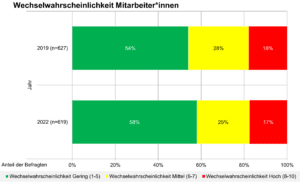
The chart above shows that the likelihood of changing jobs has decreased slightly compared to 2019. In general, there are few changes in the intention to change jobs globally.
Clearer differences in the comparison by age category and seniority
Looking at the intention to switch by age group, a very different picture emerges.
| Age group | 2019 | 2022 | |
| Up to 25 years (n=93) | Share with high intention to switch | 21% | 22% |
| 26-35 years (n=357) | Share with high intention to switch | 26% | 22% |
| 36-45 years (n=315) | Share with high intention to switch | 14% | 16% |
| 46-55 years (n=273) | Share with high intention to switch | 15% | 16% |
| 56+ years (n=208) | Share with high intention to switch | 12% | 13% |
As the table clearly shows, younger people up to the age of 35 have a much greater tendency to change jobs than employees aged 36 and over. However, this was already the case before the pandemic. Employees who are relatively new to a company are also more likely to leave:
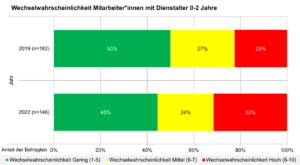
The figure above also shows that the likelihood of "new" employees changing jobs increased significantly in 2022. Employee motivation has a major influence on this. 41% of employees with low motivation had a high intention to switch in 2022, compared to 37% in 2019.
Employee turnover can be predicted
A professional employee survey is a good way of predicting staff turnover. ValueQuest calculates a probability of dismissal for each person based on the employees' responses. For reasons of anonymity, these responses are not shown for individuals, but for the organization as a whole as well as for individual areas and departments. Long-term comparisons show that these probabilities are very relevant.
Over a period of two years, up to 70% of employees with a high risk of dismissal actually leave the company. Based on the results of the employee survey, companies have the opportunity - and at the same time the challenge - to take timely measures to retain and motivate the employees concerned.
Conclusion
Overall, there has been little change in employees' intention to change jobs or their willingness to leave during the coronavirus pandemic. The fact that many companies are currently experiencing higher turnover is primarily due to opportunities on the labor market. During the pandemic, it was too risky for many employees to change jobs. At the same time, companies were cautious about creating new jobs.
It is still true that employee motivation is the main driver of employee loyalty. Employee motivation is therefore a key task for management. A professionally conducted employee survey helps management to obtain important information at an early stage and to align management, culture and processes in such a way that maximum employee motivation and loyalty can be achieved.
Article published on July 6, 2022
About Heidi Blanken

Heidi Blanken is an expert and advisor at ValueQuest with a focus on evaluation and methodological consulting. She studied psychology with a focus on methodology as well as economics and labor law at the University of Zurich and graduated with a lic. phil. I degree.
Inspired? Then share this post via your favorite platform.
Other articles that might interest you ...

AI in the Swiss Insurance Market: What Insurers Can Learn from the Results
October 1, 2026
Reading time: 4 min
Artificial intelligence is not universally accepted in the Swiss insurance market. As a study by ValueQuest shows, customers’ openness to AI depends heavily on how it is used.

AI in the Swiss Insurance Market: Between Acceptance and Skepticism
September 28, 2026
Reading time: 5 min
For many Swiss people, artificial intelligence has become an integral part of everyday life. However, the situation is different when it comes to insurance companies.
Top Employer: Raiffeisenbank Glarnerland Impresses with Strong Leadership
September 21, 2026
Reading time: 2 min
ValueQuest recently had the honor of presenting the “Excellence@Work Award” to Raiffeisenbank Glarnerland. We extend our heartfelt congratulations.
Top Swiss Employers: GastroSocial
September 9, 2026
Reading time: 3 min
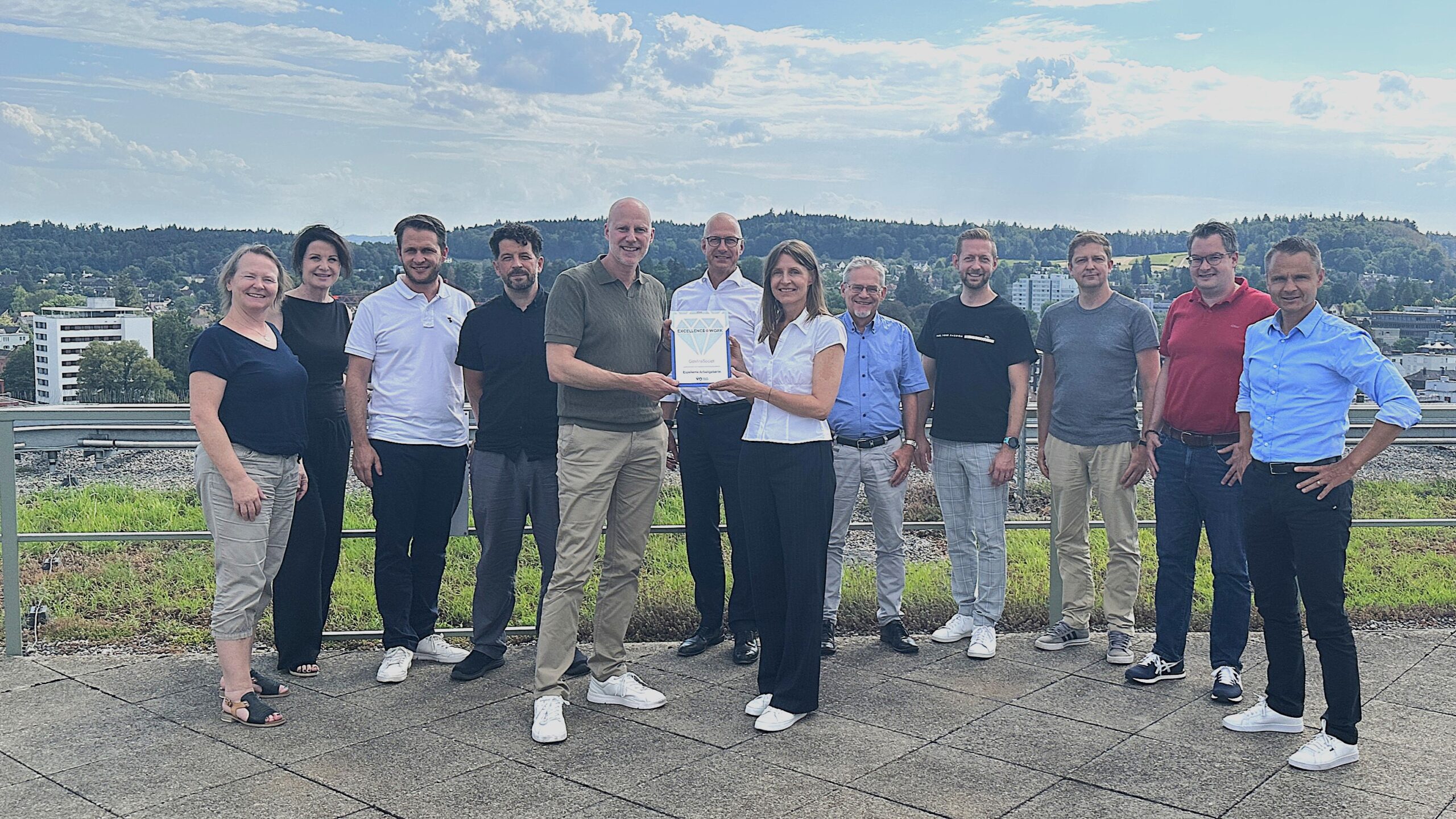
GastroSocial has received the 2026 Excellence@Work Award from ValueQuest. With a response rate of 96 percent, a motivation score of 84, and 87 percent of employees serving as brand ambassadors, the company demonstrates a strong employer culture.

Employee Survey: Raiffeisenbank Möhlin Achieves Excellent Results
August 31, 2026
Reading time: 3 min
Raiffeisenbank Möhlin is one of Switzerland's top employers and is receiving our Excellence@Work Award in recognition of this achievement. Congratulations!

Employee Surveys in Switzerland: Find Providers & Tools
August 30, 2026
Reading time: 6 min
Employee Survey in Switzerland: How Do You Find the Right Employee Survey Provider? What Really Matters When It Comes to Anonymity, Tools, Questionnaires, and Analysis.

360-Degree Feedback Questionnaire: Sample, Template, and Sample Questions
August 21, 2026
Reading time: 7 min
Table of Contents A 360-degree feedback process is only as good as its questionnaire. The questionnaire is at the heart of the entire process. It determines whether...
Employee Survey: The CAMPUS SURSEE Foundation Is Among Switzerland's Best Employers
August 5, 2026
Reading time: 2 min
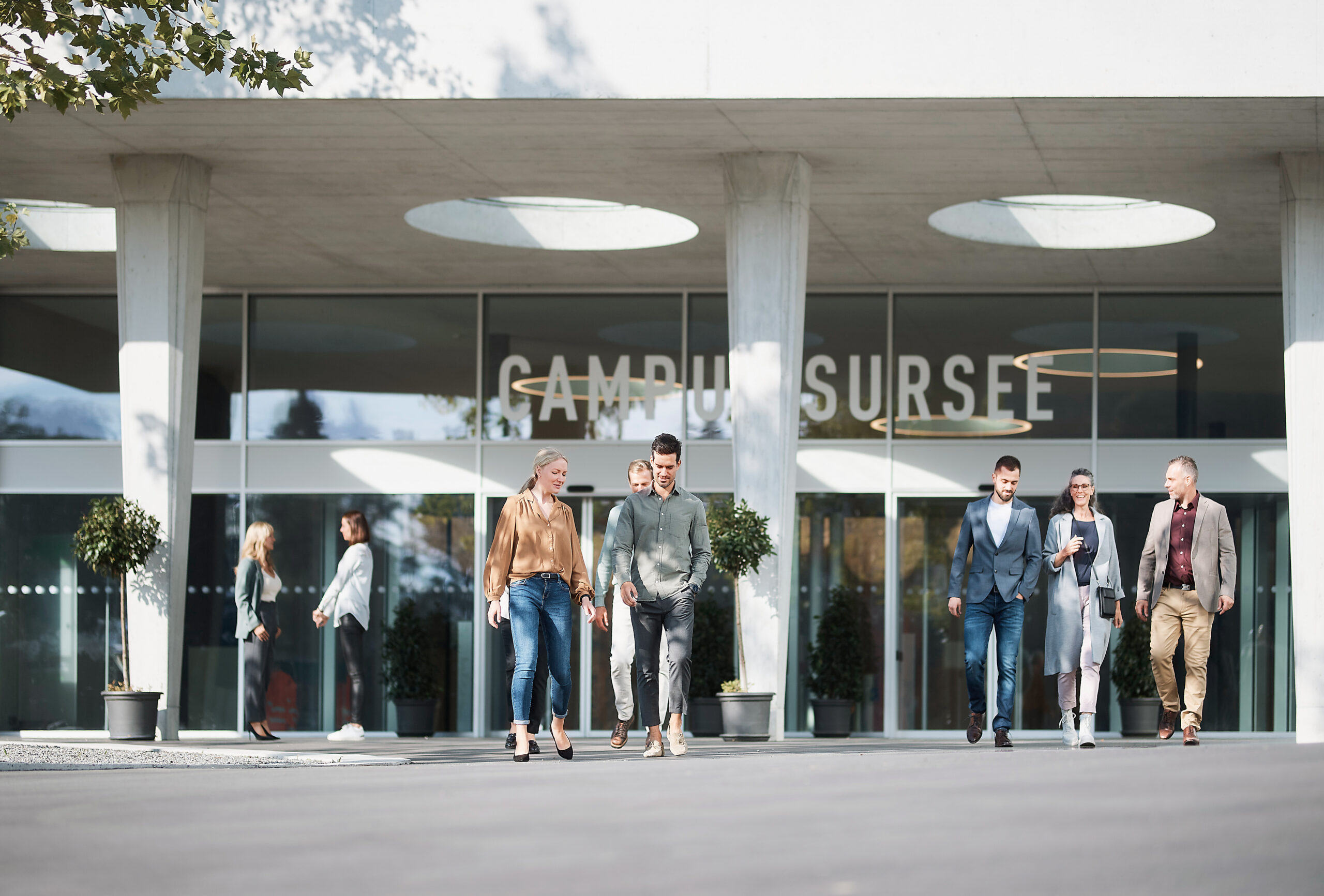
ValueQuest honors particularly attractive employers in Switzerland with the Excellence@Work Award. We recently had the pleasure of presenting the award to the CAMPUS SURSEE Foundation.
Raiffeisenbank Regio Arbon, a Top Employer: Personal Responsibility as Part of a Strong Corporate Culture
July 7, 2026
Reading time: 2 min
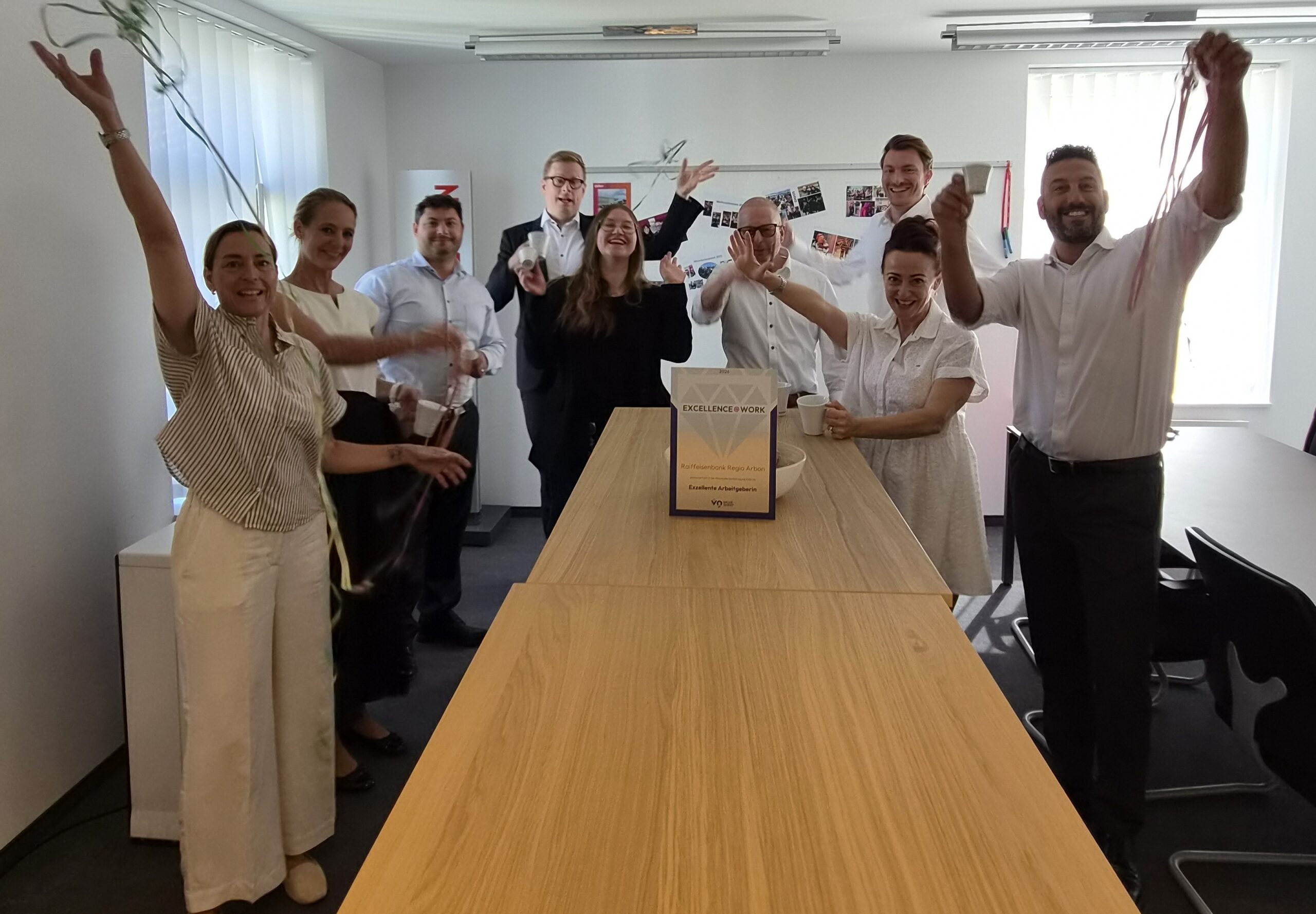
ValueQuest honors particularly attractive employers in Switzerland with the Excellence@Work Award. We recently had the pleasure of presenting the award to Raiffeisenbank Regio Arbon.