Model-based questionnaire for your employee survey
Even when formulating the questions, it is important to keep the evaluation and implementation in mind. The questionnaire must be based on a clear impact model that has its roots in research (commitment/motivation research). The evaluation must show correlations and identify drivers.
At ValueQuest, we therefore distinguish between two types of questions:
1. output questions
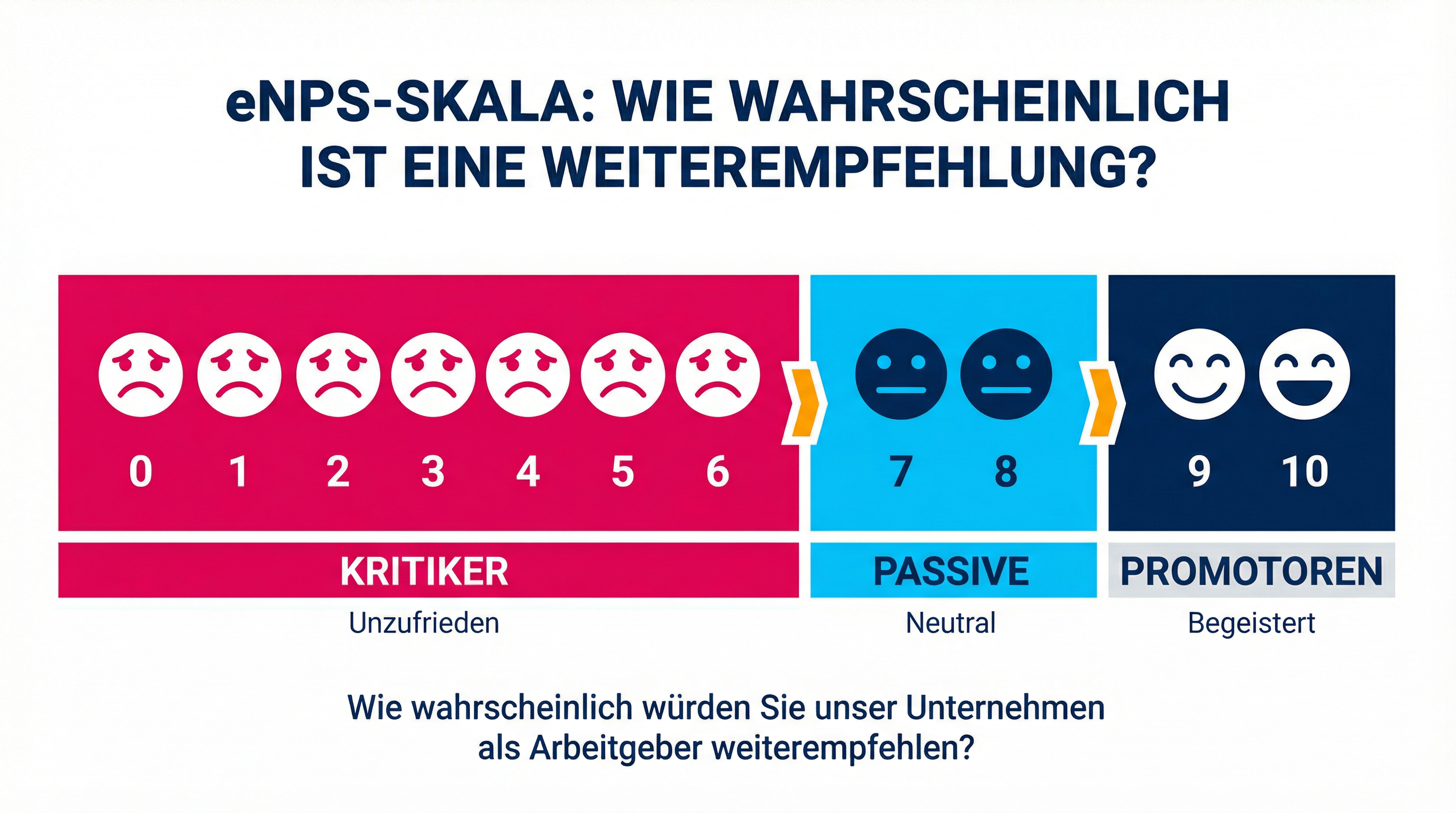
These questions are included in the central indicator of "motivation" (also known as commitment) and provide information about how the employee feels. They usually begin with "I..." and express a feeling/perception of the employee.
Example questions: I have full confidence in my company, I am prepared to give my all for my company, I am proud to work here...
The aim of the organization must be to achieve the highest possible motivation value (maximization). According to research, a high level of motivation is the prerequisite for employees being willing to perform, willing to change, customer-oriented, etc. However, motivation cannot be influenced directly. That is why another set of questions is important:
2. input questions or "management levers"
These questions are design elements of leadership and concern those things that can directly influence an organization / managers at various levels, e.g. feedback culture, infrastructure, salary, leadership, strategy, etc.
Example questions: I receive feedback that helps me move forward, cooperation across departments works well, my line manager delegates to the right extent...
The analysis determines which of these factors have the strongest influence on employee motivation and where improvements should ideally be made.
The right length of questionnaire for employee surveys
The following areas of tension must be weighed up against each other here:
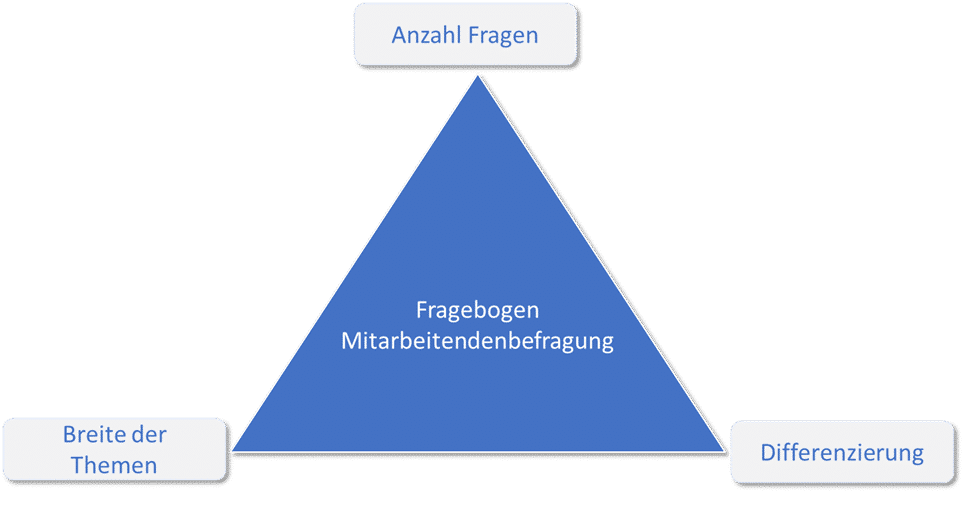
- Number of questions
The questionnaire should generally be kept short. However, it has been shown that a response time of up to 20 minutes has no influence on the participation or drop-out rate.
- Breadth of topics
All areas of daily working life that are relevant to employees should be covered. This is the only way to get a clear picture of exactly what drives employee motivation.
For example, we are often asked whether the question of pay should be asked, as the scope for action on this point is generally limited. Our recommendation is clearly YES! If areas are missing from a survey, employees have no outlet to express their (dis)satisfaction on this topic. This affects their answers in other areas and dilutes the results accordingly.
- Differentiation
The topics must be narrowed down precisely in order to understand the individual aspects in detail - if necessary, differentiated for different levels of the organization.
These different demands cause a conflict of objectives. From experience, we can say that, especially in a first survey, you should go more broadly and pay attention to completeness. A good questionnaire contains 50-100 scaled, simple questions. It should take about 15-20 minutes to complete.
Although a questionnaire that is too short provides a picture of employee satisfaction, it does not provide enough concrete starting points for interpretation and implementation.
Balanced questionnaire for employee surveys
A good questionnaire for employee surveys must be balanced. Our experience shows that organizations tend to ask a lot of questions on topics where they are already strong and completely ignore other topics. This is fine if it is deliberately planned, but very often it happens unconsciously. ValueQuest's ProMotion© Check can be used to test how complete and balanced the questionnaire is.
Questionnaire tailored to the company
A tailor-made questionnaire for employee surveys covers the specifics of the respective organization. Employees appreciate it when the questionnaire reflects the specifics of the company and does not simply come across as a standard questionnaire. This has a motivating effect and increases commitment, which in turn has an impact on the quality of the responses.
A simple language
The language should be kept simple and be easily understood regardless of the level of education:
- Short and concise statements in the active form
- Asking projective questions (see also the section "Asking personal questions")
- No negative formulations
- No nested sentences
- No brackets
- No technical jargon (unnecessary technical terms)
The shorter the processing time for a statement, the better the answers. Short statements are read correctly and not just skimmed over.
Content of the questions
A sensible question
- The questions should relate to things that the (typical) employee can observe and specifically assess in their day-to-day work
- The questions must not be overloaded (negative example: My supervisor regularly agrees targets with me and monitors them)
- "Reverse questions", i.e. questions in which a rejection represents the positive result, should be avoided. These cause difficulties both in the evaluation and interpretation of the results
Ask personal questions
- Asking questions that concern the employee personally
- Information on the sensations / feelings
- Statements that you can agree or disagree with
- In the case of social desirability(negative example: I am ready for change and innovation), no one will answer no. It is therefore better to ask projective questions: In our department, employees are open to change and innovation
Observe the time frame
The questions must relate to a specific time period.
Include open questions in the questionnaire
Open questions are a good addition and provide an outlet. However, they should be used selectively. Our experience has shown that the willingness to answer decreases sharply after 3 open questions and people only answer in monosyllables.
The right scale for the questionnaire
Which scale is appropriate for an employee survey questionnaire?
In our culture, the 6-point scale has proven its worth. It is important that positive is always on the same side (left / right). In Switzerland, for example, positive is always on the right, in Germany it is always on the left.
The headings of the scale must match the question. In other words, scales must be the answer to the question. It is sufficient to label the ends of the scale (and no textual pseudo-gradations (e.g. "somewhat dissatisfied"). It is important to know that employees do not use scales linearly. We are all shaped by our school system (and Swiss politeness). A 4 on the 6-point scale is just about acceptable, anything below that is unsatisfactory. Read more about what makes a good scale for an employee survey here.
Consistent scales within the questionnaire
Scales should not be changed within the questionnaire. What looks like variety is confusing and makes both answering and interpretation more difficult. It makes sense to have 1 or 2 questions at the end with a different scale.
Easy handling
A good user interface is important, both on the PC and on the smartphone. The question blocks should not be too long; smaller blocks are clearer. Don't forget the progress bar so that respondents can find their way around.
Article published on November 13, 2021
About Heidi Blanken

Heidi Blanken is an expert and advisor at ValueQuest with a focus on evaluation and methodological consulting. She studied psychology with a focus on methodology as well as economics and labor law at the University of Zurich and graduated with a lic. phil. I degree.
Inspired? Then share this post via your favorite platform.
Other articles that might interest you ...

AI in the Swiss Insurance Market: What Insurers Can Learn from the Results
October 1, 2026
Reading time: 4 min
Artificial intelligence is not universally accepted in the Swiss insurance market. As a study by ValueQuest shows, customers’ openness to AI depends heavily on how it is used.

AI in the Swiss Insurance Market: Between Acceptance and Skepticism
September 28, 2026
Reading time: 5 min
For many Swiss people, artificial intelligence has become an integral part of everyday life. However, the situation is different when it comes to insurance companies.

Top Employer: Raiffeisenbank Glarnerland Impresses with Strong Leadership
September 21, 2026
Reading time: 2 min
ValueQuest recently had the honor of presenting the “Excellence@Work Award” to Raiffeisenbank Glarnerland. We extend our heartfelt congratulations.
Top Swiss Employers: GastroSocial
September 9, 2026
Reading time: 3 min
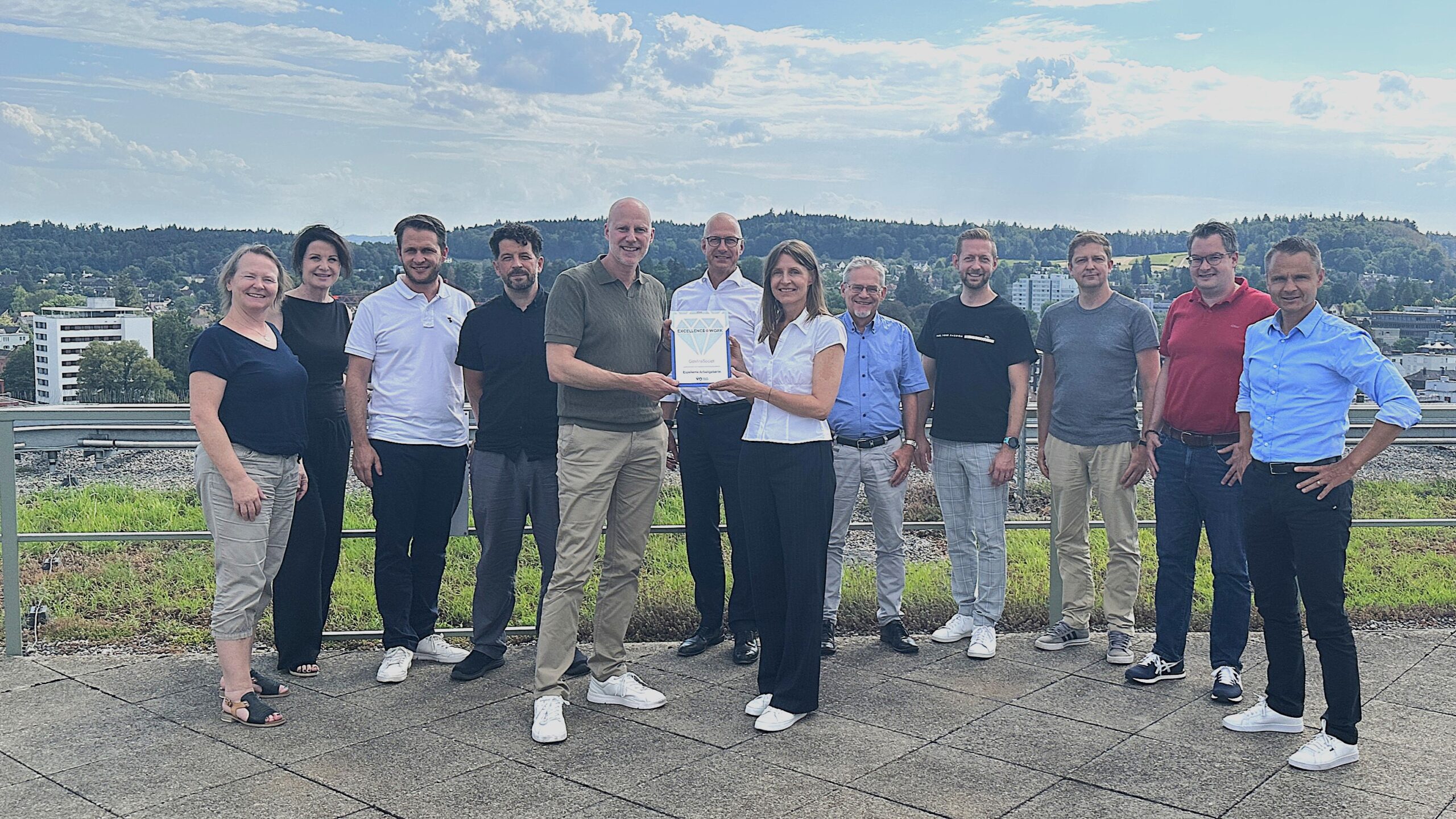
GastroSocial has received the 2026 Excellence@Work Award from ValueQuest. With a response rate of 96 percent, a motivation score of 84, and 87 percent of employees serving as brand ambassadors, the company demonstrates a strong employer culture.

Employee Survey: Raiffeisenbank Möhlin Achieves Excellent Results
August 31, 2026
Reading time: 3 min
Raiffeisenbank Möhlin is one of Switzerland's top employers and is receiving our Excellence@Work Award in recognition of this achievement. Congratulations!

Employee Surveys in Switzerland: Find Providers & Tools
August 30, 2026
Reading time: 6 min
Employee Survey in Switzerland: How Do You Find the Right Employee Survey Provider? What Really Matters When It Comes to Anonymity, Tools, Questionnaires, and Analysis.

360-Degree Feedback Questionnaire: Sample, Template, and Sample Questions
August 21, 2026
Reading time: 7 min
Table of Contents A 360-degree feedback process is only as good as its questionnaire. The questionnaire is at the heart of the entire process. It determines whether...

Employee Survey: The CAMPUS SURSEE Foundation Is Among Switzerland's Best Employers
August 5, 2026
Reading time: 2 min
ValueQuest honors particularly attractive employers in Switzerland with the Excellence@Work Award. We recently had the pleasure of presenting the award to the CAMPUS SURSEE Foundation.
Raiffeisenbank Regio Arbon, a Top Employer: Personal Responsibility as Part of a Strong Corporate Culture
July 7, 2026
Reading time: 2 min
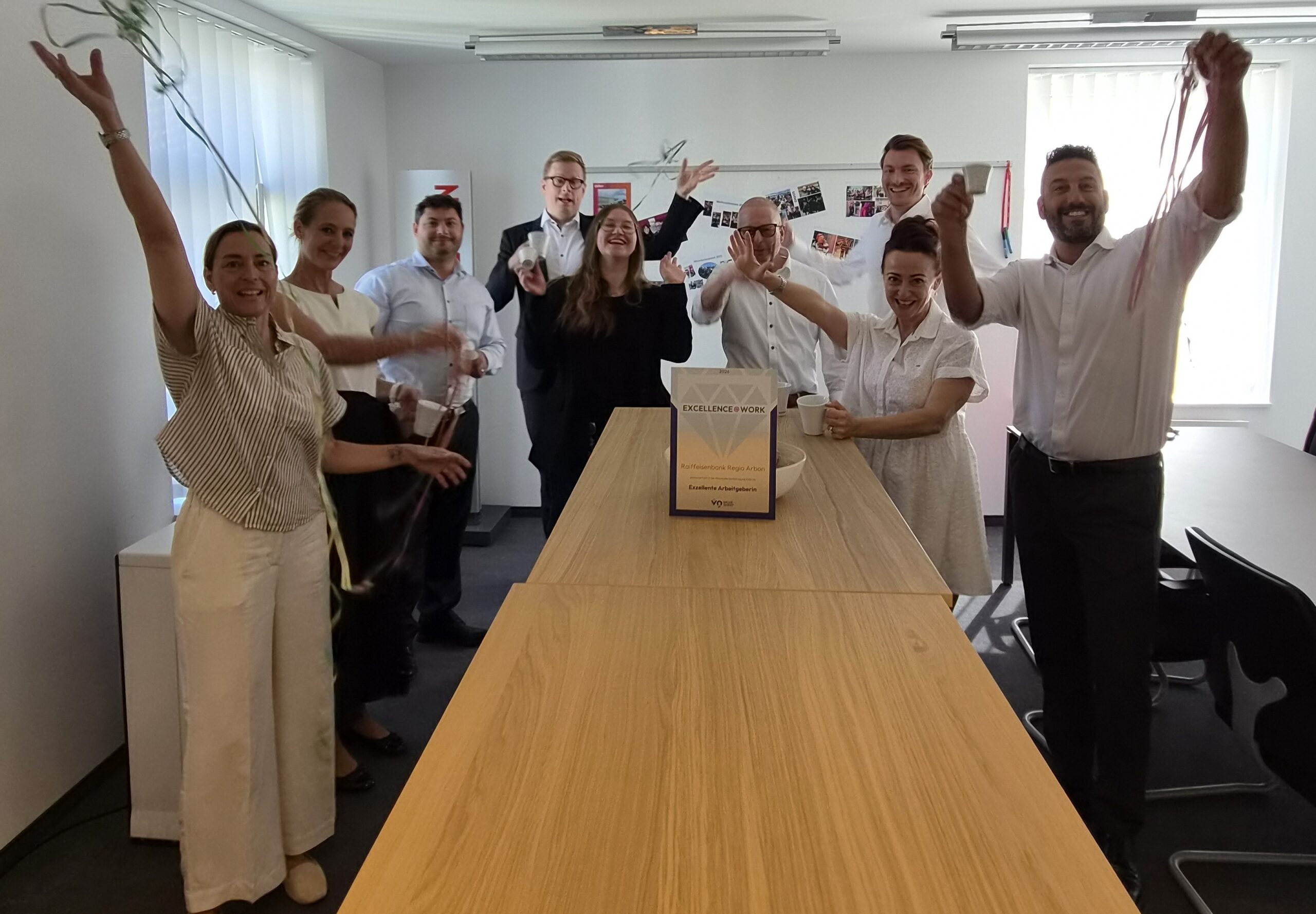
ValueQuest honors particularly attractive employers in Switzerland with the Excellence@Work Award. We recently had the pleasure of presenting the award to Raiffeisenbank Regio Arbon.