Table of contents
Feedback helps us grow. And yet, for most of us, it often feels like a bitter pill that’s hard to swallow. Rationally, we know that constructive feedback is essential for our personal and professional growth. Nevertheless, we often react to feedback with a sense of unease, defensiveness, or even anger.
Why is that? Why is it so incredibly difficult to assess our own abilities realistically, and why do we stubbornly overlook our own "blind spots"? At the same time, companies constantly preach the importance of an open feedback culture, but in practice, this feedback culture is surprisingly rarely put into practice.
This article explores the psychology of feedback . We address the following questions:
- Why does our brain often react to criticism as if it were a threat, and why does feedback therefore feel unpleasant?
- Why is it so difficult to assess one's own abilities realistically, and why do blind spots persist?
- How do models such as the Dunning-Kruger effect and the Johari window help us to better understand our self-perception and how others perceive us?
- What defense mechanisms do we use to protect our self-image, and how do they prevent us from accepting feedback?
- What role does imposter syndrome play as a subtle counterpoint to overestimated self-perception?
- Why is feedback a key factor for effective leadership, and how do leaders benefit from it?
- How can structured formats such as 360-degree feedback help break down psychological barriers and promote a culture in which feedback is seen as a gift for growth?
Fear of feedback
To understand the intensity of our reaction to criticism, we need to take a journey into our evolutionary past. Imagine our ancestors in the savannah. For them, belonging to the group was not a social convenience, but the absolute basis for survival. Exclusion from the tribe—whether through open aggression or subtle ostracism—was tantamount to a death sentence. The individual was defenseless against predators and other (hostile) groups. The brain therefore evolved into a highly sensitive social monitoring system whose top priority was to secure one's status and acceptance within the social hierarchy. (Lieberman, 2013)
Criticism or negative feedback from a tribe member was much more than a personal opinion in this context. Rather, it was a potential signal of an impending downgrade in social status or even imminent exclusion.
It signaled: "You do not meet the group's standards. Your behavior endangers us. You are no longer a valuable member." Such social rejection activated the same neural circuits in the brain that are responsible for processing physical pain. The threat was real and immediate.
Let's jump back to the present. The conference room is our modern savannah, the project team our tribe. Even though we are no longer hunted by saber-toothed tigers, our brains are still calibrated to this survival program in their basic structure.
A critical remark from a superior, a derogatory comment from a colleague—all of this is unconsciously interpreted by our limbic system as an attack on our social status and belonging. The fear we feel is the evolutionary echo of our ancestors' fear of being cast out of the protective community. We do not react to the content of the words, but to the perceived threat to our place in the social fabric.

Neuroscience behind critical feedback
This evolutionary imprint manifests itself in a specific neurobiological reaction.
Deep within our limbic system lies the amygdala, our emotional "control center." Its job is to react to potential dangers in milliseconds, long before our rational mind has fully analyzed the situation. As soon as the amygdala perceives a threat—and as we have seen, a critical remark is often enough to trigger this—it triggers an automatic response known as the "amygdala hijack." (Goleman, 1995)
The amygdala essentially takes command of the brain. In response to critical feedback (or other dangers), it releases a flood of stress hormones such as cortisol and adrenaline, which put the body in a state of high alert:
The heartbeat quickens, the muscles tense up, and breathing becomes shallower. At the same time, the activity of the prefrontal cortex, the seat of our logical thinking, impulse control, and ability to take on different perspectives, is drastically reduced. The brain switches from reflective "thinking mode" to reactive "survival mode."
The result: we can no longer think clearly, we no longer listen properly, and we are unable to process the nuances of the message. Instead, we are trapped in archaic response patterns: fight (aggressive defense, counter-criticism), flight (avoiding conversation, switching off internally), or freeze (blockade, inability to respond).
The neuroscientist David Rock has further refined this phenomenon in the SCARF model . He shows that our brains are particularly sensitive to threats in five social domains:
- status
- Certainty
- Autonomy
- Relatedness (belonging) and
- Fairness (justice)
Critical feedback is a frontal attack on almost all of these areas. When we receive negative feedback, it threatens our status, creates uncertainty about our performance, attacks our autonomy, jeopardizes our belonging to the team, and is often perceived as unfair. This neurobiological cascade is the reason why even well-intentioned feedback is often met with defensiveness and must first break through our protective wall before we can even process it rationally.
Psychological defense mechanisms for feedback
While the amygdala hijack is an immediate, unconscious reaction, over time our psyche has developed a whole arsenal of sophisticated, mostly unconscious strategies to protect our self-image from the painful truths of feedback. Sigmund Freud was the first to describe these psychological defense mechanisms. They serve as protection against unpleasant and negative feedback.
- Denial of feedback: The most direct, but also the most primitive form of defense against critical feedback. The reality of the feedback is simply ignored or dismissed as untrue. ("That's just not true. I see it completely differently.") In a work context, this often manifests itself in a complete lack of understanding of the criticism, as if two different realities were being discussed.
- Rationalization: Here, the criticism is acknowledged, but its validity is refuted by seemingly logical reasons. It is an intellectual form of justification. ("I only missed the project goal because the framework conditions were unrealistic from the outset." or "The others do the same thing.") Responsibility is shifted from oneself to external factors.
- Projection: One's own undesirable characteristics, faults, or motives are transferred onto other people. An employee who is unreliable himself may complain vehemently about the unreliability of his colleagues. By fighting the fault "outside," he does not have to acknowledge it in himself.
- Displacement: The negative emotions triggered by the feedback (e.g., anger toward the boss) are not directed at the original source (which would be too dangerous), but are displaced onto a safer target. The frustration caused by the supervisor's criticism is then vented in the evening on the partner or children.
- Intellectualization: To avoid emotional pain, the person retreats to a purely factual, analytical level. Instead of feeling personally affected, they discuss the methodology of the feedback, the semantics of the words used, or the theoretical models behind it. This creates an emotional distance from the actual content.
- Humor: Sarcasm or jokes about your own criticized weakness can also be an effective defense mechanism. By laughing at the mistake, you take away its seriousness and deprive the feedback provider of the basis for further discussion.
These mechanisms are not bad per se; they protect us in the short term from feeling overwhelmed and experiencing psychological pain due to negative feedback. In the long term, however, they prevent us from learning from our mistakes and developing further. They keep us trapped in a comfort zone of self-deception.
Why feedback is so rare: a culture of silence
The psychological hurdles are not only faced by the recipient of feedback. Giving feedback also requires courage and social skills. This explains why a culture of silence prevails in many organizations.
The following reasons explain why honest feedback is so rare and why we shy away from giving feedback to others.
- Fear of conflict and damaging relationships: The fear of hurting others or jeopardizing harmonious working relationships is the biggest barrier. As we have seen, this fear is not unfounded, given the likely defensive reaction of the other person.
- Lack of psychological safety: In an environment characterized by competitive pressure, blame, and fear of making mistakes, no one will take the risk of giving honest feedback. Psychological safety—the belief, coined by Amy Edmondson, that people can take interpersonal risks without fear of negative consequences—is an absolute prerequisite for a functioning feedback culture.
- Lack of competence and practice: Formulating constructive feedback is a challenging communication skill. Many people do not know how to package their observations into appreciative, concrete, and actionable messages. For fear of getting it wrong, they prefer to remain silent.
Why feedback is important for leadership
Nowhere are the consequences of a lack of a feedback culture as devastating as at the leadership level. Good leadership is the key driver of employee engagement, innovation, and ultimately, business success. Poor leadership, on the other hand, is the main reason for employees mentally checking out and high turnover. The problem is that the higher a person rises in the hierarchy, the more isolated they become from honest, unfiltered feedback.
Employees don't dare to criticize their superiors, and colleagues at the same level often hold back for strategic reasons. As a result, managers often operate in a dangerous, protected space that confirms their self-image and magnifies their blind spots. They lose touch with the reality of their employees' lives and don't understand why their well-intentioned initiatives fail or why motivation within the team declines.
Leadership assessment through systematic feedback is therefore not just a “nice-to-have, ” but a vital tool. It is the only way to identify and bridge the gap between one’s leadership intentions and the actual impact on employees.
Cognitive biases in self-perception
Our perception is not an objective window onto reality, but is filtered through a multitude of cognitive biases. These mental shortcuts help us cope with the complexity of the world, but they also lead to systematic misjudgments, especially in our self-perception.
Johari window reveals blind spots
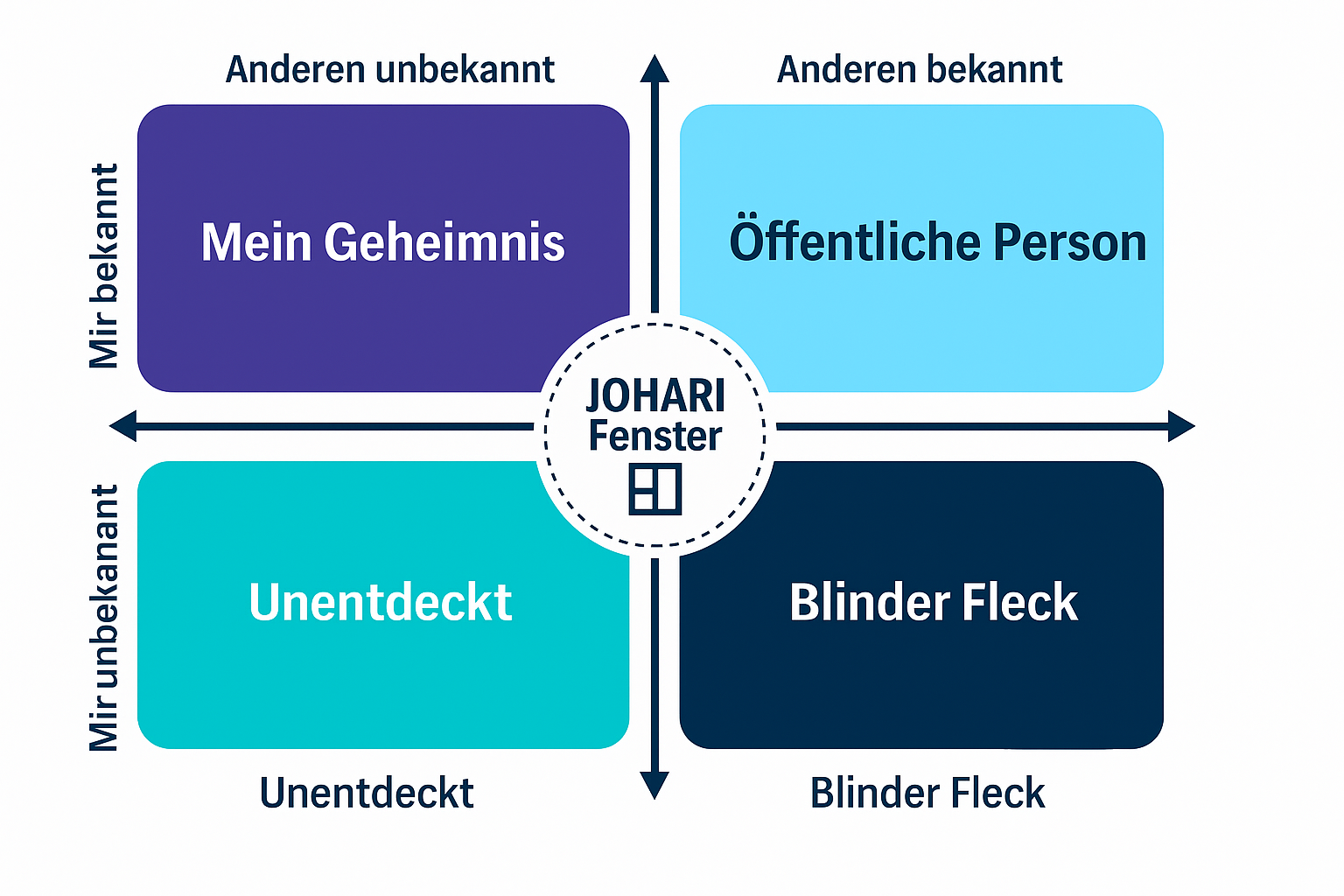
The Johari window is a fundamental model that illustrates the gap between self-perception and external perception (Luft & Ingham, 1955). It divides personality into four quadrants:
- public figure (known to everyone),
- Secret (known only to me),
- Unknown (not known to anyone)
- blind spot (known to others, but unknown to me).
This blind spot contains all our unconscious habits, tics, body language, and behaviors whose effects we ourselves do not perceive.
(Honest, constructive) feedback is the only flashlight that can shine light into this dark corner. Without an outside perspective, we remain blind to crucial aspects of our impact on others.
Overconfidence and self-doubt
Distorted self-perception often manifests itself in two contrasting but equally problematic forms:
- The Dunning-Kruger effect of overconfidence: This phenomenon describes the tendency of incompetent people to massively overestimate their abilities (Dunning & Kruger, 1999).Not only do they lack competence in a particular area, they also lack the metacognitive ability to recognize their own incompetence. They sit on the "peak of stupidity" and are therefore often inaccessible to feedback because they simply do not see the need for it.
- Impostor syndrome (impostor syndrome), or underestimating one's own abilities: On the other side of the spectrum are often highly competent people who suffer from impostor syndrome. Despite objective successes and positive feedback, they harbor self-doubt and feel that they do not deserve their successes and that they will be exposed as frauds at any moment. They attribute their successes to external circumstances ("I was just lucky," "The team did all the work") and find it difficult to accept positive feedback because it contradicts their negative self-image. For them, negative feedback is often a painful confirmation of their deepest fears.
Practical strategies for accepting feedback
Understanding why feedback is so difficult is the first step. The second, crucial step is to put this knowledge into practice. There are a number of techniques aimed at calming the "saber-toothed tiger" and creating a climate of conversation that facilitates learning and development.
The key concept here is psychological safety (Edmondson, A. C. (1999).
Strategies for feedback providers: How to create psychological safety and give feedback that resonates.
- Ask for permission: Don't start the feedback conversation by jumping straight to the point. A simple question such as "Would you be open to hearing a few thoughts I have about the project?" or "Is now a good time for some brief feedback?" signals respect, gives the other person control (autonomy), and prepares the brain for the evaluation that is about to follow. This prevents a surprise attack and an immediate amygdala hijack.
- Be specific and describe behavior: Avoid sweeping judgments about personality ("You are unreliable"). Instead, describe a specific observation and its effect on you. The SBI formula (Situation, Behavior, Impact) is a useful tool here: "In the situation (e.g., in the team meeting this morning), when you (behavior) interrupted the conversation several times, it had the effect on me that I lost my train of thought and was frustrated."
- Focus on the future (feedforward): Instead of just analyzing past mistakes, concentrate on the future and give what is known as "feedforward." Instead of saying, "You did that wrong," ask, "What could we do next time to ensure that everyone has a say?" This approach is solution-oriented, less personally accusatory, and activates creative, problem-solving thinking instead of defensive mode. Read our interview: What makes good leadership and how managers show genuine interest in their employees.
- Assume positive intent: Always assume that the other person has done their best. A phrase such as "I know you were under a lot of pressure, and I want to help you find a solution" can significantly reduce the other person's defensiveness.
Read more here about what psychological safety is and how you can strengthen it in your team.
Strategies for feedback recipients
You can follow these tips to better receive and accept feedback:
- Listen to understand, not to respond: When you receive critical feedback, your first impulse will be to justify yourself. Resist this impulse. Take a deep breath and focus solely on understanding the other person's perspective. Tell yourself: "My job right now is just to listen."
- Ask clarifying questions: Instead of disagreeing, ask questions to better understand the observation. "Can you give me a specific example?" or "What exactly do you mean by 'unstructured'?" This not only shows your interest, but also helps you to actually recognize your blind spot and see if there is any truth to the critical feedback.
- Agree with the key points (if possible): Look for the truth in the feedback. Even if 90% of the feedback seems exaggerated, there may be 10% that is accurate. A response such as "I can understand that my behavior was frustrating for you at that moment" immediately de-escalates the situation and opens the door for constructive discussion.
- Express gratitude and request time to reflect: Providing feedback requires courage. A simple "Thank you for taking the time to share this with me" acknowledges the courage of the person providing feedback. If you are emotionally upset as the recipient of feedback, it is perfectly acceptable to say: "Thank you for your honest feedback. I need to let that sink in first. Can we talk about it again tomorrow?" This gives you time to let the amygdala hijack subside and think rationally about the content of the feedback.
Read more here about strategies for giving and receiving better feedback.

360-degree feedback for leadership development
This is precisely where 360-degree feedback comes in. It is much more than an HR tool; it is a sophisticated psychological tool that can systematically address many of the barriers described above.
- It breaks through defense mechanisms: A single critical voice can easily be dismissed as a subjective opinion. However, when several people from different perspectives (supervisors, colleagues, employees) report a consistent pattern, it becomes much more difficult for the recipient to deny or rationalize reality.
- It highlights the blind spot: it is the most effective method for objectively presenting the discrepancy between self-image and external image and for reflecting a manager's impact on others in a blunt but structured manner.
- It creates psychological security for donors: guaranteed anonymity significantly lowers the inhibition threshold for honest and critical feedback. The fear of direct confrontation or negative consequences is minimized.
Regular, data-driven 360-degree feedback helps managers understand the drivers of employee engagement and tailor their behavior to create a better employee experience and close "experience gaps."
How do you motivate people to participate in 360-degree feedback?
The motivation to participate in 360-degree feedback depends largely on the framing and process design:
- Focus on development, not on evaluation: The most important rule is that 360-degree feedback is a tool for leadership development, not an assessment tool. The results of 360-degree feedback should not influence salary or promotion decisions.
- Absolute confidentiality: The results of the 360-degree feedback belong solely to the recipient and their coach. Not even the HR department or the direct supervisor should see the raw data.
- Professional debriefing and coaching: The report should never just be handed over. A qualified coach must guide the recipient through the results, help them interpret the data, address emotional reactions, and create a concrete, actionable development plan.
- Top management setting an example: The 360-degree feedback process gains enormous credibility when senior management visibly participates and speaks openly about their own learning experiences.
Receiving and giving feedback: Conclusion
The difficulty of accepting and giving feedback is deeply rooted in our human nature. Our brains are programmed to protect our egos and ward off social threats, a legacy of our evolutionary past that is often counterproductive in modern working life.
Psychological defense mechanisms and cognitive biases erect additional walls that keep us trapped in the comfort zone of self-deception. This leads to a culture of silence that particularly hinders the development of leaders and thus jeopardizes the entire success of the company.
The way out of this dilemma is not through mere appeals, but through a conscious understanding of these psychological mechanisms and the design of intelligent, secure processes. The aim is to create an environment in which psychological safety prevails and feedback is no longer seen as an attack on one's own status, but as a valuable resource for growth and learning. Structured instruments such as 360-degree feedback are not a panacea, but they are powerful tools for breaking down psychological barriers and creating a data-driven basis for genuine development.
Ultimately, an organization's ability to establish a mature feedback culture is a measure of its emotional and organizational intelligence. It is a conscious decision to trade the short-term comfort of ego protection for the long-term, infinitely more valuable reward of personal and collective growth. And that is a decision that every manager and every employee must make every day.
References and further reading
- Lieberman, M. D. (2013). Social: Why Our Brains Are Wired to Connect.
- Goleman, D. (1995). Emotional Intelligence: Why It Can Matter More Than IQ
- Wojtowicz, G. (n.d.). Psychological defense mechanisms: 15 protective strategies you should know about. Retrieved from https://www.gregor-wojtowicz.de/blog/psychologische-abwehrmechanismen
- Kruger, J., & Dunning, D. (1999). Unskilled and Unaware of It: How Difficulties in Recognizing One’s Own Incompetence Lead to Inflated Self-Assessments. Journal of Personality and Social Psychology.
- Edmondson, A. C. (1999). Psychological Safety and Learning Behavior in Work Teams. Administrative Science Quarterly.
Post published on December 25, 2025
About Dr. Kathrin Neumüller

Dr. oec. HSG Kathrin Neumüller is Co-Managing Director at ValueQuest and an expert in employee inspiration and empowerment. She also teaches strategic management in the MBA program at the ZHAW. She holds a doctorate from the University of St. Gallen (HSG) and studied at the University of Cambridge. Learn more about Kathrin
Inspired? Then share this post via your favorite platform.
Other articles that might interest you ...

AI in the Swiss Insurance Market: What Insurers Can Learn from the Results
October 1, 2026
Reading time: 4 min
Artificial intelligence is not universally accepted in the Swiss insurance market. As a study by ValueQuest shows, customers’ openness to AI depends heavily on how it is used.

AI in the Swiss Insurance Market: Between Acceptance and Skepticism
September 28, 2026
Reading time: 5 min
For many Swiss people, artificial intelligence has become an integral part of everyday life. However, the situation is different when it comes to insurance companies.

Top Employer: Raiffeisenbank Glarnerland Impresses with Strong Leadership
September 21, 2026
Reading time: 2 min
ValueQuest recently had the honor of presenting the “Excellence@Work Award” to Raiffeisenbank Glarnerland. We extend our heartfelt congratulations.
Top Swiss Employers: GastroSocial
September 9, 2026
Reading time: 3 min
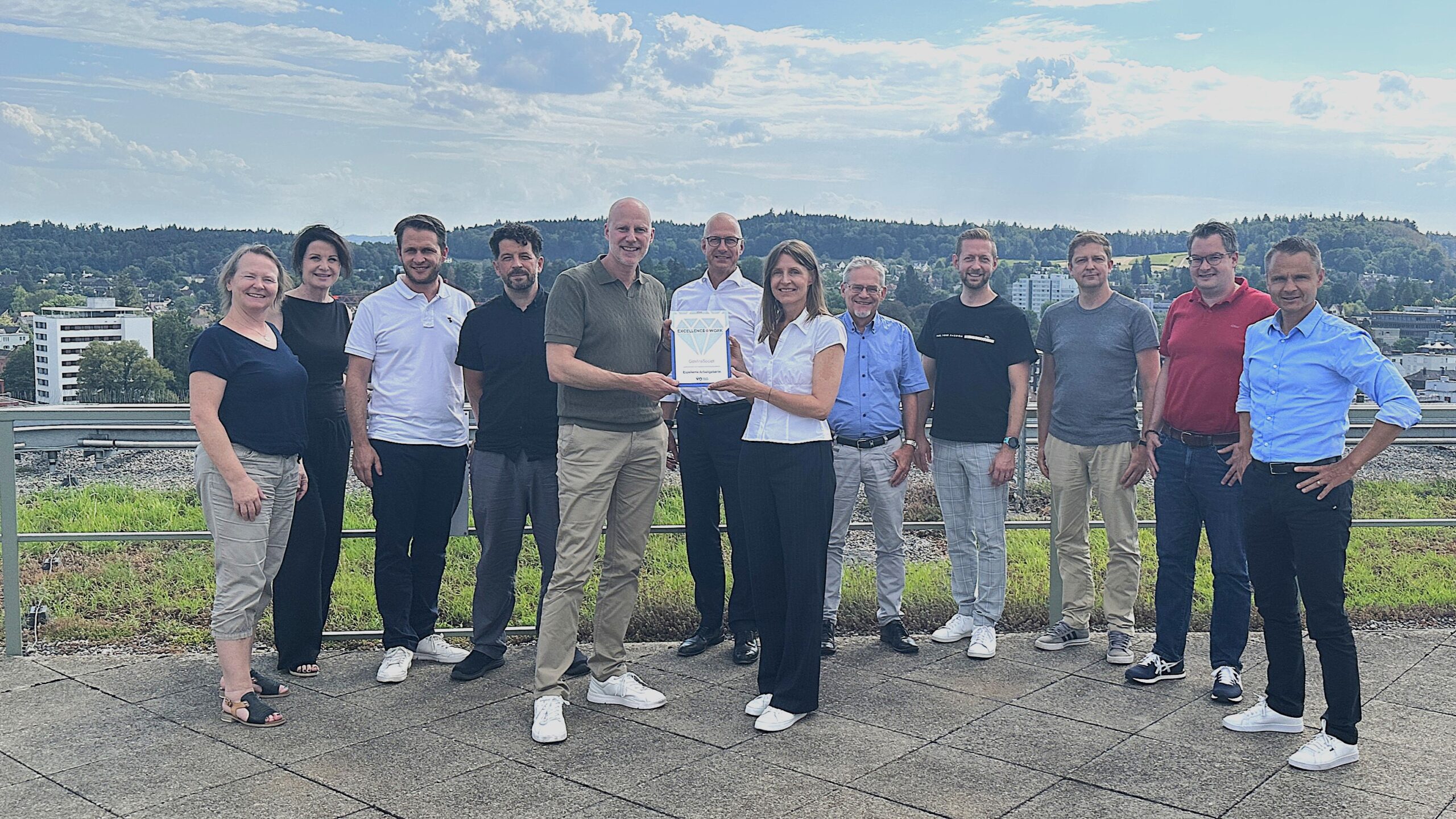
GastroSocial has received the 2026 Excellence@Work Award from ValueQuest. With a response rate of 96 percent, a motivation score of 84, and 87 percent of employees serving as brand ambassadors, the company demonstrates a strong employer culture.

Employee Survey: Raiffeisenbank Möhlin Achieves Excellent Results
August 31, 2026
Reading time: 3 min
Raiffeisenbank Möhlin is one of Switzerland's top employers and is receiving our Excellence@Work Award in recognition of this achievement. Congratulations!

Employee Surveys in Switzerland: Find Providers & Tools
August 30, 2026
Reading time: 6 min
Employee Survey in Switzerland: How Do You Find the Right Employee Survey Provider? What Really Matters When It Comes to Anonymity, Tools, Questionnaires, and Analysis.

360-Degree Feedback Questionnaire: Sample, Template, and Sample Questions
August 21, 2026
Reading time: 7 min
Table of Contents A 360-degree feedback process is only as good as its questionnaire. The questionnaire is at the heart of the entire process. It determines whether...

Employee Survey: The CAMPUS SURSEE Foundation Is Among Switzerland's Best Employers
August 5, 2026
Reading time: 2 min
ValueQuest honors particularly attractive employers in Switzerland with the Excellence@Work Award. We recently had the pleasure of presenting the award to the CAMPUS SURSEE Foundation.
Raiffeisenbank Regio Arbon, a Top Employer: Personal Responsibility as Part of a Strong Corporate Culture
July 7, 2026
Reading time: 2 min
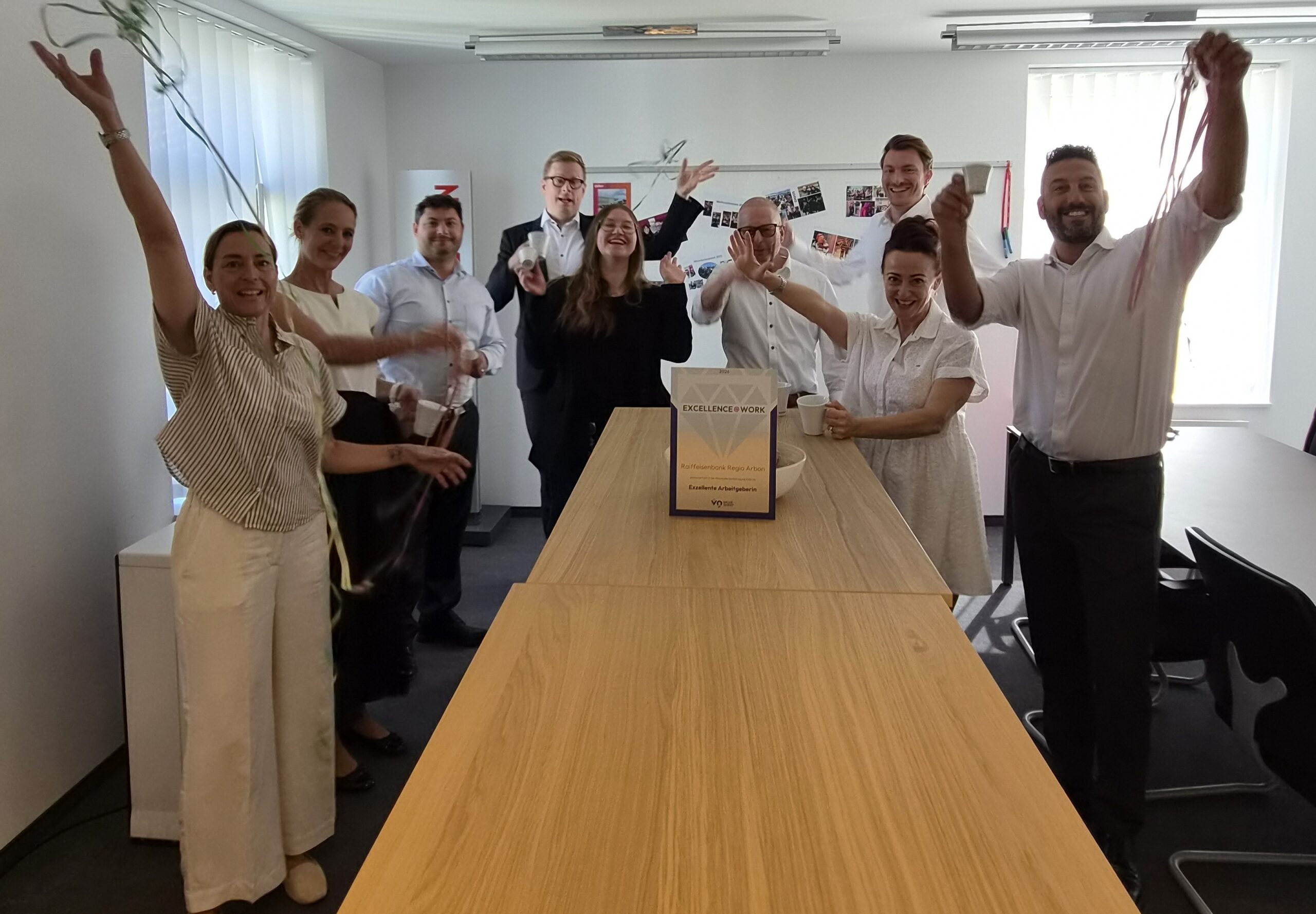
ValueQuest honors particularly attractive employers in Switzerland with the Excellence@Work Award. We recently had the pleasure of presenting the award to Raiffeisenbank Regio Arbon.