Table of contents
Leadership at a crossroads: between pressure to perform and a feel-good culture
The current debate on leadership moves between two seemingly opposing poles. On the one hand, large corporations such as Nestlé and ABB are calling for a return to a pure performance culture. In November 2025, the Handelszeitung ran the provocative headline "Less Woke, More Work", describing Nestlé CEO Philipp Navratil's call for more motivation and a stronger focus on individual performance.

On the other hand, there are the real challenges of the labor market. The latest AXA SME labor market study clearly shows this:
- 46 percent of Swiss SMEs describe the labor shortage as their biggest challenge.
- In competition with the state and large companies, SMEs are coming under increasing pressure to create attractive working conditions - not only functionally, but also culturally.
The often quoted comparison between performance and well-being orientation proves to be outdated on closer inspection.
Requirements such as mental health, a sense of purpose and personal development are not an expression of comfort, but a sign of a more mature working world. Here, performance is not played off against well-being, but understood as its direct result.
The traditional understanding of leadership, which is primarily focused on control and goal achievement, is therefore reaching its limits. Leadership in 2025 requires a rethink: away from increasing performance at all costs and towards creating an environment in which people can and want to reach their full potential.
The formula for top performance: want x can x may
A simple but effective formula helps to understand how performance is really created:
Performance = Want × Can × May
This equation makes it clear that three factors must be inextricably linked:
- WillingnessThe intrinsic motivation and personal drive to fulfill a task.
- AbilityThe skills and abilities required to successfully complete the task.
- MayThe right framework conditions and resources that are available. These include time, psychological security, social support, the right tools and a clearly defined scope of action.
If one of the three factors is zero, the entire result is also zero.
A highly talented and passionate musician will not be able to perform at their best if their instrument is out of tune (lack of "permission"). While many managers focus on the willingness and ability of their employees, it is precisely in the "being allowed" that an often underestimated but decisive lever lies that they can actively shape.
Webinar recording: Enabling top performance
- Will: The intrinsic motivation and personal drive to fulfill a task.
- Ability: The skills and abilities required to successfully complete the task.
- May: The right framework conditions and resources that are available. These include time, psychological security, social support, the right tools and a clearly defined scope of action.
What is peak performance really?
The term "top performer" often evokes associations with superlatives and comparisons. But what really characterizes a top performer? The answer depends heavily on our own values and preferences. It's time to broaden our perspective and rethink performance.
A top performer is not necessarily someone who performs best in direct comparison with others. Rather, it is someone who grows beyond their own limits and realizes their personal potential. Instead of asking: "How good is this person compared to the others?", managers should focus on individual development:
How has this person developed compared to their former self?
This perspective shifts the benchmark from external competition to internal development.
A vivid image for this is that of a racehorseA horse that excels on the racetrack will probably not be able to achieve the same performance in show jumping. This illustrates a crucial point: a top performer can only develop their full potential in the right environment. The "match" between person and task is crucial.
Leadership mistake #1: The Pygmalion effect
An employee's performance does not begin with him or herself, but already in the mind of the manager. This phenomenon is known as the Pygmalion effect a self-fulfilling prophecy. If a manager firmly believes in the talent and development potential of an employee, they will unconsciously treat them differently. They will give them more attention, more challenging tasks and more constructive feedback. As a result, the employee will actually improve. The manager's expectations shape the employee's reality.

Pygmalion was a sculptor in ancient Greece who was disappointed with the women of his time and retreated to his studio. There he created an ivory statue of a perfect woman called Galatea and fell so in love with his own work that he treated her like a real person - he spoke to her, gave her flowers and prayed to the goddess Aphrodite that she would come to life. Aphrodite granted his wish and actually brought the statue to life. The Pygmalion effect describes precisely this principle: if we firmly believe in a person's potential and treat them accordingly, that person will actually improve - our expectation creates the reality.
Leadership mistake #2: Contrast effect
Our perception of performance is not absolute, but relative.
The contrast effect shows this impressively: a good performance is often undervalued in direct comparison with an outstanding performance.
The solution lies in raising awareness among managers:Managers should be aware of this cognitive bias and recognize the individual strengths of each team member.
Like "truffle pigs", they should seek out the hidden talents of their employees and bring them to light, instead of just focusing on weaknesses.
Leadership mistake #3: The wrong image of people
Ultimately, leadership starts with one's own attitude. A manager's image of people has a direct influence on the culture in the team. Theory X and Theory Y by Douglas McGregor illustrates this:
- Theory X: Assumes that people are naturally work-shy and must be forced and controlled to work.
- Theory Y: Represents the image of the committed and naturally motivated person who enjoys work and wants to take on responsibility.
Both images of people tend to be confirmed in reality. A manager who acts according to Theory Y will create freedom and trust, which promotes initiative and motivation. The culture of performance is therefore primarily a question of attitude and begins with a belief in the potential of others.
The toolbox for modern leadership: five levers for top performance
How can managers create an environment that promotes top performance? The real levers are human and cultural. Here are five crucial tools for your day-to-day management.
Lever 1: Show appreciation to employees
As our study with the Gottlieb Duttweiler Institute shows, appreciation is the second most important driver of employee loyalty - far ahead of salary. Nevertheless, almost a third of employees in Switzerland complain that they receive too little of it. A lack of recognition is the second most common reason for resignationafter the direct manager.
But what is effective appreciation and how can it be put into practice?

Appreciation is more than just a hygiene factor. While a fair salary is expected and its absence is demotivating, genuine recognition acts as a strong, long-term motivator. It satisfies the basic human need to be seen and recognized as a valuable part of a whole.
Concrete implementation:
- Distinguish between praise and appreciation: A quick "well done" is praise. It is often hierarchical and judgmental. Genuine appreciation takes place at eye level. It is an expression of genuine interest in the other person, their performance, their commitment and also the path they have taken - not just the result.
- See the whole person: Don't just notice the work performance, but also the person behind it. Show interest in their perspectives and ideas.
- The "appreciation trick" for difficult situations: When you have a conversation with someone who is difficult to work with, take a moment beforehand. Ask yourself: "What three attitudes, skills or actions do I value in this person?" Your counterpart will sense this conscious change in attitude and can break through negative dynamics.
Lever 2: Psychological safety - the foundation for innovation
Do you know this situation? You're sitting in a meeting, have a question but are hesitant to ask it because you don't want to appear ignorant. This everyday phenomenon, which we call "impression management", is a real innovation killer. Every time we fail to ask a question, hold back an idea or conceal a mistake for fear of negative evaluation, the company misses out on a valuable learning opportunity.
Harvard professor Amy Edmondson coined the concept of psychological safety. It describes the shared conviction within a team that it is safe to take interpersonal risks. It is the trust that you will not be punished or exposed if you contribute ideas, questions, concerns or mistakes.
Concrete implementation:
- Design work as a learning process: Make it clear that in a complex world, one person alone cannot have all the answers. Emphasize: "We need all voices and perspectives to be successful."
- Admitting your own fallibility: Stepping forward as a manager and saying: "I might have overlooked something, I need your perspective" is not a sign of weakness, but an invitation to think along with you and a powerful confidence-building measure.
- Model curiosity: Actively ask questions yourself, listen attentively and respond appreciatively to contributions, even if you disagree. This is how you model the behavior you want from your team.
Lever 3: Encourage and challenge - the art of flow states
Sustainable top performance rarely occurs under pressure or in the comfort zone. It is created in the flow - a state of complete concentration and immersion in an activity in which time flies by. In this state, a person's challenges and abilities are in optimal balance.
The flow model of the psychologist Mihaly Csikszentmihalyi describes this optimal performance state. If the challenges are too small for the available skills, boredom arises. If, on the other hand, the challenges are too great, this leads to stress and excessive demands. The task of a manager is to guide their employees into this productive "flow channel" in a targeted manner.

Concrete implementation:
- Challenge: Observe your employees and identify moments when they are in the flow. An employee who blossoms during a customer presentation is an ideal candidate for a bigger challenge. Challenge them by giving them the presentation to the Board of Directors next time. This creates targeted, positive tension.
- Encourage: At the same time, you must offer the necessary support so that the person can grow with this new challenge. Serve as a sparring partner, give feedback and help to build up the necessary skills. Without this support, the pure demand will only lead to paralyzing stress.
Lever 4: Empowerment - more than just freedom
Empowerment is one of the big buzzwords of modern leadership, but is often reduced to the mere granting of autonomy. However, true empowerment is much more than that. It is about not only empowering employees, but also enabling them.
Empowerment describes the concrete, organizational measures that a manager takes. It is the framework that you create. This consists of four pillars:
- Autonomy & freedom: Give your employees the freedom to make their own decisions and complete tasks in their own way.
- Resources: Space alone is useless. Make sure that your team has the necessary time, budget and support (e.g. from sparring partners) to be successful. This also includes explicit permission to make mistakes.
- Information: In order to make good decisions, employees need access to relevant information. This applies not only to corporate goals, but also to key figures that show how their own performance contributes to overall success
- Incentives: These are not just monetary bonuses, the effect of which often fizzles out quickly. Research shows that collective incentives such as a joint team outing are particularly effective, as they strengthen cohesion and the achievement of common goals.
Empowerment is only half the battle. The decisive factor is whether these measures are also received by the employee and are perceived as empowering. The biggest mistake in empowerment is to delegate responsibility without ensuring that the employee perceives it as a positive opportunity and not as an overwhelming burden.
Lever 5: Values - the compass for long-term employee motivation
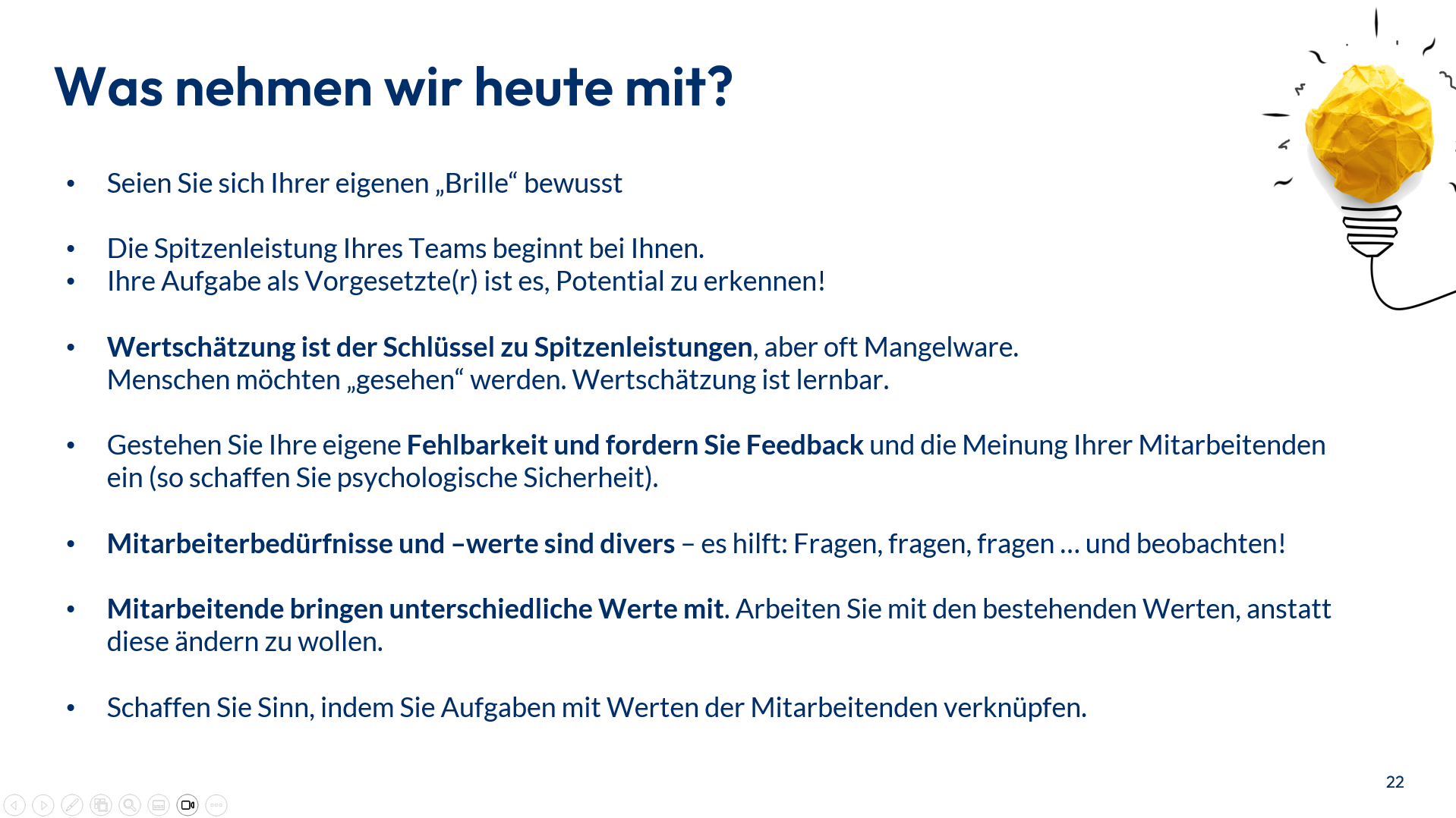
The last and perhaps most sustainable lever is the conscious linking of work tasks with the individual values of employees. While money only creates short-term incentives, values are the invisible guard rails that guide our behavior in the long term.
Our values are deeply rooted principles of success that have proven themselves over the years. They influence how we assess situations and make decisions. The biggest mistake is to assume that everyone shares the same values. As managers, we tend to positively evaluate employees who reflect our own values (e.g. on structure or efficiency). The key is not to want to change the other person's individual values, but to understand them and use them to shape the work.
Concrete implementation:
- Value-oriented listening: The direct question "What values are important to you?" is too much for most people. Instead, pay attention to emotions in everyday life. What does a person talk about with passion? What are they angry about? An employee who talks enthusiastically about process optimization probably values efficiency. A colleague who is upset about non-transparent decisions probably values fairness.
- Reflecting and sharing your own values: Do you know your own values? What guides you? Share this with your team. This creates transparency and understanding for your decisions.
- Consciously frame tasks (framing): The same task can have completely different effects depending on how it is formulated. Processing an insurance claim can be a dry, bureaucratic activity. Or, for a person with a strong social value, it can be framed as the opportunity to "stand by people in their most difficult moments and offer reliable help." This new framework creates a deep, intrinsic motivation that goes far beyond simply completing tasks.
Article published on November 20, 2025
About Dr. Kathrin Neumüller

Dr. oec. HSG Kathrin Neumüller is Co-Managing Director at ValueQuest and an expert in employee inspiration and empowerment. She also teaches strategic management in the MBA program at the ZHAW. She holds a doctorate from the University of St. Gallen (HSG) and studied at the University of Cambridge. Learn more about Kathrin
Inspired? Then share this post via your favorite platform.
Other articles that might interest you ...

AI in the Swiss Insurance Market: What Insurers Can Learn from the Results
October 1, 2026
Reading time: 4 min
Artificial intelligence is not universally accepted in the Swiss insurance market. As a study by ValueQuest shows, customers’ openness to AI depends heavily on how it is used.

AI in the Swiss Insurance Market: Between Acceptance and Skepticism
September 28, 2026
Reading time: 5 min
For many Swiss people, artificial intelligence has become an integral part of everyday life. However, the situation is different when it comes to insurance companies.

Top Employer: Raiffeisenbank Glarnerland Impresses with Strong Leadership
September 21, 2026
Reading time: 2 min
ValueQuest recently had the honor of presenting the “Excellence@Work Award” to Raiffeisenbank Glarnerland. We extend our heartfelt congratulations.
Top Swiss Employers: GastroSocial
September 9, 2026
Reading time: 3 min
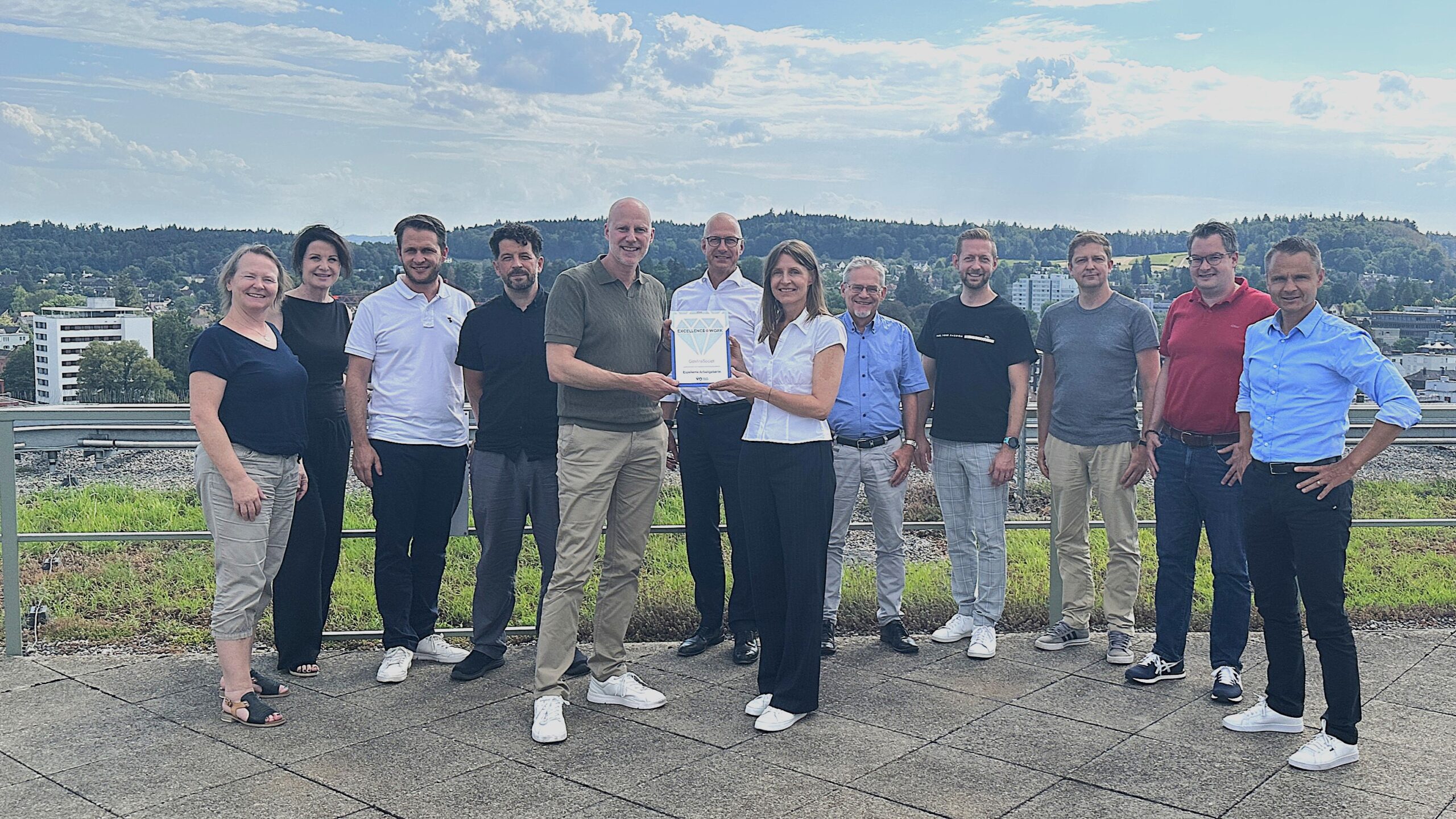
GastroSocial has received the 2026 Excellence@Work Award from ValueQuest. With a response rate of 96 percent, a motivation score of 84, and 87 percent of employees serving as brand ambassadors, the company demonstrates a strong employer culture.

Employee Survey: Raiffeisenbank Möhlin Achieves Excellent Results
August 31, 2026
Reading time: 3 min
Raiffeisenbank Möhlin is one of Switzerland's top employers and is receiving our Excellence@Work Award in recognition of this achievement. Congratulations!

Employee Surveys in Switzerland: Find Providers & Tools
August 30, 2026
Reading time: 6 min
Employee Survey in Switzerland: How Do You Find the Right Employee Survey Provider? What Really Matters When It Comes to Anonymity, Tools, Questionnaires, and Analysis.

360-Degree Feedback Questionnaire: Sample, Template, and Sample Questions
August 21, 2026
Reading time: 7 min
Table of Contents A 360-degree feedback process is only as good as its questionnaire. The questionnaire is at the heart of the entire process. It determines whether...

Employee Survey: The CAMPUS SURSEE Foundation Is Among Switzerland's Best Employers
August 5, 2026
Reading time: 2 min
ValueQuest honors particularly attractive employers in Switzerland with the Excellence@Work Award. We recently had the pleasure of presenting the award to the CAMPUS SURSEE Foundation.
Raiffeisenbank Regio Arbon, a Top Employer: Personal Responsibility as Part of a Strong Corporate Culture
July 7, 2026
Reading time: 2 min
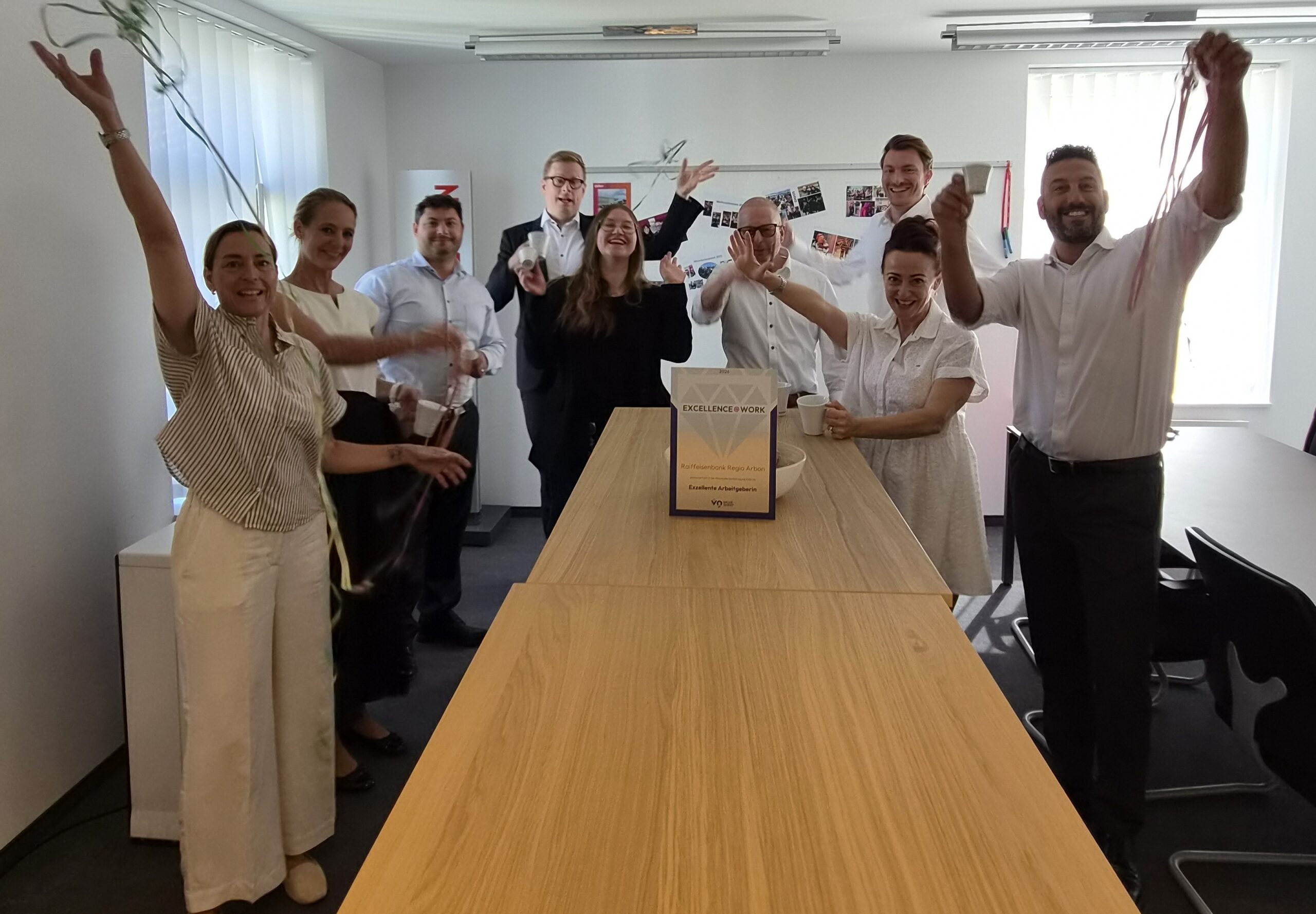
ValueQuest honors particularly attractive employers in Switzerland with the Excellence@Work Award. We recently had the pleasure of presenting the award to Raiffeisenbank Regio Arbon.