Table of contents
As Switzerland's official export promotion agency, Switzerland Global Enterprise (S-GE) faces the ongoing challenge of demonstrating the added value of its services: Do S-GE's consulting and support services lead to increased export competence, overcome trade barriers, or adapt the export strategy of Swiss SMEs that export abroad? To answer this question, S-GE has been conducting systematic impact assessments in collaboration with the market and opinion research institute ValueQuest for over a decade.
We spoke with Alfonso Orlando, one of the driving forces behind this process at S-GE, about how to successfully establish impact measurement as a strategic tool and what surprising insights the surveys provide.
The core task of Switzerland Global Enterprise
Kathrin Neumüller: Mr. Orlando, could you start by explaining the core mission of Switzerland Global Enterprise (S-GE)? What is your core business?
Alfonso Orlando: S-GE is the official Swiss organization for export promotion and location marketing. As a private consulting and platform organization commissioned by the federal government and the cantons, we support our clients in around 130 countries.
Impact measurement as proof of performance for the federal government
Kathrin Neumüller: S-GE has been conducting systematic impact assessments for over ten years. What does this involve and how does it differ from traditional customer satisfaction surveys?
Alfonso Orlando: Measuring impact is a key performance indicator for us. We want to know where and what impact we are having. It is our track record that shows the contribution we make to the Swiss export industry with our services.
Kathrin Neumüller: What was the original trigger for launching this impact measurement over a decade ago and seeking cooperation with an external partner such as ValueQuest?
Alfonso Orlando: From the outset, the starting point was to make the impact of the federal funds used measurable, among other things. Working with an external partner such as ValueQuest was central to this. It is important and sensible that we do not conduct the survey ourselves, but have it conducted for us. This ensures the neutrality of your institute, which is essential for the credibility of the results.
From performance to impact
Measuring impact goes far beyond traditional customer satisfaction surveys and asks one key question:
What effect did our services actually have on the target group?
Impact measurement is based on a clear logic, which is often presented as an impact model or logic model. This model describes the causal chain from the resources used to long-term social change:
| level | Description | Example: Switzerland Global Enterprise (S-GE) |
| inputs | The resources invested in a program or service. | Staff, budget, consultants' expertise, infrastructure. |
| activities | The specific measures and activities carried out with the inputs. | Conducting consultations, organizing workshops, preparing market analyses. |
| Outputs | The direct, measurable results of the activities. | Number of consultations conducted, number of participants in a webinar, number of export guidelines created. |
| Outcomes | The changes in knowledge, behavior, or skills that occur in the target group as a result of the outputs. | An SME is familiar with the export regulations for a new target market, can develop a market entry strategy, and decides to expand. |
| impact | The long-term, overarching changes at the level of the target group or society that can be attributed to the outcomes. | The SME increases its turnover through successful exports, creates new jobs, and contributes to strengthening Switzerland as a business location. |
A pure satisfaction survey often focuses on activities and outputs (How satisfied were you with the consulting services?). Impact measurement, on the other hand, focuses specifically on outcomes and impact. It aims to determine whether the consulting services helped the company to develop new expertise (outcome) and thereby increase its sales (impact).
How impact is lived out in everyday business life
Kathrin Neumüller: What does the term "impact measurement" mean in concrete terms in your everyday business? Is it limited to the quarterly collection of a key figure, or is it reflected beyond that?
Alfonso Orlando: Impact measurement is something that everyone in our company is familiar with. It is an important metric, and everyone knows what we need to do to achieve an impact. We analyze and discuss the results, which we receive four times a year, in great detail. We look at where we are having an impact and where we are not, and try to derive measures from this. The topic is discussed right up to top management level, and we are all very aware of it.
Kathrin Neumüller: And how exactly do you measure this effect?
Alfonso Orlando: We measure both retrospective and prospective impact. We ask customers: "Did you benefit?" For us, an impact is achieved when it is not only retrospective but also expected in the future—for example, in the next six months. Then we go into detail: Did you increase your export expertise? Did you generate more sales? At this level of detail, we can analyze exactly which consulting service has achieved which impact. A market assessment or the search for a distribution partner naturally has different sales expectations than participation in an event. This differentiation is crucial for classifying the results.
Kathrin Neumüller: Have these findings already led to strategic adjustments in your services?
Alfonso Orlando: Yes, it's an ongoing process. The quarterly in-depth data collection and analysis always triggers measures on our part. We try to make good things even better or close any gaps that have been identified. So these are continuous, strategic adjustments.
Response rates for customer surveys
Kathrin Neumüller: You conduct the survey very frequently. Maintaining a consistently high response rate over such a long period of more than ten years is undoubtedly a major challenge. How has willingness to participate developed?
Alfonso Orlando: Like many others, we strive to achieve a representative response rate. At the beginning, we had excellent participation rates of between 25 and 30 percent, which is very high for a survey conducted by an external partner three to six months after the service was provided. Unfortunately, the trend is downward. Today, we are seeing a response rate of around 15 percent. This is a development that concerns us, because representativeness is crucial.
Kathrin Neumüller: What measures have proven particularly effective in the past in maintaining or increasing participation rates?
Alfonso Orlando: We have already tried a lot of things. The impact survey has been constantly adapted, the questions shortened, and the cover letter optimized in three languages. We make sure not to send invitations before long weekends and have also conducted A/B tests with different wording in the invitation text to see what works best. It's a continuous learning process, but the general trend of declining response rates is an industry-wide challenge.
Impact measurement is something that everyone in our organization is familiar with. It is an important metric, and everyone knows what we need to do to achieve an impact.
– Alfonso Orlando
External market research institute for customer surveys
Kathrin Neumüller: You have been working with ValueQuest for over a decade now. What specific added value do you see in this long-term partnership with an independent institute?
Alfonso Orlando: This collaboration is extremely valuable to us. ValueQuest's external perspective helps us avoid operational blindness. An independent institute contributes benchmarks and experience from other projects and industries, which are very valuable to us. These external inputs are crucial for continuously developing impact measurement and testing new ideas.
The professional execution and high data quality also give us the assurance that we can rely on the results. This long-standing, trusting partnership is an important success factor for our impact measurement.
Why is impact measurement crucial for organizations such as S-GE?
Systematic recording of the impact offers four key advantages:
- Learning and steering: By understanding which measures achieve which effects, organizations can improve their offerings in a targeted manner. If, for example, it turns out that a particular consulting service has little effect on customer behavior, it can be adapted or redesigned. Impact measurement provides the data-based foundation for strategic decisions.
- Accountability (legitimacy): Organizations that receive public funds or fulfill a social mandate—such as S-GE in the context of export promotion—must demonstrate that they are using their resources effectively. Impact measurement provides evidence that the taxpayer money invested has a concrete, positive effect on the economy.
- Communicate and persuade: Positive results are a powerful argument in communication. They enable an organization to convincingly demonstrate the added value it creates to potential customers, partners, and the public. Instead of simply saying, "We have provided 500 consultations" (output), you can communicate: "Thanks to our consulting services, 50 companies were able to expand into new markets and increase their sales by an average of 15%" (impact).
- Motivate and create meaning: It is hugely motivating for employees to see that their daily work has a tangible, positive impact. Knowing that they are not just carrying out activities, but making a real difference, strengthens their identification with the company and promotes commitment.
Post published on February 20, 2026
About Dr. Kathrin Neumüller

Dr. oec. HSG Kathrin Neumüller is Co-Managing Director at ValueQuest and an expert in employee inspiration and empowerment. She also teaches strategic management in the MBA program at the ZHAW. She holds a doctorate from the University of St. Gallen (HSG) and studied at the University of Cambridge. Learn more about Kathrin
Inspired? Then share this post via your favorite platform.
Other articles that might interest you ...

AI in the Swiss Insurance Market: What Insurers Can Learn from the Results
October 1, 2026
Reading time: 4 min
Artificial intelligence is not universally accepted in the Swiss insurance market. As a study by ValueQuest shows, customers’ openness to AI depends heavily on how it is used.

AI in the Swiss Insurance Market: Between Acceptance and Skepticism
September 28, 2026
Reading time: 5 min
For many Swiss people, artificial intelligence has become an integral part of everyday life. However, the situation is different when it comes to insurance companies.

Top Employer: Raiffeisenbank Glarnerland Impresses with Strong Leadership
September 21, 2026
Reading time: 2 min
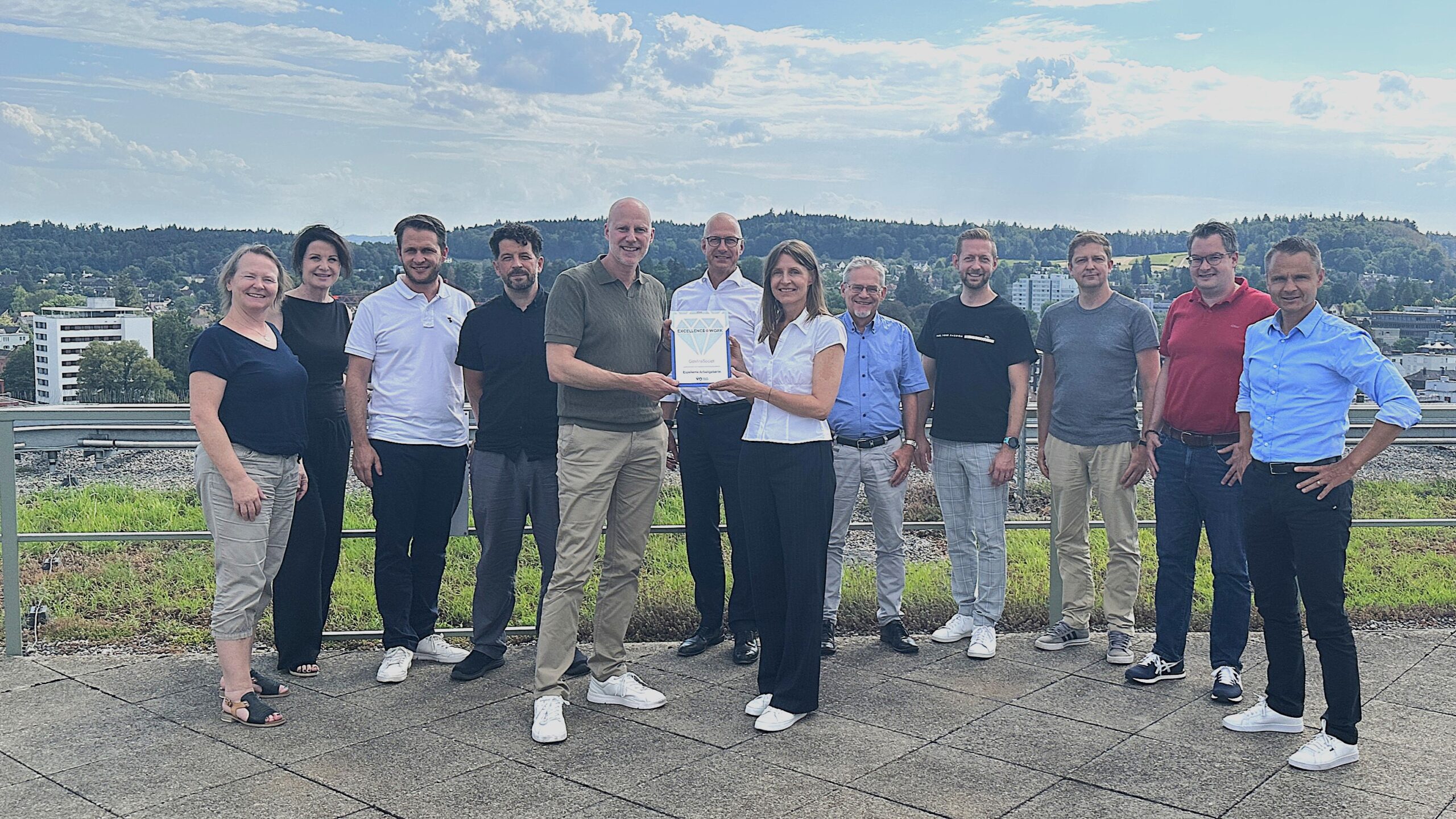
ValueQuest recently had the honor of presenting the “Excellence@Work Award” to Raiffeisenbank Glarnerland. We extend our heartfelt congratulations.
Top Swiss Employers: GastroSocial
September 9, 2026
Reading time: 3 min
GastroSocial has received the 2026 Excellence@Work Award from ValueQuest. With a response rate of 96 percent, a motivation score of 84, and 87 percent of employees serving as brand ambassadors, the company demonstrates a strong employer culture.

Employee Survey: Raiffeisenbank Möhlin Achieves Excellent Results
August 31, 2026
Reading time: 3 min
Raiffeisenbank Möhlin is one of Switzerland's top employers and is receiving our Excellence@Work Award in recognition of this achievement. Congratulations!

Employee Surveys in Switzerland: Find Providers & Tools
August 30, 2026
Reading time: 6 min
Employee Survey in Switzerland: How Do You Find the Right Employee Survey Provider? What Really Matters When It Comes to Anonymity, Tools, Questionnaires, and Analysis.

360-Degree Feedback Questionnaire: Sample, Template, and Sample Questions
August 21, 2026
Reading time: 7 min
Table of Contents A 360-degree feedback process is only as good as its questionnaire. The questionnaire is at the heart of the entire process. It determines whether...

Employee Survey: The CAMPUS SURSEE Foundation Is Among Switzerland's Best Employers
August 5, 2026
Reading time: 2 min
ValueQuest honors particularly attractive employers in Switzerland with the Excellence@Work Award. We recently had the pleasure of presenting the award to the CAMPUS SURSEE Foundation.
Raiffeisenbank Regio Arbon, a Top Employer: Personal Responsibility as Part of a Strong Corporate Culture
July 7, 2026
Reading time: 2 min
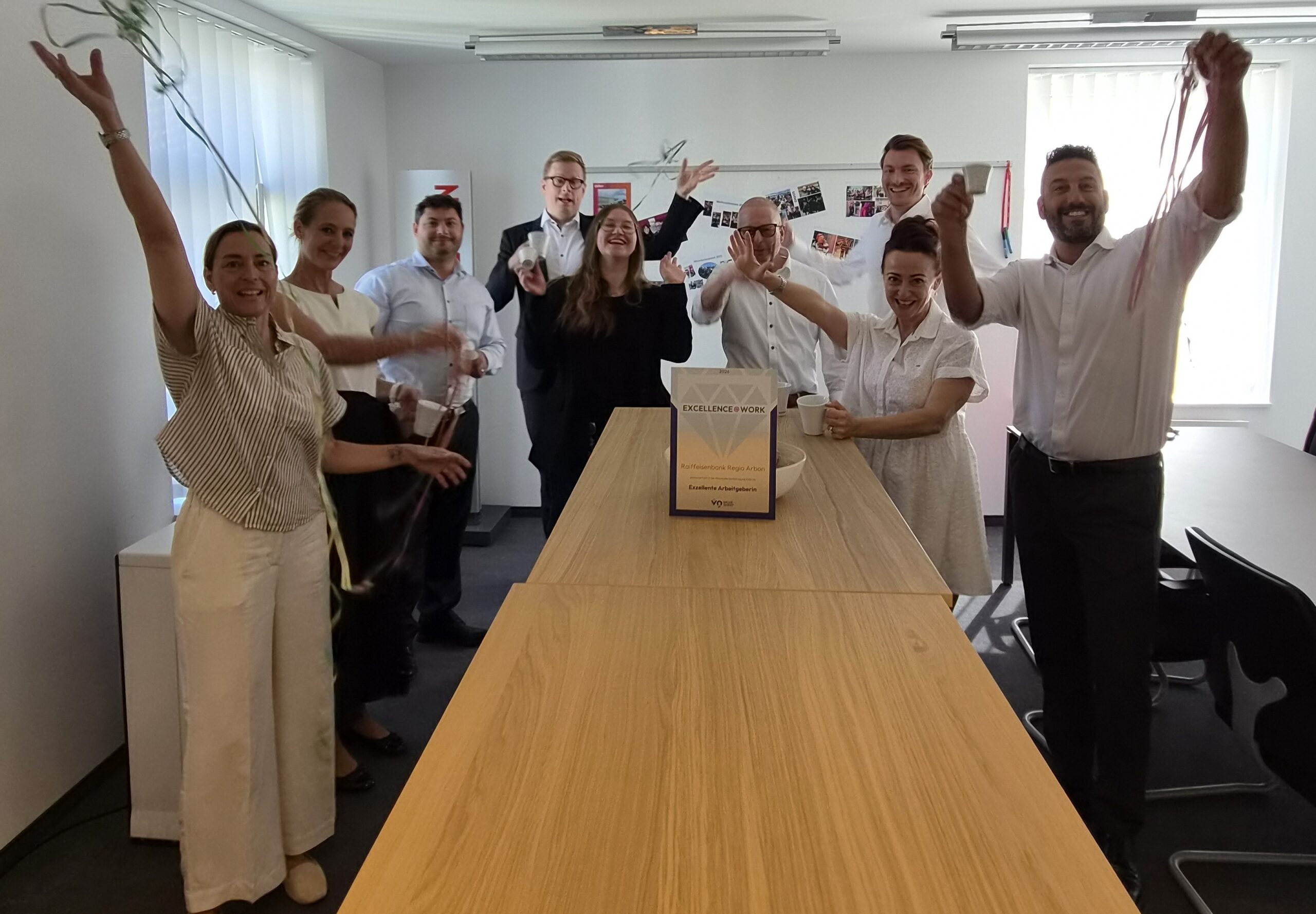
ValueQuest honors particularly attractive employers in Switzerland with the Excellence@Work Award. We recently had the pleasure of presenting the award to Raiffeisenbank Regio Arbon.