In an increasingly complex and fast-paced working world, it is essential for companies to have a clear value orientation.
The so-called corporate purpose - the core, which goes beyond profit and represents the deeper "why" behind the company's actions - plays a central role (Gartenberg & Serafeim, 2019). It not only provides a strategic basis for decisions, but also creates an emotional connection to employees and customers (Hsu, 2017; Welch 2011). For small and medium-sized enterprises (SMEs) in particular, an authentically lived purpose can be a decisive competitive advantagethat attracts talent, strengthens employee loyalty and promotes customer loyalty (see Špoljarić & Tkalac Verčič, 2022).
SMEs often face the challenge of living out and communicating their purpose in a way that motivates and inspires their employees.
Why is purpose important for employee motivation?
Regardless of age, gender or origin, employees strive to find meaning and significance in their work. It's not just about completing tasks, but about being able to place their own role in a larger, meaningful narrative within the organization. A clearly defined purpose fulfills this need by conveying a "why" behind the daily work. This connection to an overarching goal not only increases employee commitment and satisfaction, but also strengthens the emotional bond with the company. Purpose is therefore important for giving employees a sense of purpose.
In practice, it is clear that many companies deliberately use their purpose as a driver of employee motivation. When it is regularly highlighted in internal communication channels—such as the intranet, emails, team meetings, or onboarding programs—it can serve as a guide and foster greater employee commitment.
This effect is particularly visible in the NGO sector: employees at organizations such as OceanCare are often intrinsically motivated because they identify strongly with the mission and values. The purpose of this NGO - the protection of the oceans - acts as a primary source of inspiration. The daily work is then experienced as meaningful, which leads to a high level of identification and emotional loyalty among employees.
For the principle to be effective outside the NGO context, it is particularly important how credibly and clearly the purpose is anchored in the company. The decisive factor here is the alignment between the employees' personal values and the company's basic attitudes (Rey & Bastons, 2019). This alignment of values strengthens employees' sense of purpose, belonging and loyalty - three key factors for sustainable employee motivation that go beyond traditional incentive systems. When employees experience that their own beliefs are aligned with the goals and purpose of the company, they not only perceive their work as relevant, but also as authentic and fulfilling.
What your company can do to strengthen its purpose
-
Communicate purpose specifically as a "why"
Employees seek meaning in their work. Companies should therefore actively demonstrate how each role contributes to the bigger picture.
For example, consciously explain in team meetings: "This task contributes to our goal/purpose because..." -
Integrate purpose into internal communication instead of treating it separately
Instead of a one-off mention, purpose belongs in existing formats: Onboarding, feedback meetings, newsletters, project kick-offs.
Rule: "No meeting without a purpose reference " - even subtly will do. -
Use real examples instead of general phrases
OceanCare shows how intrinsic employee motivation is created by living purpose. Companies should showcase their own specific cases in which employees visibly experience meaning.
e.g. "Case of the week": a success story that shows that our work has an impact. -
Actively assess and foster alignment with values
A company’s purpose is effective only if it aligns with employees’ personal beliefs.
Conduct internal surveys or dialogue sessions: “What do you personally stand for—and where do you see the connection to our company’s purpose?” -
Understand purpose as a retention tool, not a branding tool
Employees are more interested in a sense of purpose than in bonuses. Making purpose credible strengthens motivation and loyalty in the long term.
Managers should communicate concretely: "We are choosing this because it fits our purpose " - not just because it makes economic sense.
Errors in the implementation of the company purpose
Mistake #1: Generic purpose and interchangeable marketing phrases
A common obstacle is that the purpose is formulated too generally or vaguely - especially if it was developed by external agencies that have only limited knowledge of the corporate culture and working reality. The result is often a purpose that seems interchangeable and generates little resonance among employees.
In such cases, the impression of pure marketing rhetoric is quickly created: a good-sounding sentence that has no connection to the company's own work. The result is a drop in credibility - especially if the purpose is not backed up by concrete behavior and comprehensible decisions. Some employees perceive such messages as arbitrary and compare them with previous employers, where similar phrases circulated without anything having changed in everyday life.
NGOs such as OceanCare are a good example of how purpose can act as an intrinsic drive: The organization has stood for the protection of the marine world for over 30 years - and consistently lives this mission both internally and externally. The leitmotif "Living Oceans" permeates all areas of activity, from political work and scientific research to education and awareness-raising work. It is already made clear during the application process that a strong personal identification with this purpose is a prerequisite for working at OceanCare.
In addition to information material, new employees also receive an introduction to values - the purpose is not only communicated, but also experienced together. Visible elements such as flags and posters, as well as campaigns such as clean-up days or participation in the Zurich lake crossing, make the brand purpose physically tangible. Employees know what they are committed to - and experience every day that their work contributes directly to the achievement of a larger goal. This close connection between individual motivation and organizational purpose leads to a remarkably high level of identification - and often makes traditional incentive systems superfluous. OceanCare is an example of how effective a clearly formulated and practiced purpose can be - especially when it is deeply rooted in everyday life and supported by a strong community of values.
Organizations that want to achieve this impact should ensure that their purpose is specific, actionable and closely linked to the individual context and real work processes. Involving a diverse group of employees in its development helps to align it with the actual values and goals of the organization. Regular communication, concrete rituals and decisions from everyday life as well as interactive formats such as workshops help to make the purpose tangible for everyone. A "bottom-up" approach, in which employees are actively involved in the design, not only increases acceptance, but also makes the purpose tangible - as part of the lived culture rather than a purely formal statement.
Impulses for action for companies: Increasing meaningfulness through purpose
-
Formulate purpose concretely instead of interchangeably
Always link statements to real achievements or impact.
Test question: "Can any company make the same claim?" - If yes, sharpen. -
Translate purpose into real work
Employees should clearly see how their work contributes to the achievement of objectives.
Tip: In project meetings, say specifically: "With this step we are achieving..." -
Consciously involve employees in the formulation
Bottom-up workshops instead of agency text - close to real culture.
"What drives you here? What do we really stand for?" -
Create an experience instead of a message
Make purpose visible through physical and social elements (e.g. Clean-Up-Day, meeting rooms, campaigns).
What is our "Clean-Up-Day" moment? -
Make purpose tangible as early as the recruiting and onboarding stages
Early reference to impact leads to greater identification.
Integrate purpose introduction firmly into onboarding.
Mistake #2: Disregarding geographical and cultural differences
Purpose can only be effective if it is understood, felt and supported by all employees - across all locations. In reality, however, employees often experience the purpose to varying degrees, depending on their geographical location, cultural context or proximity to headquarters. This poses a particular challenge in Switzerland: Not only the multilingual structure, but also regional cultural differences require sensitive, differentiated internal communication. What works well in Zurich may not have the same effect in French-speaking Switzerland or Ticino - simply because language, tonality and communication habits vary.
An authentically formulated and credibly lived purpose is far more than just a marketing tool - it is a strategic lever for employee motivation, identification and cultural transformation.
- Sarah Schlegel, Purpose expert
Schweizerische Bundesbahnen AG (SBB) is a good example of how companies with a decentralized structure can meet this challenge. The company deliberately relies on a variety of low-threshold, locally adapted measures: Information screens in break rooms, visible on-site management and regional contact persons - so-called brand ambassadors - ensure that the purpose can also be felt beyond the company headquarters. It is not about one big measure, but about the interplay of many small, continuous steps. As the company emphasizes: "Especially in such a large company, many things are going on at the same time. It is often impossible to say exactly which measure has achieved how much - but it is precisely these continuous, locally anchored actions that carry the whole thing forward.
Regular visits from managers, location-specific workshops and targeted communication formats also help to convey a consistent message - and make the purpose tangible in everyday life. This practice shows how effective a personal presence, simple communication channels and local contact persons can be - regardless of whether it is a large company or a small SME. Impact is created where communication is consistent, close to the people and continuously practiced. A one-off initiative is rarely enough - it is the day-to-day anchoring that makes the decisive difference.
How to design your purpose optimally
-
Adapt purpose linguistically and culturally
Impact is created where people feel addressed.
Tip: Ask yourself: "Does this sentence also appeal to colleagues in French-speaking Switzerland or Ticino?" -
Appoint local purpose ambassadors
Proximity creates trust and facilitates translation into everyday life.
Tip: Appoint employees as contact persons for local anchoring. -
Many small measures instead of one big campaign
Consistency beats a one-off campaign.
Tip: Start three simple initiatives that can be implemented tomorrow. -
Regular on-site management - physical or digital
Presence makes purpose credible.
Tip: Schedule regular visits or digital town halls per location. -
Interactive rather than one-way communication
Dialogue strengthens identification.
Tip: Use workshops or Q&A formats: "What does our purpose mean for our location?"
Mistake #3: No time, no money, no resources
While large companies often have resources for comprehensive purpose and cultural programs, SMEs are confronted with tighter budgets and less specialized communications departments.
Many SMEs would like to anchor their corporate purpose more clearly, but lack the time, money and structures for systematic programs. At the same time, SMEs can play to their strengths in personal exchange, flat hierarchies and short decision-making paths.
Purpose is not implemented in long change projects, but through direct discussions between management and employees, spontaneous feedback rounds or joint action in everyday life.
This means that purpose can often have a faster and more immediate effect in SMEs - provided that the management visibly exemplifies it and makes it tangible in daily interaction.
How to design your purpose optimally
-
Purpose impact doesn't start with the budget, but with awareness
attitude beats campaign.
Tip: Ask yourself: "What can we do immediately - without an additional budget?" -
Actively use flat hierarchies
Direct exchange accelerates cultural anchoring.
Tip: Regularly anchor purpose as a fixed point in team discussions. -
Using everyday life as the most important stage for purpose
Impact is created in the small decisions.
Tip: When making decisions, ask: "How does this contribute to our purpose?" -
Leadership as a credible role model
Particularly crucial in SMEs.
Tip: Mention purpose explicitly in decisions, not just in presentations. -
Spontaneous actions instead of complex programs
Genuine behaviour has a stronger impact than strategic concepts.
Tip: Share an authentic purpose story in the next team meeting.
Implementation: Communicating purpose effectively to employees
Measure #1: Continuity instead of one-off action
At the same time, it is clear that it is not enough to communicate the purpose once - it must be repeated and reinforced continuously. It can only be anchored in the long term and internalized by employees through a constant presence in a wide variety of formats and channels. This requires a diverse communication landscape that includes both digital and physical channels.
Platforms such as the intranet, Microsoft Teams, email, newsletters, Confluence pages or screens in break rooms are actively used to share content relating to the purpose. Formats such as town hall meetings, CEO livestreams, webinars or face-to-face meetings offer opportunities for dialog and direct contact.
Digital channels such as play a key role in integrating employees who work in a hybrid environment. This makes it possible to participate in interactive communication formats regardless of where you work - and ensures that the purpose reaches everyone and remains alive.
Measure #2: Integrate purpose into everyday life
Another key point is the integration of purpose into everyday working life. When values and visions are not only "communicated", but become visible in daily activities - for example in the way meetings are conducted, how recognition is distributed or how decisions are made - then purpose becomes a living reality. Despite increasing digitalization, face-to-face meetings, spontaneous conversations and team events remain crucial for cohesion and the emotional connection to the organization.
Physically tangible elements such as posters, printed materials or specifically named meeting rooms also contribute to the visibility of the purpose - for example at BMW (Schweiz) AG. The meeting rooms there are deliberately named after international BMW plants - such as Steyr, Munich or Chennai.
This not only creates a link to the global brand world, but also establishes a direct connection between your own place of work and the production sites of the vehicles.
This reference is continued in the foyer: Selected vehicle models are displayed there, which employees encounter as the finished product of their joint work. In this way, the purpose - "the joy of driving" - is not only communicated, but also physically experienced and emotionally anchored.

Measure #3: Dialogue instead of monologue
It is particularly important that communication is not one-sided.
A successful approach to brand purpose relies on two-way communication that enables dialog instead of monologue. Employees should not only listen, but also be able to ask questions, give feedback and contribute their own topics - whether in meetings, via digital tools or in direct exchanges with managers.
This openness not only strengthens trust, but also promotes active engagement with the purpose.
Swiss Radio and Television (SRF) is an example of this. There, great importance is attached to ensuring that employees - including those working from home - not only have the opportunity to ask questions, but are expressly encouraged to address all questions openly, including critical ones. This attitude creates genuine dialog and ensures that internal communication is more than just passing on information - it is a lively, two-way exchange.
Measure #4: Leadership as a role model
In the discussion about corporate culture, people often talk about communication - but credible leadership does not start with what is said, but with how it is practiced. Managers in particular have a key responsibility here. From the CEO to the team leader, they are expected not only to represent the purpose, vision and values of the organization, but also to authentically exemplify them.
This example is reflected in daily decisions, the setting of priorities and in dealings with employees and partners. Only when managers consistently anchor these principles in their actions will the corporate culture become credible and sustainable. Otherwise, there is a risk of demotivation, loss of trust and a noticeable gap between formulated aspirations and lived reality.
Another decisive factor is the accessibility of the management level. Visibility alone is not enough - approachability and a willingness to engage in dialog are required. Formats such as livestreams, Q&A sessions or informal employee events create opportunities for exchange and participation. This creates a culture in which employees feel heard and can play an active role in shaping the company.
This is why managers in middle management and project management are not only communicators, but also translators of purpose. They make it tangible, understandable and applicable to their teams in their day-to-day work. This requires not only a sense of responsibility, but also the ability to translate abstract visions into concrete impulses for action: What does purpose mean in sales? In customer service? In the home office? Only when employees clearly recognize this connection can a sense of purpose be lived effectively and sustainably.
The decisive factor here is not only what is communicated, but howclose to the people, close to everyday life and dialog-oriented. When employees not only know the purpose, but also feel it and can help shape it, a living corporate culture is created that inspires - and is sustainable in the long term.
- Dr. oec. HSG Albena Björck, Purpose Expert ZHAW
Your corporate purpose is the strategic lever for employee motivation
An authentically formulated and credibly lived purpose is far more than just a marketing tool - it is a strategic lever for employee motivation, identification and cultural transformation. Especially for SMEs that want to assert themselves in the competition for talent and customers, it is worth investing in credible, continuous purpose communication.
But: The "what" and "how" counts.
The decisive factor is not only what is communicated, but how: close to the people, close to everyday life and dialog-oriented. When employees not only know the purpose, but also feel it and can help shape it, a living corporate culture is created that inspires - and is sustainable in the long term.
This is why managers in middle management and project management are not only communicators, but also translators of purpose. They make it tangible, understandable and applicable to their teams in their day-to-day work. This requires not only a sense of responsibility, but also the ability to translate abstract visions into concrete impulses for action: What does purpose mean in sales? In customer service? In the home office? Only when employees clearly recognize this connection can a sense of purpose be lived effectively and sustainably.
Dr. Albena Björck
Head Global Business Lab, ZHAW School of Management and Law and Chair of the Strategic Management Division, European Academy of Management.
Dr. oec. HSG Albena Björck is Chair of the Strategic Management Division of the European Academy of Management and heads the topic area "Purpose-oriented strategies". Björck has co-founded international research networks on purpose and chief purpose officers. She also lectures and researches at the ZHAW School of Management and Law and is an expert at Innosuisse. Björck has more than 25 years of practical experience in strategic corporate development and communication.
Sarah Schlegel
Sarah Schlegel holds a Bachelor's degree in Business Communication (B.Sc.) from the Zurich School of Business (2023) and a Master's degree in International Business (M.Sc.) from the ZHAW School of Management and Law. Her qualitative Master's thesis entitled "Internal Brand Purpose Communication: Fostering Employee Motivation & Inspiration Through Brand Purpose" is based on interviews with experts from various industries and types of companies - from Swiss SMEs to public service organizations and international corporations.
Sources
Gartenberg, C. & Serafeim, G. (2019). 181 top CEOs have realized companies need a purpose beyond profit. Harvard Business Review. https://hbr.org/2019/08/181-top-ceos- have-realized-companies-need-a-purpose-beyond-profit.
Hsu, C. K. J. (2017). Selling products by selling brand purpose. Journal of Brand Strategy, 5(4), 373-394.
Paefgen-Lass, M. (2021). Purpose as the heartbeat of companies. https://www.springerprofessional.de/mitarbeitermotivation/unternehmensstrategie/der-purpose-als-herzschlag-von-unternehmen/19671894#:~:text=Mitarbeiter%2C%20die%20den%20Purpose%20verinnerlicht,Unternehmen%20spüren%20und%20erleben%20können.
Rey, C., & Bastons, M. (2019). Three dimensions of purpose: Knowledge, motivation, and action. Purpose-driven organizations: management ideas for a better world, 29-41.
Špoljarić, A., & Tkalac Verčič, A. (2022). Internal communication satisfaction and employee engagement as determinants of the employer brand. Journal of Communication Management, 26(1), 130-148.
Welch, M. (2011). The evolution of the employee engagement concept: communication implications. Corporate Communications: An International Journal, 16(4), 328-346.
Article published on November 18, 2025
About Dr. Kathrin Neumüller

Dr. oec. HSG Kathrin Neumüller is Co-Managing Director at ValueQuest and an expert in employee inspiration and empowerment. She also teaches strategic management in the MBA program at the ZHAW. She holds a doctorate from the University of St. Gallen (HSG) and studied at the University of Cambridge. Learn more about Kathrin
Inspired? Then share this post via your favorite platform.
Other articles that might interest you ...

AI in the Swiss Insurance Market: What Insurers Can Learn from the Results
October 1, 2026
Reading time: 4 min
Artificial intelligence is not universally accepted in the Swiss insurance market. As a study by ValueQuest shows, customers’ openness to AI depends heavily on how it is used.

AI in the Swiss Insurance Market: Between Acceptance and Skepticism
September 28, 2026
Reading time: 5 min
For many Swiss people, artificial intelligence has become an integral part of everyday life. However, the situation is different when it comes to insurance companies.
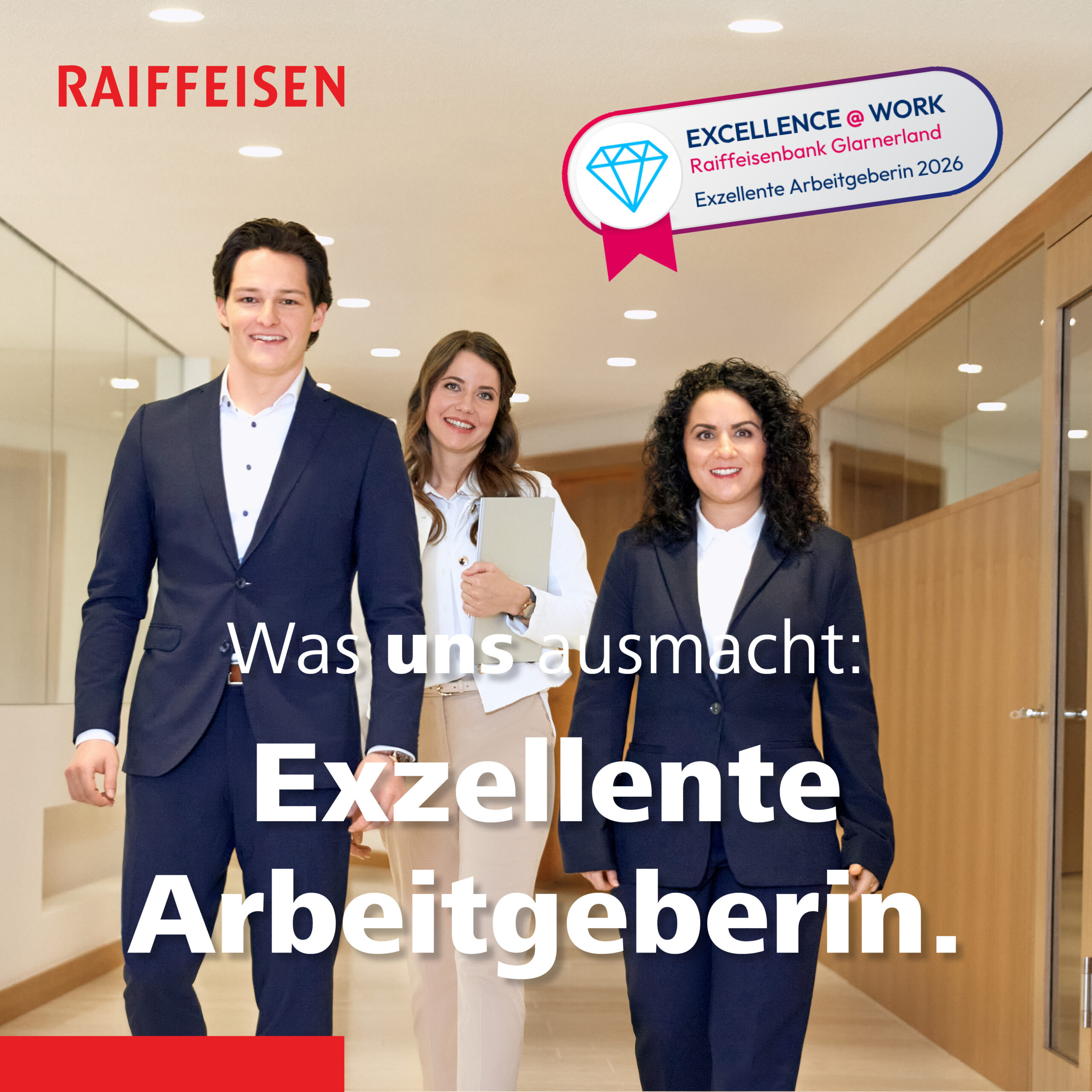
Top Employer: Raiffeisenbank Glarnerland Impresses with Strong Leadership
September 21, 2026
Reading time: 2 min
ValueQuest recently had the honor of presenting the “Excellence@Work Award” to Raiffeisenbank Glarnerland. We extend our heartfelt congratulations.
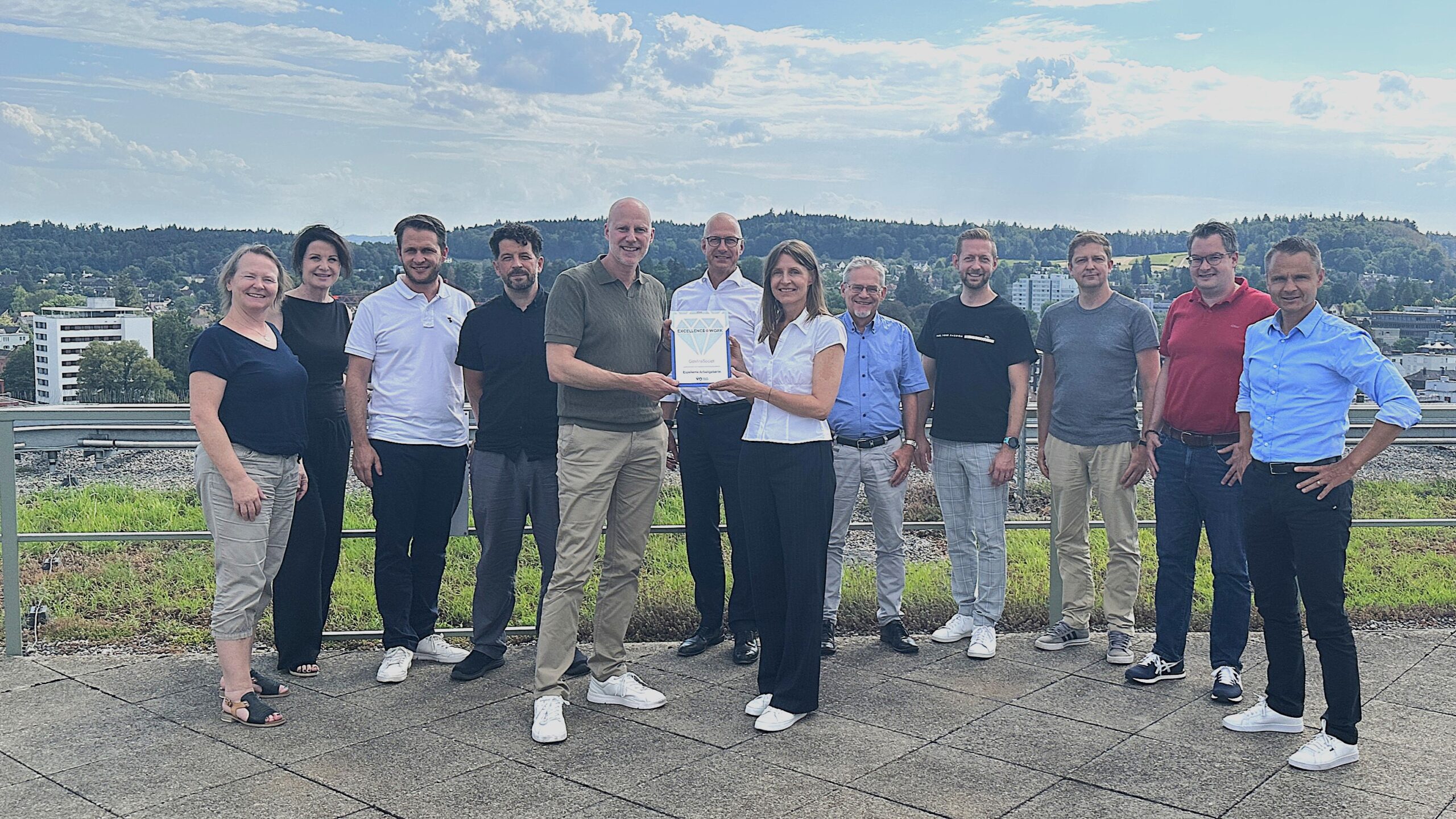
Top Swiss Employers: GastroSocial
September 9, 2026
Reading time: 3 min
GastroSocial has received the 2026 Excellence@Work Award from ValueQuest. With a response rate of 96 percent, a motivation score of 84, and 87 percent of employees serving as brand ambassadors, the company demonstrates a strong employer culture.

Employee Survey: Raiffeisenbank Möhlin Achieves Excellent Results
August 31, 2026
Reading time: 3 min
Raiffeisenbank Möhlin is one of Switzerland's top employers and is receiving our Excellence@Work Award in recognition of this achievement. Congratulations!

Employee Surveys in Switzerland: Find Providers & Tools
August 30, 2026
Reading time: 6 min
Employee Survey in Switzerland: How Do You Find the Right Employee Survey Provider? What Really Matters When It Comes to Anonymity, Tools, Questionnaires, and Analysis.

360-Degree Feedback Questionnaire: Sample, Template, and Sample Questions
August 21, 2026
Reading time: 7 min
Table of Contents A 360-degree feedback process is only as good as its questionnaire. The questionnaire is at the heart of the entire process. It determines whether...

Employee Survey: The CAMPUS SURSEE Foundation Is Among Switzerland's Best Employers
August 5, 2026
Reading time: 2 min
ValueQuest honors particularly attractive employers in Switzerland with the Excellence@Work Award. We recently had the pleasure of presenting the award to the CAMPUS SURSEE Foundation.
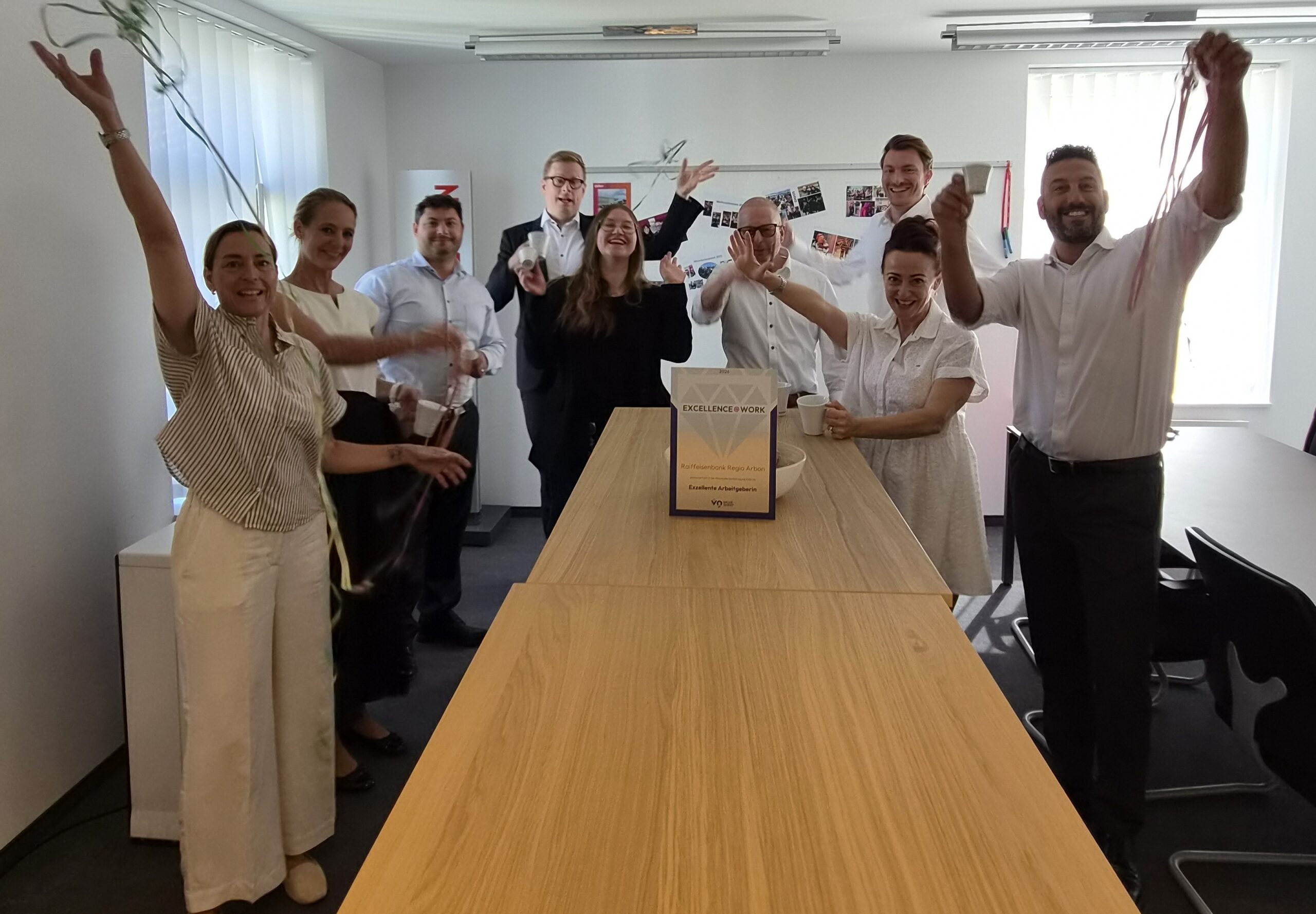
Raiffeisenbank Regio Arbon, a Top Employer: Personal Responsibility as Part of a Strong Corporate Culture
July 7, 2026
Reading time: 2 min
ValueQuest honors particularly attractive employers in Switzerland with the Excellence@Work Award. We recently had the pleasure of presenting the award to Raiffeisenbank Regio Arbon.