Employee surveys are more than just "taking the temperature". They should be seen as a strategic tool that contributes to the future viability of companies. But for this to succeed, a rethink is needed. In our dynamic market environment, satisfied or committed employees are no longer a guarantee of success. Instead, inspired employees are coming to the fore - they think and act entrepreneurially and are the drivers of sustainable success. Modern employee surveys should take this paradigm shift into account.
Key Take-Aways:
- Satisfied employees often only react to current conditions and not proactively. Satisfaction does not necessarily mean that your employees will contribute new ideas or think and act entrepreneurially. Satisfaction can even lead to a comfort zone in which employees do not feel motivated to think outside the box or develop innovative solutions.
- Committed employees often focus on existing tasks without developing strategic initiatives. Commitment alone is not enough to ensure long-term success. Committed employees can work efficiently and with motivation, but often lack an eye for strategic change and long-term innovation.
- Develop questions that measure your employees' willingness to innovate, their inspirational power and their entrepreneurial thinking and actions. Use these questions to measure the willingness to change and the ability to develop new ideas. The focus should be on how employees can contribute to the continuous improvement and strategic direction of the company.
- Examples of questions:
- "How often do you feel inspired to develop new ideas or solutions to existing problems?"
- "To what extent do you feel encouraged to think and act entrepreneurially?"
Exploiting the full potential of employee surveys
Around 6 out of 10 companies in Germany regularly conduct employee surveys - and for good reason. After all, employee surveys are regarded as an indispensable instrument of modern corporate management. Employee surveys make it possible to capture an objective picture of the mood of the entire workforce and to obtain meaningful and differentiated feedback from employees. This paves the way for targeted measures to improve working conditions and management culture.
However, to see employee surveys as a purely HR tool is to misjudge their potential: they are far more than just a snapshot of employee sentiment. Employee surveys only create real added value if they are also used as a strategic tool. At a strategic level, they allow new trends to be identified at an early stage and future-oriented change initiatives to be launched. Employee surveys are not only about generating past-related findings - feedback - but also about deriving future-oriented options for action - feedforward. The focus of contemporary employee surveys should therefore be on the future-oriented skills of employees. But do existing employees have the right skills and competencies that the company needs to survive in the market in the future? If not, how can companies promote these skills?
Selection of key figures
Despite the widespread use of employee surveys, many companies still do not know how they can actually use employee surveys as a strategic tool. The first step is to select target-compliant key figures. These key figures (and the resulting questions) should be directly related to the positioning and performance of the company, contribute to the corporate goals and reflect the corporate values. Questions such as "Would you be happy to take your partner to the employee event?" are not clearly related to the employees' work performance and the associated company success.
The latest technological developments in the field of artificial intelligence only help to a limited extent when selecting the relevant questions and key figures for an employee survey: AI-supported survey tools such as Survey Crafter, SurveyDone or SurveyBuilder offer drafts for possible employee surveys at the touch of a button, but caution is advised here. Not every AI-generated question gets to the heart of the company's vision and overarching goals. Careful and critical selection by humans remains essential. Even in the age of generative AI, companies must critically examine whether individual questions and key figures really contribute to the company's values and goals. The result of employee surveys should not be to generate data cemeteries - regardless of whether the questions are developed by humans or artificial intelligence.
The limits of traditional key figures
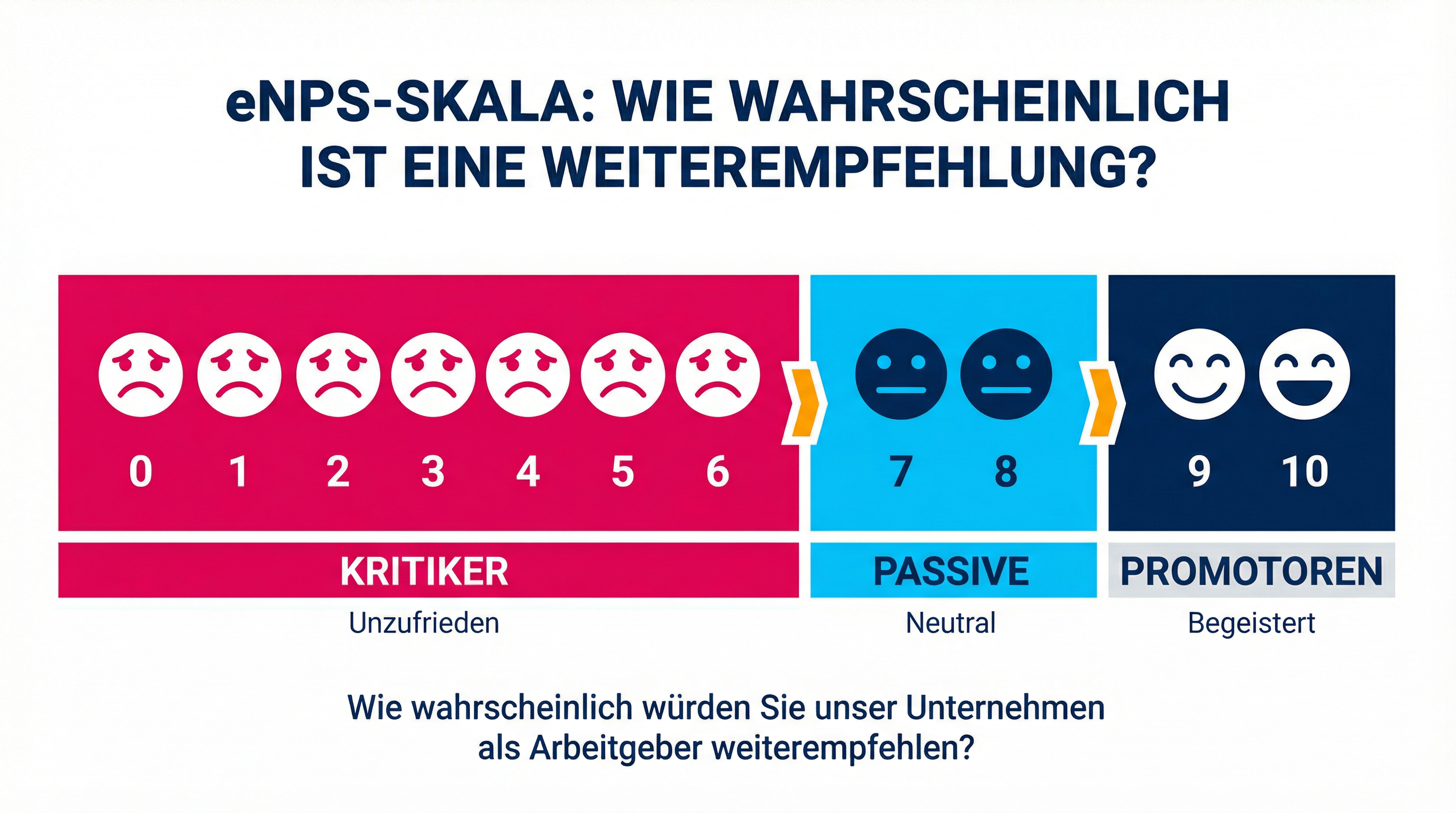
Employee satisfaction and engagement are particularly widespread metrics in employee leadership and HR management. Many HR managers would agree with the statement that a high level of employee satisfaction and engagement is indicative of an intact and productive working environment. True to the motto: "Happy employees drive success". However, the equation is not that simple. Let's look at employee satisfaction, for example. This is often determined by asking questions such as: "On a scale of 1 (very dissatisfied) to 5 (very satisfied), how satisfied are you currently in your company?" But how meaningful is the answer to this question really? Employee satisfaction as an overarching performance indicator can be misleading. For example, an employee could be very dissatisfied with their salary, but be very satisfied with the way they work in a team. A differentiated picture of employee satisfaction requires a comprehensive survey that measures satisfaction along various aspects of work. Only in this way can assessments of various aspects of work be adequately recorded.
However, distortions can also occur when individual aspects of work are surveyed in detail. Take, for example, an employee who is dissatisfied with her salary. At the same time, however, her salary is not particularly important to her. In this case, a pay rise will not necessarily lead to an increase in performance. In order to avoid such distortions, the subjective importance of individual aspects should also be surveyed. This is the only way for companies to identify the most important levers for increasing employee satisfaction. However, measuring satisfaction says little about how employees deal with customers or whether they are willing to undergo further training, acquire new skills and advance the company. An employee who only does "work to rule" can also be satisfied. However, it is highly questionable whether they will help the company to transform in disruptive times.
Thinking beyond productivity and efficiency
The situation is similar with employee engagement as a key performance indicator. A high level of employee engagement is also not very meaningful. High engagement indicates that employees are energized, fully committed to their tasks and enthusiastic about their work. In short, engaged employees bring efficiency gains for companies because they complete their tasks faster, more efficiently and with greater concentration.
However, digital change and technological progress are increasingly changing the demands placed on companies and their employees. The focus is shifting from purely increasing efficiency to greater effectiveness. Continuing with proven practices - more of the same - is no longer enough to be successful on the market in the long term. Accordingly, it is no longer enough to complete existing tasks faster or more efficiently. Instead, it is important to question which strategically relevant tasks should be tackled - in other words, to evaluate the effectiveness of the tasks and decide which tasks would be better performed by people and which by machines. Effectiveness - i.e. the completion of strategically relevant tasks - is hardly measured by employee engagement. Dedicated employees are generally not enough to meet the challenges of a dynamic market environment.
This becomes particularly clear when we take a look at the latest technological changes in the field of generative artificial intelligence. What good is it if an employee is committed but invests their skills and potential in tasks that will either soon be automated or do not create the greatest possible value for the company or society? How does a committed employee manage to generate something new if she is stuck in rigid structures and has hardly any freedom to finalize her ideas? Do companies really need committed employees who work more productively and efficiently?
In a world where artificial intelligence and automation are taking over more and more tasks once performed by humans, the focus of human labor is shifting. Instead of competing with machines in terms of speed, it is important to foster the uniquely human - creativity, emotional intelligence and the ability to solve complex problems in new and innovative ways. Companies should encourage employees to question existing tasks, processes and working methods with regard to the company's goals and develop new ideas based on this. Ideally, all employees, regardless of their role in the company, should contribute to the company's ability to adapt and change. It is therefore crucial that companies not only measure and encourage engagement in employee surveys, but also ensure that this engagement is directed in the right direction.
Employee inspiration as a key performance indicator
In times of profound change in companies, the entrepreneurial thinking and actions of employees play a decisive role. It is important that employee surveys not only measure efficiency and productivity, but also the willingness and ability of the workforce to help shape change. "Employee inspiration" sets itself apart from traditional metrics such as satisfaction and engagement by focusing on employees' openness to change, entrepreneurial thinking and willingness to develop innovative ideas. Inspiration puts new things at the center of our attention, opens up innovative and better ways of solving problems and encourages us to think outside the box.
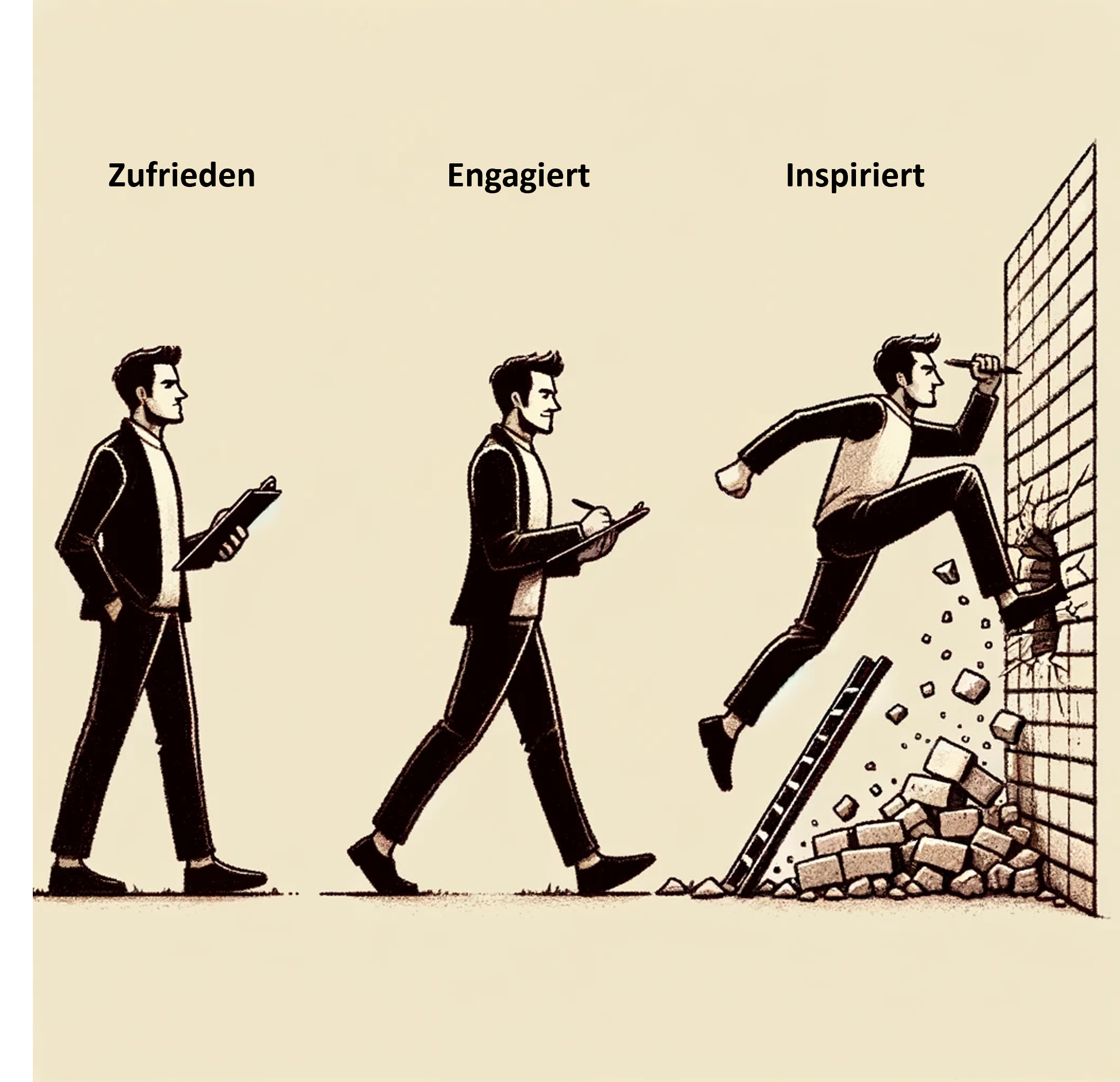
"Satisfied employees hold a meeting to discuss what can be done about walls. Committed employees start looking for ladders to overcome the wall. Inspired employees manage to break right through them." (Harvard Business Review, 2015)
Inspiration is more than a management tool
If inspired employees are seen as a catalyst for digital transformation, how do companies manage to inspire their employees? It is often managers who are supposed to inspire their employees to perform better through charisma and a gripping vision. But this way of thinking reduces inspiration to a leadership style. Inspiration is much more than that. When we think about inspiration, we should always consider two perspectives - the perspective of the manager who wants to inspire their employees and the perspective of the employees who decide how (inspirational) measures affect them.
Inspiration is the personal experience of inspiring moments. Our approach to inspiration focuses on people, i.e. employees and their individual perception - because inspiration can come from many sources. Managers are just one of many sources of inspiration (Neumüller 2022). For example, the products or services offered by the company can also have an inspiring effect on employees due to their quality or value proposition. Similarly, certain corporate values - such as sustainability or customer focus - can have an inspiring effect on employees. In order to successfully meet the challenges of the market, companies should record the individual level of inspiration of each employee as well as a broad spectrum of possible sources of inspiration in their employee surveys. Such an approach makes it possible to identify specific starting points in employee surveys for increasing the willingness to change and the innovative capacity of the workforce.
Summary
The use of employee surveys as a strategic tool requires a comprehensive perspective that goes beyond the mere measurement of satisfaction and commitment. Taking inspiration into account as a central element can help companies set the course for successful change. The challenge is to realize the full potential of employee surveys by capturing both the status quo and asking forward-looking questions aimed at fostering a willingness to change and a spirit of innovation.
ValueQuest is happy to support you in developing a future-oriented questionnaire! Let's shape the future of the working world together! Get a non-binding consultation for an employee survey!
This article by the authors Kathrin Neumüller and Kristina Kleinlercher was published on May 28, 2024 in HR-Performance:
Dr. oec. HSG Kathrin Neumüller is an expert in the field of employee empowerment and employee inspiration and project manager at the Swiss market research institute ValueQuest. She lectures in the Executive Master's program at the Zurich University of Applied Sciences (ZHAW). She is also a keynote speaker and author of specialist books on the topics of leadership, employee empowerment and employee inspiration. Her latest book "Inspiring Employees" was published in February 2024.
Prof. (FH) Dr. oec. HSG Kristina Kleinlercher is Professor of Omnichannel Marketing & Sales at MCI International University of Applied Sciences. She previously worked as a project manager and head of the Omnichannel & Customer Experience Management Competence Center at the Research Center for Retail Management at the University of St.Gallen. Her areas of expertise are consumer behavior along the customer journey, social media marketing and service management with a special focus on employee inspiration.
Bibliography:
Neumüller, K. (2022). Frontline Employee Inspiration in Retailing - Conceptualization, Scale Development, Sources, and Customer Outcomes (Doctoral dissertation, University of St. Gallen).
Garton, Eric, and Michael C. Mankins. "Engaging your employees is good, but don't stop there." Harvard Business Review 93 (2015): 12.
Article published on September 12, 2024
About Dr. Kathrin Neumüller

Dr. oec. HSG Kathrin Neumüller is Co-Managing Director at ValueQuest and an expert in employee inspiration and empowerment. She also teaches strategic management in the MBA program at the ZHAW. She holds a doctorate from the University of St. Gallen (HSG) and studied at the University of Cambridge. Learn more about Kathrin
Inspired? Then share this post via your favorite platform.
Other articles that might interest you ...

AI in the Swiss Insurance Market: What Insurers Can Learn from the Results
October 1, 2026
Reading time: 4 min
Artificial intelligence is not universally accepted in the Swiss insurance market. As a study by ValueQuest shows, customers’ openness to AI depends heavily on how it is used.

AI in the Swiss Insurance Market: Between Acceptance and Skepticism
September 28, 2026
Reading time: 5 min
For many Swiss people, artificial intelligence has become an integral part of everyday life. However, the situation is different when it comes to insurance companies.
Top Employer: Raiffeisenbank Glarnerland Impresses with Strong Leadership
September 21, 2026
Reading time: 2 min
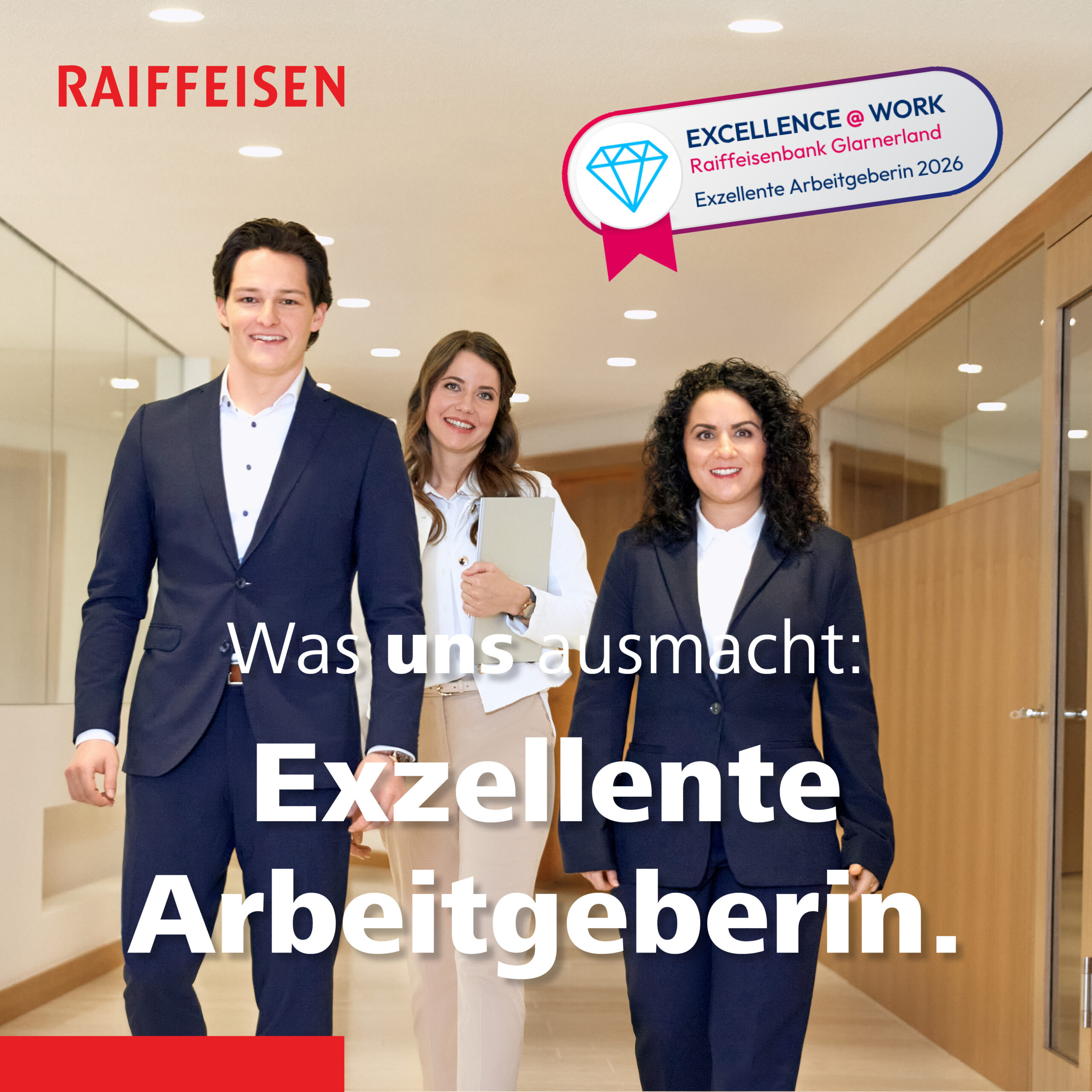
ValueQuest recently had the honor of presenting the “Excellence@Work Award” to Raiffeisenbank Glarnerland. We extend our heartfelt congratulations.
Top Swiss Employers: GastroSocial
September 9, 2026
Reading time: 3 min
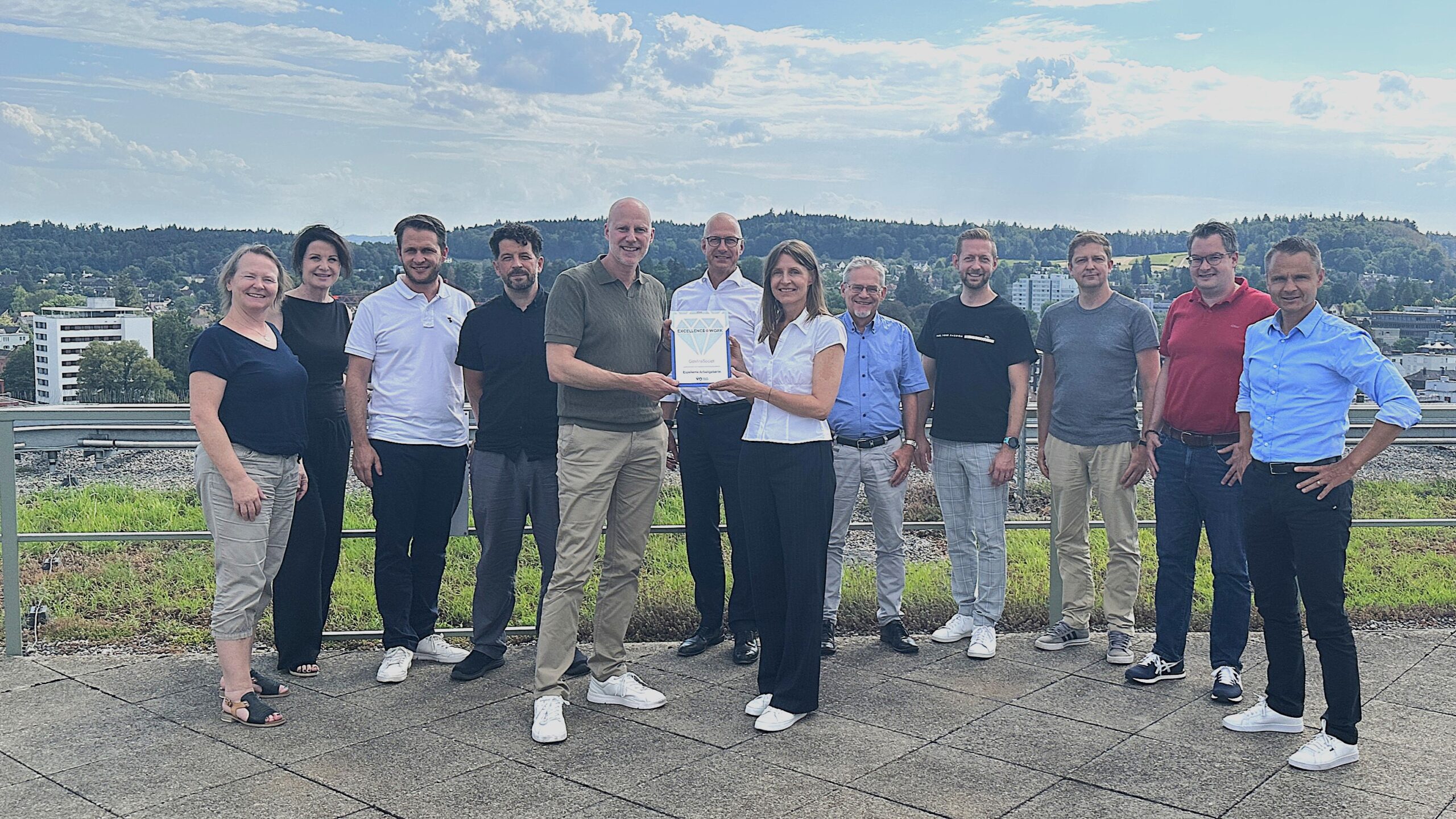
GastroSocial has received the 2026 Excellence@Work Award from ValueQuest. With a response rate of 96 percent, a motivation score of 84, and 87 percent of employees serving as brand ambassadors, the company demonstrates a strong employer culture.

Employee Survey: Raiffeisenbank Möhlin Achieves Excellent Results
August 31, 2026
Reading time: 3 min
Raiffeisenbank Möhlin is one of Switzerland's top employers and is receiving our Excellence@Work Award in recognition of this achievement. Congratulations!

Employee Surveys in Switzerland: Find Providers & Tools
August 30, 2026
Reading time: 6 min
Employee Survey in Switzerland: How Do You Find the Right Employee Survey Provider? What Really Matters When It Comes to Anonymity, Tools, Questionnaires, and Analysis.

360-Degree Feedback Questionnaire: Sample, Template, and Sample Questions
August 21, 2026
Reading time: 7 min
Table of Contents A 360-degree feedback process is only as good as its questionnaire. The questionnaire is at the heart of the entire process. It determines whether...

Employee Survey: The CAMPUS SURSEE Foundation Is Among Switzerland's Best Employers
August 5, 2026
Reading time: 2 min
ValueQuest honors particularly attractive employers in Switzerland with the Excellence@Work Award. We recently had the pleasure of presenting the award to the CAMPUS SURSEE Foundation.
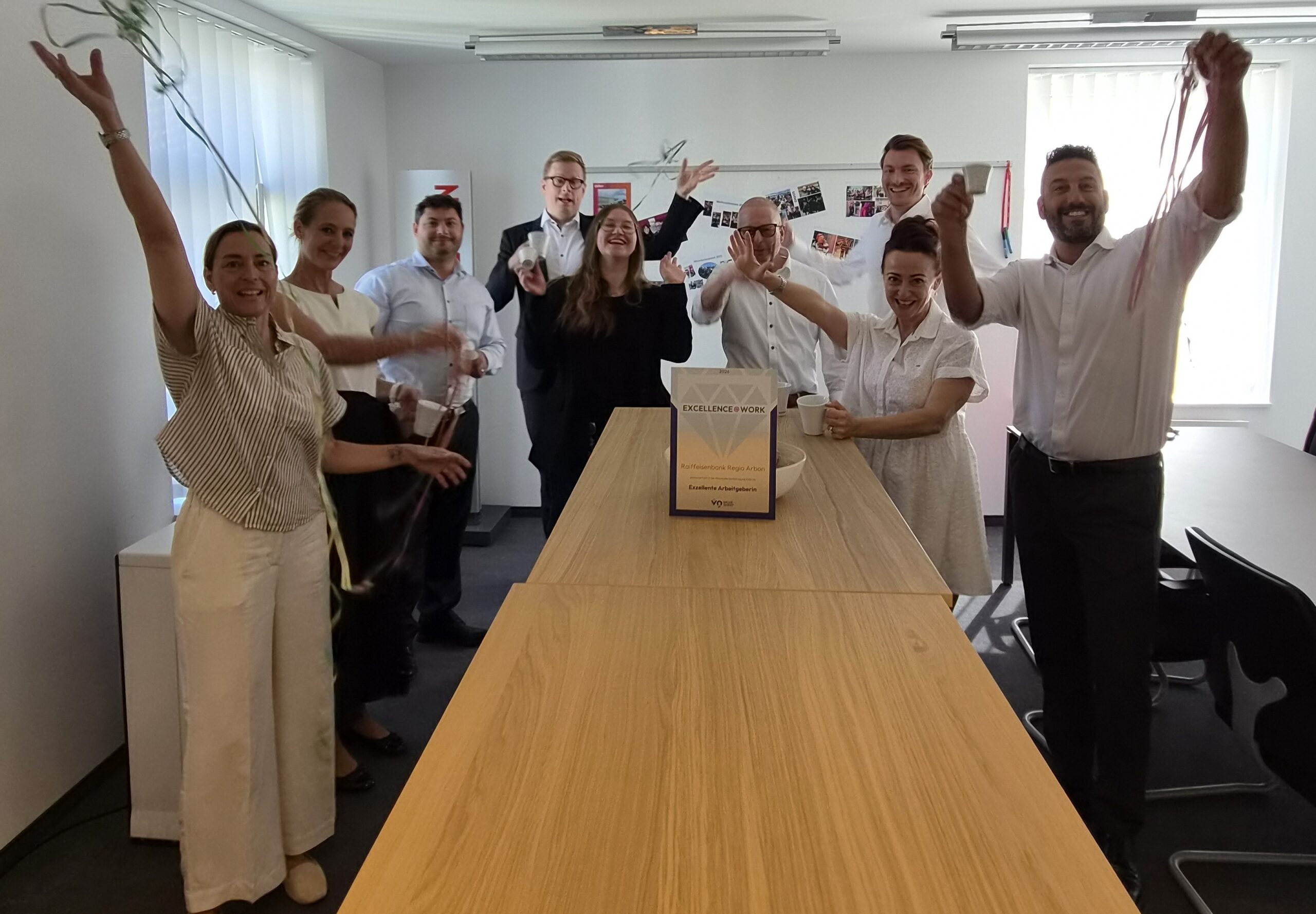
Raiffeisenbank Regio Arbon, a Top Employer: Personal Responsibility as Part of a Strong Corporate Culture
July 7, 2026
Reading time: 2 min
ValueQuest honors particularly attractive employers in Switzerland with the Excellence@Work Award. We recently had the pleasure of presenting the award to Raiffeisenbank Regio Arbon.