Empowerment is the responsibility of both employers and employees. One side of the coin is that employers must be willing to empower their employees. The other side of the coin is that employees also want to be empowered. For employees, empowerment means accepting responsibility and taking an active role. It is a departure from a consumerist attitude to work. It means that tasks are no longer served up on a plate.
Do your employees even want to be empowered?
In the world of work, we are basically dealing with two images of people. These are based on Theory X and Theory Y (McGregors, 1964). Theory X assumes that people are naturally lazy, work-shy and responsibility-shy. They need to be controlled and often motivated with punishments or incentives. This view is clearly at odds with empowerment, which focuses on autonomy and self-determination. Theory Y is completely different. It states that people are intrinsically motivated to take on responsibility and enjoy working. Theory Y supports the principles of empowerment, as it assumes that employees work best when they are autonomous, can use their skills and are involved in decision-making processes.
In other words, the empowerment approach is based on a positive and emancipated view of people. According to this view, people and employees have the ability and desire to actively and self-determinedly shape their work. Empowerment therefore presupposes that managers see the potential of employees and (want to) trust them.
Empowerment means courage
For the empowerment approach to succeed, employees must be prepared to accept and use this empowerment with all its consequences. If employees have been "educated" for decades to be immature and to work through tasks, it is often difficult for them to suddenly become empowered. It is understandable if employees are initially hesitant or afraid of making mistakes. After all, empowerment requires courage from employers and employees - the courage to make mistakes and recognize opportunities for improvement. Empowerment is not just a collection of organizational measures. It is a mindset that managers must also adopt.
Empowerment requires support for managers
Empowerment basically means a democratization of responsibility - in other words, responsibility is distributed across hierarchical levels. What is a gain in decision-making freedom for employees can be perceived by managers as a loss of power. This can lead to fear and resistance among managers: fear of losing control and concerns about having to invest in transparent communication channels. These concerns are justified because, from the line manager's perspective, empowerment also means relinquishing control and power. It is therefore clear that empowerment requires support and advice not only for employees, but also for managers.
Six tips and food for thought:
- Empowerment reduces fluctuation and increases employee loyalty: Employees who feel empowered are more satisfied and loyal to their employer. This leads to lower staff turnover and strengthens employee loyalty to the company.
- Empowerment requires courage from managers and employees: The path to true empowerment requires courage and a willingness to change. Managers must be prepared to relinquish control and employees must be prepared to take responsibility and act proactively.
- Empowerment requires psychological safety and trust. As a manager, you can create psychological safety by showing your own fallibility and being curious to find out more about the cooperation and empowerment of your employees. This will make employees feel more confident to communicate.
- Be an enabler and mentor: managers should control less and empower and advise more. This requires a rethink of the management philosophy and a realignment of management practices.
- Empowerment as a central component of New Work: Empowerment is not just a means of increasing work motivation, but a central component of the New Work movement. Without empowerment, New Work remains an empty phrase, as the actual goals - self-development and co-determination for employees - cannot be achieved.
- Activate entrepreneurial thinking among employees: Employees need to move from a consumerist mindset to an active, entrepreneurial mindset for the empowerment approach to succeed. This means taking responsibility, acting proactively and actively shaping their role in the company.
This article was published in the HR magazine Penso on September 19, 2024. It is the third article in a four-part series.
Article published on October 14, 2024
About Dr. Kathrin Neumüller

Dr. oec. HSG Kathrin Neumüller is Co-Managing Director at ValueQuest and an expert in employee inspiration and empowerment. She also teaches strategic management in the MBA program at the ZHAW. She holds a doctorate from the University of St. Gallen (HSG) and studied at the University of Cambridge. Learn more about Kathrin
Inspired? Then share this post via your favorite platform.
Other articles that might interest you ...

AI in the Swiss Insurance Market: What Insurers Can Learn from the Results
October 1, 2026
Reading time: 4 min
Artificial intelligence is not universally accepted in the Swiss insurance market. As a study by ValueQuest shows, customers’ openness to AI depends heavily on how it is used.

AI in the Swiss Insurance Market: Between Acceptance and Skepticism
September 28, 2026
Reading time: 5 min
For many Swiss people, artificial intelligence has become an integral part of everyday life. However, the situation is different when it comes to insurance companies.

Top Employer: Raiffeisenbank Glarnerland Impresses with Strong Leadership
September 21, 2026
Reading time: 2 min
ValueQuest recently had the honor of presenting the “Excellence@Work Award” to Raiffeisenbank Glarnerland. We extend our heartfelt congratulations.
Top Swiss Employers: GastroSocial
September 9, 2026
Reading time: 3 min
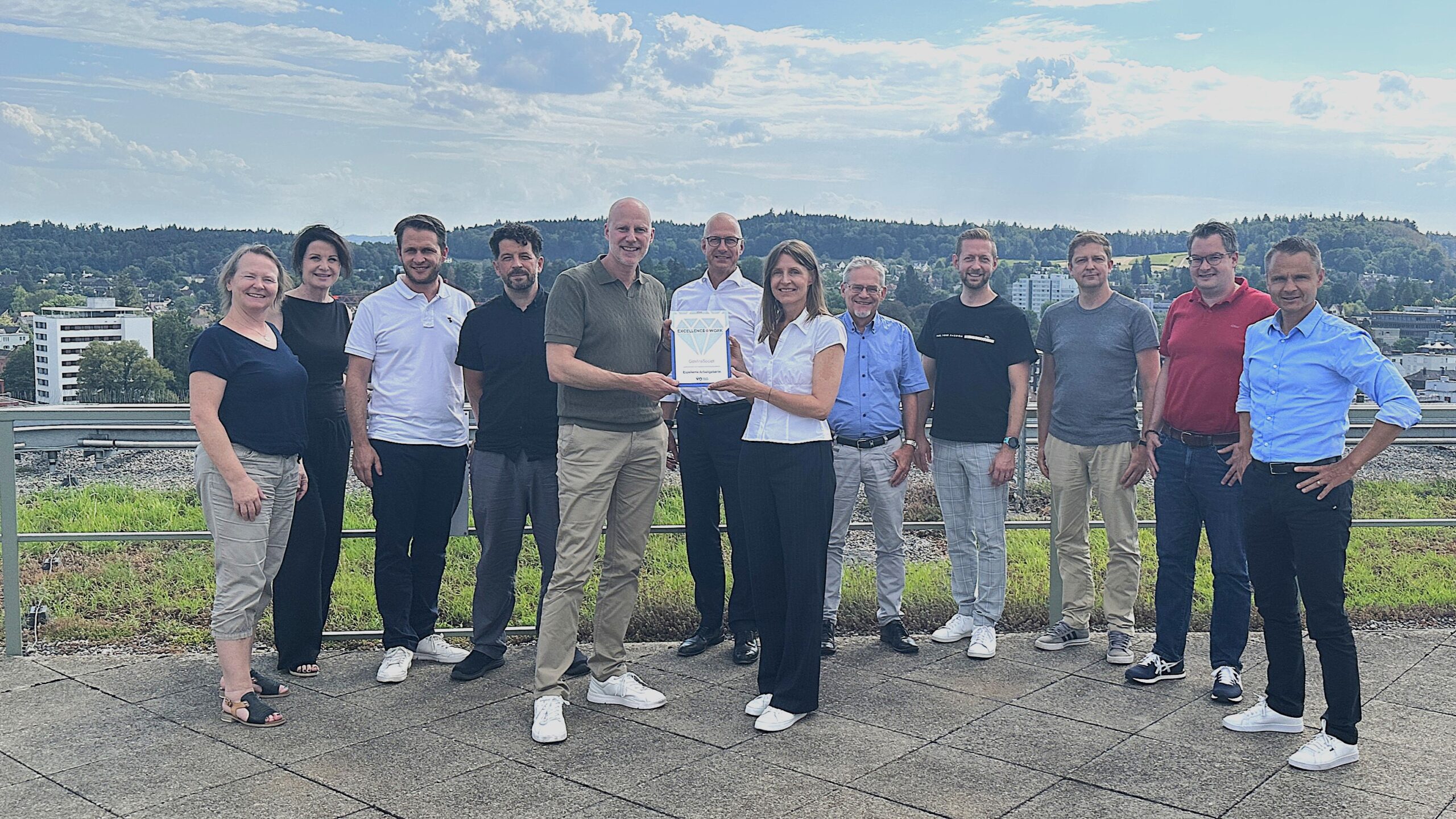
GastroSocial has received the 2026 Excellence@Work Award from ValueQuest. With a response rate of 96 percent, a motivation score of 84, and 87 percent of employees serving as brand ambassadors, the company demonstrates a strong employer culture.

Employee Survey: Raiffeisenbank Möhlin Achieves Excellent Results
August 31, 2026
Reading time: 3 min
Raiffeisenbank Möhlin is one of Switzerland's top employers and is receiving our Excellence@Work Award in recognition of this achievement. Congratulations!

Employee Surveys in Switzerland: Find Providers & Tools
August 30, 2026
Reading time: 6 min
Employee Survey in Switzerland: How Do You Find the Right Employee Survey Provider? What Really Matters When It Comes to Anonymity, Tools, Questionnaires, and Analysis.

360-Degree Feedback Questionnaire: Sample, Template, and Sample Questions
August 21, 2026
Reading time: 7 min
Table of Contents A 360-degree feedback process is only as good as its questionnaire. The questionnaire is at the heart of the entire process. It determines whether...

Employee Survey: The CAMPUS SURSEE Foundation Is Among Switzerland's Best Employers
August 5, 2026
Reading time: 2 min
ValueQuest honors particularly attractive employers in Switzerland with the Excellence@Work Award. We recently had the pleasure of presenting the award to the CAMPUS SURSEE Foundation.
Raiffeisenbank Regio Arbon, a Top Employer: Personal Responsibility as Part of a Strong Corporate Culture
July 7, 2026
Reading time: 2 min
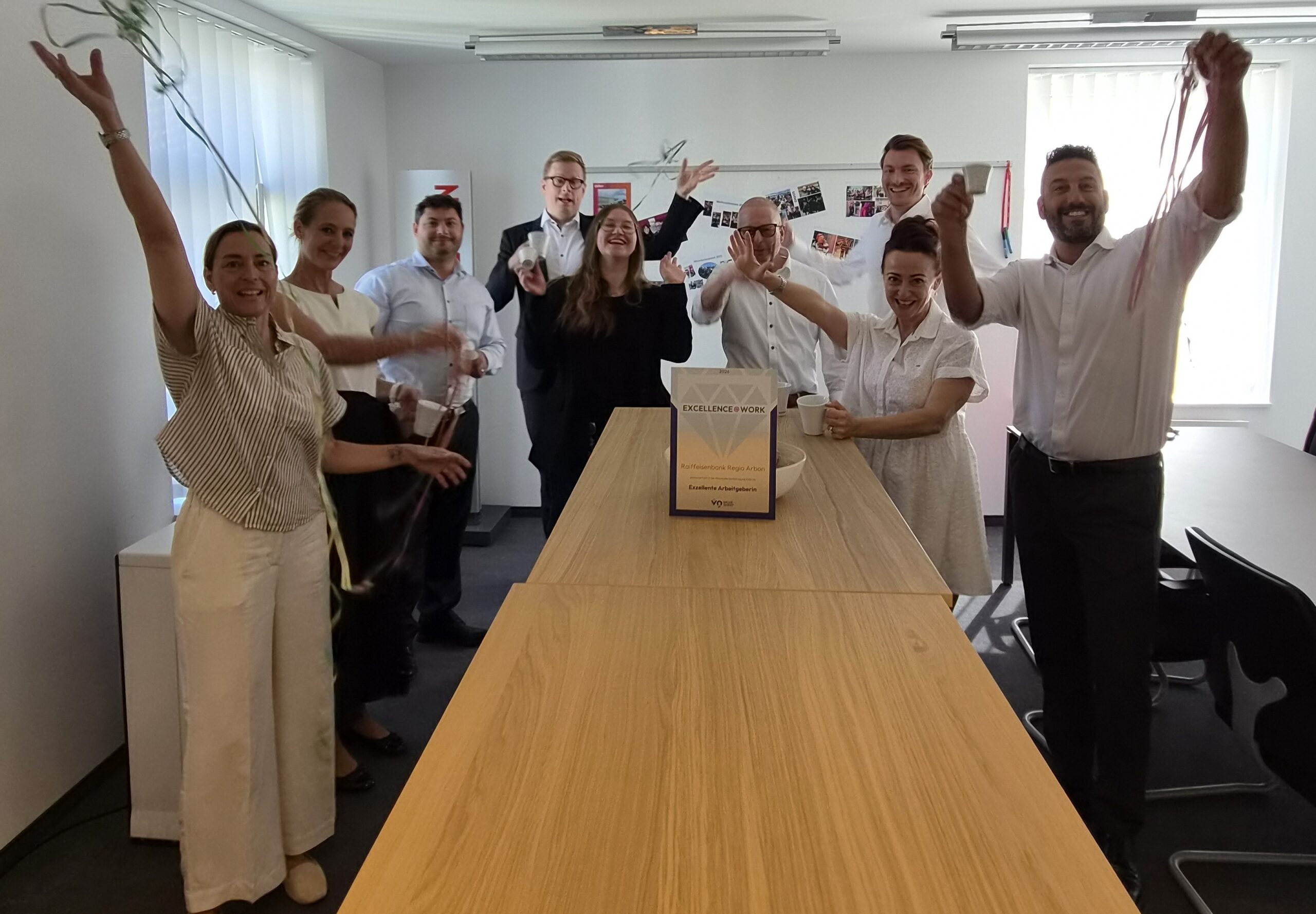
ValueQuest honors particularly attractive employers in Switzerland with the Excellence@Work Award. We recently had the pleasure of presenting the award to Raiffeisenbank Regio Arbon.