Employee surveys are an excellent tool for learning more about your own organization and understanding what drives it. A well-designed employee survey provides concrete information on how motivated and satisfied employees are and, in this sense, is also an early warning indicator.
An employee survey examines the organization from the inside. It shows how it functions and what influence this has on employees' day-to-day work. ValueQuest has developed the organizational DNA analysis tool to visualize this.
The organizational DNA analysis shows what drives the organization
This analysis shows for each area, each department and each team how the issues of day-to-day operations affect motivation. This can be used to generate a lot of important information for optimizing motivation.
The organizational DNA analysis is based on 15 subject areas. These are the management levers - i.e. the areas that can be changed in an organization. For each of these topic areas, the analysis shows how strongly the topic affects employee motivation and demotivation:
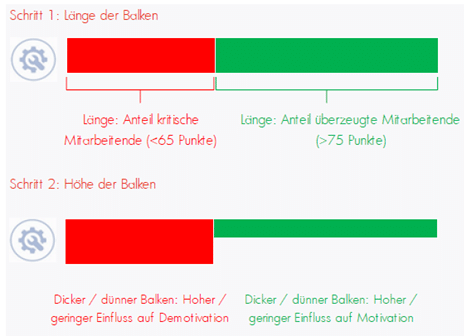
The length of the individual bars shows the proportion of employees who view the respective topic in the organization critically (negative) and those who are convinced of it (positive). The height of the bars shows how strongly demotivating or motivating the topic is. Depending on the organization, individual topics can have an "unbalanced" effect, either strongly motivating or strongly demotivating. Overall, topics with a large red area (length x height) are strongly demotivating, while those with a large green area are strongly motivating.
Organizational DNA profiles can vary greatly
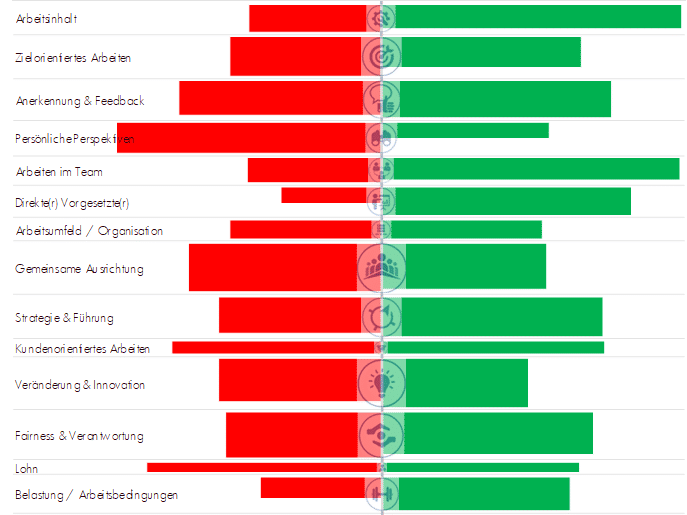
The DNA profiles of different organizations can vary greatly. As an example, we see the DNA of a public administration in the figure below:
This compares with the DNA of a regional bank:
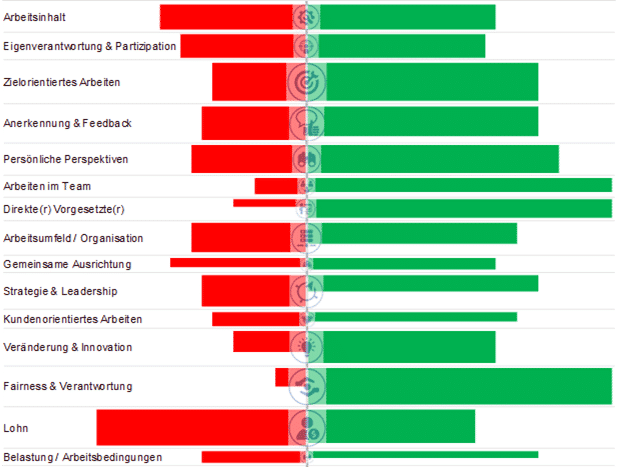
Industry-specific patterns definitely have an influence. However, there are also strong differences in the life cycle of an organization. In phases of strategic reorientation, for example, there is often a stronger impact (both positive and negative) on strategic issues (common direction, strategy, etc.), while issues in the micro-environment (work content, team, supervisor) are less important during this time.
Intra-organizational deviations can also be easily identified and visualized using a DNA profile. For example, if an organizational area has a strongly deviating profile during a phase of strategic reorientation - e.g. there is a strong focus on the micro-environment - this is an indication that this area has "dropped out" and retreated into the safe micro-environment.
Identification of the most effective measures
If you take a closer look at the two examples above, you will see, for example, that in both organizations the "salary / compensation" is often viewed critically, which is incidentally the case in most organizations. But only in the case of the bank would salary adjustments have an impact on motivation. In public administration, salary adjustments would have no effect. The DNA analysis as part of an employee survey therefore clearly shows where to start.
In addition, conclusions can also be drawn about the needs and motivators of employees. In public administration, a lack of prospects has a strong demotivating effect, but the presence of prospects is only moderately motivating. If such hygiene factors are not fulfilled, they have a demotivating effect. However, if they are fulfilled to a good degree, they have no further motivating effect.
The analysis of organizational DNA as part of an employee survey is an effective tool for identifying the most effective measures. Targeted changes to the DNA result in a better working environment. Employees are happier and more committed and their commitment to the company is strengthened, which has a positive impact on commitment and productivity.
Would you like to know more? It's worth taking a look at our homepage! And if you are interested in topics relating to employee surveys, 360-degree feedback or customer surveys, follow us on Linkedin. That way you won't miss any of our posts.
Article published on September 26, 2021
About Francine Kräuchi

Francine Kräuchi is a senior manager and project manager at ValueQuest with many years of in-depth expertise in employee surveys and 360-degree leadership feedback. As a systemic coach, she supports managers in their further professional development based on the feedback results. Learn more about Francine
Inspired? Then share this post via your favorite platform.
Other articles that might interest you ...

AI in the Swiss Insurance Market: What Insurers Can Learn from the Results
October 1, 2026
Reading time: 4 min
Artificial intelligence is not universally accepted in the Swiss insurance market. As a study by ValueQuest shows, customers’ openness to AI depends heavily on how it is used.

AI in the Swiss Insurance Market: Between Acceptance and Skepticism
September 28, 2026
Reading time: 5 min
For many Swiss people, artificial intelligence has become an integral part of everyday life. However, the situation is different when it comes to insurance companies.
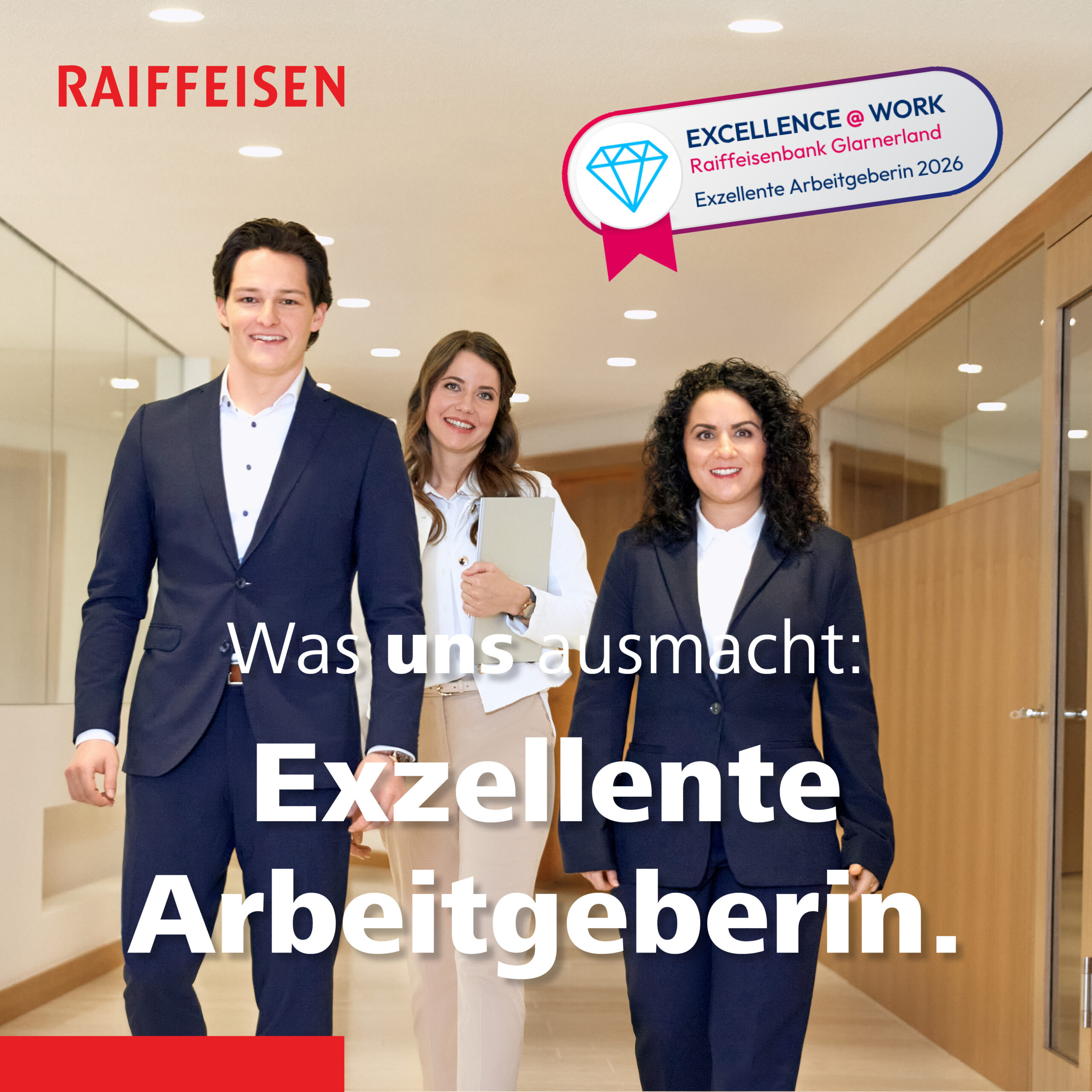
Top Employer: Raiffeisenbank Glarnerland Impresses with Strong Leadership
September 21, 2026
Reading time: 2 min
ValueQuest recently had the honor of presenting the “Excellence@Work Award” to Raiffeisenbank Glarnerland. We extend our heartfelt congratulations.
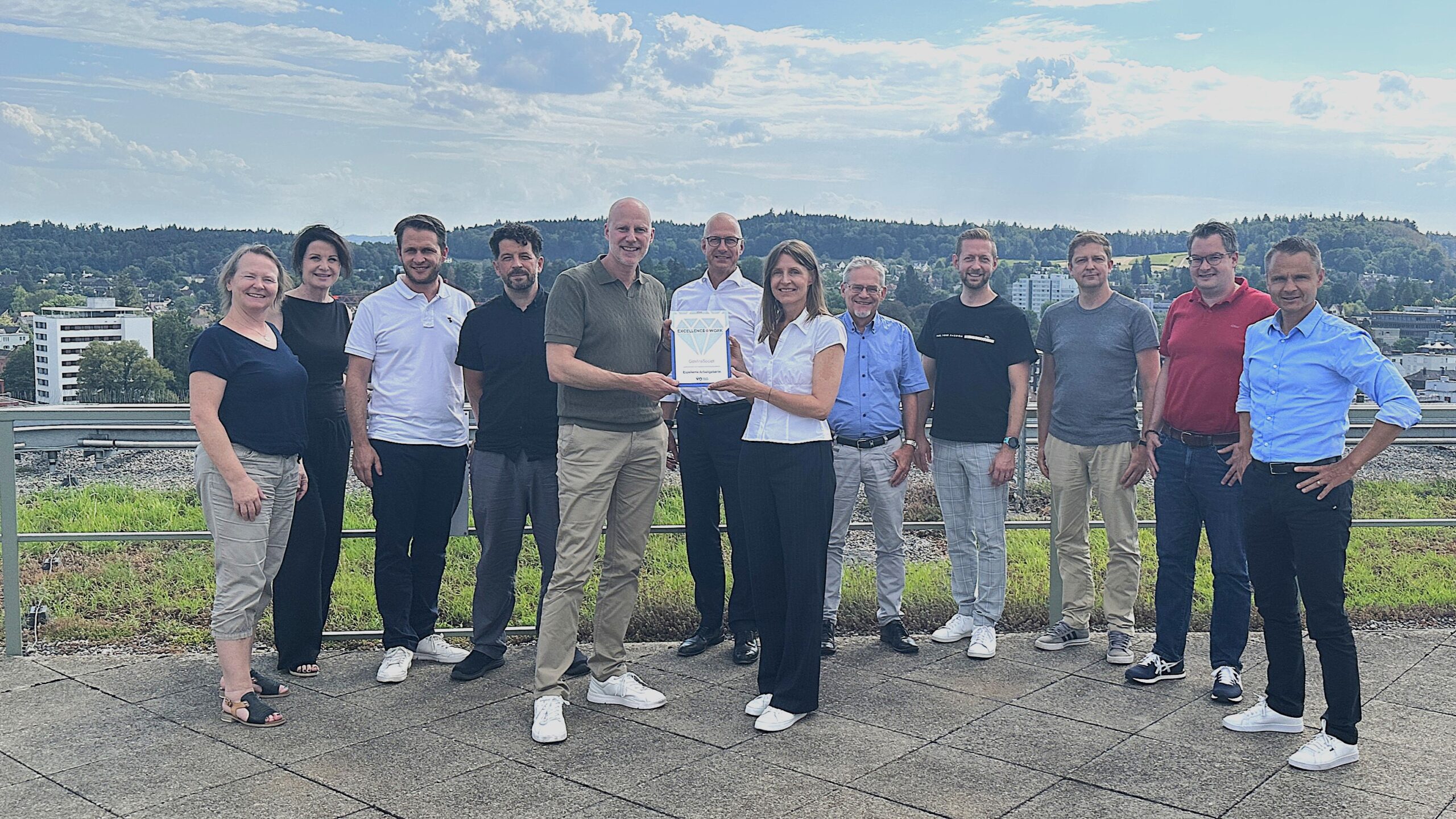
Top Swiss Employers: GastroSocial
September 9, 2026
Reading time: 3 min
GastroSocial has received the 2026 Excellence@Work Award from ValueQuest. With a response rate of 96 percent, a motivation score of 84, and 87 percent of employees serving as brand ambassadors, the company demonstrates a strong employer culture.

Employee Survey: Raiffeisenbank Möhlin Achieves Excellent Results
August 31, 2026
Reading time: 3 min
Raiffeisenbank Möhlin is one of Switzerland's top employers and is receiving our Excellence@Work Award in recognition of this achievement. Congratulations!

Employee Surveys in Switzerland: Find Providers & Tools
August 30, 2026
Reading time: 6 min
Employee Survey in Switzerland: How Do You Find the Right Employee Survey Provider? What Really Matters When It Comes to Anonymity, Tools, Questionnaires, and Analysis.

360-Degree Feedback Questionnaire: Sample, Template, and Sample Questions
August 21, 2026
Reading time: 7 min
Table of Contents A 360-degree feedback process is only as good as its questionnaire. The questionnaire is at the heart of the entire process. It determines whether...

Employee Survey: The CAMPUS SURSEE Foundation Is Among Switzerland's Best Employers
August 5, 2026
Reading time: 2 min
ValueQuest honors particularly attractive employers in Switzerland with the Excellence@Work Award. We recently had the pleasure of presenting the award to the CAMPUS SURSEE Foundation.
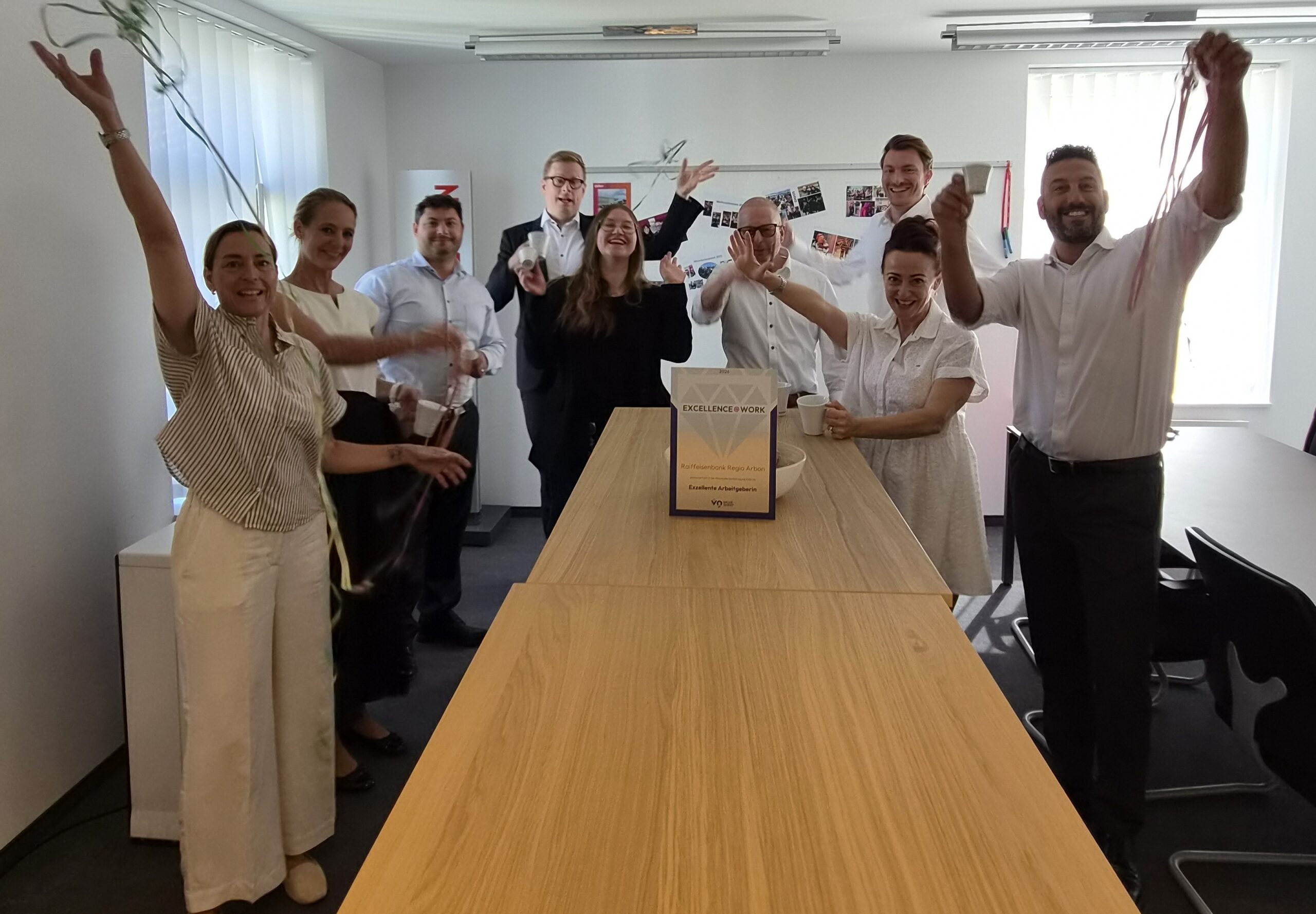
Raiffeisenbank Regio Arbon, a Top Employer: Personal Responsibility as Part of a Strong Corporate Culture
July 7, 2026
Reading time: 2 min
ValueQuest honors particularly attractive employers in Switzerland with the Excellence@Work Award. We recently had the pleasure of presenting the award to Raiffeisenbank Regio Arbon.