Ruthlessness in everyday working life
Psychologists Delroy Paulhus and Kevin Williams from the University of British Columbia in Vancouver, Canada, were the first to study the dark triad of personality. This includes the Three personality types: narcissists, Machiavellians, and psychopaths. What all three types have in common is that they prioritize their own well-being over that of others.

Source Diagnostica/A. Küfner, M. Dufner and M. Back
- Narcissists tend to overestimate themselves excessively and have a strong need for attention and admiration. He often treats others with disinterest and even reacts to objective criticism in a disagreeable and irritable, sometimes even aggressive manner.
- The Machiavellian strives for power. He always seeks his own advantage and manipulates others for his own purposes. He easily disregards morals and ethics, but knows how to dazzle his counterpart and present himself as harmless or charming.
- The psychopath is impulsive and hardly thinks about the consequences of his actions and the consequences for those around him. He seeks thrills and often behaves openly aggressively. He causes offense in the community and does not try to hide it.
Properties often occur together
Paulhus and Williams were able to show that although these are three different personality types and traits, they often occur together. People who are highly narcissistic often also have strong psychopathic or Machiavellian traits. What all three have in common is low social compatibility, which is reflected in ruthlessness, a tendency to deceive and an unwillingness to abide by rules or moral principles.
Paulhus and Williams emphasize that although these three characteristics are inherent in every person to a certain degree, they are usually less pronounced. Even those who achieve extreme values are often not yet conspicuous in the clinical sense. People with high levels of narcissism, Machiavellianism and psychopathy therefore do not suffer. And their (professional) advancement is even promoted as a result.
The dark triad in management
Because they strive for money, status and power, they like to be where all this can be achieved. They also have the ambition and strategies to climb the career ladder. They are particularly successful in corporate cultures that favor the pursuit of power. For example, when companies are excessively meritocratic, ruthless competition quickly develops. Strength, assertiveness and quick decision-making are qualities that ensure "survival" in such a case.
There are numerous studies that prove that personality types of the dark triad are represented above average in the upper management of large companies.
Uncritical personnel selection
Uwe Kanning (business psychologist at Osnabrück University of Applied Sciences) also believes that the ruthlessness of the dark triad helps with career advancement. When in doubt, an important position in the company is more likely to be filled by an applicant who is a little too self-confident. Once dark triad personalities have reached a management position, they stay there or rise even higher. They are then hardly questioned by others and they consider themselves to be born leaders anyway.
"Managers often display psychopathic, narcissistic and Machiavellian tendencies," says Hossiep. The fact that their self-image is distorted is also due to the fact that realistic feedback is all the rarer the higher up in the hierarchy you work. In this way, the characteristics of the dark triad are reinforced over time. Although narcissists are indeed initially considered the better leaders by everyone around them - as a study by the University of Amsterdam shows - the performance of groups with narcissists at the top suffers.
Managers who no longer see themselves as part of a team and make decisions on their own pose a major risk to the company and its culture. They cannot handle constructive criticism, create tension in their work environment, and are unmanageable.
Diagnostic tools for personnel selection and management
It is therefore essential to use the right diagnostic tools for selecting employees and to work through these topics again and again in leadership development. Structured feedback tools such as our 360-degree leadership feedback confront line managers with their impact on others. And they create the necessary commitment between line managers, colleagues and employees. If required, they form an excellent basis for support from a coach.
See also:
→ The Dark Triad: How employee surveys reveal toxic dynamics
Article published on March 30, 2022
About Heidi Blanken

Heidi Blanken is an expert and advisor at ValueQuest with a focus on evaluation and methodological consulting. She studied psychology with a focus on methodology as well as economics and labor law at the University of Zurich and graduated with a lic. phil. I degree.
Inspired? Then share this post via your favorite platform.
Other articles that might interest you ...

AI in the Swiss Insurance Market: What Insurers Can Learn from the Results
October 1, 2026
Reading time: 4 min
Artificial intelligence is not universally accepted in the Swiss insurance market. As a study by ValueQuest shows, customers’ openness to AI depends heavily on how it is used.

AI in the Swiss Insurance Market: Between Acceptance and Skepticism
September 28, 2026
Reading time: 5 min
For many Swiss people, artificial intelligence has become an integral part of everyday life. However, the situation is different when it comes to insurance companies.

Top Employer: Raiffeisenbank Glarnerland Impresses with Strong Leadership
September 21, 2026
Reading time: 2 min
ValueQuest recently had the honor of presenting the “Excellence@Work Award” to Raiffeisenbank Glarnerland. We extend our heartfelt congratulations.
Top Swiss Employers: GastroSocial
September 9, 2026
Reading time: 3 min
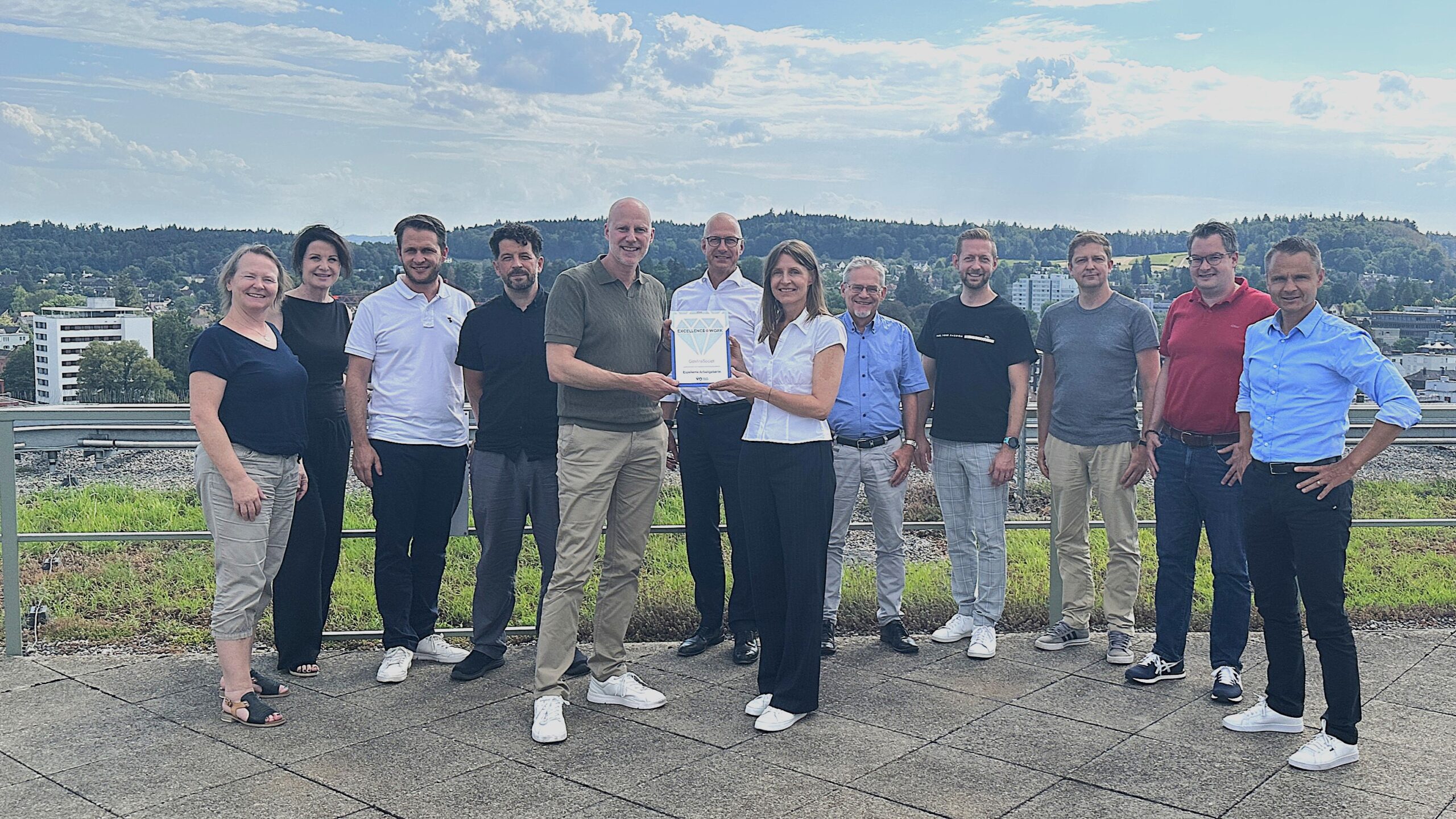
GastroSocial has received the 2026 Excellence@Work Award from ValueQuest. With a response rate of 96 percent, a motivation score of 84, and 87 percent of employees serving as brand ambassadors, the company demonstrates a strong employer culture.

Employee Survey: Raiffeisenbank Möhlin Achieves Excellent Results
August 31, 2026
Reading time: 3 min
Raiffeisenbank Möhlin is one of Switzerland's top employers and is receiving our Excellence@Work Award in recognition of this achievement. Congratulations!

Employee Surveys in Switzerland: Find Providers & Tools
August 30, 2026
Reading time: 6 min
Employee Survey in Switzerland: How Do You Find the Right Employee Survey Provider? What Really Matters When It Comes to Anonymity, Tools, Questionnaires, and Analysis.

360-Degree Feedback Questionnaire: Sample, Template, and Sample Questions
August 21, 2026
Reading time: 7 min
Table of Contents A 360-degree feedback process is only as good as its questionnaire. The questionnaire is at the heart of the entire process. It determines whether...

Employee Survey: The CAMPUS SURSEE Foundation Is Among Switzerland's Best Employers
August 5, 2026
Reading time: 2 min
ValueQuest honors particularly attractive employers in Switzerland with the Excellence@Work Award. We recently had the pleasure of presenting the award to the CAMPUS SURSEE Foundation.
Raiffeisenbank Regio Arbon, a Top Employer: Personal Responsibility as Part of a Strong Corporate Culture
July 7, 2026
Reading time: 2 min
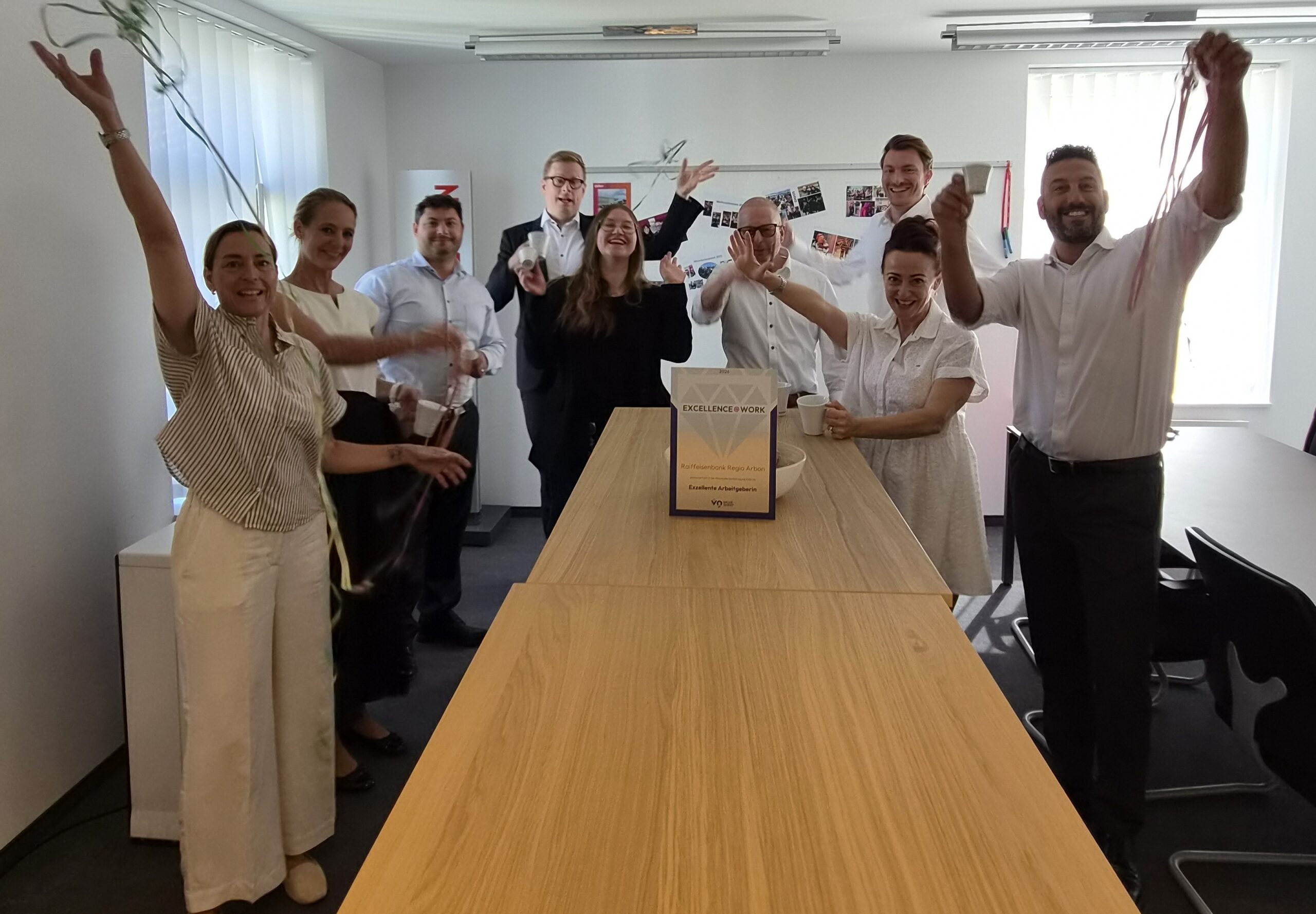
ValueQuest honors particularly attractive employers in Switzerland with the Excellence@Work Award. We recently had the pleasure of presenting the award to Raiffeisenbank Regio Arbon.