Table of contents
Definition: What is the dark triad?
Leadership is never simply black and white. Between charismatic inspiration and manipulative control lies a broad spectrum of human motives. In modern organizations, ambitious individuals face pressure to perform, political dynamics, and the desire for influence—a breeding ground for the traits that psychology describes as the Dark Triad: narcissism, Machiavellianism, and psychopathy.
These three personality dimensions are not clinical diagnoses, but subclinical tendencies that occur in varying degrees in many people. They explain why some managers appear successful at first glance - charismatic, courageous, assertive - and yet divide teams, destroy trust or spread fear.
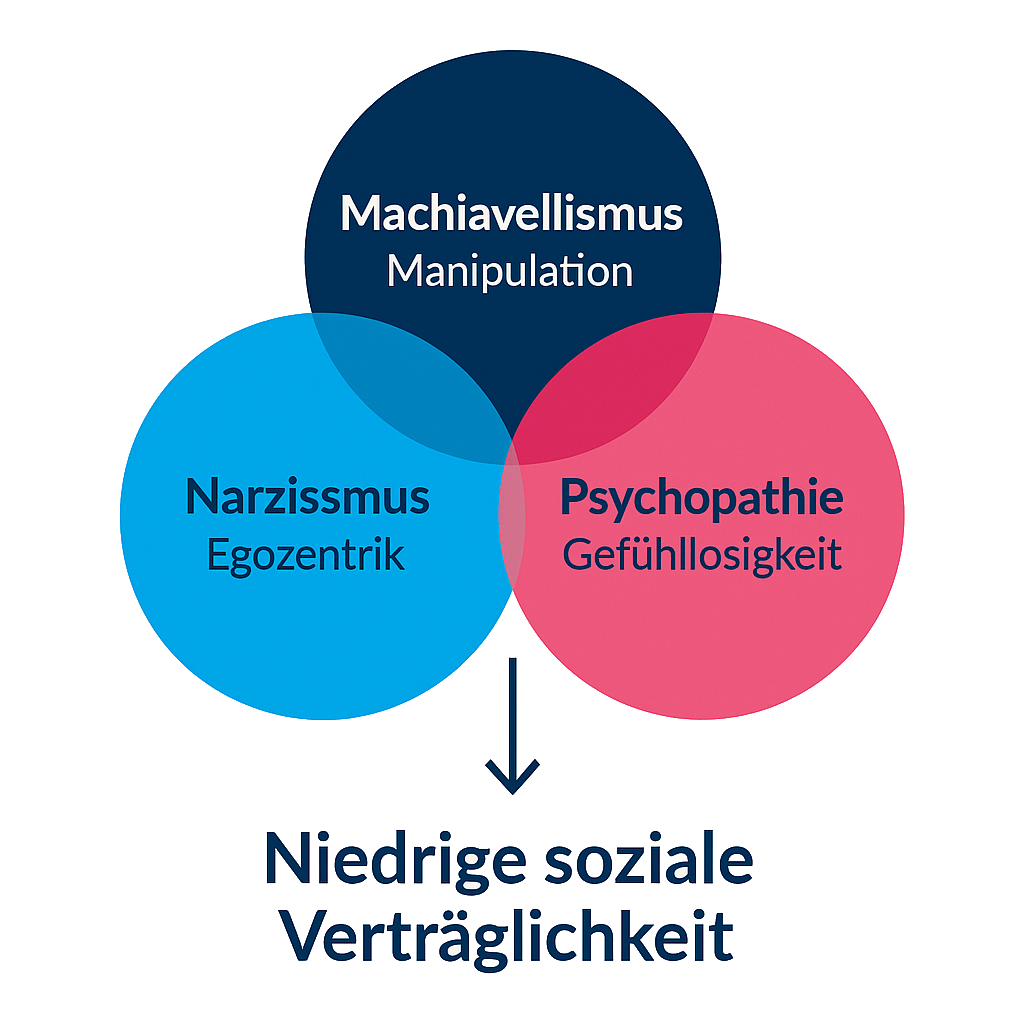
Venn diagram for the "dark triad": Narcissism (grandiose self), Psychopathy (lack of empathy) and Machiavellianism (manipulative exploitation) with a focus on their intersection - low social compatibility.
This is precisely why employee surveys, pulse surveys and 360° feedback are key tools of modern organizational diagnostics. They make visible how leadership is actually experienced, beyond the self-assessment of managers. While pulse surveys reveal emotional tensions or loss of trust in the team at an early stage, 360° feedbacks show in a differentiated way how far self-image and external image diverge - a classic pattern in the case of narcissistic or Machiavellian characteristics. Employee surveys, on the other hand, provide aggregated data that indicate leadership culture, psychological safety and collective stress - in other words, precisely those factors that erode first under dark leadership dynamics.
The relationship between the Dark Triad and leadership behavior has been the subject of intensive research in recent years—including by Prof. Dr. Marco R. Furtner, a clinical psychologist and professor of entrepreneurship and leadership at the University of Liechtenstein. In his work, he demonstrates how narcissistic, Machiavellian, and psychopathic tendencies manifest themselves in everyday leadership situations.
Narcissism - glamor and self-dramatization
Narcissistic leaders crave recognition, admiration, and status. They know how to present themselves, inspire others, and portray themselves as the bearers of grand visions. In the short term, this can unleash enormous energy: narcissistic leaders are risk-takers, persuasive, and often capable of driving change (Grijalva et al., 2015; Rosenthal & Pittinsky, 2006).
But there are cracks in the shine. Behind the façade of self-confidence lurks sensitivity, competitiveness and a strong need for control. If there is no admiration, the dynamic shifts: criticism is experienced as an attack, loyalty is demanded rather than earned. Research therefore distinguishes between "admiration" - an admiration-oriented form that can have a positive effect - and "rivalry", a defensive, hostile variant that promotes conflict within the team (Back et al., 2013; Küfner et al., 2013; Leckelt et al., 2015).
Especially in politicized environments where visibility and dominance are rewarded, narcissistic personalities can even accelerate careers (Deluga, 1997, 2001; Maccoby, 2000; Higgs, 2009). In the long term, however, they jeopardize psychological security and trust - the foundations on which sustainable leadership is based.
Typical characteristics of a narcissist:
- Excessive need for admiration
- Strong self-confidence, but low critical faculties
- Leads to a charismatic appearance, but can hinder cooperation
Typical signals: Dominance, striving for status, sensitivity to feedback
Focus: External impact - "I want to be seen".
Our tip
Employee surveys and 360° feedback can show the extent to which self-image and external image diverge - a classic pattern of narcissistic leadership. While those affected often perceive themselves as visionary and inspiring, teams often reflect a different image: control instead of trust, presentation instead of participation. Pulse surveys can be an early warning system in such cases - they recognize when motivation and psychological security are declining, even before fluctuation or conflicts become apparent.
Machiavellianism - calculation instead of relationship
Machiavellian personalities act strategically, tactically and highly rationally. They read power structures intuitively, know who has influence and use information specifically for their own purposes (Christie & Geis, 1970; Bedell et al., 2006). In their world, efficiency counts more than empathy. Relationships are a means to an end, loyalty a function of benefit.
In highly competitive environments, this mindset can be surprisingly effective. Companies that focus on hard metrics and short-term results sometimes benefit from thestrategic coldness of these players. But the price is high: trust, fairness and team cohesion erode when everything becomes a tactic.
Good leadership can redirect this energy by setting clear goals, fair incentives and ethical guidelines (Belschak et al., 2015). If Machiavellian tendencies are embedded in a value-based system, constructive competition - not intrigue - emerges. If this framing is missing, there is a risk of micropolitics and a climate of mistrust.
Typical characteristics of a Machiavellian:
- Calculated, strategic and often manipulative way of thinking
- Emotional distance and instrumental understanding of relationships
- Goal-oriented, but low trust and sense of fairness
Typical signals: tactics, information advantage, political games
Focus: Control over others - "I plan to win".
Our tip
Leadership and HR analytics can reveal the dynamics of Machiavellian behavior —for example, through patterns in employee surveys where employees describe their supervisors as “ambiguous,” “calculating,” or “political.” In 360-degree feedback, Machiavellianism often manifests as high scores for results orientation but low scores for trust and integrity.
Psychopathy - coolness, impulse and power
Psychopathic tendencies in the workplace are rarely clinically diagnosed, but they are palpable: they manifest asemotional coldness, fearlessness, impulsivity, and a manipulative approach to dealing with people (Hare, 2003; Coid et al., 2009). Managers with such traits may appear charming, eloquent, and decisive on the surface—but behind the facade often lies a calculated detachment.
Research is increasingly distinguishing between "primary" and "secondary psychopathy": the former describes emotional coldness and calculation, the latter impulsiveness and lack of control. Both variants can also be found in organizations - especially where performance and assertiveness are placed above social skills.
Such personalities are not necessarily unsuccessful - some excel in the short term through fearlessness and decisiveness - but in the long term they poison trust, cooperation and corporate culture. Those who systematically measure leadership and take feedback seriously will recognize these patterns in good time - and can turn them into learning processes instead of crises.
The spectrum ranges from charismatic and efficient to openly destructive (Babiak & Hare, 2006; Boddy, 2015a, 2015b). The consequences are clearly documented: lower job satisfaction, more counterproductive behavior and a higher turnover intention among such managers (Mathieu & Babiak, 2015, 2016; Spencer & Byrne, 2016).
Typical characteristics of a psychopath:
- Low empathy and feelings of guilt
- Impulsiveness, fearlessness, emotional coldness
- Decisive in the short term, destructive in the long term
Typical signals: recklessness, charm without depth, excesses of risk
Focus: Emotional distance - "I don't feel anything, so I act".
Our tip
When dealing with psychopaths, a pulse survey can provide the decisive clue: If values on trust, fairness or working atmosphere repeatedly drop significantly in the team, this is a warning signal for destructive dynamics. Combined with 360° feedback, a realistic leadership profile can be derived - and targeted development measures, supervision or coaching can be implemented.
Impact in teams and organizations
The three dimensions of the Dark Triad explain why leadership can sometimes be both effective and destructive at the same time. In the early stages of a career, dark characteristics are often not even noticed negatively - they are even misunderstood as a sign of strength, dominance or determination. It is only over time, when relationships, trust and team stability become more important, that the dark sides become apparent.
Dark personality traits rarely work quietly. They leave their mark - in communication patterns, decision-making processes and ultimately in the culture of a company. While narcissistic leadership can release energy in the short term, Machiavellian strategies and psychopathic coldness lead to the erosion of trust, fairness and psychological security in the long term. Especially in teams that rely on openness and cooperation, the downsides quickly become apparent: conflicts increase, creativity decreases and emotional distance becomes a survival strategy.
- Performance vs. relationship damage: Darker expressions explain bullying, knowledge hiding, and careerism, among others (Baughman et al., 2012; Chiaburu et al., 2013; Jonason et al., 2012).
- Leadership style: Correlations with abusive or authoritarian leadership behavior are well documented (Kiazad et al, 2010; Spain et al, 2013; Westerlaken & Woods, 2013).
- Work behaviors: Meta-analyses show robust relationships with Counterproductive Work Behaviors (O'Boyle et al., 2012) and - in certain niches - also with career success (Spurk et al., 2016).
Furtner and colleagues link these findings to self-leadership and value-based leadership: those who lead in a self-reflective manner reduce the downsides and stabilize the team climate and impact (Furtner et al., 2011, 2013; Furtner & Baldegger, 2016; Furtner, 2016, 2017a, 2017b).
Measuring leadership: How employee surveys reveal the dark side
Employee surveys and 360° feedback are the best tools for systematically recognizing the effects of dark leadership patterns.
This is because toxic or manipulative dynamics are not first revealed in key figures, but in mood, trust and perceived fairness - precisely the variables that ValueQuest surveys using scientifically sound survey designs.
- Employee surveys serve as an early warning system: they reveal where trust is crumbling, psychological security is declining or turnover intentions are increasing - classic side effects of dark leadership (Boddy, 2015; Mathieu & Babiak, 2016).
- Pulse surveys enable real-time observation: Do charisma, pressure or ego orientation lead to increased uncertainty or conflict in certain phases?
- 360° feedback reveals differences between self-image and external image: Narcissistic exaggeration or a lack of empathy can thus be measured and reflected upon.
Furtner (2017b) emphasizes that self-reflection and feedback culture are the central counterforces to dark tendencies.
→ Survey tools such as those from ValueQuest help companies to facilitate this reflection in a structured way - not as a control, but as a mirror.
Handling and prevention in the company
- Selection & diagnostics: Employee surveys, pulse surveys, 360-degree surveys andprofessional personality assessments (e.g. SD3, Short Dark Triad) help to identify excessive characteristics at an early stage - not to exclude those affected, but to understand the risks.
- Leadership development: Training that promotes empathy, ethical decision-making and self-reflection can cushion the destructive potential of dark traits.
- Organizational culture: Transparent communication, clear rules and a climate of psychological safety are the most effective antidote to manipulative behavior.
- Supervision and coaching: Regular reflection with neutral third parties prevents positions of power from corrupting or conviction from tipping over into arrogance.
In day-to-day management, there are a significant number of managers who exhibit dark leadership tendencies.
- Prof. Dr. Marco Furtner in Dark Leadership
Conclusion
The Dark Triad is not a label for “bad people,” but a scientific model of human complexity. Every company, every team, and every leader contains elements of it—the question is how consciously they are managed. Those who understand its mechanisms can recognize early warning signs, strengthen healthy leadership, and create a culture where performance-oriented goals are not achieved at the expense of trust. In this way, psychological insight becomes a strategic advantage—for organizations that want to lead not only successfully but also with integrity.

Literature
Babiak, P., & Hare, R. D. (2006). Snakes in suits: When psychopaths go to work. HarperCollins.
Baughman, H. M., Dearing, S., Giammarco, E., & Vernon, P. A. (2012). Relationships between bullying behaviors and the dark triad: A study with adults. Personality and Individual Differences, 52, 571-575.
Bedell, K., Hunter, S., Angie, A., & Vert, A. (2006). A historiometric examination of Machiavellianism and a new taxonomy of leadership. Journal of Leadership and Organizational Studies, 12, 50-72.
Belschak, F. D., Den Hartog, D. N., & Kalshoven, K. (2015). Leading Machiavellians: How to translate Machiavellians' selfishness into pro-organizational behavior. Journal of Management, 41, 1934-1956.
Boddy, C. R. (2015a). Organizational psychopaths: A ten year update. Management Decision, 53, 2407-2432.
Boddy, C. R. (2015b). Psychopathic leadership: A case study of a corporate psychopath CEO. Journal of Business Ethics. https://doi.org/10.1007/s10551-015-2908-6
Chiaburu, D. S., Munoz, G. J., & Gardner, R. G. (2013). How to spot a careerist early on: Psychopathy and exchange ideology as predictors of careerism. Journal of Business Ethics, 118, 473-486.
Christie, R., & Geis, F. L. (1970). Studies in Machiavellianism. Academic Press.
Coid, J., Yang, M., Ullrich, S., Roberts, A., & Hare, R. D. (2009). Prevalence and correlates of psychopathic traits in the household population of Great Britain. International Journal of Law and Psychiatry, 32, 65-73.
Deluga, R. J. (1997). Relationship among American presidential charismatic leadership, narcissism, and rated performance. The Leadership Quarterly, 8, 49-65.
Deluga, R. J. (2001). American presidential Machiavellianism: Implications for charismatic leadership and rated performance. The Leadership Quarterly, 12, 339-363.
Furnham, A., Richards, S. C., & Paulhus, D. L. (2013). The dark triad of personality: A 10-year review. Social and Personality Psychology Compass, 7, 199-216.
Furtner, M. (2016). Effectiveness of transformational leadership: heroes, visions and charisma. Springer Gabler.
Furtner, M. (2017a). Dynamic leadership: Mastering leadership situations mindfully and flexibly. Springer Gabler.
Furtner, M. (2017b). Empowering Leadership: With self-responsible employees to innovation and top performance. Springer Gabler.
Furtner, M., & Baldegger, U. (2016). Self-Leadership and Leadership: Theories, Models and Practical Implementation (2nd ed.). Springer Gabler.
Furtner, M. R., Rauthmann, J. F., & Sachse, P. (2011). The self-loving self-leader: An examination of the relationship between self-leadership and the dark triad. Social Behavior and Personality, 39, 369-380.
Furtner, M. R., Baldegger, U., & Rauthmann, J. F. (2013). Leading yourself and leading others: Linking self-leadership to transformational, transactional, and laissez-faire leadership. European Journal of Work and Organizational Psychology, 22, 436-449.
Grijalva, E., Harms, P. D., Newman, D. A., Gaddis, B. H., & Fraley, C. (2015). Narcissism and leadership: A meta-analytic review of linear and nonlinear relationships. Personnel Psychology, 68, 1-47.
Hare, R. D. (2003). The Hare Psychopathy Checklist-Revised. Multi-Health Systems.
Higgs, M. (2009). The good, the bad and the ugly: Leadership and narcissism. Journal of Change Management, 9, 165-178.
Jonason, P. K., Slomski, S., & Partyka, J. (2012). The dark triad at work: How toxic employees get their way. Personality and Individual Differences, 52, 449-453.
Kiazad, K., Restubog, S. L. D., Zagenczyk, T. J., Kiewitz, C., & Tang, R. L. (2010). In pursuit of power: The role of authoritarian leadership in the relationship between supervisors' Machiavellianism and subordinates' perceptions of abusive supervisory behavior. Journal of Research in Personality, 44, 512-519.
Küfner, A. C. P., Nestler, S., & Back, M. D. (2013). The two pathways to being an (un-)popular narcissist. Journal of Personality, 81, 184-195.
Leckelt, M., Küfner, A. C. P., Nestler, S., & Back, M. D. (2015). Behavioral processes underlying the decline of narcissists' popularity over time. Journal of Personality and Social Psychology, 109, 856-871.
Maccoby, M. (2000). Narcissistic leaders: The incredible pros, the inevitable cons. Harvard Business Review, 78, 68-77.
Mathieu, C., & Babiak, P. (2015). Tell me who you are, I'll tell you how you lead: Beyond the full-range leadership model, the role of corporate psychopathy on employee attitudes. Personality and Individual Differences, 87, 8-12.
Mathieu, C., & Babiak, P. (2016). Corporate psychopathy and abusive supervision: Their influence on employees' job satisfaction and turnover intentions. Personality and Individual Differences, 91, 102-106.
O'Boyle, E. H., Jr, Forsyth, D. R., Banks, G. C., & McDaniel, M. A. (2012). A meta-analysis of the dark triad and work behavior: A social exchange perspective. Journal of Applied Psychology, 97, 557-579.
Paulhus, D. L., & Williams, K. M. (2002). The dark triad of personality: Narcissism, Machiavellianism, and psychopathy. Journal of Research in Personality, 36, 556-563.
Rosenthal, S. A., & Pittinsky, T. L. (2006). Narcissistic leadership. The Leadership Quarterly, 17, 617-633.
Spain, S. M., Harms, P. D., & LeBreton, J. M. (2013). The dark side of personality at work. Journal of Organizational Behavior, 35, 41-60.
Spencer, R. J., & Byrne, M. K. (2016). Relationship between the extent of psychopathic features among corporate managers and subsequent employee job satisfaction. Personality and Individual Differences, 101, 440-445.
Spurk, D., Keller, A. C., & Hirschi, A. (2016). Do bad guys get ahead or fall behind? Relationships of the dark triad of personality with objective and subjective career success. Social Psychological and Personality Science, 7, 113-121.
Westerlaken, K. M., & Woods, P. R. (2013). The relationship between psychopathy and the full-range leadership model. Personality and Individual Differences, 54, 41-56.
Article published on November 7, 2025
About Thomas Bigliel

Thomas Bigliel is an expert in digital marketing and communication. He is also a guest lecturer at the ZHAW for strategic marketing management and a specialist author (for Springer Gabler and Marketing Review St. Gallen, among others). He is a business information scientist with a specialization in human-computer interaction. He was awarded the Grimme Online Award for his work.
Inspired? Then share this post via your favorite platform.
Other articles that might interest you ...

AI in the Swiss Insurance Market: What Insurers Can Learn from the Results
October 1, 2026
Reading time: 4 min
Artificial intelligence is not universally accepted in the Swiss insurance market. As a study by ValueQuest shows, customers’ openness to AI depends heavily on how it is used.

AI in the Swiss Insurance Market: Between Acceptance and Skepticism
September 28, 2026
Reading time: 5 min
For many Swiss people, artificial intelligence has become an integral part of everyday life. However, the situation is different when it comes to insurance companies.

Top Employer: Raiffeisenbank Glarnerland Impresses with Strong Leadership
September 21, 2026
Reading time: 2 min
ValueQuest recently had the honor of presenting the “Excellence@Work Award” to Raiffeisenbank Glarnerland. We extend our heartfelt congratulations.
Top Swiss Employers: GastroSocial
September 9, 2026
Reading time: 3 min
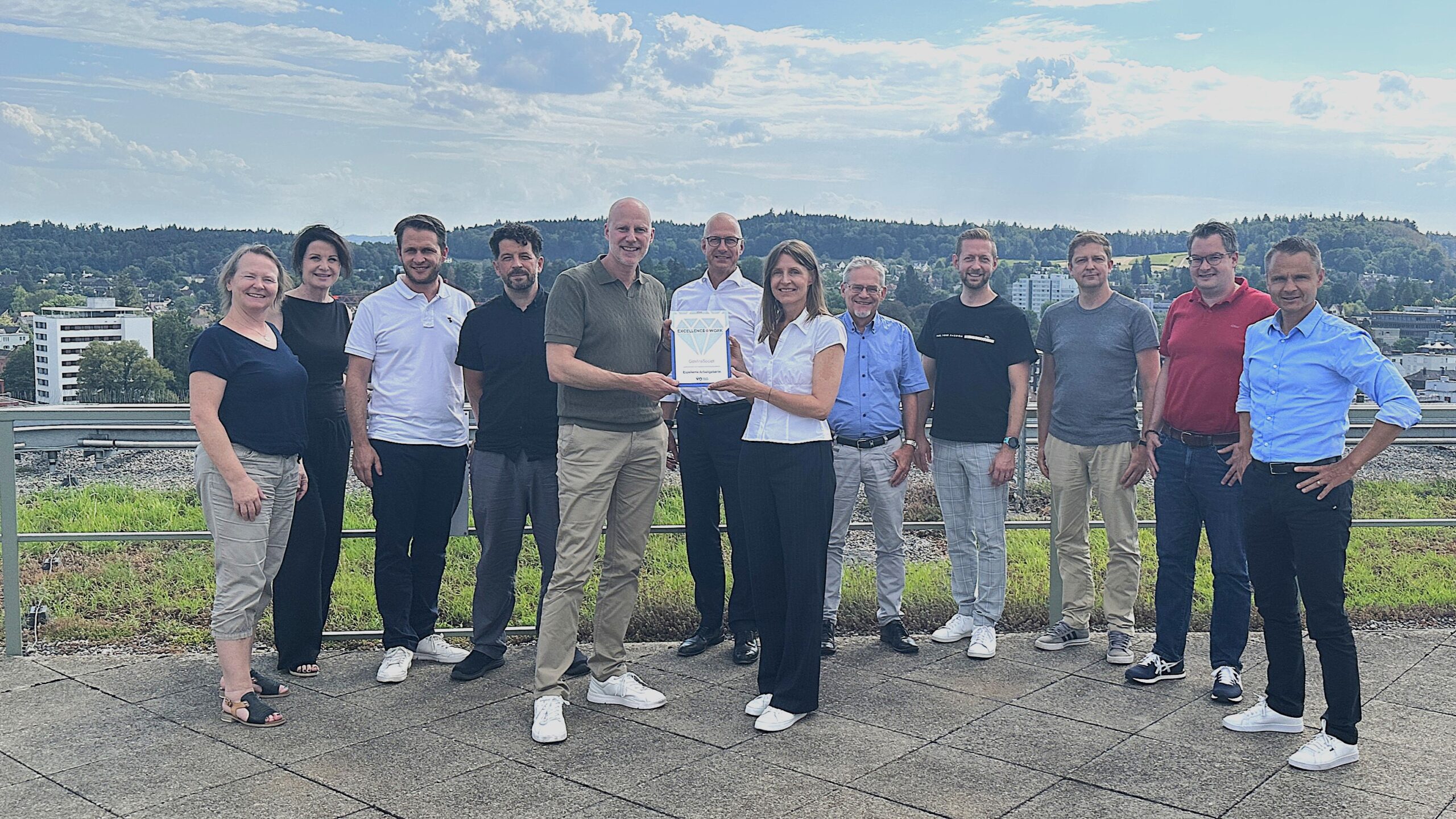
GastroSocial has received the 2026 Excellence@Work Award from ValueQuest. With a response rate of 96 percent, a motivation score of 84, and 87 percent of employees serving as brand ambassadors, the company demonstrates a strong employer culture.

Employee Survey: Raiffeisenbank Möhlin Achieves Excellent Results
August 31, 2026
Reading time: 3 min
Raiffeisenbank Möhlin is one of Switzerland's top employers and is receiving our Excellence@Work Award in recognition of this achievement. Congratulations!

Employee Surveys in Switzerland: Find Providers & Tools
August 30, 2026
Reading time: 6 min
Employee Survey in Switzerland: How Do You Find the Right Employee Survey Provider? What Really Matters When It Comes to Anonymity, Tools, Questionnaires, and Analysis.

360-Degree Feedback Questionnaire: Sample, Template, and Sample Questions
August 21, 2026
Reading time: 7 min
Table of Contents A 360-degree feedback process is only as good as its questionnaire. The questionnaire is at the heart of the entire process. It determines whether...

Employee Survey: The CAMPUS SURSEE Foundation Is Among Switzerland's Best Employers
August 5, 2026
Reading time: 2 min
ValueQuest honors particularly attractive employers in Switzerland with the Excellence@Work Award. We recently had the pleasure of presenting the award to the CAMPUS SURSEE Foundation.
Raiffeisenbank Regio Arbon, a Top Employer: Personal Responsibility as Part of a Strong Corporate Culture
July 7, 2026
Reading time: 2 min
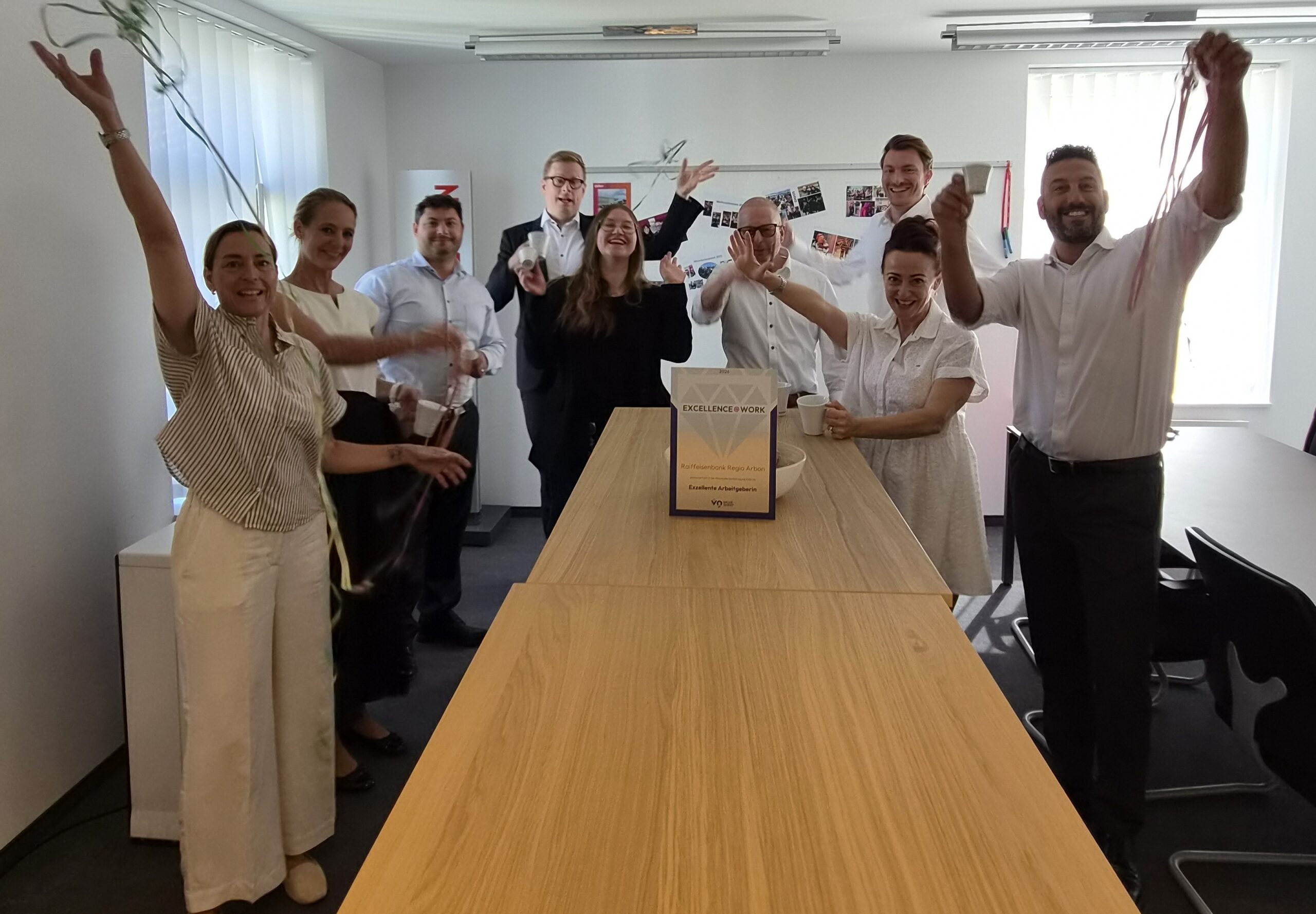
ValueQuest honors particularly attractive employers in Switzerland with the Excellence@Work Award. We recently had the pleasure of presenting the award to Raiffeisenbank Regio Arbon.