Artificial intelligence (AI) is a double-edged sword for HR professionals. Will algorithms replace experience and gut instinct when selecting talent in the future? And how can applicants be prevented from reaching into the AI bag of tricks themselves? An arms race with consequences. On the curse and blessing of robot recruiting.
In an era of labor shortages, companies are increasingly turning to artificial intelligence (AI) for help. They hope that using AI will make the selection process more objective and efficient. But who is the better recruiter? Human or machine? One thing is certain: the old saying “time is money” remains relevant. In the context of AI, saving time is a key priority for companies. Inviting 1,000 candidates to an assessment is neither practical nor economically sensible. But thanks to the use of AI, large volumes of applications can be efficiently reduced to a manageable number.
Whereas this initial screening used to be done by humans, many companies now automatically scan incoming applications for relevant keywords and use this information to assess the qualifications of each applicant —all within fractions of a second and fully automated. Such systems are nothing new. There are many different services and software providers that use keywords to assess the suitability of applicants. This process is called CV parsing or resume parsing. But it is not new.
Anyone who has applied to a large company in the past was aware that their application materials would be reviewed not only by a human but possibly also by a machine. It was mostly larger companies that used such systems. If certain keywords or buzzwords appeared in the application, candidates were preselected based on them. That was the state of the art until now.
Digital arms race on both sides
The first public version of ChatGPT was presented on November 30, 2022. Everyone has been talking about AI since this date at the latest. But ChatGPT is more than just a smart chat robot. It is a neural, adaptive network. What sounds like science fiction is already more science than fiction. AI applications use algorithms that are modeled on the way the human brain works. For ChatGPT, this means that the software not only strings words together based on a learned probability distribution, but can also be trained to learn from data and perform tasks without being explicitly programmed to do so. In research, such models are referred to as Large Language Models (LLM). They are a subfield of machine learning (ML), a technology that enables computers to recognize patterns in data and make decisions or predictions on this basis.
What began as a simple keyword match is now becoming more powerful, faster, and smarter. It is foreseeable that companies offering applicant tracking systems and e-recruiting tools will increasingly rely on AI elements in the future. This will give SMEs, for the first time, access to powerful tools for the automated assessment and pre-selection of applicants
A TECHNOLOGICAL VICIOUS CIRCLE ARISES WHEN JOB ADVERTISEMENTS ARE GENERATED BY KI AND APPLICANTS ALSO OUTSOURCE THE WRITING OF THEIR APPLICATION DOCUMENTS TO KI
For some HR professionals, this is probably a horror vision. Whereas talent was previously screened and selected using experience and gut instinct, a robot can now do this job - faster and more efficiently than a human ever could. The problem is that applicants are also well aware of this fact. These days, cover letters and CVs are often no longer created by the applicants themselves, but with the help of ChatGPT, Google Bard and the like. This can result in AI applications that are almost too good to be true. The result is a digital arms race.
In his 1985 book "Amusing Ourselves to Death", US media scientist Neil Postman warned that our society was heading towards a zero-trust age in the face of technological change, in which supposed facts would have to be put to the test: "What Orwell feared were those who would ban books. What Huxley feared was that there would be no reason to ban a book, because there would be no one who wanted to read one." Almost four decades later, in the age of AI, Postman's warning is more relevant than ever. Which candidate is authentic? Which candidate may have had some help with her CV? Is it actually a real person applying for the position written out? Even AI can only help to a limited extent in this arms race.
Battleground of buzzwords
A technological vicious circle arises when job advertisements are generated by AI and applicants also outsource the writing of their application documents to the AI. Based on the job advertisement generated by the AI, a CV and a cover letter are generated that use specific buzzwords from the job advertisement to serve the AI algorithms. We then find ourselves in a "battlefield of buzzwords", because applicants are no longer writing their documents for a human counterpart, but for machines. Relevant keywords are strategically placed for "artificial recruiters" in order to increase the chances of being invited to a job interview. To paraphrase Postman: "Faking Ourselves to Death". It is clear that HR management - despite the great advantages of AI - must also keep an eye on the few, but not negligible, disadvantages of this technology. It is conceivable that degrees from renowned educational institutions will become more important in the future - they are a quality feature that inspires confidence in an apparent age of zero trust.
In the future, companies will not only benefit from efficiency gains through AI. Rather, they will also be confronted with all kinds of legal pitfalls and stumbling blocks. For example, it is possible and not unlikely that an AI system will systematically disadvantage and automatically exclude certain applicants based on certain characteristics. In theory, software providers already ensure that no discriminatory patterns can arise when creating algorithms, but this cannot be ruled out. HR professionals should be aware of this problem and carry out regular test runs with their own system. Finally, data protection aspects should not be neglected. The revised Data Protection Act (revDSG), which came into force on September 1, 2023, in particular Art. 21 DSG, regulates the limits of automated evaluations - and thus also of AI-supported personnel searches.
The use of AI in HR management has the potential to revolutionize the efficiency of recruitment processes. However, the successful use of AI depends on the quality and fairness of the underlying analog processes. AI can reflect or even reinforce existing biases if it is based on distorted data. Talent managers are therefore faced with the challenge of prioritizing effectiveness and ethical standards when leveraging the potential of AI.
This article was published as a guest contribution by Dr. Kathrin Neumüller and Thomas Bigliel in HR Today 1 / 2024. Kathrin Neumüller is a project manager at ValueQuest and an expert in employee empowerment and inspiration. Thomas Bigliel is a product manager and digitalization expert. He founded and managed several start-ups, is a winner of the Grimme Online Award, author of specialist books and has an affiliation with Lucerne University of Applied Sciences and Arts.
Article published on January 27, 2025
About Dr. Kathrin Neumüller

Dr. oec. HSG Kathrin Neumüller is Co-Managing Director at ValueQuest and an expert in employee inspiration and empowerment. She also teaches strategic management in the MBA program at the ZHAW. She holds a doctorate from the University of St. Gallen (HSG) and studied at the University of Cambridge. Learn more about Kathrin
Inspired? Then share this post via your favorite platform.
Other articles that might interest you ...

AI in the Swiss Insurance Market: What Insurers Can Learn from the Results
October 1, 2026
Reading time: 4 min
Artificial intelligence is not universally accepted in the Swiss insurance market. As a study by ValueQuest shows, customers’ openness to AI depends heavily on how it is used.

AI in the Swiss Insurance Market: Between Acceptance and Skepticism
September 28, 2026
Reading time: 5 min
For many Swiss people, artificial intelligence has become an integral part of everyday life. However, the situation is different when it comes to insurance companies.
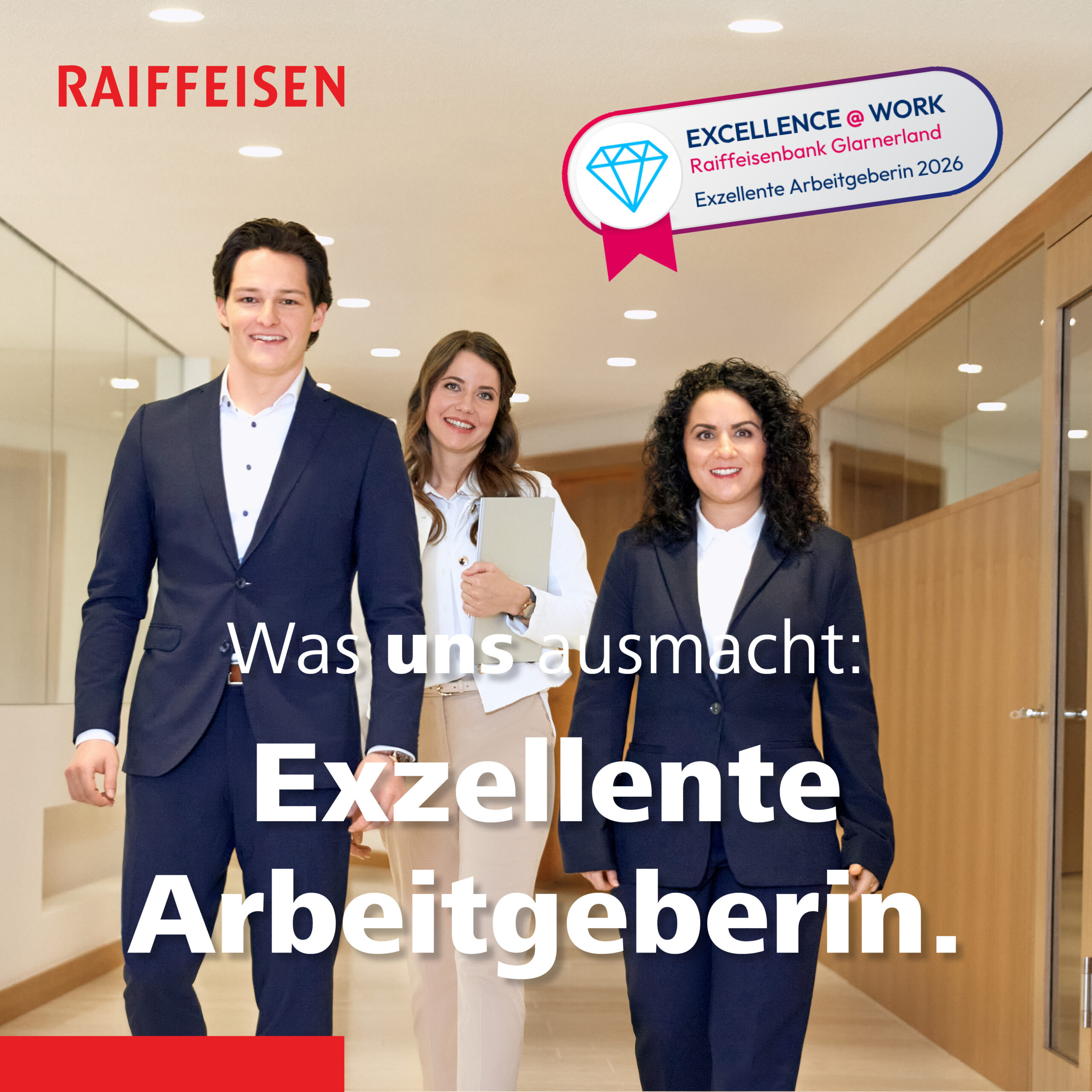
Top Employer: Raiffeisenbank Glarnerland Impresses with Strong Leadership
September 21, 2026
Reading time: 2 min
ValueQuest recently had the honor of presenting the “Excellence@Work Award” to Raiffeisenbank Glarnerland. We extend our heartfelt congratulations.
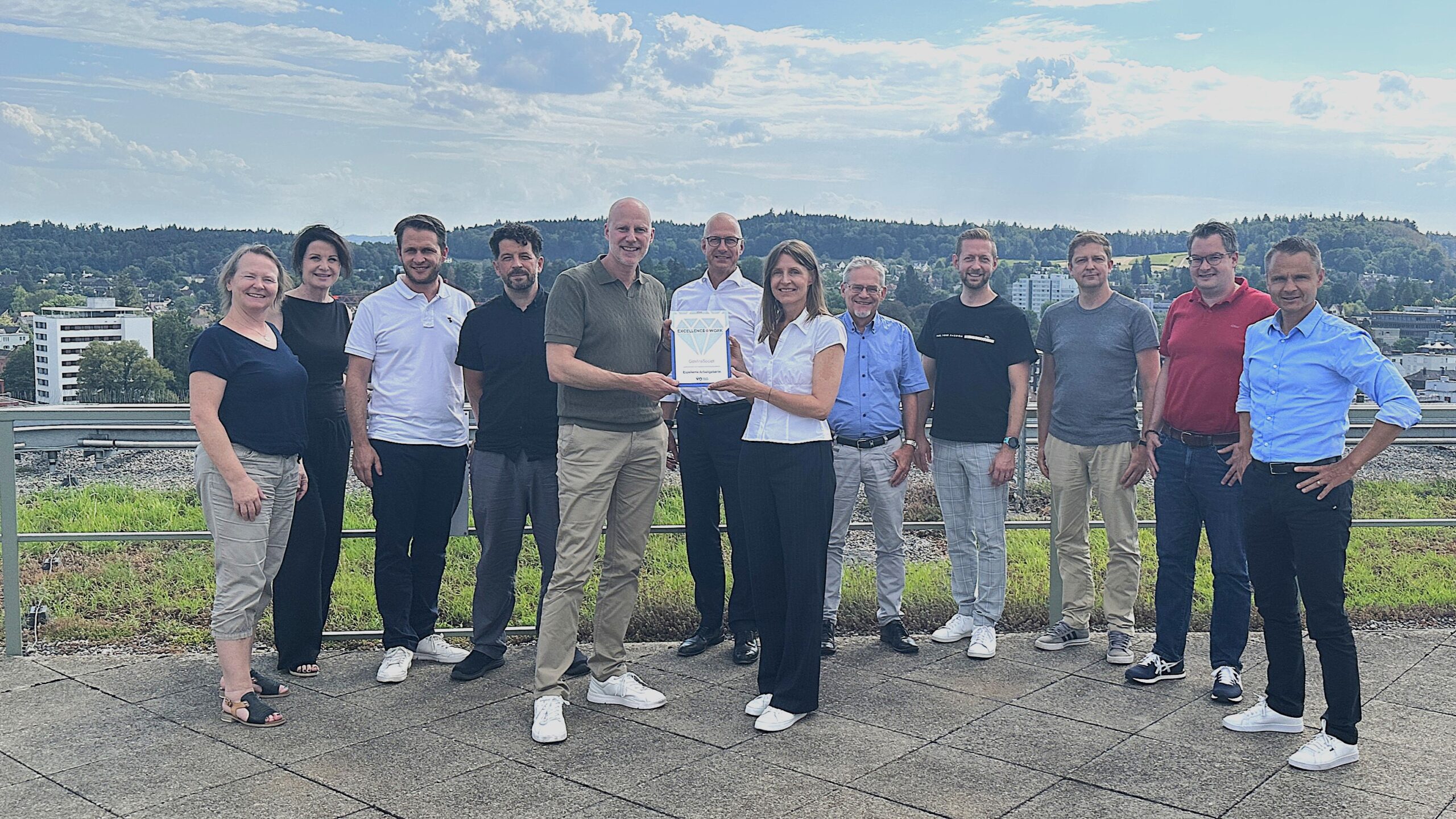
Top Swiss Employers: GastroSocial
September 9, 2026
Reading time: 3 min
GastroSocial has received the 2026 Excellence@Work Award from ValueQuest. With a response rate of 96 percent, a motivation score of 84, and 87 percent of employees serving as brand ambassadors, the company demonstrates a strong employer culture.

Employee Survey: Raiffeisenbank Möhlin Achieves Excellent Results
August 31, 2026
Reading time: 3 min
Raiffeisenbank Möhlin is one of Switzerland's top employers and is receiving our Excellence@Work Award in recognition of this achievement. Congratulations!

Employee Surveys in Switzerland: Find Providers & Tools
August 30, 2026
Reading time: 6 min
Employee Survey in Switzerland: How Do You Find the Right Employee Survey Provider? What Really Matters When It Comes to Anonymity, Tools, Questionnaires, and Analysis.

360-Degree Feedback Questionnaire: Sample, Template, and Sample Questions
August 21, 2026
Reading time: 7 min
Table of Contents A 360-degree feedback process is only as good as its questionnaire. The questionnaire is at the heart of the entire process. It determines whether...
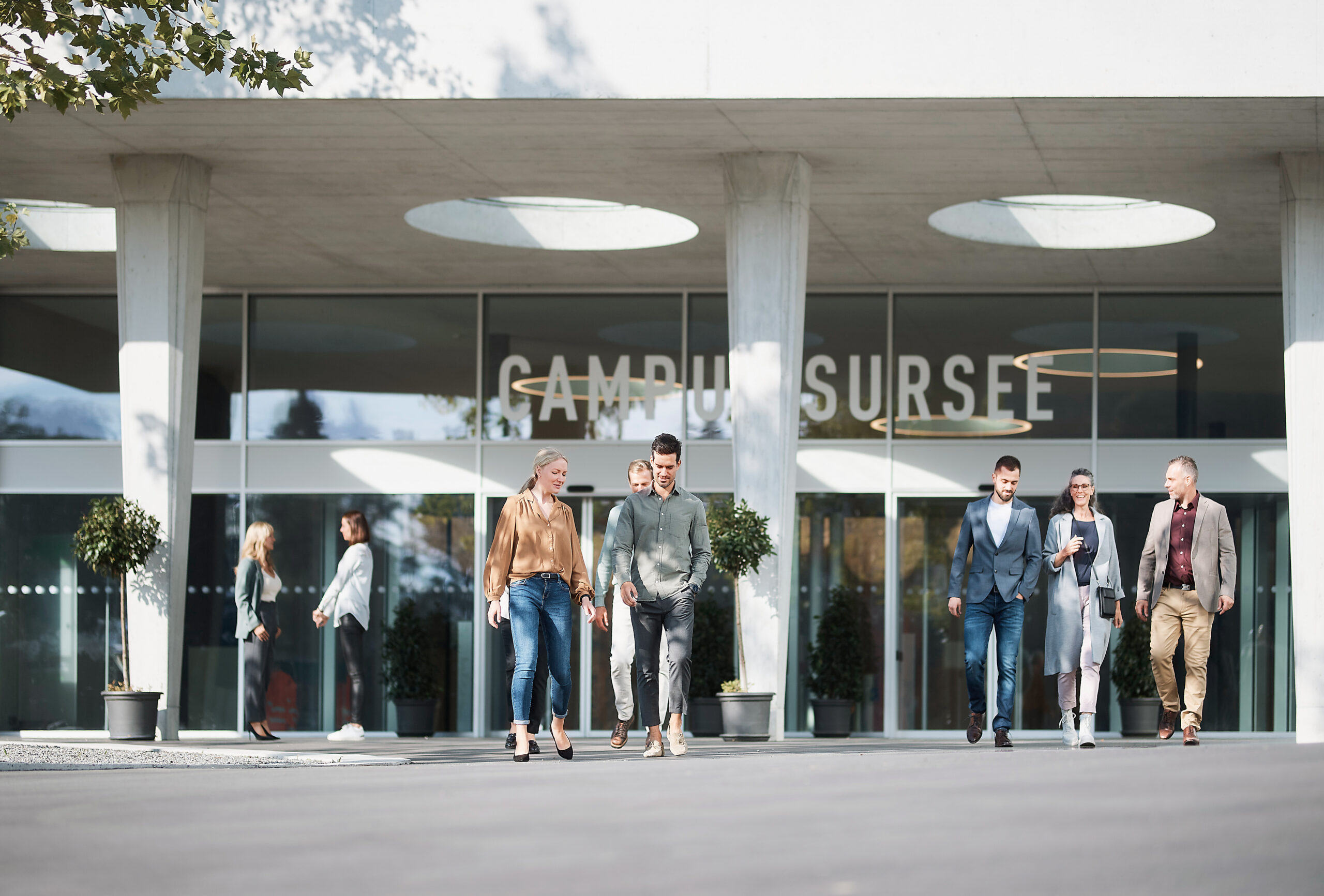
Employee Survey: The CAMPUS SURSEE Foundation Is Among Switzerland's Best Employers
August 5, 2026
Reading time: 2 min
ValueQuest honors particularly attractive employers in Switzerland with the Excellence@Work Award. We recently had the pleasure of presenting the award to the CAMPUS SURSEE Foundation.
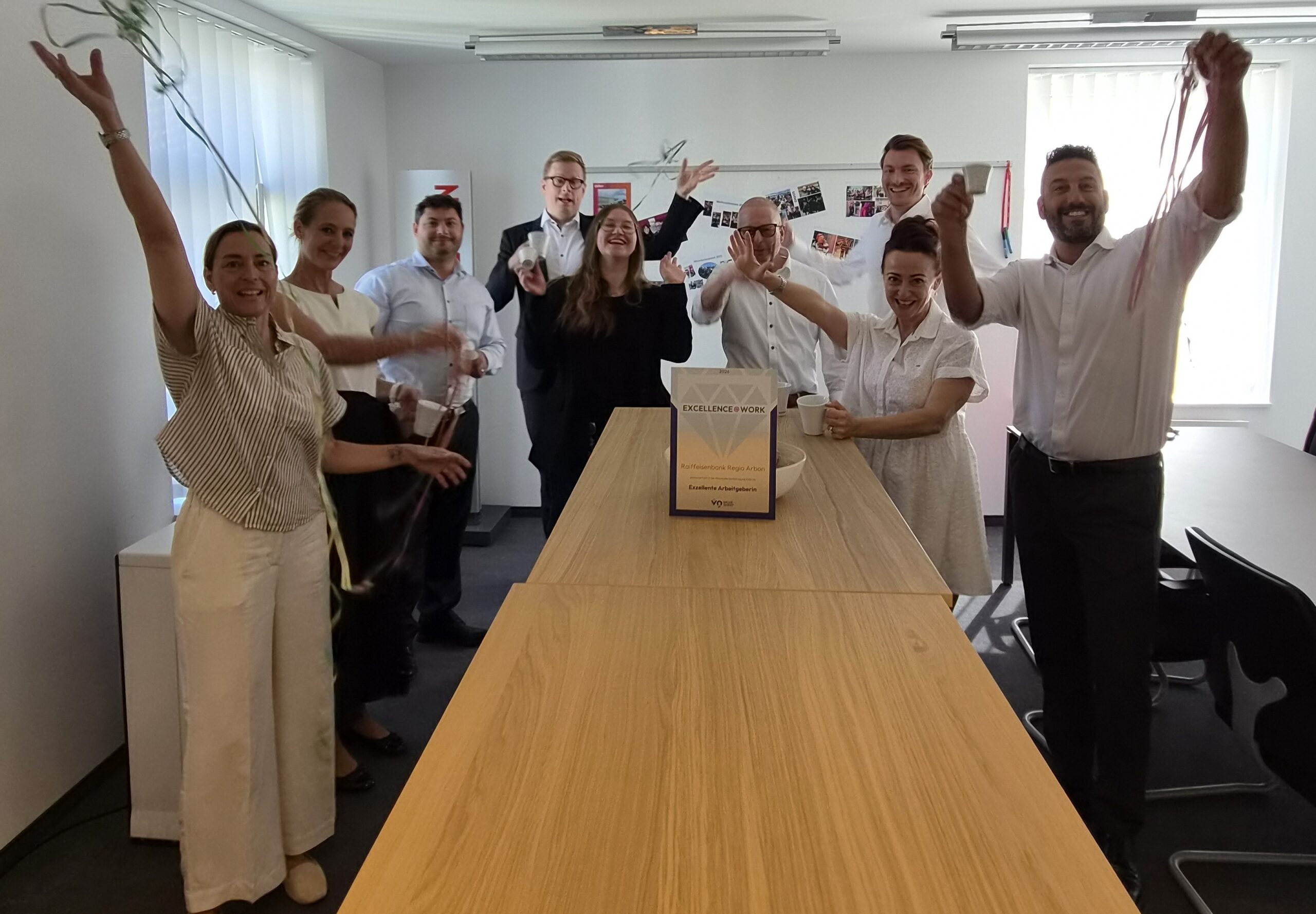
Raiffeisenbank Regio Arbon, a Top Employer: Personal Responsibility as Part of a Strong Corporate Culture
July 7, 2026
Reading time: 2 min
ValueQuest honors particularly attractive employers in Switzerland with the Excellence@Work Award. We recently had the pleasure of presenting the award to Raiffeisenbank Regio Arbon.