In the second part of the fascinating expert interview conducted by Kathrin Neumüller with Gianni Valeri, Managing Director of Leadership & Culture , he gives specific tips on how leadership can be more successful and what he thinks of the discussion on generational differences in the workplace.
Four practical tips for better leadership
Kathrin: Good leadership sounds much easier in theory than it is in practice. Especially when managers are confronted with many operational tasks, they find little time for their employees. What specific four pieces of advice would you give to a manager (e.g. a store manager in retail) who is faced with a lot of operational tasks and has little time for their employees?
Tip 1: Obtain feedback
Gianni: Leadership begins with self-examination, i.e. leading yourself. That's why my first important suggestion is to get feedback on your own leadership: How is my leadership perceived? This feedback can be obtained, for example, from your line manager, from colleagues at the same level or from employees. Admittedly, this takes some effort, because not only praise, but possibly also criticism will come.
Tip 2: Reflect on feedback
Gianni: Review the day or the week and reflect on what happened and what impact your activity had. This self-reflection is essential. It should be at least 30 minutes a week. Once a year is definitely not enough.
Tip 3: Take time for employees
Gianni: Take the time for a regular team meeting and for individual meetings with the team members (approximately every two weeks).
Tip 4: Express praise and criticism directly
Gianni: Always give praise and criticism when it happens and try to balance it well. Don't wait until the qualification interview or the next meeting to praise and criticize. Address something immediately, because the immediacy of feedback massively increases its impact.
How proper self-management and self-reflection can help to improve your own management style
Kathrin: Leadership books often focus on interaction with other people. Your tips are more focused on yourself, i.e. how can we reflect on ourselves, deal with ourselves and manage ourselves. Which specific questions and which specific aspects would you reflect on?
Gianni: Leadership has four aspects that we should always consider:
- Myself as a leader
- My employees
- The situation
- Communication, i.e. how I deliver the message
It is important that during self-reflection I consider what my mood was like on that day and in that situation.
Questions for self-reflection on your own management style
- Did one of my employees have a bad day?
- Has my feedback triggered a reaction? It's about the questions:
- What did I do?
- How was it received?
- What triggered it?
- I want to understand what I have done and how it affects others.
The be-all and end-all of leadership is an authentic demeanor
Kathrin: Is there a leader or role model we can look to for guidance in terms of leadership style?
Gianni: We all have our own individual leadership style. I will never lead like Jack Welsch or Ghandi. Those are the great leaders you look up to as role models. They probably had great talent and have developed and learned. However, I can only lead as I am as a person. Leadership should have an authentic effect on the employee. Everyone leads differently. It is important to find this out. That's why I can't tell anyone how to lead. I can only give advice on how to find out so that you can lead authentically and be credible and genuine. Only then can a good relationship be established between the employees and the manager.
Are the younger generations too lazy to work?
Kathrin: There is a lot of talk about generational differences in terms of employee motivation and work ethic. What trends do you see with regard to the different generations in terms of employee motivation and work ethic?
The accusation that "young people are too lazy to work" goes back to ancient times
Gianni: Elena Obrist from NZZ magazine recently published a column on the subject of "Is youth really lazy?". Obrist searched the media over the last 100 years and came to the conclusion that the "youth of today" is always the worst. The "young versus old" feud is an old issue and was the same 100 years ago.
Kathrin: Probably ever since Seneca, because he was already bothered by the laziness of young people in ancient Rome.
Employees' expectations of their employer are changing
Gianni: Personally, I don't think much of this discussion.Society is changing. And when societies change, people's demands and needs change too. This is where leadership comes into play. Leadership has four factors: the leader, the person being led, the situation and communication. And of course, today I can no longer give orders and hope that they will be carried out. This type of communication probably doesn't go down well with the younger generation. Young people no longer accept this authoritarian approach.
Leadership needs an open dialog
Gianni: So the question is: How do I communicate? How do I work with people in the current situation? How can I fully exploit the potential and ability of my employees? This requires a dialog. At the same time, this doesn't mean that young employees are allowed to do whatever they want. As a manager, I still have to say where the journey is going and what the goal is. I have to give employees a direction. It's about the way in which I do this. Leadership is no longer about giving orders, as it might have been 50 years ago.
I worked with very young people at Coople Switzerland. The average age was 23, but only because of me. Otherwise it would have been much lower. The commitment of these young people was enormous. The first ones came in at six in the morning and the last ones left at ten in the evening. It's a different way of working, a different view of work - you have to accept that. All these employees worked very hard. But it was no longer "nine to five", everyone chose their own rhythm, which was enriching. That's why I can't support these bold statements that young people are too lazy. In future, we will have to work with all generations.
It takes two to build a good relationship. It's the same in leadership. It always takes two people who have the will to do something good together. This is a leadership task. Leadership is not easy, but it is very exciting and an incredibly enriching school.
Kathrin: Dear Gianni, thank you very much for the inspiring exchange. I learned a lot of new things.
Dr. oec. HSG Kathrin Neumüller is an inspiration expert and project manager at ValueQuest. She gives keynote speeches and workshops internationally on the topics of leadership, employee inspiration and empowerment. Would you like to book a keynote speech? Then get in touch with us at info@valuequest.ch or 044 786 32 52.
Feedback from your employees and colleagues is valuable. Reflect on your management style together with ValueQuest and successfully promote employee-centered change in your company. How do you do this? With 360-degree feedback, you will gain differentiated insights into your collaboration with your employees and your leadership style. ValueQuest is your competent partner in this process and enables you to have a smooth and seamless feedback process.
Article published on August 2, 2023
About Dr. Kathrin Neumüller

Dr. oec. HSG Kathrin Neumüller is Co-Managing Director at ValueQuest and an expert in employee inspiration and empowerment. She also teaches strategic management in the MBA program at the ZHAW. She holds a doctorate from the University of St. Gallen (HSG) and studied at the University of Cambridge. Learn more about Kathrin
Inspired? Then share this post via your favorite platform.
Other articles that might interest you ...

AI in the Swiss Insurance Market: What Insurers Can Learn from the Results
October 1, 2026
Reading time: 4 min
Artificial intelligence is not universally accepted in the Swiss insurance market. As a study by ValueQuest shows, customers’ openness to AI depends heavily on how it is used.

AI in the Swiss Insurance Market: Between Acceptance and Skepticism
September 28, 2026
Reading time: 5 min
For many Swiss people, artificial intelligence has become an integral part of everyday life. However, the situation is different when it comes to insurance companies.
Top Employer: Raiffeisenbank Glarnerland Impresses with Strong Leadership
September 21, 2026
Reading time: 2 min
ValueQuest recently had the honor of presenting the “Excellence@Work Award” to Raiffeisenbank Glarnerland. We extend our heartfelt congratulations.
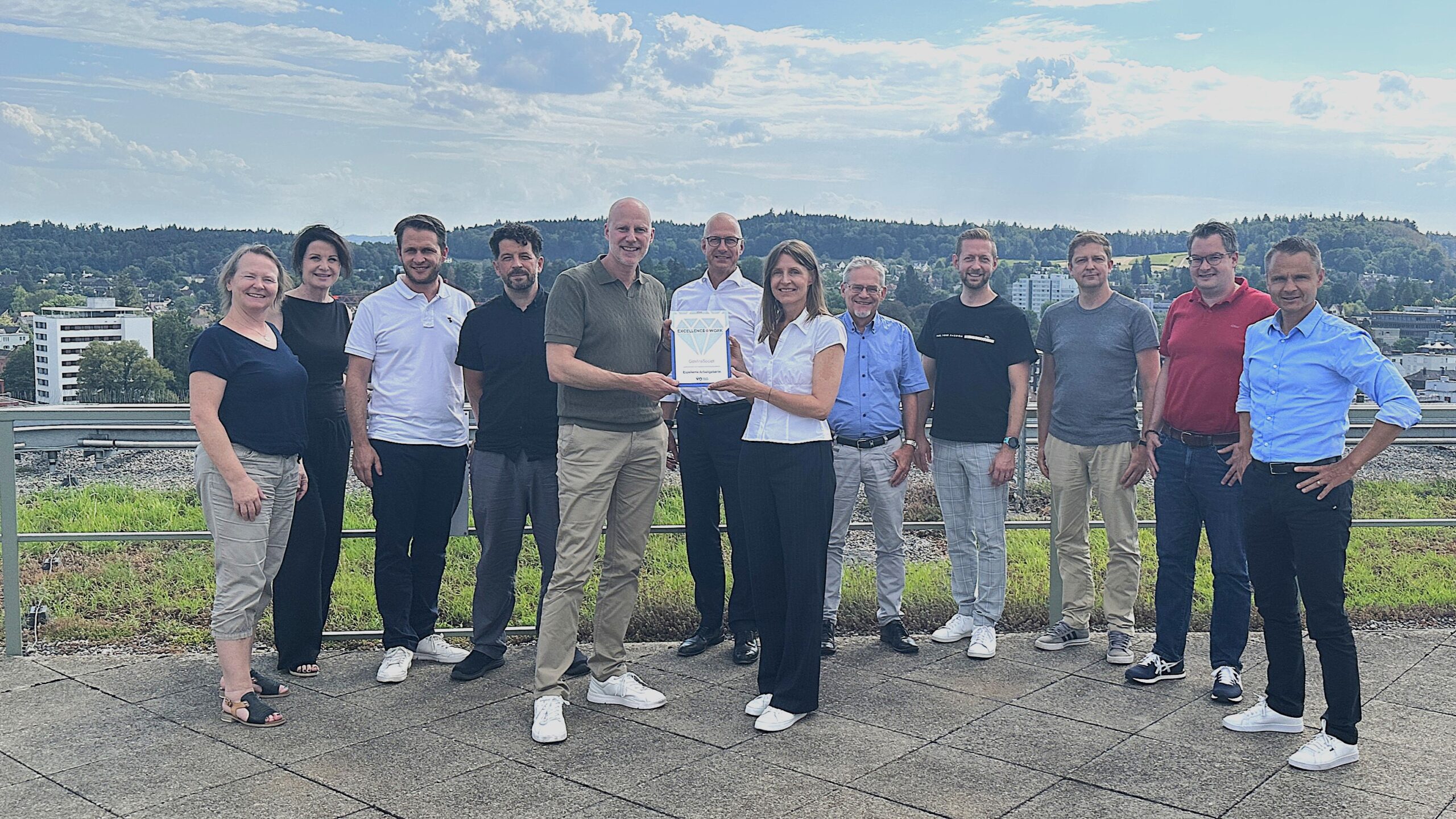
Top Swiss Employers: GastroSocial
September 9, 2026
Reading time: 3 min
GastroSocial has received the 2026 Excellence@Work Award from ValueQuest. With a response rate of 96 percent, a motivation score of 84, and 87 percent of employees serving as brand ambassadors, the company demonstrates a strong employer culture.

Employee Survey: Raiffeisenbank Möhlin Achieves Excellent Results
August 31, 2026
Reading time: 3 min
Raiffeisenbank Möhlin is one of Switzerland's top employers and is receiving our Excellence@Work Award in recognition of this achievement. Congratulations!

Employee Surveys in Switzerland: Find Providers & Tools
August 30, 2026
Reading time: 6 min
Employee Survey in Switzerland: How Do You Find the Right Employee Survey Provider? What Really Matters When It Comes to Anonymity, Tools, Questionnaires, and Analysis.

360-Degree Feedback Questionnaire: Sample, Template, and Sample Questions
August 21, 2026
Reading time: 7 min
Table of Contents A 360-degree feedback process is only as good as its questionnaire. The questionnaire is at the heart of the entire process. It determines whether...
Employee Survey: The CAMPUS SURSEE Foundation Is Among Switzerland's Best Employers
August 5, 2026
Reading time: 2 min
ValueQuest honors particularly attractive employers in Switzerland with the Excellence@Work Award. We recently had the pleasure of presenting the award to the CAMPUS SURSEE Foundation.
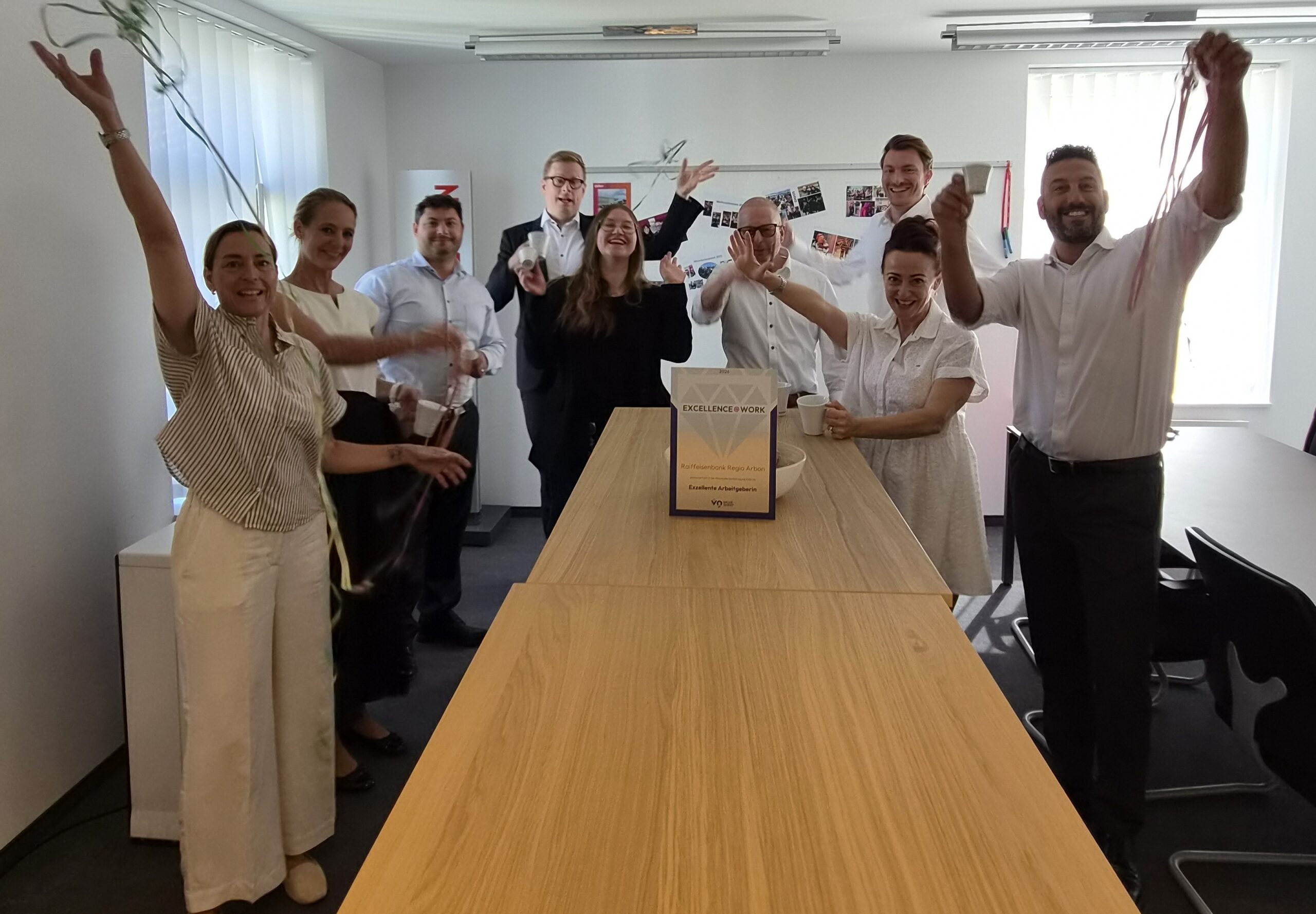
Raiffeisenbank Regio Arbon, a Top Employer: Personal Responsibility as Part of a Strong Corporate Culture
July 7, 2026
Reading time: 2 min
ValueQuest honors particularly attractive employers in Switzerland with the Excellence@Work Award. We recently had the pleasure of presenting the award to Raiffeisenbank Regio Arbon.