We already reported on the advantages of agile organizations in an earlier blog post. Quite a few companies today are asking themselves what their structures should look like (in the future). Clear structures and responsibilities or rather flat hierarchies where everyone is free to make their own decisions, as is the case with many start-ups?
Flat hierarchies are used to make and implement decisions quickly and thus survive in a dynamic and volatile market environment. Among the flat organizational structures, holacracy (also known as holacracy) receives a lot of attention.
What is meant by holacracy
The concept of holacracy was developed by Brian Robertson. It is a model of self-organization in which decision-making processes are rethought and lived in a participatory manner. This results in a bottom-up approach in which employees lower down in the hierarchy can have a say in important decisions.
This concept requires the entire organization of the company to be realigned and redesigned. Hierarchies are reduced to a minimum; instead, there are roles and circles that discuss and distribute their tasks independently.
Active participation in decision-making makes employees feel valued. This autonomy enables them to make better use of their individual strengths and abilities and to find creative solutions. The feeling of being able to act independently thus increases the psychological empowerment of employees (Spreitzer, 1995). Increased empowerment in turn leads to greater employee motivation and company success in the long term.
Why did holacracy come about?
The world of work is changing rapidly and is increasingly characterized by uncertainty. In order to maintain a competitive edge, decisions need to be made faster and faster and change initiatives need to be implemented more quickly. Rigid structures with clear hierarchies often stand in the way of rapid decision-making and implementation. In addition, the focus is no longer just on efficiency, but also on creativity and creative power.
Another reason for companies' growing interest in holacracy is the knowledge economy. More and more companies are generating their revenue through ideas and expertise. As a result, managers rarely have all the expertise required to solve organizational problems. Rather, individuals at all organizational levels should contribute information and ideas and thus contribute to the company's success. New product and service ideas no longer originate exclusively at the top management level (Lee and Edmondson, 2017).
How does holacracy work?
In classically structured companies, all employees have a clearly defined position in the hierarchy. In a holocratic organization, these rigid structures and responsibilities are abolished. Instead, roles are created to manage tasks and projects.
Roles and circles as central elements
Each employee takes on at least one self-chosen role, which must not overlap with the role of another. If several roles come together, they form a so-called holacracy circle, comparable to a working group. Once the task or work has been completed, the roles change. Or they are dissolved and new roles are created.
Holacracy is based on a fixed set of rules - the Holacracy Constitution. Clear rules and coordination in various holacracy meetings ensure order. Among other things, the participants discuss the overarching goals of the week ("tacticals") and specific problems. There are also governance meetings at which the roles and circles are regularly reviewed.
Advantages and disadvantages
Employees determine the direction and distribute tasks independently. This has the advantage for organizations that they can react quickly to challenges and problems. All processes are transparent, which leads to more personal responsibility and ensures greater motivation among employees. Those who like to take on responsibility or work independently can make better use of their strengths and potential in a holocratically organized company.
However, holacracy is often criticized for having too many rules. The Holacracy Constitution is very extensive, which reduces freedom and flexibility. In order to successfully introduce this model in a company, all managers and employees must be familiar with and accept this form of organization. It also requires employees who are willing and able to work independently.
Conclusion
Holacracy is a promising approach for organizations that want to react agilely to change and drive transformation. However, the model does not work for every company; it is probably best implemented in start-ups and smaller organizations.
The introduction of holacracy marks the start of a change management process during which the corporate culture is transformed. It is important for companies to take good care of all employees during the process and to deal with the (initial) difficulties in the best possible way.
Sources:
Lee, Michael Y., and Amy C. Edmondson. "Self-managing organizations: Exploring the limits of less-hierarchical organizing." Research in organizational behavior 37 (2017): 35-58.
Spreitzer, Gretchen M. "Psychological empowerment in the workplace: Dimensions, measurement, and validation." Academy of management Journal 38.5 (1995): 1442-1465.
Article published on June 20, 2023
About Dr. Kathrin Neumüller

Dr. oec. HSG Kathrin Neumüller is Co-Managing Director at ValueQuest and an expert in employee inspiration and empowerment. She also teaches strategic management in the MBA program at the ZHAW. She holds a doctorate from the University of St. Gallen (HSG) and studied at the University of Cambridge. Learn more about Kathrin
Inspired? Then share this post via your favorite platform.
Other articles that might interest you ...

AI in the Swiss Insurance Market: What Insurers Can Learn from the Results
October 1, 2026
Reading time: 4 min
Artificial intelligence is not universally accepted in the Swiss insurance market. As a study by ValueQuest shows, customers’ openness to AI depends heavily on how it is used.

AI in the Swiss Insurance Market: Between Acceptance and Skepticism
September 28, 2026
Reading time: 5 min
For many Swiss people, artificial intelligence has become an integral part of everyday life. However, the situation is different when it comes to insurance companies.
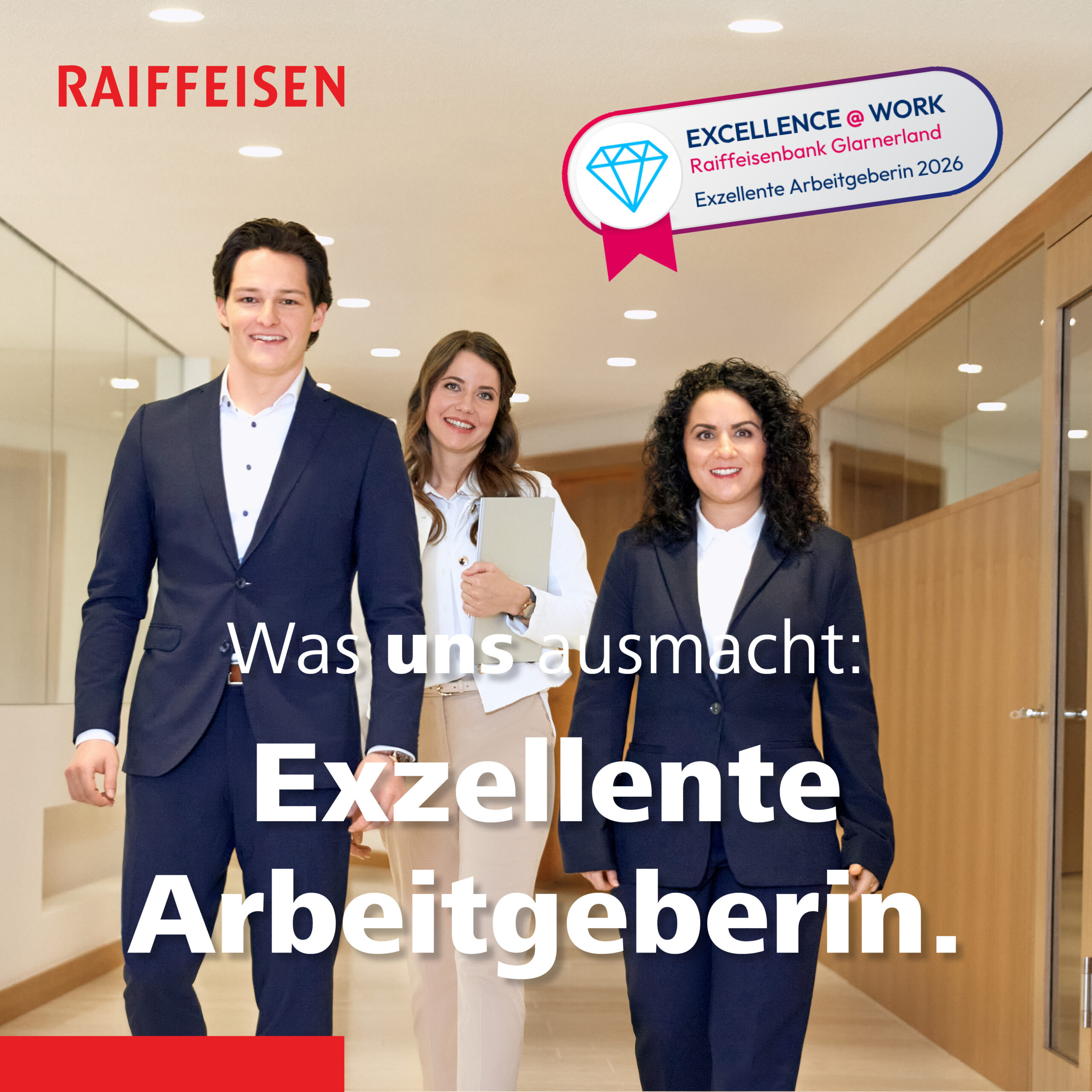
Top Employer: Raiffeisenbank Glarnerland Impresses with Strong Leadership
September 21, 2026
Reading time: 2 min
ValueQuest recently had the honor of presenting the “Excellence@Work Award” to Raiffeisenbank Glarnerland. We extend our heartfelt congratulations.
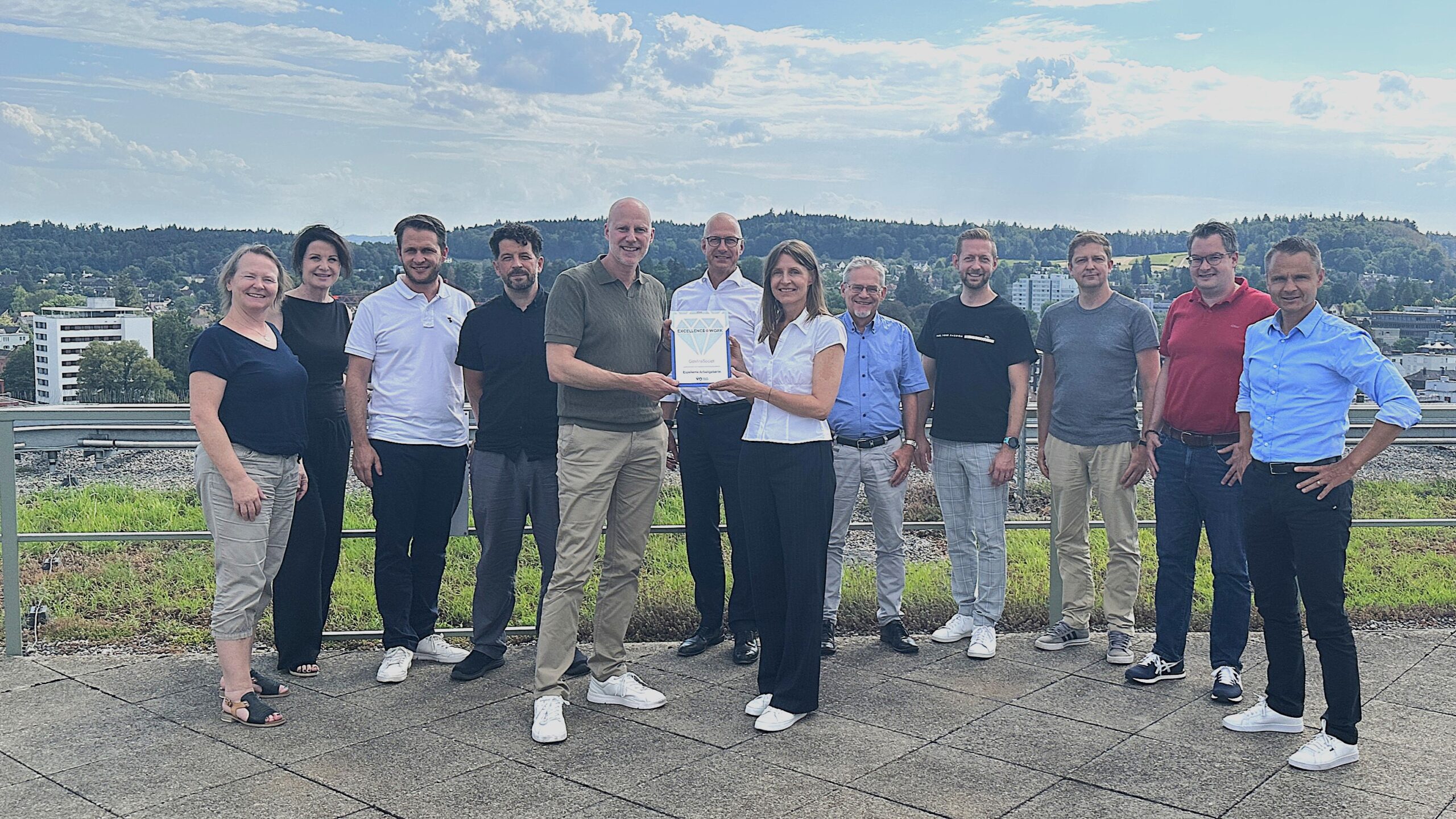
Top Swiss Employers: GastroSocial
September 9, 2026
Reading time: 3 min
GastroSocial has received the 2026 Excellence@Work Award from ValueQuest. With a response rate of 96 percent, a motivation score of 84, and 87 percent of employees serving as brand ambassadors, the company demonstrates a strong employer culture.

Employee Survey: Raiffeisenbank Möhlin Achieves Excellent Results
August 31, 2026
Reading time: 3 min
Raiffeisenbank Möhlin is one of Switzerland's top employers and is receiving our Excellence@Work Award in recognition of this achievement. Congratulations!

Employee Surveys in Switzerland: Find Providers & Tools
August 30, 2026
Reading time: 6 min
Employee Survey in Switzerland: How Do You Find the Right Employee Survey Provider? What Really Matters When It Comes to Anonymity, Tools, Questionnaires, and Analysis.

360-Degree Feedback Questionnaire: Sample, Template, and Sample Questions
August 21, 2026
Reading time: 7 min
Table of Contents A 360-degree feedback process is only as good as its questionnaire. The questionnaire is at the heart of the entire process. It determines whether...
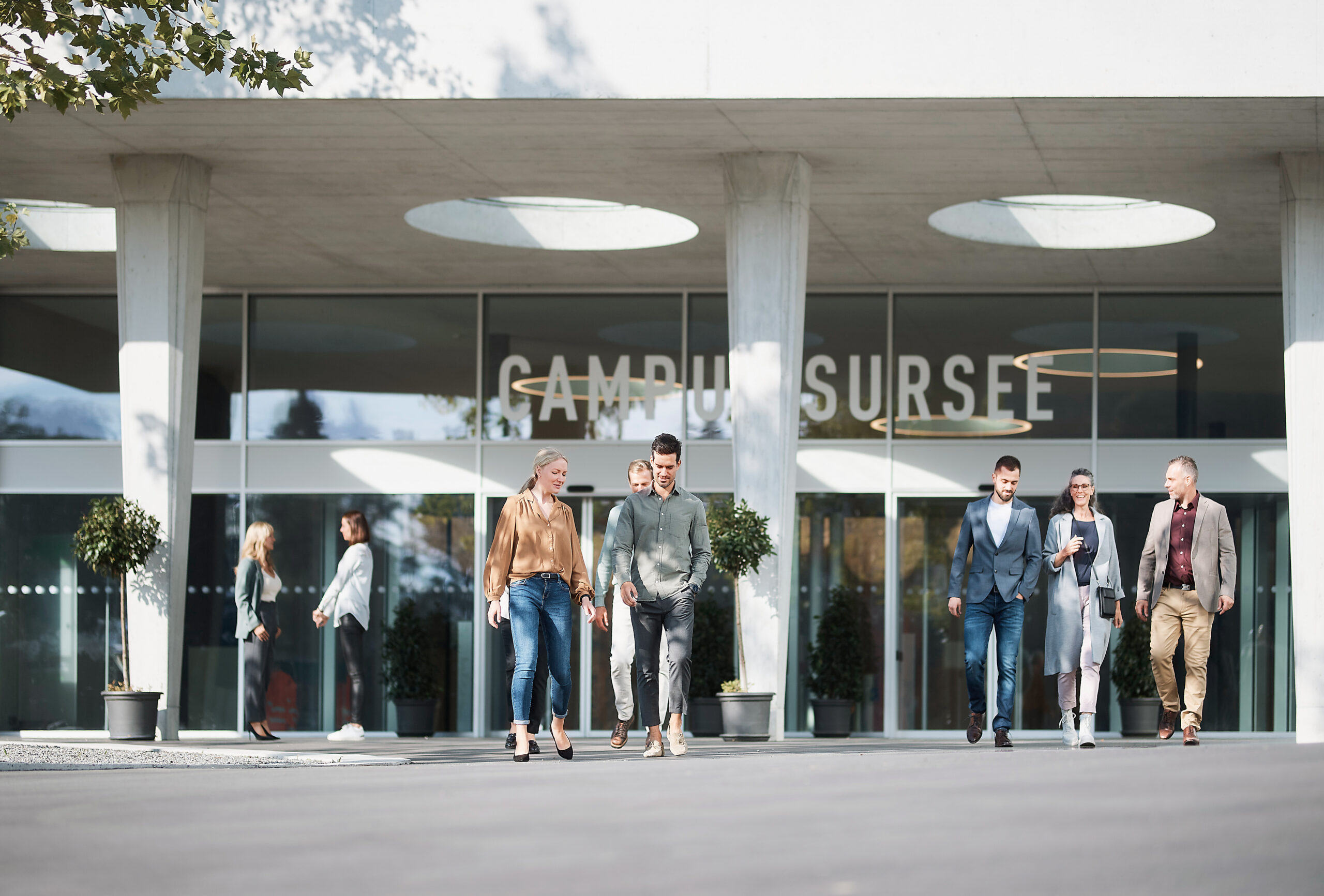
Employee Survey: The CAMPUS SURSEE Foundation Is Among Switzerland's Best Employers
August 5, 2026
Reading time: 2 min
ValueQuest honors particularly attractive employers in Switzerland with the Excellence@Work Award. We recently had the pleasure of presenting the award to the CAMPUS SURSEE Foundation.
Raiffeisenbank Regio Arbon, a Top Employer: Personal Responsibility as Part of a Strong Corporate Culture
July 7, 2026
Reading time: 2 min
ValueQuest honors particularly attractive employers in Switzerland with the Excellence@Work Award. We recently had the pleasure of presenting the award to Raiffeisenbank Regio Arbon.