Table of contents
Definition and differentiation between employee surveys and supervisor feedback
Is an employee survey the same as management feedback?
In short: no.
Even though both feedback tools contain feedback on leadership, the objectives and methodological structure differ significantly.
How does an employee survey differ from supervisor feedback in terms of content?
Employee surveys take a holistic view of how employees experience their day-to-day work. From collaboration, strategy and information flow to processes, development opportunities, leadership culture and leadership quality, employees evaluate their working environment.
The focus is on a collective assessment at team or organizational level, not on the assessment of individuals. The survey captures the general mood, needs and opinions of all employees. The questionnaires cover a wide range of topics and are used for organizational development.
It is an anonymous feedback tool that also provides feedback on leadership, but only in aggregated form (e.g. at team or department level). Perceptions are measured, not individual competencies or leadership styles. The core question to be answered by an employee survey is how employees experience their organization and their everyday life.
Infobox: Definition of employee survey
Question: What is an employee survey?
Answer: An employee survey is an anonymous, standardized tool that companies use to record how employees perceive the organization, culture and collaboration. It provides aggregated results, identifies strengths and areas for action and serves as a basis for improving working conditions.
Leadership feedback, on the other hand, is a targeted development tool for managers. Participating managers receive individual feedback on their leadership behavior with the aim of personal reflection and further development. This is based on specific questionnaires that record the behavior and impact of individual managers, for example on communication, trust, decision-making behavior or feedback culture.
The 360-degree questionnaire is based on competency models and compares self-perception and external perception. The central question from the feedback recipient's perspective is how their individual leadership behavior is perceived and where their personal development areas lie.
Infobox: Definition of 360 degree feedback
Question: What is 360-degree feedback?
Answer: 360-degree feedback is structured management feedback in which a manager receives feedback from several perspectives: from employees, superiors, colleagues and, if necessary, customers. Self-assessment is also recorded. The comparison of self-image and external image reveals strengths, areas for development and differences in perception.
Goals and benefits: When to use which feedback tool?
What are the objectives of an employee survey?
An employee survey provides a comprehensive picture of how employees experience the organization, culture and cooperation. In particular, it serves to
- Analyze the corporate culture and working environment
- to capture the collective perception on topics such as collaboration, communication, strategy and processes
- Identify strengths and areas for action to improve working conditions
- create a sound basis for cultural and organizational development
What are the objectives of 360-degree management feedback?
360° feedback provides managers with an individual assessment of where they stand and helps them:
- Recognize strengths and areas for development
- Promote self-reflection and targeted management development
- Introduce and anchor leadership models or competence models
- Strengthen leadership quality in the company
What benefits do companies derive from an employee survey and 360-degree feedback?
While the employee survey focuses on the collective view of the working environment, management feedback focuses on the management style and the impact of individuals. Strategically, it also serves to anchor a common understanding of leadership. Tailor-made leadership feedback is usually based on the specific leadership principles and competency grids of the respective organization, which are translated into specific, meaningful questions. Frequently, 360° feedback also acts as a touchstone for an existing or newly developed leadership mission statement or competency model.
| Aspect | Employee survey | 360 degree leadership feedback |
|---|---|---|
| Goal | Capture the overall picture of the organization and culture | Individual assessment for managers |
| Focus | Mood, collaboration, processes, strategy, management culture | Behavior, impact and competencies of individual managers |
| Level | Team and organizational level | Individual (manager) |
| Anonymity | Aggregated results only (from team size 5) | Anonymized feedback per feedback group |
| Methodology | Standardized questionnaire with broad topic blocks | Questionnaire on leadership behavior with self-image/external image comparison |
| Benefit | Organizational development, improvement of the working environment | Personal development, strengthening leadership skills |
| Feedback provider | All employees | Employees, superiors, colleagues, optional customers |
| Example question | "Communication within the company works well." | "My manager communicates clear expectations and gives constructive feedback." |
Methodology: How employee surveys and management feedback work
How does an employee survey work?
The employee survey is based on a standardized questionnaire comprising several topic blocks and individual items on the working conditions and attitudes of employees. These include remuneration, strategic orientation of the company, information flow, motivation, satisfaction, cooperation and development opportunities.
The evaluation is usually based on average values and so-called driver models. The latter calculate the influence that certain working conditions - such as perceived fairness or the quality of internal communication - have on key indicators such as motivation or loyalty.
Employee surveys are conducted anonymously to ensure honest and open feedback. The survey is usually conducted online and is based on a structured, standardized questionnaire. The results are only evaluated in aggregated form (e.g. for teams, departments or entire organizations). This ensures anonymity and the focus is on overarching patterns and trends rather than individual responses.
How does 360-degree management feedback work?
360° feedback captures the perception of an individual's leadership behavior from several perspectives:
- Employees (direct reports)
- Supervisor
- Colleagues (peers)
- optional: internal and external customers
In addition to the external perception, self-assessments of the manager are also included. The evaluation shows similarities and differences between self-perception and external perception, identifies strengths and uncovers areas for development.
Practical guide: When 360-degree feedback makes sense
Can the performance review replace 360-degree feedback?
The question is repeatedly asked whether management feedback is really necessary. After all, there are also annual employee appraisals. However, bilateral discussions are no substitute for systematic management feedback. In a management culture characterized by mistrust or fear, critical points are often not addressed openly in personal discussions.
However, a manager's further development depends to a large extent on receiving honest and differentiated feedback on their own leadership behavior. In everyday working life, it is rare for managers to receive such feedback in an open form. Structured 360° feedback creates the necessary framework here. It enables employees to evaluate their manager anonymously and clearly state which behaviors or characteristics have a positive effect - and which they have perhaps long felt to be a hindrance.
360° feedback offers a personal assessment and individual development tool for managers. It shows how one's own leadership is perceived from different perspectives - often with high impact for reflection, self-perception and development. There are various sources.
Why is 360-degree management feedback (in addition to the employee survey) useful?
Best practice is to conduct an employee survey first. This provides a broad picture of the perceived strengths and weaknesses in the working environment and corporate culture. If it becomes apparent that leadership culture or leadership quality are perceived as weaknesses, subsequent leadership feedback can be a suitable instrument for working on these in a targeted manner.
In this case, 360° feedback helps managers to understand their impact from different perspectives, identify areas for development and derive specific measures for their personal development. In this way, the employee survey becomes the starting point - and the management feedback becomes an individual in-depth and development tool.
Can I draw conclusions about the performance and behavior of individual managers from an employee survey?
No. The results of an employee survey are only suitable for evaluating individual managers to a limited extent.
In employee surveys, employees evaluate the leadership culture and quality globally, which cannot be compared with differentiated leadership feedback. If you want specific feedback on your personal leadership behavior, you should use separate leadership feedback.
Why management feedback does not belong in an employee survey
What happens when you try to incorporate management feedback into an employee survey?
The idea of integrating questions about individual managers into a general employee survey may seem efficient at first glance. In practice, however, it leads to methodological, data protection and content-related problems. It can weaken both the impact of and trust in both formats.
- Loss of informative value
Questions in employee surveys are deliberately kept general in order to capture an overall picture of the organization. The necessary depth of detail is therefore lacking for management feedback.
The questionnaire item "Our management ensures clear goals", for example, shows a tendency, but leaves open whether the problem lies in the definition of goals, communication or implementation. If you actually want to promote the development of individual managers, you therefore need more differentiated questions and should not hide them in a general survey. If management feedback is disguised as an employee survey, this can lead to a loss of trust in the organization.
- Inadequate preparation of managers
In both employee surveys and 360-degree feedback, all participants are protected by minimum sizes: In the case of employee surveys, results are only evaluated from a minimum size of usually five participants; in the case of 360-degree feedback, this threshold is usually three people per feedback role (e.g. employees, colleagues).
These minimum sizes protect both the anonymity of the feedback giver and the manager being assessed. With 360-degree feedback, however, the individual manager is clearly the focus of the assessment. Without careful preparation for this process and a clearly communicated, supportive framework for dealing with the results, this can trigger uncertainty or even defensiveness among managers.
- Development of mistrust
Employees can be unsettled when very specific questions about their direct management appear in an otherwise anonymous organizational survey. This gives the impression that the survey is being misused.
As a result, employees are more cautious or give distorted answers in order to avoid drawing conclusions about themselves. Valuable insights are thus lost.
Our tip: A hybrid approach dilutes both instruments. It makes more sense to clearly separate a broad-based and anonymous employee survey from targeted, personalized management feedback. This is the only way to ensure both openness and impact.

Practical tip: What managers can take away from an employee survey
Can managers still take something away from the results of the employee survey for themselves?
Yes.
An employee survey can provide valuable information, especially if managers actively use the results to talk to their team about issues such as
- Trust
- Clarity of objectives
- Quality of communication
- Support in everyday working life
- Decision-making behavior
If, for example, the results show that the transfer of information within the team is rated as inadequate, this can be an opportunity for the manager to introduce regular team updates. Even if such information is not personalized, it provides valuable impetus for improving the management culture.
Important: However, an employee survey is no substitute for personal, structured feedback. If you want to work specifically on your management style, you need concrete feedback on your individual behavior and impact.
Read more about tips, templates and checklists for employee surveys.
Article published on November 8, 2025
About Dr. Kathrin Neumüller

Dr. oec. HSG Kathrin Neumüller is Co-Managing Director at ValueQuest and an expert in employee inspiration and empowerment. She also teaches strategic management in the MBA program at the ZHAW. She holds a doctorate from the University of St. Gallen (HSG) and studied at the University of Cambridge. Learn more about Kathrin
Inspired? Then share this post via your favorite platform.
Other articles that might interest you ...

AI in the Swiss Insurance Market: What Insurers Can Learn from the Results
October 1, 2026
Reading time: 4 min
Artificial intelligence is not universally accepted in the Swiss insurance market. As a study by ValueQuest shows, customers’ openness to AI depends heavily on how it is used.

AI in the Swiss Insurance Market: Between Acceptance and Skepticism
September 28, 2026
Reading time: 5 min
For many Swiss people, artificial intelligence has become an integral part of everyday life. However, the situation is different when it comes to insurance companies.

Top Employer: Raiffeisenbank Glarnerland Impresses with Strong Leadership
September 21, 2026
Reading time: 2 min
ValueQuest recently had the honor of presenting the “Excellence@Work Award” to Raiffeisenbank Glarnerland. We extend our heartfelt congratulations.
Top Swiss Employers: GastroSocial
September 9, 2026
Reading time: 3 min
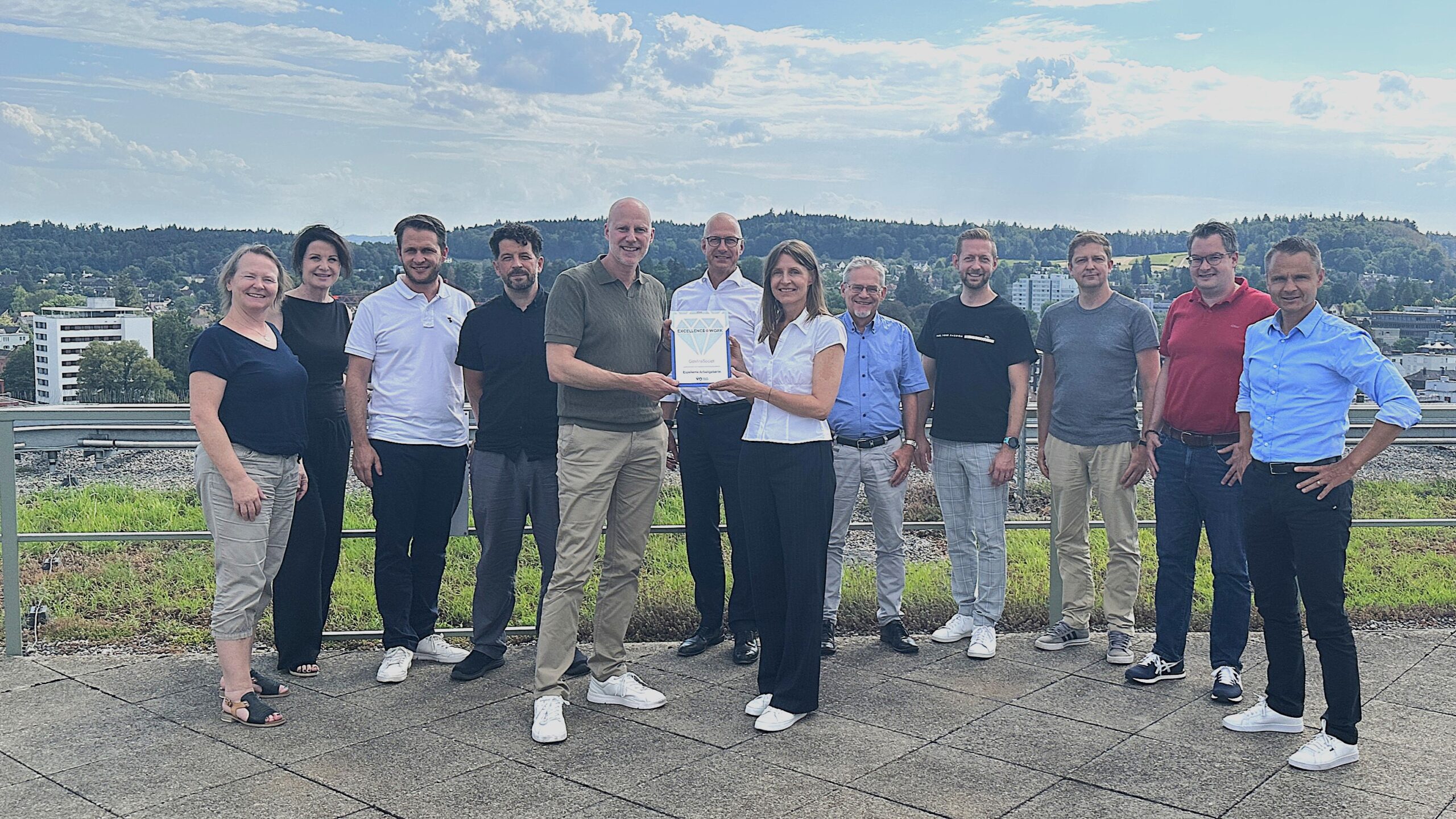
GastroSocial has received the 2026 Excellence@Work Award from ValueQuest. With a response rate of 96 percent, a motivation score of 84, and 87 percent of employees serving as brand ambassadors, the company demonstrates a strong employer culture.

Employee Survey: Raiffeisenbank Möhlin Achieves Excellent Results
August 31, 2026
Reading time: 3 min
Raiffeisenbank Möhlin is one of Switzerland's top employers and is receiving our Excellence@Work Award in recognition of this achievement. Congratulations!

Employee Surveys in Switzerland: Find Providers & Tools
August 30, 2026
Reading time: 6 min
Employee Survey in Switzerland: How Do You Find the Right Employee Survey Provider? What Really Matters When It Comes to Anonymity, Tools, Questionnaires, and Analysis.

360-Degree Feedback Questionnaire: Sample, Template, and Sample Questions
August 21, 2026
Reading time: 7 min
Table of Contents A 360-degree feedback process is only as good as its questionnaire. The questionnaire is at the heart of the entire process. It determines whether...

Employee Survey: The CAMPUS SURSEE Foundation Is Among Switzerland's Best Employers
August 5, 2026
Reading time: 2 min
ValueQuest honors particularly attractive employers in Switzerland with the Excellence@Work Award. We recently had the pleasure of presenting the award to the CAMPUS SURSEE Foundation.
Raiffeisenbank Regio Arbon, a Top Employer: Personal Responsibility as Part of a Strong Corporate Culture
July 7, 2026
Reading time: 2 min
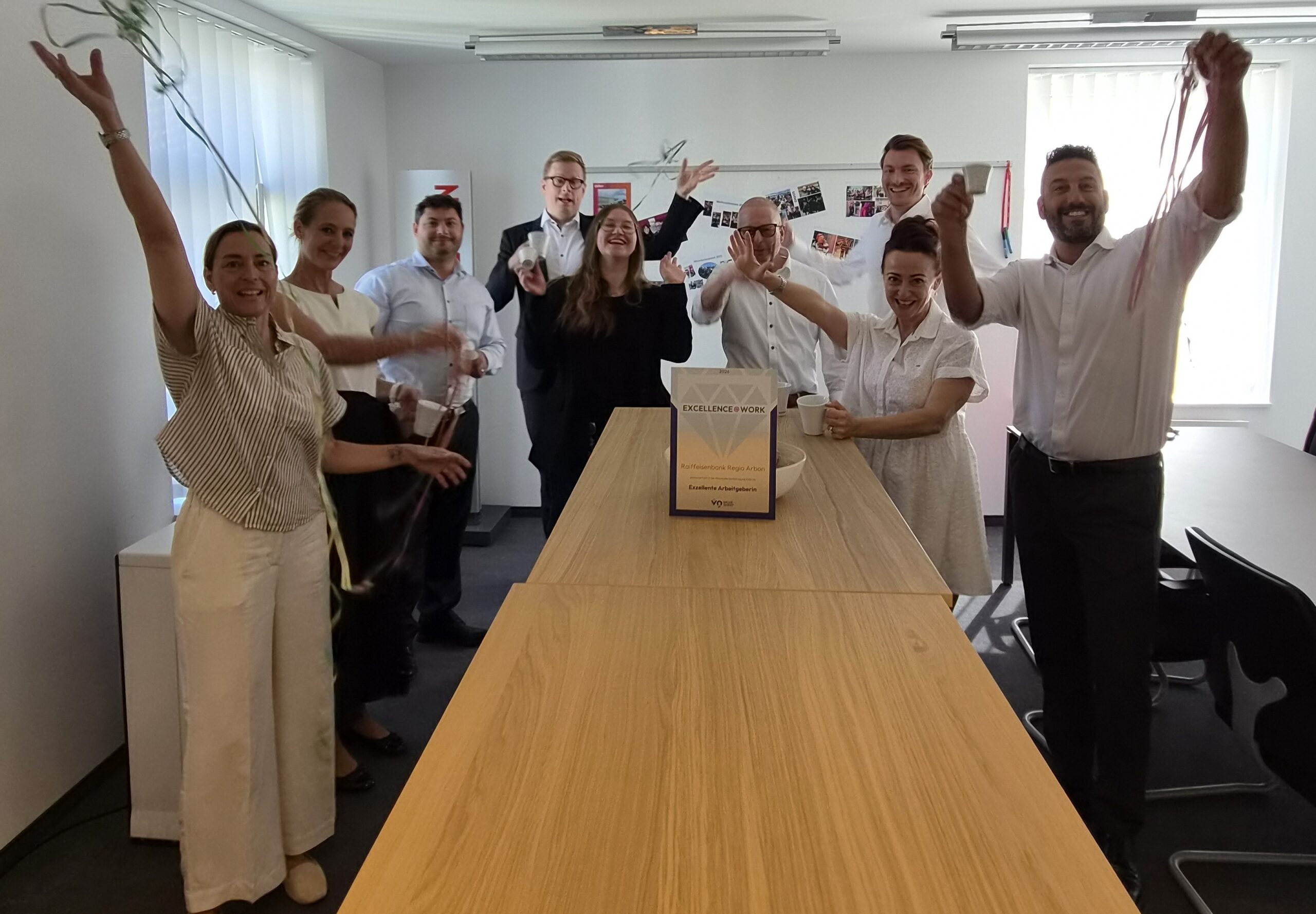
ValueQuest honors particularly attractive employers in Switzerland with the Excellence@Work Award. We recently had the pleasure of presenting the award to Raiffeisenbank Regio Arbon.