Table of contents
Satisfied employees perform better, are more committed and stay with the company longer. Numerous studies show this: The impact of satisfied employees goes far beyond their own willingness to perform. Satisfied employees have a lasting impact on customer satisfaction and contribute to the long-term success of the company.
This is why measuring employee satisfaction is one of the most frequently used questions in employee surveys. In practice, however, the term employee satisfaction is often used ambiguously.
In this article you will learn
- what employee satisfaction actually means
- which scientific models offer helpful orientation
- How employee satisfaction can be measured professionally, including a sample questionnaire and specific example questions
Definition: Employee satisfaction
Anyone who reads through the academic literature on job and employee satisfaction quickly realizes that there are many definitions of employee satisfaction - but no definitive agreement on what exactly it is. Nevertheless, three helpful perspectives can be distinguished that are well suited for practical use.
Employee satisfaction as a target/actual comparison
Organizational researcher Edwin Locke describes employee satisfaction as the relationship between expectations and reality. Put simply:
Employees are satisfied when their expectations are met or exceeded - and dissatisfied when they are not.
One example:
If an employee expects a higher salary than they receive, dissatisfaction arises. If they are positively surprised, employee satisfaction increases.
Employee satisfaction is multi-layered - partial satisfaction
Employee satisfaction is not a single measure, but is made up of several building blocks, so-called partial satisfactions. You can be very satisfied in one area and dissatisfied in another:
Example:
- satisfied with the team,
- neutral in terms of working conditions,
- dissatisfied with the management style.
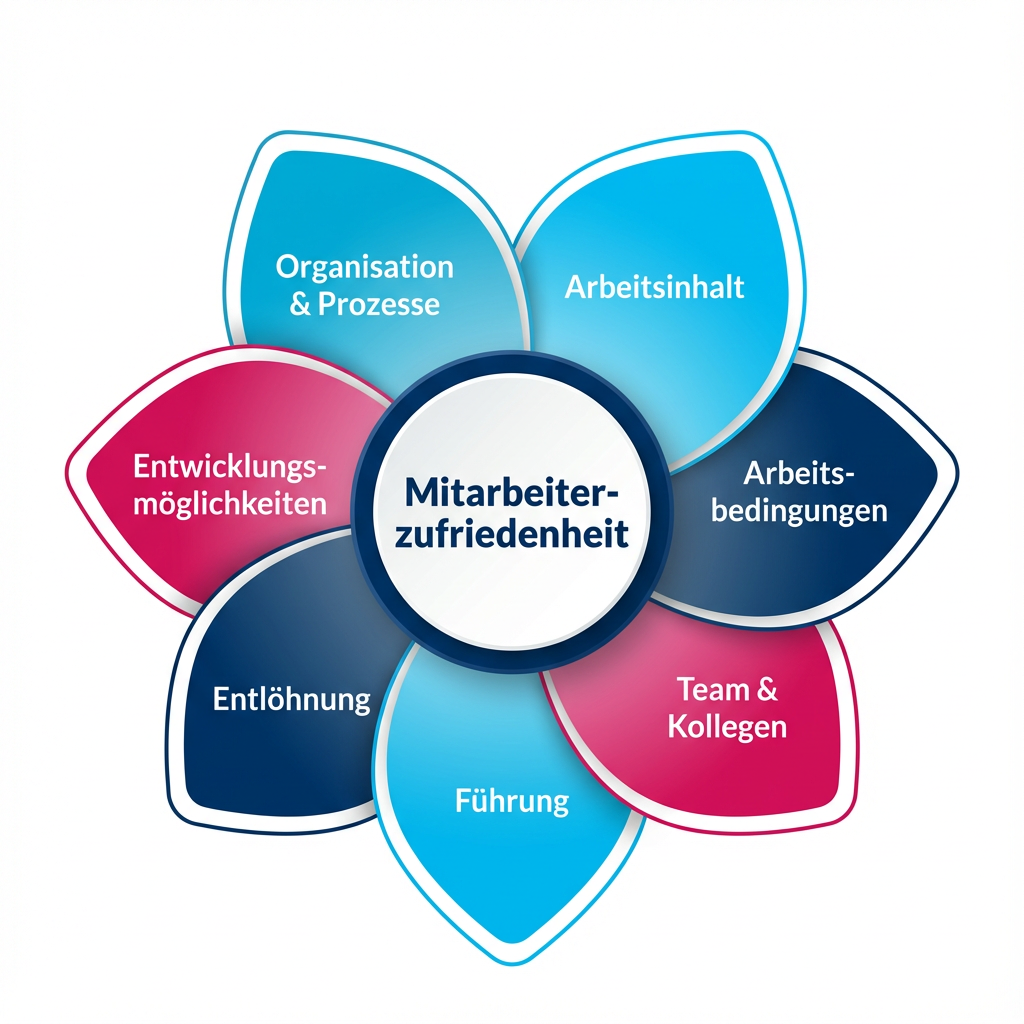
Typical dimensions of job satisfaction are:
- Work content
- Working conditions
- Team and colleagues
- Guidance
- Remuneration
- Development opportunities
- Organization and processes
This multidimensional view of employee satisfaction is particularly important in employee surveys. Only through the differentiated measurement of employee satisfaction can concrete potential for change be identified.
Employee satisfaction as an attitude
Other researchers - including Neuberger and Allerbeck - understand employee satisfaction as an attitude towards the overall work situation. This attitude is made up of two types of employee satisfaction:
- Cognitive employee satisfaction: What do I think about my work? (e.g. "My tasks make sense", "My workload is fair") Cognitive employee satisfaction is related to an objective evaluation. For example, someone may rationally feel that their tasks are meaningful or that their manager treats them fairly.
- Emotional/affective employee satisfaction: How do I feel at work? (e.g. proud, stressed, motivated, frustrated) Emotional employee satisfaction describes how the employee feels at work - they can feel exhausted, stressed or indifferent.
This perspective on employee satisfaction makes it clear:
Employee satisfaction is not only based on objective facts, but also on the individual perception of employees.
So two employees can have exactly the same working conditions - and still be completely differently satisfied. Why? Because each employee views their work situation through their own personal lens:
- Previous experience
- Values and expectations
- Individual load limits
- Personality
- Private life situation
All these factors influence how a person interprets and perceives their work - and therefore also how satisfied or dissatisfied they are.
In practice, this means that even if all the objective framework conditions are right, employee satisfaction can be low if the subjective perception is negative. In the same way, employees can be satisfied despite a high workload if they experience the meaning and opportunities to shape their role as positive.
A concrete example: two employees are given the same work assignment. One employee sees it as an opportunity, feels motivated and is satisfied with the task. The other employee interprets it as an additional burden, feels stressed and reacts with dissatisfaction. Although the general conditions are objectively the same, the subjective perception leads to different levels of employee satisfaction.
Objectively, the task is identical. The attitude towards the work makes the difference when it comes to employee satisfaction.
Impact and benefits of satisfied employees
Employee satisfaction is far more than just a barometer of mood. It influences key indicators of company performance and determines competitiveness, customer relationships and employer attractiveness in the long term. Research results, including those of Winter (2005), show clear correlations between employee satisfaction and factors such as commitment, performance, fluctuation, absenteeism, customer-oriented behavior and economic success.
Satisfied employees identify more strongly with their role and the organization. They show more commitment, are more likely to think along with the company, contribute ideas and stay with the company longer. Particularly in times of a shortage of skilled workers and increased pressure to transform, employee satisfaction has a stabilizing effect and promotes loyalty and motivation.
Employee dissatisfaction, on the other hand, often has a hidden effect - not only through resignations, but also through internal distancing. It can lead to a higher error rate, poorer service, increased sickness reports and a decline in the willingness to innovate. Teams in which dissatisfaction is not recognized or addressed often develop a culture of withdrawal instead of co-creation.
Systematic measurement of employee satisfaction is worthwhile in order to manage these effects in a targeted manner. It makes it possible to identify risks at an early stage and introduce targeted measures.
Effect of employee satisfaction
- Higher motivation and productivity
- Stronger identification with the company and vision
- Higher commitment and lower fluctuation
- Less absenteeism and sick leave
- Positive influence on service quality and customer satisfaction
- Greater willingness to actively support change
- More commitment and innovative strength
Typical consequences of employee dissatisfaction
- Inner resignation and decrease in motivation
- Rising sickness rate
- Higher fluctuation and loss of expertise
- Poorer service and product quality
- Lower willingness to change and innovation passivity
Measuring employee satisfaction
Measuring employee satisfaction is challenging because it encompasses both subjective perceptions and objective working conditions. There are direct and indirect methods to measure employee satisfaction.
Survey methods for measuring employee satisfaction
Direct survey methods of employee satisfaction
Direct methods are aimed at explicitly asking employees about their employee satisfaction. According to the Hans Böckler Foundation, these include:
- Written surveys (questionnaires): Classic employee survey or employee survey that is conducted in writing or digitally. It allows the anonymized and systematic collection of standardized data and is particularly suitable for larger companies.
- ValueQuest offers a scientifically sound employee survey that makes employee satisfaction, motivation and corporate culture visible.
- Interviews: Personal interviews or semi-structured guided interviews can be used to supplement quantitative surveys. They provide deeper insights, but are time-consuming.
- Workshops and focus groups: Group discussions provide space for opinions to be expressed and promote dialog between management and employees.
- Online surveys: Thanks to digital tools, surveys can now be rolled out quickly and evaluated easily. They are particularly suitable for carrying out regular pulse checks and shorten response times. ValueQuest uses modern platforms including evaluation dashboards for this purpose.
Indirect survey methods of employee satisfaction
In addition to direct surveys, indirect indicators can also provide information on employee satisfaction:
- Absenteeism and fluctuation: Frequent sick leave or high resignation rates can indicate dissatisfaction.
- Accidents and complaints: An increasing number of accidents at work or complaints signals problems in the working environment.
- Participation in programs: Low participation in training programs or projects can reflect dissatisfaction.
These indicators are useful for comprehensive monitoring. However, they do not replace the employee survey, as they do not identify causes, but merely measure symptoms of employee satisfaction.
Likert scale
Almost all scientifically based instruments for measuring employee satisfaction use a Likert scale. It usually consists of five or seven response levels ranging from "strongly disagree" to "strongly agree". This translates subjective assessments into measurable results.
The Likert scale is important because it
- reflects different opinions of employees in a differentiated way
It shows not only whether someone agrees, but also to what extent. This enables companies to recognize whether employees are only moderately satisfied or express very positive opinions. This gradation is crucial in order to take targeted action and differentiate between a slight need for improvement and critical problem areas. - is easy to understand for employees
The scale is intuitive and does not require a complex assessment. Employees only have to assess the extent to which they agree with a statement. This leads to a higher willingness to participate and fewer misunderstandings in the interpretation of the question. - enables a reliable statistical evaluation
As the responses are recorded numerically, they can be automatically evaluated, compared and analyzed over time. Companies can recognize trends, identify critical areas and, if necessary, make differences between teams or locations visible. This enables data-based decisions instead of subjective assessments.
Whether a five- or seven-point scale is chosen depends on the aim of the survey and the target group. Odd scales offer a neutral middle ground. Even scales, for example with four or six levels, force a clear decision and avoid neutral answers.
Providers of employee surveys also work with such Likert scales as standard. They enable automated analysis and make it easier to compare results over time or between teams. At ValueQuest, we use the six-point Likert scale for employee surveys.
In addition to the quantitative survey using scaled questions, open questions, i.e. comment fields, should be integrated. They give employees space to explain the background and formulate specific suggestions for improvement. Such information helps to better understand the figures and supports an open feedback culture.
Sample questionnaire and sample questions
Numerous standardized and scientifically tested instruments and questions are available for measuring employee satisfaction. These tools enable companies to measure employee satisfaction precisely and accurately. Questionnaires that were developed in organizational research and are now also integrated into digital tools for employee surveys are particularly well established.
The following questions are regarded as central standards in research and practice:
| Questionnaire / construct | Origin | Relevance |
| Job Descriptive Index (JDI) | Smith et al, 1969 | Internationally one of the most widely used instruments for measuring employee satisfaction |
| Work description sheet (ABB) | Neuberger & Allerbeck, 1978 | Significant in German-speaking countries |
| SAZ (scale for measuring job satisfaction) | Various | Frequently used in scientific studies |
| Minnesota Satisfaction Questionnaire (MSQ) | Weiss et al. | Detailed model, differentiates between intrinsic and extrinsic employee satisfaction |
| Job Diagnostic Survey (JDS) | Hackman & Oldham | Combines work design and employee satisfaction |
| Job Satisfaction Survey (JSS) | Spector | Particularly suitable for service companies |
| MODI (Mannheim Organizational Diagnostic Instrument) | University of Mannheim | Combines several modules including culture, leadership and employee satisfaction |
An effective questionnaire for measuring employee satisfaction should cover several topics and provide clear starting points for improvement. The questions must be clearly formulated, easy to understand and directly related to the work situation. Ideally, companies combine closed questions (e.g. using a Likert scale) with supplementary open questions in order to obtain both measurable results and qualitative insights.
Below you will find a selection of typical questions for measuring employee satisfaction. All examples are suitable for a 5- or 7-point Likert scale.
| Dimension (partial satisfaction) | Sample questions (Likert scale) |
| General employee satisfaction | "Overall, I am satisfied with my current work situation." "I am satisfied with my company as an employer." |
| Work content | "I enjoy my work." (emotional) "I find my tasks meaningful." (cognitive) "My tasks correspond to my abilities." |
| Leadership (quality & behavior) | "I am satisfied with the way my manager treats me." (emotional) "Management decisions are comprehensible." (cognitive) |
| Team & Community | "I feel like I belong in my team." (emotional) "We support each other in the team." |
| Psychological safety | "I can openly say what I think without fearing negative consequences." "I feel safe to speak up about mistakes." |
| Working environment & general conditions | "I am satisfied with my workplace and the equipment." "The spatial conditions support my productivity." |
| Digital working environment | "The digital tools make my daily work easier." "I am satisfied with the technical infrastructure (e.g. systems, software)." |
| Load & Energy | "I have enough energy to do my job well." (emotional) "The workload is sustainable in the long term." (cognitive) |
| Sense & values (purpose reference) | "I recognize a meaning in my work." (cognitive) "I am proud to be part of this company." (emotional) |
| Fairness & equal treatment | "I feel that employees are treated fairly." "Decisions are made fairly, regardless of position or function." |
| Innovation & change | "New ideas are taken seriously and pursued." "I am satisfied with the way changes are supported in the company." |
| Remuneration & Benefits | "I feel fairly remunerated compared to similar functions." "I am satisfied with the additional benefits." |
| Bonding & future prospects | "I can imagine working for the company in the future." "I would recommend the company as an employer (eNPS)." |
Ideally, employee satisfaction should be measured twice in an employee survey - before and after answering the detailed questions.
Why does it make sense to measure employee satisfaction twice?
- At the beginning, employees are often not aware of what exactly contributes to their employee satisfaction. They answer spontaneously according to their gut feeling and without reflection.
- Reflecting on individual dimensions (e.g. task, team, leadership) sometimes changes the overall assessment. Employees have now dealt with the individual aspects of their working environment and make a reflective assessment of their job satisfaction.
- This shows whether employee satisfaction is stable or has been perceived rather superficially.
If overall satisfaction improves at the end, this indicates that positive aspects were perceived more strongly than expected. If it falls, this may be an indication of blind spots or underestimated problem areas.
Open questions
Closed questions show how satisfied an employee is. Open-ended comments are important to understand why an employee gives this score. Open comments provide context, emotions and concrete suggestions for improvement.
Typical open questions are, for example
- "Which two changes would make your work much easier?"
- "What particularly motivates you in your work at the moment?"
- "Is there something that is frustrating you at the moment? Please explain."
Even if the evaluation of open responses takes a little more time, it is worth the effort. Modern digital tools can increasingly analyze text responses automatically and thus provide valuable information for targeted measures.
Advantages and limitations of open questions in the employee survey
A balanced questionnaire combines both types of questions.
| Question type | Advantage | Disadvantage |
| Closed questions (scale) | Measurable, easily comparable, can be evaluated automatically | does not provide any background information |
| Open questions | shows causes and emotions | Evaluation more complex |
| Combination of both question types | Generates action knowledge for the implementation of the employee survey | requires careful design |
Measuring changes in employee satisfaction
Not only what is measured, but also how it is measured influences the significance of the results on employee satisfaction. Many companies only measure current employee satisfaction. This often fails to take into account whether employee satisfaction has changed over time - and how.
Particularly in the case of changes, such as after a reorganization, new management structures or process adjustments, it is important to recognize whether measures are having an effect. Consistent employee satisfaction can be positive, but it can also mean that employees have come to terms without being motivated (resigned employee satisfaction). In order to differentiate between the two, it is important to look at the development over time.
It is therefore advisable to combine absolute employee satisfaction with relative employee satisfaction.
In addition, a short follow-up question is recommended to capture the background, for example:
"What was the most important reason for this change?"
or
"What would have to happen for your employee satisfaction to improve?"
| Measurement type | Typical employee satisfaction issue | What does this make visible? |
| Absolute measurement | "How satisfied are you with your current work situation?" | Current state of employee satisfaction |
| Relative measurement | "How has your employee satisfaction developed in the last twelve months?" (improved / remained the same / deteriorated) | Change in employee satisfaction over time |
When is it particularly useful to measure changes in employee satisfaction?
- after the introduction of new measures (e.g. leadership training, team workshops)
- during change processes or cultural transformation
- in regular pulse surveys to monitor trends
- if an apparently stable level of employee satisfaction is to be questioned
The inclusion of relative measurement significantly increases the informative value of survey results. It not only shows how satisfied employees currently are, but also how their employee satisfaction has developed and whether changes have already had an impact. In dynamic organizations in particular, this approach provides valuable information for managing measures.
- "How satisfied are you with your current work situation?"
- "How has your employee satisfaction developed in the last twelve months?"
- "What was the most important reason for this change?" (open question)
| Result of the survey | Interpretation | Implication for the company |
| High employee satisfaction, deep willingness to change | Resigned employee satisfaction | Risk of standstill, little active participation |
| Low employee satisfaction, high willingness to change | constructive employee dissatisfaction | Opportunity for development, utilizing potential for improvement |
| High employee satisfaction, high motivation | Stable employee satisfaction | Optimum condition, can be used as best practice |
| Low employee satisfaction, low motivation | Stable employee dissatisfaction | critical, requires targeted immediate measures |
Is employee satisfaction enough?
In order to interpret employee satisfaction correctly, it is not enough to simply measure employee satisfaction levels. Companies should also include key figures that say something about employees' willingness to help shape the company and their emotional commitment.
Employee satisfaction should never be viewed in isolation. A realistic picture only emerges in combination with employee commitment, energy, willingness to change and loyalty. A high employee satisfaction score is only positive if employees are willing to actively participate. Low employee satisfaction, on the other hand, can be valuable if it is constructive and there is a willingness to change.
Employee satisfaction should therefore always be included in a staff survey in conjunction with other questions, for example on employee motivation and commitment.
| HR-KPIsbit | What becomes visible |
| Employee commitment | Motivation and personal commitment |
| Willingness to change | Willingness to actively participate |
| Employee Net Promoter Score (eNPS) | Intention to recommend and emotional attachment |
| Energy level / stress experience | Emotional employee satisfaction |
| Intention to fluctuate | Remaining in the company |
| Number of ideas or suggestions for improvement | Willingness to innovate and participate |
Ideal time for an employee survey
The timing of an employee survey has a greater influence on the results than many companies assume. A person's satisfaction depends not only on long-term experience, but also on short-term moods and external circumstances. Research by Daniel Kahneman and Amos Tversky shows how strongly situational factors can influence our judgment.
In an experiment by Kahnemann and Tversky, coins were randomly placed in the printer. People who "discovered" them rated their life satisfaction significantly higher, even though nothing had objectively changed. It was a simple mood stimulus, but it had a positive short-term effect on the rating.
What does this mean for employee surveys?
The measurement of employee satisfaction in a company can also be distorted by current events. A stressful phase, a management meeting, a bonus decision or the introduction of a new tool can influence the answers more than actual long-term satisfaction.
| Industry | Bad timing | Appropriate time |
| Retail / Retail | November - Christmas | February or spring |
| Building trade | Project completion under time pressure | Mid-project term |
| Financial services | Directly after bonus payment | Between the bonus periods |
| Healthcare | Pandemic peak / flu epidemic | Stable normal operation phase |
| Industry | Production changeover | One to two months later |
This is particularly evident in the retail sector: a survey before Christmas or during other peak periods can lead to artificially negative results. At the same time, an employee survey directly after a successful project or event can lead to unusually high ratings.
Plan your employee survey carefully. Don't conduct it when things are "busiest", but when the work situation can be depicted as realistically as possible.
The ideal time to measure employee satisfaction is a phase in which neither exceptionally positive nor exceptionally negative events influence the mood. Short-term emotions have a demonstrable effect on satisfaction levels. If you time the survey carefully, you will obtain more realistic results - and avoid misinterpretations that could lead to incorrect measures.
- A period with a stable workload
- No immediately preceding positive or negative events
- A clear indication in the questionnaire that answers should be evaluated independently of individual situations (e.g. "Please rate your satisfaction based on your overall experience in the last year")
Best practice: Ideal time for employee surveys
- Do not carry out during periods of high stress (e.g. peak season, end of year, before major events)
- Not directly after bonuses, employee celebrations or promotion rounds
- Optimal: in a stable, representative operating phase
- Wait two weeks after major changes
- Communicate in advance that the survey is to be assessed independently of short-term situations
- For seasonal companies, ideally in the average period of the financial year
Interpreting employee satisfaction correctly
Not all employee satisfaction is the same. There are a few pitfalls when interpreting the satisfaction values of your employee survey.
High employee satisfaction does not necessarily have to be positive
The Bruggemann model distinguishes between different forms of employee satisfaction and employee dissatisfaction. Central to this is the realization that dissatisfaction does not necessarily have to be negative.
In technical terms, this is called constructive employee dissatisfaction and resigned employee satisfaction.
For example, employees can be dissatisfied and at the same time actively looking for solutions. This so-called constructive employee dissatisfaction can be an important driver for change.
Conversely, there is resigned employee satisfaction, where employees appear satisfied but show no motivation to improve. In practice, it therefore makes sense to view dissatisfaction not only as a risk, but also as an indication of development potential.
- Constructive dissatisfaction → the employee is dissatisfied but willing to actively seek solutions
- Resigned employee satisfaction → the employee is satisfied but not willing to change
- Employee dissatisfaction can be a positive stimulus if it triggers a willingness to change
What does this mean in concrete terms for the design and interpretation of employee surveys?
- A high level of employee satisfaction is only positive if there is a willingness to change and commitment at the same time.
- Low employee satisfaction can be valuable if it reveals potential for improvement ("constructive dissatisfaction").
- Employee surveys should therefore not only measure employee satisfaction, but also commitment, willingness to change or energy levels.
- Employee survey tools should automatically ask about critical values, for example:
- "What specifically would have to change for you to be happier?"
- Ask not only about employee satisfaction, but also about motivation to act (e.g. "I am willing to actively contribute to improvement.").
Practical example: What survey results can actually tell us
A company conducts an employee survey. The results show that employees are very satisfied with management behavior. At the same time, the willingness to actively participate in improvements is significantly lower. The opposite can be seen in the area of teamwork: employee satisfaction is relatively low, but employees are motivated to actively contribute and drive change.
At first glance, a high level of employee satisfaction with management seems positive. Only additional analysis reveals that employee satisfaction does not automatically mean commitment or willingness to change. According to the Bruggemann model, this can be interpreted as follows: High employee satisfaction coupled with a low willingness to change indicates resigned employee satisfaction. The situation is accepted, but not actively shaped. This harbors the risk of stagnation.
In contrast, the lower employee satisfaction with high motivation in the team area shows constructive employee dissatisfaction. Employees feel that the situation is in need of improvement and are actively involved. This can be a valuable driver for further development.
More pay does not automatically create more satisfaction
Herzberg distinguishes between hygiene factors and motivators. Hygiene factors such as salary, working conditions or the behavior of the manager prevent employee dissatisfaction if they are sufficiently present. However, they do not generate genuine employee satisfaction. Instead, motivators such as recognition, responsibility or development opportunities are crucial. In practice, this means that a fair salary ensures that employees are not dissatisfied, but only meaningful tasks and appreciation measurably increase employee satisfaction.
- Hygiene factors → prevent employee dissatisfaction, but do not generate employee satisfaction
Examples: Wages, working conditions, relationship with the manager - A fair wage is necessary, but not sufficient for employee satisfaction
Maslow's pyramid of needs
Maslow describes five levels of human needs: from physiology and safety to social belonging, recognition and self-actualization. Employees are satisfied when their work fulfills as many of these needs as possible. However, this rigid order only applies to a limited extent in practice. Many people strive for social connectedness and personal development at the same time. In terms of employee satisfaction, this means that the better the work matches a person's individual needs, the higher the level of employee satisfaction.
- Employee satisfaction arises when work fulfills central needs
(e.g. security, belonging, recognition, self-realization) - The order of the levels is not necessarily linear: employees can have several needs at the same time.
For example: someone has enough financial security, but still struggles with insecurity and at the same time wants more belonging in the team and more meaning in their work. Higher needs can be important, even if they are not perfectly fulfilled.
A nurse, for example, works in a stressful environment (high workload, security not felt to be optimal), but stays because meaning, recognition and relationships with clients are extremely important to her. - People often pursue several needs at the same time
- Employee satisfaction increases when working conditions match individual needs.
Maslow's needs pyramid provides valuable information for the interpretation of employee satisfaction values in your employee survey. It shows that employee satisfaction is not one-dimensional, but depends on the extent to which various needs are met - from security and reliability to belonging, recognition and meaning. When analyzing the results, this means that a single value for employee satisfaction says little about why employees are satisfied or dissatisfied.
For example, a person may be stressed or suffer from a high workload, but still appear satisfied because they experience their work as meaningful or have strong social ties within the team. Conversely, there may be objectively good framework conditions - such as stable working hours or appropriate remuneration - and yet employee satisfaction remains low if emotional or development-oriented needs are not taken into account. Employees often have several needs at the same time. Therefore, a good result in the area of "working environment" cannot hide the fact that there is a lack of meaning, recognition or development potential.
In terms of interpretation, this means that two company divisions with similar levels of employee satisfaction can have completely different requirements for action. It is not just a question of how high employee satisfaction is, but which needs are behind it and whether basic needs (e.g. security) or higher needs (e.g. meaning, design, growth) are addressed.
Article published on November 28, 2025
About Dr. Kathrin Neumüller

Dr. oec. HSG Kathrin Neumüller is Co-Managing Director at ValueQuest and an expert in employee inspiration and empowerment. She also teaches strategic management in the MBA program at the ZHAW. She holds a doctorate from the University of St. Gallen (HSG) and studied at the University of Cambridge. Learn more about Kathrin
Inspired? Then share this post via your favorite platform.
Other articles that might interest you ...

AI in the Swiss Insurance Market: What Insurers Can Learn from the Results
October 1, 2026
Reading time: 4 min
Artificial intelligence is not universally accepted in the Swiss insurance market. As a study by ValueQuest shows, customers’ openness to AI depends heavily on how it is used.

AI in the Swiss Insurance Market: Between Acceptance and Skepticism
September 28, 2026
Reading time: 5 min
For many Swiss people, artificial intelligence has become an integral part of everyday life. However, the situation is different when it comes to insurance companies.

Top Employer: Raiffeisenbank Glarnerland Impresses with Strong Leadership
September 21, 2026
Reading time: 2 min
ValueQuest recently had the honor of presenting the “Excellence@Work Award” to Raiffeisenbank Glarnerland. We extend our heartfelt congratulations.
Top Swiss Employers: GastroSocial
September 9, 2026
Reading time: 3 min
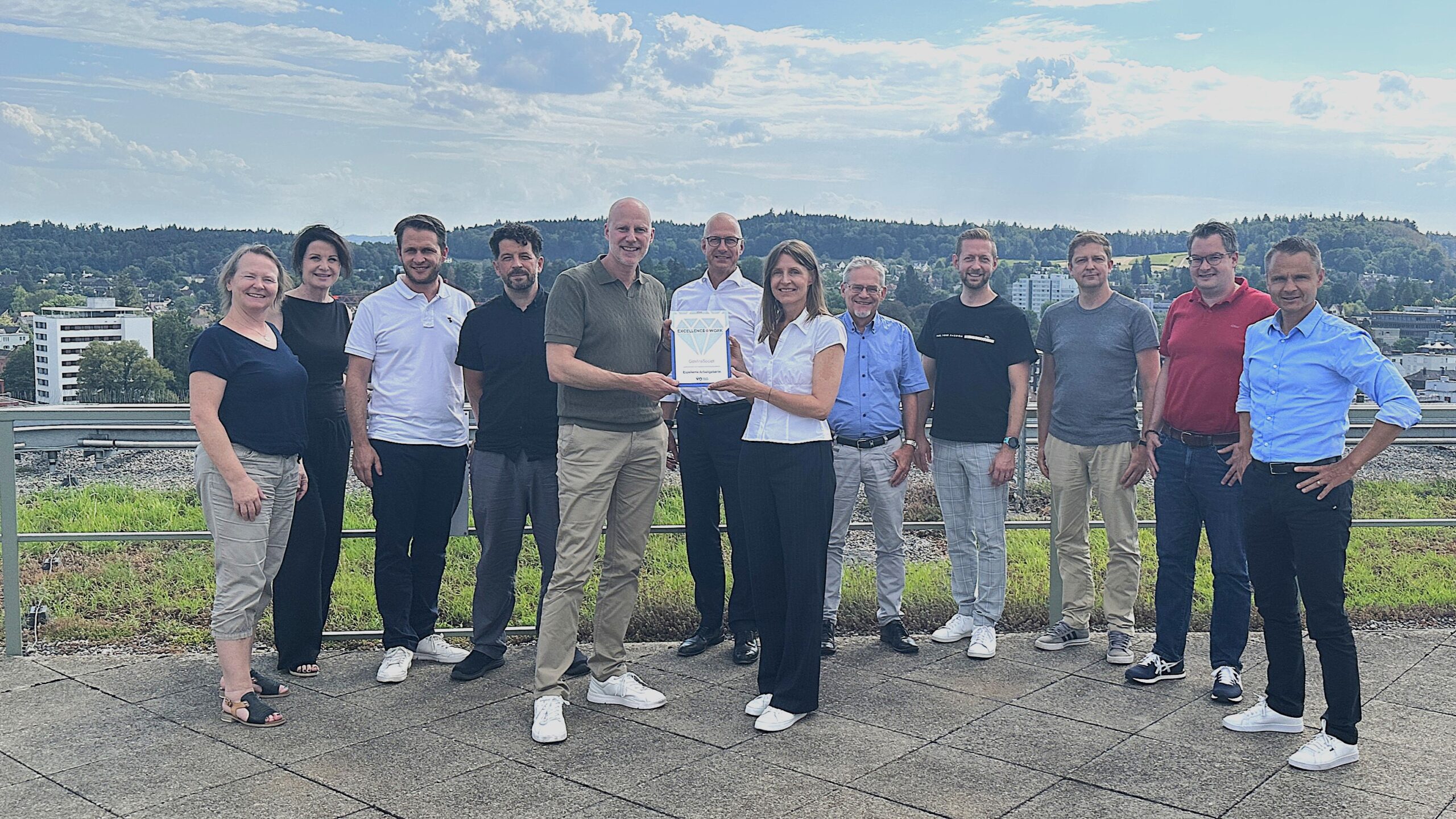
GastroSocial has received the 2026 Excellence@Work Award from ValueQuest. With a response rate of 96 percent, a motivation score of 84, and 87 percent of employees serving as brand ambassadors, the company demonstrates a strong employer culture.

Employee Survey: Raiffeisenbank Möhlin Achieves Excellent Results
August 31, 2026
Reading time: 3 min
Raiffeisenbank Möhlin is one of Switzerland's top employers and is receiving our Excellence@Work Award in recognition of this achievement. Congratulations!

Employee Surveys in Switzerland: Find Providers & Tools
August 30, 2026
Reading time: 6 min
Employee Survey in Switzerland: How Do You Find the Right Employee Survey Provider? What Really Matters When It Comes to Anonymity, Tools, Questionnaires, and Analysis.

360-Degree Feedback Questionnaire: Sample, Template, and Sample Questions
August 21, 2026
Reading time: 7 min
Table of Contents A 360-degree feedback process is only as good as its questionnaire. The questionnaire is at the heart of the entire process. It determines whether...

Employee Survey: The CAMPUS SURSEE Foundation Is Among Switzerland's Best Employers
August 5, 2026
Reading time: 2 min
ValueQuest honors particularly attractive employers in Switzerland with the Excellence@Work Award. We recently had the pleasure of presenting the award to the CAMPUS SURSEE Foundation.
Raiffeisenbank Regio Arbon, a Top Employer: Personal Responsibility as Part of a Strong Corporate Culture
July 7, 2026
Reading time: 2 min
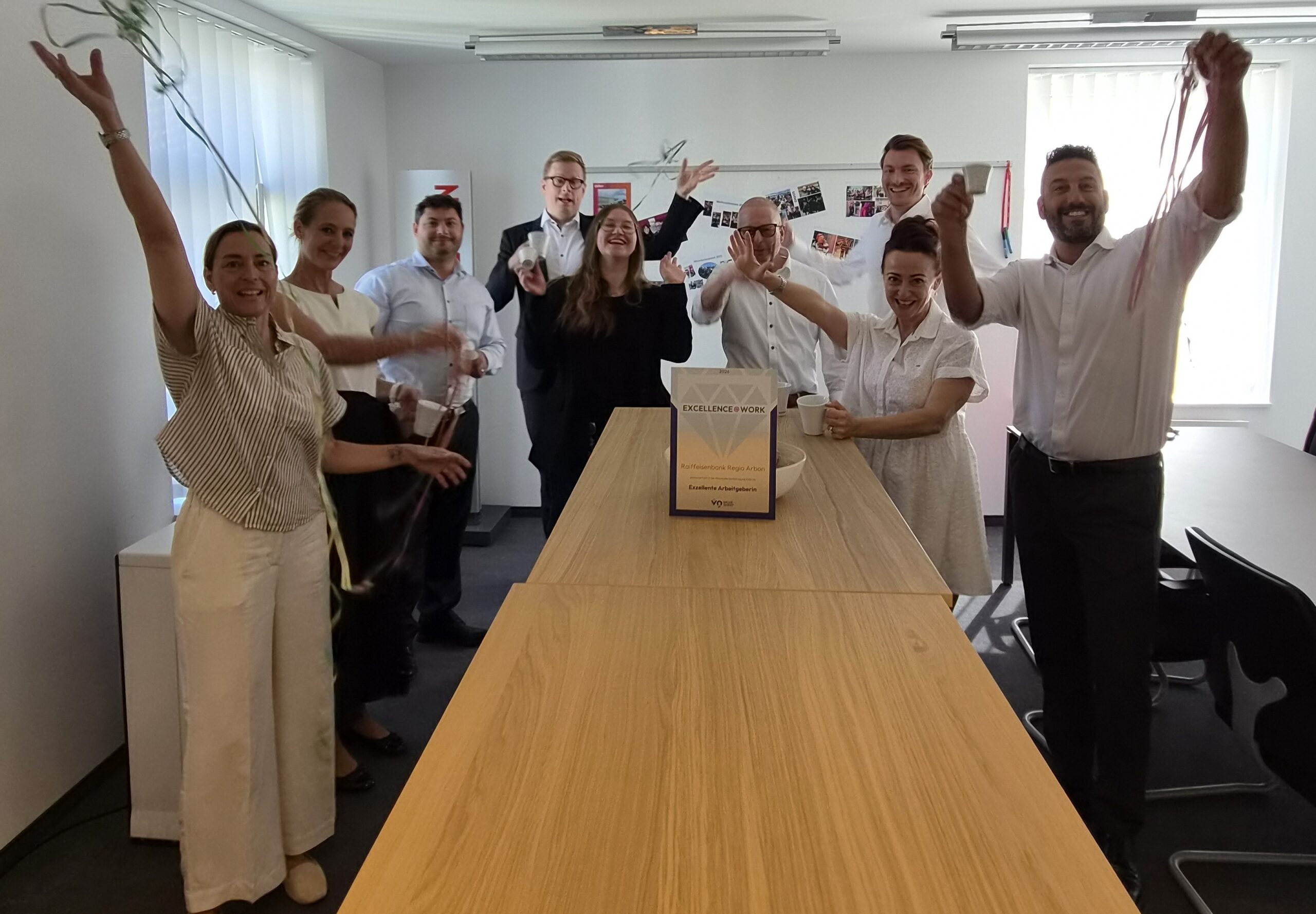
ValueQuest honors particularly attractive employers in Switzerland with the Excellence@Work Award. We recently had the pleasure of presenting the award to Raiffeisenbank Regio Arbon.