Why the Likert scale is so important
The Likert scale is one of the most widely used measuring instruments in empirical research. It allows subjective assessments to be quantified - for example, how strongly someone agrees or disagrees with a statement.
Especially in the employee survey or in 360° feedback This is crucial: only if answers are collected in a structured and comparable manner can clear recommendations for action be made.
How a Likert scale works
A classic Likert scale consists of a series of response options - usually five or seven levels - that lead from a negative to a positive attitude.
An example:
"I feel sufficiently supported by my manager."
1 - Strongly disagree
2 - Disagree
3 - Neither
4 - Agree
5 - Strongly agree
This creates a simple, intuitive scale that is understandable for both respondents and analysts.

Example of a 5-point Likert scale for measuring agreement - from "strongly disagree" to "strongly agree".
The optimal scaling: 5 or 7 points? Or 10 points?
In practice, 5-level or 7-level scales are usually used.
-
5-point scales are clear and promote a high response rate.
-
7-point scales allow finer gradations and are particularly suitable for experienced respondents or in scientific contexts.
Which variant is better depends on the objective and the target group - ValueQuest supports you in choosing the right model. The limitation to 5 or 7 points has statistical and psychological reasons:
The Likert scale is designed to do two things:
-
Differentiate between subjective opinions,
-
remain simple and intuitive at the same time.
- If it is too short (e.g. 3 points), subtle nuances are lost.
- If it is too long (e.g. 9 or 10 points), many respondents are overwhelmed - they often don't know whether 8 or 9 really makes a difference.
5- and 7-level scales are therefore regarded as the optimum compromise between:
-
cognitive simplicity (answers remain clearly distinguishable)
-
Measurement accuracy (sufficient variance for statistical evaluations)
For odd-numbered scales (e.g. 5 or 7 points), there is always a neutral mean value, i.e. a "neither" option. This allows respondents to express a neutral or undecided attitude. In the case of even scales (e.g. 4 or 6 points), this middle point is deliberately removed in order to force respondents to express a clear tendency - agreement or disagreement.
Why are there still 10-point scales?
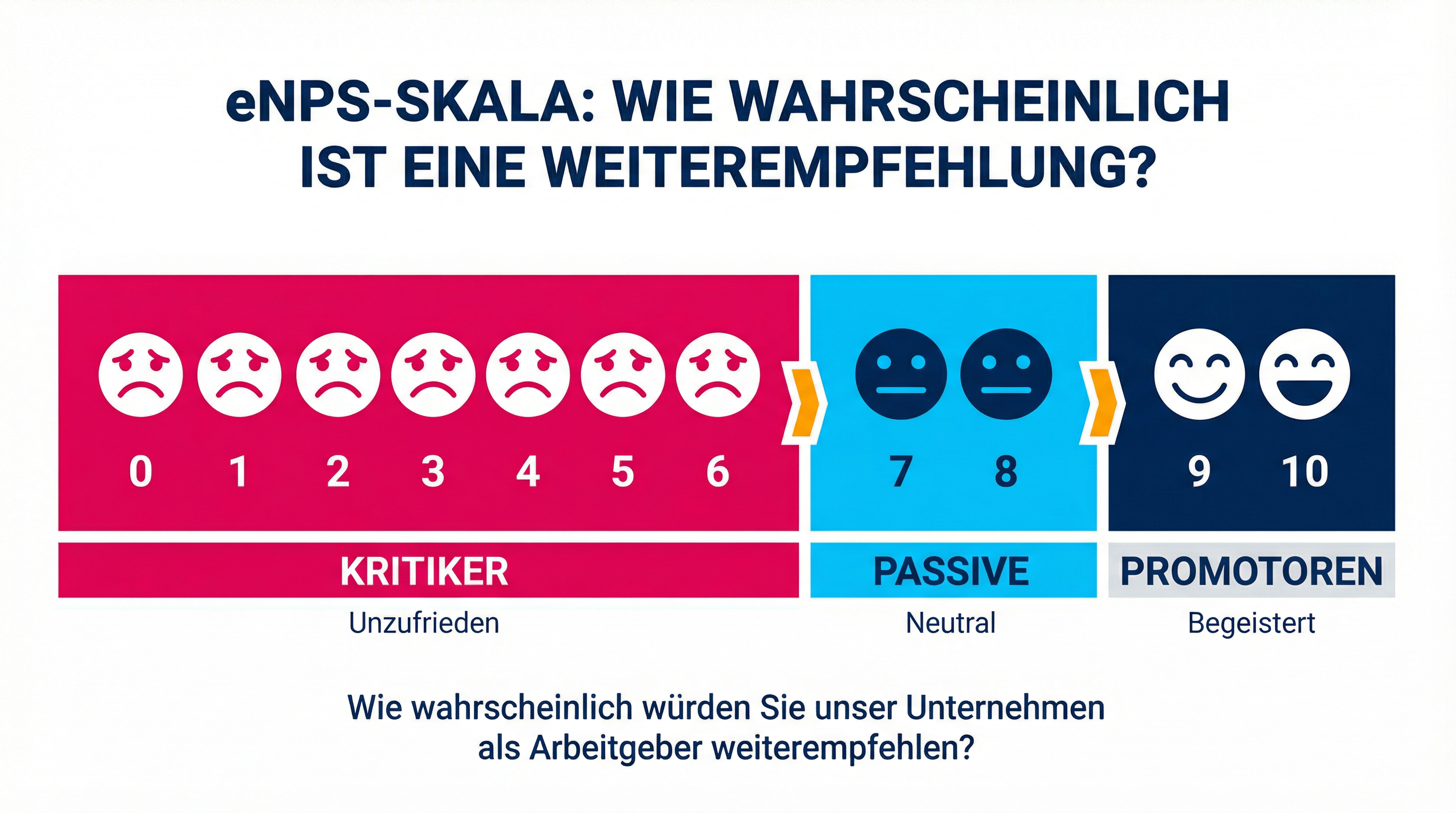
10-point scales are sometimes used for numerical ratings (e.g. NPS, satisfaction), but are not Likert scales in the narrower sense because they usually do not have semantically labeled levels (such as "agree/disagree"). They therefore measure intensity rather than agreement. In addition, 10-point scales lose reliability because people interpret differently what an "8" means, for example.
Likert scales in use at ValueQuest
Our solutions are based on carefully calibrated scales that ensure high validity and comparability.
-
Employee surveysCapture sentiment, satisfaction and trust - in a well-founded and comprehensible way.
-
360° feedbackUse standardized Likert scales to make leadership skills measurable from different perspectives.
-
Public VoiceMeasure the public's perception of your organization - from approval to disapproval.
Advantages of the Likert scale
-
Easy to understand: respondents can answer intuitively.
-
High comparability: Results can be easily analyzed across groups and time periods.
-
Statistical evaluability: average values, standard deviations and trends can be calculated precisely.
-
Flexibility: The scale is suitable for almost any topic - from satisfaction to attitudes or values.
Best Practices
-
Avoid double negatives: Clear, positive formulations lead to more reliable results.
-
Use consistent answer formats: A standardized scale increases comparability.
-
Combine with open questions: additional qualitative feedback provides valuable contextual information.
-
Visualize trends: Changes over time are often more meaningful than individual values.
Conclusion
The Likert scale is an inconspicuous but powerful tool: it translates opinions and feelings into numbers - and thus makes progress measurable.
With ValueQuest's survey solutions, you can use the Likert scale in a targeted way to gain insights, support decisions and make the effectiveness of your measures verifiable.
Article published on November 12, 2025
About Thomas Bigliel

Thomas Bigliel is an expert in digital marketing and communication. He is also a guest lecturer at the ZHAW for strategic marketing management and a specialist author (for Springer Gabler and Marketing Review St. Gallen, among others). He is a business information scientist with a specialization in human-computer interaction. He was awarded the Grimme Online Award for his work.
Inspired? Then share this post via your favorite platform.
Other articles that might interest you ...

AI in the Swiss Insurance Market: What Insurers Can Learn from the Results
October 1, 2026
Reading time: 4 min
Artificial intelligence is not universally accepted in the Swiss insurance market. As a study by ValueQuest shows, customers’ openness to AI depends heavily on how it is used.

AI in the Swiss Insurance Market: Between Acceptance and Skepticism
September 28, 2026
Reading time: 5 min
For many Swiss people, artificial intelligence has become an integral part of everyday life. However, the situation is different when it comes to insurance companies.

Top Employer: Raiffeisenbank Glarnerland Impresses with Strong Leadership
September 21, 2026
Reading time: 2 min
ValueQuest recently had the honor of presenting the “Excellence@Work Award” to Raiffeisenbank Glarnerland. We extend our heartfelt congratulations.
Top Swiss Employers: GastroSocial
September 9, 2026
Reading time: 3 min
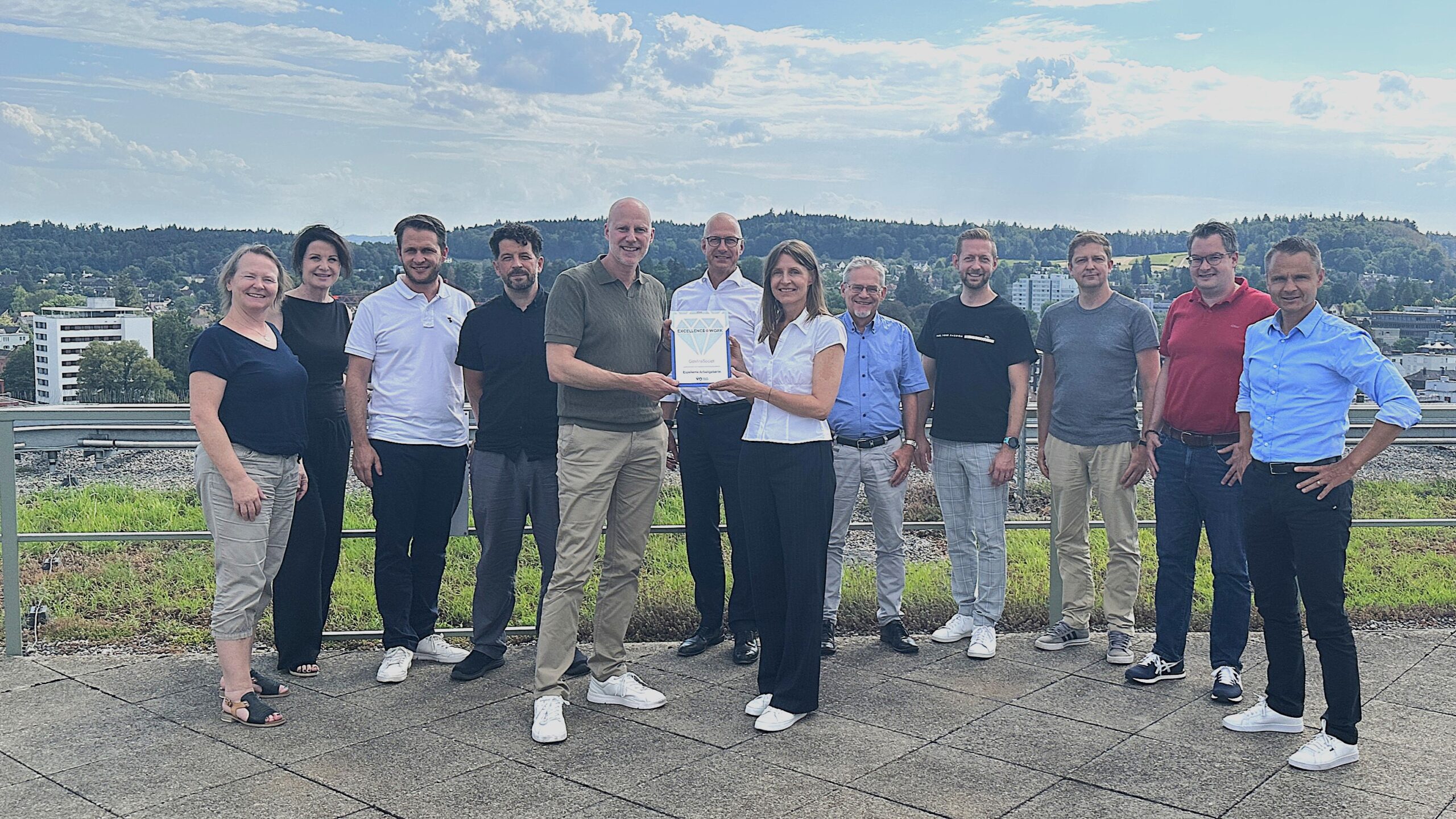
GastroSocial has received the 2026 Excellence@Work Award from ValueQuest. With a response rate of 96 percent, a motivation score of 84, and 87 percent of employees serving as brand ambassadors, the company demonstrates a strong employer culture.

Employee Survey: Raiffeisenbank Möhlin Achieves Excellent Results
August 31, 2026
Reading time: 3 min
Raiffeisenbank Möhlin is one of Switzerland's top employers and is receiving our Excellence@Work Award in recognition of this achievement. Congratulations!

Employee Surveys in Switzerland: Find Providers & Tools
August 30, 2026
Reading time: 6 min
Employee Survey in Switzerland: How Do You Find the Right Employee Survey Provider? What Really Matters When It Comes to Anonymity, Tools, Questionnaires, and Analysis.

360-Degree Feedback Questionnaire: Sample, Template, and Sample Questions
August 21, 2026
Reading time: 7 min
Table of Contents A 360-degree feedback process is only as good as its questionnaire. The questionnaire is at the heart of the entire process. It determines whether...

Employee Survey: The CAMPUS SURSEE Foundation Is Among Switzerland's Best Employers
August 5, 2026
Reading time: 2 min
ValueQuest honors particularly attractive employers in Switzerland with the Excellence@Work Award. We recently had the pleasure of presenting the award to the CAMPUS SURSEE Foundation.
Raiffeisenbank Regio Arbon, a Top Employer: Personal Responsibility as Part of a Strong Corporate Culture
July 7, 2026
Reading time: 2 min
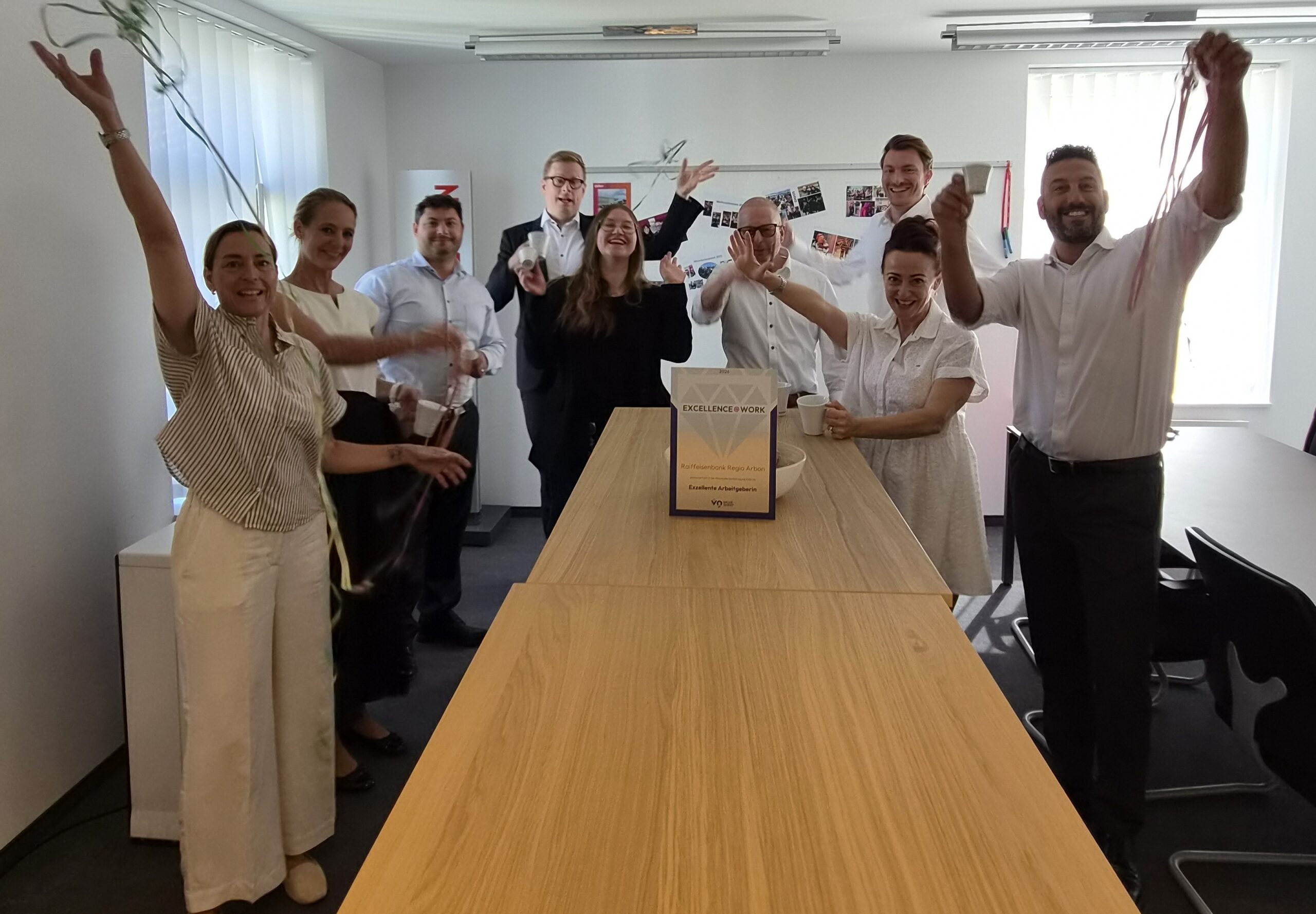
ValueQuest honors particularly attractive employers in Switzerland with the Excellence@Work Award. We recently had the pleasure of presenting the award to Raiffeisenbank Regio Arbon.