Table of contents
ESOMAR is the global professional association for market, opinion and social research based in Amsterdam. ESOMAR has been setting standards for professional, independent research since the 1940s and, together with the International Chamber of Commerce (ICC), publishes the globally recognized ICC/ESOMAR International Code.
For you as a client, this means that when you work with ValueQuest, you are working with an institute that voluntarily submits to stricter rules than the law alone requires - binding, globally recognized and regularly updated.
The Five Principles of the ESOMAR Code
The current version of the ICC/ESOMAR Code (Revision 2025) is the fifth revision and responds explicitly to topics such as AI, synthetic data, new online channels and the increasing use of self-service platforms.
At the heart of the ICC/ESOMAR Code are five basic principles that the ValueQuest team consistently implements:
-
Legal, honest, transparent
Whether it's an employee survey, 360-degree feedback or pulse check, every online survey is designed to be legally compliant, technically correct and clearly understandable for participants. -
Diligence and protection from harm
Respondents must not suffer any harm - material, psychological or reputational - as a result of their participation in a survey. This applies particularly in sensitive contexts such as management culture, health or conflicts in the workplace. -
Data protection and privacy first and foremost
Personal data is only collected to the extent that is absolutely necessary for the study (data minimization). Storage, evaluation and reporting are designed in such a way that it is not possible to draw conclusions about individuals. -
Clear separation of research and marketing
Those who take part in a survey must not be transferred to marketing or sales channels. Data from a study may not be used for advertising or acquisition. If a non-research activity is planned afterwards - such as a customer experience follow-up - this must be clearly identified and approved separately. -
Human responsibility despite AI and automation
The Esomar Code now emphasizes the need for human oversight: AI-supported analyses, synthetic data or automated dashboards do not absolve researchers of their responsibility. The results must be professionally reviewed, transparently documented and correctly classified.
What does this mean in concrete terms for your employee survey?
When you use ValueQuest to conduct management feedback or an organization-wide employee survey, the ESOMAR code has a very concrete effect in several places:
-
Anonymity and group sizes
Results are only reported for groups that achieve a minimum number of responses (e.g. ≥ 5 people) so that no conclusions can be drawn about individuals. This is explicitly stated in our terms and conditions and privacy policy. -
Voluntary participation and withdrawal
Employees can refuse or withdraw from participation - without any disadvantages. If possible, personal raw data is deleted upon withdrawal without distorting the aggregated results. -
Clarity about purpose and use
Before the survey starts, we provide transparent information about what the data will be used for, how long it will be stored and who will have access to which evaluations. -
No "secondary use" of the data
Data from your survey will not be misused for marketing, sales or recruitment purposes - neither by us nor by third parties.
In this way, we create trust among employees - the basis for honest answers and usable results.
360-degree feedback: sensitive data, high responsibility
In 360-degree feedback, the focus is on individual managers. The ESOMAR code is particularly important here:
-
Confidentiality in all directions
Persons providing feedback are protected; feedback is evaluated in aggregated form. At the same time, the manager's evaluations are confidential and are only passed on in an agreed form. -
Clear roles and responsibilities
The code requires transparency about who is the client, who collects the data, who evaluates it and what role internal HR departments or external coaches play. -
Fairness and Duty of Care
The use of 360° tools must not lead to "naming and shaming", but must be geared towards development and learning opportunities. This characterizes questionnaires, communication and our coaching services.
What ESOMAR has to do with our survey tool and Swiss quality
Our digital survey tool for employee surveys and 360-degree feedback is developed and operated in Switzerland. It meets the requirements of both the Swiss Data Protection Act (revDSG) and the EU GDPR - and is also based on the ESOMAR standard.
What does this mean for your online survey in concrete terms?
-
Data minimization and purpose limitation
We only collect what is necessary for the study and use the data exclusively for research - not for advertising or profiling. -
Secure infrastructure
Hosting, encryption and access rights are designed to prevent unauthorized access, data loss or manipulation. -
Transparent use of AI
Wherever we use AI-supported methods or automated analyses, we remain responsible: we check results, document methods and make the use of AI transparent for clients - in line with the ICC/ESOMAR Code.
Your advantage as a client: Reliable results, strong legitimacy

Our ESOMAR membership and code compliance are not an end in themselves for us, but added value for you:
- Higher participation and more honest feedback
Employees are more likely to participate if they know that an independent, certified institute with clear rules is behind it - and not their own communications department. - Greater legitimacy vis-à-vis social partners and committees
The results of an ESOMAR-compliant study are much easier to communicate in internal discussions, with employee representatives or to the Board of Directors / Board of Trustees. - Comparability and professionalism
Clean methodology, clear documentation and compliance with international standards make your results robust - even in comparison with benchmarks, multi-client surveys or external audits.
Article published on November 26, 2025
About Thomas Bigliel

Thomas Bigliel is an expert in digital marketing and communication. He is also a guest lecturer at the ZHAW for strategic marketing management and a specialist author (for Springer Gabler and Marketing Review St. Gallen, among others). He is a business information scientist with a specialization in human-computer interaction. He was awarded the Grimme Online Award for his work.
Inspired? Then share this post via your favorite platform.
Other articles that might interest you ...

AI in the Swiss Insurance Market: What Insurers Can Learn from the Results
October 1, 2026
Reading time: 4 min
Artificial intelligence is not universally accepted in the Swiss insurance market. As a study by ValueQuest shows, customers’ openness to AI depends heavily on how it is used.

AI in the Swiss Insurance Market: Between Acceptance and Skepticism
September 28, 2026
Reading time: 5 min
For many Swiss people, artificial intelligence has become an integral part of everyday life. However, the situation is different when it comes to insurance companies.

Top Employer: Raiffeisenbank Glarnerland Impresses with Strong Leadership
September 21, 2026
Reading time: 2 min
ValueQuest recently had the honor of presenting the “Excellence@Work Award” to Raiffeisenbank Glarnerland. We extend our heartfelt congratulations.
Top Swiss Employers: GastroSocial
September 9, 2026
Reading time: 3 min
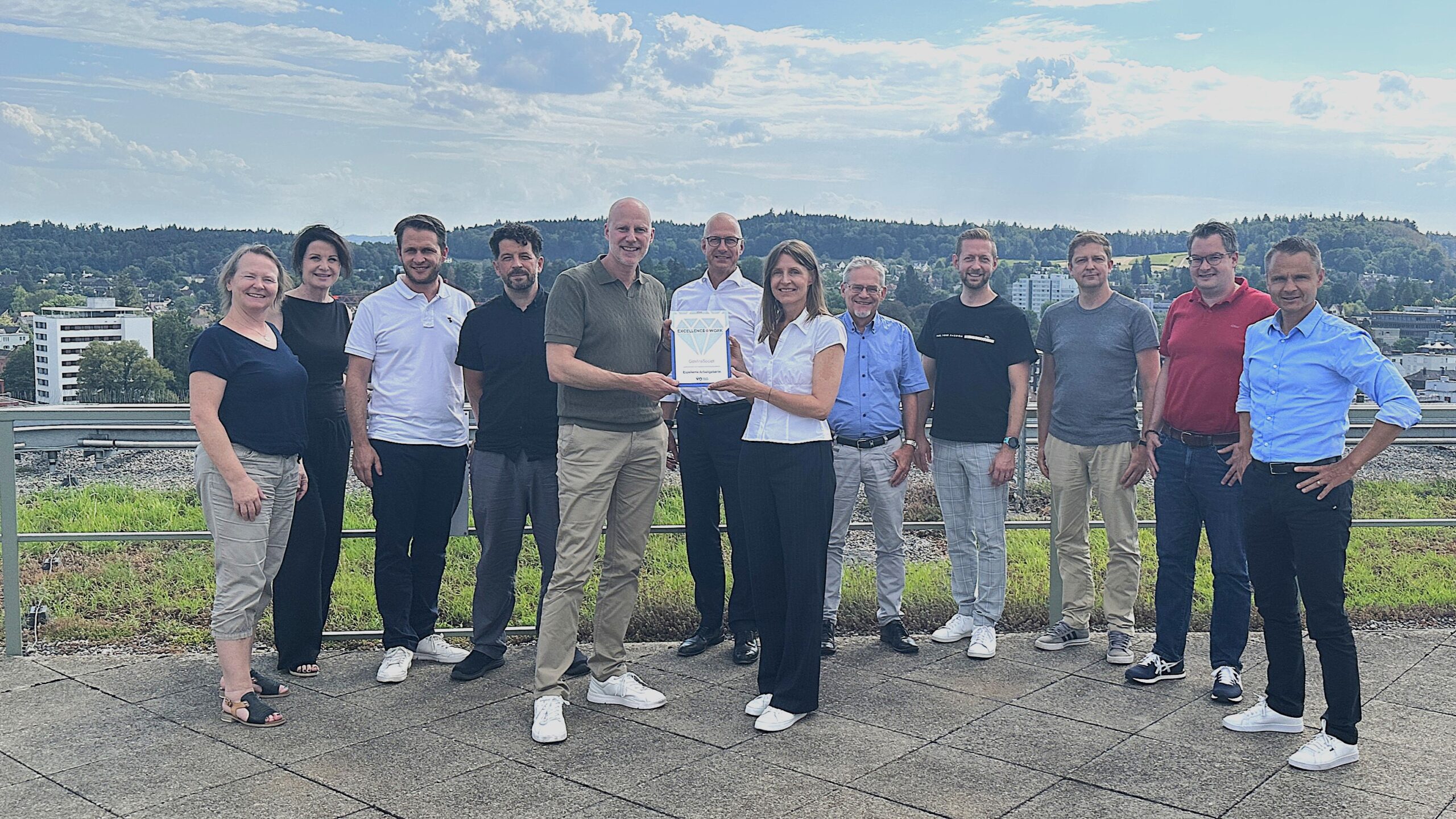
GastroSocial has received the 2026 Excellence@Work Award from ValueQuest. With a response rate of 96 percent, a motivation score of 84, and 87 percent of employees serving as brand ambassadors, the company demonstrates a strong employer culture.

Employee Survey: Raiffeisenbank Möhlin Achieves Excellent Results
August 31, 2026
Reading time: 3 min
Raiffeisenbank Möhlin is one of Switzerland's top employers and is receiving our Excellence@Work Award in recognition of this achievement. Congratulations!

Employee Surveys in Switzerland: Find Providers & Tools
August 30, 2026
Reading time: 6 min
Employee Survey in Switzerland: How Do You Find the Right Employee Survey Provider? What Really Matters When It Comes to Anonymity, Tools, Questionnaires, and Analysis.

360-Degree Feedback Questionnaire: Sample, Template, and Sample Questions
August 21, 2026
Reading time: 7 min
Table of Contents A 360-degree feedback process is only as good as its questionnaire. The questionnaire is at the heart of the entire process. It determines whether...

Employee Survey: The CAMPUS SURSEE Foundation Is Among Switzerland's Best Employers
August 5, 2026
Reading time: 2 min
ValueQuest honors particularly attractive employers in Switzerland with the Excellence@Work Award. We recently had the pleasure of presenting the award to the CAMPUS SURSEE Foundation.
Raiffeisenbank Regio Arbon, a Top Employer: Personal Responsibility as Part of a Strong Corporate Culture
July 7, 2026
Reading time: 2 min
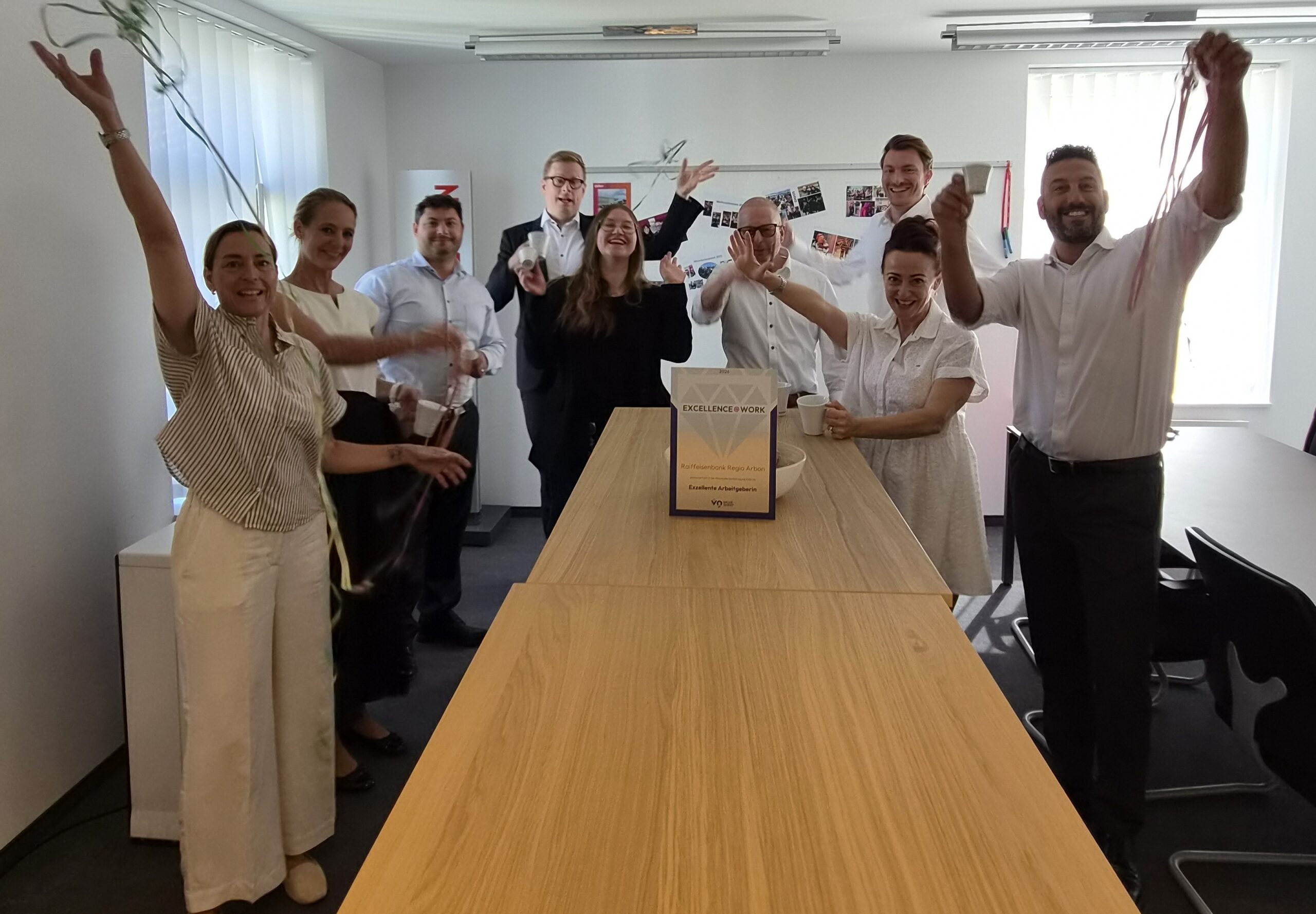
ValueQuest honors particularly attractive employers in Switzerland with the Excellence@Work Award. We recently had the pleasure of presenting the award to Raiffeisenbank Regio Arbon.