Our Co-Managing Director Kathrin Neumüller conducted an exciting interview with Eric Krapf about the impact of artificial intelligence on our daily working environment. This first part of the interview focuses on the impact of AI on employees and human resources.
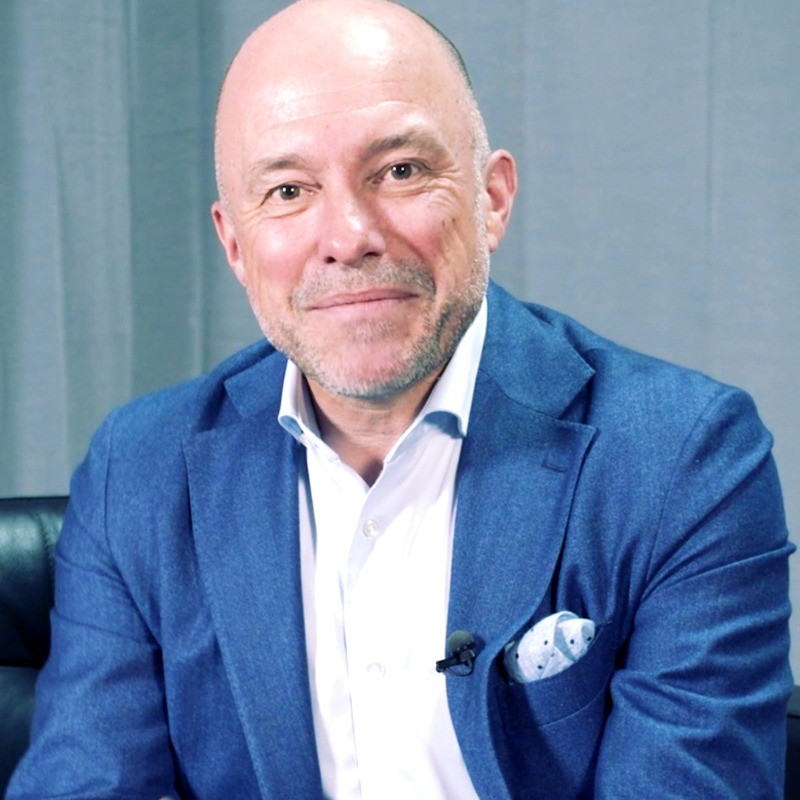
Eric Krapf is a Client Advisor at aspaara and, together with Kathrin Neumüller, a start-up expert at the ZHAW. aspaara is an artificial intelligence company founded in 2015 and based in Zurich. As an official start-up of the University of Zurich, aspaara conducts research with ETH Zurich and the ZHAW in the "Artificial and Networked Intelligence" innovation cluster. This is financially supported by the federal government in order to promote science-based innovations in the interests of the economy and society.
How can artificial intelligence be used for employee and resource planning?
Kathrin Neumüller: Eric, you work in the field of AI-piloted resource planning and talent planning. What exactly do you mean by this term?
Eric Krapf: In AI-piloted talent planning, employees are planned with the help of artificial intelligence. People used to work with planning boards, but nowadays the planner sits in front of a screen and assigns employees to jobs. This is a very challenging task, especially when something changes in terms of scheduling. This planning process is currently being optimized on the computer with the help of AI - like Tetris. An initial arrangement is made and suggested to the planner. The planner can accept, change or improve the AI-generated suggestions.
Kathrin Neumüller: Thank you for explaining the difference to traditional resource planning. Can you explain to me how employees and customers can benefit from AI-piloted resource planning or talent planning?
Eric Krapf: There are three important stakeholder groups: the planners, who have to develop the plan, the employees, who should work according to this plan, and finally the managers, who have to use this plan to achieve the company's goals.
We also have customers as a fourth (external) stakeholder. These also have demands on planning. AI-piloted talent planning initially takes a lot of work off the planner's hands. If you have to plan for hundreds of employees for a year, there are many possible combinations. This leads to a very large solution space that we humans are not good at keeping track of. AI-piloted talent planning creates a proposal for optimal resource planning.
In addition, AI-piloted talent planning provides planners with data that can be used to argue why an employee would be better assigned to mandate A than B. This leads to a significant improvement in the quality of the discussion for managers in the coordination meeting because it can take place on the basis of comprehensible data and calculations.
AI-supported resource planning makes it possible to respond more closely to employee needs
There are also important advantages for employees: they can express their individual preferences. For example, they may want to work in a certain language or use certain skills. AI-piloted talent planning takes these preferences into account. Some employees like to travel, while others prefer to work from home or close to home. Until now, employers have considered their employees as an average when planning, because otherwise the complexity would have increased too much. With today's technology, the preferences of individuals can be taken into account in a balanced way, leading to a much better overall result. Ultimately, customers also benefit because they have more continuity in their delivery teams. In addition, employees who enjoy working on these projects work in the teams. This better task-employee fit increases employee motivation and therefore also work performance.
Kathrin Neumüller: At this point, you mention an important keyword: employee motivation. When employees see that their preferences are taken into account in personnel planning, this can lead to greater motivation to work and a higher level of psychological empowerment.
Eric Krapf: Indeed. Companies used to plan very much according to a top-down approach. Many of today's organizational forms were traditionally developed in the age of industrialization. Today, however, we are dealing with an increasing speed of change. Accordingly, we need different planning methods that take greater account of employees' wishes. This leads to higher work motivation and also to greater employee empowerment, as employees feel that their needs are taken seriously.
Companies can react faster and more agile
Kathrin Neumüller: What challenges does the agile VUCA world (VUCA stands for volatility, uncertainty, complexity and ambiguity) pose for AI-piloted resource planning?
Eric Krapf: These very rapid changes require rescheduling, sometimes even in a matter of seconds or minutes. What does the planner do if the customer postpones the project by three weeks? Where is the best place to schedule the freed-up resources? This is where artificial intelligence comes in, as it can generate suggestions and solutions in a matter of seconds.
My thesis is that we will enter a zero-trust world where everyone has to assume that all information is fundamentally false in the first place. We have more data and more technologies than ever before. At the same time, we can be less and less sure what the facts are and what corresponds to reality. Seen in this light, we are by and large reverting to the time before the Enlightenment, when belief was more important than knowledge.
- Eric Krapf
Employee scheduling based on AI has major advantages in retail
Kathrin Neumüller: Real-time is a major advantage in personnel planning. I can imagine that AI-piloted talent planning will bring many advantages for the retail trade, including shift planning for sales staff.
Eric Krapf: In retail, staff deployment planning is crucial. We supported McKinsey in a project a few years ago. The aim was to determine the best possible occupancy of a certain area in relation to the number of customers.
The result was an exciting curve: in the beginning, sales increased. If there are too many employees in the space and too few customers, then sales fall - not per employee, but per square meter. At this point, AI-piloted resource planning can help to take these different aspects into account. The weather could also be included as an additional parameter when planning. The high performance of this technology makes many things possible.
Will artificial intelligence like Chat GPT eliminate jobs?
Eric Krapf: Yes, certain tasks will become less important and certain tasks will be taken over by these tools. But there is also the question: will this create more jobs? If you look at the past few years, this has always been the case. However, I don't think we can answer this question conclusively today. What is certain is that there will be shifts. Craftsmen, for example, will become more important. You can't do carpentry using artificial intelligence - you have to do it by hand. It is becoming increasingly difficult to find good specialists in this field.
Kathrin Neumüller: Thank you very much for your interesting answers. I'm looking forward to the second part of the interview - where we will discuss the impact of AI on employee loyalty, leadership and appreciation.
Eric Krapf: Thank you very much for the interview, Kathrin, it was fun. I'm looking forward to the next questions.
The use of artificial intelligence in recruiting presents us with major challenges
Kathrin Neumüller: I would like to broaden the focus to artificial intelligence in general. To what extent do you think that artificial intelligence can help us companies to further develop human resources?
Eric Krapf: Quite a lot. It's important to understand what artificial intelligence is, what it can actually do and what its limits are. When I call up a program like ChatGPT today and ask questions, I get answers that are astonishing at first. It is a technology that has never existed before. The big challenge for companies with so-called generative AI is that it is not possible to understand how the results come about. This poses a fundamental challenge for all corporate functions. If you can't explain how the result came about, you can't argue logically.
A few years ago, artificial intelligence began to be used in recruiting as well. Suddenly, people with certain résumés were no longer invited to interviews, even though they would have been suitable for the job. Artificial intelligence must be used in such a way that it
- is unbiased
- is fair
- meets the requirements of traceability
We call this enterprise AI or enterprise-grade artificial intelligence. This AI makes it possible to understand why one solution is better than another. Unfortunately, many companies still don't really understand why traceability is so important. In the meantime, regulators and legislators are taking notice of artificial intelligence. Let's hope that this is done with a sense of proportion, but at the same time regulated in such a way that individuals do not suffer any disadvantages as a result.
Kathrin Neumüller: This is a very exciting point, because it's about trust in the sources and traceability of the results generated by artificial intelligence.
The downside of artificial intelligence - will we enter a "zero trust world"?
Kathrin Neumüller: We have talked about the influence of AI on the recruitment process. Now I would like to broaden the focus to the world of work. In your opinion, what are the effects of AI on the world of work in general? Will we lose our jobs tomorrow?
Eric Krapf: That's an incredibly big question. I don't presume to even begin to answer it comprehensively. But I can share a few observations based on my experience and our experience as a company.
AI technologies can help to complete certain tasks more quickly and easily. Many tasks consist of a computing and a thinking part. Computers can do the former better than humans. If there is a clear parameterization, a computer can calculate much faster and deliver a good result. This also includes AI-piloted writing, AI-piloted graphic design, AI-piloted planning and AI-piloted development. Our developers also work with generative AI to generate code.
I am of the opinion that AI-piloted work is becoming increasingly important. However, there is also a downside. When we use AI to generate content, decision-makers are bombarded with a flood of information. This information needs to be reduced to what is relevant. However, it is becoming increasingly difficult to distinguish between what is relevant and what is correct. My theory is that we will enter a zero-trust world where everyone has to assume that all information is fundamentally wrong in the first place. We have more data and more technologies than ever before. At the same time, we can be less and less sure what the facts are and what corresponds to reality. Seen in this light, we are by and large reverting to the time before the Enlightenment, when belief was more important than knowledge.
Kathrin Neumüller: In your opinion, the so-called information overload will continue to increase. We can no longer process 98% of the information because we are so overwhelmed with news that we are constantly overstimulated.
You also mentioned that a lot of information can be wrong. From this I conclude that an important recruitment criterion for employees will be critical thinking skills, i.e. the ability to distinguish between false and correct information.
Eric Krapf: Definitely. Alongside the ability to work together with others (collaboration), this is the most important skill for the future world of work, according to the World Economic Forum, as is critical thinking. You have to be able to assess whether the information is even possible or correct. It will be essential to understand orders of magnitude and form relationships without reading every detail.
Article published on January 15, 2024
About Dr. Kathrin Neumüller

Dr. oec. HSG Kathrin Neumüller is Co-Managing Director at ValueQuest and an expert in employee inspiration and empowerment. She also teaches strategic management in the MBA program at the ZHAW. She holds a doctorate from the University of St. Gallen (HSG) and studied at the University of Cambridge. Learn more about Kathrin
Inspired? Then share this post via your favorite platform.
Other articles that might interest you ...

AI in the Swiss Insurance Market: What Insurers Can Learn from the Results
October 1, 2026
Reading time: 4 min
Artificial intelligence is not universally accepted in the Swiss insurance market. As a study by ValueQuest shows, customers’ openness to AI depends heavily on how it is used.

AI in the Swiss Insurance Market: Between Acceptance and Skepticism
September 28, 2026
Reading time: 5 min
For many Swiss people, artificial intelligence has become an integral part of everyday life. However, the situation is different when it comes to insurance companies.
Top Employer: Raiffeisenbank Glarnerland Impresses with Strong Leadership
September 21, 2026
Reading time: 2 min
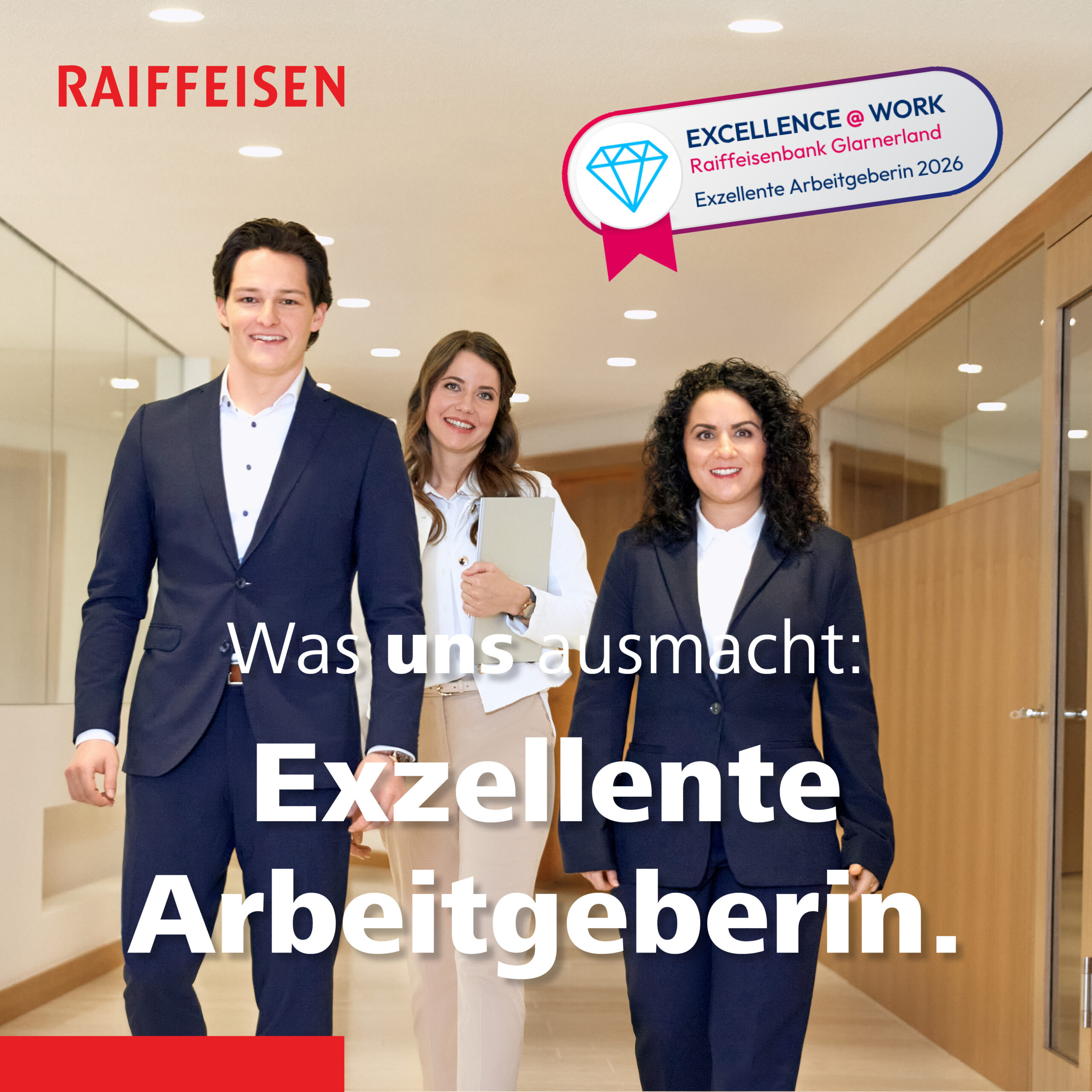
ValueQuest recently had the honor of presenting the “Excellence@Work Award” to Raiffeisenbank Glarnerland. We extend our heartfelt congratulations.
Top Swiss Employers: GastroSocial
September 9, 2026
Reading time: 3 min
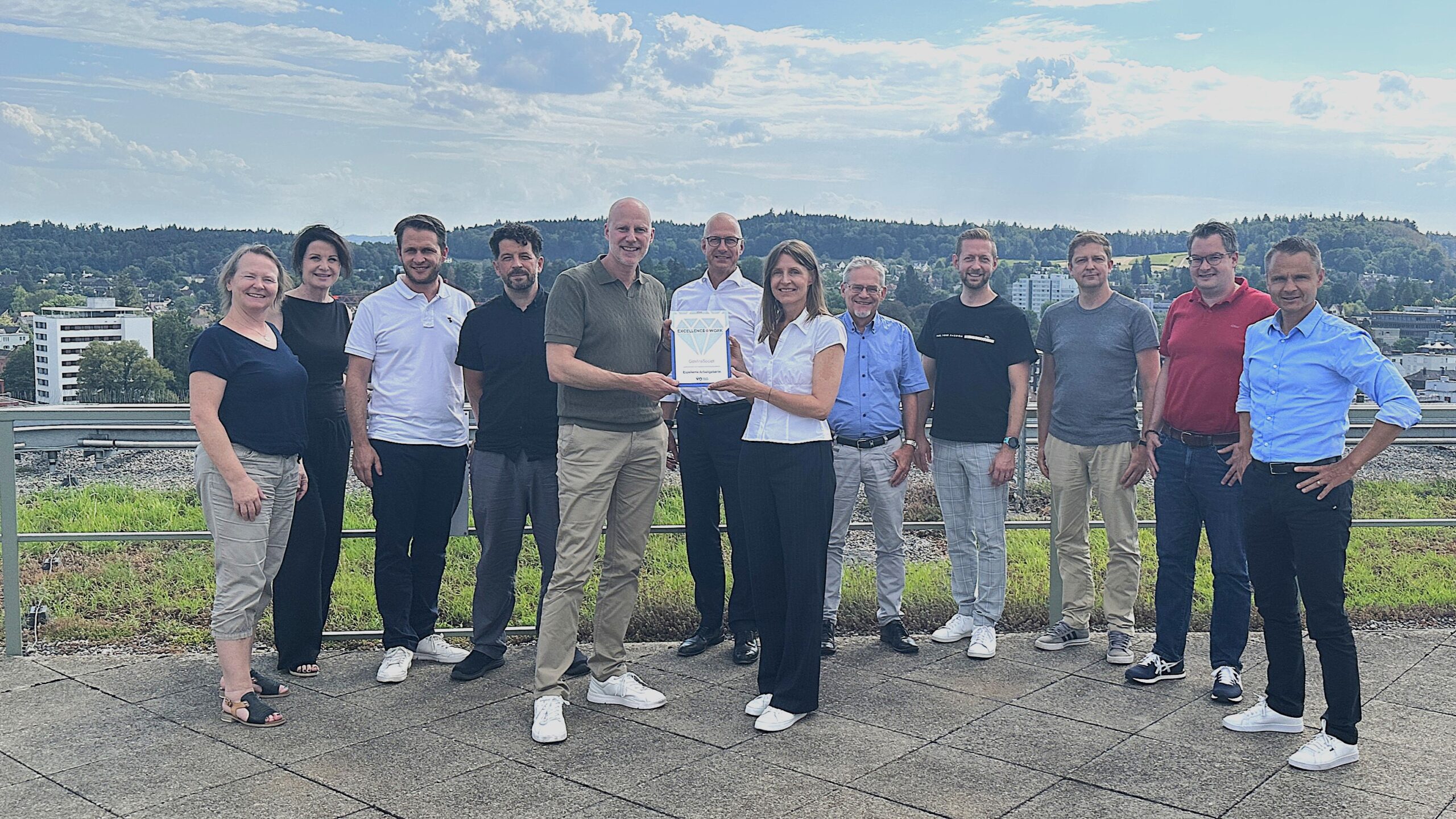
GastroSocial has received the 2026 Excellence@Work Award from ValueQuest. With a response rate of 96 percent, a motivation score of 84, and 87 percent of employees serving as brand ambassadors, the company demonstrates a strong employer culture.

Employee Survey: Raiffeisenbank Möhlin Achieves Excellent Results
August 31, 2026
Reading time: 3 min
Raiffeisenbank Möhlin is one of Switzerland's top employers and is receiving our Excellence@Work Award in recognition of this achievement. Congratulations!

Employee Surveys in Switzerland: Find Providers & Tools
August 30, 2026
Reading time: 6 min
Employee Survey in Switzerland: How Do You Find the Right Employee Survey Provider? What Really Matters When It Comes to Anonymity, Tools, Questionnaires, and Analysis.

360-Degree Feedback Questionnaire: Sample, Template, and Sample Questions
August 21, 2026
Reading time: 7 min
Table of Contents A 360-degree feedback process is only as good as its questionnaire. The questionnaire is at the heart of the entire process. It determines whether...

Employee Survey: The CAMPUS SURSEE Foundation Is Among Switzerland's Best Employers
August 5, 2026
Reading time: 2 min
ValueQuest honors particularly attractive employers in Switzerland with the Excellence@Work Award. We recently had the pleasure of presenting the award to the CAMPUS SURSEE Foundation.
Raiffeisenbank Regio Arbon, a Top Employer: Personal Responsibility as Part of a Strong Corporate Culture
July 7, 2026
Reading time: 2 min
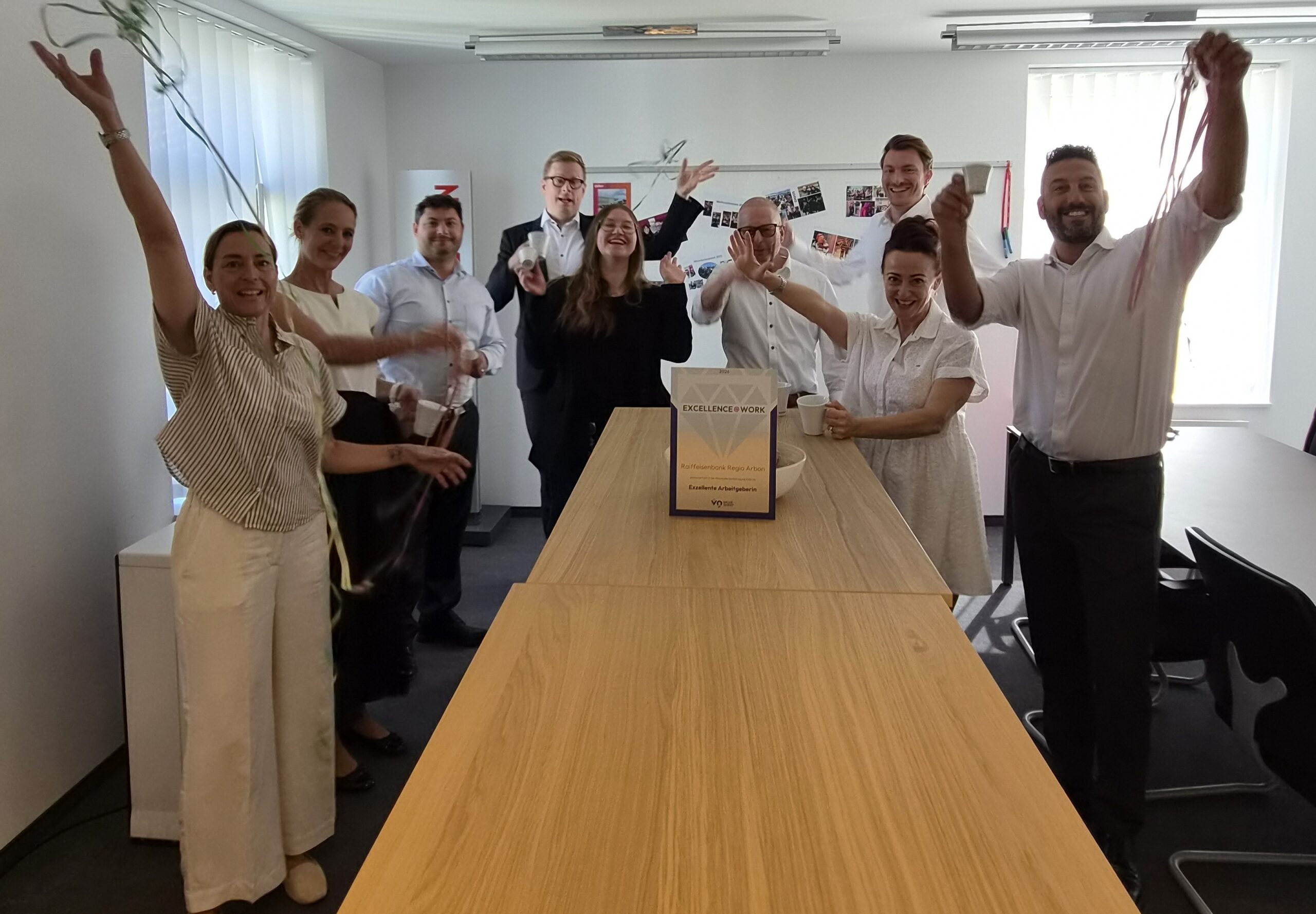
ValueQuest honors particularly attractive employers in Switzerland with the Excellence@Work Award. We recently had the pleasure of presenting the award to Raiffeisenbank Regio Arbon.