Good managers should have a realistic understanding of their own competencies - strengths / weaknesses. Professionally conducted 360-degree leadership feedback is an important tool for supporting line managers and specialists in reflecting on their leadership qualities and consciously leading employees.
Overall analysis of self-perception and external perception of 360-degree leadership feedback carried out
In reality, there are major differences in the self-perception of individual managers. Some have a realistic picture of their own competence profile, some overestimate themselves and others underestimate their own abilities.
In recent years, ValueQuest has conducted several hundred 360-degree feedback sessions using the proven and scientifically based "Leadership Plus" model.
In an overall analysis of all 360-degree feedbacks, ValueQuest shows how self-perception (self-image) and external perception by employees, peers, customers and superiors compare on average. The following picture emerges:
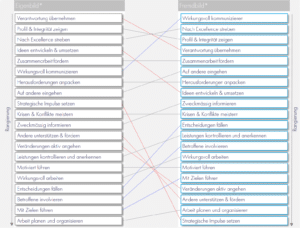
Fig. 1: Self-image versus external image
(Methodology: Ranking of the 20 Leadership Plus competencies)
The figure clearly shows that, for example, there is a major difference between self-perception and the perception of others when it comes to "Providing strategic impetus". The managers rate themselves more highly than is the case in the surveyed environment. On the other hand, they underestimate their skills in "Communicating effectively", "Making decisions" and "Involving those affected". These are ranked much higher in the external perception than in the self-perception. There is clear agreement in the assessment of the competencies "Promoting cooperation", "Tackling challenges", "Mastering crises and conflicts" and "Motivated leadership".
Overall, the self-image and external image of all 20 competencies match in the sum of all feedback recipients. In concrete terms, this means that there are roughly the same number of managers who underestimate or overestimate themselves.
Recognizing blind spots
The illustration based on the Johari window also shows an interesting picture. The Johari window was developed in 1955 by the American social psychologists Joseph Luft and Harry Ingham. It is a window of conscious and unconscious personality and behavioral traits between the person themselves and others or a group. The Johari window is primarily used to illustrate the so-called "blind spot" in a person's self-image.
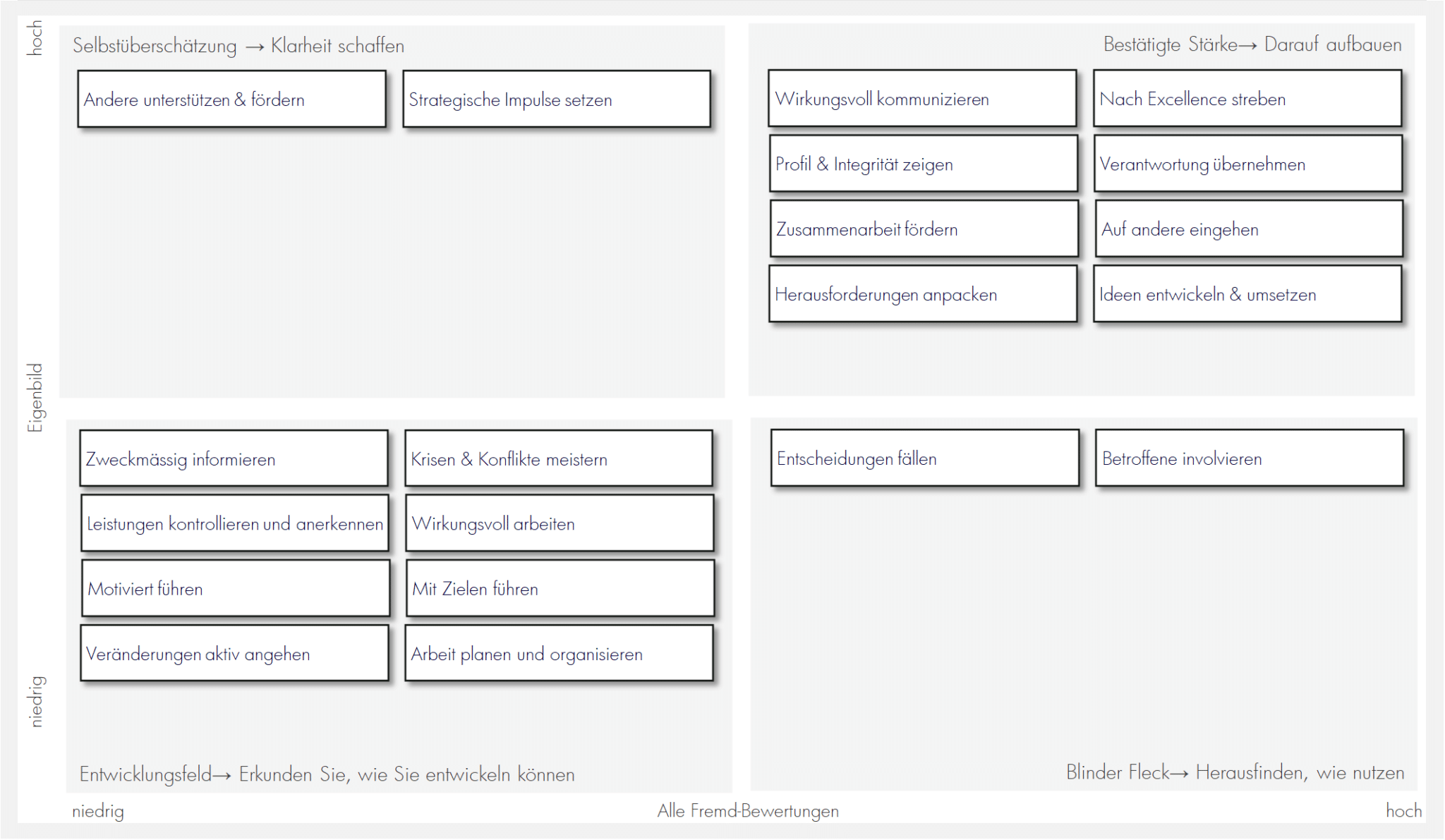
Fig. 2: Representation of ValueQuest based on the Johari window
The top left-hand window shows the skills in which the respondent overestimates him/herself. At the top right are the confirmed strengths that can be built on. At the bottom left are skills that need to be developed and at the bottom right are a leader's blind spots.
When implementing the results of the 360-degree feedback, managers can, for example, address their weaknesses with specific measures or consider how they can make targeted use of their recognized and previously unused strengths - the blind spots.
A comparison between self-perception and the perception of others is essential for personal development. If managers are aware of their own impact, they can make the necessary adjustments. This allows line managers to focus specifically on their strengths and work on those skills where there is still potential.
Your own skills profile also allows managers to recognize whether they are in the right place. After all, it is important to set realistic expectations of yourself and others, otherwise the result is excessive demands and sometimes even burnout. Our experience - with managers who have been using the tool for years - shows that the correspondence between self-perception and external perception increases over time. This increases the effectiveness of leadership, which very often results in greater satisfaction - both for themselves and their environment.
Article published on September 7, 2021
About Francine Kräuchi

Francine Kräuchi is a senior manager and project manager at ValueQuest with many years of in-depth expertise in employee surveys and 360-degree leadership feedback. As a systemic coach, she supports managers in their further professional development based on the feedback results. Learn more about Francine
Inspired? Then share this post via your favorite platform.
Other articles that might interest you ...

AI in the Swiss Insurance Market: What Insurers Can Learn from the Results
October 1, 2026
Reading time: 4 min
Artificial intelligence is not universally accepted in the Swiss insurance market. As a study by ValueQuest shows, customers’ openness to AI depends heavily on how it is used.

AI in the Swiss Insurance Market: Between Acceptance and Skepticism
September 28, 2026
Reading time: 5 min
For many Swiss people, artificial intelligence has become an integral part of everyday life. However, the situation is different when it comes to insurance companies.

Top Employer: Raiffeisenbank Glarnerland Impresses with Strong Leadership
September 21, 2026
Reading time: 2 min
ValueQuest recently had the honor of presenting the “Excellence@Work Award” to Raiffeisenbank Glarnerland. We extend our heartfelt congratulations.
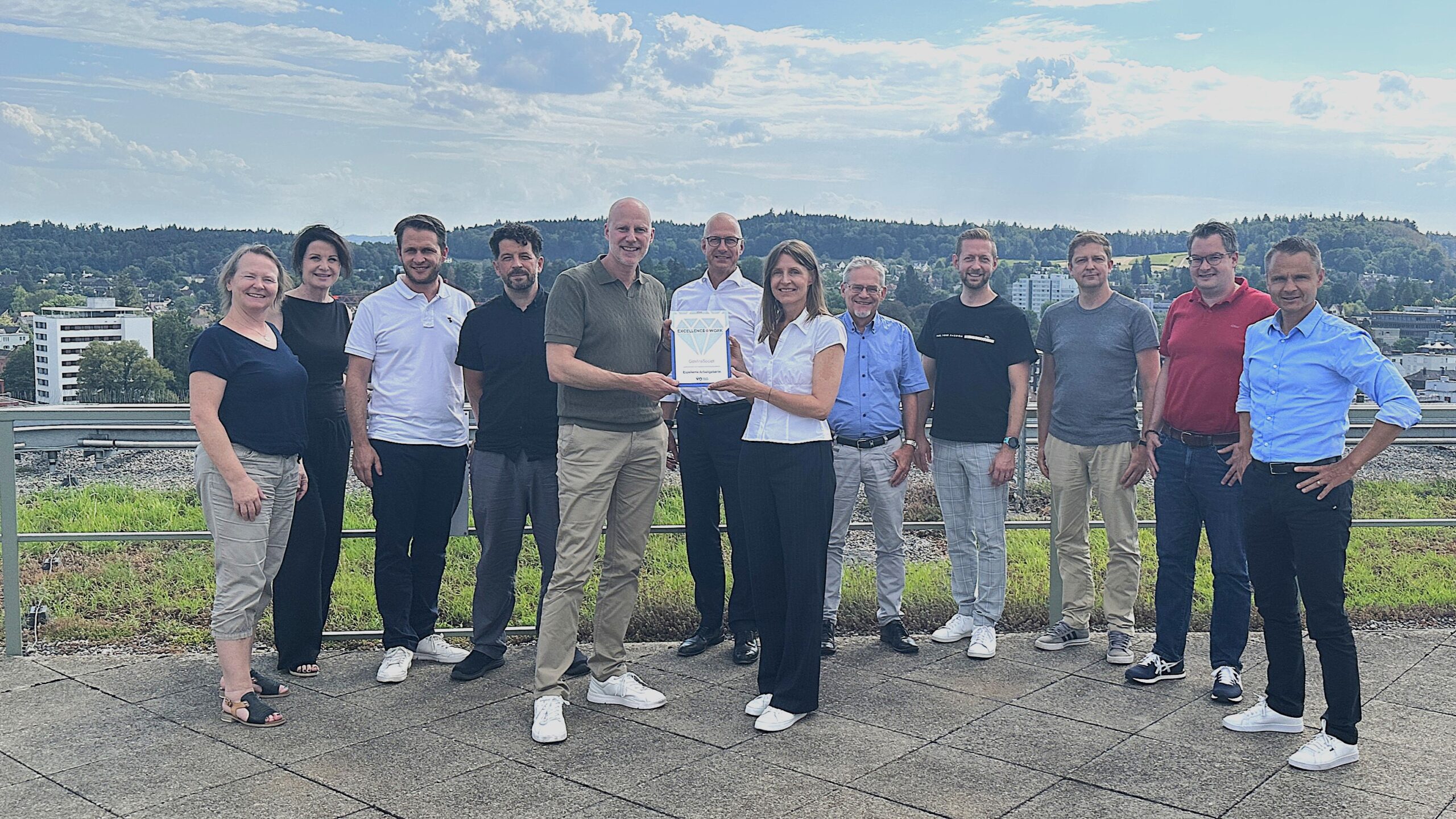
Top Swiss Employers: GastroSocial
September 9, 2026
Reading time: 3 min
GastroSocial has received the 2026 Excellence@Work Award from ValueQuest. With a response rate of 96 percent, a motivation score of 84, and 87 percent of employees serving as brand ambassadors, the company demonstrates a strong employer culture.

Employee Survey: Raiffeisenbank Möhlin Achieves Excellent Results
August 31, 2026
Reading time: 3 min
Raiffeisenbank Möhlin is one of Switzerland's top employers and is receiving our Excellence@Work Award in recognition of this achievement. Congratulations!

Employee Surveys in Switzerland: Find Providers & Tools
August 30, 2026
Reading time: 6 min
Employee Survey in Switzerland: How Do You Find the Right Employee Survey Provider? What Really Matters When It Comes to Anonymity, Tools, Questionnaires, and Analysis.

360-Degree Feedback Questionnaire: Sample, Template, and Sample Questions
August 21, 2026
Reading time: 7 min
Table of Contents A 360-degree feedback process is only as good as its questionnaire. The questionnaire is at the heart of the entire process. It determines whether...
Employee Survey: The CAMPUS SURSEE Foundation Is Among Switzerland's Best Employers
August 5, 2026
Reading time: 2 min
ValueQuest honors particularly attractive employers in Switzerland with the Excellence@Work Award. We recently had the pleasure of presenting the award to the CAMPUS SURSEE Foundation.
Raiffeisenbank Regio Arbon, a Top Employer: Personal Responsibility as Part of a Strong Corporate Culture
July 7, 2026
Reading time: 2 min
ValueQuest honors particularly attractive employers in Switzerland with the Excellence@Work Award. We recently had the pleasure of presenting the award to Raiffeisenbank Regio Arbon.