In the second part of this fascinating interview, our project manager Kathrin Neumüller and Eric Krapf address the question of how companies can increase the loyalty of their employees.
Eric Krapf is a Client Advisor at aspaara and, together with Kathrin Neumüller, a start-up expert at the ZHAW. aspaara is an artificial intelligence company founded in 2015 and based in Zurich. As an official start-up of the University of Zurich, aspaara conducts research with ETH Zurich and the ZHAW in the "Artificial and Networked Intelligence" innovation cluster. This is financially supported by the federal government in order to promote science-based innovations in the interests of the economy and society.
Companies achieve employee loyalty through action, not grand slogans
Kathrin Neumüller: I will now turn to the upheaval in the world of work and have a question about employee loyalty. Many employers complain about the declining loyalty of their employees. At the same time, opposing voices claim that employers are partly to blame for this problem, because they themselves are becoming less and less loyal to their employees. Where do you stand on this debate?
Eric Krapf: It's a relevant debate. But why should employees be loyal to their employer? What is loyalty and how does loyalty develop? Loyalty has a lot to do with personal relationships and is strongly driven by behavior - how employees are treated. If people work in an environment in which they feel valued and have a job that they can do well and which at the same time challenges them to develop to the best of their ability, the employee is in a positive comfort zone. If companies show their employees appreciation, they can increase employee loyalty and not through good marketing or big slogans, massages and a chef in the canteen. These tend to be benefits with which companies try to compensate for a lack of basics.
Now the question is: How do I create greater employee loyalty in a VUCA world(Volatility, Uncertainty, Complexityand Ambiguity) and especially in a home office world? How do I express appreciation when I don't see a person for days or even weeks?
Kathrin Neumüller: And what do you recommend at this point?
Eric Krapf: Many companies are working on this and there are different approaches. For example, I can introduce a planning system that takes employees' personal wishes into account. This is appreciation through action. Words are nice, but at the end of the day it's actions and behavior that count.
This brings us to the second part of the question: are companies loyal to their employees? There are many good examples, for example Victorinox in Switzerland, which has always been loyal to its employees. In contrast, there are other companies that abruptly dismiss employees overnight. In my opinion, the effect on the remaining employees is often underestimated. The message is conveyed to employees: If we no longer need you, we will let you go, regardless of individual people / situations. Clear signals must be sent to the remaining employees. If this communication does not work, loyalty will decline.
Kathrin Neumüller: I have learned a number of things: On the one hand, you differentiated between hygiene and non-core factors. If the hygiene factors aren't right, benefits (non-core factors) won't help to maintain loyalty either. And you said that we can increase employee loyalty by creating a positive feel-good zone. The feel-good zone you described reminds me a lot of the flow concept of the well-known researcher Mihaly Csikszentmihalyi. Flow is at the interface between control over my abilities and stimulation. I can contribute as a person with my abilities and at the same time I still have a kind of demand and stimulation. These are exciting thoughts from behavioral psychology.
Good leadership starts with the realization that as a boss you don't know everything
Kathrin Neumüller: We have already had the pleasure of discussing leadership and I was able to take away a lot of exciting input from our discussion back then. So I would like to ask you today: do you think that good leadership can be learned?
Eric Krapf: I believe that good leadership can be learned to a large extent, as it is also strongly dependent on behavior. Everyone has different behavioral patterns within them and can learn to apply those that are more effective in leadership accordingly.
Kathrin Neumüller: Do you have any advice for our readers on how they can improve their leadership style?
Eric Krapf: In my opinion, a good management style means that the boss doesn't always know everything themselves, but is genuinely interested in what the employees know and is convinced that they can learn something from every single person in the company. In his book "From Good to Great", Jim Collins writes that successful companies have managers who are empathetic, are less focused on self-presentation and do not put themselves in the foreground, but give their employees enough space.
Is the purpose debate superfluous and distracts from what employees really want? Promotion and appreciation?
Kathrin Neumüller: There is currently a lot of talk about meaning, meaningfulness, purpose and inspiration. These concepts are often used as tools to motivate employees to perform better. I've noticed that this debate is mostly about white-collar employees in offices. However, there is now a shortage of sales staff in retail and truck drivers in the logistics industry. To me, this debate of purpose and meaningfulness seems rather absurd in light of the labor shortage in less skilled jobs.
Is purpose and meaningfulness withheld from white-collar employees? Are we moving towards a two-tier employee system where a lot of effort is put into white-collar workers while blue-collar workers tend to be left out?
Eric Krapf: There is and always has been a two-tier employee society. In my opinion, however, this debate is less accentuated in Europe than in America. There are many "fluid" jobs here. Is a nurse a white-collar worker or a blue-collar worker? Does she work with her hands or does she work with her head? They not only work with patients, but also do a lot of administrative work. A carpenter, who is typically seen as a blue collar worker, is often involved in planning and design. We can no longer make these distinctions so clearly.
Of course, there tend to be pure blue collars (e.g. refuse collectors) and pure white collars (e.g. university professors) who hardly do any manual work. These classes will always exist. But how important are they? I believe that respect for people who work with their hands is much greater today than it used to be. We now know how important this work is for us. Nothing that we experience physically can be created without manual or mechanical work by people. Waste disposal, food supplies, everything we use on a daily basis is produced, delivered, sold and put away by people.
I ask myself what the purpose of the purpose discussion is and where it is leading us. In the past, people worked to earn money. Even today, wages are still one of the most important motivations for many people, so that they can pay the bills, provide for their families and go on vacation. I sometimes get the impression that the purpose discussion is a substitute discussion. Instead of companies creating an environment in which employees are supported and valued, it becomes a purpose discussion: how can we save the world and make it a better place for everyone?
Kathrin Neumüller: Thank you very much for your insightful answers on the various topics. I look forward to further exciting exchanges.
Eric Krapf: Thank you very much for the interview, Kathrin, it was fun. And thank you for the qualified and in-depth questions.
Read the first part of this exciting interview about the impact of artificial intelligence on employees and human resources here. Don't want to miss any more posts? Then follow us on Linkedin.
Article published on May 28, 2024
About Barbara Haimoff

Barbara Haimhoff is Office Manager at ValueQuest and ensures that day-to-day business runs smoothly. She graduated from the KV Baden business school and is a qualified commercial clerk with many years of professional experience in administration and organization. Find out more about Barbara
Inspired? Then share this post via your favorite platform.
Other articles that might interest you ...

AI in the Swiss Insurance Market: What Insurers Can Learn from the Results
October 1, 2026
Reading time: 4 min
Artificial intelligence is not universally accepted in the Swiss insurance market. As a study by ValueQuest shows, customers’ openness to AI depends heavily on how it is used.

AI in the Swiss Insurance Market: Between Acceptance and Skepticism
September 28, 2026
Reading time: 5 min
For many Swiss people, artificial intelligence has become an integral part of everyday life. However, the situation is different when it comes to insurance companies.
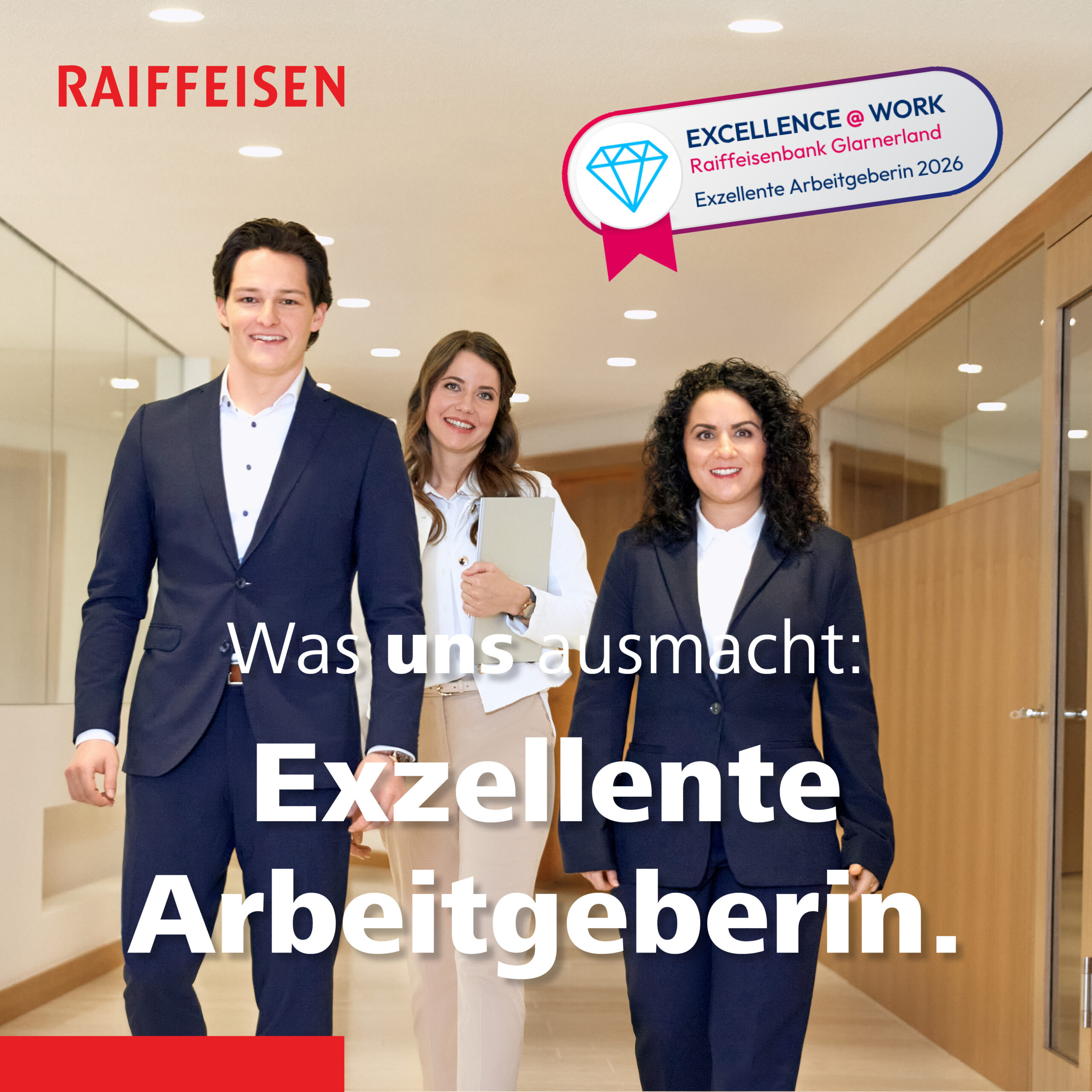
Top Employer: Raiffeisenbank Glarnerland Impresses with Strong Leadership
September 21, 2026
Reading time: 2 min
ValueQuest recently had the honor of presenting the “Excellence@Work Award” to Raiffeisenbank Glarnerland. We extend our heartfelt congratulations.
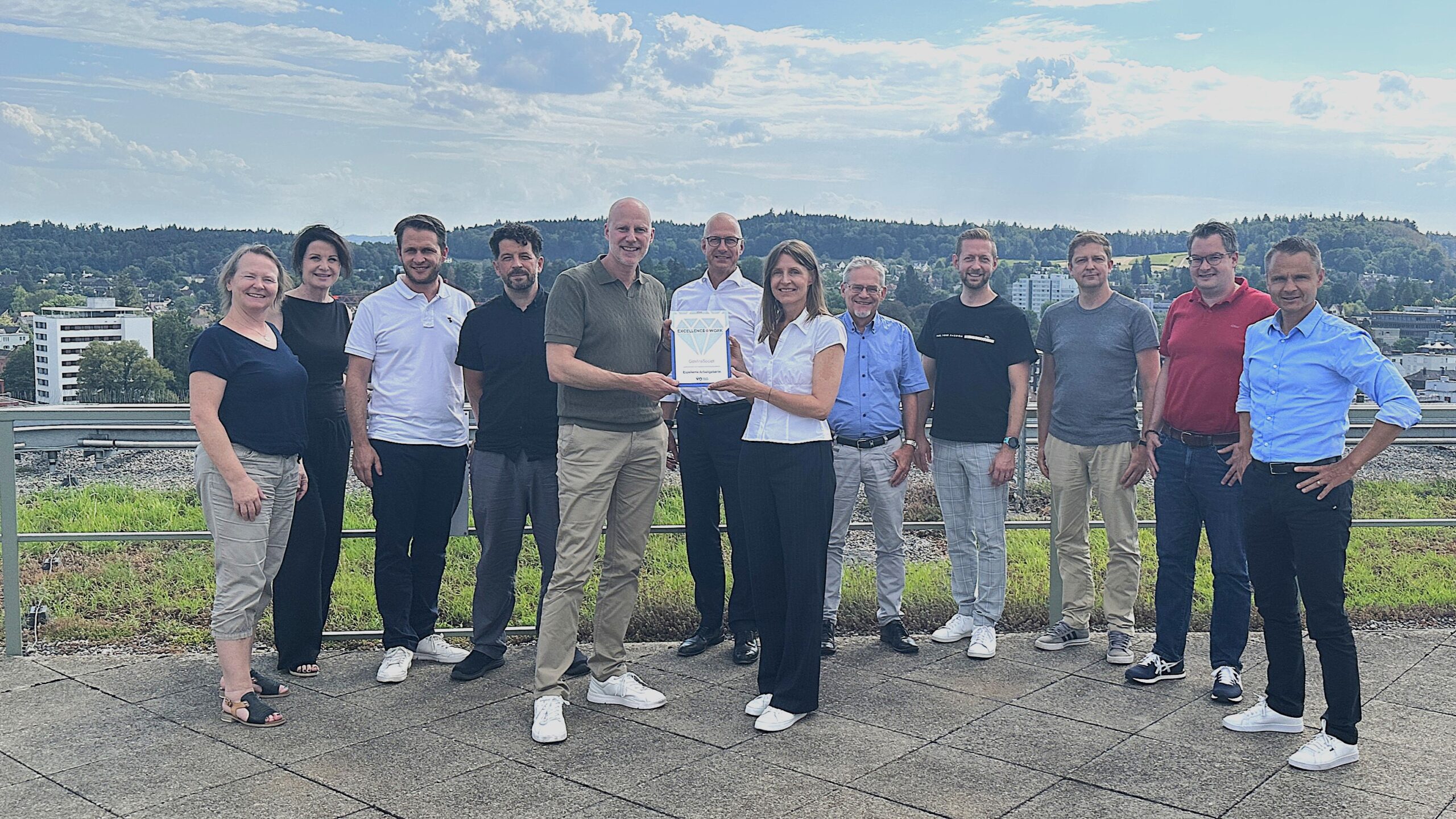
Top Swiss Employers: GastroSocial
September 9, 2026
Reading time: 3 min
GastroSocial has received the 2026 Excellence@Work Award from ValueQuest. With a response rate of 96 percent, a motivation score of 84, and 87 percent of employees serving as brand ambassadors, the company demonstrates a strong employer culture.

Employee Survey: Raiffeisenbank Möhlin Achieves Excellent Results
August 31, 2026
Reading time: 3 min
Raiffeisenbank Möhlin is one of Switzerland's top employers and is receiving our Excellence@Work Award in recognition of this achievement. Congratulations!

Employee Surveys in Switzerland: Find Providers & Tools
August 30, 2026
Reading time: 6 min
Employee Survey in Switzerland: How Do You Find the Right Employee Survey Provider? What Really Matters When It Comes to Anonymity, Tools, Questionnaires, and Analysis.

360-Degree Feedback Questionnaire: Sample, Template, and Sample Questions
August 21, 2026
Reading time: 7 min
Table of Contents A 360-degree feedback process is only as good as its questionnaire. The questionnaire is at the heart of the entire process. It determines whether...
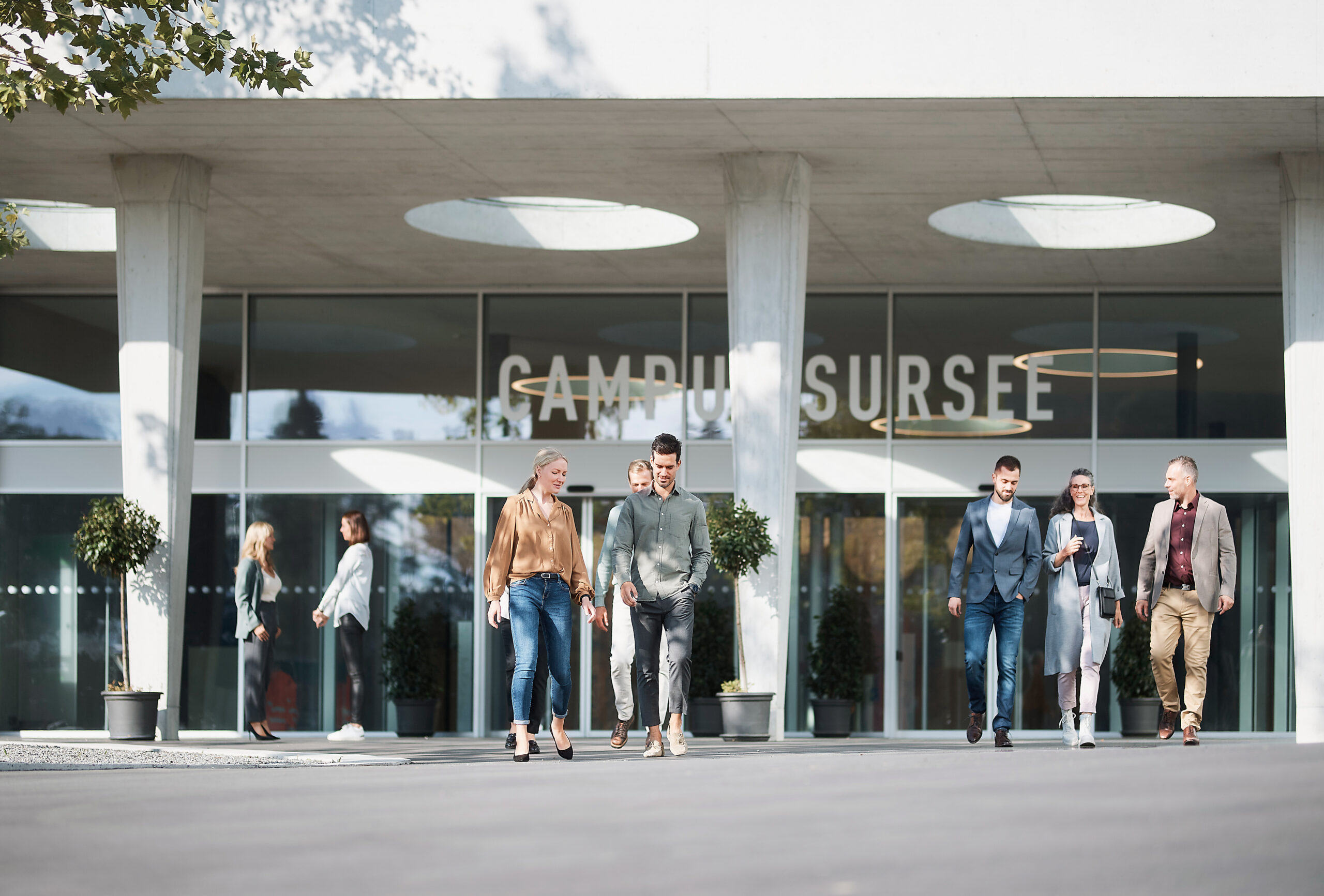
Employee Survey: The CAMPUS SURSEE Foundation Is Among Switzerland's Best Employers
August 5, 2026
Reading time: 2 min
ValueQuest honors particularly attractive employers in Switzerland with the Excellence@Work Award. We recently had the pleasure of presenting the award to the CAMPUS SURSEE Foundation.
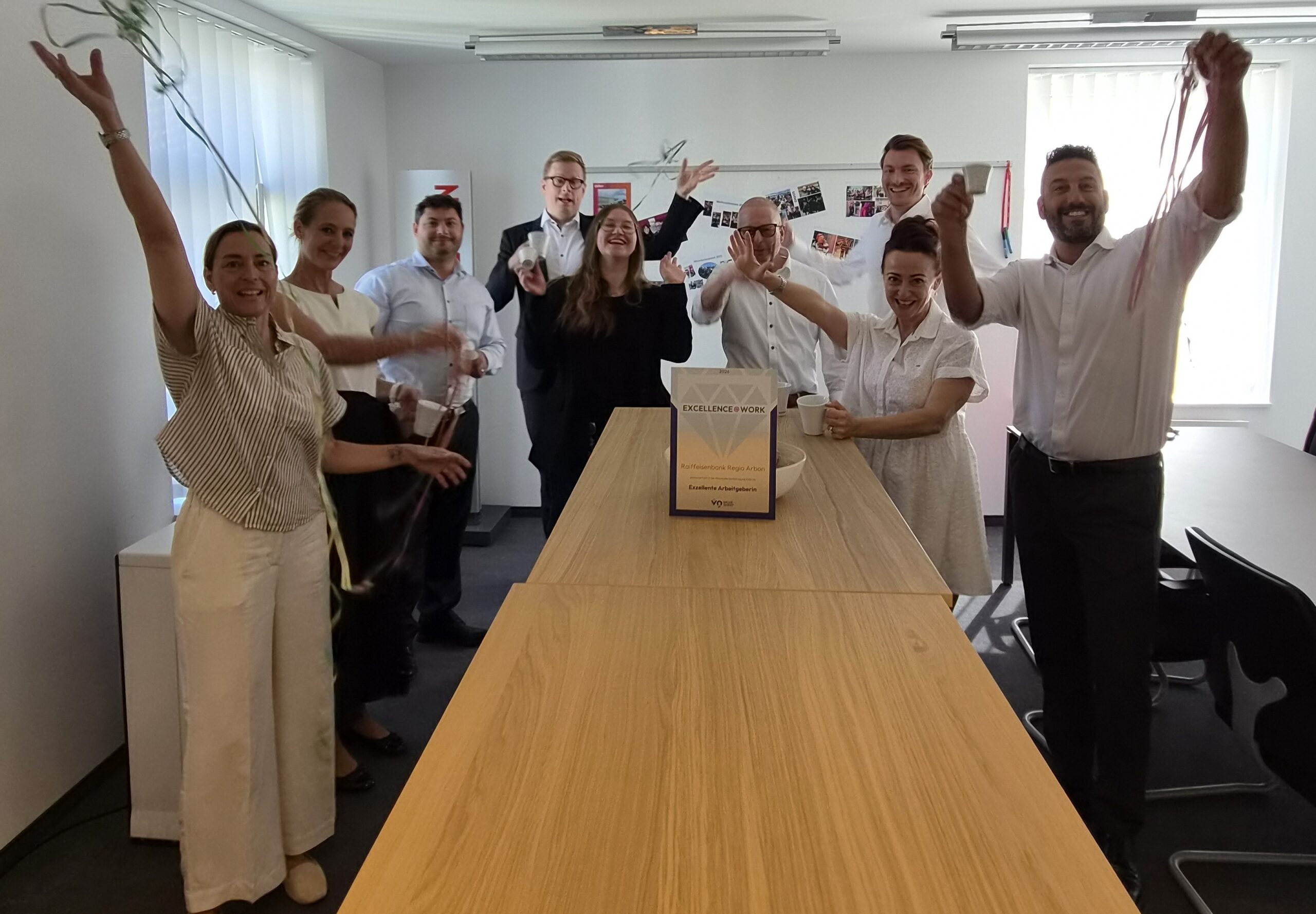
Raiffeisenbank Regio Arbon, a Top Employer: Personal Responsibility as Part of a Strong Corporate Culture
July 7, 2026
Reading time: 2 min
ValueQuest honors particularly attractive employers in Switzerland with the Excellence@Work Award. We recently had the pleasure of presenting the award to Raiffeisenbank Regio Arbon.