In the corporate context, empowerment refers to a process in which employees are empowered to shape their own work, make decisions and take responsibility. The empowerment approach aims to increase employee motivation and satisfaction, develop their skills and ultimately promote the growth and success of the company.
The social, political and societal shifts of the last five decades have also changed employees' expectations of their work and their employers. Challenges arise in particular when different generations work together in teams. This reality can confront managers with the question of how they can further develop the way they work together and their management style in order to meet these changing and sometimes divergent demands from their employees. One possible solution is the targeted and systematic empowerment of employees, which is discussed in more detail in this article.
Empowerment is a component of modern leadership
Whereas five decades ago, leadership meant "enforcing the will of others"[1], today we are dealing with a more holistic concept of leadership: In addition to the classic "top-down leadership", leadership also means "self-management" (leadership of oneself, e.g. through self-reflection), "peer management" (leadership between work colleagues, e.g. through vertical feedback) as well as "boss management" (leadership from the bottom up).2 Thus, leadership is no longer primarily about exerting influence. Instead, the focus is on the actions and behavior of all employees and managers so that they can develop their potential and perform better. Performance has three components: Ability to perform (can), willingness to perform (will) and opportunity to perform (may)[2]. Empowerment is about the latter: empowerment aims to promote employees' ability to perform and remove barriers that prevent them from developing their potential.
The positive effects of employee empowerment
Implementing a comprehensive employee empowerment approach can have a positive impact on employees and the company's success. When employees are empowered to make decisions independently and take responsibility, they feel valued and more involved in their work.[3] At the same time, more empowerment tends to boost employees' self-confidence and work motivation, as they feel they have an influence on their own working conditions.[4] Empowered employees can develop their potential and implement new ideas more easily, which promotes the responsiveness of companies - with positive effects on their competitiveness.[5] Due to the high potential of employee empowerment for innovation and employee motivation, much has already been written about empowerment in the practical literature. Employee empowerment is often oversimplified and equated with increased autonomy or freedom for employees. However, this view falls short and does not exploit the full potential of the concept.
Structural empowerment
The concept of empowerment comes from social psychology and refers to the holistic creation and design of organizational structures and processes in order to give employees more responsibility, influence and empowerment in their working environment.6 Empowerment comprises four dimensions (see figure):
- Access to information refers to employees having access to relevant information in order to perform their tasks effectively. For example, companies can promote communication and information transparency through an internal communication system (e.g. intranet portals, regular newsletters or team meetings) that makes it easier for employees to access important information and resources.
- Freedom to make decisions: Employees can make decisions within a defined framework and thus influence their work situation. One example of this is when a company introduces a decentralized decision-making structure in which employees can make decisions independently within clearly defined limits. This empowers employees to manage certain projects independently or to make certain budget decisions. Empowerment therefore does not mean "unlimited" freedom of decision, but rather freedom of decision with clearly defined guidelines.
- Resources: Employees are provided with the necessary resources (e.g. technology, time or feedback) to successfully fulfill their tasks. For example, a company can offer training, mentoring and continuing education programs to develop and strengthen employees' skills.
- Incentives include financial rewards such as bonuses or performance awards as well as non-monetary incentives such as recognition, promotions or development opportunities, for example a performance-related reward system in which employees are financially rewarded based on the team's performance and achievement of targets.
By taking these four dimensions of structural empowerment into account, companies can create an empowering environment that enables employees to develop their skills and potential and have a positive impact on their work and the company as a whole. In the context of leadership, empowerment therefore means that even the influence of managers on their employees can be reduced. By and large, empowerment stands for the removal of factors that reduce the self-development of employees.
From structural to psychological empowerment
One weakness of structural empowerment is that it takes too little account of employees' individual perceptions: Just because a company provides more resources and opportunities does not mean that employees automatically feel more empowered. This is why in business administration we differentiate between structural empowerment (i.e. what companies can do) and psychological empowerment (i.e. what employees actually feel).
According to US organizational researcher Spreitzer, psychological empowerment refers to how employees subjectively experience the empowerment measures of their working environment[6]. Psychological empowerment comprises four dimensions: Meaningfulness, competence, influence and self-determination.
- Meaningfulness means that employees perceive their work as meaningful and essential. The aim is to create a link between the individual tasks of employees and the overarching mission and vision of the company. Companies should clearly demonstrate their corporate goals to their employees and communicate how their employees' work contributes to the company's goals and the goals of society as a whole.
- Competence means that employees have confidence in their skills and knowledge to successfully complete their tasks. The aim is to give employees the opportunity to develop their skills and competencies. For example, companies can offer training and development programs so that employees can learn new skills and deepen their knowledge.
- Influence means that employees can influence decisions and processes that affect their work. Obtaining feedback from employees and taking their needs and ideas into account in the decision-making process increases the feeling of influence among employees. Examples include employee surveys and/or regular feedback meetings. It is important that feedback goes in two directions: not only does the line manager give feedback to the employee, but the employee can also provide feedback and new ideas to the line manager.
- Self-determination means scope for decision-making. Employees should have the freedom to organize their work independently and make decisions within clearly defined limits. Examples include flexible working hours and the opportunity to manage projects independently.
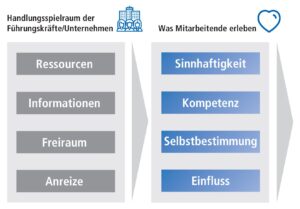
To identify the level of empowerment and fields of action, companies can use standardized questionnaires on structural and psychological empowerment. These can be integrated into internal employee surveys. As employee empowerment is effective in its entirety with four dimensions, all dimensions should be measured. Spreitzer, for example, provides twelve questions for measuring psychological empowerment
Conclusion
The term "empowerment" is used excessively in companies these days. While empowerment is often equated with increased autonomy, the concept is far more complex from a scientific perspective. In organizational psychology and business administration, a distinction is made between the structural and psychological empowerment approach. Structural empowerment encompasses all "visible" measures taken by the company to empower its employees. Psychological empowerment looks at how employees perceive these measures and whether they actually feel empowered. While structural empowerment measures are in the hands of the company and its managers, the level of psychological empowerment indicates the actual experience of the employees. Both concepts are therefore closely interrelated and must be considered as a whole. For empowerment measures to be effective and have a positive impact on employees and the company, it is crucial that all four dimensions of both structural empowerment and psychological empowerment are fulfilled.
At ValueQuest, we know first-hand how important employee empowerment is. An engaged and motivated workforce is key to increasing productivity and driving innovation. As experts in employee empowerment, we offer exclusive inspiration and empowerment workshops for managers in addition to employee surveys.
Sources
Article published on November 2, 2023
About Dr. Kathrin Neumüller

Dr. oec. HSG Kathrin Neumüller is Co-Managing Director at ValueQuest and an expert in employee inspiration and empowerment. She also teaches strategic management in the MBA program at the ZHAW. She holds a doctorate from the University of St. Gallen (HSG) and studied at the University of Cambridge. Learn more about Kathrin
Inspired? Then share this post via your favorite platform.
Other articles that might interest you ...

AI in the Swiss Insurance Market: What Insurers Can Learn from the Results
October 1, 2026
Reading time: 4 min
Artificial intelligence is not universally accepted in the Swiss insurance market. As a study by ValueQuest shows, customers’ openness to AI depends heavily on how it is used.

AI in the Swiss Insurance Market: Between Acceptance and Skepticism
September 28, 2026
Reading time: 5 min
For many Swiss people, artificial intelligence has become an integral part of everyday life. However, the situation is different when it comes to insurance companies.

Top Employer: Raiffeisenbank Glarnerland Impresses with Strong Leadership
September 21, 2026
Reading time: 2 min
ValueQuest recently had the honor of presenting the “Excellence@Work Award” to Raiffeisenbank Glarnerland. We extend our heartfelt congratulations.
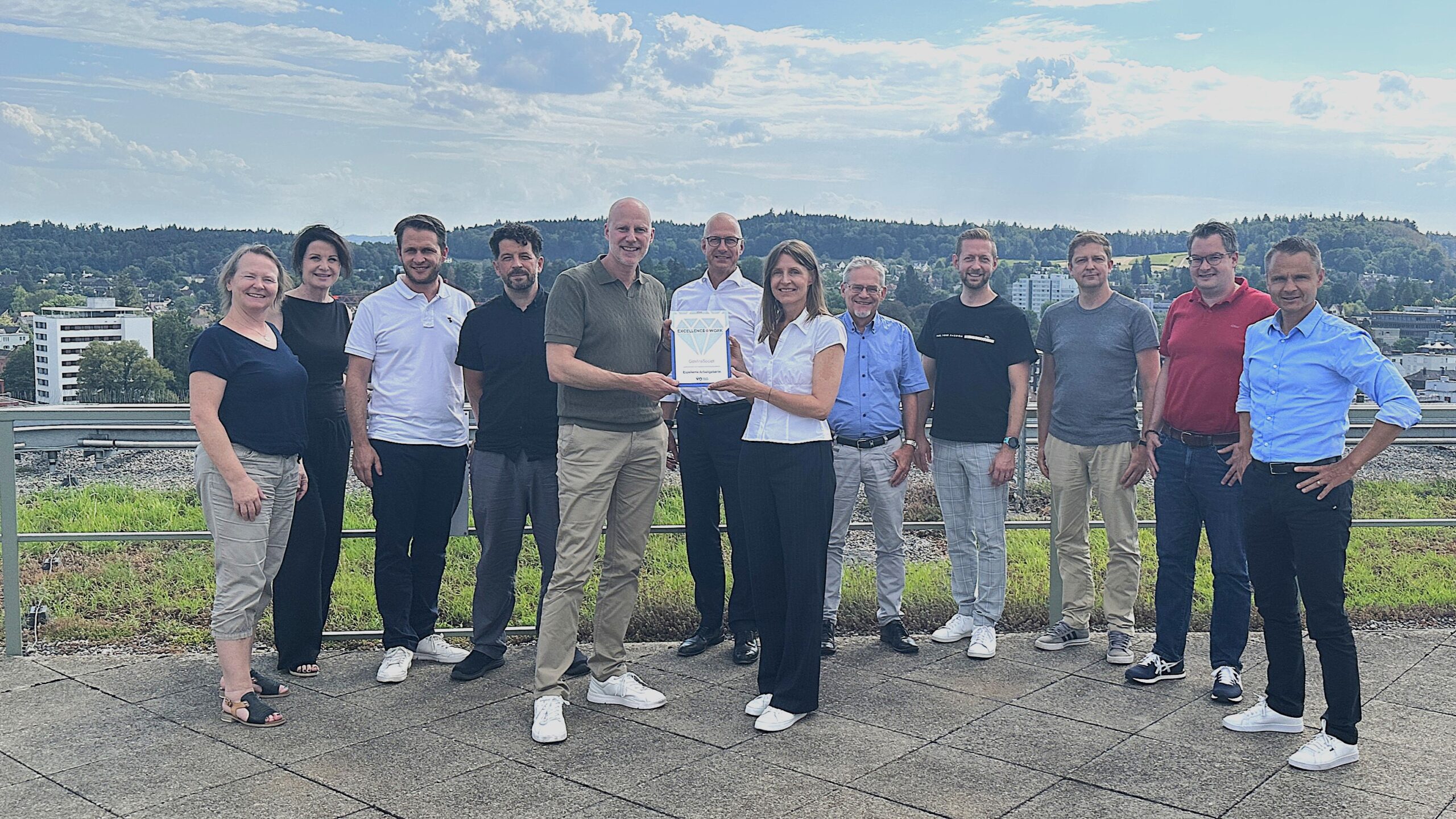
Top Swiss Employers: GastroSocial
September 9, 2026
Reading time: 3 min
GastroSocial has received the 2026 Excellence@Work Award from ValueQuest. With a response rate of 96 percent, a motivation score of 84, and 87 percent of employees serving as brand ambassadors, the company demonstrates a strong employer culture.

Employee Survey: Raiffeisenbank Möhlin Achieves Excellent Results
August 31, 2026
Reading time: 3 min
Raiffeisenbank Möhlin is one of Switzerland's top employers and is receiving our Excellence@Work Award in recognition of this achievement. Congratulations!

Employee Surveys in Switzerland: Find Providers & Tools
August 30, 2026
Reading time: 6 min
Employee Survey in Switzerland: How Do You Find the Right Employee Survey Provider? What Really Matters When It Comes to Anonymity, Tools, Questionnaires, and Analysis.

360-Degree Feedback Questionnaire: Sample, Template, and Sample Questions
August 21, 2026
Reading time: 7 min
Table of Contents A 360-degree feedback process is only as good as its questionnaire. The questionnaire is at the heart of the entire process. It determines whether...

Employee Survey: The CAMPUS SURSEE Foundation Is Among Switzerland's Best Employers
August 5, 2026
Reading time: 2 min
ValueQuest honors particularly attractive employers in Switzerland with the Excellence@Work Award. We recently had the pleasure of presenting the award to the CAMPUS SURSEE Foundation.
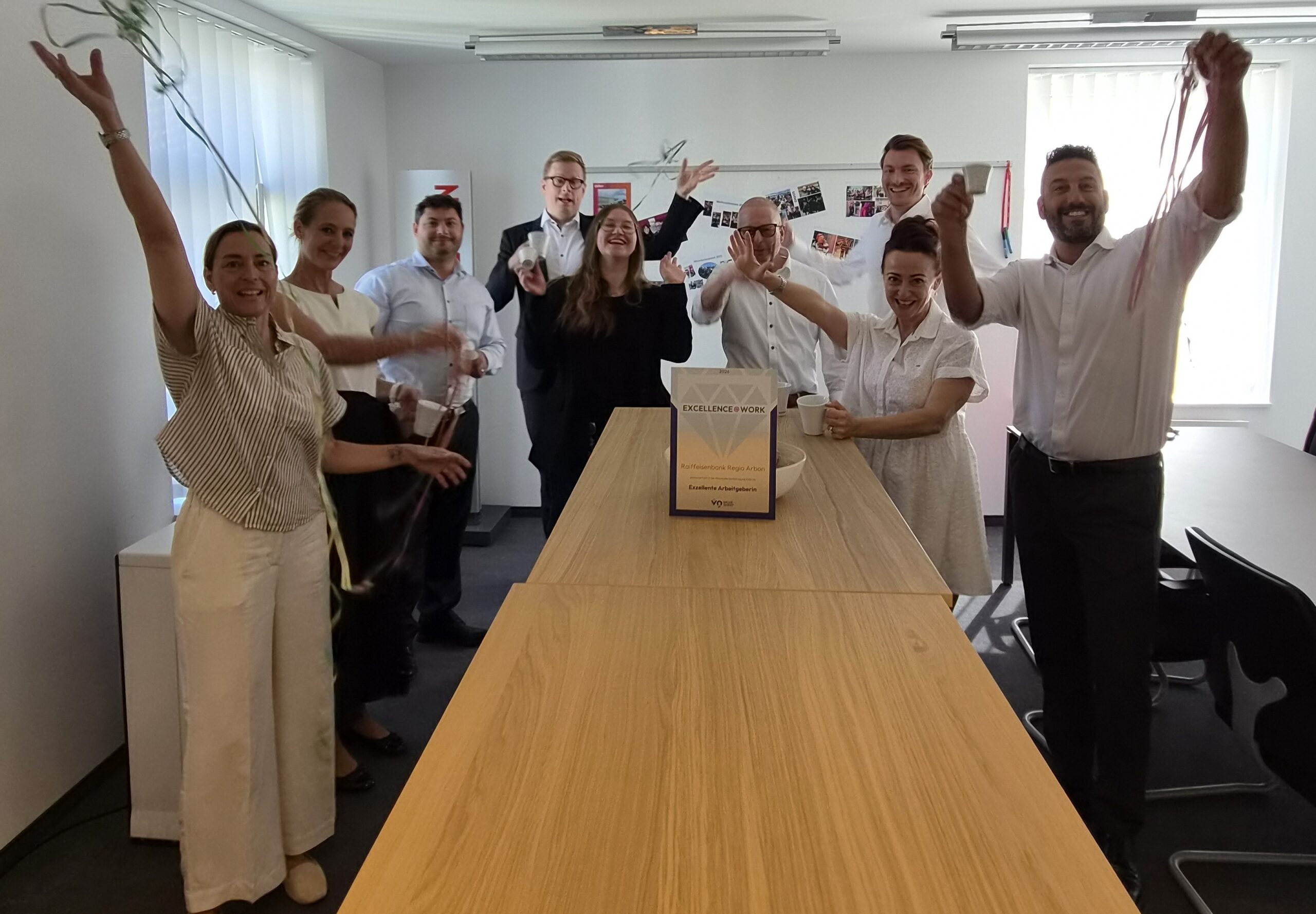
Raiffeisenbank Regio Arbon, a Top Employer: Personal Responsibility as Part of a Strong Corporate Culture
July 7, 2026
Reading time: 2 min
ValueQuest honors particularly attractive employers in Switzerland with the Excellence@Work Award. We recently had the pleasure of presenting the award to Raiffeisenbank Regio Arbon.