Table of contents
Does it make a difference whether we talk about an "employee survey" or a "staff survey"?
The short answer: yes—linguistically, socially, and strategically, it even has a big impact. This is because the term "employee survey" or "staff survey" says a lot about how a company thinks and communicates.
From employee to collaborator
When writing or speaking about an "employee" but meaning all employees (i.e., men, women, non-binary), thegeneric masculine form is used. "Generic" here means that the word "employee" includes all genders, not just male employees.
Traditionally, the term "employee survey" has long been used in German-speaking countries. For decades, it was considered neutral, even though it only includes the masculine form. With growing sensitivity to gender-neutral language, this has changed.
The generic masculine form "Mitarbeiter" (employee) has been criticized for making women and other genders linguistically "invisible." Today, many people no longer consider the term "Mitarbeiter" to be inclusive. That is why the form "Mitarbeitende" (employees) is increasingly being used—a so-called present participle. It describes people by their activity (they work with), not by their gender.
In many places, the classic employee survey has thus become the employee survey. This form is grammatically correct, easy to read, and avoids special characters such as colons or asterisks, which are rarely used in Switzerland.
It also fits in with related terms such as employee development, employee satisfaction, and employee survey, giving it a consistent and modern feel.
"Employee survey" is not a perfect term, but it is pragmatic.
From a grammatical point of view, the form "Mitarbeiter" (employee) is a present participle – i.e. a verb that describes an action that is currently taking place. Literally, it means "someone who is currently working". Strictly speaking, this is limited in time. An employee is someone who is working at this moment – not necessarily someone who is permanently employed.
In a figurative sense, however, the participle has become generalized and is now almost always used as a noun, i.e., as a substitute for the noun employee. Linguistically speaking, this is a workaround: not a perfect solution, but one that works.
You could call it a pragmatic bridge form. It is neutral, inclusive, and avoids special characters—but it shifts the meaning slightly. With some participles, this shift would not work: no one would talk about craftspeople or leaders, because depending on the activity, it can quickly sound unnatural or even ironic.
The fact that the term "employee" has nevertheless become established is because the word describes an activity that can be easily generalized. Those who "work together" are part of a team, an organization, a process—and that is precisely the context in which the term is used.
In short: Mitarbeitende is not a linguistic ideal, but an inclusive and pragmatic solution. It avoids the generic masculine form without disrupting the flow of reading and fits in with Swiss language practice, where gender symbols are not widely used.
Grammatically speaking, "Mitarbeitende" is not a noun, but a present participle used as a noun. It therefore describes someone who is currently working – just like "Lernende" (learners), "Reisende" (travelers) or "Suchende" (seekers). Strictly speaking, the participle refers to an ongoing action. A "Mitarbeitender" would therefore be someone who is currently working. If one were to take this idea literally, one would have to ask with a smile whether someone who is currently on vacation is no longer a Mitarbeitender.

Special characters are problematic
The correct gender-neutral wording is a question of method: "Mitarbeiter" (employees) is the simplest and most neutral option. Alternatives include double nouns ("Mitarbeiterinnen und Mitarbeiter") or the use of special characters such as the gender star ("Mitarbeiter*innen") or the internal I ("MitarbeiterInnen"). The choice depends on the context and the guidelines.
However, special characters such as asterisks or colons are problematic in the latter case: screen readers read them as "employee asterisk inside," which makes access difficult for people with visual impairments. And since certificates and official documents are considered legal documents, such spellings are not permitted there anyway.
In any case, employees and staff members are so-called substantivized participles, which are usually inflected in exactly the same way as adjectives: All employees are subordinate to ... The company insures all staff members. Employees have a say.
When an "employee survey" is still appropriate
Despite this development,"employee survey"is by no means incorrect. The term continues to be widely used in everyday language in Switzerland, Austria, and Germany. In practice, this means:
Example:
"Our employee survey—also known as a staff survey—reveals what really motivates your team."
This way, the text remains inclusive and can still be found by anyone searching for the traditional term.
Linguistically correct use of "employees"
While Mitarbeiter is a noun, Mitarbeitende functions grammatically as a participle. This has minor but important consequences for sentence structure.
- Grammatically correct: "The employees were surveyed."
- Grammatically incorrect: "Employee satisfaction"
- Grammatically incorrect "The development of employees"
The same applies to compound terms: the participle remains unchanged, i.e. "die Zufriedenheit der Mitarbeitenden" (employee satisfaction), not "der Mitarbeitender" (the employee's satisfaction).
Those who consciously use this term demonstrate linguistic sensitivity and signal appreciation for all employees, regardless of gender or position.
Gender star, colon, or neutral form?
In Germany, the colon or asterisk (employee survey) has become established in many organizations. In Switzerland, however, most companies, universities, and media outlets prefer neutral forms without special characters. The Federal Statistical Office, SRG, and many universities consistently use employees, students, teachers, or managers.
This style of writing is more relaxed and easier to read, especially in longer texts such as reports or questionnaires.
Gender-neutral language for employer branding and recruiting
The way a company communicates says a lot about its culture and values. Young talent—especially those from Generation Z and younger millennials—pay close attention to whether companies actually live up to their values. Inclusive language sends a strong signal in this regard.
Companies that consistently use inclusive language signal openness and progressiveness. This makes them significantly more attractive to young talent. A job advertisement that refers to "employees" is more inviting to all genders than one that only uses "male employees." Gender-neutral language has a measurable effect:
- Attractiveness to applicants: Job seekers feel drawn to companies that make them visible in their own language. This leads to more qualified applications from a broader talent pool.
- Employee retention: When employees feel visible and valued in corporate communications, their emotional attachment to the company increases. This reduces employee turnover and saves costs for new recruitment.
- Reputation and visibility: Companies that consistently use gender-neutral language are rated more positively by diversity-focused platforms and employer review portals. This improves visibility when searching for talent.
According to a study by the University of Zurich (2023), 68% of respondents rate companies that use inclusive language as more modern and attractive. At the same time, 72% of job seekers in Switzerland say that corporate culture is an important factor when choosing a job.
Research shows measurable effects: one study found that job advertisements using gender-neutral language were viewed significantly more often than those using generic masculine forms. Another study based on real user data from the StepStone recruitment platform shows that gender-neutral language in job titles correlates with higher viewing rates among female users. The most successful forms were job titles with the feminine suffix, such as "teacher," followed by variants with an asterisk or colon.
Internal communication and sense of belonging: Language shapes perception
Language shapes perception—and our perception shapes behavior. If employees do not see themselves reflected in corporate communications, this can subconsciously create a feeling of exclusion, even if this is not the intention—which is not only an emotional problem, but also a strategic one.
The use of "employees" instead of "staff" has concrete implications for internal communication:
- Participation in surveys and response rates: Employees who feel addressed by the language are more likely to participate in employee surveys. This can lead to better response rates.
- Authenticity of responses: When employees feel valued, they give more honest and constructive responses. This leads to better data for decision-makers and enables the company to identify and address real problems.
- Trust in the organization: Consistent, respectful communication strengthens trust in the survey itself—and thus in the seriousness with which the company seeks feedback. Employees can sense whether communication is carefully and respectfully designed.
Studies show that a simple email introduction can make all the difference: "Dear employees, we invite you to take part in the employee survey..." can feel exclusive—especially for women and non-binary people. In contrast, "Dear colleagues, we look forward to hearing your perspective..." feels inclusive and appreciative.
Compliance and legal aspects of gender-neutral language
Although there is no legal obligation to use gender-neutral language in Switzerland, there is a clear trend among leading institutions and organizations:
- The Federal Statistical Office (FSO) consistently uses neutral forms such as "employees" and "students."
- The SRG (Swiss Radio and Television) has incorporated gender-neutral language into its official guidelines.
- Many cantons and municipalities already use official language guidelines that include inclusive forms.
- Leading Swiss universities such as the University of Zurich and ETH Zurich use gender-neutral language as standard.
A study shows that gender-neutral job advertisements are used more frequently in more egalitarian countries with higher socioeconomic gender parity—and Switzerland is explicitly mentioned as a country with higher use of gender-neutral language.
For companies, this means that those who adhere to modern standards are playing it safe. Gender-neutral language is not a trend, but an established standard among leading organizations. Companies that still rely on the generic masculine form today risk being perceived as outdated.
Recommendation for companies
For Switzerland, language and communication experts clearly recommend the term "employee survey." It is grammatically correct, appreciative, and fits in with modern corporate language guidelines. But choosing the right language is much more than a stylistic decision—it is a strategic investment in corporate culture, employer branding, and organizational credibility.
The following overview shows which language forms are recommended for Swiss companies and why:
- Official and inclusive: Employee survey
This is the recommended form. It is grammatically correct, avoids special characters, works with screen readers, and creates a consistent word family (employee satisfaction, employee development, etc.). It signals modernity and inclusivity.
- Less suitable stylistically: Employee survey, staff survey, employee* survey: These variants are problematic because special characters (colon, hyphen, asterisk) are difficult for screen readers to read, interrupt the flow of reading, and do not comply with the standard in Switzerland. They also appear less professional and consistent.
- Elegant workarounds: Staff survey or employee questionnaire: These alternatives are neutral and functional, but come across as less personal and direct. They can be used as a supplement, but should not be the primary form.
The decision between employee survey and staff survey is not purely a question of style, because language reflects attitude. Those who consistently use inclusive language demonstrate sensitivity, openness, and respect towards people and employees. This applies to both internal and external communication.
This accuracy is a sign of diligence and respect, especially in HR documents, surveys, and official company communications. It shows that the company not only talks about inclusion, but also lives it.
Post published on December 9, 2025
About Dr. Kathrin Neumüller

Dr. oec. HSG Kathrin Neumüller is Co-Managing Director at ValueQuest and an expert in employee inspiration and empowerment. She also teaches strategic management in the MBA program at the ZHAW. She holds a doctorate from the University of St. Gallen (HSG) and studied at the University of Cambridge. Learn more about Kathrin
Inspired? Then share this post via your favorite platform.
Other articles that might interest you ...

AI in the Swiss Insurance Market: What Insurers Can Learn from the Results
October 1, 2026
Reading time: 4 min
Artificial intelligence is not universally accepted in the Swiss insurance market. As a study by ValueQuest shows, customers’ openness to AI depends heavily on how it is used.

AI in the Swiss Insurance Market: Between Acceptance and Skepticism
September 28, 2026
Reading time: 5 min
For many Swiss people, artificial intelligence has become an integral part of everyday life. However, the situation is different when it comes to insurance companies.
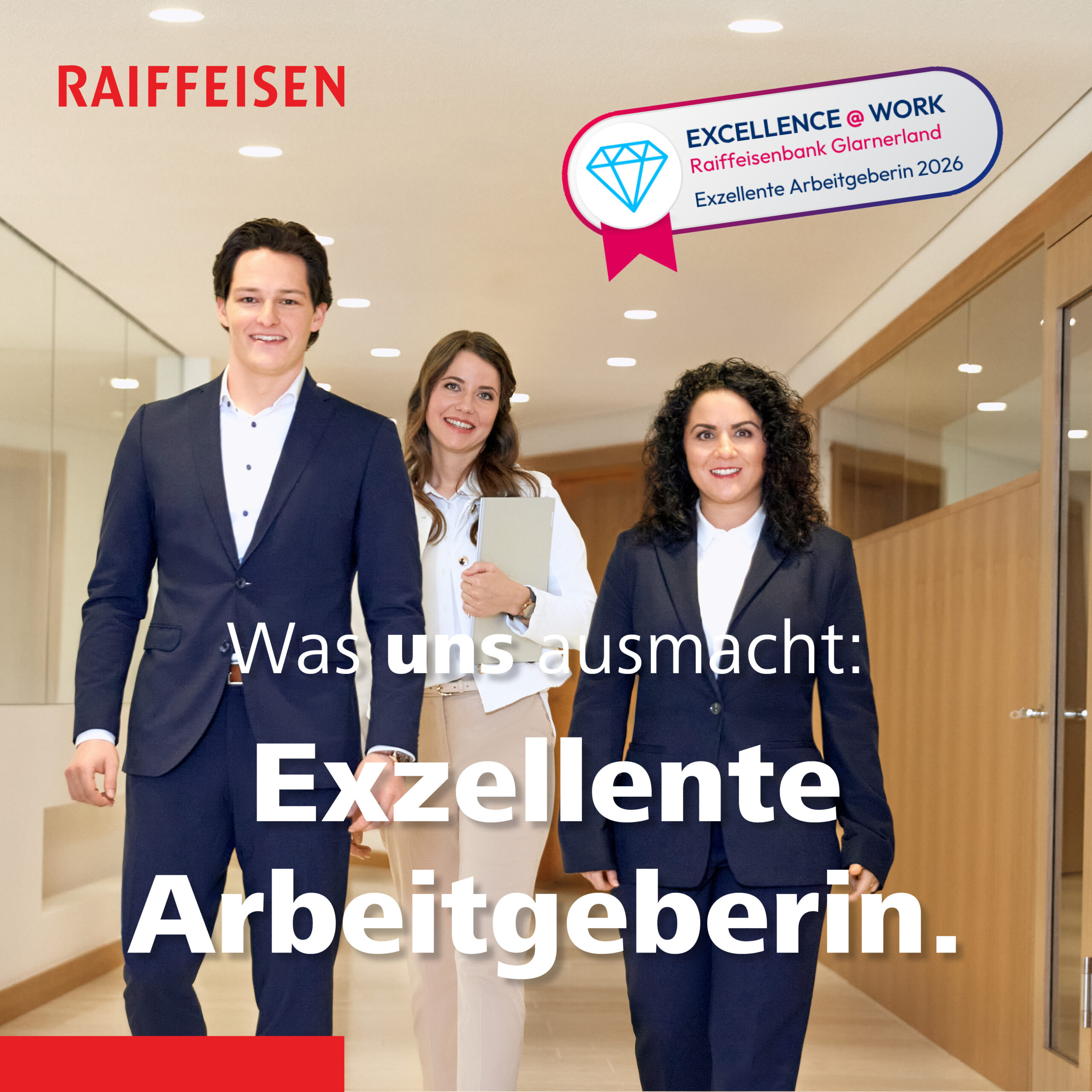
Top Employer: Raiffeisenbank Glarnerland Impresses with Strong Leadership
September 21, 2026
Reading time: 2 min
ValueQuest recently had the honor of presenting the “Excellence@Work Award” to Raiffeisenbank Glarnerland. We extend our heartfelt congratulations.
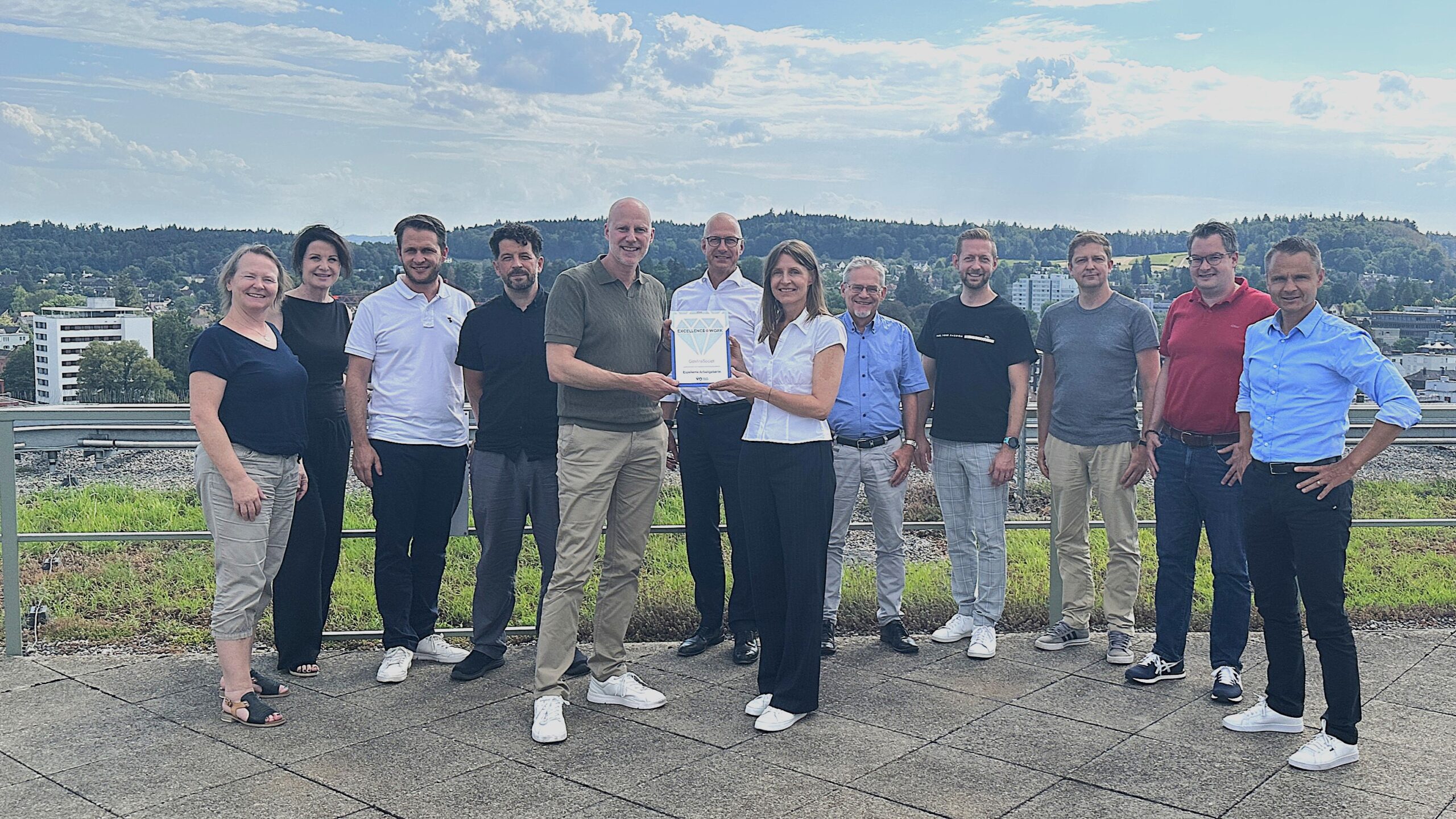
Top Swiss Employers: GastroSocial
September 9, 2026
Reading time: 3 min
GastroSocial has received the 2026 Excellence@Work Award from ValueQuest. With a response rate of 96 percent, a motivation score of 84, and 87 percent of employees serving as brand ambassadors, the company demonstrates a strong employer culture.

Employee Survey: Raiffeisenbank Möhlin Achieves Excellent Results
August 31, 2026
Reading time: 3 min
Raiffeisenbank Möhlin is one of Switzerland's top employers and is receiving our Excellence@Work Award in recognition of this achievement. Congratulations!

Employee Surveys in Switzerland: Find Providers & Tools
August 30, 2026
Reading time: 6 min
Employee Survey in Switzerland: How Do You Find the Right Employee Survey Provider? What Really Matters When It Comes to Anonymity, Tools, Questionnaires, and Analysis.

360-Degree Feedback Questionnaire: Sample, Template, and Sample Questions
August 21, 2026
Reading time: 7 min
Table of Contents A 360-degree feedback process is only as good as its questionnaire. The questionnaire is at the heart of the entire process. It determines whether...

Employee Survey: The CAMPUS SURSEE Foundation Is Among Switzerland's Best Employers
August 5, 2026
Reading time: 2 min
ValueQuest honors particularly attractive employers in Switzerland with the Excellence@Work Award. We recently had the pleasure of presenting the award to the CAMPUS SURSEE Foundation.
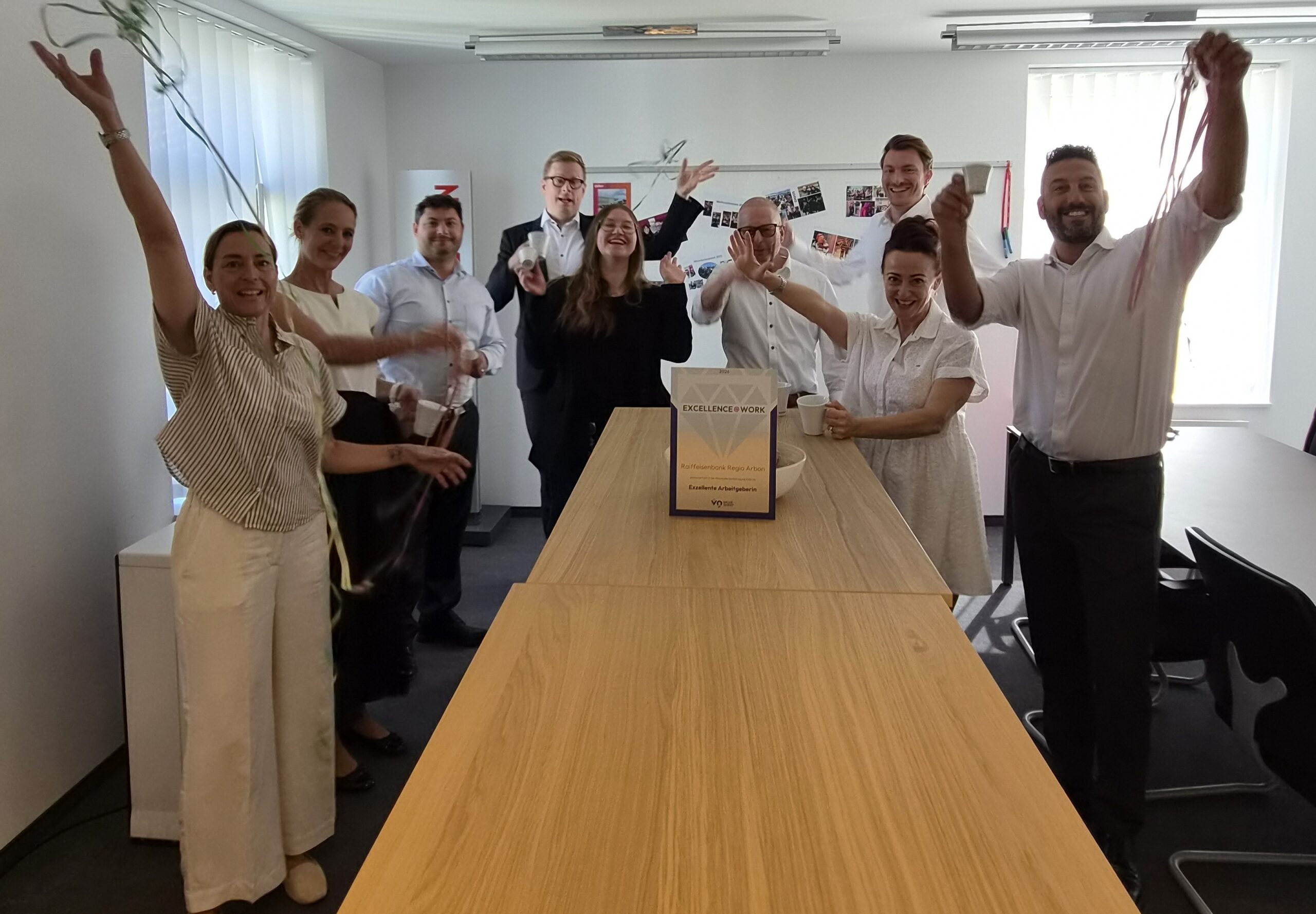
Raiffeisenbank Regio Arbon, a Top Employer: Personal Responsibility as Part of a Strong Corporate Culture
July 7, 2026
Reading time: 2 min
ValueQuest honors particularly attractive employers in Switzerland with the Excellence@Work Award. We recently had the pleasure of presenting the award to Raiffeisenbank Regio Arbon.